The considered life

Psychological flexibility allows us to move toward our discomfort in a way that is curious, open, and kind.*
Steven Hayes

Without internal tension there would be a fluid rush to a straightaway mark; there would be nothing that would be called development and fulfilment. The existence of resistance defines the place of intelligence in the product of an object of fine art.**
John Dewey

Richard Sennett reflects on these words from John Dewey:

As in art, so in life; resistance prompts us to think.^

Resistance is important if we are to live a fine life, and yet resistance is being removed or lost in many dimensions of life.

Sennett takes his readers around the resistant-free technological experience of a computer, to “Googleplex” in New York, and then to the smart city of Songdo in South Korea, controlled from a central “cockpit”: experiences he feels to be lifeless: smart experiences that dumb us down.

The kind of experiences that provide us with answers when we need questions to wrestle with.

I couldn’t help but think of Richard Rohr’s five elemental truths: experiences of resistance that when we push through them, grow us in the process:

Life is hard
You are not as special as you think
Your life is not about you
You are not in control
You are going to die.^^

Steven Hayes, a developer of Acceptance and Commitment Therapy (ACT), encourages us to turn towards the difficult things with curiosity, rather than distracting ourselves from what we find painful, so developing openness.

For me, this means openness of mind, heart and will.

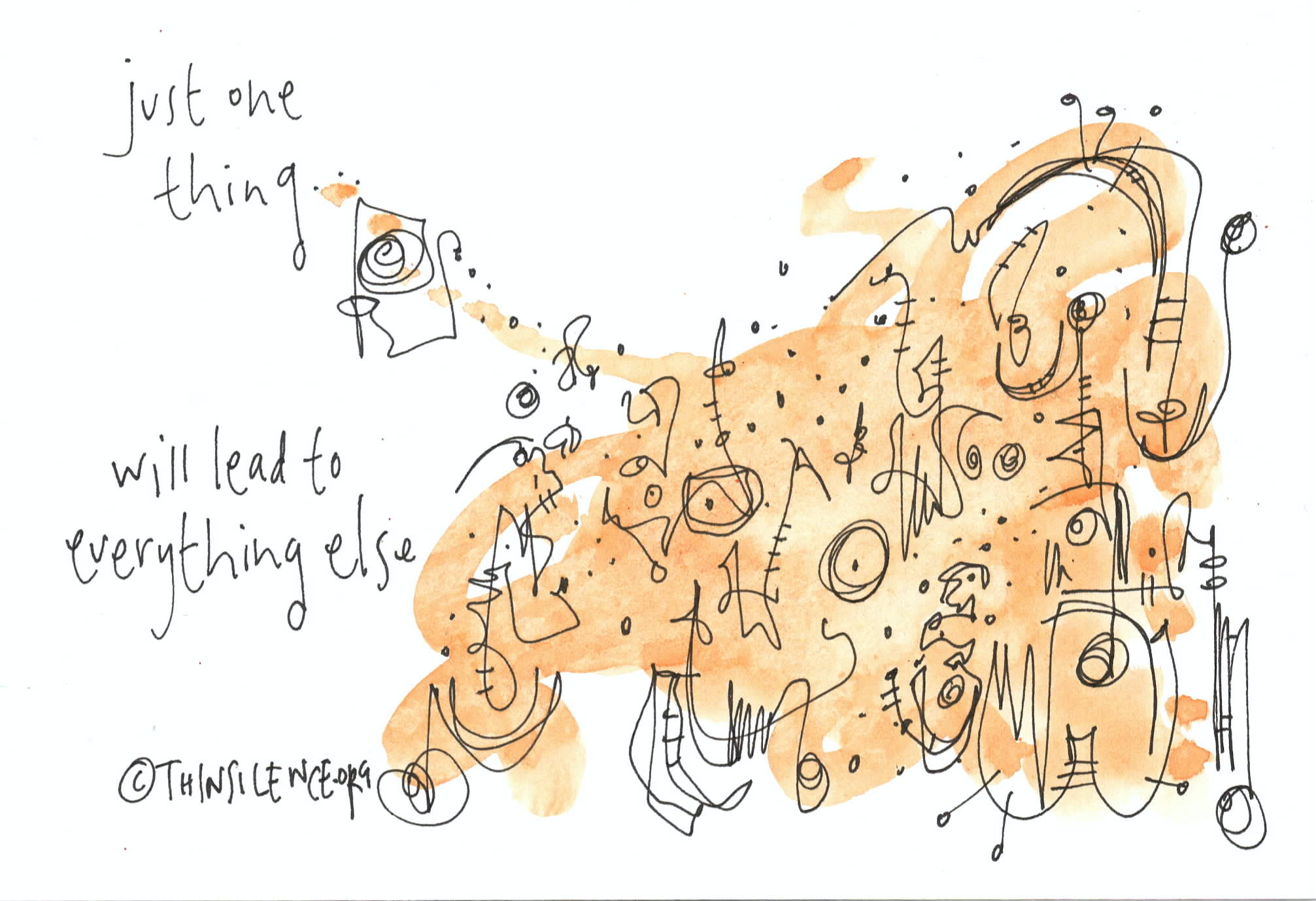
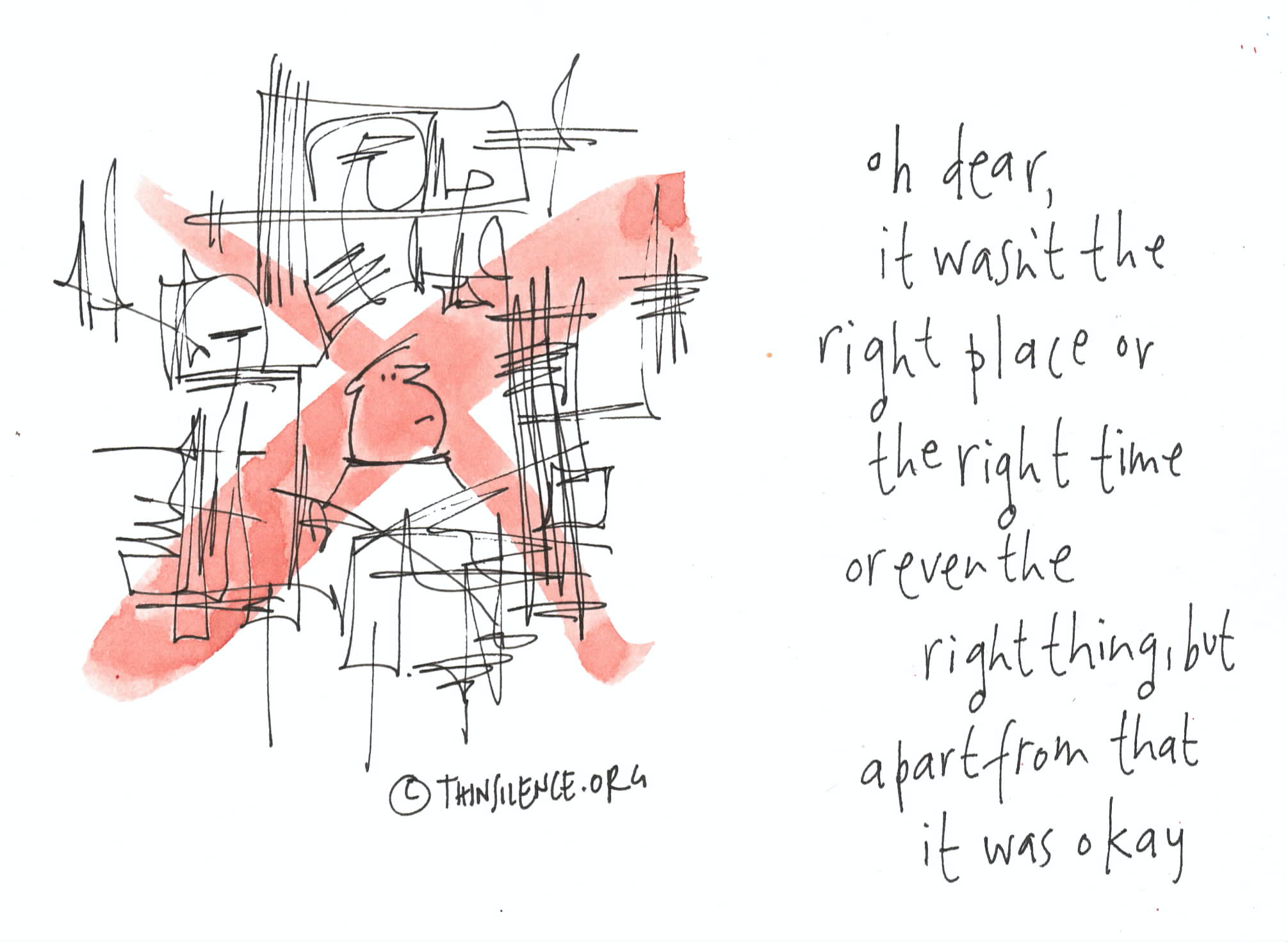
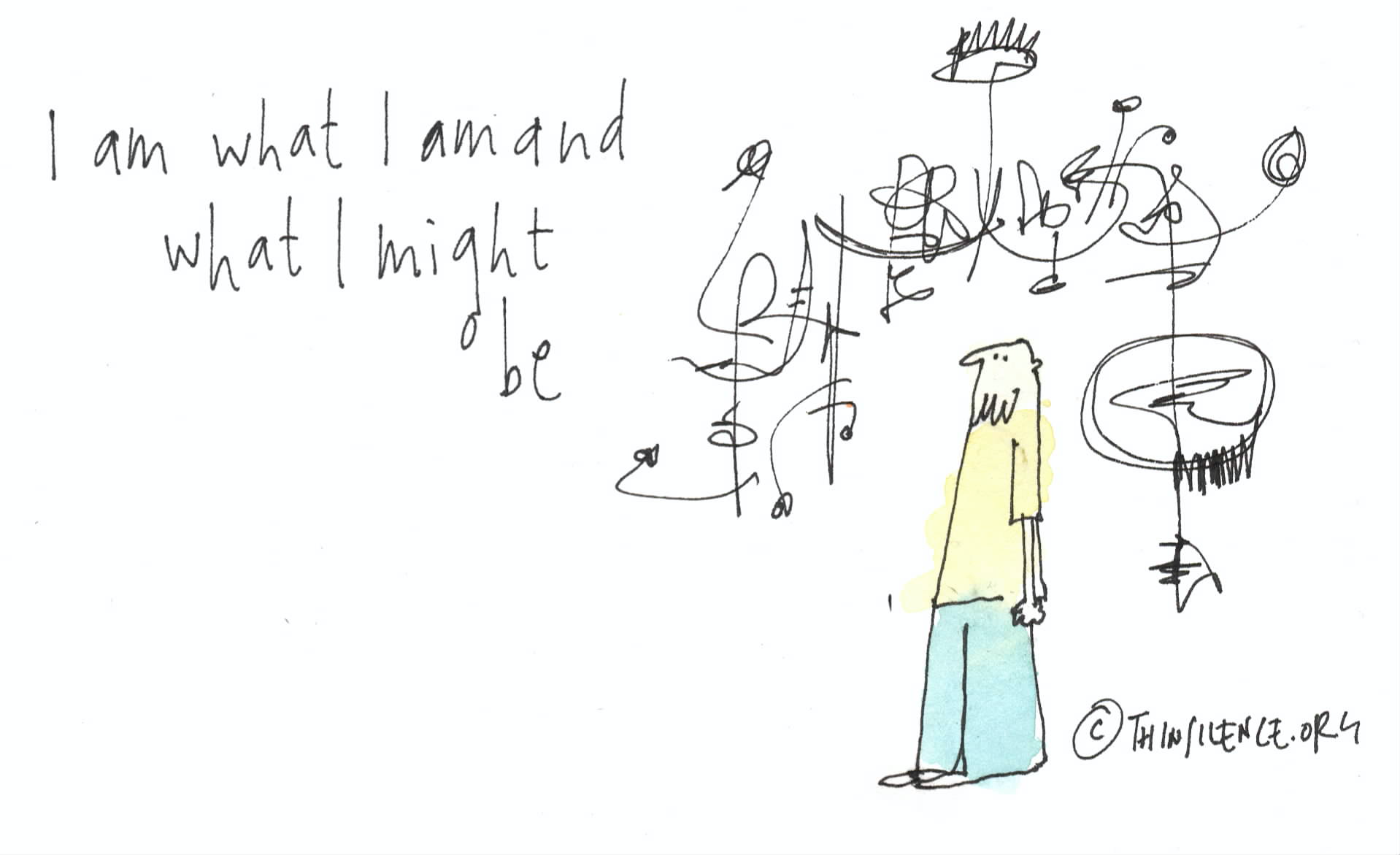
The considered life – I borrow the term from Jesus of Nazareth – means to slow down, notice, struggle, let go, let come, move on. Where we are in this moment is only a starting point:

Genre is a box, a set of boundaries, something the creative person can leverage against. The limits of the genre are the place you can do your idiosyncratic work. To make change happen, the artist must bend one of those boundaries, one of those edges.*^

Into the resistance.

*From Steven Haye’s A Liberated Mind;
**John Dewey, quoted in Richard Sennett’s Building and Dwelling;
^From Richard Sennett’s Building and Dwelling;
^^From Richard Rohr’s Adam’s Return;
*^From Seth Godin’s The Practice.

Magic things

The world is full of magic things, waiting patiently for our senses to grow stronger.*
William Butler Yeats

The way of seeing that I am speaking about can be accessed by any, regardless of ethnic origin or religious background, for it is a way of seeing that is based on what the soul already deeply knows, that both the earth and every human being are sacred.**
Philip Newell

Truth is one thing, wisdom is how we grow when we open ourselves to it.

The doodle is based on an inscription a woman in her eighties had made in one of Philip Newell’s books in which he emphasised the truth of the light of the divine in everyone, rather than the doctrine of original sin.

The woman had written in her copy, “I knew it! I knew it! I knew it!” All her life she had known this, but finally she had heard it spoke out.

May your senses grow stronger.

*William Butler Yeats, quoted in Jonah Paquette’s Awestruck;
**From John Philip Newll’s Sacred Earth Sacred Soul.

A good perspective

Good process leads to good outcomes.*
Seth Godin

What happens because of what happens next?**
Alex McManus

Here is a journey into the future.

We not only imagine and reflect upon what we will say or do next, but also on what will happen because of this.

In some small way, we are capable of shaping the future in a small but good way.

In 1990, the Voyager spacecraft, as it was about to leave our solar system, reversed its camera to take a final picture before being shut down to conserve energy.

The iconic picture of a blurred dot of light in an arc of sunlight^ was reflected upon by Carl Sagan, the scientist whose appeal had turned the camera around, offering us a very good perspective from which to understand our life together on this tiny planet:

the Earth is where we make our stand. It has been said that astronomy is a humbling and character-building experience. There is perhaps no better demonstration of the follow of human conceits than this distant image of our tiny world. To me it underscores our responsibility to deal more kindly with one another and to preserve and cherish the pale blue dot, the only home we’ve ever known.^^

*From Seth Godin’s The Practice;
**From Alex McManus’ Makers of Fire;
^This is an enhanced image;
Carl Sagan, from Maria Popova’s Figuring
.

Failure and fulfilment

Failure is the foundation of your work. … We fail and then we edit and then we do it again.*
Seth Godin

I am so grateful that I came across Seth Godin, more than fifteen years ago now.**

Coinciding with my arrival in Edinburgh, a city that would become a place of experiment, Godin reset my understanding of failure.

Some of my biggest failures have become some of my strongest foundations because I have sought to learn from them and to grow.

And I know the failures aren’t behind me because I need to keep experimenting and exploring, and I know I will mess up, but the only place to be fulfilled is out there pushing the limits of who I ca be, which just happens to be helping others to do the same.

*From Seth Godin’s The Practice:
**I picked up Seth Godin’s Purple Cow.

The hinterland of choice

human motivation is actually based on a timescale that is long, sometimes even longer than our lifetime*
Dan Ariely

You can’t find a good reason until you know what you’re trying to accomplish.**
Seth Godin

Choice is not only out there in variety and opportunity.

Choice is also inside me, grown through daily practice.

When I neglect this, and something happens, I react.

When I grow enough, and something happens, I respond.

When I grow more, and something happens, I launch.

I’ve found that a good place to begin is at the beginning of the day: exploring humility (wonder within), gratitude (wonder without) and faithfulness (wonder in practice).

*From Dan Ariely’s Payoff;
**From Seth Godin’s The Practice.

The curiouser

she was observant, curious about who other people were and what they were doing*
Richard Sennett

The “curious idiot” approach can serve you well if you can quiet your ego long enough to perform it. A curious idiot is unafraid to ask stupid questions. Every stupid question you ask takes a teeny, tiny act of courage. Sometimes you have to muster the will to push the words out of your lips.**
Austin Kleon

How many questions do I ask on a good day?

I’m not sure, but I hope a lot.

I’m always aware that I have a lot of questions to ask of those I’m working with, but I want to ask even more.

I am curious, not nosey, the reveal is for others, not me.

Curiosity is not the problem, telling is.

And telling is on the rise.

We haven’t got the time to ask, telling is more efficient.

There’s no denying that curiosity is slow.

It’s how we are led to wonder and to awe, whether in a sunset, an idea or a person.

The curiouser is one who is slowing down to notice more and to inquire.

The opening words are Richard Sennett’s description of Jane Jacobs, an activist and writer who stood against the post-war planners and designers who wanted to force their bold, powerful and efficient designs upon urban populations, form over content as it were.

*From Richard Sennett’s Building and Dwelling;
**From Austin Kleon’s blog: Ignorant, but curious.

The calling and the hearing

you’ve simply had enough
of drowning
and you want to live and you
want to love and you will
walk across any territory
and any darkness
however fluid and however
dangerous to take the
one hand you know
belongs in yours*

David Whyte

Everyone is called.

Not everyone hears.

We may carry romantic notions of calling, but the hearing involves doubt, distraction and discouragement.

Yes this is where we find life-in-all-its-sfullness.

Here’s David Whyte’s full poem (I recommend listening to Whyte reading The Truelove):

There is a faith in loving fiercely
the one who is rightfully yours,
especially if you have
waited years and especially
if part of you never believed
you could deserve this
loved and beckoning hand
held out to you this way.

I am thinking of faith now
and the testaments of loneliness
and what we feel we are
worthy of in this world.

Years ago in the Hebrides,
I remember an old man
who walked every morning
on the grey stones
to the shore of baying seals,
who would press his hat
to his chest in the blustering
salt wind and say his prayer
to the turbulent Jesus
hidden in the water,

and I think of the story
of the storm and everyone
waking and seeing
the distant
yet familiar figure
far across the water
calling to them

and how we are all
preparing for that
abrupt waking,
and that calling,
and that moment
we have to say yes,
except it will
not come so grandly
so Biblically
but more subtly
and intimately in the face
of the one you know
you have to love

so that when
we finally step out of the boat
toward them, we find
everything holds
us, and everything confirms
our courage, and if you wanted
to drown you could,
but you don’t
because finally
after all this struggle
and all these years
you simply don’t want to
any more
you’ve simply had enough
of drowning
and you want to live and you
want to love and you will
walk across any territory
and any darkness
however fluid and however
dangerous to take the
one hand you know
belongs in yours.
*

*From David Whyte‘s The Truelove, quoted in Maria Popova’s The Maginalian: The Truelove: Poet and Philosopher David Whyte on Reaching Beyond Our Limiting Beliefs About What We Deserve.

Responsible originality/original responsibility

Don’t aim at success – the more you make it your target, the more you are going to miss it. For success, like happiness, cannot be pursued; it must ensue … as the intended side effect of one’s personal dedication to a course greater than yourself.*
Mihaly Csikszentmihalyi

Story is about originality, not duplication. … True originality is the meeting of content and form. … As writers, you must make distinctive choices of subject and find your unique shaping of the telling.**
Robert McKee

In the most transcending moments of our lives, we understand ourselves to have a responsibility.

It’s a moment of awakening.

We can only take up our own responsibility: I cannot take up yours, nor you mine: each responsibility is unique, crafted and formed with a unique life-setting.

I can help, mind, and I will help you as much as I can.

Here are a few tests for our calling to responsibility: success is not guaranteed, some will hate it, it’s more important than life itself, it will be transformative. Oh, and it will also be filled with beauty, goodness and love.

*From Mihály Csikszentmihalyi’s Flow;
**From Robert McKee‘s newsletter: Why You Must Strive for Originality.

The refined soul

Somewhere, something incredible is waiting to be known.*
Carl Sagan

A refined soul is in general one with the gift of transforming the most limited task and the most petty object into something infinite by the way in which it is handled.**
Friedrich Schiller

To be more grateful is to lay down a path into awe.

Gratitude is a choice that we make the invisible visible, opening a greater world: more colourful, bigger, filled with wonders:

The moment one gives close attention to anything, even a bad of grass, it becomes a mysterious, awesome, indescribably magnificent world in itself.^

*Carl Sagan, quoted in Jonah Paquette’s Awestruck;
**From Friedrich Schiller’s On the Aesthetic Education of Man;
^Henry Miller, quoted in Jonah Paquette’s Awestruck.

At the beginning of the day

You step into a kind of magic circle when you start writing, and you step into a magic circle when you start reading. … You step into the portal to discover what you didn’t know you were looking for.*
Austin Kleon

I enter the portal every morning not sure of what is going to happen, and I struggle to be open through reading and writing and doodling.

I’ve been coming here, in some shape or form, for almost twenty four years and it’s never exhausted as a space for possibility.

Indeed, if anything, it is growing in its fecundity.

And hopefully, god willing, I will come out a little changed.

*From Austin Kleon’s blog: Entering the portal.