Unless your talent is one that keeps you focused on the matter in hand, No matter what, Then talent won’t be enough.
It may seem a little strange for me to be telling you this; I’ve been working with people and their talents since 2005.
Reality is, You need to keep turning up, Whatever the “weather.” There’s always the possibility that “this” might not be for you to be considered, But if you’re sure, then you have to keep going, Disappointment after failure after hurt.
I write when the spirit moves me, and the spirit moves me every day.** William Faulkner
Following on from yesterday’s thoughts on being infused leading to doing some infusing, And alhough I am getting older and crumbly, I am yet noticing more and more how each day provides me with the possibility of being more alive for me to pluck or ignore.
I want to unfold. I don’t want to stay folded anymore, because where I am folded, there I am a lie.^
Transience turns everything to air. You look behind and see no sign even of a yesterday that was so intense. Yet in truth, nothing ever disappears, nothing is lost. Everything that happens to us in the world passes into us. It all becomes part of the inner temple of the soul and it can never be lost.* John O’Donohue
A set up is a cause hidden in the past. … Setups are nothing without …** Robert McKee
… payoff.**
We’re all infused. Some more intentionally: Being as open as possible to as much as possible for as long as possible.
When we look more closely to see what all that infusing makes possible, And are as open as possible to as much as possible of what we find, And this for a long as possible, We are ready to do some infusing.
The last time we took action on an idea, extended ourselves for a friend, and perhaps encouraged ourselves for a new project – these happened because the story worked.^
Which all leads on to what I want to share tomorrow …
At Bollingen I am in the midst of my true life, I am most deeply myself.* Carl Jung
the world within you will create the world around you** Erwin McManus
Of the different environments a day comprises, The first is the one most personally shaped, The one we have carefully formed to take us most deeply into ourselves, Where we re-member who we are and what we want to bring to others for a new day.
For some, the first environment is extended throughout the day, For more, Having to move into spaces shaped by others, The first environment is carried within their heart and mind and soul.
While the knowing of the mind is limited by frontiers, the soul has no frontiers.^
And after he had dismissed the crowds, he went up the mountain by himself to pray. When evening came, he was there alone … .*
Whatever it is we want to contribute or produce through our lives, The likelihood is that it will benefit when wrapped in routine.
Though we will not find a shop on the high street, Nor some online store, providing ready-made routines and rituals We can shape our own through trial and error, Whilst always stimulating and stirring its life through adaptation.
We learn from others – I’m beginning to read Mason Currey’s book on how history’s famous shaped their daily routines – About what to include and what to avoid, Helping us to create our own within our particular restrictions and limitations.**
*Matthew 14:23; **I wish I had more time, but I have until around 9.30am each day to read and journal, and blog and doodle, before turning my attention to my four days of university work spread over five days.
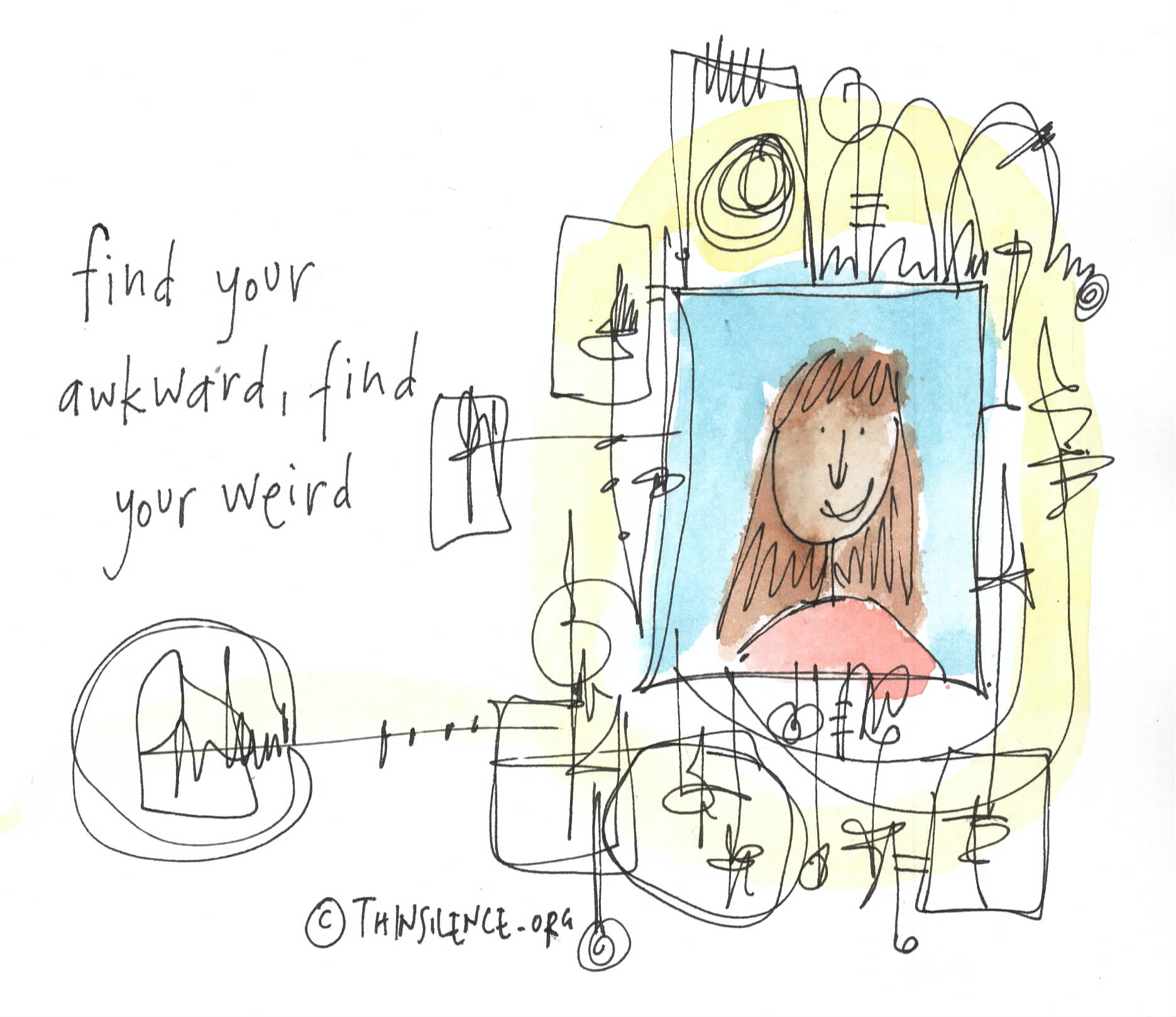
The shape of each soul is different. An individual is a carefully fashioned, unique world. The shape of the flaw that each person carries is also different. The flaw is the special shape of personal limitation; angled at a unique awkwardness to the world, it makes our difficulty and challenge in the world different from that of others.* John O’Donohue
Look at the person sitting to the right of you. And if there’s no person on the right, look at the person sitting to the left. That person and you differ at over a million locations in you DNA.** Lee Silver
Why can’t you fit in? Why can’t you be like everyone else?
Perhaps we need to take a closer look at that difference we carry, The awkwardness, The odd-angleness we feel. See where it leads, What it hooks up to.
Mason Currey introduced me to pie-artist Wayne Thiebaud whose breakthrough in painting happened when he began painting food:
I could not from then on leave that subject matter alone, and it was because the drawing and the painting was coming together in this very interesting way.^
Here is the discovery of what my friend Alex McManus and writer-artist Elle Luna call must: The stuff our lives are whispering to us about, Only they’re drowned out by the shouts to fit in, To be like everyone else.
Currey then, is right to ask us:
isn’t this what we’re all seeking as painters or writers or musicians or other makers-of-things – to strike a vein of work that we can’t leave alone, and where we can shed our inhibitions and find “charm and freedom” in the work?^^
The thing you are looking for lies with you, Just waiting for a story to be unwrapped from.
When you trust yourself enough to discover and integrate your strangeness, you bestow a gift on yourself.*
Children know something most people have forgotten. Children possess fascination with their everyday existence that is very special and would be very helpful to adults if they could lear to understand and respect it.* Keith Haring
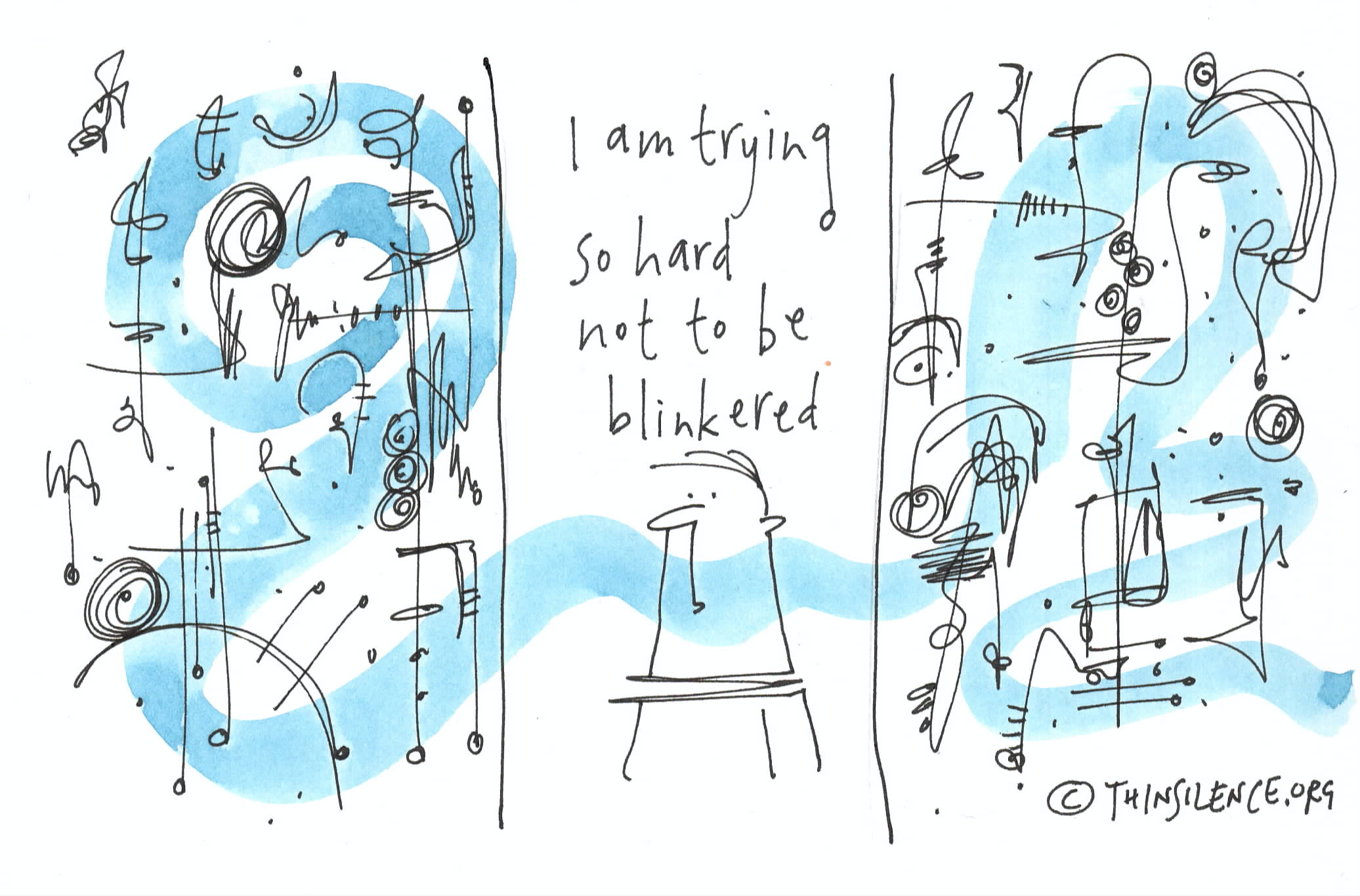
But we are also a species continually blinkered — sometimes touchingly, sometimes tragically — by our own delusions about the totality around us. Our greatest limitation is not that of imagination but that of perspective – our lens is too easily contracted by the fleeting urgencies of the present, too easily blurred by the hopes and fears of our human lives.** Maria Popova
It’s the hardest thing in the world: Not to become blinkered, To remain open for as long as possible to as much and as many as possible, The reward being the opening of more of the possibility each life contains.
Belief in one’s self is only a mirror of belief in other people and every person.* Keith Haring
When you discover something new about yourself, you become more grounded and free. It is delightful when you find out more of your hidden light, when the radiance inside you glimmers through in new unexpected colours.** John O’Donohue
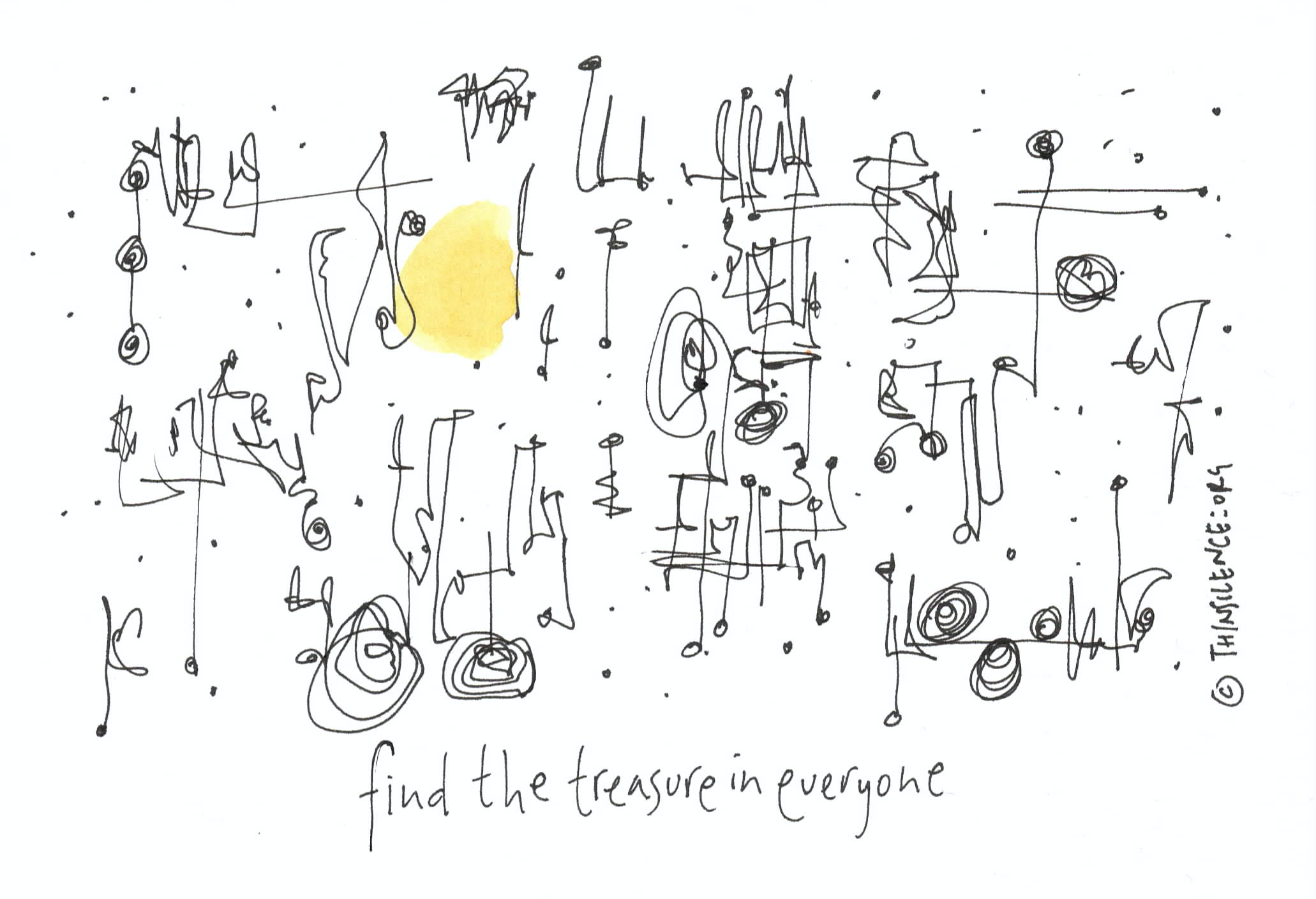
I have told the story quite a few times. Back in 2005, I was part of a group identifying talents, With the hope of growing these into strengths. Chip Anderson, who was guiding us, Gave each of us a pair of glasses at the end of the day, Asking us to use these over the following days for looking at ourselves, And also to look around at others. The message was clear, And I have never forgotten it: In discovering our own talents and abilities, We will also ever see people in a different way. In this, my life and my work were changed, Eventually giving up what I had been doing for decades to be able to pursue helping people find their treasure.
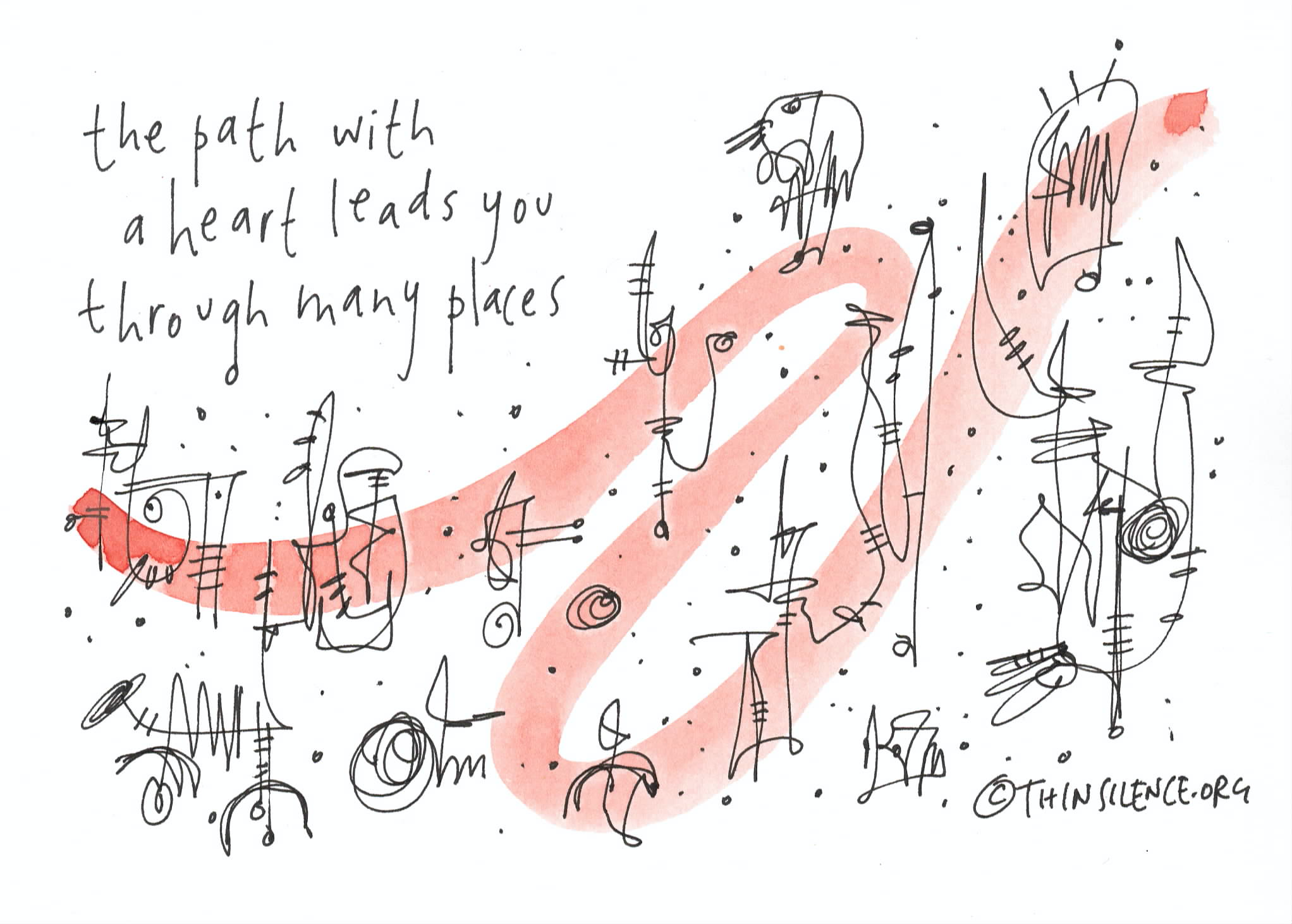
Does this path have a heart? If it does, the path is good; if it doesn’t, it is of no use. Both paths lead nowhere; but one has a heart, the other doesn’t. One makes for a joyful journey; as long as you follow it, you are one with it. The other will make you curse your life. One makes you strong; the other weakens you.* Carlos Casteneda
We are confronted with an unattractive direction that we have to take. For weeks or months we have to travel through limbo; the comfort and security of our familiar belonging lies far behind us. Where we will belong next has yet to become clear.** John O’Donohue
Limbo is a place we must journey through. Rather than the suspension of purpose and movement we might imagine it to be, It is actually the unfamiliar, An unexperience, Until we allow to be what it is, A real place our path with a heart is leading us through for some transformation to occur, But it is not a place for us to abide.
If you’ve got something that benefits from use, from practice and community, use it and share it.* Seth Godin
The best reason to pain is that there is no reason to paint.** Keith Haring
Keith Haring encourages us not to be precious about our art – whatever this be – I think this is partly why he was so prolific in his too short a life. Not only producing for the big sponsors, But also for small ventures, Generous, Often gifting his artistry, Especially to children.




You must be logged in to post a comment.