Passion: Middle English: from Old French, from late Latin passio(n- ) (chiefly a term in Christian theology), from Latin pati ‘suffer’.
The artist rarely says, “I’d like to do less.” Instead she wonders how to contribute more, because the very act of creativity is the point of the work.* Seth Godin
We speak of our passion when describing what it is that moves us and energises us into activeness.
What if the thing that propels us in this modern sense is also the thing of suffering and sacrifice of the original meaning?
We have a choice whether wish to continue evolution on this planet or not.I vote “yes.”* Keith Haring
People evolve before organisations do.**
We’re all adding our little bit of evolving to the human species.
This ongoing exploration of what we might be as Human unfolds through our desire to self-improve – something that has been happening for millennia, as Anna Katharina Schaffner identifies through her very insightful book The Art of Self-Improvement: Ten Timeless Truths.
There are some who believe our evolution will only come through technology, but I am more intrigued by our naked, or un-enhanced, humanness: in how we relate to each other, yes, but also how we embrace our world and all of its fauna and flora, as well as how we relate to ourselves – an area in which it seems we’re having a lot of problems of late.
As Keith Haring noted, this choice to encourage evolution is critically ours.
I was taken by John O’Donohue’s five Transcendentals when I first came upon them and am finding myself revisiting them. I offer them here as something you may enjoy reflecting upon – Being, the One, the True, the Good and the Beautiful:
Being is the deepest reality, the substance of our world and all things in it; the opposite would be Nothingness, the things that are not. The One claims that all things are somehow bound together in an all-embracing unity: despite all the differences in us, around us and between us, everything ultimately holds together as one; chaos does not have the final word. The True claims that reality is true and our experience is real and our actions endeavour to come into alignment with the truth. The Good suggests that in practising goodness we participate in the soul of the world. … Beauty brings warmth, elegance and grandeur. Something in our souls longs deeply for that graciousness and delight.^
Often, without knowing it, we are waiting for a new idea to come along and cut us free from our entanglement.* John O’Donohue
Our crisis, if we can get through it, is an attempt to dislodge us from a toxic status quo and constitutes an insistent call to rebuild our lives on a more authentic and sincere basis. It belongs, in the most acute and panicked way, to the search for self-knowledge.** Alain de Botton
Pain and awe cover most of the ways new ideas get into us.
We do not have to wait for these to come to us, they can be a part of our daily openness.
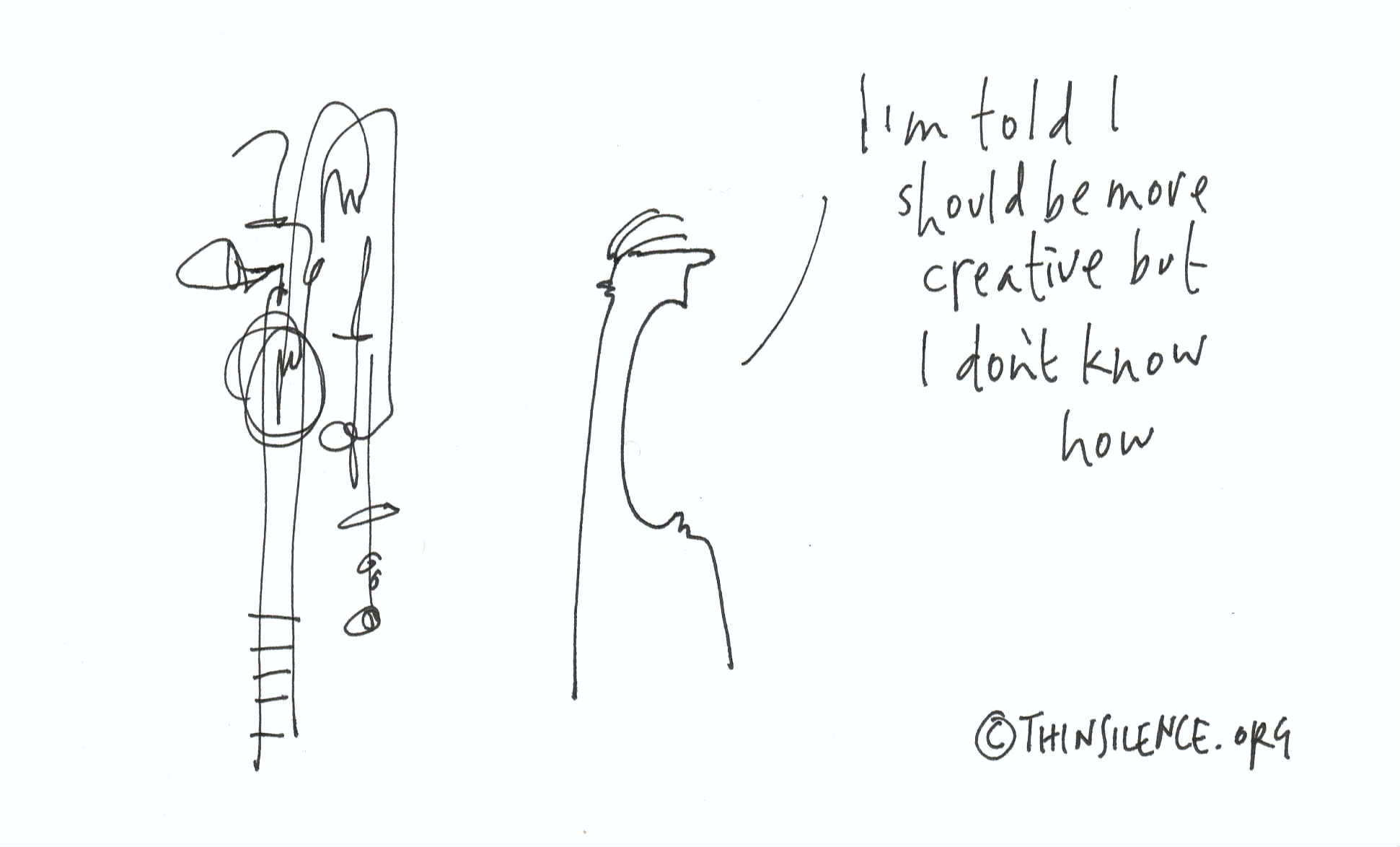
We then need the means to get new ideas out of us.
John O’Donohue offers five Transcendentals: Being, the One, the True, the Good and the Beautiful. I offer them here in a larger quote to help our reflecting on where our ideas may be leading us:
Being is the deepest reality, the substance of our world and all things in it; the opposite would be Nothingness, the things that are not. The One claims that all things are somehow bound together in an all-embracing unity: despite all the differences in us, around us and between us, everything ultimately holds together as one; chaos does not have the final word. The True claims that reality is true and our experience is real and our actions endeavour to come into alignment with the truth. The Good suggests that in practising goodness we participate in the soul of the world. […] Beauty brings warmth, elegance and grandeur. Something in our souls longs deeply for that graciousness and delight.*
In practical terms, three rules of thumb are especially useful for harnessing the power of patience as a creative force. The first is to develop a taste for having problems. … The second principle is to embrace radical incrementalism. … The final principle is that, more often than not, originality lies on the far side of unoriginality.* Oliver Burkeman.
Holiness as in set apart for a purpose.
What are you set apart for?
Oliver Burkeman encourages me to make room in my life for problems, to keep moving, small step by small step, and to learn from and to copy others, if I am to be led into my holiness.
Does it matter if others see something as original? I strongly suspect not. It’s our choice. What matters is that we see something emerging that we had not expected, marked by selflessness, generosity and wisdom.
This extremely high option of oneself is justified, since this generation will be remembered as the best ever … we are special. There is nothing wrong with knowing this. It is not vanity that this generation exhibits – it’s pride.*
Self-actualisation is possible only as a side-effect of self-transcendence.** Viktor Frankl
If we’re experiencing a narcissism epidemic, and there are those who believe we are, then it’s both a difficult and a dangerous place to be:
You can’t write — or live — if you imagine the whole world watching over your shoulder, waiting for you to screw up, ready to mock or vilify you. Which, thanks to the internet, it now is.^
One obvious danger is that you have to protect your brand, your self as product, and that means you are both making yourself fragile whilst also imprisoning the possibility of becoming:
Rather than thinking of personality as a “type” you fit into, view it as a continuum of behaviours and attitudes that is flexible, malleable, and based on context.^^
Viktor Frankl believed we have to find our purpose beyond ourselves, towards whom or which we live our lives.
There are many “skills” we might develop in this direction, but two in particular that are helpful are humility – having a true sense of self, but also, and more importantly, others – and towards this, disappearing, so that we can are able to notice more.*^
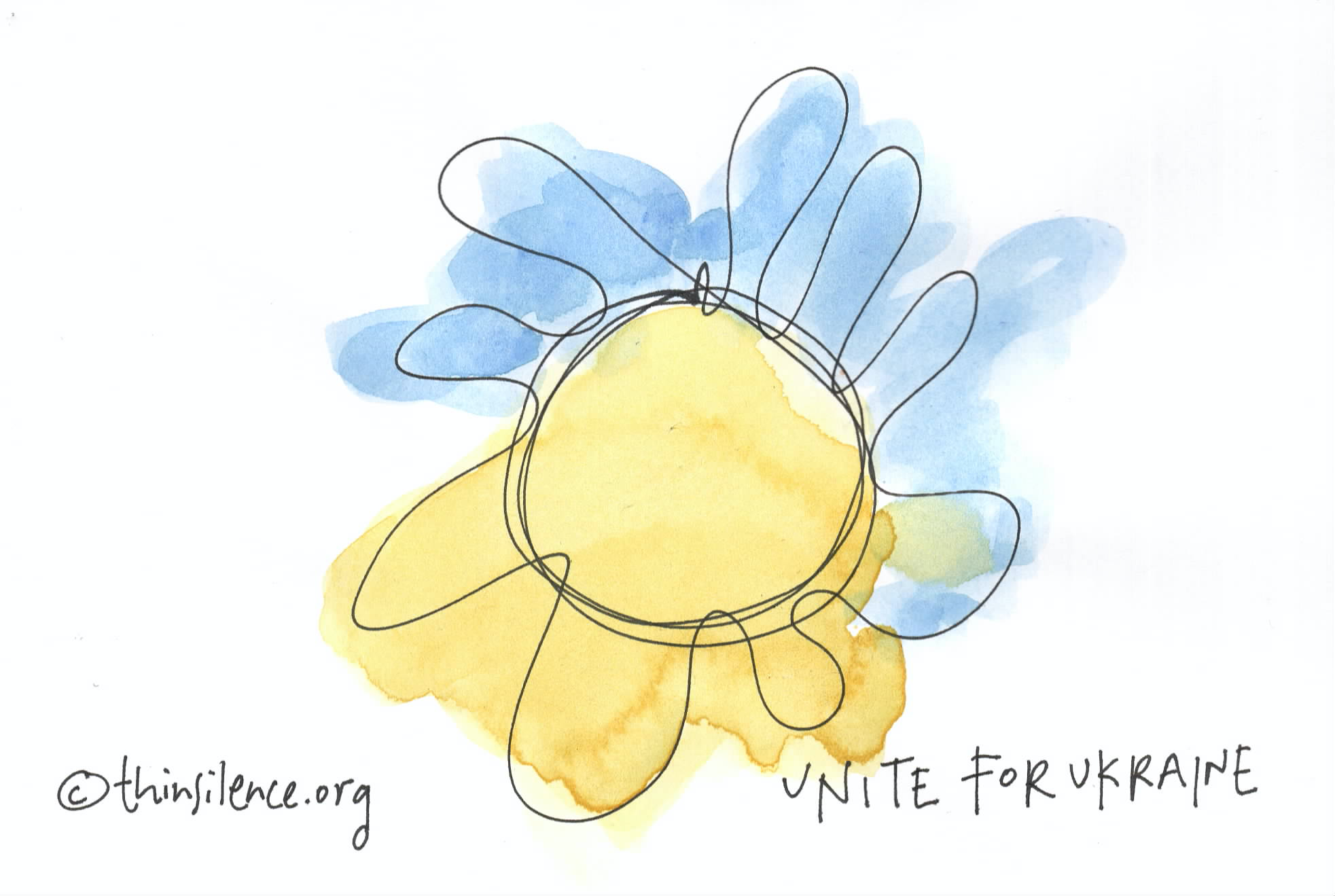
I’ve previously mentioned an initiative to support the people of Ukraine from the University of Edinburgh and its Chaplaincy that you may be interested in.
This has been inspired by Tatiana, a Ukrainian woman interviewed by the BBC who made the following plea:
We need the world to light up your hearts for Ukraine and for God.
The website has now been published and there is a vigil to take place on Thursday (7th April) in Edinburgh.
One of the things to be encouraged is the growing of sunflowers in as many places around the globe as possible (there’s a map to populate on the website):
We can gather, we can recklessly sow seeds of hope, literally doing so with sunflowers that will bloom with audacity as they salute the sun and sky in freedom.**
The idea is simple: You have a purpose so big and inspiring it transforms your entire life.* Ben Hardy
An overnight success almost never is. Might as well plan for the journey.** Seth Godin
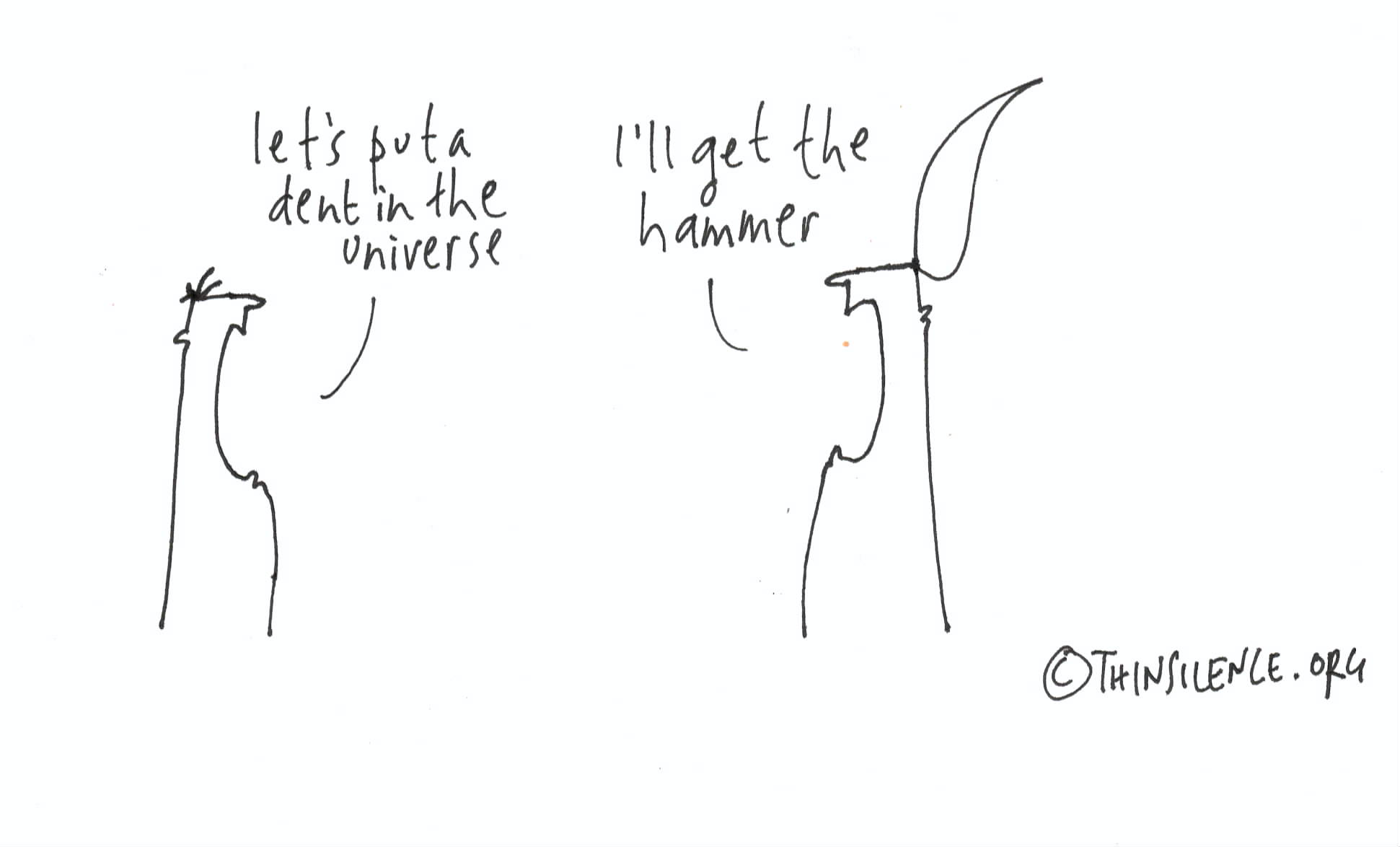
We’re told it’s possible to put a dent in the universe.
This is highly unlikely.
The only one I can think of is the collaborative dent we’re presently working on by messing up your only home.
That being said, it doesn’t mean we can’t live a meaningful life: human consciousness asks of us that we do.
We may search for meaning in ourselves but we’ll be disappointed:
An ethnographer studies others; a flâneur searches for self in others.^
meaning has to be located outside ourselves – discovered in the world rather than in our own psyches … the more we forget ourselves, by dedicating ourselves to an external cause or to people we love the more we actualise ourselves. “Self actualisation,” [Viktor Frankl] sums up, “is possible only as a side-effect of self-transcendence.”^^
So we look around –
Look with all your eyes, look.*^
and we begin to notice we are more curious and interested in some things over others, with echoes of these turning up in our values, our talents and our energies, and so we choose to begin living in these directions.
[C]atastrophization is a reasonable response–until it begins to undermine the work we need to do. … The best way to care is to persist in bending the culture and our systems to improve things over time.* Seth Godin
A hero is someone who has given his or her life to something bigger than oneself.** Joseph Campbell
“Don’t turn a mountain into a molehill.”
Bad things happen, but we cannot live in catastrophe: for something to be a catastrophe there has to be a lot of inaccuracy, even untruth present: “I messed up at work, now I’m gong to lose my job.”
The valuable but hard work is using the issue, problem, difficulty, to grow ourselves into our “suchness:”
Here lies the connection between beauty and truth. Beautyis not the opposite of the “ugly,” but of the “false”; it is the sensory statement of the suchness of a thing or a person.^
The opposite of a catastrophe may not be a molehill but one of your finest moments.
their end-of-the-day fatigue comes from satisfying work and endeavours, not from being shut up in too small a mind-set, job or relationship* Clarissa Pinkola Estés
because I have eyes, I have the need to see; because I have ears, I have the need to hear; because I have a mind, I have the need to think; and because I have a heart, I have the need to feel. In short, because I am a man, I am in need of man and of the world** Erich Fromm
Clarissa Pinkola Estés’ wild women are not out of control, but in their true nature. Equally, Erich Fromm’s multi-gendered “man” is similarly connecting.
We may think of smart phones as providing incredible connectivity, but we have always been instruments of deep connection, as Kelly Bird makes visible when she observes:
Source: Life force. Around us, in us, a wellspring of energy to tap into at any minute.^
As John Muir understood more than a century earlier:
This was my method of study. I drifted from rock to rock, from stream to stream, from grove to grove. … When I discovered a new plant, I sat down beside it for a minute or day, to make its acquaintance and try to hear what it had to say. …. I asked the boulders I met, whence they came from and whither they are going.^^
We may judge this strange talk, but there is nothing stranger than a creature denying its creatureliness, its natural state … disconnected.

 THIN|SILENCE
You must be logged in to post a comment.