The true dilemma (fixing ourselves)

It is my firm belief that the best way to fix the world – a handyman’s dream if ever there was one – is to fix yourself. […] Anything else is presumptuous. Anything else risks harm, stemming from your ignorance and lack of skill.*
(Jordan Peterson)

But complexity consists of integration as well as differentiation. The task of the next decades and centuries is to realise this underdeveloped component of the mind. Just as we have learned to separate ourselves from each other and the environment, we now need to learn how to reunite ourselves with other entities around us without losing our hard-won individuality.**
(Mihaly Csikszentmihalyi)

Bernadette Jiwa asks three big questions of those developing their own businesses, though, the questions feel important for everyone:

What do you think is missing in the world?
What kind of work will you do to fix it?
How will you find the courage to stand out when the world is screaming at you to fit in?^

Our true dilemma lies in responding to the third question.

We will soon identify something that is needed or could be better in the world, we even have the abilities to bring this into being, but finding the courage to begin, to act is more difficult.

To identify what Martin Buber names our “self-sense,”^^ we must detach ourselves from others and from the world in order to move into our independence. We separate to know ourselves but must then reunite ourselves if we are to make our stronger contribution.

Mihaly Csikszentmihalyi sees this reuniting as our work into the future. We understand how we can we independent have to become explorers of a greater interdependence:

Recognising the limitations of human will, accepting a cooperative rather than a ruling role in the universe, we should feel the relief of the exile returning home. The problem of meaning will then be resolved as the individual’s purpose merges with the universal flow.**

Here are echoes of Frederick Buechners’s declaration that meaning is found where our deepest joy meets the world’s greatest need. Joseph Campbell named two critical myths: the personal myth which contains our “bliss,” our purpose, and the social myth which understands how we bring this into integration with others.

Each day, we can practice these: separate to know who we are and what we bring, reunite and bring our strongest self to serve others and our world.

(*From Jordan Peterson’s 12 Rules for Life.)
(**From Mihaly Csikszentmihalyi’s Flow.)
(^From Bernadette Jiwa’s The Story of Telling Monthly Update for August.)
(^^See Martin Buber’s I and Thou.)

More than activity and reflection

Activity and reflection should ideally complement and support each other. Action is blind, reflection impotent.*
(Mihaly Csikszentmihalyi)

But being creative is never an end; it is a means to something else.**
(Austin Kleon)

When activity and reflection are brought together there is the possibility of change.

A change of mind.

A change of heart,

A change of direction.

We can change.

Others can change.

Cultures can change.

The world can change.

Even our god can change.

The real product of today is not the activity or the reflection alone, but the change that can take place.

Even transformation.

(*From Mihaly Csikszentmihalyi’s Flow.)
(**From Austin Kleon’s Keep Going.)

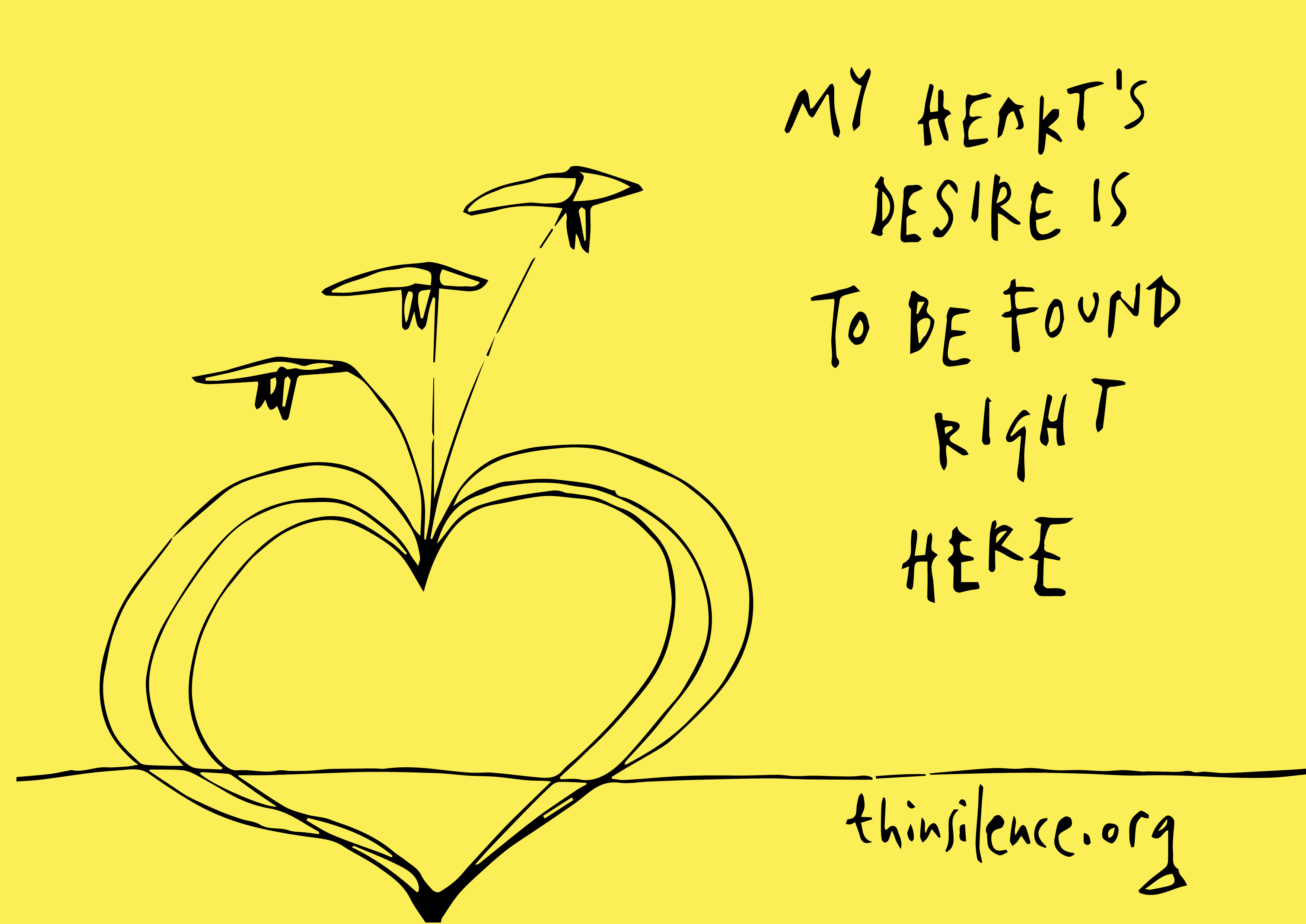
Heart’s desire

It’s as true today as it ever was: He who seeks beauty will find it.*
Bill Cunningham)

If we allow ourselves to see, we will more readily feel, and if we open to the river of compassionate feeling, we will more likely act. But the call to action is the sticking point.**
(Philip Newell)

Just before you think that really is your heart’s desire, pause a moment before acting upon it.

Is there more to see, to know, to think about, to feed your feeling and grow your heart, and the effect it will have on others.

If it’s a worthy desire, continue, and bring something beautiful into being.

(*Bill Cunningham, quote in Austin Kleon’s Keep Going.)
(**From Philip Newell’s The Rebirthing of God.)

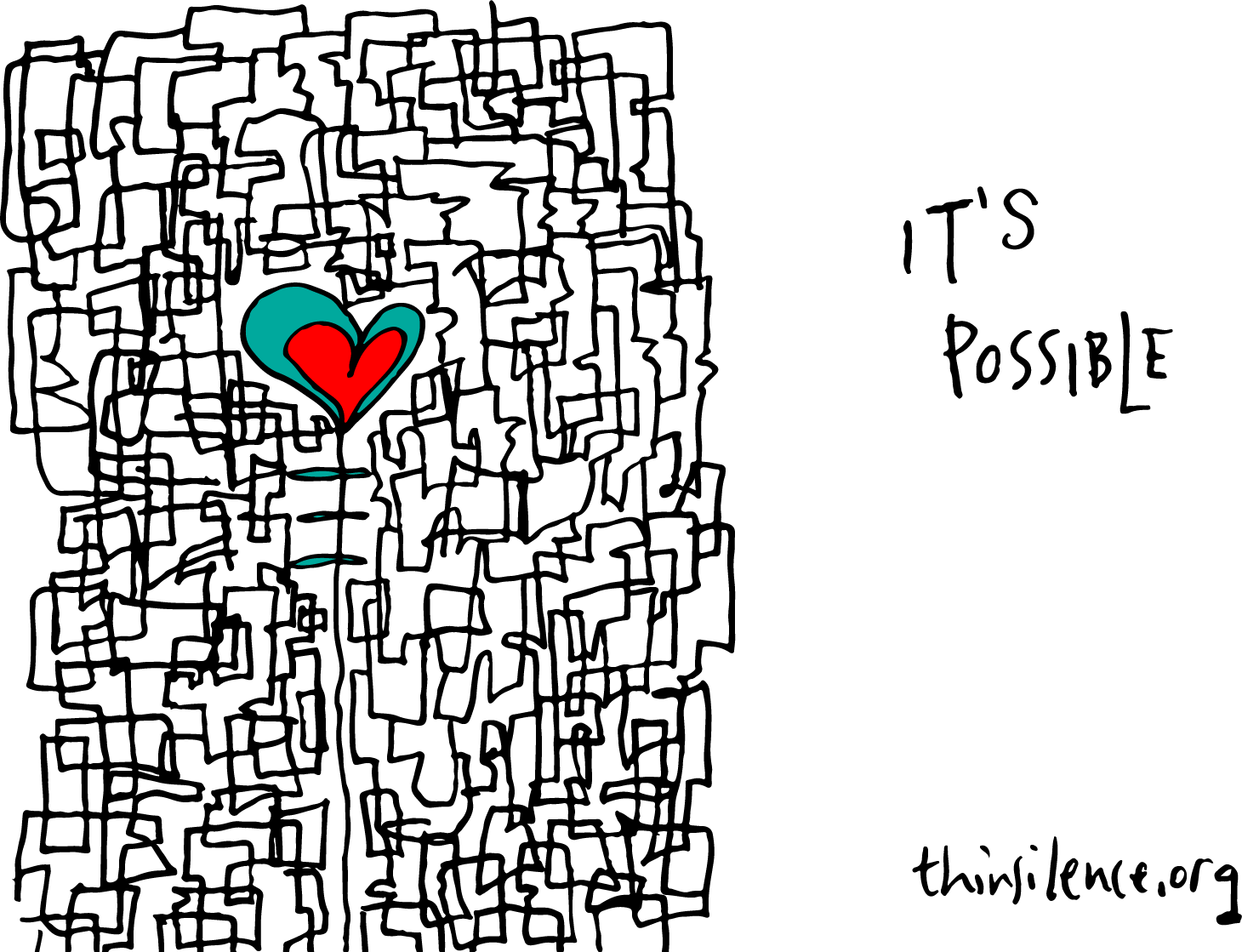
It’s possible

we must face the fact that we have a responsibility to own what’s possible. Opportunity abounds. And that’s both a scary and empowering thought*
(Bernadette Jiwa)

Probability sounds good on the face of it. You know where you stand with probability and it will be the same tomorrow.

Probability is fine until it doesn’t work any more.

Obversely, possibility sounds much less likely. Yet every probability began life as a possibility. There is nothing that exists that has has always been this way.

We are children of possibility.

Especially when we see the possibility of someone or something being more human, more caring, more compassionate, more beautiful, more helpful … and we take responsibility for it – because now we can.

And humility is the best place to grow possibility: knowing who we are and what it is we can contribute.

(*From Bernadette Jiwa’s blog: The Bounds of Possibility.)

Ready for a change?

You can’t make people change. But you can create an environment where they choose to.*
(Seth Godin)

A world that works for everyone does not exist except in the imagination. So we must feed the imagination.**
(Alex McManus)

When we recognise the world is not what it ought to be, the person who is strong is the person able to change themselves.

This is even more important when we see how we’re all being changed all the time by external forces.

Change from within is the best change.

(*From Seth Godin’s blog: Leadership.)
(**From Alex McManus’ Makers of Fire – eBook version.)

What the street can’t hear (and are you in the street?)

When we look at the world, we perceive one what is enough for our plans and actions to work and for us to get by. What we inhabit, then, is this “enough.”*
(Jordan Peterson)

If you’re not transforming your past, present, and future, then you aren’t fully experiencing the benefits of gratitude.**
(Ben Hardy)

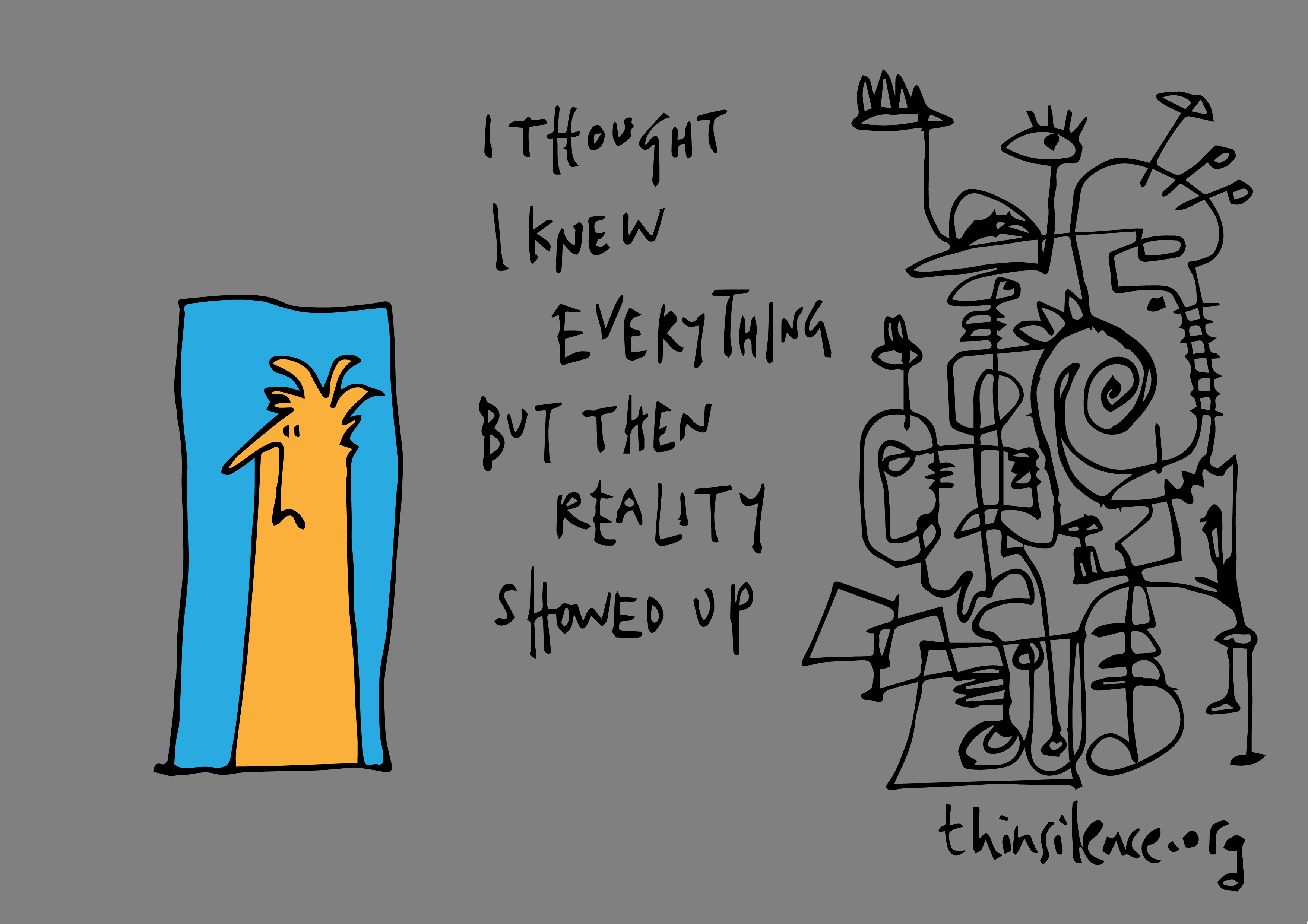
There’s certainly a lot more to see than we’re seeing.

We can end up only seeing what we need to see in order to make sense of and reinforce our worlds, perhaps a lack of curiosity, perhaps to provide a semblance of control, perhaps even to hold back the chaos we fear will overwhelm if we open up our attention to what we do not know.

With this there can also come a fixed mindset, but what about when chaos finds a way in? And chaos always finds a way in.

Only paying attention to the things we need to and nothing else includes focusing on the things we don’t have. Ben Hardy uses the term “living in the gap.” There’s a positive-fixed mindset when people can feel they’re just better or more special than everyone else, but there’s also a negative-fixed mindset:

Living in the gap forces your brain to think that things cannot change. It’s how you develop a negatively fixed mindset.**

The other kind of mindset, Carol Dweck reminds us,^ is a growth mindset, gratitude being one of the things to help grow this:in relation to the past, because we have come a long way and have learned many things; for the present, because we have capacity to be and to change things; for the future, because we can shape the future we want to live.

Hardy recommends making time at the beginning of the day to be grateful – making time to stop and look and listen, before we rush into the street.

Nassim Taleb describes those who are wise:

In their intense meditation the hidden sound of things approaching reaches them and they listen reverently while in the street outside the people hear nothing at all.^^

(*From Jordan Peterson’s 12 Riles for Life – my main read for August.)
(**From gapingvoid’s blog: We all know gratitude is the mother of all virtues. Here’s why.)
(^See Carol Dweck’s Mindset.)
(^^From nassim Taleb’s Fooled by Randomness.)

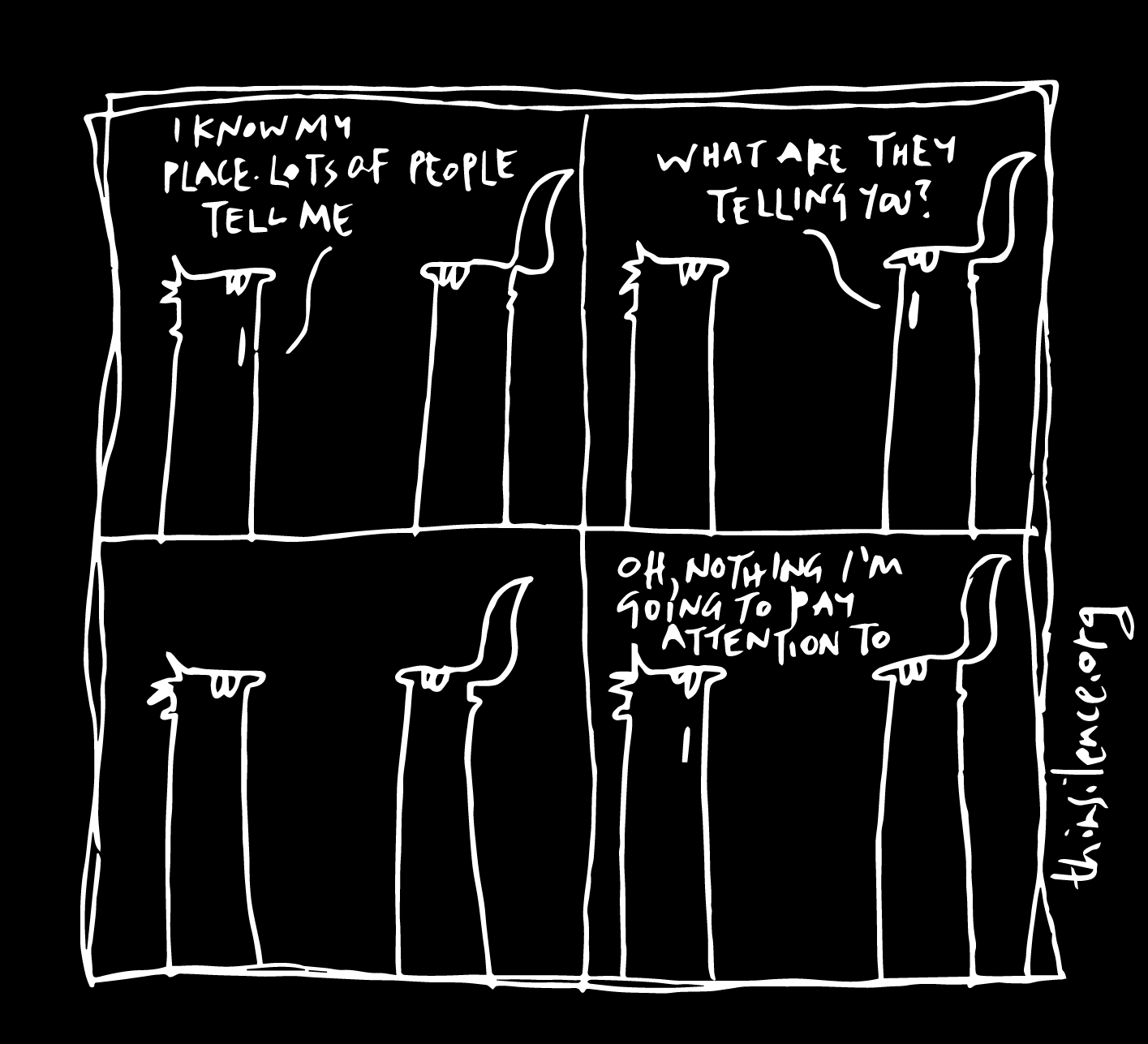
I know my place, and it is a place of many possibilities

I am finding my place and choosing my path on this incredible journey. I have BIG dreams. I see possibility. I have endless curiosity. I make discoveries. I have a feeling of wonder.*
(Susan Verde)

That’s the purpose of memory. You remember the past not so that it is “accurately recorded,” to say it again, bit so you are prepared for the future.**
(Jordan Peterson)

Here I am, wondering what I’m supposed to get up to.

It can take a lifetime to figure out, but I think that’s okay, because the important thing is to never reach the end of our curiosity, to never run out of questions, to never grow tired of discovering, to never cease growing.

In her book for children of all ages, including sixty year olds, Susan Verde helps us to see that we are more than capable of keeping moving, of not becoming stuck:

I remind myself that because I AM human, I can make choices. I can move forward.*

Jordan Peterson identifies the benefits of the human ability and practice to remember in summary. Remembering is not about the past but about the future. So, Hugh Macleod caught my eye with some words to put alongside Peterson’s:

We are all haunted by something deep inside us, and often, a lot of our best work is the result of trying to come to terms with this.^

We know our place.

We are human.

Nothing can stop us from our incredible journey.

And whilst others can help you figure out what we are supposed to get up too. Only you really know.

(*From Susan Verde’s I Am Human.)
(**From Jordan Peterson’s 12 Rules for Life – my main August read.)
(^From gapingvoid’s blog: Spiritual redemption.)

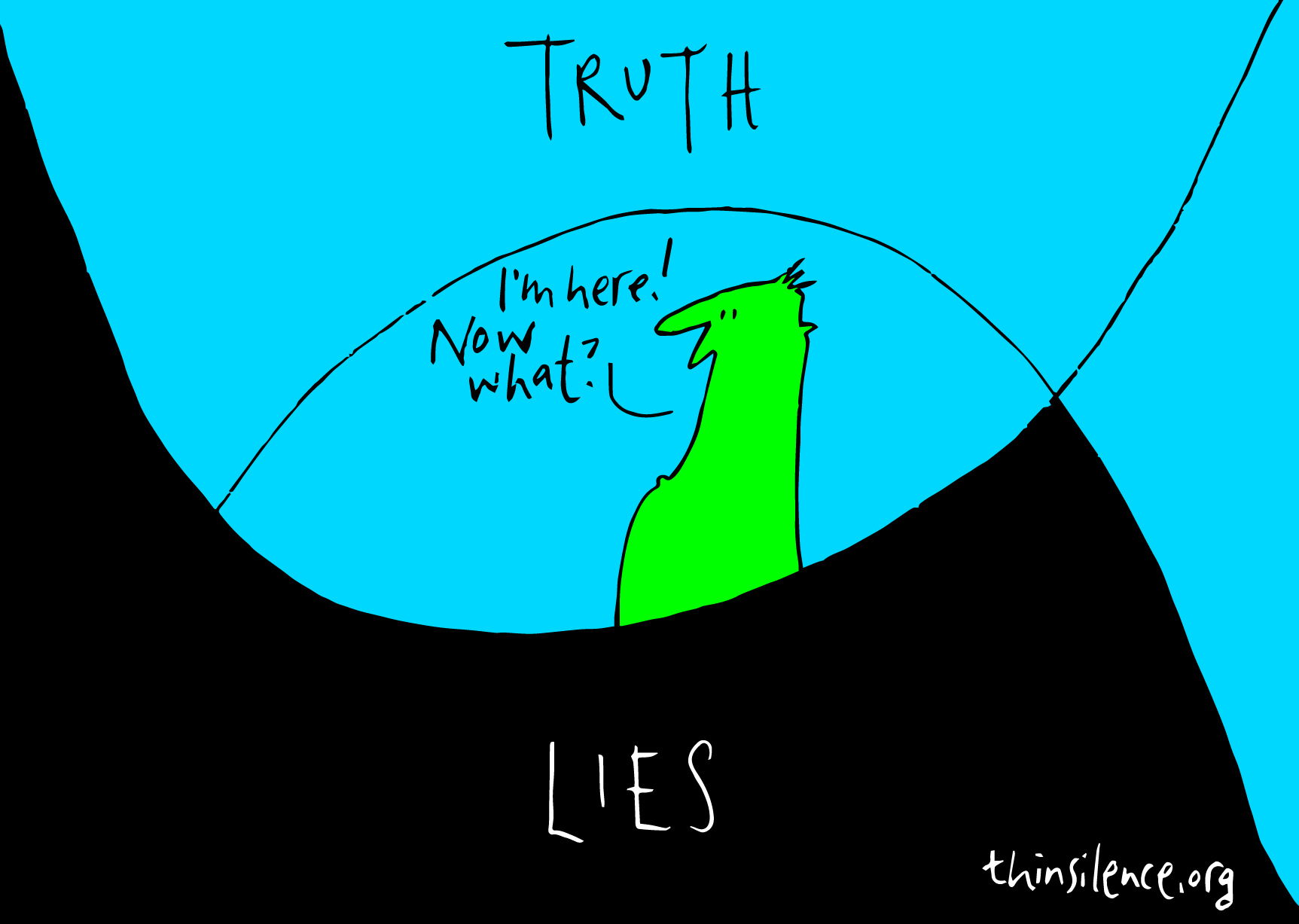
Truth be told

Nietzsche said that a man’s worth was determined by how much truth he could tolerate. You are by no means only what you already know. You are also that which you could know, if you only would. Thus you should never sacrifice what you could be for what you are.*
(Jordan Peterson)

As Rilke says: Hier zu sein ist so viel – to be here is immense.**
(John O’Donohue)

We are all richer than we know and we can be richer still.

This richness is in our complexity of being able to imagine and make and fail and keep going.

This is our truth.

Lies are easier to live with, mind: others are imaginative but not you; others make great things but no one wants what you have to bring; these others don’t know the meaning of the word failure; to keep going, then, when life has dealt such an impossible hand, is too difficult.

The lie requires you to keep moving, to be surrounded by noise, but find a place to stop and be quiet in, and listen to your heart beating, listen to the truth your life is:

It is so absolutely quiet that each person can hear the heartbeat of the person to his right or his left.^

Perhaps nothing will happen the first time you find this place, but keep going there and something will.

(*From Jordan Peterson’s 12 Rules for Life.)
(**From John O’Donohue’s To Bless the Space Between Us.)
(^From Alan Lightman’s Einstein’s Dreams.)

Immaculate conception

Meaning is the ultimate balance between, on the one hand, the chaos of transformation and possibility, and on the other, the discipline of pristine order, whose purpose is to produce out of the attendant chaos a new order that will be even more immaculate, and capable of bringing forth a still more balanced and productive chaos and order. Meaning is the Way, the path more abundant, the place you live when you are guided by Love and Truth and when nothing you want or could possibly want takes any precedence over precisely that. Do what is meaningful, not what is expedient.*
(Jordan Peterson)

You must understand this, my beloved: let everyone be quick to listen, slow to speak, slow to anger; for your anger does not produce God’s righteousness.**
(James the Apostle)

Seventeen years ago, I came across a metaphor for life that includes the dynamic and the static, how we need both, the dynamic producing the static and the static stimulating the dynamic. When either spins off into their own smaller orbit, it results in spiritism or idealism on the part of the dynamic, and traditionalism or organisationalism (amnd, dare I say, totalitarianism) on the part of the static.^

Whenever I come across similar thoughts, I stop and notice.

Wallace Stevens offers just such a possibility when he writes about the new reality coming about when the pressure of reality meets the power of imagination.

Mihaly Csikszentmihalyi writes similarly with the concepts of belonging and exploration.^^

This is what Jordan Peterson offers us in the opening words for today. We find meaning between the chaos of the new or unfamiliar and the order of the old or familiar.

Albert Einstein claimed for himself:

I have no special talents. I am only passionately curious.*^

When we realise we hardly know anything, curiosity is what we need if we are to move from the static-familiar into the dynamic-unfamiliar, understanding that we’re able then incorporate and integrate the new-familiar into who we are and what we produce.

Curiosity doesn’t try to talk over what we are becoming aware of. First of all it needs to listen and inquire and learn.

You may enjoy Rebecca Elson’s poem Theories of Everything:^*

THEORIES OF EVERYTHING
(When the lecturer’s shirt matches the painting on the wall)

He stands there speaking without love
Of theories where, in the democracy
Of this universe, or that,
There could be legislators
Who ordain trajectories for falling bodies,
Where all things must be dreamed with indifference,
And purpose is a momentary silhouette
Backlit by a blue anthropic flash,
A storm on the horizon.

But even the painting on the wall behind,
Itself an accident of shattered symmetries,
Is only half eclipsed by his transparencies
Of hierarchy and order,
And the history of thought.

And what he cannot see is this:
Himself projected next to his projections
Where the colours from the painting
Have spilled onto his shirt,
Their motion stilled into a rigorous
Design of lines and light.

(*From Jordan Peterson’s 12 Rules for Life.)
(**James 1:19-20.)
(^See Christian Schwarz’s Paradigm Shift in the Church.)
(^^
See Mihaly Csikszentmihalyi’s Creativity.)
(*^Albert Einstein, quoted in Bernadette Jiwa’s Hunch.)
(^*Rebeca Elson’s Theories of Everything, quoted in maria Popova’s Brain Pickings: The Universe in Verse.)

Some tension in-between

No tree can grow to Heaven unless its roots reach down to Hell.*
(Carl Jung)

What if it was the case that the world revealed whatever goodness it contains in precise proportion to your desire for the best?**
(Jordan Peterson)

We want the easy life, to be special in some way, for life to work for us, to be in control, and perhaps, even, to live forever.

None of these seem particularly harmful and yet history shows us that none of us are free from dealing great harm when are free to roam wherever they will.

We need to be tethered and the tether is a five corded hawser, a means of focusing more powerfully our hopes and wants:

Life is hard;
We are not as special as we think;
Our lives are not about us;
We are not in control;
We are going to die.

The tension created between what we want and how life is where we find ourselves most alive and useful and caring, where our greatest joys and the world’s deepest needs meet.

Slackness, the separation of one from the other, is what we have to avoid.

(*Carl Jung, quoted in Jordan Peterson’s 12 Rules for Life.)
(**From Jordan Peterson’s 12 Rules for Life.)