heroes and guides and others

10 what to be today

Last night, I got to be part of a customer focus group helping a cafe figure out the direction to develop in.

We rocked!

Coming up with all kinds of brilliant ideas to make the business work better.

Reality is, we weren’t the heroes in this story.

They would be the cafe owners, taking the brave step of admitting they need help.

‘All the hero has to do to make the story great is struggle with doubt, face their demons, and muster enough strength to destroy the Death Star.’*

And we weren’t the guides.

These would be the consultants, who’ll wisely make sense of all they gather.

‘The strongest character in the story isn’t the hero, it’s the guide.  Yoda.’*

We were the others, helping the heroes and guides to make the right choices, and, hopefully, wise enough to know this was our role.

At some point, we’ll get to be the hero in the story – when we must do the stuff we must do.

And other times, we will be the guide in the story – Obi-Wan Kenobi helping Luke, knowing when to step out.

A lot of the time, we’ll be amongst the others in the story – willing to play a small part.

But the important thing is: we will not be an other for all our lives.

Each must figure out when the story demands we be a hero or a guide and turn up.

(*From Donald Miller’s Scary Close.)
maps and the online life

9 the universe

Denis Wood illustrates how maps aren’t the same as the reality they sign and symbolise:

‘What lies between the roads isn’t aether … : it’s tobacco and loblolly pine and patches of red dirt rolling over the Piedmont, or rugose mats of corn dotted with crows and John Deeres … .*

When it comes to observing online trends, Sherry Turkle sees the possibility of ‘cyberintimacies [sliding] into cybersolitudes,’ how those who’ve grown up inside the technology ‘come to accept lower expectations for connections and finally, the idea that robot friendships could be sufficient unto the day’**

There are also those who love technology but are appear heretics to the growing patterns and habits which eschew contact for texting and messaging.

These passionate renegades bring randomness to the the systems establishing themselves.  À la Nassim Taleb, who claims, ‘when some systems are stuck in a dangerous impasse, randomness and only randomness, can unlock them and set them free.’^   Taleb goes further: ‘You can see here that an absence of randomness is guaranteed death.’

If Alex McManus is correct, then the quality of our connecting will determine the kind of world we shape:

‘Contact with outsiders, significant events, and epiphanies are inbound forces that drive change.’^^

Significant change will not take place without significant contact.

Heretics and passionate renegades wanted.

(*From Denis Wood’s The Power of Maps.)
(**From Sherry Turkle’s Alone Together.)
(^From Nassim Taleb’s Antifragile.)
(^^From Alex McMaus’s Makers of Fire.)

a blog about technology and who we are (together)

8 i don't care

‘[P]art of me believes when the story of earth is told, all that will be remembered is the truth we exchanged. The vulnerable moments.  The terrifying risk of love and the care we took to cultivate it.’*

Relationships are a tightrope experience.

I’m out here, trying not to fall to the right for inauthentic, nor the left as unprepared to change.

Then there’s the risk I take that at any moment you could shake the wire.

The truth is, I’m sometimes tempted to impress.  At other times, I know my soul is small and I refuse change.

Funny, I don’t want to be any of this.  I’m a work in progress.  I guess we all are.  I guess we are as a species.

‘I’m the kind of person who wants to present my most honest, authentic self to the world – so I hide backstage and rehearse honest and authentic lines until the curtain opens.*

What if our advancing technologies explain what we long for most: the hard work in labs, teamwork around a problem, laughter around lunchtime, having a drink in the pub before heading home – all the “stuff” around the technology is the stuff that counts?

We’ve come to a time Sherry Turkle’s names the robotic moment:

‘At the robotic moment, the performance of connection seems connection enough.’**

Check out the videos of Paro and Spot.  Our interactions with robots tell us everything about what it is to be Human and not what it feels like to be a robot.  (Remember the outrage from some at Spot being kicked?)

The same technology makes it possible to avoid one another – I can get more done if I message and text than if I phone someone – AND also to connect – a Facebook message in the morning confirms I can meet up with someone for a chat at the end of the day (I can fine-tune this with him through the day if necessary).

What if who we are most visible in our relationships?  I am more Geoffrey when I am with you than when I am on my own?   This is where things get messy.  You’ll definitely see my mess if I really turn up, if I manage to stay on the tightrope.

But it’s on the tightrope where I find hope.

(*From Donald Miller’s Scary Close.  When the history of our time is written, it won’t be about the fiscal dexterity of the British Government which catches the attention, but our recognition of and compassion towards those caught up in potentially the greatest Human migration for half a century.)
(**From Sherry Turkle’s Alone Together.)

knock, knock

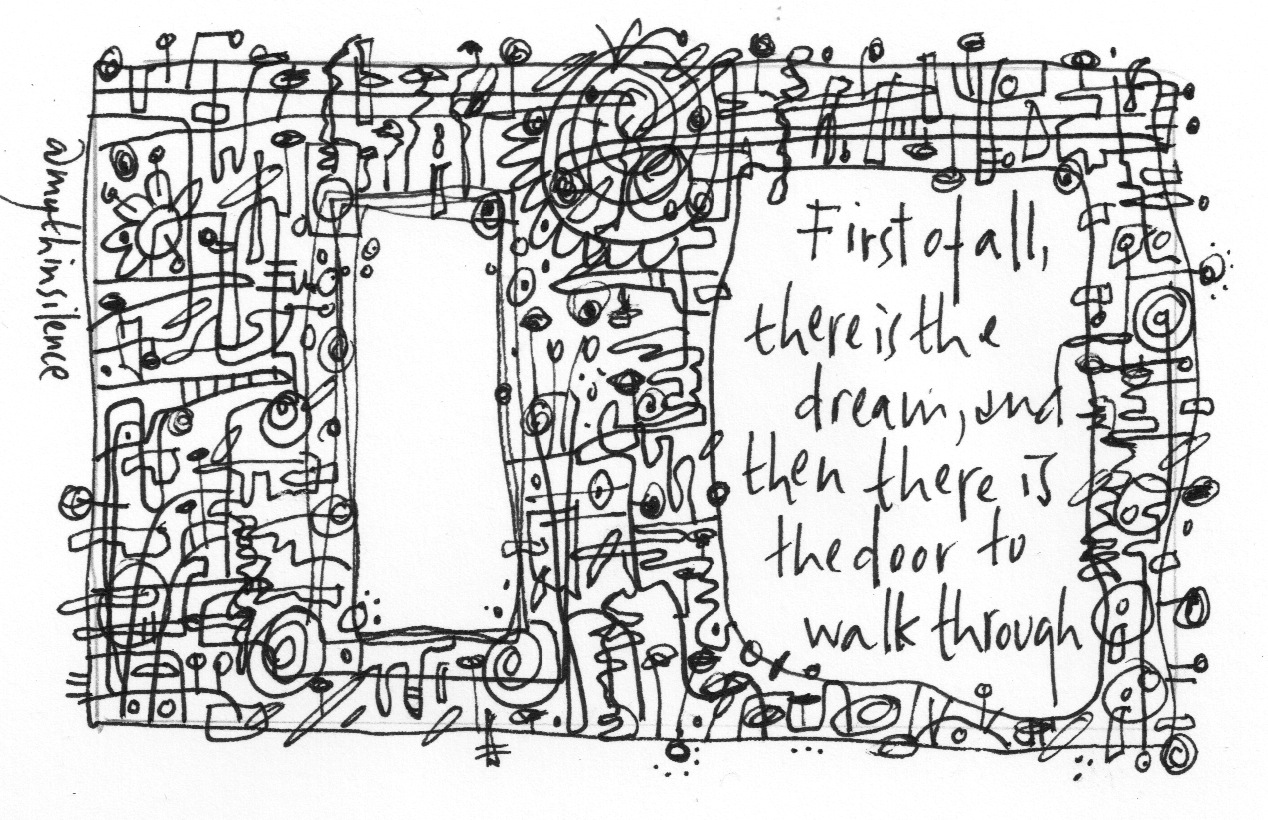
7 first of all

‘Art is a vast democracy of habit.’*

There many kinds of doors.   Passing never becomes easier.  If it was easy, it wouldn’t really be a door to something new, something more.

More difficult, though, is to live with the regret of never moving through the doors which present themselves; there’ll also come a day when there’ll be more doors provided.

‘But retreating from doors drains the human spirit far more than charging through them does.’**

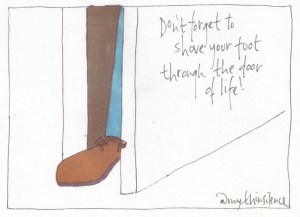
7 don't forget

All can learn and grow skills which keep them moving through doors.  These skills are many, connected in different patterns,making them unique to individuals.  If you know yours, you know how to move forward.

As Twyla Tharp offers in the opening line, working on habits is something available to all, opening up the possibility for great art.

And all around, there are dreamwhisperers who live to help others know their skills and move:

‘they awaken hope.  They connect meaning to action.  They craft narratives that release human energy.  They make new maps that guide us into places where there are no paths.’^

(*From Twyla Tharp’s The Creative Habit.)
(**From John Ortberg’s All the Places to Go.)
(^From Alex McManus’s Makers of Fire.)

my door

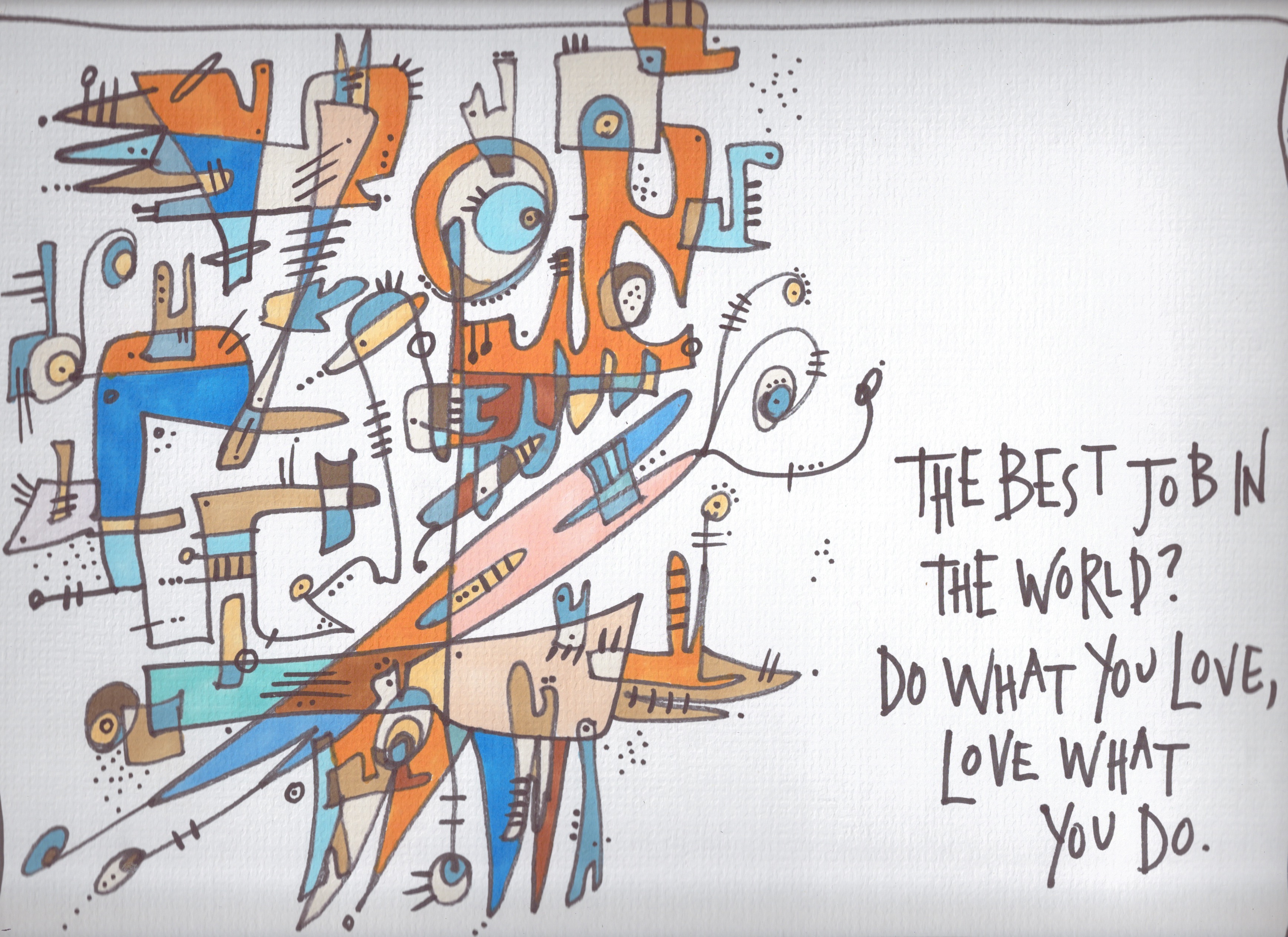
6 the best job

You will know your door.

You’ll think it the most incredible, demanding, engaging purpose in the universe, and you’re staggered when you think you really get to do this.

It’s more than likely others won’t see it this way at all, but no matter.  What is important is you finding your door … and others finding theirs.

My door?

I was reminded again, today, I have the best job this side of Pluto.

I am a dreamwhisperer.

I get to awaken others to their dreams.

(Goosebump time.)


life, you’ve got to love it

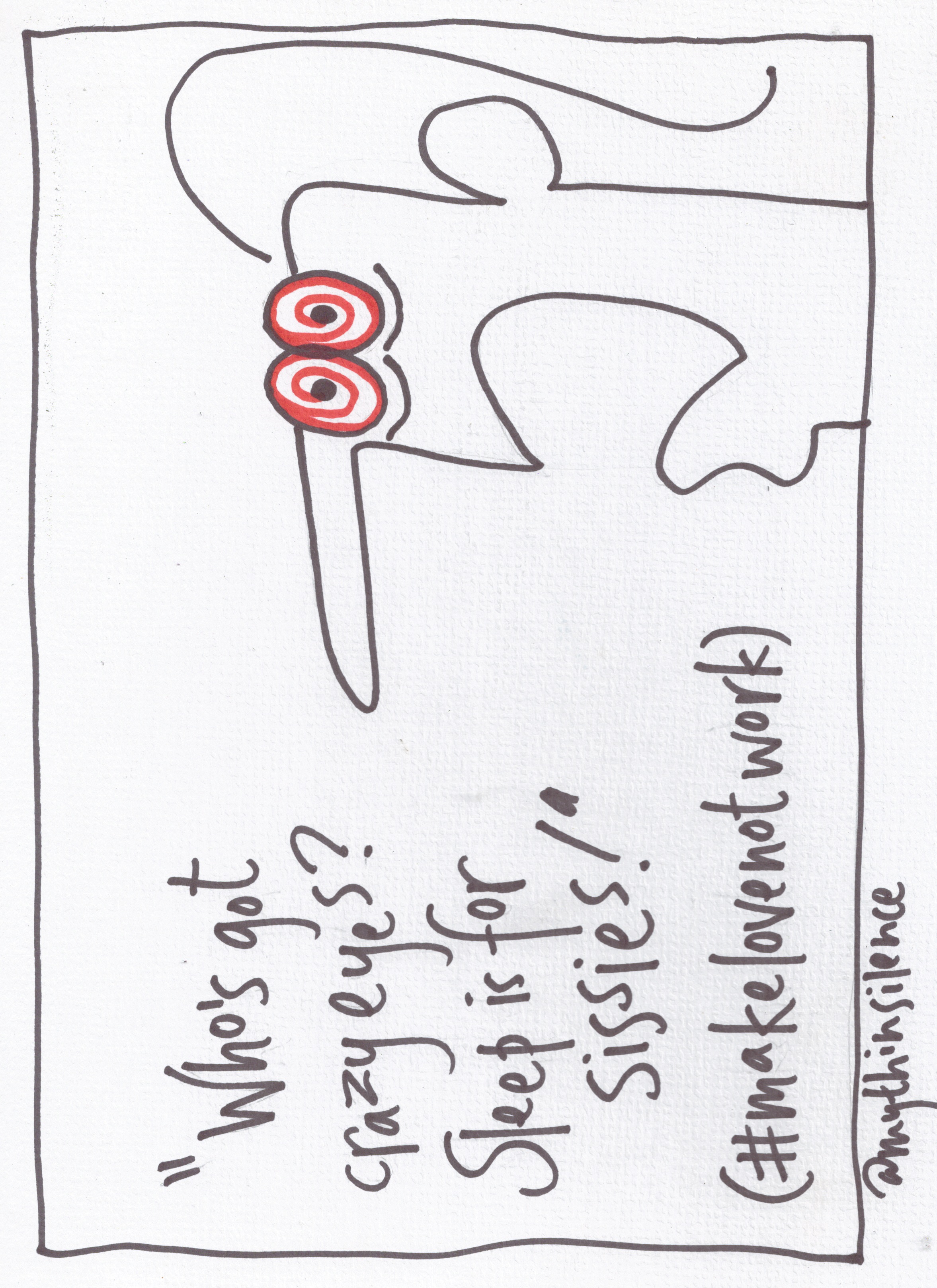
5 who's got crazy eyes

The slight seventy-two year old figure sits stroking Paro, her robot baby harp seal.  Able to turn towards a human voice, respond to touch and speak, the sociable robot brings comfort to its owner who appears to respond to the needs of Paro:

‘In attempting to provide the comfort she believes it needs, she comforts herself.’*

Clinical psychologist Sherry Turkle is wrestling with claims that Humans will move into a sex and love relationships with robots.  Turkle tells this story of Paro and also of a conversation she had with a woman in her mid-twenties who confesses she’d trade in her demanding boyfriend for a robot displaying a caring attitude towards her.

Is there a greater experience and sense of fulfilment for Humans beyond love: to special others, to a larger tribe or community, and to some purpose we love which is greater than ourselves.

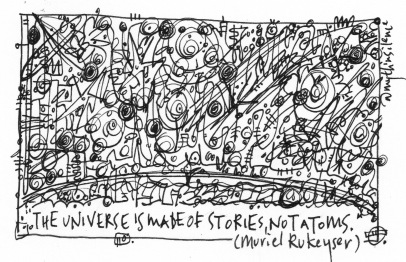
It seems as though love is most amazing thing the universe has birthed.

‘Love is the emergent capacity of empathetically including others within our own self-identity.  It is the context for all faith and love.’**

(*From Sherry Turkle’s Alone Together.)
(**From Alex McManus’s Makers of Fire.)

more stories we tell ourselves

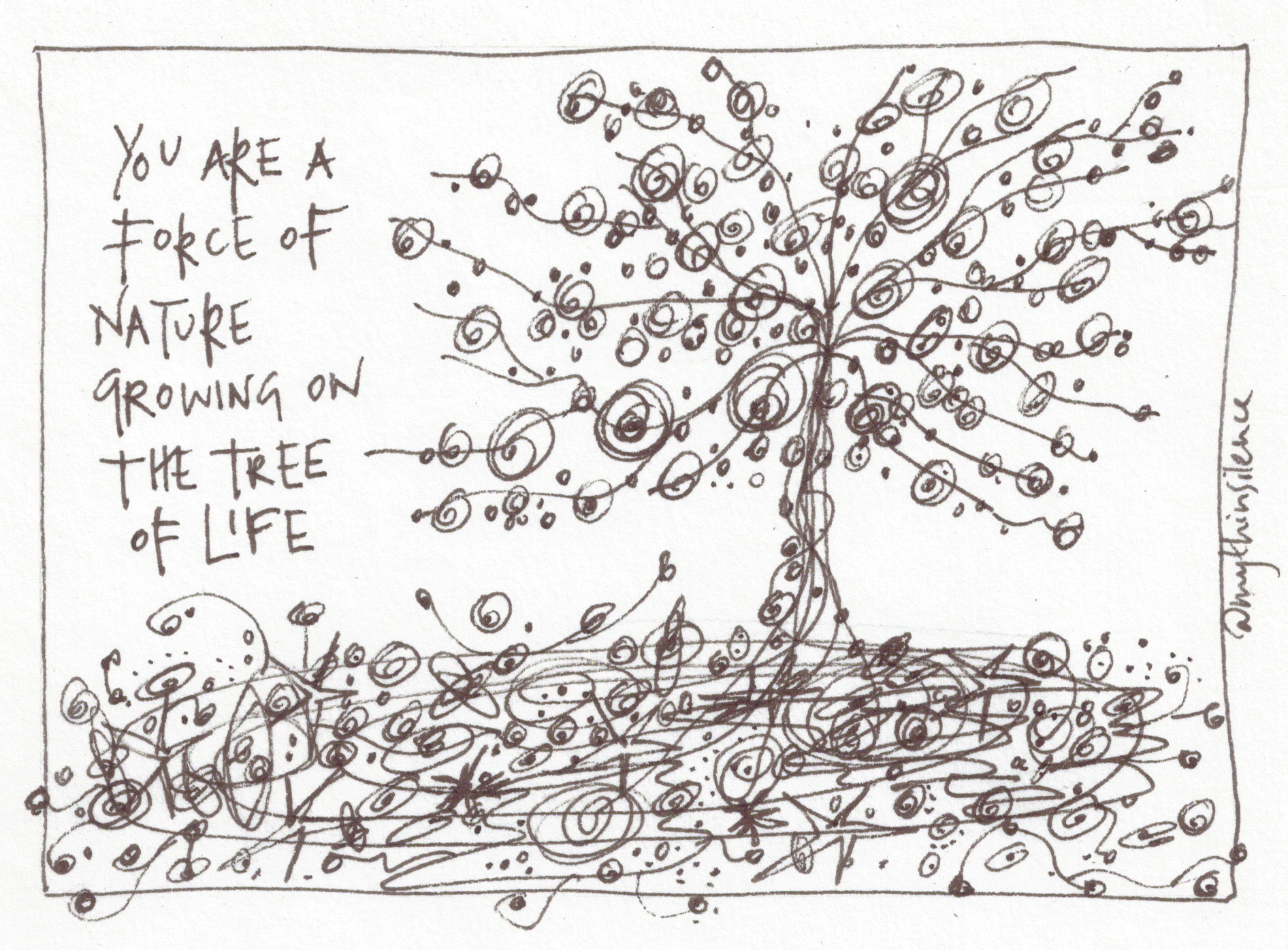
4 you are a force

We have the opportunity to write an infinite story, but time and time again write a finite one.

(Like the infinite game, an infinite story aims to include as many as possible for as long as possible, and when the rules get in the way, they’re changed.  On the other hand, the finite game is exclusive: some win, and the winners make the rules – most don’t even get to play.)

Yuval Noah Harari contends that Humans stepped outside their biological instincts to create larger cooperative networks: ‘humans created imagined orders and devised scripts.  These two inventions filled the gaps left by our biological inheritance.’*

These devices, though, have created inequality and distinction not based on reality: men and women, blacks and whites, residents and aliens, rich and poor, and all the others.  They’re all bubbles we create to live in.

The same devices can write a different story.

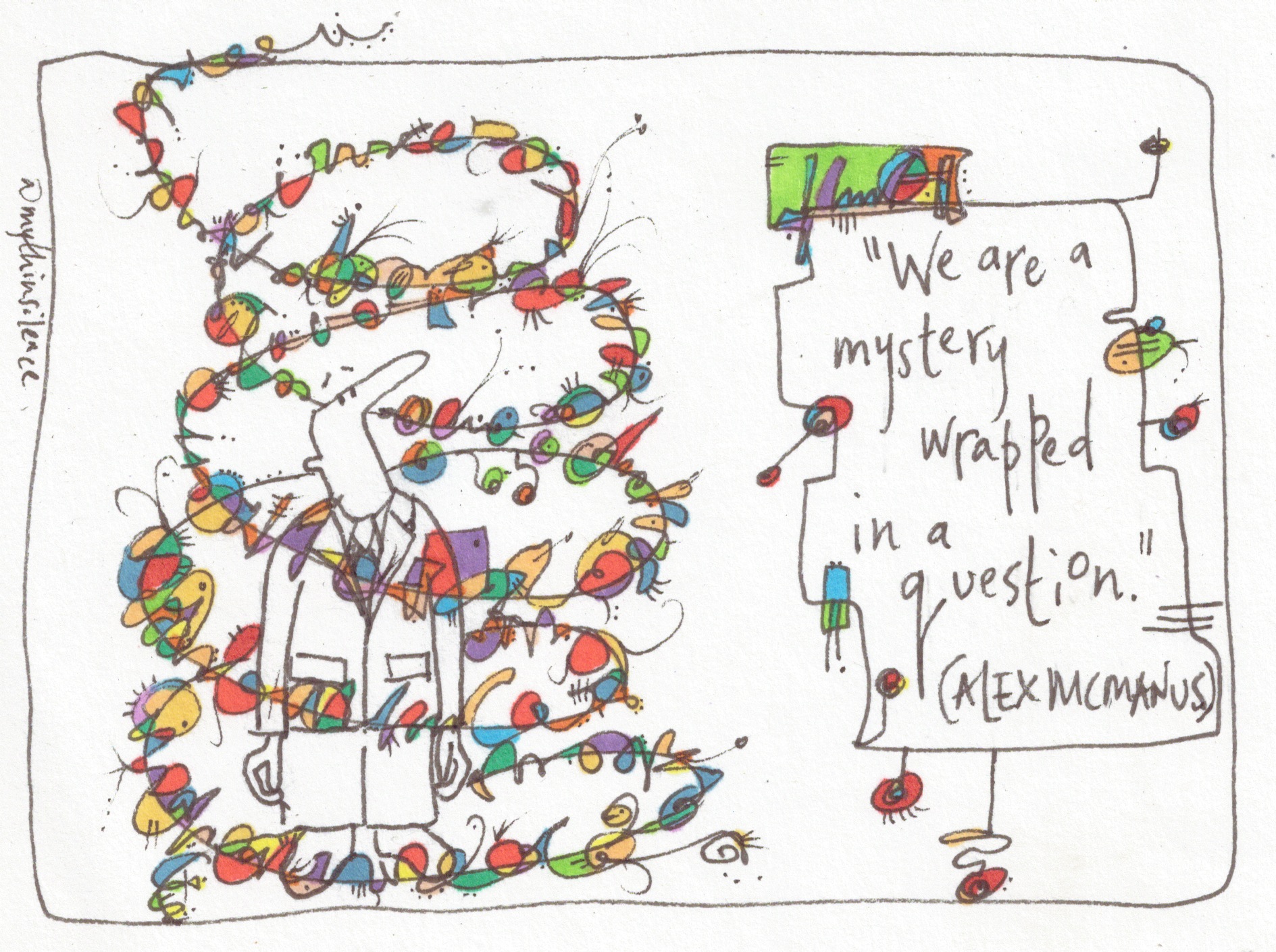
My friend Alex** claims we are Human Becomings.  Those who see the fictions, see through them, aiming to script a better story, are such Becomings.  The attempts might be clumsy, but when we keep in mind all can thrive, we’re heading in the right direction: hope for outsiders and insiders of the stories in the bubbles.

(*From Yuval Noah Harari’s Sapiens.)
(**See Alex McManus’s Makers of Fire.)


when is a door not a door?

3 we are a mystery

When it’s a wall.

‘The great question in life is whether the universe has a door in the wall.’*

Syrian refugees camp out in a Hungarian railway station hoping a door will open into Germany; the world is impacted by the personal reality of the refugee crisis in the story of three year old Syrian boy whose body is found on a Turkish beach – his family – all thought to have perished – had hoped for a door into security in Europe.

‘The great question in life is whether the universe has a door in the wall.’*

It seems, we have some say in how the question is answered.**

We look for the doors in life so we might pass through to something different, something more.  But our lives can be doors for others, too.

‘We are partners in the unfolding of the universe.’^

Frederick Buechner wrote of how we find our place or purpose “where your deep gladness and the world’s deep hunger meet.”

Each of us is a different kind of door for others.

‘I suggest the word “inhumane” is a sign that we are discovering a meaning to life.  Our purpose is to reject  inhumanity and build a civilisation that is consumed by love.  In other words, our purpose is to become human.’^^

Today, I decide again to be door and not a wall.

(*From John Ortberg’s All the Places to Go.)
(**As I write, the city council of my home city of Edinburgh is waiting to offer sanctuary to the most vulnerable of Syrian refugees, but they are waiting for the British Government to be a door rather than a wall.)
(^From Joseph Jaworski’s Source.)
(^^From Alex McManus’s Makers of Fire.)


small is the new big

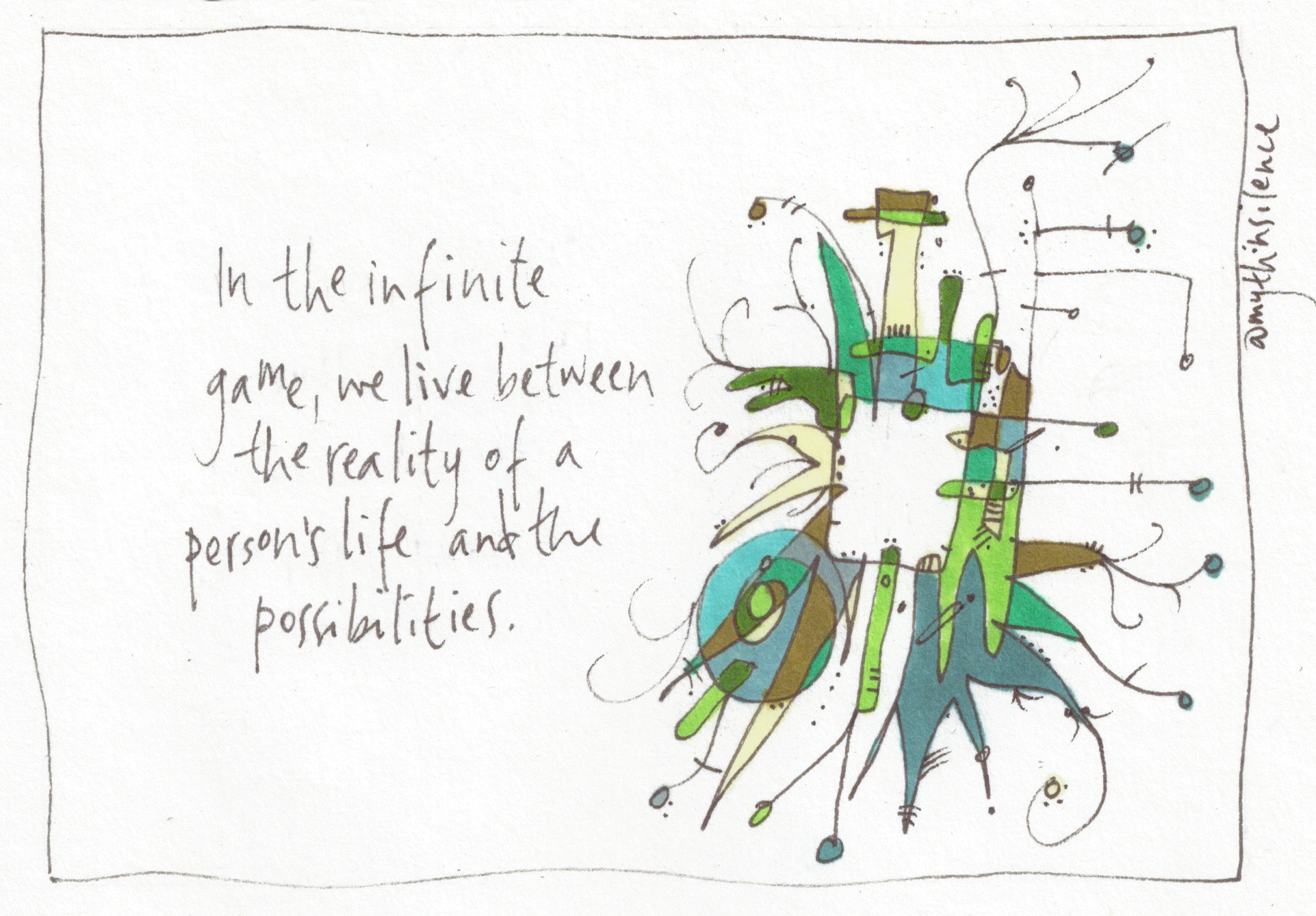
2 in the infinite game

This is becoming real on many levels.

It can be true in terms of the long tail, someone’s art,* business, and a person’s life.

Iincreasing understanding doesn’t lead to being a know-it-all, but to becoming a connector, maven, or marketer.**  Humility means it’s the development of skill which is focused on, not the packaging.

‘Creativity is a skill and a habit.  You need to learn and practice the skill, which then becomes a habit.^

I love this because it holds out the hope of increasing understanding for anyone.

When we follow our curiosities, develop practices, take these deeper, then we create habits of skill.  It means there are as many creativities as there are people.  Being informed by something beyond ourselves – a value, a need, a philosophy, a god – can turns this into something even more groundbreaking and impactful.

None of this implies great size.

This is an infinite game, welcoming as many as possible to play and keeping the game going for as long as possible.*^

‘Today, you can have a narrow movement, a tiny movement, a movement in a silo.’^^

(*For long tails think, Etsy, PinterestNoiseTrade and more.)
(**In The Tipping Point, Malcolm Gladwell names three kinds of people who make a difference: connectors know lots of people and get a buzz from connecting them; mavens know lots of things and love to share helpful things in the right places; and salespeople love to see someone won over and joining them in what they love – I offer marketer as an alternative term, though am still looking for a better one.)
(^From Edward de Bono’s How to Have a Beautiful Mind.)
(^^From Seth Godin’s Tribes.)
(*^For more on infinite games, check out James Carse’s Finite and Infinite Games.)

future sensers

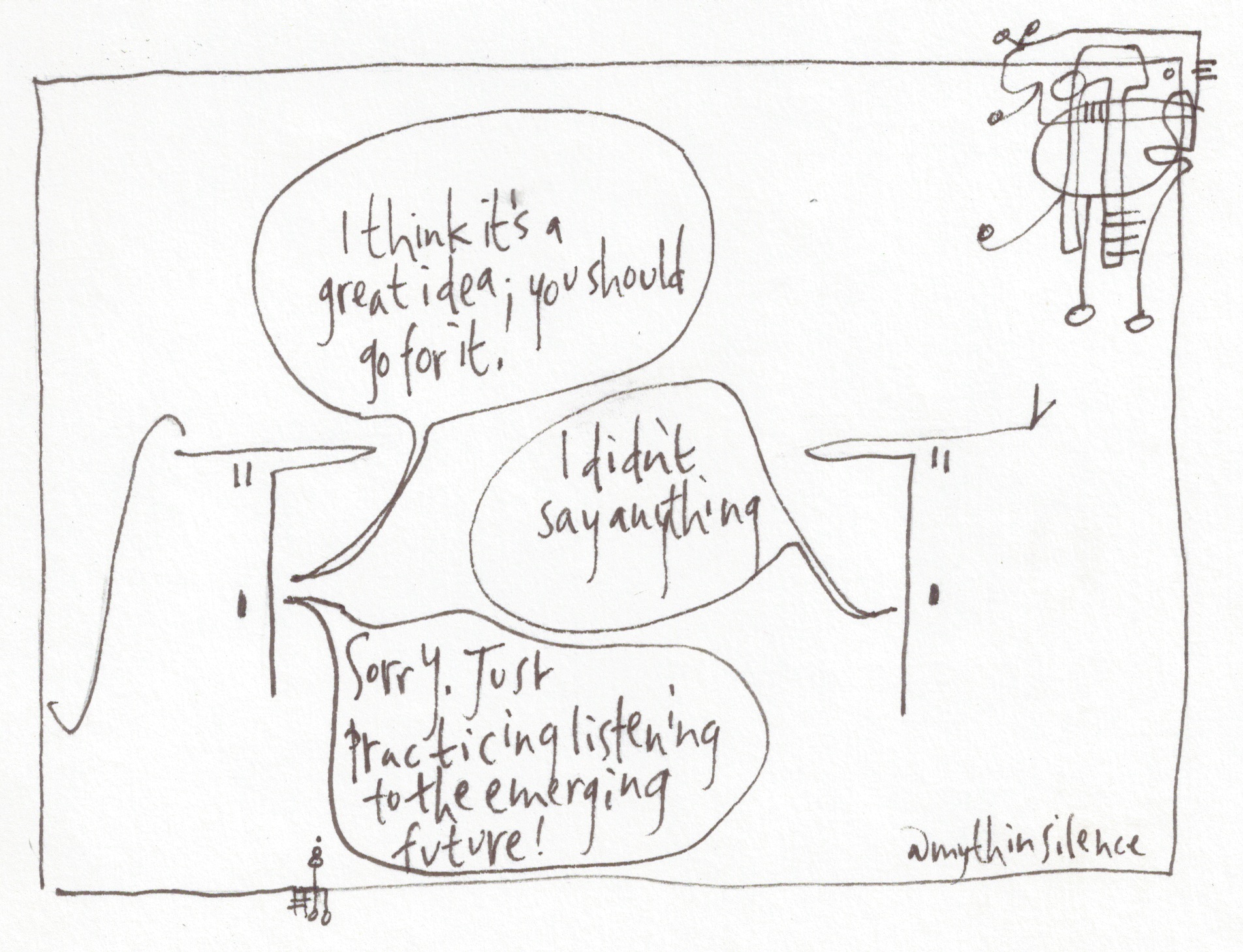
1 i think it's

Humans appear to be set up for sensing the future: ‘the heart may perceive future events before the brain does’ … ‘at the very least it implies the brain does not act alone in the perception of future events’.*

Many species of animal display senses which makes it possible for them to anticipate approaching danger – weak signals from a future which is not quite upon them.  When we think in these terms, it isn’t surprising that we have sensing skills too.  Jospeh Jaworski proffers:

‘Human beings are exquisitely designed to sense the future, shape it, and bring it to reality – to actualise it when necessary and meaningful, as it desires.’*

What fascinates me is the possibility of shaping a future.  There’s no such thing as the future – I guess Jaworski isn’t suggesting there is.  More likely, we’re expressing an awakening of our perceptual skills towards expected, possible, and preferred futures. It is the possibility of preferred futures which catches my attention.

We can all develop “good eyes,” making it possible for us to see more of what’s happening, and to develop the skills to see and shape a better future with foresight, intention, and love.

(*From Jospeh Jaworski’s Source.)