Umvelt

Umvelt or umwelt: the world as it is experienced by a particular organism.

The Scottish naturalist John Muir, born in Dunbar just along the coast from where I’m typing, declared:

‘When we try to pick out anything by itself, we find it hitched to everything else in the universe.’*

Everything is present to everything else, but we often do not know it.

As I come into contact with this tree or this hill, as I watch this bird swoop across my eyeline or this hornet flit around the garden, I become connected.  When I stop objectifying the world around me and allow for all this presence to teach me, perhaps there will be a better world in me, rather than the climate change I am:

‘Could a national park be seen as a place of poetry?  Line by line, step by step, we wander along a path unknown to us, but in the process of discovery, we come to recognise ourselves in each tree, each plant, each bird and face our longing to reconnect with a larger world beyond ourselves.  Rather than fear the wilderness ahead, even climate change, we are present inside it.  Fear is replaced with engagement.  Relationships are forged, resiliency as a species is enhanced.’**

For other thoughtful reflections on the relationship between ourselves and trees, see Maria Popova’s Brain Pickings post Consider the Tree, and Jacques Goldstyn’s poignant children’s story of the child whose best friend is a tree Bertolt.

(*John Muir, quoted in Terry Tempest Williams’ The Hour of Land.)
(**From Terry Tempest Williams’ The Hour of Land.)

Except one …

Listen to your life.  See it for the fathomless mystery it is.*
(Frederick Buechner)

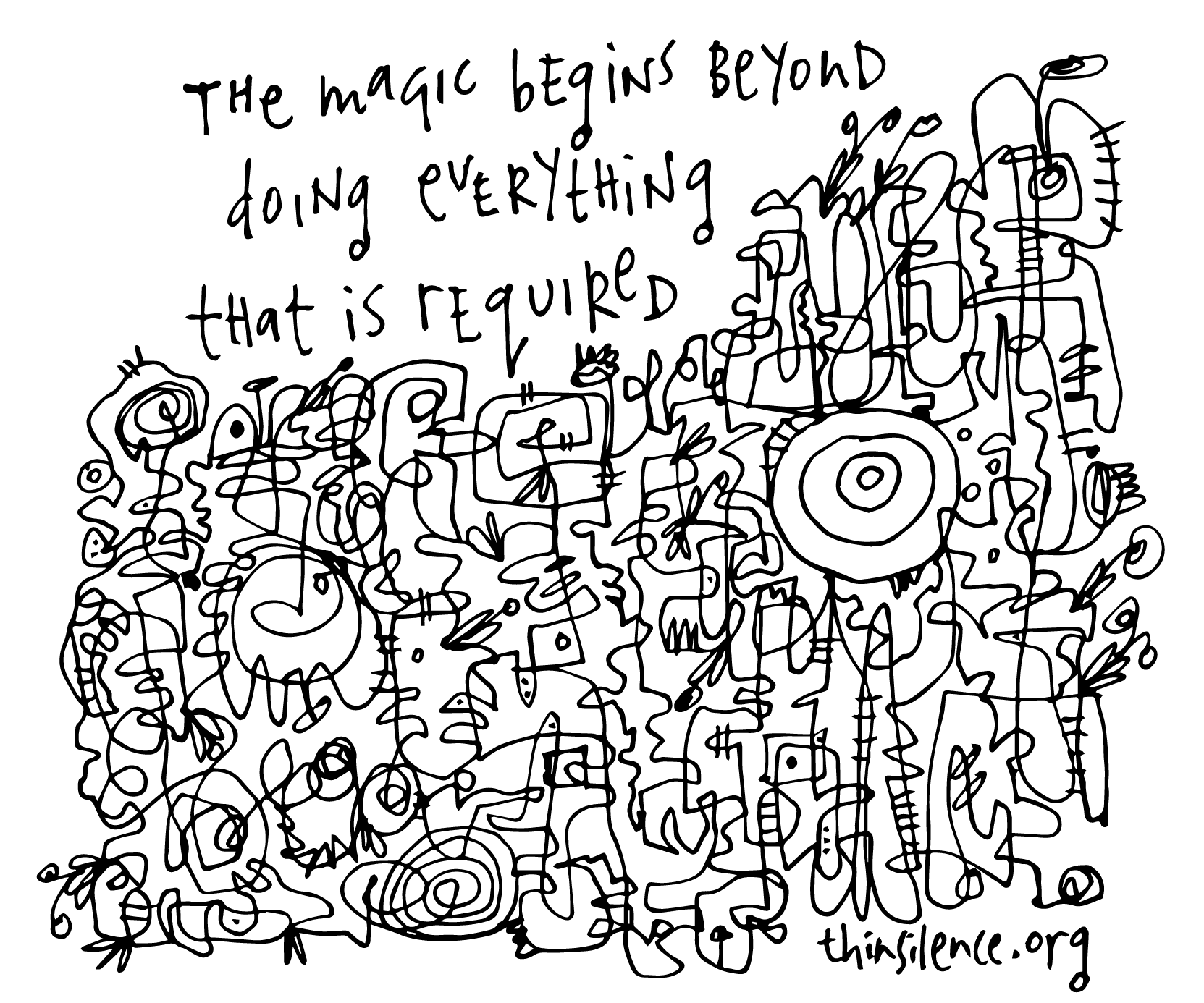
We can do everything right and still not really live.  Doing everything that is required is not the end goal.  To do it with flair is way more interesting.  We’re going to take a look at where that flair comes from.

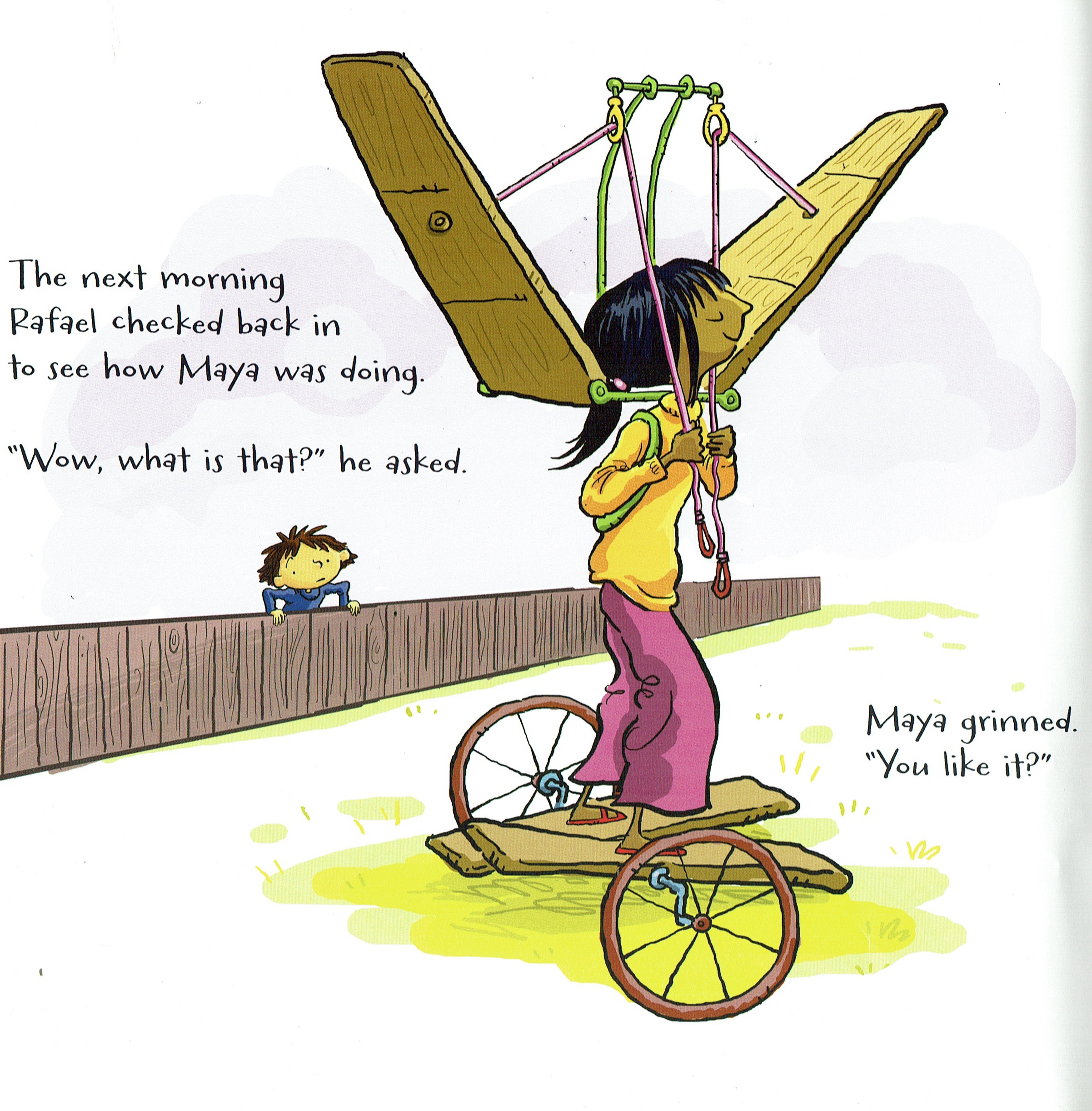
In their lovely children’s book Going Places about a go-cart competition, Peter and Paul Reynolds tell a tale of what can happen if we go beyond the rules.

In school, Rafael is the first to grab a go-cart kit for the “Going Places contest.”  When he got home, out came the kit and the instructions.

Rafael was very pleased when his cart looked like the one in the instructions.

He then wondered how his friend and next-door neighbour Maya was getting on.  She hadn’t even started, instead she was intent on sketching a bird and then watched it dreamily fly away.

John O’Donohue introduces his book To Bless the Space between Us with these words:

‘There is a quiet light that shines in every heart.  It draws no attention to itself, though it is always secretly there.  It is what illuminates our mind to see beauty, our desire to seek possibility and our hearts to love life.  Without this subtle quickening our days would be empty and wearisome, and no horizon would ever awaken our longing.’**

Maya is gazing at the horizon of possibilities but there is something lit within her that has already been noticed in her sketching the bird.  She is about to bless the space between herself and Rafael.

When Rafael told Maya that she had not made a go-cart, she replied, “Who said it HAD to be a go-cart?”

Rafael gets it: the instructions didn’t say they couldn’t team up, either: his blessing for Maya

O’Donohue continues:

‘Our passion for life is quietly sustained from somewhere in us that is wedded to the energy and excitement of life.  This shy inner light is what enables us to recognise and receive our very presence here as a blessing.  We enter the world as strangers who all at once become heirs to a harvest of memory, spirit, and dream that has long preceded us and will now enfold, nourish, and sustain us.  The gift of the world is our first blessing.’**

As Maya gazes at the bird in flight, some words from Frans Johansson catch my gaze as they wing there way past me – he encourages me to “take my eye of the ball” for a while:

‘Conscientiousness is […] the type of behaviour that insures execution, but also allows us to miss great ideas, projects, improvements or connections that keep popping up around us.  Unfortunately, by rigidly pouring all of our effort into one approach, we miss out on the unexpected paths to success.’^

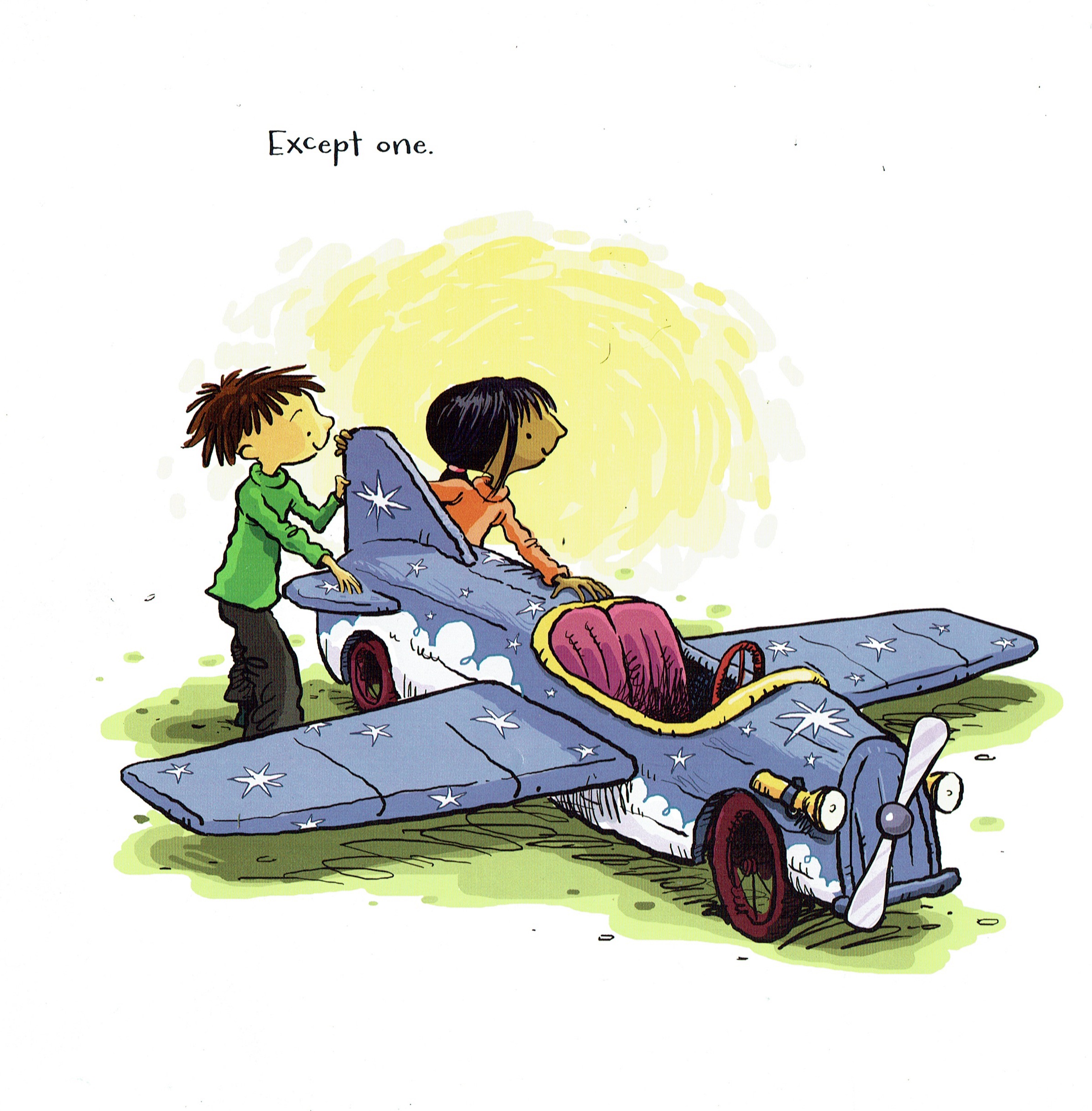
The other children had followed the instructions for the go-cart race and so all their machines look the same.

Except one.

While the others roll along the ground as fast as they can, Maya and Rafael take to the air.  They win the race and come to a halt by the school lake, and on seeing a frog jumping by the edge, wonder …

O’Donohue is saying that, deep down, we each have the light that makes it possible to move beyond … and beyond again.

(*Frederick Buechner, quoted in the Northumbria Community‘s Morning Prayer.)
(**From John O’Donohue’s To Bless the Space Between Us.)
(^From Frans Johansson’s The Click Moment.)

Sacrilege

we are amazing, mysterious beings leading amazing, mysterious lives, and we need to keep discovering new ways to remind ourselves of this, in spite of all the evidence to the contrary*
(Hugh Macleod)

There is an art to making history, and it has everything to do with storytelling, and good storytelling is personal, layered, symbolic, and complex.’**
(Terry Tempest Williams)

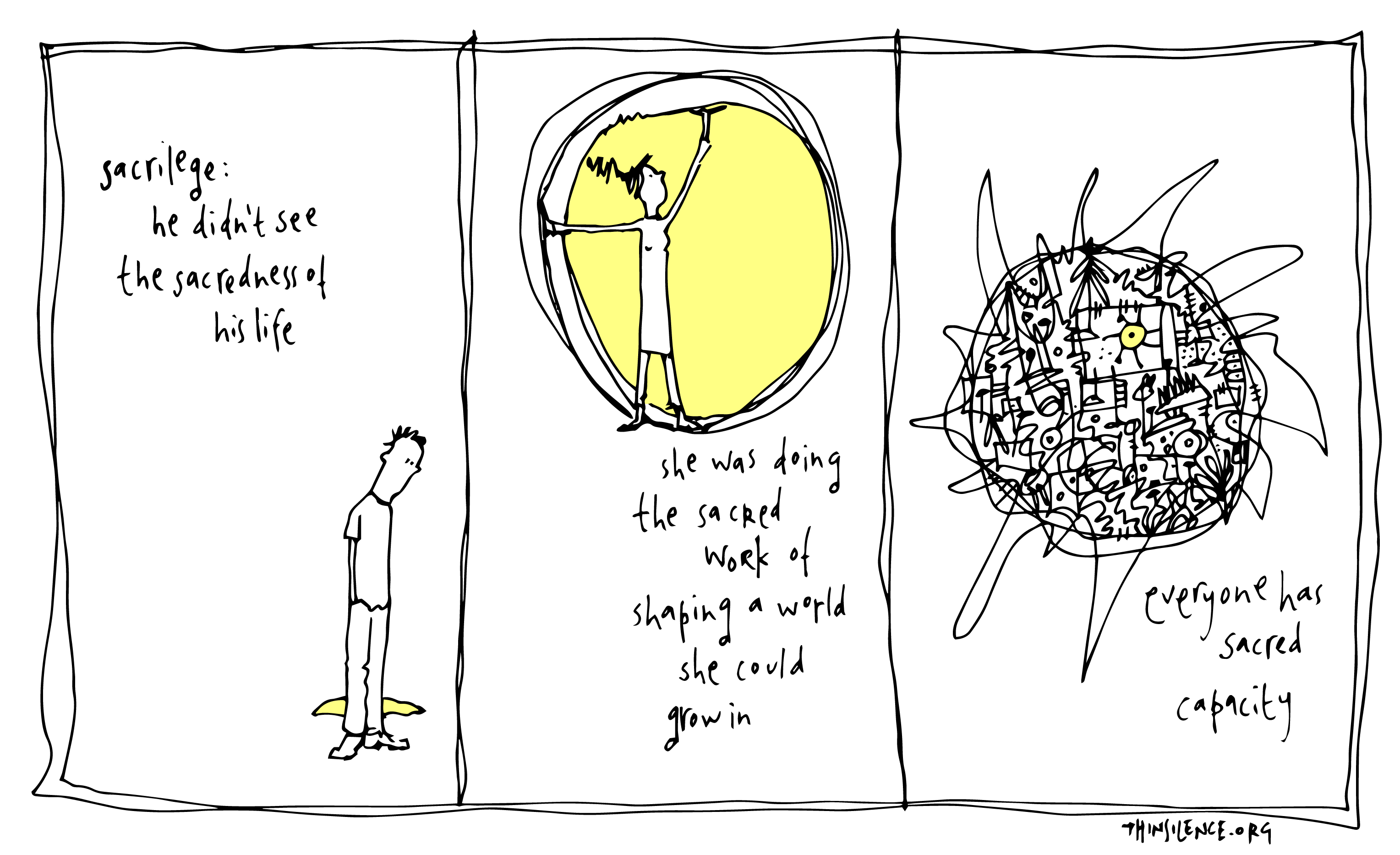
Sacrilege is the stealing of sacred things.

Often it is we ourselves who are the thieves.  Not to explore our amazing, mysterious lives is self-theft:

What we must do is often lurking in the darkness; we must dream it into the light.

We know life is special but we’re often distracted from this, perhaps only catching a glimpse of what it can be in someone else’s painting or poem or story or movie … .

I suspect dysfunctional religions are to blame, too, when they say “it has to be this, it can’t be that.”

In seeing our lives as stories we’re creating and capturing the rituals of our lives.  They make it possible to bring our attention to the significant-ordinary, the sacredness of everything.  When you think about being here on this planet, and everything required to make this possible, it is pretty amazing.  I’m very happy to live with this.

We are creators of the sacred when we bring the power of our imagination to play upon the pressure of reality.^  Ben Hardy writes about it this way:

‘You design your worldview by proactively shaping your external inputs, such as the information you consume, the people you surround yourself with, the places you go, and the experiences you have.  Most people, however, reactively and mindlessly respond to whatever environments they find themselves in, and then develop a worldview leading to ineffective behaviour and victimhood.’^^

Hardy is saying we blame our environments for what happens to us but we have allowed those environments to be formed:

‘If you don’t shape your environment, it will shape you.’^^

This is a fragile life but there is also an antifragile life.*^  We need ways of reminding one another that we are the creators of our own environments of possibility, in which we then interact and develop.  This is where rituals and stories and the sacred become important.  If this is true then Joseph Jaworski’s words make sense:

‘Each of us has the capacity for awe, wonder, and reverence.’ *^

Each can develop this capacity.  It won’t arrive in an app, though, or some “twelve days to your perfect life” book – although these may be included from time to time.

It comes from forming the vital practices of life that allow us to create profound environments with which we can explore life-in-all-its-fullness.

(*From gapingvoid’s blog: Seeking: A Higher Love.)
(**From Terry Tempest Williams’ The Hour of Land.)
(^See Maria Popova’s Brain Pickings: Wallace Stevens on reality, Creativity, and our Greatest Self-Protection from the Pressure of the News.)
(^^From Ben Hardy’s Willpower Doesn’t Work.)
(*^See Nassim Taleb’s Antifragile.)
(^*From Joseph Jaworski’s Source.)

Truth isn’t what it used to be

Go peaceful
in gentleness
through the violence of these days.
Give freely.
Show tenderness
in all your ways.*
(Paul Field)

When we declare ourselves wise, we’re probably not.

Even when we think we’re right about something, it’s likely we’ve missed something.

There’s truth that is the reality of things and there is the truth of what can be imagined into being.

There’s a lot of truth, then, much of it yet undiscovered.

The best truth of all sees good things being produced for others, enabling them to flourish.  And the same goes for the world as for people.

New truths will always uphold the best of the truth we already know and question the truth that seeks to imprison.

Some think they possess the truth or they want us to follow their truth.  They may even hurt us to make this so, something Terry Tempest Williams brought me face-to-face with this morning as I read:

‘In Iran, Shiva Nazar Ahari, a journalist, is arrested on charges of waging war against God; she is serving a four-year prison sentence.  Lolo, a Tibetan singer, arrested for recording an album that called for Tibet’s independence and the return of the Dalai Lama, is sentenced to six years in prison.  Agnes Uwimana Nkusi, a Rwandan and editor of the independent newspaper Umurabyo, was arrested on grounds of corruption after publishing opinion pieces criticising the government; she is now serving a four-year prison sentence.  Mikola Statkevich, a politician and presidential candidate from Belarus, was sentenced to three years’ labour for organising mass protests against lifting presidential term limits.’**

New truth may challenge established truth.

It appears that each of us is capable of producing new truth when we are most creative, wherein we are connecting with what lies beyond ourselves:

‘A […] way of attaining union lies in creative activity, be it that of the artist, or of the artisan.  In any kind of creative work the creative person unites himself with his material, which represent the world outside himself.’^

The more creative we are the greater the possibility of resistance, as John O’Donohue allows for when he writes:

‘A life that wishes to honour its own possibilities has to learn too how to integrate the suffering of dark and bleak times into a dignity of presence.’^^

Perhaps this is why we fall in line with what others are doing or to “copy and paste” their ideas – Hugh Macleod asks:

‘And since when did avocado toast become a thing … ?’*^

We need your truth and we need to figure out better ways of bringing our truth together into a better world.

(*Paul Field, quoted in the Northumbria Community‘s Morning Prayer.)
(**From Terry Tempest Williams’ The Hour of Land.)
(^From Erich Fromm’s The Art of Loving.)
(^^From John O’Donohue’s Eternal Echoes.)
(*^From gapingvoid’s blog: How to create an innovation mindset.)


Walking to somewhere new

Modernity: we created youth without heroism, age without wisdom, and life without grandeur.*
(Nassim Taleb)

Young human beings need exercise win imagination as they need exercise in all the basic skills of life, bodily and mental: for growth, for health, for competence, for joy.  This need continues as long as the mind is alive.**

She felt young again, no matter what the calculation of her years had witnessed as an increase.

The day was new and there were things to explore.

Once again she had prepared for this.  In the morning, as she did every morning.  In humility … gratitude … faithfulness, the path this day was for her, opened up as her mind became alive with possibility.

Even the smallest and most mundane things finding their place and purpose.

‘If life is a journey our lives become tangible, with goals we can move forward, progress we can see, achievement we can understand, metaphors united with actions.’^

(*From Nassim Taleb’s The Bed of Procrustes.)
(**From Ursula Le Guin’s Words Are My Matter.)
(^From Rebecca Solnit’s Wanderlust.)

Nor can foot feel, being shod*

The geographical pilgrimage is the symbolic acting out of an inner journey.  The inner journey is the interpolation of the meanings and signs of the outer pilgrimage.  One can have one without the other.  It is best to have both.**
(Thomas Merton)

We have never been here before.

Climate change.  Will we change?^
(Terry Tempest Williams)

We do not have to walk the earth any longer.  It has become interrupted by pavement, by wheels, by earbuds … .

Walking, though, is more than an outmoded form of getting from A to B.  We connect with the earth and the Earth with us and she has much to teach us.

(*From Gerard Manley Hopkin’s poem: God’s Grandeur.)
(**Thomas Merton, quoted in Rebecca Solnit’s Wanderlust.)
(^From Terry Tempest Williams’ The Hour of Land.)

Why am I doing this?

Man’s attitude toward nature is today critically important because we have now acquired a fateful power to alter and destroy nature … but man is a part of nature, and this war against nature is inevitably a war against himself.*
(Rachel Carson)

Go well, do well, my children!  Support all endeavours that promise a better life for the inhabitants of our planet.  Cherish sunsets, wild creations, and wild places.  Have a love affair with the wonder and beauty of the Earth!*
(Stewart Udall)

It isn’t gratitude if it doesn’t go anywhere – if something doesn’t return in some form of thankfulness to the giver or is shared with those we notice most of all and – never to be left out – with our wonderful planet without which we would not be here.

If we’re not moved in these ways, we’ll keep consuming and the planet will keep shrinking and shrinking as species disappear, as water acidifies, as beauty is perceived by the powerful only to be a mantle hiding commodities we want to get at.

(*From Terry Tempest Williams’ The Hour of Land.)

The night is large and full of wonders*

That’s how you are going to fix the world – with your own gifts and talents.**

I have just read of three people with different missions.

Colin Kaepernick is the American footballer who wants to bring attention to racial injustice and is the face on Nike’s controversial advertising campaign, an embodiment of the campaign’s slogan:

“Believe in something.  Even if it means sacrificing everything.”^

Tim DeChristopher is an environmental activist who, in 2008, became Bidder 70 in Utah’s Bureau of Land Management land auction, purchasing 22,500 acres for a price tag of $1.8 million against the fracking companies (he didn’t have the money):

‘He had successfully interrupted the auction.  In a brave and imaginative act of civil disobedience, one your man with a love of wilderness and a message from his generation on how fossil fuels are contributing to climate can change, thus robbing them of a lovable future, not only exposed the cosy relationship between industry and government, but challenged it.’^^

Evelyn Glennie shares in a TEDtalk of her life-goal:

My aim is to teach the world to listen.’*^

Three quite different and meaningful missions towards a better world.

This better world will not arrive by one big-all-encompassing mission or purpose but by thousands upon thousands of small and meaningful ones, like yours.

In our night, these are the many wonders.

(*Lord Dunsany, quoted in the Northumbria Community‘s Morning Prayer)
(**Ken Sleight, quoted in Terry Tempest Williams’ The Hour of Land.)
(^Quoted in Bernadette Jiwa’s blog: Making Sense of Nike’s Controversial A Campaign.)
(^^From Terry Tempest Williams’ The Hour of Land.)
(*^From Evelyn Glennie’s Tedtalk: How to Truly Listen.)

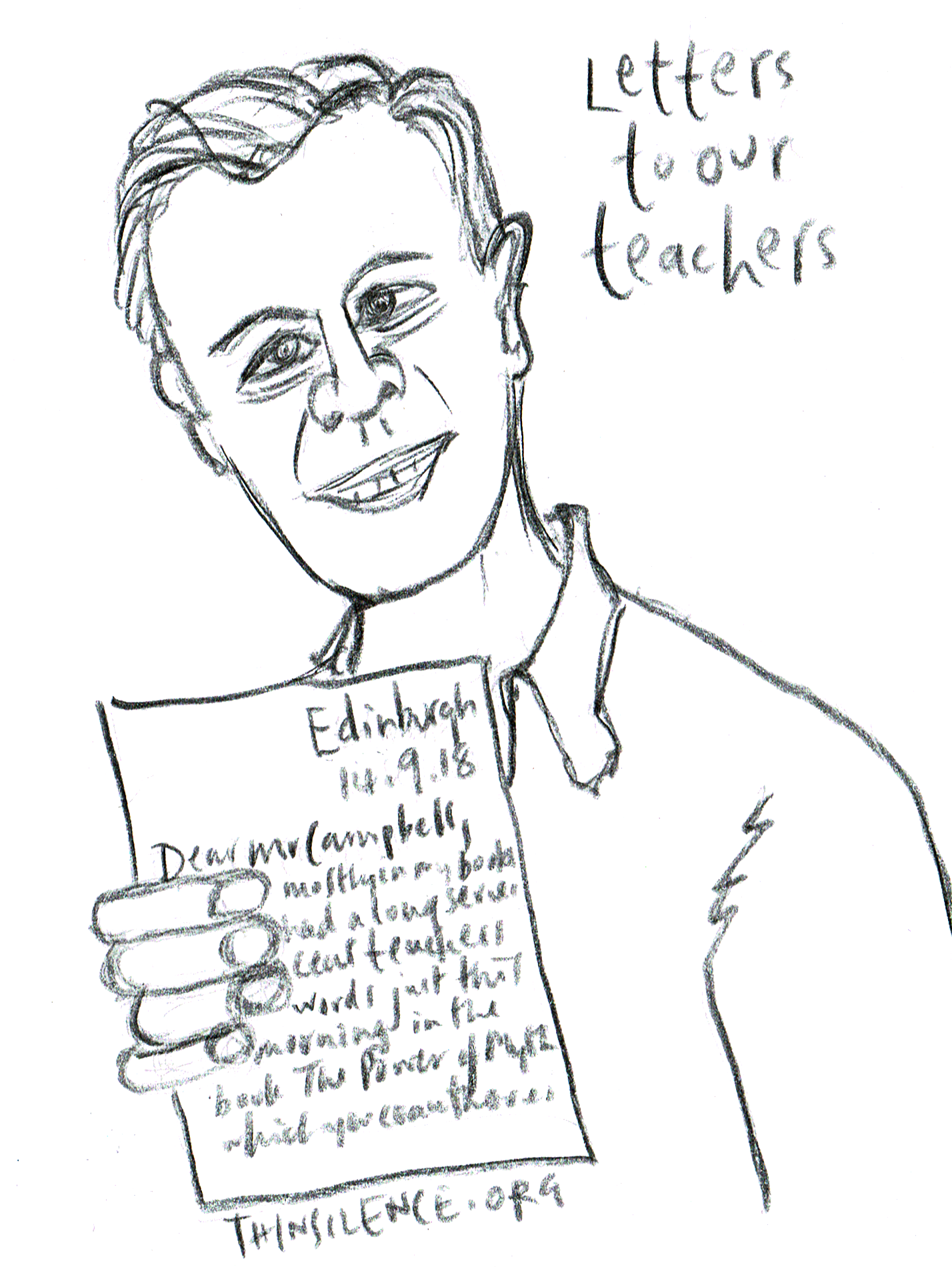
Dear Mr Campbell …

In my own life, mostly it comes from books, though I have had a long series of magnificent teachers.*
(Joseph Campbell)

Dear Mr Campbell,

I read these words only this morning in The Power of Myth which you co-authored with Bill Moyers.  Your words are true for me as you are one of my magnificent teachers.

Other words had already captured my attention:

‘I don’t think there is any such thing as an ordinary mortal.  everybody has his own possibility of rapture in the experience of life.  All he has to do is recognise it and then cultivate it and get going with it.  I always feel uncomfortable when people speak about ordinary mortals because I’ve never met an ordinary man, woman, or child.’*

When I read this, I’d just been thinking about how the quests for honour, nobility and wisdom are open to all and I believe the truth of your words is more accessible now than ever before in human history.

I am writing to you from 2018 but you spoke these things in 1986 just before you died.  Only a few years later the Internet would herald a bold new world of connection and information for turning into knowledge and action through their imagination and creativity. There’s always been formal and informal learning but the possibilities of learning from beyond the institutions of education have become exponential.  Even now I am engaging in a Bootstrappers Workshop (I think you’ll enjoy exploring what these blue words make possible) in which I watch videos from a thoughtful practitioner (another of my magnificent teachers), after which I’m encouraged to engage in some personal work and connect with hundreds of others through message boards.

You knew this about humans because of your love of mythology.  Some see myths as untruth but I read somewhere** that myths are true in generally true, though not specifically true.  If I may quote you back to yourself, this appears to dovetail with what you are saying here:

‘No, mythology is not a lie, mythology is poetry, it is metaphorical.  It has been well said that mythology is the penultimate truth – penultimate because the ultimate cannot be put into words.’*

Out of this love of mythology emerged your hero’s journey, ‘the adventure of being alive’* – another idea of yours that has been misunderstood.  Nassim Taleb has described himself as a “sceptical empiricist” but he understands what you’re saying, one time writing in a book inspired by the myth of Procrustes:

‘A man without heroic bent starts dying at the age of thirty.’**

Taleb is writing from his understanding of the universe as a random and even chaotic place, and you are also writing these things I’ve been quoting back to you in relation to a life of chance and how we need to find our centre within:

‘The place is find is within yourself. […] There is a centre of quietness within, which has to be known and held.  If you lose that enter, you are in tension and begin to fall apart.’*

In the Bootstrappers Workshop there’s a little video extra from Elizabeth Gilbert and she is distinguishing between hobbies, jobs, careers and vocations – and I’m thinking hobbies for interest, jobs for income, careers for purpose and vocations for legacy.  I believe it’s our myths, though, that hold these together – how we connect to ourselves and to others and to our world.

Perhaps one of the greatest things you have taught me is how people the world round have common hopes and aspirations and meanings and they have been exploring these in myths and stories for thousands of years.  Our myths are where we’ll find or greatest plans and hopes for humans and our world.

I close my letter of gratitude with some words from the writer Neil Gaiman:

‘Albert Einstein was once asked how we could make our children intelligent.  “If you want your children to be intelligent,” he said, “read them fairy tales.  If you want them to be more intelligent, read them more fairy tales.”‘^^

Yours gratefully,

Geoffrey Baines.

(*Joseph Campbell, from Joseph Campbell and Bill Moyers’ The Power of Myth.)
(**See Karen Armstrong’s Twelve Steps to a Compassionate Life.)
(^From, Nassim Taleb’s The Bed of Procrustes.)
(^^From Neil Gaiman’s Art Matters.)

A life of multiple perspectives

I am facing the mountain, this glorious indifference.  I am watching as someone is watching me.*
(Terry Tempest Williams)

You’re finding out something as you read that will be vitally important for making your way in the world.  And it’s this: THE WORLD DOESN’T HAVE TO BE LIKE THIS. Things can be different.**
(Neil Gaiman)

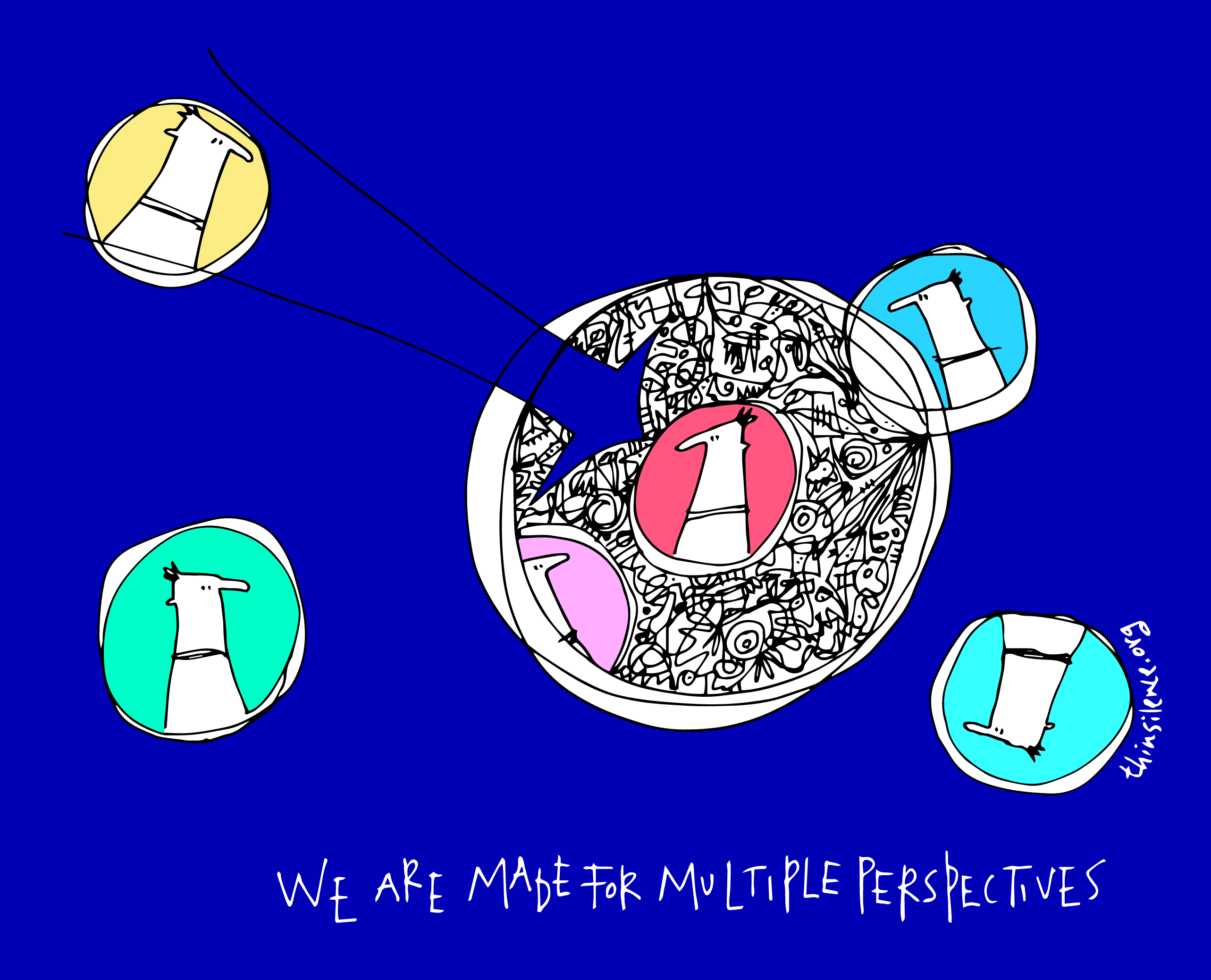
Rush is a perspective, slow is another.  Kind is a perspective, so is indifference and “rules-first.”  When we notice our perspectives, we can change them for better ones.

Brian Solis writes:

“Once you see things through a lens of possibility and growth, you’ll wonder why you didn’t see it sooner.”^

He continues:

“I’m learning to see that perspective is a gift.”^

We’re very gifted.

As Richard Rohr writes, everything changes when we are able to see things differently:

‘So get ready for some new freedom, some dangerous permission, some unexpected happiness, some stumbling stones, some radical grace and some new and pressing responsibility for yourself and for your suffering world.’^^

If the world isn’t as you hope or want, change perspective, see it from a different place.

Another perspective is love:

‘Love is not primarily a relationship to a specific person: it is and attitude, and orientation of character which determines the relatedness of a person to the world as a whole, not toward one ‘object’ of love.’*^

It feels like Martin Buber is writing on love as perspective when he pens:

‘Love is a cosmic force.  For those who stand in it and behold it, men emerge from their entanglement in busy-ness; and the good and the evil, the clever and the foolish, the beautiful and the ugly, one after another become actual and a You for them, that is liberated, emerging into a unique confrontation.’^*

Perspectives are learned, we can change them, the purpose for which Neil Gaiman makes, above, and Alan Burdick points us towards, here:

“But empathy is a sophisticated trait, a mark of emotional adulthood: it takes time.  As children grow and develop, they gain a better sense of how to navigate the social world.  Put another way, it may be that a critical aspect of growing up is learning how to bend our time in step with others.”⁺

Another perspective is closer, to move closer to what has caught our attention, to notice more, and maybe then it will reach our hearts.  This in turn will bring us to another perspective, that of experimenting or actioning, from where we see differently again.

Our perspectives make it possible to make more of life, not only for ourselves but also for others.

(*From Terry Tempest Williams’ The Hour of Land.)
(**From Neil Gaiman’s Art Matters.)
(^Brian Solis, writing for gaping void’s blog: The importance of an open mind.)
(^^From Richard Rohr’s Falling Upward.)
(*^From Erich Fromm’s The Art of Loving.)
(^*From Martin Buber’s I and Thou.)
(⁺Alan Burdick, quoted in Maria Popova’s Brain Pickings: Empathy is a Clock that Ticks in the Empathy of Another.)