Vérité sans frontières

The management of Liverpool Football Club have just reversed their earlier decision to furlough its background staff during the Covid-19 lockdown, apologising for this great error to the fans and past players who’d caused a ruckus over what they’d seen as being un-Liverpool.

I don’t know whether Seth Godin knew of this story when he wrote about the lifelong fan:

It turns out that the name of the team (and the other fans) are a much more important part of our narrative than we realise. Part of being a fan isn’t insisting that your team win every game – in fact, being a fan is defined as showing up even when you’re losing, even when the leaders are wrong, even when logic dictates that this makes no sense at all. Once you realise that being a fan is an important part of your self-worth, the most generous thing you can do is speak up when management is about to do something stupid. Because when the fans speak up, it’s possible that leadership listens.*

Like the Ship of Theseus, since Liverpool’s founding in 1892, the ground, the players, the managers, the chairmen, the background staff and the fans have changed many times over. Yet there’s a deeper truth that lives on through all of these changes for the fans and past players, a truth that needs to be preserved – though it is also a truth that has needed all of those years to grow and develop.

Everyone wants to stand for something that matters, a timeless truth, and perhaps the person who is to be most pitied is she or he without any truth to hold on to.

I also happened to read Seth Godin’s letter to young readers this morning:

Are the eggs of the purple unicorn edible? […] If they are edible, would you be willing to have a unicorn-egg omelette? Would that be right or fair or even delicious?**

Godin is catching my attention here because because of his highlighting of playful imagination as being so important for life. Although there are no unicorns, never mind purple ones – and do they lay eggs? – we need to employ huge amounts of imagination when it comes to the truths we live our lives by:

The thing about reading is that anything is possible. No special effects, no stunt men, If the writer can write it, it’s real. […] Discovering what’s possible is your job.**

The third element to these things comes from Cal Newport’s “grand gesture – deep action taken to ensure what we are working on gets done.

When we imaginatively play with our important truths through deep work new possibilities will emerge from the focus of purpose and energy, freeing our truth from time and circumstance so that it can grow and develop into the beautiful and practical expressions the world needs.

(*Seth Godin’s blog: The lifelong fan.)
(**From Seth Godin’s letter to young readers in Maria Popova and Claudia Bedrick’s A Velocity of Being.)
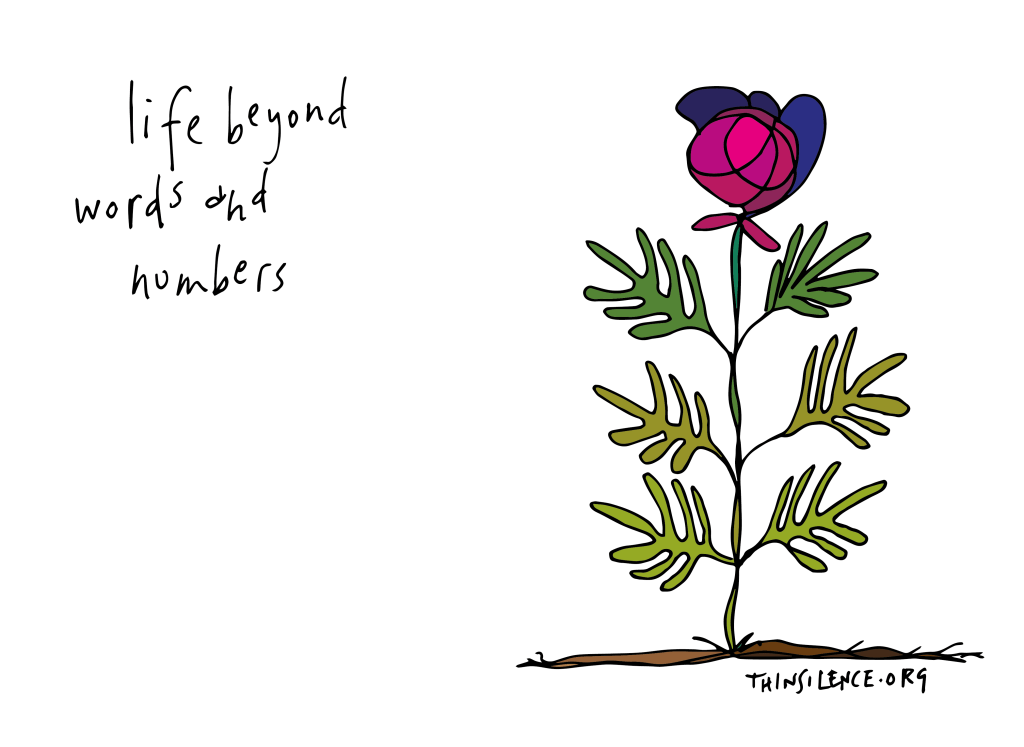
Deep-workers all

A potter brings his clay into centre on the potter’s wheel, and then he gives it whatever shape he wishes.*
(M. C. Richards)

We’ve all been handed a lump of clay to make something out of. It’s called life.

How we shape it is up to us.

We’re all capable of making something very fine and elegant from our clay.

Cal Newport suggests four ways of getting down to the deep work of what we want to do with our life that matters:**

Monastic: Disappearing and isolating to get on with what we want to do over a very long period of time, even a lifetime;
Bimodal: Earning the money we need to live on or feed our work in one mode and disappearing into multiple-days of deep work on what is most important in the other mode;
Rhythmic: Creating a rhythm of habits for the day in order to work on what is important whilst also meeting the other calls on our lives;
Journalistic: Snatching the opportunities to present themselves for deep work, able to enter quickly and be focused.

It feels like a mix of the rhythmic and journalistic that works for me and I’d guess the same for you: the former reinforcing the latter. The important thing is, there’s a way available to all of us to get on with that deep work of sharing the clay into something very fine indeed, before it hardens.

(*From M. C. Richards’ Centering.)
(**From Cal Newport’s Deep Work.)

An artist’s view

It is particularly moving to find the physicist [David] Bohm saying that reality cannot be described statistically – that it lends itself much more to the way of understanding one might have for the arts, of poetry and dance for example, though it is in music that he finds the leading paradigm.*
(M. C. Richards)

Blessed are the meek, for they will inherit the earth. **
(Jesus of Nazerath)

When we have turned the earth into statistics, commodity, and economics, we have destroyed it.

If we are to inherit the earth, we must enter into relationship, allowing nature to provide us with insight and learning and leading.

The artist does not see statistics but the truth of something, including and beyond data alone … and we are all artists in some way or another.

Wherever you find yourself taking the given time to move outside your home during this lockdown, let nature speak to you, whether it be a garden, a park, some trees, the sky above or the plants pushing through the pavement.

(*From M. C. Richards’ Centering.)
(**Matthew 5:5)

Touching the sacred (an essential condition)

Our brains […] construct our worldview based on what we pay attention to.*
(Cal Newport)

Human beings, it seems, are at their best when immersed deeply in something challenging.*
(Cal Newport)

In these two quotes, Cal Newport is reflecting on the work of Winifred Gallagher and Mihaly Csikszentmihalyi when it comes to focusing our attention on deep work rather than shallow.

Gallagher focuses on the contents of our attention after she noticed how she felt better about her life when she didn’t dwell on her recent cancer diagnosis but on “movies, walks, and a 6.30 martini.”** Her interest aroused, she began a five year exploration of the science around this, concluding:

Like fingers pointing to the moon, other diverse disciplines from anthropology to education, behavioural economics to family counselling, similarly suggest that the skilful management of attention is the sine qua non of the good life and the key to improving virtually every aspect of your life.**

Csikszentmihalyi emphasises that the very experience of going deep brings rewards that are satisfying to us.

We’re looking at the “inside and outside” of the same thing, a möbius strip helping us to see just how this can be. It’s M. C. Richards who helps us to see this when she ponders the “crossing point” of a carrot seed, able to push down the hard, orange root but also send up the green filigreed leaves:

we may think of the genius of the human being, earth oriented by gravity, with feet on the ground, and in consciousness a weightless being whose head is full of dreams and visions. We do not have to decide which we will be, practical or visionary, for we are both. And that is our genius.^

Gallagher had noticed:

when you lose focus, your mind tends to focus on what’s wrong with your life instead of what’s right”.**

Newport presses on because he wants to consider the sacredness of deep work and how this is absent in shallow work. We must become craftspeople again:

Craftsmanship […] provides a key to reopening a sense of sacredness in a responsible manner.*

You may have guessed this is why I sat up when reading this. It is my belief and work that everyone is a craftsperson – it is our absolutely necessary condition.

(*From Cal Newport’s Deep Work.)
(**Winifred Gallagher, quoted in Cal Newport’s Deep Work.)
(^From M. C. Richards’ Centering.)

What on earth am I doing?

There’s something about keeping your hands busy when your brain feels broken. […] We’re wired to turn chaos into order. Randomness into meaning.*
(Austin Kleon)

I didn’t eat lunch alone, I ate lunch in Castle Rock, Maine, with Stephen King. I’ve hung out with Jane Austen. I’ve curled up in corners with Toni Morrison. I’ve climbed trees with Louisa May Alcott With a book in my hand, I was transported.**
(Shonda Rhimes)

Each morning, as the day begins, I look up at the sky .

The tendrils of trees reach up into its vastness and I wonder whether I’ll see birds flying across.

All of this took such a long time of preparation before I could ever enjoy it, life exploding for me to enjoy the light of day.

Even as we let ourselves consider the wonder of just being here, we know that it doesn’t always feel so great. Cal Newport writes about how knowledge workers can find themselves lost, wondering whether they are producing anything worthwhile, falling back on more predictable things to measure – emails sent and replied to – calling it ‘Busyness as Proxy for Productivity.’^

We can all feel like this at times. We can all lose sight of what it is we really want to be doing.

Austin Kleon confesses at the beginning of one of his weekly newsletters:

I was sort of off this week.^^

What to do when we are feeling off?

Kleon turned to solving problems. These days we can binge on the latest Netflix series, but this is more likely to just put off feeling the off-ness, the lostness.

What we can do when we’re feeling off or lost is to invest in our attitude, how we’ll approach things.

Possibilities include reading a book, going for a walk, looking up at the sky and explore the shapes of the clouds, working with our hands – drawing, collaging, fitting curtain poles and the list goes on.

“What’s your best discovery?” asked the mole. “That I’m enough as I am.”*^

We can lean into our attitude – indeed, we can understand attitude to be the way we lean, no matter what. Kelvy Bird shares how:

After one or two years of dedicated journaling, where I wrote the words alongside sketches, I realised that my style – my true voice – was going to have to be something new, to me and to others.^*

One or two years!

But add up the times you felt odd or lost and one or two years may seem like a bargain.

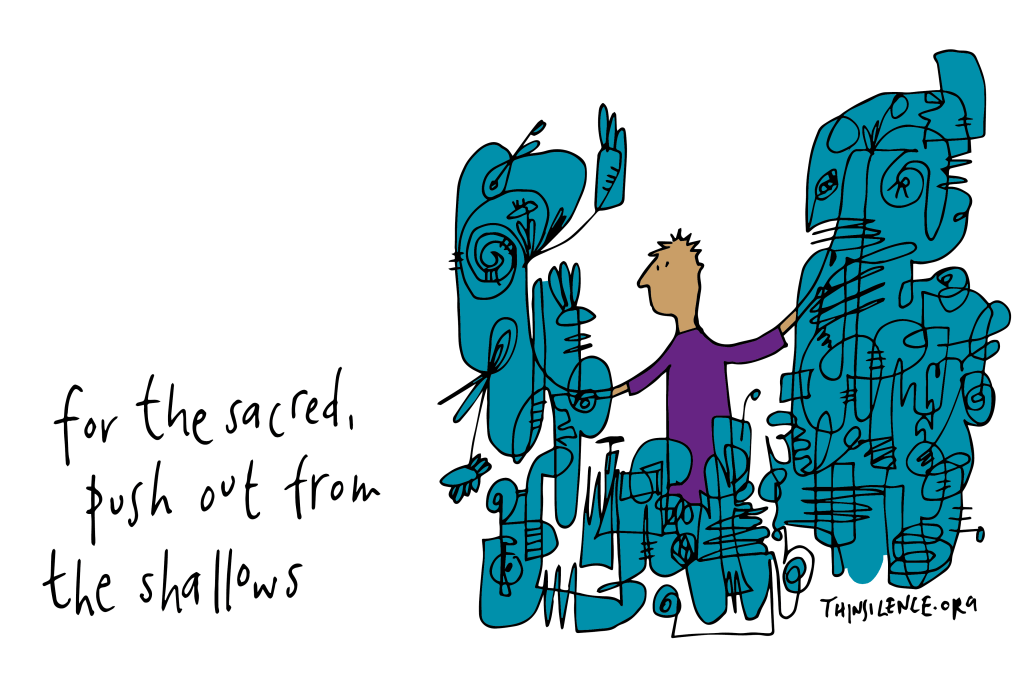
Back to the beginning of the day, and how it took billions of years of preparing before I could enjoy it, a few years more towards identifying our voice, our colour of productivity, are worth their weight in gold. As Wayne Dyer clarifies:

When you change the way you see things, the things you see change.

(*From Austin Kleon’s blog: The Cube (in praise of solvable problems).)
(**Shonda Rhimes letter to young readers from Maria Popova and Claudia Bedrick’s A Velocity of Being.)
(^From Cal Newport’s Deep Work.)
(^^From Austin Kleon’s newsletter: In praise of solvable problems.)
(*^From Charlie Mackesy’s The Boy, the Mole, the Fox and the Horse.)
(^*From Kelvy Bird’s Generative Scribing.)
(⁺Wayne Dyer, quoted in gapingvoid’s blog: Unlock the key to happiness.)

Attention residue

when you switch from some Task A to another Task B, your attention doesn’t immediately follow – a residue of your attention remains stuck thinking about the original task*
(Cal Newport)

Will cannot run very far ahead of knowledge, and attention is our daily bread.**
(Iris Murdoch)

Attention is our food.

So if you control someone’s attention do you control them?

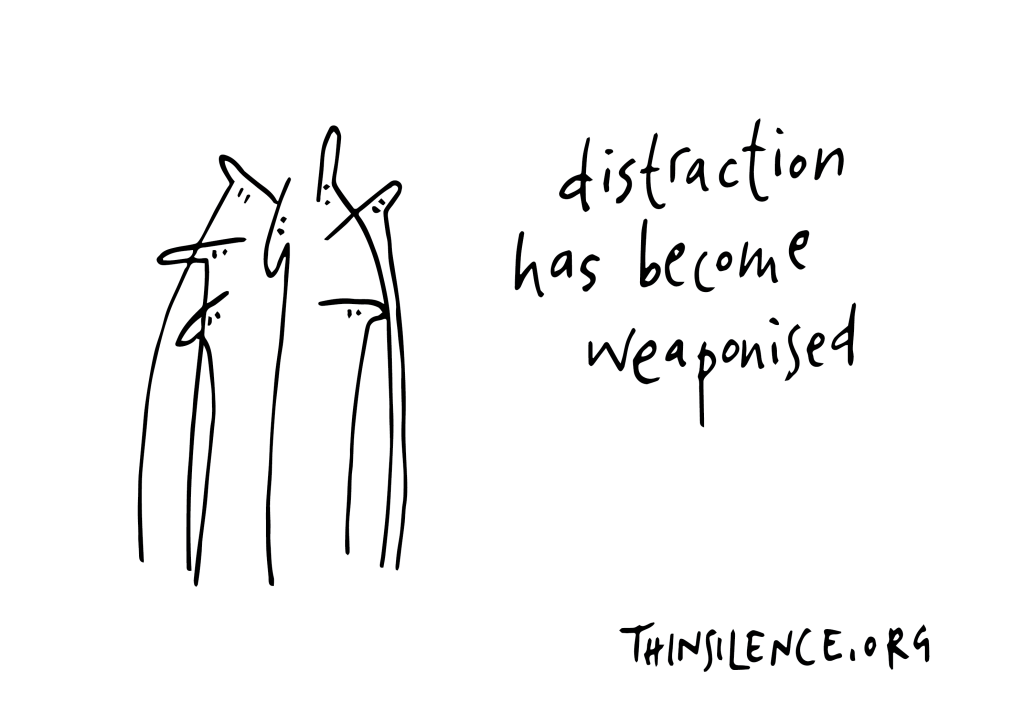
We increasingly live in a world built on distraction – emails, notifications, texts, messaging, open work spaces, being constantly connected.

When we’re distracted and turn our attention from one thing to another, neither the first nor the second is attended to very well. This is “attention residue” and it prevents us from doing our best work – perhaps we can also include building stronger relationships, collaborations, compassionate initiatives … .

Instead of being controlled by distraction, attractive life and work is about drawing near what we’re noticing, enabling us to bring out and to receive the fullness of whatever it is, (from the verb attrahere, from ad- “to” and trahere “draw”).

Now we’re bringing the strongest Self to the game.

(*From Cal Newport’s Deep Work.)
(**From Iris Murdoch’s The Sovereignty of Good.)

It works!

Colouring is an art technique that allows us to relax. As we colour, the outside world fades, our breathing slows and deepens. We’re free of distraction and allowing to come to us whatever needs to.

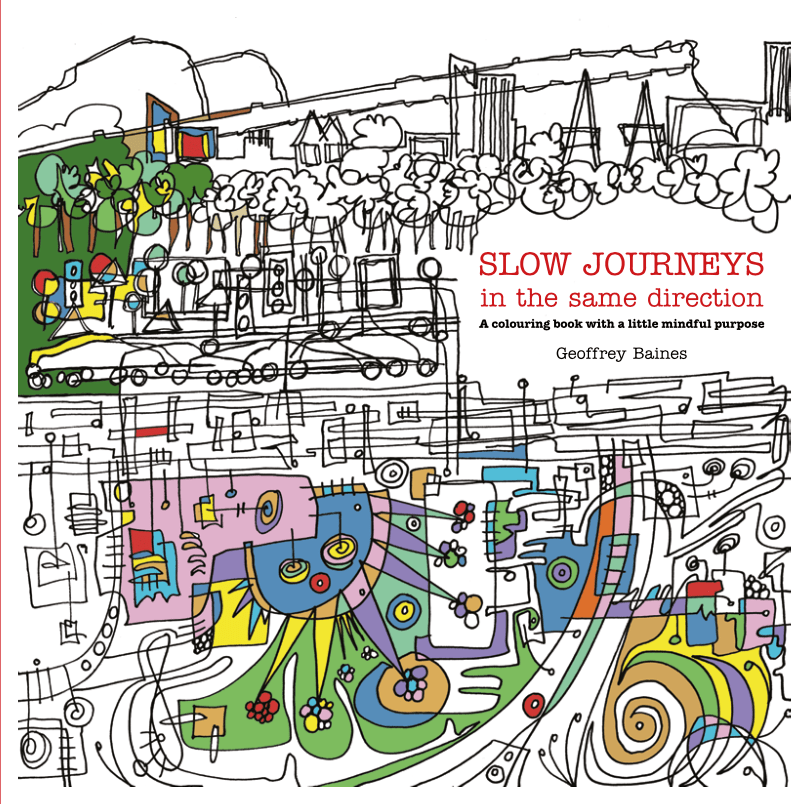
I was delighted, then, to receive this message from Lisa who has turned to colouring the doodles in Slow Journeys in the Same Direction whilst in lockdown:

I have been struggling with my attention span this last week – too much news to consume, kids to manage, no alone time … . So I spent some time colouring your doodle book. I calmed right down and was able to journal for a bit and then read. It was a relief. I shall be doing more colouring!

If you want to pick up a copy for yourself, it’s available online to be delivered to you; just follow this link. It’s only £4.99 and Lisa’s just dropped me a line to let me know postage is free right now!

As far as I’m aware, it is the only colouring book with online content to expand and explore.

I got rhythm*

The time when I have stopped drawing, put my arms down, turned around to connect with the speaker, paused, tuned in to the moment – whether to notice rain on the roof or the light bouncing on a wall at a certain angle or the cool temperature of the air – are when my internal rhythms start to slow down, to make way for a finer sensibility to come online, my aperture of awareness opens, and more of the moment can come through me.**
(Kelvy Bird)

Having practiced some of the visual scribing Kelvy Bird excels at, I know how special is the place she’s describing. Visual scribes can find themselves deluged by a relentless torrent of information needing to be captured and expressed. To think of stopping drawing and letting arms fall is almost unthinkable, and it’s why I don’t do it too often as it’s so tiring.

Yet what Bird describes is the presencing of ability that she has honed for so many years, making it possible for her to relax into her natural rhythms.

Through life, we all have been developing our own natural rhythms, and to take the time to notice just what these are and how they’re comprised will be invaluable. Lydia Davis’ words about writing connect for me here in a wider sense:

Always work (note, write) from your own interest, never from what you think you should be noting, or writing. Trust your own interest. […] Be mostly self-taught. There is a great deal to be learned from programmes, courses, and teachers. But I suggest working equally hard, throughout your life, at learning new things on your own, from whatever sources seem most useful to you.^

What are your interests? How have they developed through the years? Where have these things brought you to? Can you feel your rhythm?

My more focused read for April will be Cal Newport’s Deep Work. Not only are we thinking about rhythm, but how rhythm is forged in our deepest work. The opposite of deep is, of course, shallow, and too much of our technologically generated work is shallow, exacerbated by distraction:

The ability to perform deep work is becoming increasingly rare at a time it is becoming increasingly valuable in our economy.^^

My interest, though, is primarily in personal value rather than economic value, as Joseph Campbell articulates for me:

The ultimate aim of the quest must be neither release nor ecstasy for oneself, but the wisdom and power to serve others.*^

There’s never been a better time not only to identify or discover your rhythms, with all their attendant skills and passions and experiences, but also to develop these more widely and deeply:

Men of genius themselves were great only by bringing all their power to bear on the on on which they had decided to show their full measure.^*

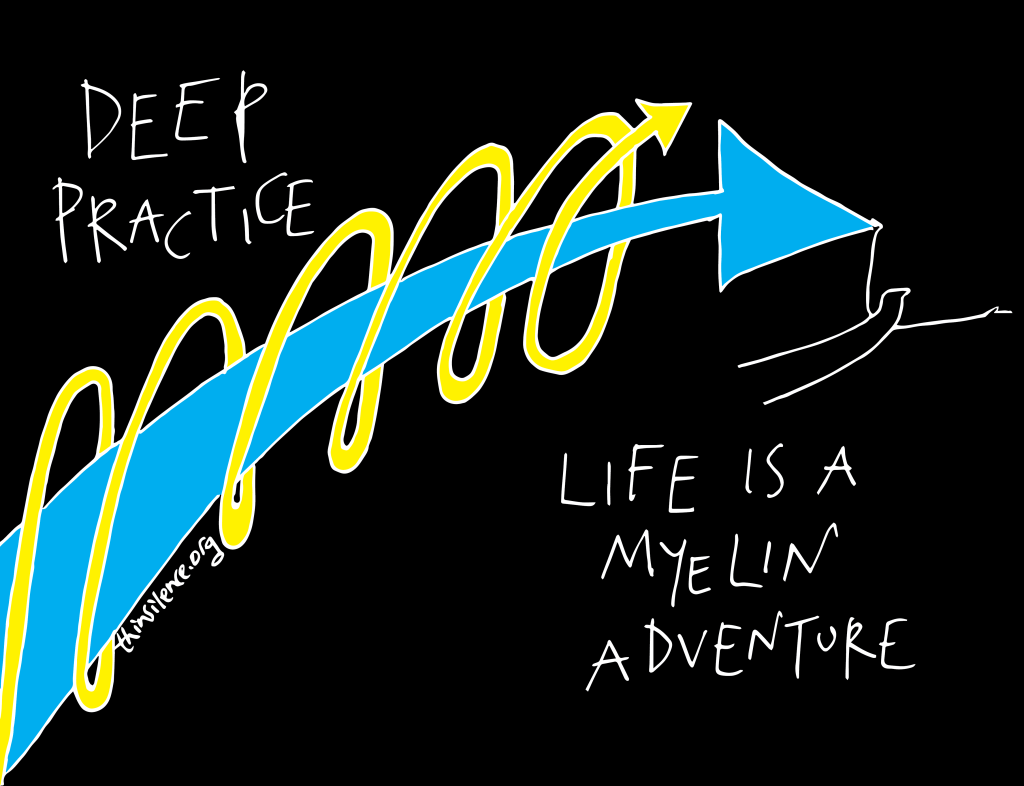
Unless your “deep” is technology, you’ll need to switch it off. Deep work, the focusing on something and not everything, requires brain circuits to be isolated in order to fire again and again, leading to the wrapping and insulating of the circuit with myelin. If you’re listening to music, or being distracted by the phone, you’re not able to isolate the circuit and deep will evade you.

(*The music in my head is George Gershwin’s I Got Rhythm, here sung by the incomparable Ella Fitzgerald. I had to turn it off after a while so I could focus.)
(**From Kelvy Bird’s Generative Scribing.)
(^From The Literary Hub’s article: Lydia Davis: Ten of My Recommendations for Good Writing Habits.)
(^^From Cal Newport’s Deep Work.)
(*^From Joseph Campbell and Bill Moyers’ The Power of Myth.)
(^*Antonin-Dalmace Sertillanges, quoted in Cal Newport’s Deep Work.)

Reset

Why This? Why You? Why Now? Three simple questions we are often reluctant to answer.*
(Bernadette Jiwa)

How can we not see what our eyes behold? As our perceptions become more and more coordinated, we grow in justice.**
(M. C. Richards)

We are possibly looking at months, rather than weeks, of lockdown in our response to Covid19.

This could be one of the severest interruptions to life as normal on planet Earth in peacetime, or it could be the greatest unimagined and uninvited opportunity to change things for the better.

Drawn from her experience of the potter’s wheel, with its four movements -up-down and in-out, M. C. Richards suggests four ways towards a more centred life to benefit everyone: the via positiva is the way of perception, the via negativa is the way of acceptance, the via creativa is the way of imagination and the via tranformativa is the way of justice – for the planet and all of its species.

The artist-of-the-future will be the person who is able to increasingly centre their life through all of these ways pursued as one, helpfully pictured in the labyrinth which, whilst taking many directions on its way to the centre, is only one path:

But a labyrinth is actually an arrangement of paths that lead you, in time, to their centre. You can’t get lost in them; they are comprised of only now winding corridor. It slows you down, that’s all.^

We cannot accept without perceiving, cannot imagine without accepting, cannot transform without imagining.

So we slow down.

(*From Bernadette Jiwa’s The Story of telling blog: Why This? Why You? Why Now?)
(**From M. C. Richard’s Centering.)
(^From Lauren Belkin’s Flâneuse
.)

The story isn’t over until it’s over

All stories take the form of a Quest. To understand the Quest form of your story, penetrate the psychology of your protagonist and find an honest answer to the question: “What does he or she want?”*
(Robert McKee)

You’re not done yet. Your story isn’t yet complete. The journey continues.

Don’t celebrate prematurely, thinking you’ve reached the goal of your potential. Don’t give up, thinking you’ll never make it, when there’s more to come.

We must continue to pursue what we have found in our hearts: the quest we must never give up on.

Keep turning up.

Follow your plan – until it needs to be adapted or clarified.

The obstacle is often found to be the way:

When the dark clouds come … keep going.^

There are so many other scripts we’ll be tempted to follow, those written for us by others, the expectations of our society and culture, but there’s a reason the universe has made it possible for you to form your dream.

In her letter to young readers, Ruth Ann Harnisch writes of her superpower:

More words, more power. […] The more I read, the more I become myself, an individual with ideas. […] As long as I can read, I can unlock the secrets of the world. It’s my best superpower.^

The more words we have for what we seek and we do, the more ideas we will have, the more ways of seeing our way through, the stronger we’ll become, and the more service we can be to others.

(*Robert McKee’s newsletter: The Complex Simplicity of Story.)
(**From Charlie Mackesy’s The Boy, the Mole, the Fox and the Horse.)
(^From Ruth Ann Harnisch‘s letter to young readers, in Maria Popova and Claudia Bedrick’s A Velocity of Being.)