A hospitality of discomfort

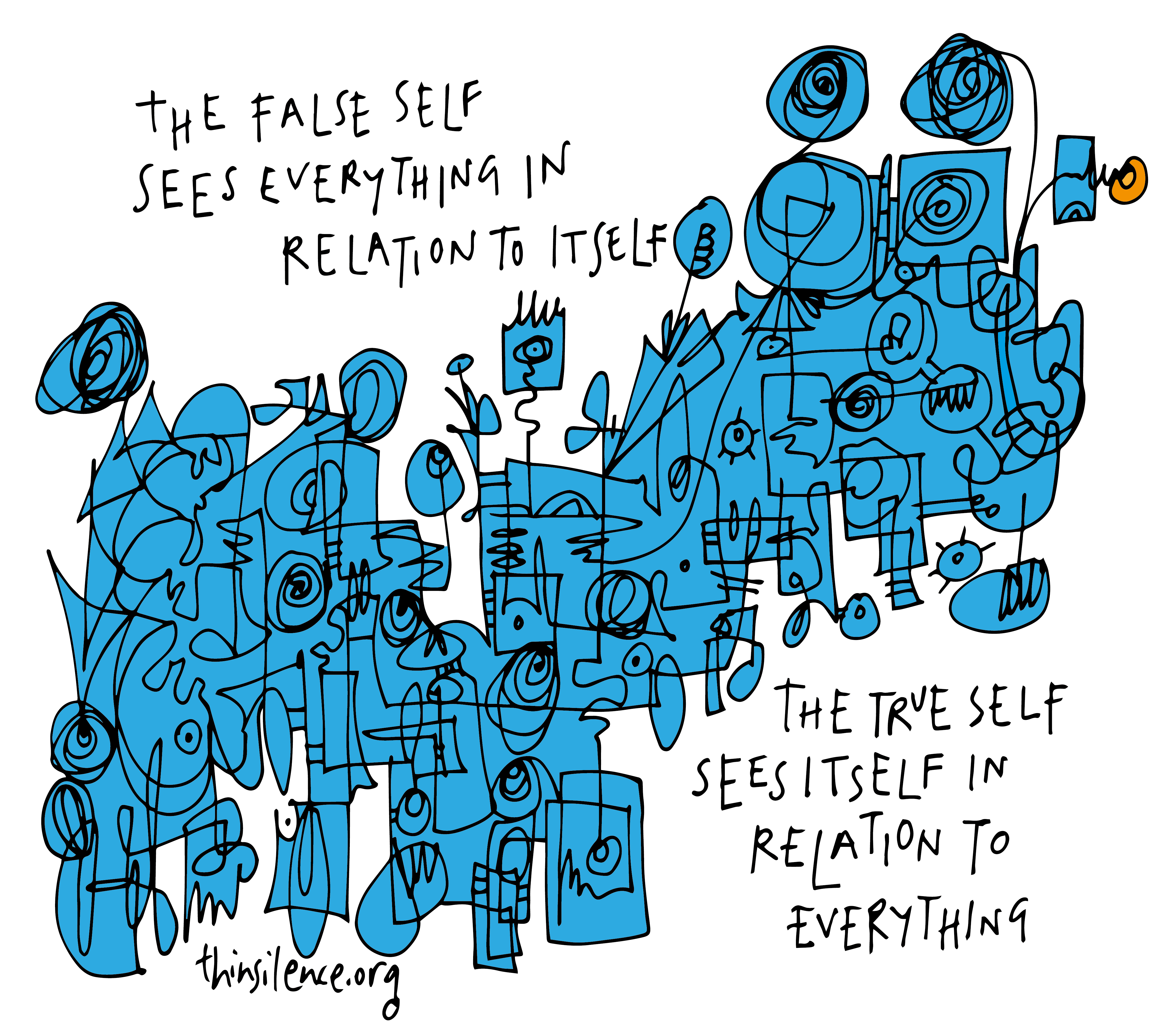
Our False Self is precisely our individual singularity in both its “Aren’t I wonderful! or “Aren’t I terrible!” forms. Both are their own kind of ego trip, and both take the tiny little self far too seriously.*
(Richard Rohr)

But art doesn’t seek to create comfort. It creates change And change requires tension.**
(Seth Godin)

Janine Benyus writes of the molecule:

A molecule’s goal in life [,,,] is to fall to the minimum energy level – to relax.^

When it does, it will find a complementary molecule and “snap” together minimising free energy. I want to say that it appears we desire comfort at a molecular level and the False Self is where we find this, even when for some it will mean working long days and sacrificing loved ones in order to achieve because its desirable to the truth they would have to face about themselves.

The True Self provides hospitality of discomfort. It says “You belong here,” but asks that we be more and bring more.

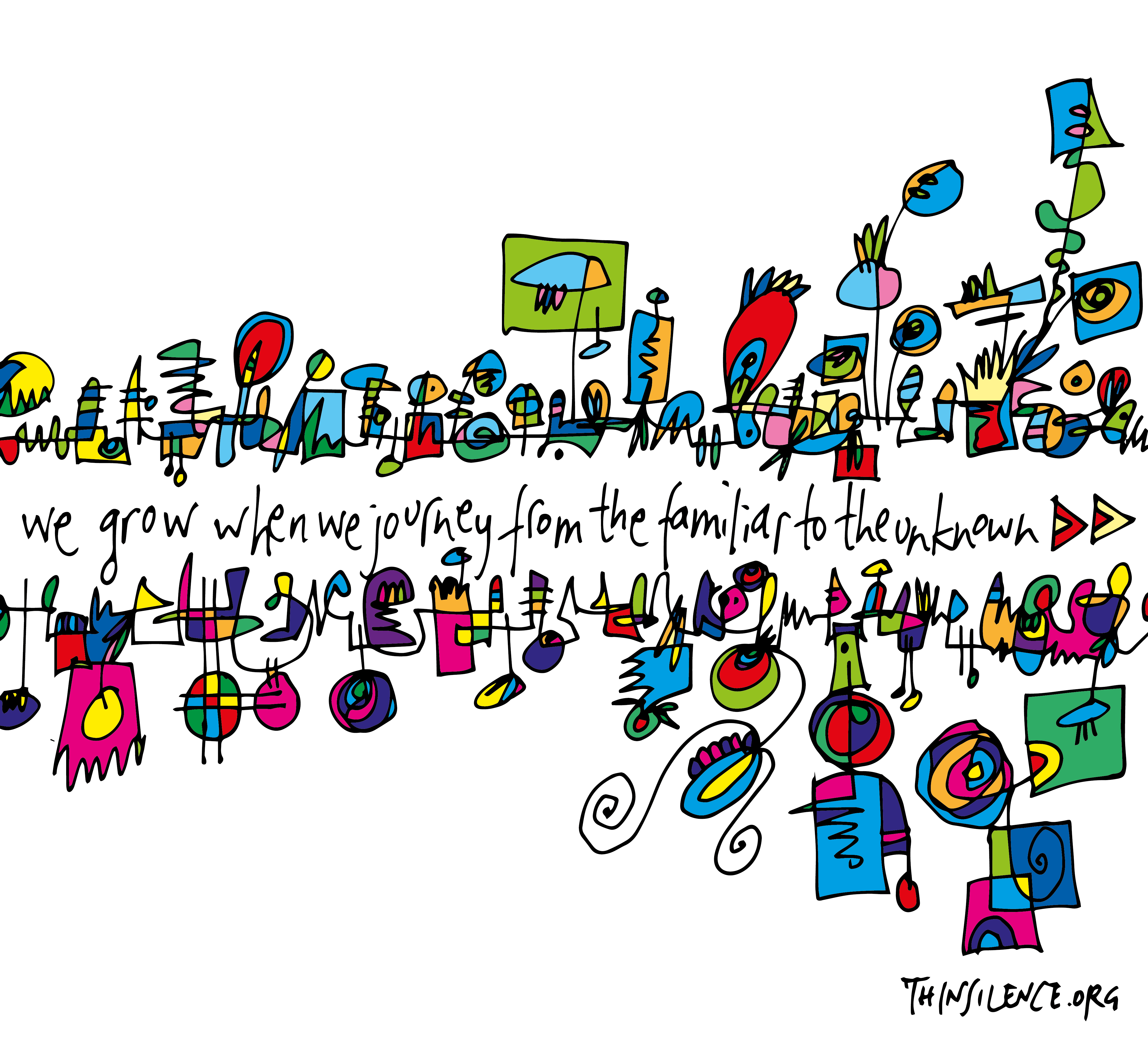
We can overlay this with James Carse’s finite and infinite games. It is more difficult, more uncomfortable to play an infinite game in which we include as many as possible for as long as possible and when these aims are threatened we change the rules. It is dramatic – we don’t know where this will take us next, demanding of us at it is to keep growing and stretching.

On the other hand, the finite game with its exclusivity, its clear goal and its rules is theatrical, that is scripted, and, therefore, comfortable. We know how it will end, sometimes on a daily basis.

As we’re approaching the festival of Christmas, we can note how one of the stories within Christmas fits this pattern of an infinite game. Jesus of Nazerath announces:

Those who are well have no need of a physician, but those who are sick; I have come to call not the righteous but sinners to repentance.^^

It can be read this way: people were being left out of the story – the sick and the sinner – so a rule change was made in the form of Jesus’ arrival to include people once again – repentance can mean realign, get back in the game, back in the story.

Art, when we understand it to be the gift or product from deep within a person, belongs to the infinite story or game:

Choosing to offer only comfort undermines the work of the artist and leader. Ultimately it creates less impact and less hospitality as well.**

This may be a uncomfortable but may you discover there is more to you than you know and more to what you are able to do than you can imagine.

(*From Richard Rohr’s Immortal Diamond.)
(**From Seth Godin’s The Practice.)
(^From Janine Benyus’ Biomimicry.)
(^^Luke 5:31-32)

Borges’ library

A finite game occurs within a world. The fact that it must be limited temporally, numerically, and spatially means that there is something against which the limits stand. There is an outside to every finite game.*
(James Carse)

We may think we’re right but the truth is there’ll be many more people who know more than we do about the things we know so much about.

Janine Benyus writes of Jorge Luis Borges’ The Library of Babel in which,

Borges asks us to imagine a huge library the contains all possible books, that is, each end every combination of letters, punctuation marks, and spaces in the English Language.**

In Borges’ library the first book we select may make no sense at all, just letters and punctuation marks, so we pick up the book next to it and perhaps find it makes a little more sense, perhaps a word, so we beginning follow the books in this direction until we come upon one that is complete sense.

The library provides a wonderful picture for us to see that, whilst we know plenty, there’re many more things to discover even about what we know a lot about. We must keep moving, knowing anything worthwhile and valuable in the earlier books will be contained in the later copies we pick up.

To use James Carse’s finite and infinite language, the necessary human experience is one of moving from the finite to the infinite.

We may be perfectly happy with what we know now, and I think that’s okay – as long as we allow for there being more we don’t know.

For those who want to keep exploring, though, there may be things needing to let go of or put down. The good news is, we’ll likely be surprised at how these things reveal themselves to us if we are prepared to give some time and effort to looking, as Corita Kent captures a profound truth in simple fashion:

Looking is the beginning of seeing.^

We may try some reflective journaling towards this. Have fun discovering outside.

(*From James Carse’s Finite and Infinite Games.)
(**From Janine Benyus’ Biomimicry.)
(^From Corita Kent and Jan Steward’s Learning by Heart.)

Gentle eyes

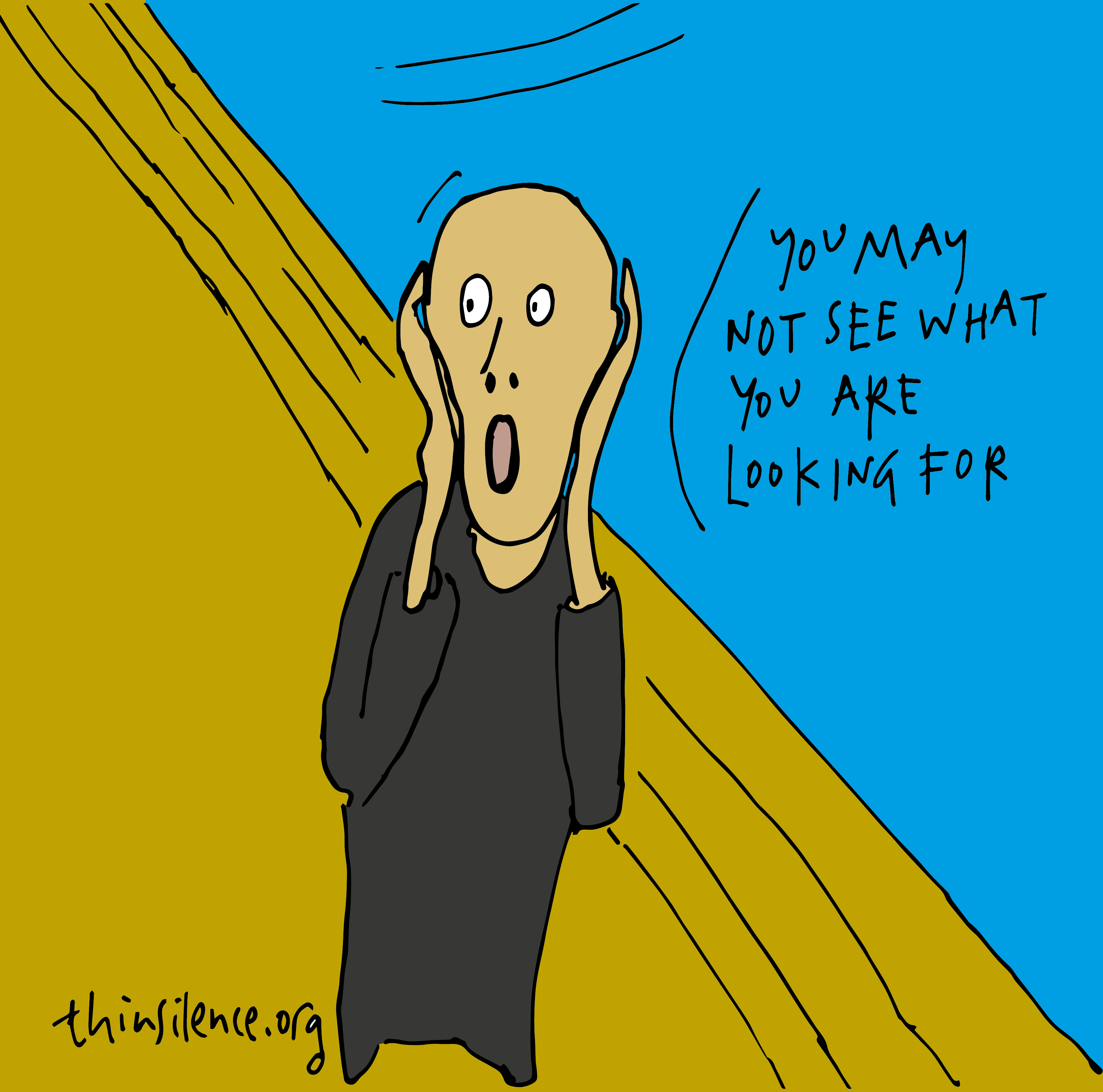
Always be ready to see what you haven’t seen before. It’s a kind of looking where you don’t know what you’re looking for.*
(Corita Kent)

Our times are driven by the inestimable energies of the mechanical mind; its achievements derive from its singular focus, linear direction and force. When it dominates, the habit of gentleness dies out.**
(John O’Donohue)

Placing these two together caused me to think about gentle eyes. Whether there is a way of seeing without agenda or judgement making it possible to see new, to see more, both people and things.

The context of Corita Kent’s words is an exercise for seeing and I notice that she uses the phrase “soft focus” for the way of looking to be adopted – which feels like having gentle eyes. I thought to write it out as a whole here because you may like to try it – perhaps connecting it with John Cage’s 4′ 33″, setting a timer and looking with gentle eyes:

There is an exercise I’ve learned lately, and that is to be quiet and look at an object or space directly ahead of you. Keep a soft focus and also allow your attention to reach past your peripheral vision, left and right. In addition, place your attention on top of or above your head. All of these directions – front, right, left, above – being looked at with a kind of diffuseness. You try to have a clear moment when you are empty and open to things around you. You see them new – your vision is cleansed and you can make contact with what is really there, uncluttered by old thoughts and prejudices.*

It is the difference between looking for something and seeing or receiving what is there, be it object or subject.

(*From Corita Kent and Jan Snowden’s Learning by Heart.)
(**From John O’Donohue’s Divine Beauty.)

‘fess up

Almost everyone is screwed up, broken, clingy, scared, and yet designed for joy.*
(Anne Lamott)

Mythology opens the world so that it becomes transparent to something that is beyon speech, beyond words – in short, what we call transcendence.**
(Joseph Campbell)

Our full confession involves owning up to how we mess up – ourselves, each other, the planet – AND

how we are also capable of joy and beauty. We are made for transcendence.

(*Anne Lamott, quoted in Maria Popova’s Brain Pickings: Anne Lamott on Forgiveness, Self Forgiveness, and the Relationship Between Brokenness and Joy.)
(**From Joseph Campbell’s The Hero’s Journey.)

The good-enough story

We are accustomed to looking at objects.  We need to become accustomed to seeing spaces between and around objects as if they, too, were solid.  Seeing spaces can free us from deadly assumptions.  Spaces can help us understand where connections are made.*
(Corita Kent)

One of the ways Corita Kent would encourage her art students to draw a chair was by drawing the spaces.  These are part of chairness, too.  This illustrates how the unseen spaces between the things we often notice about ourselves are also who we are, part of our stories, making our stories more than good-enough.

(*From Corita Kent and Jan Snowden’s Learning by Heart.)

The voice

You have the right to remain silent. But I hope you won’t. The world conspires to hold us back, but it can’t do that without our permission. […} What do you sound like when you sound like you?*
(Seth Godin)

It’s always an evolving conversation between self and society. It’s always balancing tensions and trying to live life in grace and balance.**
(David Brooks)

It’s astonishing how we can so quickly identify the voice of someone calling us, but there’s way more to a voice’s uniqueness than this. We are all capable of speaking out new things from the depths of our lives, from the things that have caught our attention and captivated us.

And yet we have learnt that life is more straightforward if we keep quiet or sound like everyone else, but that’s survival rather than thriving. We are meant to add our voices to the great conversation taking place between the richness of individual lives and the richness of society. This is nothing less than a a quest of mythological proportions, as mythologist Joseph points to in the hero’s journey:

The whole idea is that you’ve got to bring out again that which you went to recover, the unrealised, unutilised potential in yourself.^

We can use our voices to drown others out or to ask a question and open a space for listening. I choose the latter.

(*From Seth Godin’s The Practice.)
(**From David Brooks’ The Second Mountain.)
(^From Joseph Campbellll’s The Hero’s Journey.)

Generously does it

There is a constant struggle [for the committed person] to live as an effective giver and receiver of gifts. There are millions of people around us whose lives are defined by generosity and service. Personal being [Emmanuel] Mournier continues, is essentially generous. But our society does not teach us how to be an effective giver of gifts. The schools don’t emphasise it. The popular culture is confused about it.*
(David Brooks)

Art is what we call it when we’re able to create something new that changes someone.**
(Seth Godin)

What better reason could there be for continually searching for ways and means to improve and develop ourselves than to become more generous?

Then Godspeed as you enter your art.

(*From David Brooks’ The Second Mountain.)
(**From Seth Godin’s The Practice.)

The elegant solution

This is art. Not painting, but art: the act of doing something that might not work, simply because it’s a generous things to do. The combination of talent, skill, craft, and point of view that brings new light to old problems.*
(Seth Godin)

A committed life involves some common struggles. It is, for example, a constant struggle to see people at their full depths. In the business of daily life there is the constant temptation to see the other person as an object and not a whole.**
(David Brooks)

Many of us will find our way and purpose in life by noticing a problem others do not, even though we may all be looking at the same thing.

Where others pass by, you decide to commit and bring your talent, skill, craft and way of seeing to bear.

You must trust that if this is so then there will also be the elegant solution within you. When you recognise this it comes to life, but it also needs form, and life and form equals beauty.

When this happens you will have begun a great struggle, not only with the forces surrounding the problem you have noticed, but also those within, as Richard Rohr recognises:

What the ego (the False Self) hates and fears more than anything else is change.^

We will find many reasons for not turning the life of our elegant solution into form, the thing that will shape our lives – our True Self.

By heart I mean the place emotions meet reason, mobilise the will, and shape identity.^^

(*From Seth Godin’s The Practice.)
(**From David Brooks’ The Second Mountain.)
(^From Richard Rohr’s Immortal Diamond.)
(^^From Alex McManus’ Makers of Fire.)

What makes you light up?

There are infinitely many kinds of beautiful lives.*
(Maria Popova)

Genius is looking at things in an unhabitual way.**
(Corita Kent)

Whatever it is that lights you up – with curiosity, interest, pushing in deeper, leaping, failing, starting over, commitment – that is the light of your attention we all can benefit from.

You need to not only figure out what kind of light is yours but make sure you do not cover it up or hide it away. Let it be your identity and bring it to others:

Julia Cameron’s morning pages help unlock something inside. Not the muse or a magic mystical power, but simply the truth of your chosen identity. If you do something creative each day, you’re now a creative person. Not a blocked person, not a striving person, not an untalented person. A creative person.^

I take from these words of Seth Godin that to begin the day with some journaling about your light identity is a good place to start because your are owning it, but it will also identify moves you can actually make happen. Journal about your light and then shine … for someone or somemany.

(*From Maria Popova’s Figuring.)
(*From Corita Kent and Jan Snowden’s Learning By Heart.)
(^From Seth Godin’s The Practice.)