This is my myth

These self-reflective brains are evolution’s latest attempt to find a way to handle and profit from information.*
(Janine Benyus)

The best discipline is to enjoy your friends, enjoy your meals. Realise what play is. Participate in the play, in the play of life.**
(Joseph Campbell)

When my friend and mentor Alex McManus asked what it means to me to be human, I had to think awhile, eventually responding: to live with creativity, generosity and enjoyment. I now understand this to be the myth I want to live.

Robert Bly even suggests that students will benefit from choosing and exploring a traditional myth to live by, enabling them to navigate to their own:

Then the student would choose the one myth that attracted him and then spend time in college seeing how far he lived it and how the myth lived him.^

Though we will each reply differently to the question, there are ways and means useful to all when it comes to giving them expression. Janine Benyus’ offers four such ways in her steps to biomimicry (echoing what we see in nature as a response to our problems): to quieten, listen, echo and steward, leading us to find and articulate our own myth:

Quieten: to come aside from the busyness of life in order to notice more;
Listen: to listen for the whispers from our lives – values, talents, energies;
Echo: to give expression to these in playful, exploratory and experimental ways;
Steward: and then we’ll be able to live these in both a preserved and developing way.

Some want to be rewarded for what they do in life but life is the reward, being journey rather than destination. From my experience of working with people around discovering and developing their story or myth, I see how it’s figuring out what we have and how to use it and to enjoy this that shapes our myth.

Mythologist Joseph Campbell calls this our bliss:

Life is an expression of bliss.**

I like to think of it as our zing – because it’s loaded with more energy than we can handle and remain immobile – we have to do something with it. And the best way I have found is to give it away:

Generous means choosing to focus on the change we seek to make.^^

(*From Janine Benyus’ Biomimicry.)
(**From Joseph Campbell’s The Hero’s Journey.)
(^Robert Bly, quoted in Joseph Campbell’s The Hero’s Journey.)
(^^From Seth Godin’s The Practice.)

More than you know

Nothing is one thing. […] If you’re focusing on the part of your day that was just “fine,” then you’re ignoring the parts that were a miracle, or disappointing or thrilling.*
(Seth Godin)

May you discover you are more than you know.

Make a note whenever you are really energised by something, what you are doing, why you are doing it, who you are doing it with or for, and when you are doing it. In a few weeks you may have twenty to thirty different things on your list, probably small, but these are the best ones and will lead into worlds of possibility.

I’ll be exploring more of what things like this can mean in 2021, especially for those who have found themselves left by the pandemic without work. Spread the word.

In the meantime, however you will be celebrating at this time of year, may it be rich and meaningful.

I’ll be back shortly, but in the meantime, I’m posting pages from something I put together earlier in the year,

(*From Seth Godin’s blog: Nothing is one thing.)

Make change

A horizon is a phenomenon of vision. One cannot look at the horizon; it is simply the point beyond which we cannot see.*
(James Carse)

“Here, I made this.” […] These four words carry with them generosity, intent, risk, and intimacy. The more we say them, and mean them, and deliver on them, the more art and connection we create. And we create change.**
(Seth Godin)

We can get boundaries and horizons mixed up.

When we move beyond a boundary we encounter resistance; that’s why it’s a boundary. When we move towards the horizon, it moves.

Yes, there’ll be boundaries along the way, but by then we’ll have gained the self-knowledge and confidence to believe we can keep moving.

We will all see different horizons, defining the kind of change we will make.

(*From James Carse’s Finite and Infinite Games.)
(**From Seth Godin’s The Practice.)

It’s just expected

I don’t think learning is defined by a building or a certificate. It’s defined by a posture, a mindset and actions taken.
(Seth Godin)

Whoever takes possession of the objects of art has not taken possession of the art.  Since art is never possession, and always possibility, nothing possessed can have the status of art.  […] Art is dramatic, opening always forward, beginning so something that cannot be finished.**
(James Carse)

I may love habits and disciplines more than most, but I must remind myself, it is never about these per se but rather what they are supporting, especially when it comes to learning and art. These are primarily dynamic postures or attitudes, demanding new habits or containers to continue leaning into the future.

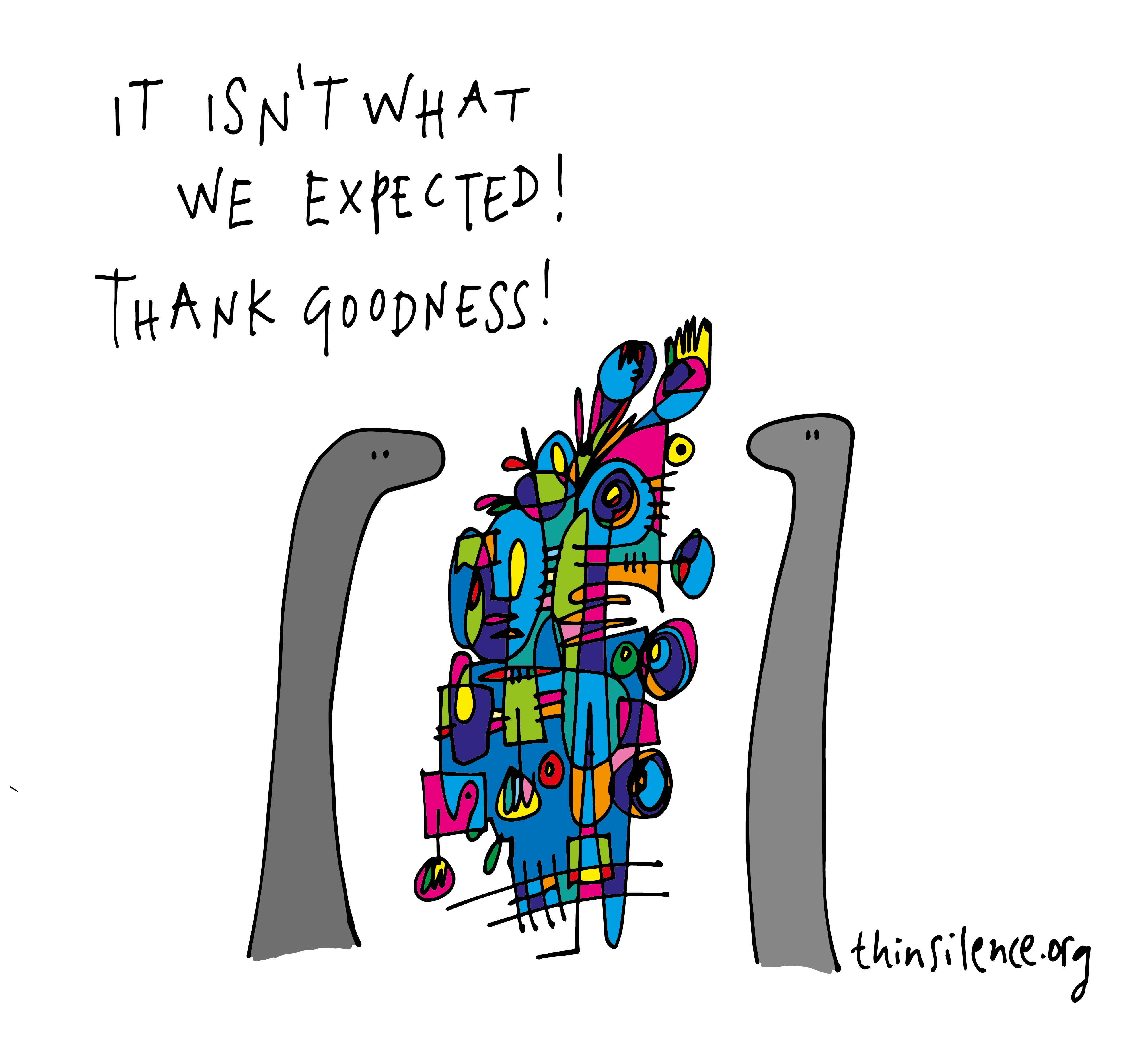
More than what is expected – which is the scripted life, may you continue to be an explorer of the dramatic.

(*From Seth Godin’s blog: source lost.)
(**From James Carse’s Finite and Infinite Games.)