Our stability

Basically love works only works inside humility. […] Fullness in a person cannot permit love because there are no openings, no handles, no give-and-take, and no deep hunger. It is like trying to attach two inflated balloons to one another.*
(Richard Rohr)

Personal stability doesn’t come from being powerful or self-sufficient, but through humility, gratitude and faithfulness These infused with love, forgiveness and service.

We must also add pain and suffering – which is to love, forgive and serve ourselves, otherwise we hide from ourselves and our True Self, as well as from others.

Yesterday’s post was pondering what James Carse means by touch and move. Touching suggests intimacy and requires that we be our True Self, as Richard Rohr proffers – moving being how the False Self relates:

intimacy happens when we reveal and expose our insides, and this is always scary*.

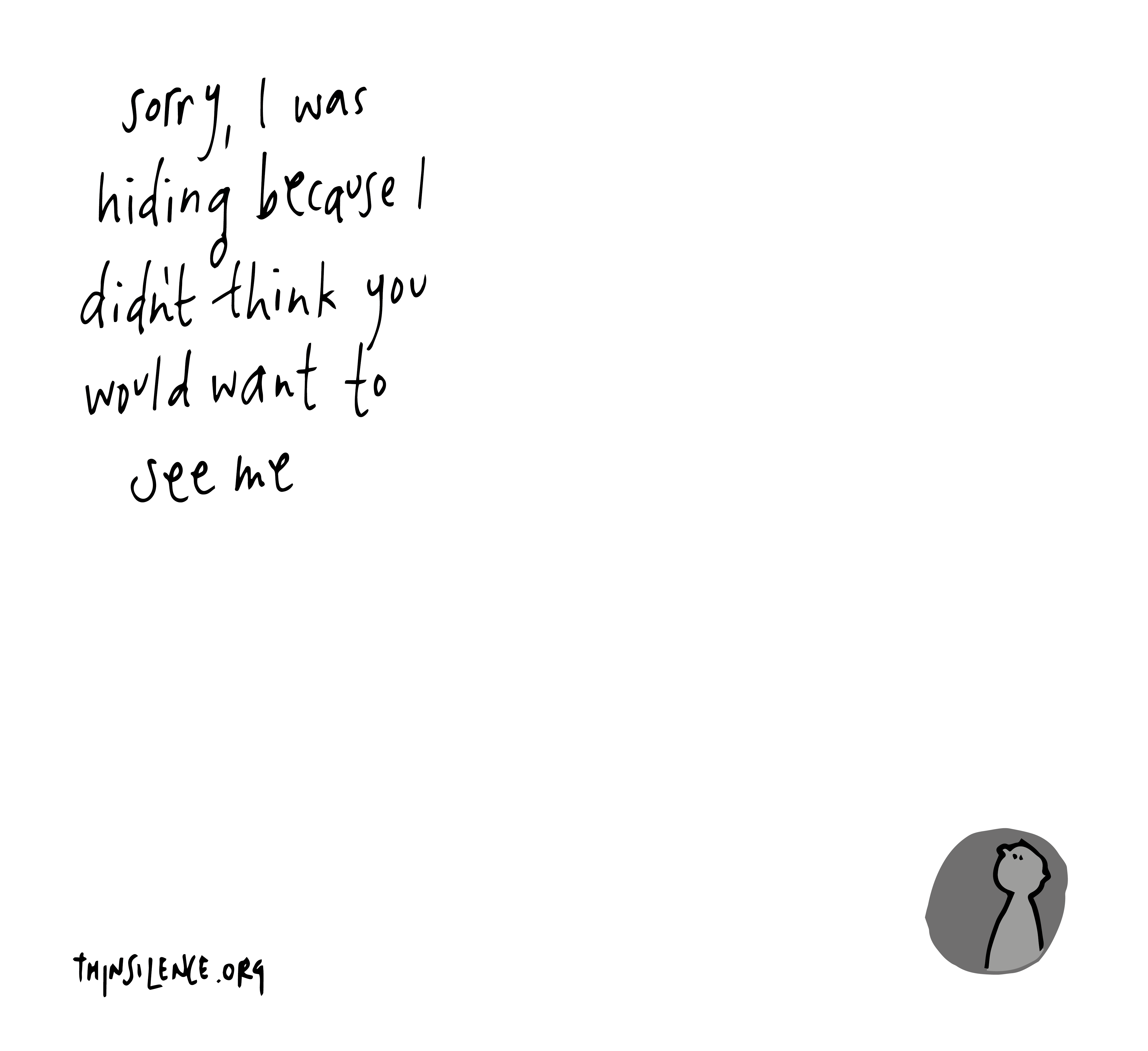
We remember that it is possible to hide from ourselves as well as from others.

This behaviour of the False Self being more likely to try and move others in developed further by Carse when he suggests, the things we through up as screens to others being the very means by which we are moved:

This means that we can be moved only by persons who are not what they are; we can be moved only when we are not who we are, but are what we cannot be. […] We can be moved only by way of our veils. We are touched though our veils.**

The veils suggest our power, invulnerability and sufficiency, but the True Self is a poor self, a connected self, an intimate self:

And this is exactly what the moment of intimacy of moment always is, even from God. It is always a moment of “poverty” from one side or the other – or both.*

Until I allow this – which is a true expression of strength – I am likely to moved and react with counter-move, whilst what our world needs is for people to meet each other in their poverty – and their beauty – in order to discover and contribute courage, generosity and wisdom.

(*From Richard Rohr’s Immortal Diamond.)
(**From James Carse’s Finite and Infinite Games.)

Shall we win-win?

Whoever must play cannot play.*
(James Carse)

Where shall we go? is an invitation to infinite play, engaging both/all for as long as possible. Of course, it takes longer, that’s why we take shortcuts and play the win-lose game that in the end take longer.

Where shall we go? is an invitation to explore possibility together, not for one or other to have their agenda met. James Carse is right to say that if we’re forced to play then we’re not playing.** We’re doing something less.

Helping us to look inside of what is happening here, Carse writes about the difference between being touched and being moved, the former being win-win, the latter win-lose,

I am touched only if I respond from my own centre – that is, spontaneously, originally. But you do not touch me except from your own centre, out of your own genius.*

In order to understand this play between two or more people people then we must see that it comes from a deeper place. Theory U would understand this be more than opening the mind to one another but also opening the heart. Opening the mind will require us to move from judgement to openness, but this is only pre-play was far as an infinite game is concerned. Opening the heart involves moving from cynicism to compassion. If we are to play, all the players matter.

Touching is always reciprocal. You cannot touch me unless I touch you in response. The opposite of touching is moving.*

Our players are now moving towards generative play, in which something spontaneous and original – which neither have thought of and brought into the game – can happen. Ultimate win-win cannot be pre-meditated.

You move me by pressing me from without toward a place you have already foreseen and perhaps prepared. It is staged action that succeeds only if in moving me you remain unmoved yourself.*

Here one player has come with an agenda and had pressed this through without compromise. Win-lose. It may have occurred amicably but that is a shallow perspective. For one thing, the genius of the other has not been invited into play, and also, as Nassim Taleb points out:

People overvalue their knowledge and underestimate the probability of their being wrong.^

If this is the way we play some of the more important games in life, inhibiting everyone being able to bring their contribution, their genius, we all miss out in a world in which we have such massive and complex problems:

In no way is the source of genius external to itself; never is a child moved to genius. Genius arises with touch. Touch is a characteristically paradoxical phenomenon of infinite play.*

Touch only happens in the kind of play we have been outlining.

Wherever you find yourself in life and whatever you find yourself doing, a conversation with those around you about how effectively you nurture the genius in one another may be a liberating, if difficult, one to have.

(*From James Carse’s Finite and Infinite Games.)
(**I would use the word should where James Carse uses the word must.)
(^From Nassim Taleb’s The Bed of Procrustes.)

And am I yet alive?

Now all that is needed is more. More time. More cycles, more bravery, more process. More of you. Much more of you, More idiosyncrasy, more genre, more seeing, more generosity. More learning. It’s not working. (Yet.)*
(Seth Godin)

We know we are alive but there are those moments that leave us feeling even more alive.

It’s as though we have woken up and before we were only drowsing.

What if tomorrow holds the possibility of being even more awake? Perhaps today, we are only dreaming of being awake.

How to awaken ourselves. Wendell Berry has written about his relationship with a physical place, but could well be writing about the life we each inhabit:

I had made a significant change in my relation to the place: before, it had been mine by coincidence or accident; now it was mine by choice. My return, which at first had been hesitant and tentative, grew wholehearted and sure. I had come back to stay.**

The first response feels dulled, the second, quickened.

There’s a place in the apostle Paul’s letter to the Philippian believers where he encourages them to ‘work out your own salvation with fear and trembling.’^ His words not unfamiliar, this time they felt charged with an excited alertness: about choosing to live as fully as possible. The same sense is found in James Carse’s comparison of a theatrical life with a dramatic life. What we are then seeking to release is genius:

Theatrically, my birth is an event of potted repetition.  I am born as another member of my family and culture.  Who I am is a question already answered by the content and character of a tradition.  Dramatically, my birth is the rupture of the repetitive sequence, an event certain to change what the past has meant.  In this case the character of a tradition is determined by who I am.  Dramatically speaking, every birth is the birth of genius.^^

As Nassim Taleb has pointed out, there’s only one thing better than skin in the game and that is soul in the game – aliveness in every part of our being.

I do not feel I am there (yet), but I aim to turn up each day in the process that is shaped by my values, talents and energies. Watch out for more information about an online meetup I’ll be hosting and you can be a part of.

(*From Seth Godin’s The Practice.)
(**Wendell Berry, quoted in Austin Kleon’s blog: My relation to the place.)
(^Philippians 2:12)
(^^From James Carse’s Finite and Infinite Games.)
Giving is the new getting

For art to be generous it must change the recipient. If it doesn’t, it’s not working (yet). But realising it’s not working is an opportunity to make it better. […] You can produce more than you know if you are intent on doing it for someone else.*
(Seth Godin)

Most of the things that divide us are about winning, getting ahead, having more, being right, superiority (gender, race, education, religion). They’re all about getting, whether consciously or unconsciously expressed.

Giving is both a test and remedy for these. It provides what we are looking for in True Self mode rather than that of the False Self: true honour and nobility rather than false.

This set me thinking about how we might begin to disarm an escalation in competition, dominance, aggression, greed and suchlike, in some generous ways to lead out the generosity in the other.

There are no guarantees of success and it may take us a lifetime to work at, but one place for us to begin may well be in identifying our talents and abilities as generously as possible, not as ways to get but to give.

A great place to begin is with the Clifton StrengthsFinder, which will provide you with your top five talents; it’s not magic but it proves again and again to be a great mirroring tool for talents.**

(*From Seth Godin’s The Practice.)
(**In my posts since the beginning of the year, I have identified three key things to do for making the most of this new year for becoming your True Self: articulate your values in detail, begin keeping a list of the most energising experiences – this is best added to fresh as you notice the things you are really alive to, and identifying your talents.)

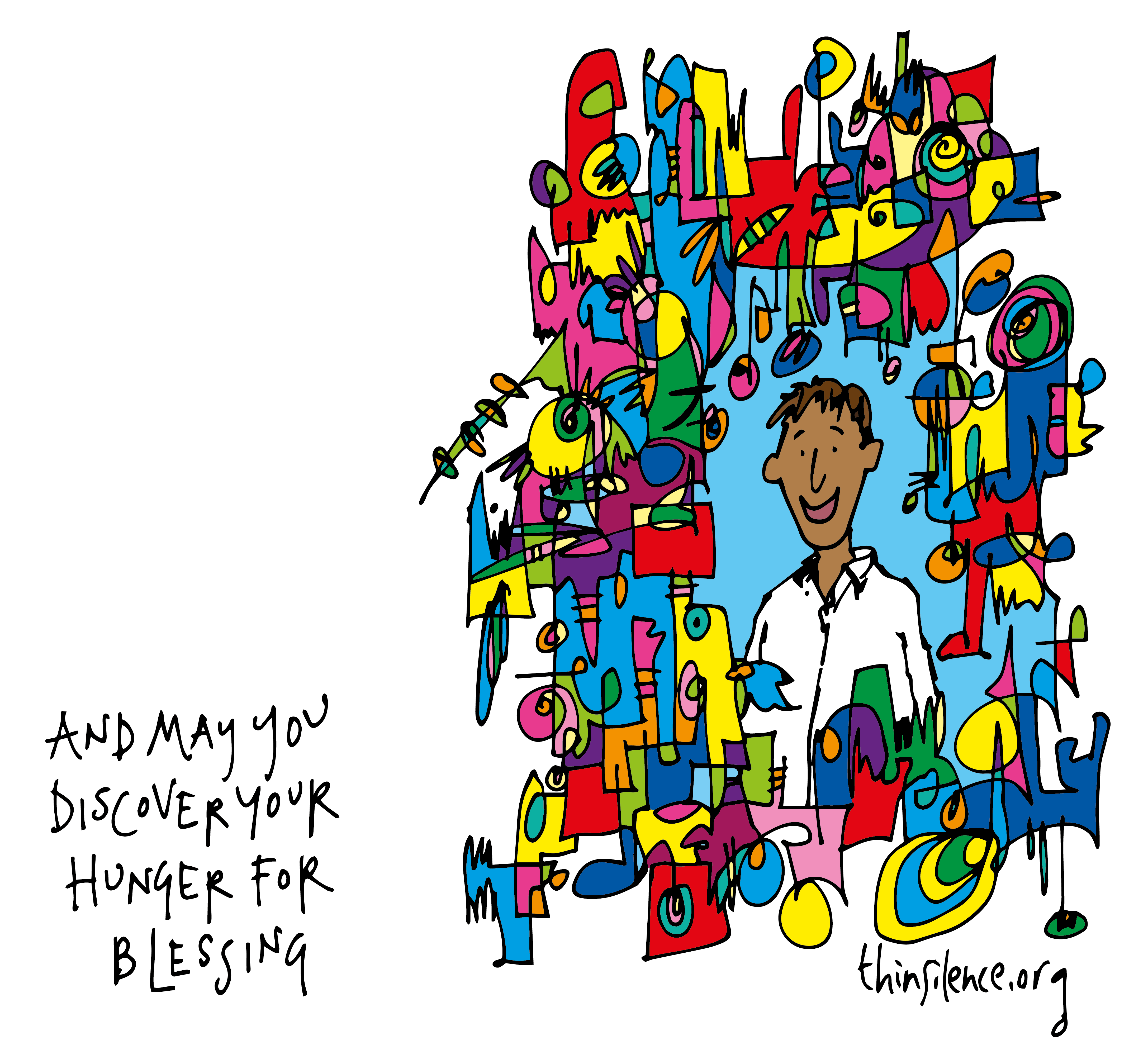
Beauty is sweeter than sugar

The good, the united, and the true in this world will always be somehow beautiful too, and beautiful souls will recognise it immediately.*
(Richard Rohr)

Specialisation, as I will keep insisting, comes with side effects, one of which is separating labour from the fruits of labour.**
(Nassim Taleb)

A spoonful of sugar helps the medicine go down, sings Mary Poppins, but life is more than something to be got through with some sugaring up from time to time.

A world of asynchronous work – prescribed technology as Ursula Franklin names it – leaves us more loathing than loving, more disconnected and numbed.

But work should be beautiful: from urge to idea to implementing to realising. Beauty is not only to be discovered in the work we do, but also in the people we are becoming – the two are connected, indwelling our responses to the two critical questions of Who is my True Self? and What is my contribution (work)?:

Our deepest self-knowledge unfolds as we are embraced by Beauty.^

John O’Donohue, whose words these are, holds my attention further as he writes about how,

the Beautiful [presents] as a threshold which holds the real and the ideal in connection and conversation with each other^.

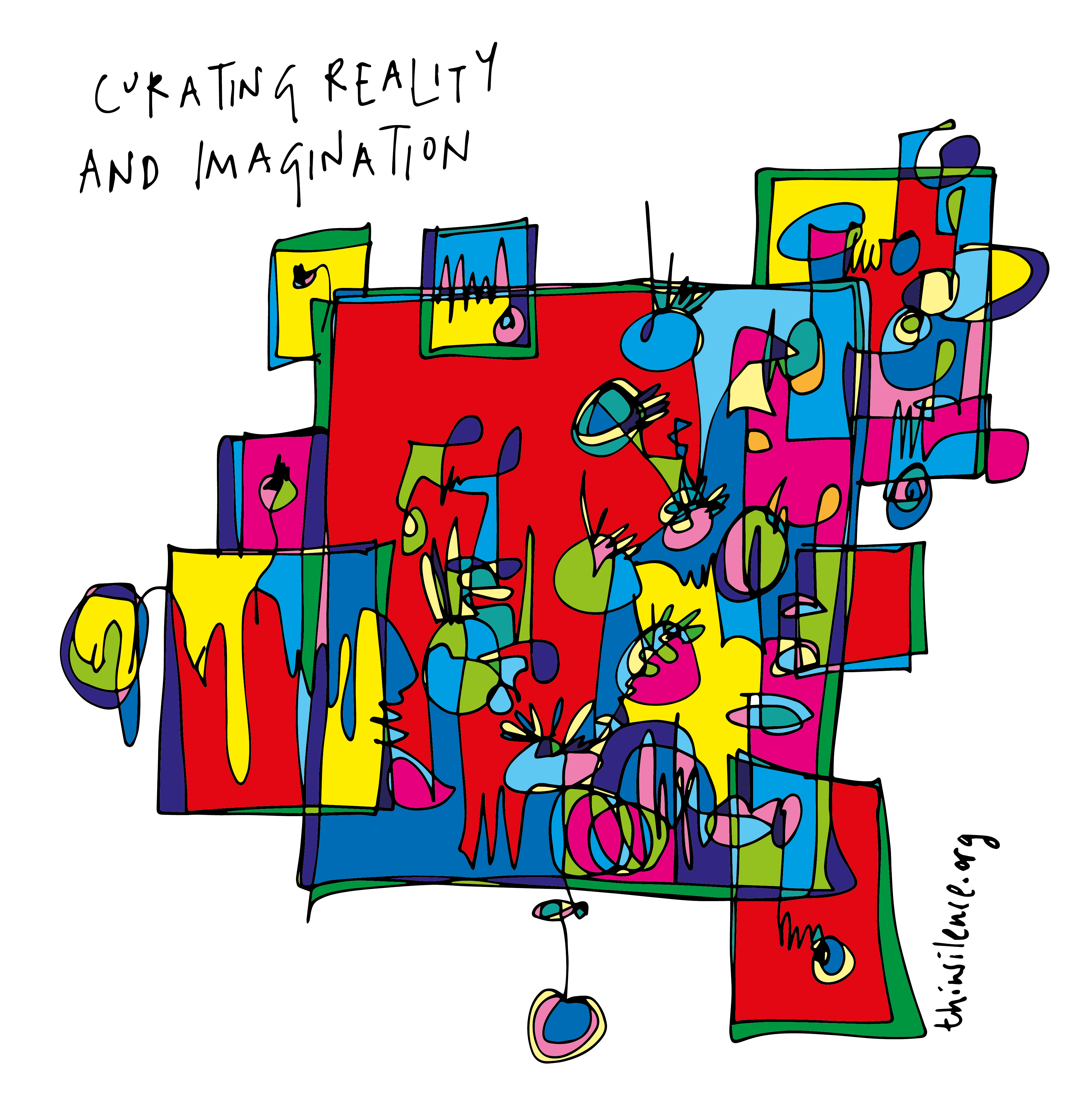
Which connects in my thoughts to Wallace Stevens’ thinking about the pressure of reality being met by the power of imagination to create something new, and, if so, Beauty is the child of this union.

Do not underestimate the power of your imagination, fuelled by your values, your talents and your energies. Identify these with as much detail as you are able and the Beautiful will begin to come into view.

(*From Richard Rohr’s Immortal Diamond.)
(**From Nassim Taleb’s Skin in the Game.)
(^From John O’Donohue’s Divine Beauty.)

Transform, why don’t you?

Curation is the ultimate method of transforming noise into meaning.*
(Rohit Bhargava)

What will matter more than what just happened is what we decide to do with where we are, daily, persistently, generously, for the next 3,650 days.**
(Seth Godin)

Life happens because of the magic of transformation that is to be found everywhere. For a biggy, think photosynthesis.

We are transforming species, turning this into that, yet we can miss the reality that we too can be transformed through life, instead becoming trapped within one form that may not satisfy us, sometimes for years, sometimes for tens of years, sometimes for a lifetime.

Yet, if we borrow the metaphor of a museum for our lives, we have so much more stored in our vaults and that may be brought out into the light of day to tell a different and more compelling story, arranged and enhanced – which is what curation is all about. If we do this then we’ll find that we are also able to replenish our stores with new ideas and dreams and possibilities and relationships that we come upon:

To get a different output sometimes you need a different input.*

This phenomenon of transformation is what Seth Godin is imagining over the next ten years of his life, yet it is capable of carrying us until the day we die. We are at the beginning of the first instalment of this – the next 365 days. How would you like to transform your story?

I offer dreamwhispering as a particular way for making this possible.

(*From Rohit Bhargava’s Non Obvious 2019.)
(**From Seth Godin’s blog: 2030.)

The curators

Much of our life we are trying to connect the dots, to pierce the heart of reality to see what is good, true, and beautiful for us. We want something lasting and transcendent.*
(Richard Rohr)

It’s not that we need more if we are to pursue our dreams, it’s how we bring the most important things to us together into a story: select, arrange, enhance.

There are a lot of dots and you don’t need to connect all of them.

Let me know if I can help.

(*From Richard Rohr’s Immortal Diamond.)

The moment is now

won’t you celebrate with me
what i have shaped into
a kind of life? i had no model.
[…]
i made it up
here on this bridge between
starshine and clay*
Lucille Clifton)

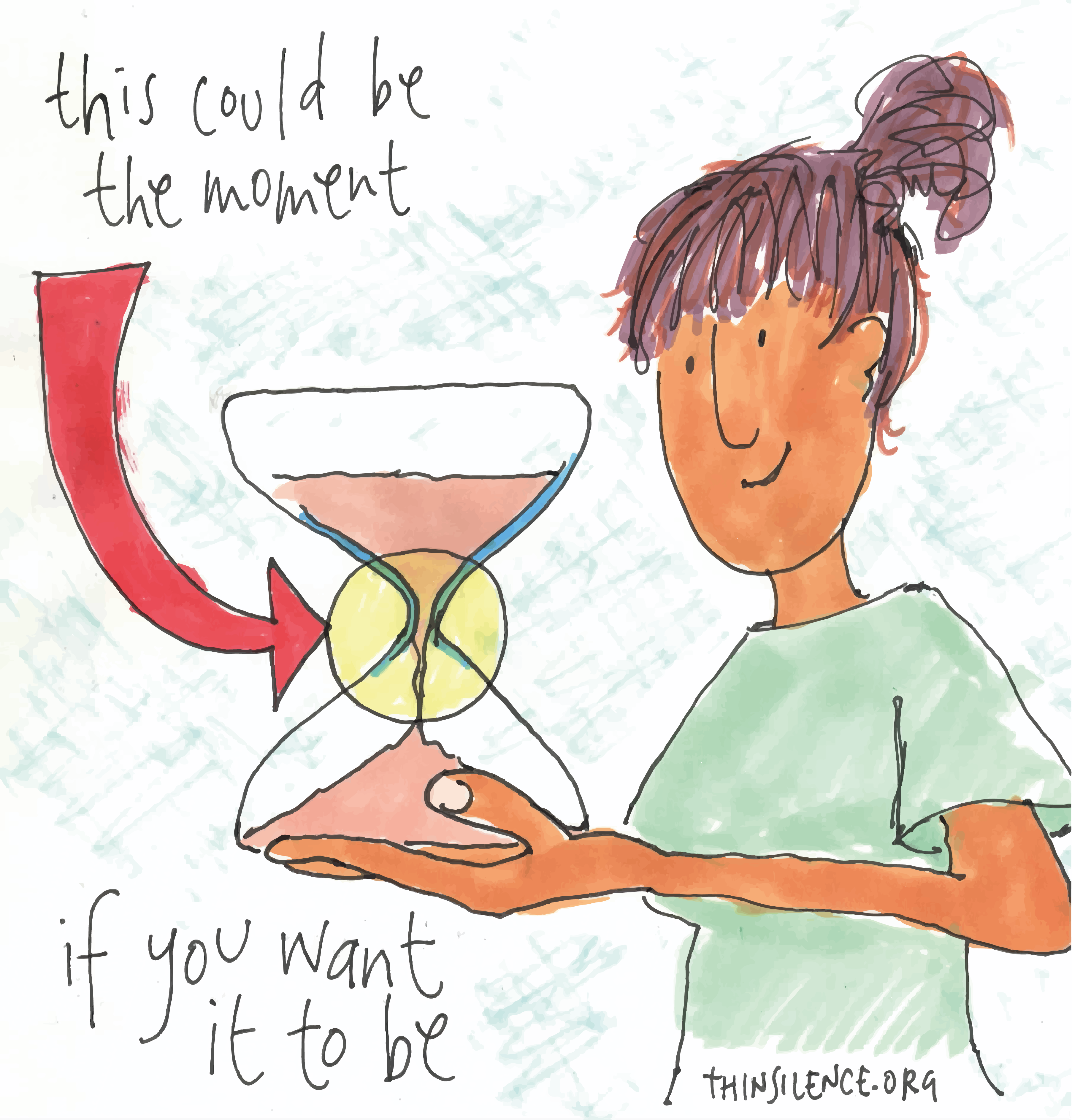
A moment is different to a minute – a different kind of time. Time with meaning added.

Even this moment, as you are reading these words, can begin an adventure that you can fling open across this new year.

There won’t be any magic. The world won’t shift under your feet. It’s only a first step on a new path, it’s only an opening to walk through to see what’s on the other side. And yet such beginnings can lead to magic and shift worlds on this bridge between starshine and clay.

It may simply be that you desire to use this year in a different way. Then go find a notebook or fold up some paper – or even determine to buy some, grab a pen, and write out your values – the things that matter most to you, the kind of world you dream of living, the world you want to invite others into.**

(*Lucille Clifton, quoted in Maria Popova’s Figuring.)
(**You can also determine in a moment to begin two lists, one to accommodate really energising moments you notice, the other to be filled by really de-energising moments – both will tell you a lot about yourself.)

What you will do next

The most important blog post. It is on the most important blog. Yours. Even if no one but you reads it. The blog you write each day is the blog you need the most. It’s a compass and a mirror, a chance to put a stake in the ground and refine your thoughts. And the most important post? The one you’ll write tomorrow.*
(Seth Godin)

The ego is you as you think of yourself. You in relation to all he commitments of your life, as you understand them. The self is the whole range of possibilities that you’ve never even thought of. And you’re stuck with your past when you are stuck with your ego.**
(Joseph Campbell)

Maria Mitchell received a medal from the King of Denmark for her discovery of a new comet, a moment that made her invisible pursuit visible to others. She had stepped outside the norms of her society to pursue her love of astronomy, becoming the first woman to be admitted to the American Academy of Arts and Sciences. She reflected, though:

Medals are small things in the light of the stars […]. There’s only one thing in the world of any real importance, and that is goodness.^

Her particular pursuit of goodness saw Mitchell at the forefront of the campaign against slavery and the campaign for female education. Although it is unlikely she would describe it so, it was a journey from ego into the self and the opening of a better future.

This is a journey we all find ourselves upon, especially noticeable to us when we come to the end of one year and the beginning of another.

My particular pursuit is for people to discover what they have within them for making a difference, for themselves and for those around them. With this in mind, Seth Godin’s words were timely for me as today I complete my seventh year of blogging and doodling every day. I wonder about the eighth, about what will happen as I continue to aim my words and doodles at myself first of all, these pushing me to where I need to be heading, but also offering them to you, waiting to see what you will do next.

(*From Seth Godin’s blog: The most important blog post.)
(**From Joseph Campbell’s The Hero’s Journey.)
(^Maria Mitchell, quoted in Maria Popova’s Figuring.)

What you already have but don’t know

In that special silence, you can get a sense of something that wants to happen that you wouldn’t be aware of otherwise.*
(Joseph Jaworski)

Many times in my dreamwhispering work I have been acutely aware of how what has been hidden within a person comes into view when time is taken and generous questions are asked.

Beautiful things inside everyone.


(*Joseph Jaworski, from Peter Senge, Otto Scharmer, Jospeh Jaworski and betty Sue Flowers’ Presence.)