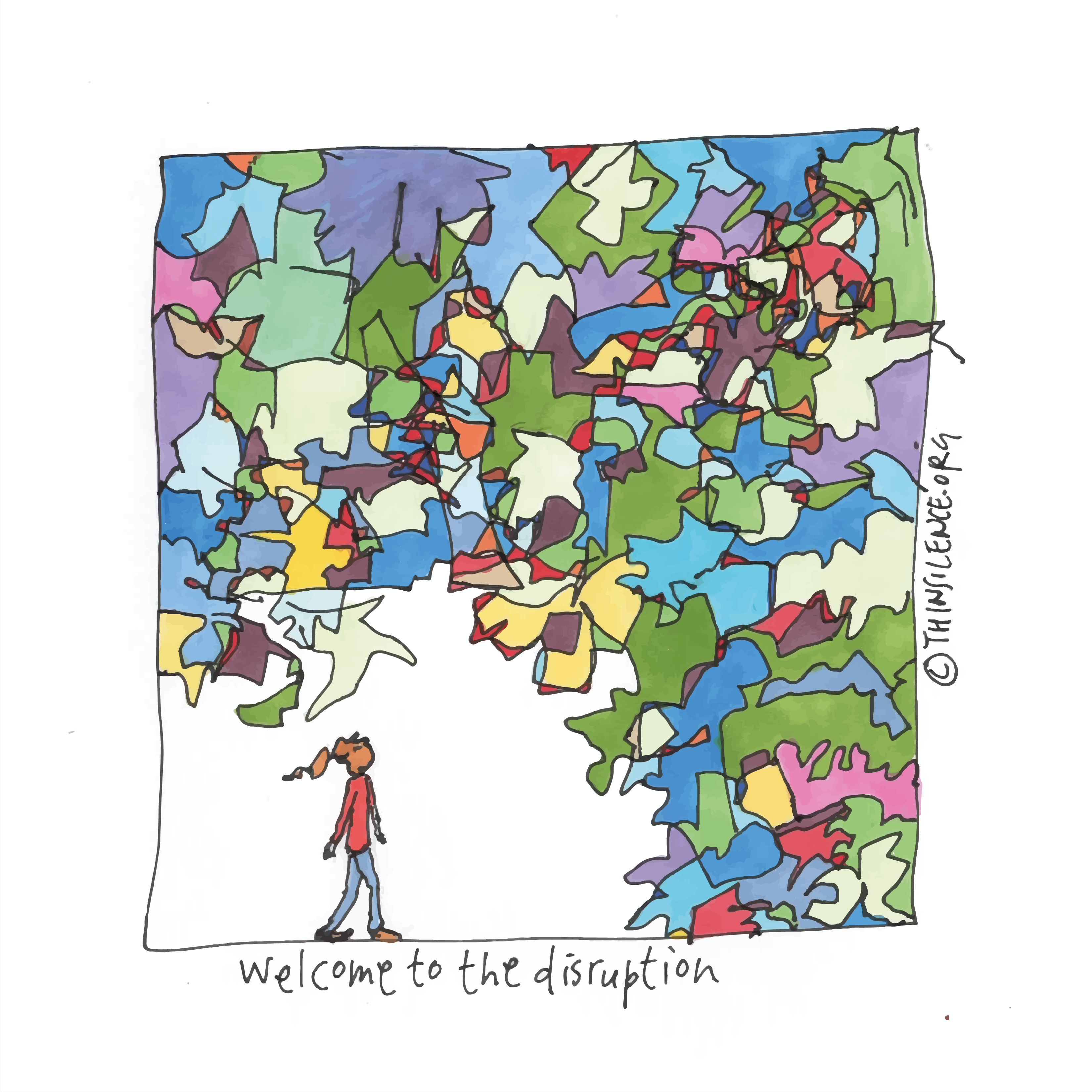
The disruptive narrative

For everything there is a season, and a time for every matter under heaven: a time to seek, and a time to lose; a time to keep, and a time to throw away … .*
(The Teacher)

Civilisation is a race between education and catastrophe.**
(H. G. Wells)

It may not be in a written or electronic form, but we all have a curriculum vitae, a “course of life.”

Writing out your larger curriculum vitae can be a way of reflection.

A CV usually begins with educational qualifications and continue with work experience, jobs and positions. It might finally include other interests, and perhaps other related activities.

A larger CV would include the significant people in our lives: partners, mentors, children. It would also include transformative experiences.

As you reflect, does the CV unfold with a predictability that is somewhat painful to look upon?

Nassim Taleb writes concerning our predicament:

If you know in the morning, what your day looks like with any precision, you are a little bit dead – the more precision, the more dead you are.^

What such a life underlines is that everything is moving towards entropy.

Innovation can disrupt this inevitable, at least for a while:

Innovation … means finding new ways to apply energy to create improbable things and see them catch on.^^

“For a while” makes all the difference between existing and living.

CVs normally list things up to the present, but miss out, or at best, are vague about the future.

Why not try continuing yours into the future with a few surprises: those moments of innovation that you are going to focus as energy for making improbable things.

Here are four areas that will benefit from some innovation as identified by Ben Hardy:

Rather than facing our fears, and rather than facing the truth, we avoid them.

Rather than creating the life we want, we build that life that allows your problems to exist unresolved.

Rather than becoming the person we want to become, we stay the person we are.

Rather than adapting our personality to match our goals, we adapt our goals to match our current and limited personality.*^

Don’t see these as end points, but places to begin.

Bring it all into some journaling, be playful … add pictures.

Perhaps you had something else to do.

I just thought you might enjoy the disruption.

*Ecclesiastes 3:1, 6;    
**H. G. Wells, quoted in Ken Robinson’s Out of Our Minds;
^From Nassim Taleb’s The Bed of Procrustes;
^^From Matt Ridley’s How Innovation Works;
*^From Benjamin Hardy’s Personality Isn’t Permanent.

The sower

In our time we have released a totally new social force, “a stream of change so accelerated that it influences our sense of time, revolutionises the tempo of daily life, and affects the very way we feel the world around us.*
(Ken Robinson and Alvin Tofler)

The seeds have been shared out for the sunflower festival on the estate where I live.

The residents will sow their seed and around August time their flowers will be “judged.”

Everyone wins in some category or other: the tallest, the biggest flower, the most flowers, the one that finished well after struggling, the best one in a pot.

The real harvest is the conversations that take place between neighbours at the beginning and end of the festival.

Over the ages, the garden has become a metaphor for our lives, so, whilst not everyone has an outer garden, we all have an inner garden to tend, needing its equivalents of water, sunlight, weeding, nourishment.

More than ever, this garden is important to us.

Alvin Tofler wrote his words of warning on a typewriter back in 1974 and they would only become more true as the Internet arrived less than twenty years later.

The inner garden is a place we can withdraw to even in the busiest of worlds, nurturing ourselves towards health and harvest, the fruit of which we get to share with others.

It is there for us to enter at the beginning of the day: a gardening journal being a great help-sake for our visits, as we note how we are growing or not, and what’s preventing what ought to be our natural process.

Ken Robinson offers a solution echoing Wallace Stevens’ writing on reality and imagination:

Our best resource is to cultivate our singular abilities of imagination, creativity and innovation. Our greatest peril would be to face the future without investing fully in those abilities.**

Note Robinson’s use of the word cultivate.

Carl Sagan declared,

The oak tree and me, we’re made of the same stuff.

A couple of things we can do for our inner garden:

Visit a garden, whether yours, a public garden or the countryside and give yourself at least 4′ 33″ to pause awhile and gaze at something whilst it’s growing.

What does this plant or tree have to say to you?

Borrow or buy a book on imagination, creativity or innovation. Here are some starters, but there are so many:

The Necessary Angel from Wallace Stevens;
The Icarus Deception from Seth Godin;
How Innovation Works from Matt Ridley;
Messy from Tim Harford;
and, of course, Out of Our Minds from Ken Robinson

*Ken Robinson quoting Alvin Tofler in his book Out of Our Minds;
**From Ken Robinson’s Out of Our Minds.

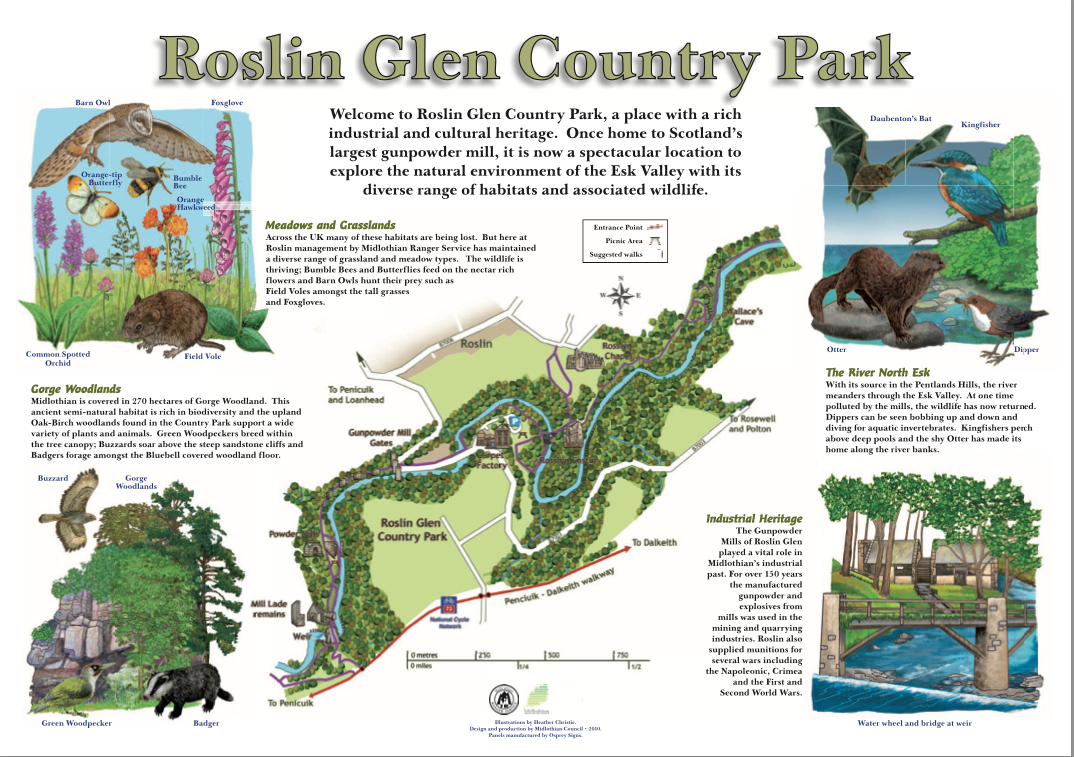
A walk Christine and I took on Saturday: the Powder Mills

Oh, what have you seen …

For all the virtues of indirection and silence, the hub of cooperation is active participation rather than passive presence.*
(Richard Sennett)

I appreciate what Richard Sennett is saying here, but I want to play with his words to suggest there can also be passive participation and active presence.

Passive participation as simply joining in with the decisions and activities of others.

Active presence as bringing the quality of deep listening and noticing that can lead to greater breakthroughs.

Bernadette Jiwa helps us to see capacities that will become increasingly valuable in a distracted and myopic world:

They pay attention to the seemingly mundane or insignificant, and delight in the kind of details other people overlook or ignore. The best storytellers are:

  • great listeners; and
  • first class noticers.**

Jiwa is relating these to storytellers, but we’re all tellers of stories really.

Our families are stories, our workplaces are stories, our nations and human existence are all stories we’re trying to tell better.

Karen Armstrong encourages us to ‘make place for the other,’^ and listening and noticing is the beginning of this openness to others and the world.

We must also make room for ourselves:

When you get to be older, and the concerns of the day have all been attended to, and you turn to the inner life – well, if you don’t know where it is or what it is, you’ll be sorry.^^

Silence, solitude, slowness are the friends of listeners and noticers.

*From Richard Sennett’s Together;
**From Bernadette Jiwa’s What Great Storytellers Know;
^From Karen Armstrong’s Twelve Steps to a Compassionate Life;
^^Joseph Campbell, from Joseph Campbell and Bill Moyers’ The Power of Myth.

Don’t forget to take your story with you today

A cat moves as if his body were not an object but an unfurling gesture. … The human animal makes the most complex movement. In its every gesture the long, upright body of a person is weighted with consciousness. More often than not the inner gravity of thought is heavier than the gravity of the clay.*
(John O’Donohue)

Instructions for living a life. Pay attention. Be astonished. Tell about it.**
(Mary Oliver)

Around three thousand years ago, tradition has it that King Solomon was scribing his wisdom; things like:

He has made everything suitable for its time; moreover, he has put a sense of past and future into their minds, yet they cannot find out what God has done from the beginning to the end.^

Today, our species is exploring deep into space on the one hand and nanotechnology on the other.

Measuring travel across space in light years: 6 trillion miles a year.

Measuring distance in nanospace in nanometres: a billionth of a metre.

If you want to go smaller there are always picometres, attometres and temtometres: respecitively a thousandth, millionth and billionth of a nanometre.

I cannot imagine these distances: apparently a nanometre is equivalent to the distance a man’s beard grows in a second.^^

I am feeling the weight of O’Donohue’s gravity of consciousness.

Whatever we do, and we can do some amazing and astonishing things, we’ll never lose ourselves to the distances or the details if we daily connect with our stories: the kinds of story that are moving, unfolding, rather than fixed.

Robert Mckee writes,

writers of unique characters underpin their creativity with research*^.

I’d just been reading Bernadette Jiwa’s account of spotting someone at a nearby café table taking out a notebook and observing a couple at another table, commenting to her husband and then reflecting:

‘She’s a writer.’ […] And I know for sure those details will end up in a story or novel one day.^*

We must never stop working at and researching for our personal stories:

Could a greater miracle take place than for us to look through each other’s eyes for an instant.

Reconnecting with your stories is the best way to start a day.

We can’t use light years and nanometres to measure our stories.

How do you measure?

*From John O’Donohue’s Divine Beauty;
**Mary Oliver, quoted in Bernadette Jiwa’s What Great Storytellers Know;
^Ecclesiastes 3:11;
^^From Ken Robinson’s Out of Our Minds;
*^From Robert McKee‘s newsletter: The Secret to One-of-a-Kind Characters;
^*From Bernadette Jiwa’s What Great Storytellers Know;
⁺From Henry David Thoreau’s Where I Lived, and What I Lived For.

The magnificent must

Selective ignorance is not the avoidance of learning. […] It’s knowing what to avoid.*
(Ben Hardy)

Generally my feeling is towards less: less shopping, less eating, less drinking, less wasting, less playing by the rules and recipes. All of that I want in favour of more thinking on the feet, more improvising, more surprises, more laughs.**
(Brian Eno)

There are many things that can divert us from what we must do in life.

Our must is different to a goal.

Goals have to be reached, that’s why we set them, but there is something about our must that feels unattainable, held ever before us in the blue of distance.

My must is about helping people to discover how amazing they are and the the gift they can bring into the world.^

There’ll always be another person to walk with, there’ll always be a need to increase and improve my skills.

Goals come and goals go, but the nature of must means to lose sight of it, or be diverted from it, would be soul-crushing.

Reading seven words for the best storytellers provided by Bernadette Jiwa, I thought how they can help us, perhaps through some reflection and journaling, to stay close to our must:

We must be:

present
aware
specific
vulnerable
empathetic
intentional
brave.^^

*From Benjamin Hardy’s Personality Isn’t Permanent;
**From Brian Eno’s A Year With Swollen Appendices;
^Someone recently shared how, ‘People are totally magnificent’;
^^From Bernadette Jiwa’s What Great Storytellers Know.

Gold in the shadows

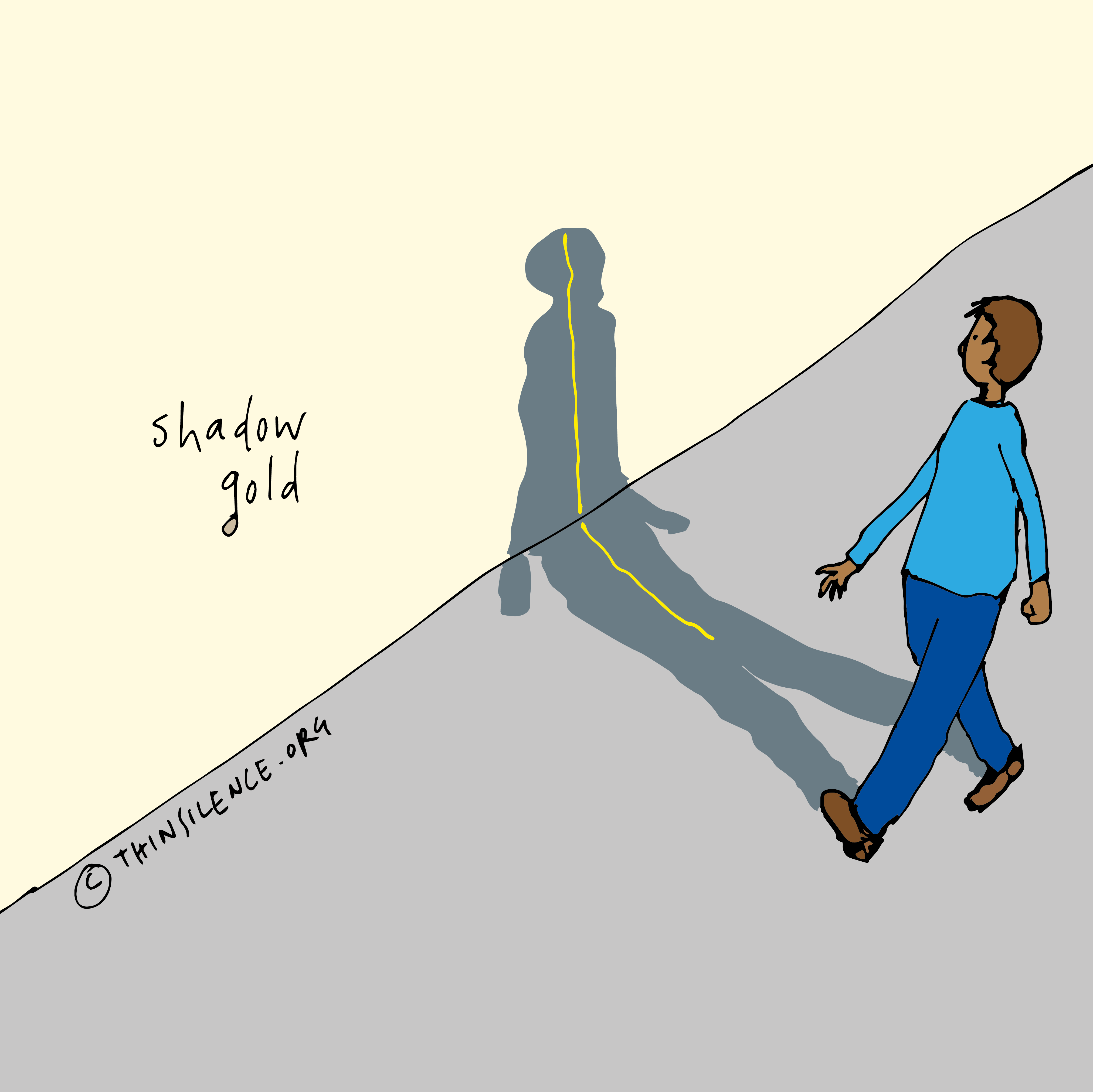
The shadow originates in all the negative experiences a person has accumulated, and part of the task of becoming free is the retrieval of the banished shadow. There are many difficult riches trapped in the shadow side. [Carl] Jung said the shadow held 90 percent gold.*
(John O’Donohue)

Innovation, like evolution, is a process of constantly discovering ways of rearranging the world into forms that are unlikely to arise by chance – and that happens to be useful. The resulting entities are the opposite of entropy: they are more ordered, less random, than their ingredients were before.**
(Matt Ridley)

There is gold to be mined from our most difficult experiences.

It’s not bullion, but ore.

Innovation refines the ore into something not only precious but beautiful.

Story is innovation.

In story we are able to gather the most precious things of our lives and shape them into something more.

Even now, my most painful memories provide me with hope and motivation and even energy.

In her latest book, Bernadette Jiwa lists the four differences between a good and a great story:

  • A good story tells.
  • A great story engages.
  • A good story informs people.
  • A great story moves people.
  • A good story chronicles events.
  • A great story invests people in the outcome.
  • A good story changes how we think.
  • A great story changes how we feel and what we do.^

As the first reader or listener to our story: we must create a tale that engages us at the deepest levels of our being; that constantly moves or motivate us to keep growing; that includes a greater future purpose that is larger than ourselves; and, one that changes us deeply – DNA-deep.

Mining is difficult but the outcomes is worth it many times over.

*From John O’Donohue’s Divine Beauty;
**From Matt Ridley’s How Innovation Works;
^From Bernadette Jiwa’s What Great Storytellers Know.

What’s in a day

What if you were given a whole day to pursue something important to you?

No interruptions, just the time to focus, imagine, create.

You have it: it’s called today.

Or what if you knew that today contained some treasure that would bring you joy, wrapped and hidden in its moments and hours, stillness and busyness, noise and silences.

How would you go into today differently?

Vibrancy

Each thing comes alive in the sun: how a stone vibrates to the sun is how it absorbs the light energy at that frequency and the rhythm of the frequency is the key to its colour. The frequency fillets out a specific colour from the spectrum of light an this then becomes the colour of the object.*
(John O’Donohue)

vibrant (adj.) 1550s, “agitated;” 1610s, “vibrating” (especially “vibrating so as to produce sound,” of a string, etc.), from Latin vibrantem (nominative vibrans) “swaying,” present participle of vibrare “move to and fro” (from PIE root *weip- “to turn, vacillate, tremble ecstatically”). Meaning “vigorous, full of life” is first recorded 1860. Related: Vibrantlyvibrancy.**

Everyone vibrates uniquely to bring a different “colour” into the world.

To bring this specific colour, it is necessary to find our light environments for bringing this out: the stories we create, talents and values, the atmospheric mix of ideas, experiences, people and truths.

Some things to take a playful look at.

*From John O’Donohue’s Divine Beauty;
**From the Online Etymology Dictionary.

Gap or gain

The following words delighted me so much when I read them yesterday that I shared them at the beginning of each dreamwhispering conversation in the day.

The poem The Table is by Edip Cansever who sold carpets in Istanbul’s Grand Bazaar and wrote poetry:

The Table
A man filled with the gladness of living
Put his keys on the table,
Put flowers in a copper bowl there.
He put his eggs and milk on the table.
He put there the light that came in through the window,
Sounds of a bicycle, sound of a spinning wheel.
The softness of bread and weather he put there.
On the table the man put
Things that happened in his mind.
What he wanted to do in life,
He put that there.
Those he loved, those he didn’t love,
The man put them on the table too.
Three times three make nine:
The man put nine on the table.
He was next to the window next to the sky;
He reached out and placed on the table endlessness.
So many days he had wanted to drink a beer!
He put on the table the pouring of that beer.
He placed there his sleep and his wakefulness;
His hunger and his fullness he placed there.
Now that’s what I call a table!
It didn’t complain at all about the load.
It wobbled once or twice, then stood firm.
The man kept piling things on.*

Later in the day I heard Lauren Greenfield being interviewed about her documentary about the time-share billionaires David and Jackie Siegel’s dream to build the American Versailles, a 90,000 square foot mega-mansion which would make it the largest home in the States.**

The housing collapse then happened, and they lost and then regained the mansion which remains unfinished, but listening to David in a clip from the documentary, one could only come away with the impression that he was a deeply dissatisfied and unhappy man.

Cansever’s poem is an example of a gain mindset – look how far I’ve come, see what I have, while Siegel’s is a gap mindset – there is so much missing.

*Edip Cansever’s The Table, quoted in Kate Clanchy’s How to Grow Your Own Poem;
**Lauren Greenfield’s The Queen of Versailles.

Entering the day

We awaken and return to the world when the colours return at dawn. There is is a beautiful word in Irish for this: luisne – the first blush of light before dawn breaks.*
(John O’Donohue)

The action in a universe of possibility may be characterised as generative, or giving, in all sense of that word – producing new life, creating new ideas, consciously endowing with meaning, contributing, yielding to the power of contexts. The relationship between people and environments is highlighted, not the people and the things themselves. Emotions that are relegated to the special category of spirituality or abundant hero: joy, grace, awe, wholeness, passion, and compassion.**
(Ben and Roz Zander)

I enter the day:
its newness and freshness,
its skies, blueness and cloud,
its stillness and busyness,
its silence and noisiness,
its trees and pavements,
its doing and being;
taking only my openness –
I do not know what I will find,
or what will find me.

*From John O’Donohue’s Divine Beauty;
**From Benjamin and Rosamund Zander’s The Art of Possibility.