Nil saoi gan locht

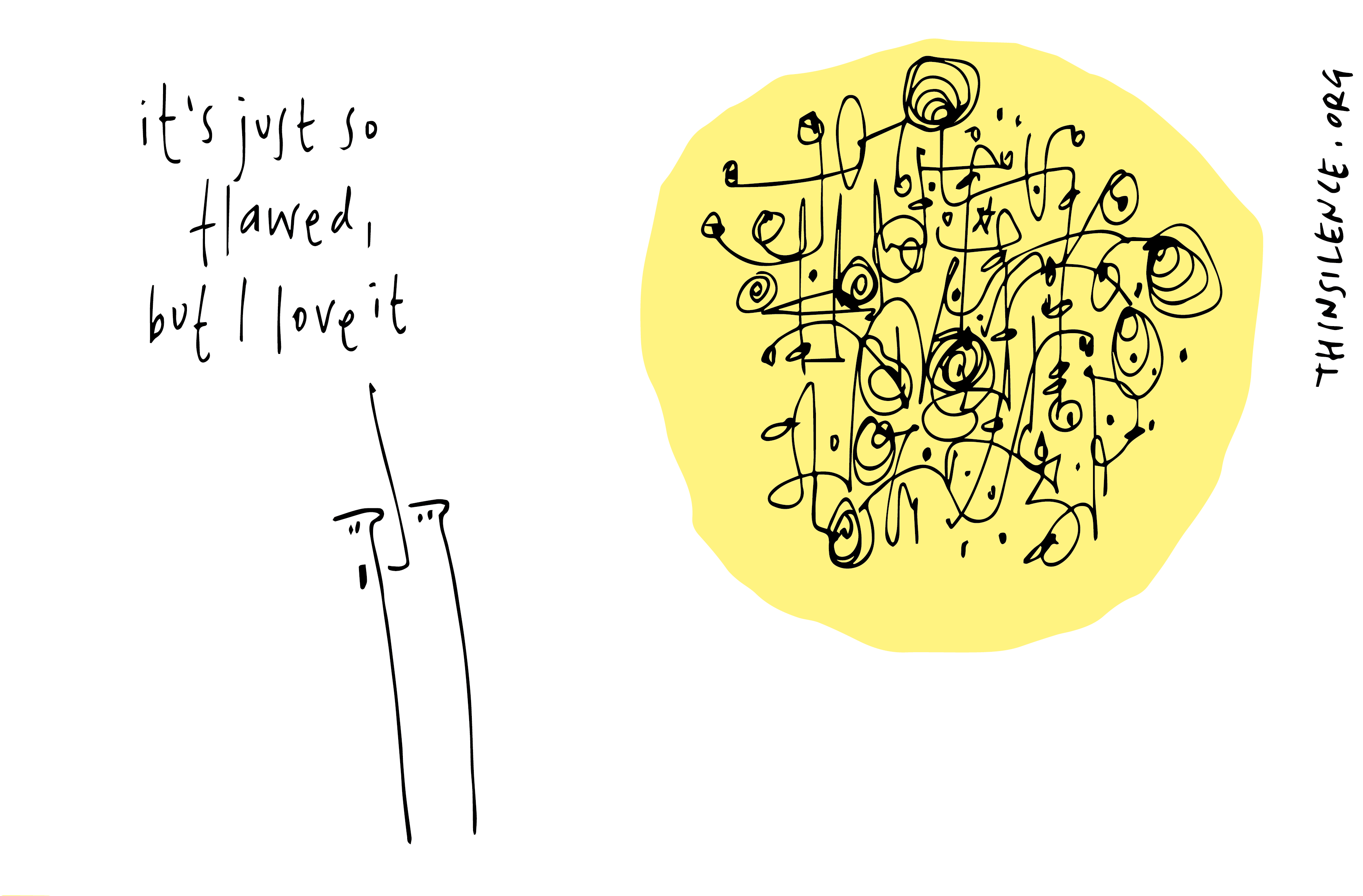
There is an old Irish proverb, ‘Nil saoi gan locht’ – there is no craftsman without a flaw.*

Frequently, in a journey of the soul, the most precious moments are the mistakes. They have brought you to a place that you otherwise woulds have avoided.**

(John O’Donohue)

We may think flaws and mistakes are no way to live and work.

As I reflect on how I got to be here, in place and time, I have to confess John O’Donohue sees me truly.

This truth keeps moving me forward.

His words brought to mind some words I embraced as soon as I read them decades ago, and which architect and artist Charles Rennie Mackintosh would make his mantra:

There is hope in honest error, none in the icy perfections of the mere stylist.^

*From John O’Donohue’s Divine Beauty;
**From John O’Donohue’s Anam Cara:
^J. D. Sedding.

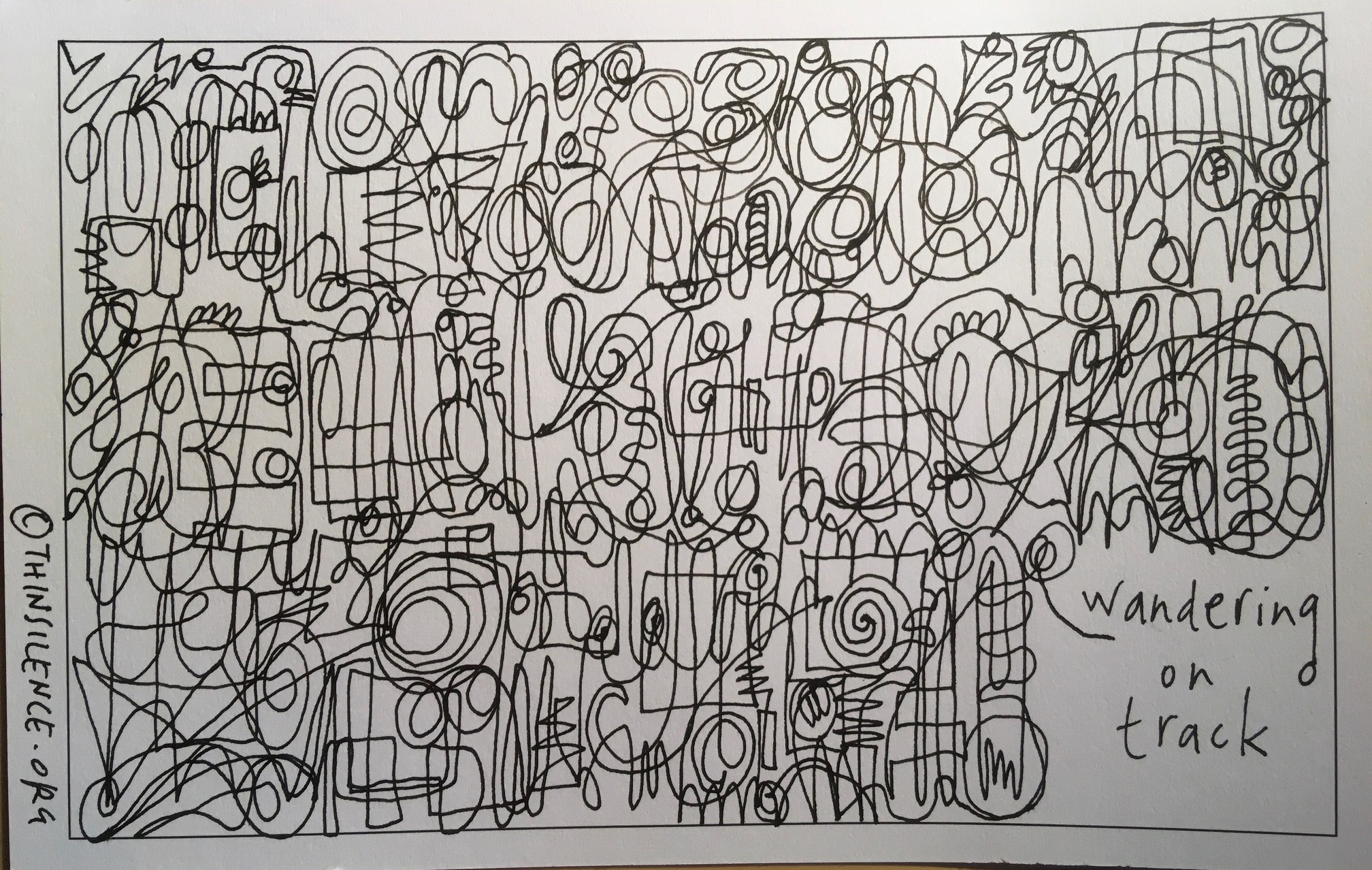
Doodling with a wandering line

(Temporary image)

Here’s another simple doodling exercise following on from last Saturday’s doodling post.

We’re going to use one line to complete today’s doodle using the frame method.

Check out last week’s post to make your simple square frame.

Place your frame in one corner of the paper you’re doodling on, use all the shapes from the visual alphabet filled the square, leaving your line waiting to carry on once you’ve re-placed your frame, which should slightly overlap the square just finished.

Make each square different until you’ve finished.

Colour in. Everything changes with colour.

The importance of desire

An inner alignment starts to develop that can release extraordinary energy and creativity, qualities previously dissipated by denial, inner contradiction, and unawareness of the situation and oneself.*
(Peter Senge)

Eros is the mother of life, the force that has brought us here. It constantly kindles in us the flame of beauty and the desire for the Beautiful as a path towards growth and transformation.**
(John O’Donohue)

We are creatures of desire.

We have basic to complex desires, there are healthy to unhealthy desires.

We cannot live without them.

Through each of our lives runs a desire line, leading us to bring beauty into the world and to live our lives in service of others.

This in billions of different ways.

For me there is only the traveling on paths that have heart, on any path that may have heart, and the only worthwhile challenge is to traverse its full lengt – and there I travel looking, looking breathlessly.^

*From Peter Senge’s The Necessary Revolution;
**From John O’Donohue’s Divine Beauty
;
^From Carlos Casteneda’s The Teachings of Don Juan.

And your name shall be Spring

Eros is the light of wisdom that awakens ad guides the sensuous. It is the energy that illuminates the earth. Without it, the earth would be a bare, cold planet for Eroos it the soul of the earth. … Eros is the mother of life, the force that has brought us here.*
(John O’Donohue)

Coming from so far away, everything on our earth is new to them, interesting and worthy of examination. Nothing is to be taken for granted. There are so many questions to ask. The whole world is, via as yet unmarked minds, born anew.**
(The School of Life)

I am a child of the summer but spring is my favourite time of the year.

We are surrounded by a living picture reminding us of how our creativity and fruitfulness is not lost somewhere in the past but comes again and yet again.

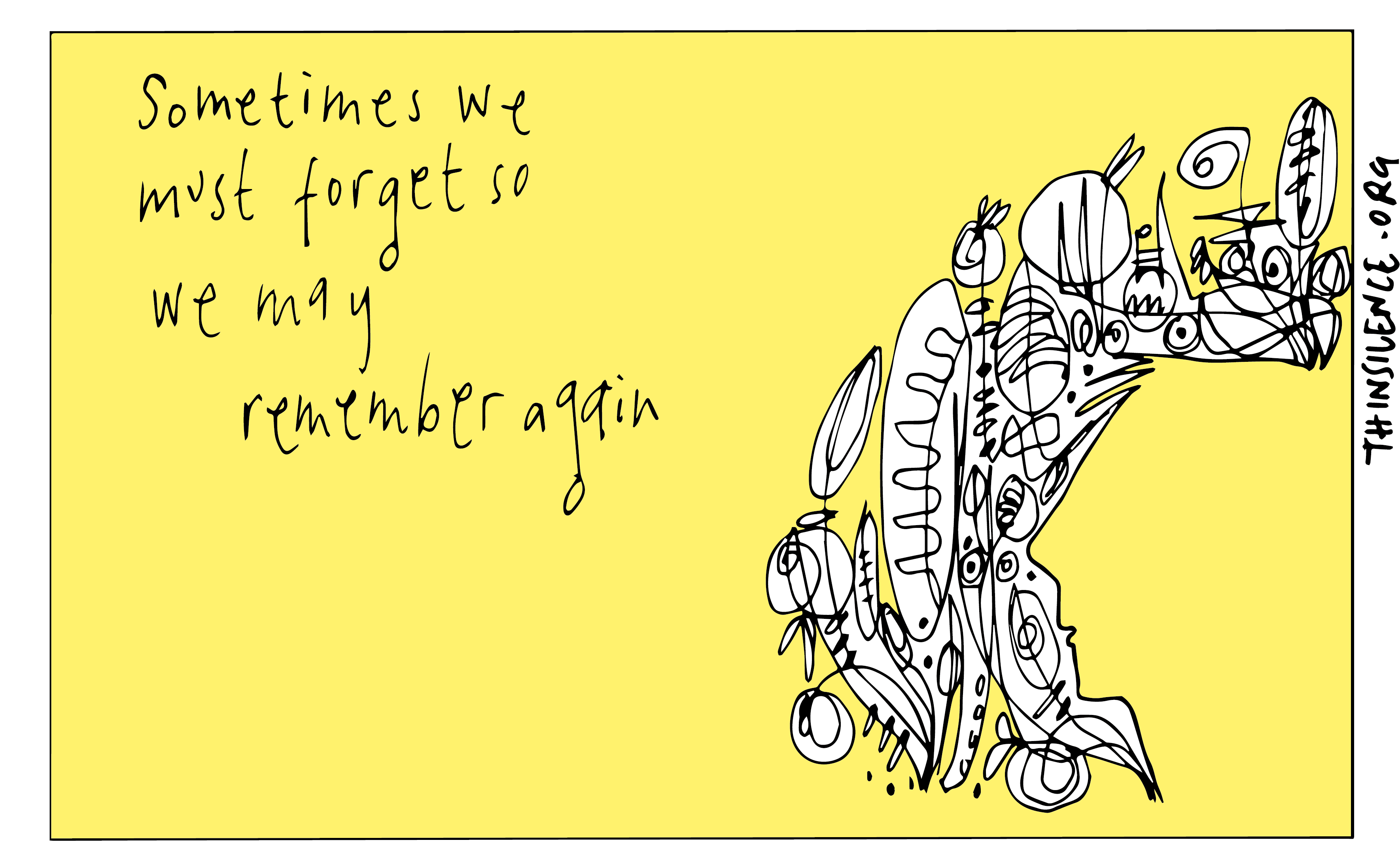
Perhaps winter is a season of forgetting so that we are able to come anew to this experience of spring: childlike, examining, questioning, dreaming, fruiting.

The curious shall inherit the earth.

*From John O’Donohue’s Divine Beauty;
**The School of Life describing children, quoted in Austin Kleon’s blog: The School of Life: How to be curious.

Desire lines

Advice from people who have gotten lucky is a tricky thing. … Luck might not be a strategy, but setting yourself up to be lucky might be.*
(Seth Godin)

Lucky people tend to be those who get themselves out there more than those who stay at home.

We live in a universe of abundance rather than a world of scarcity.

Specifically, we all have something to give, and with seven billion people on the planet, that’s a lot of resources.

Abundance is more a way of seeing.

Desire lines are what we call those paths that cut across the grass the city planners and architects have put down.

Canny developers wait to see where people desire to walk before putting the paths in place.

As we think about it today, a desire line is a way of getting “out there” in a way that is personal to each of us.

It translates into doing the faithful things that help us turn up and be open, to be able to follow leads when they appear and to show our work.

Our best desire lines open us to our passions overcoming inertia, originality and generosity ovecomingr dogma, service and adventure overcoming ease, following convictions overcoming wilting under criticism, apologising overcoming blagging, kindness overcoming being clever at the expense of others, being a builder overcoming being a cynic.

*From Seth Godin’s blog: Luck is not a strategy.

The liberating cycle of creativity

It is often said that education and training are the keys to the future … but a key can be turned in two directions. TurN it one way and you lock resources away. Turn it the other way and you release resources and give people back to themselves.*
(Ken Robinson)

My hunger for freedom is my hunger for myself, for my creative initiative.**
M. C. Richards)

If you are living in your creativity – and there are as many creativities as there are people – then it is likely that someone encouraged you to go forth and explore and discover.

It’s not that some are creative and others are not, rather some are living in their creativity while others are not. (I think it may surprise us to discover who is and who isn’t.)

Ken Robinson writes very helpfully for us:

There are three related tasks in teaching for creativity: encouraging, identifying and fostering.*

Encouragement is a gift that makes it possible to enter into the adventure of discovering more about our creativity: and the more we discover the more we have to develop and grow.

Towards this adventure, I offer Erwin McManus’ encouragement:

And isn’t that the whole point of choosing to live an adventure – to keep your eyes wide open and to soak in the beauty of the life all around you.^

Everything changes from the perspective of discovery.

It was Erwin who encouraged me deeper into my own adventure. Had I not been willing to receive his gift then I am not sure I would have come to be a dreamwhisperer, or a doodler.

I leave the final words to Walt Whitman, who also encourages: encourages us to question everything i order to find our creativity:

re-examine all you’ve been told at school or church or in any book; dismiss whatever insults your own soul, and your very flesh shall be a great poem and have the richest fluency not only in its words but in the silent lines^^.

*From Sir Ken Robinson’s Out of Our Minds;
**From M. C. Richards’ Centering;
^From Erwin McManus’ The Barbarian Way;
^^From Walt Whitman’s Leaves of Grass.

This could take the rest of the day

I think it was one of the popes who, when asked how long he prayed each day, replied, “About ten minutes, but I spend all day thinking about it”.*
(Nick Cave)

You desire truth in the inward being; therefore teach me wisdom in my secret heart.**

Connecting with truth and wisdom in the morning can go a long way through the day, or a week or more.

I am thinking of the possibilities for creativity that may not appear in an instant or when we want them to, but are more likely to emerge as we stay close to our values, energies, thoughts, feelings, talents:

A creative person. Initiating, enacting. Using his lifetime to find his original face, to awaken his own voice, beyond all learning, habit, thought: to tap life at its source. When the human community finally knows itself, it will discover that it lives at the centre. Men will be artists in their life and labour.^

*From Nick Cave’s Red Hand Files: Issue #140;
**Psalm 51:6;
^From M. C. Richards’ Centering.

Sappiness

It is the nature of the earth and of our dust to be in constant contact with the impulses of life. If we listen, we will hear the continuous tread of love moving up our limbs like sap, like an electric current, impelling us as well to stir and step put.”*
(M. C. Richards)

How much of the beauty of our own lives is about the beauty of being alive? How much of it is conscious and intentional?That is the big question.**
(Joseph Campbell)

*From M. C. Richards’ Centering;
**From Joseph Campbell and Bill Moyers’ The Power of Myth.

Doodling with a visual alphabet

I thought to offer a doodling idea for today

Below, you’ll find a visual alphabet – basically all the shapes you need in order to doodle.

You’ll need a piece of paper for your design and a ten centimetre square piece of paper to make a frame from.

For the frame, fold the paper in half, fold it again so that it makes a smaller square. From the corner where all the folds meet cut out a one centimetre square – this will leave you with a two centimetre square in the middle of your frame.

You’ll build up your doodle in small blocks using the frame.

I filled the one above with all the shapes from the alphabet in a different formation.

You might also try putting one shape or a few shapes in each block, changing these as you build your doodle up block by block.

If there are spaces between the blocks you can “knit” them together using different shapes from the alphabet.

Then you have something to colour – which changes everything.

Enjoy.