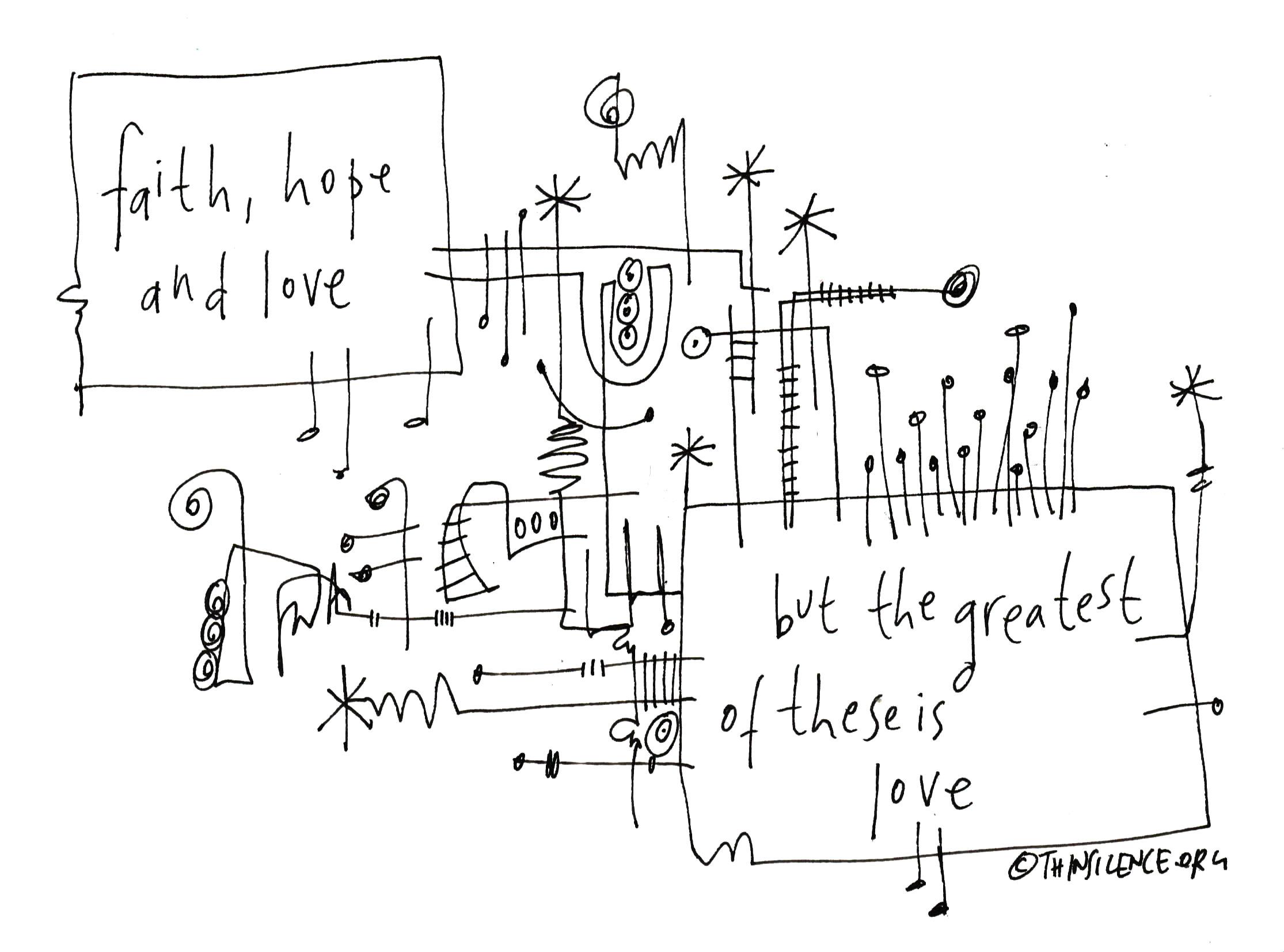
Love is perhaps the most difficult task given us, the most extreme, the final proof and text, for which all other work is only preparation.* Rainer Maria Rilke
John Lewis asked a “what if” question as a tool for social alchemy: what if the beloved community were already a reality, the true reality, and he simply had to embody it until everyone could see it.* Krista Tippett
Love has everything to do with it. Theory U envisages a journey from I-in-me, The self existing in the cocoon in a small defensive world, to I-in-it, in which we become open to new information, then I-in-us, and we learn about each other, to I-in-now, when we open to what is wanting to emerge, The better society we know is wanting to exist: The revolutionary force in this century is the awakening of a deep generative human capacity – the I-in-now.** Karen Armstrong writes about how, millennia ago, Humans began creating better stories: The first great flowering of mythology… came into being at a time when homo sapiens became home mecans, “man the killer,” and found it very difficult to accept the conditions of his existence in a violent world.^ We speak of tolerance and respect, but perhaps what we need a better story of love, The most difficult task of all.
The hunger will give you everything. And it will take from you everything. It will cost you your life and there’s not a damn thing you can do about it. But knowing this, of course, is what sets you free.* Hugh Macleod
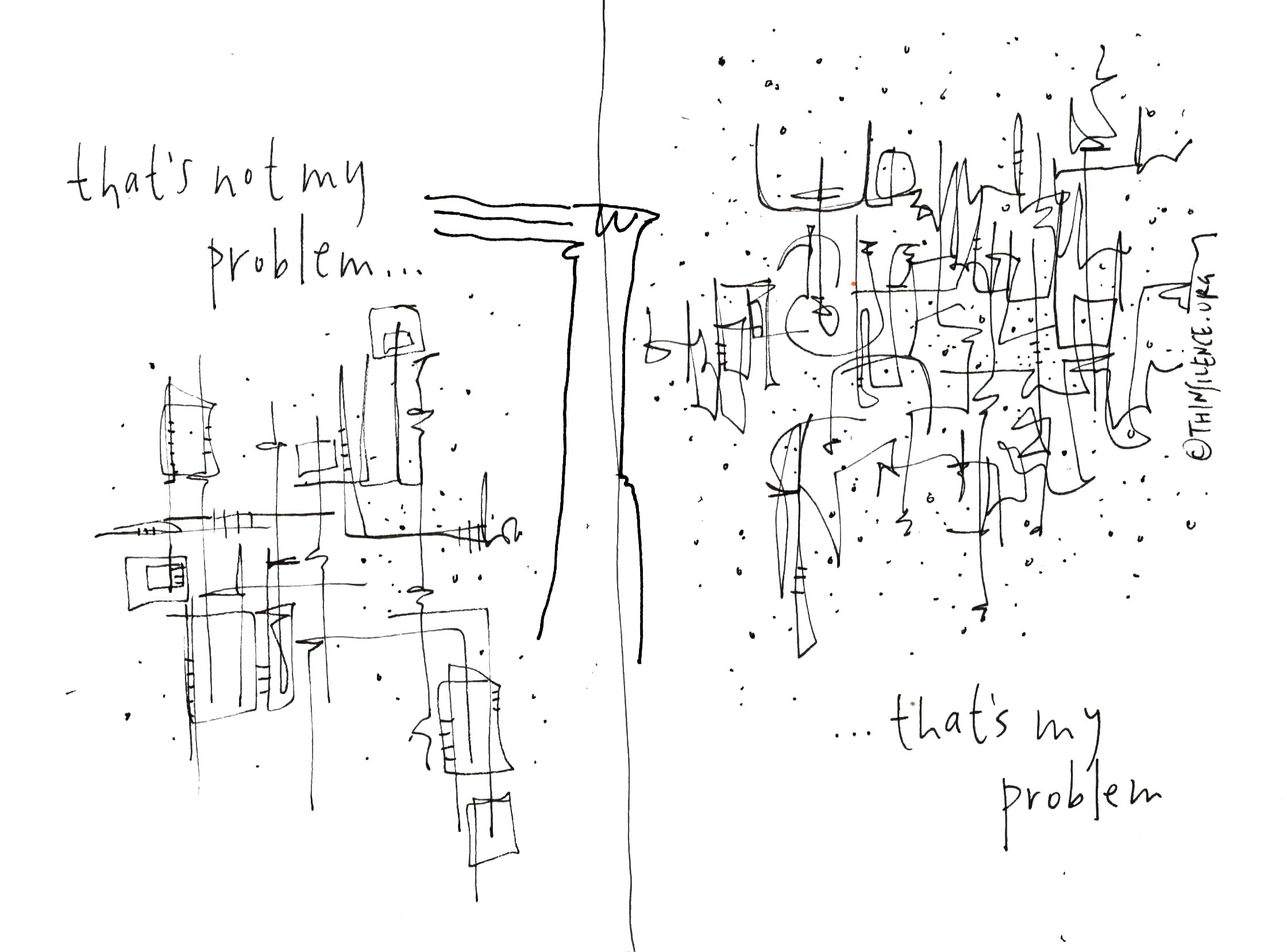
Problems don’t really care whether we acknowledge them or not. They still exist. What matters is how we choose to direct our energy, because our tomorrow is the direct result of the way we spend our resources today.** Seth Godin
… but this one is; We have to make sure we focus our energies on the problem we are here to make a difference with: Where our deepest joy meets the world’s greatest need.^
Though I do not believe that a plant will spring up where no seed has been, I have great faith in seed. Convince me that you have a seed there, and I am prepared to expect wonders.* Henry David Thoreau
If you keep telling people who they are, who their best selves are, if you keep reminding them of their true identity, there’s a good chance they’ll figure out what to do. Rob Bell
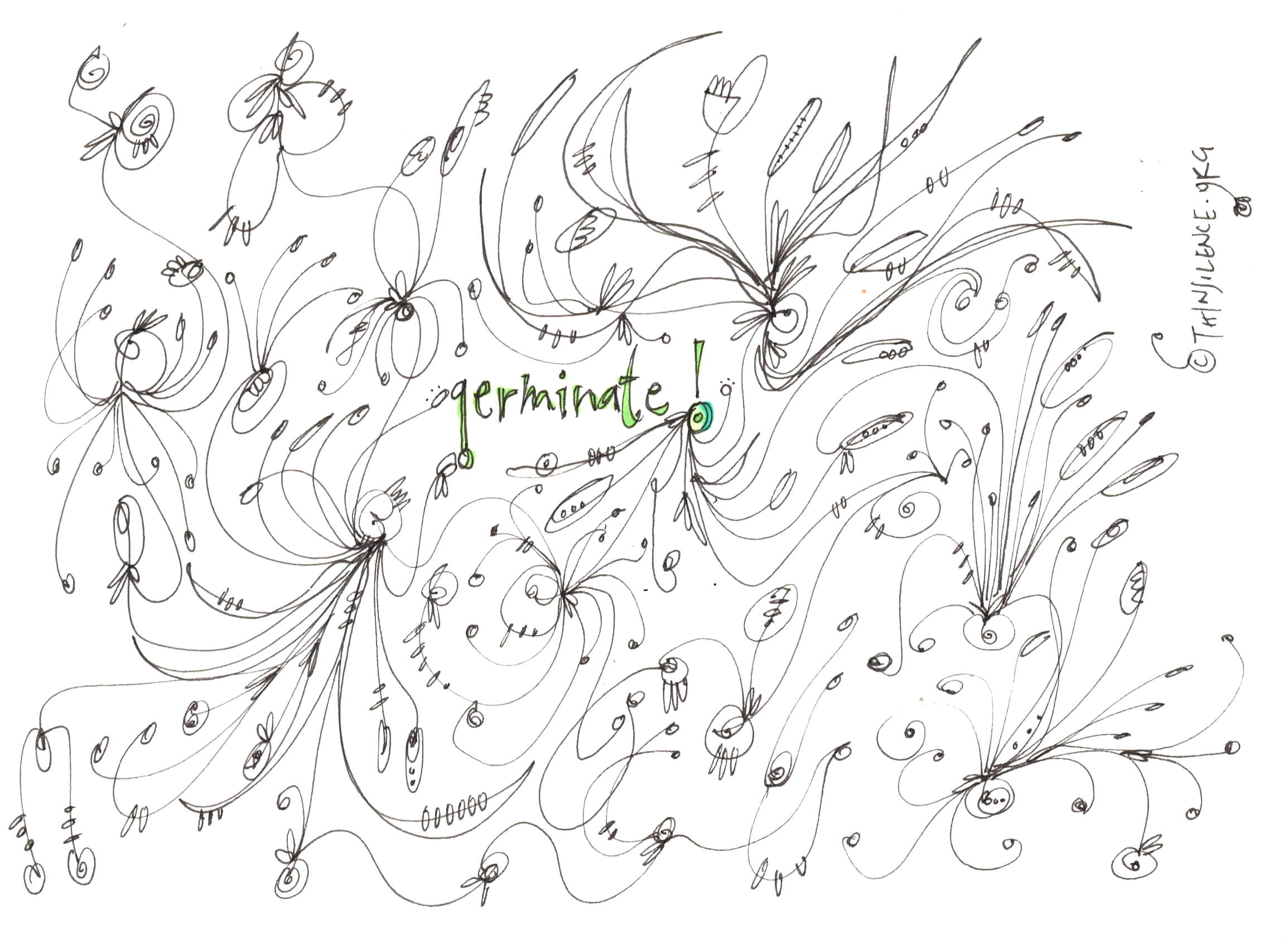
It’s a staggering thought: The mighty sequoia is contained within a tiny seed, just waiting to germinate; No less staggering is what lies within you, Waiting.
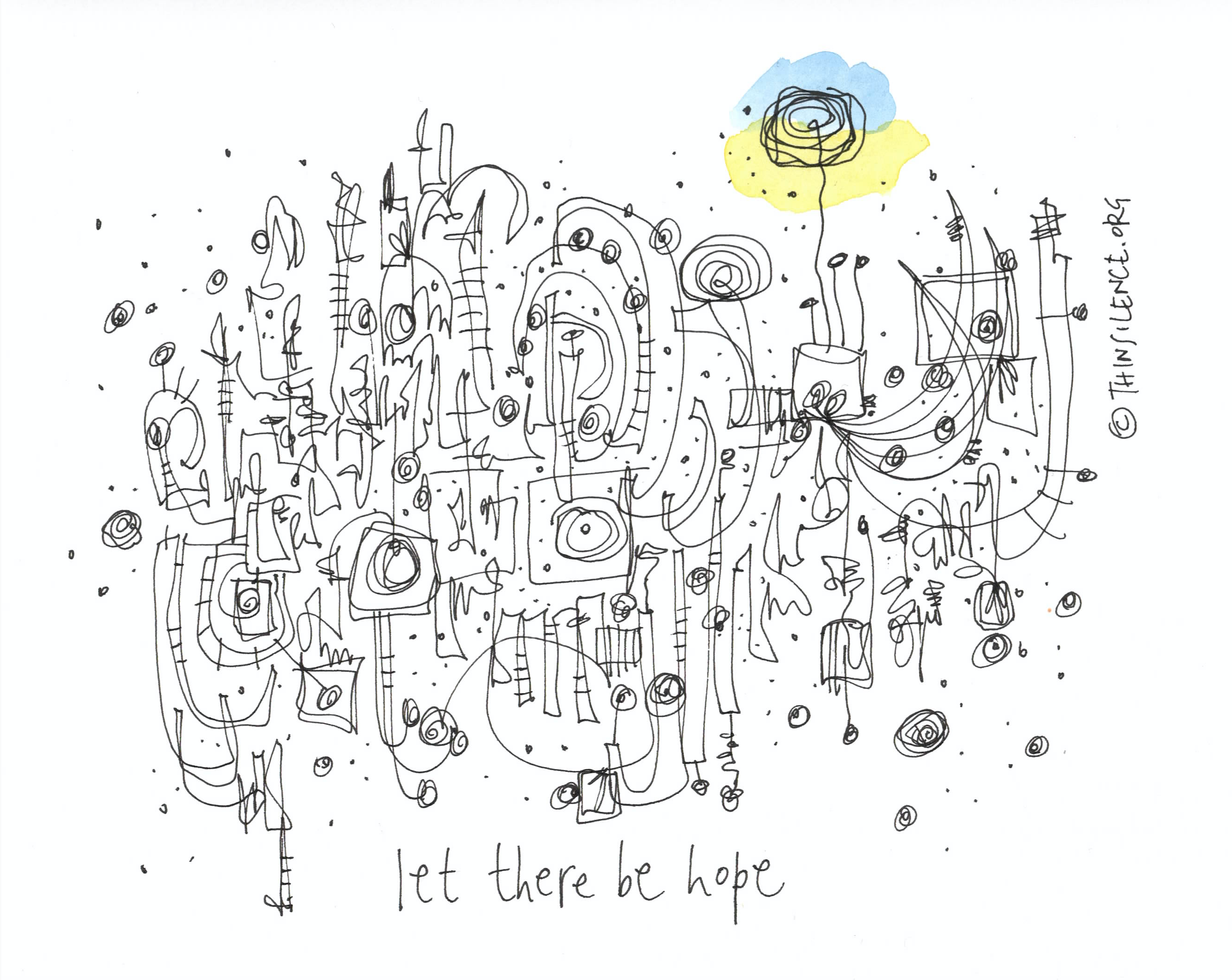
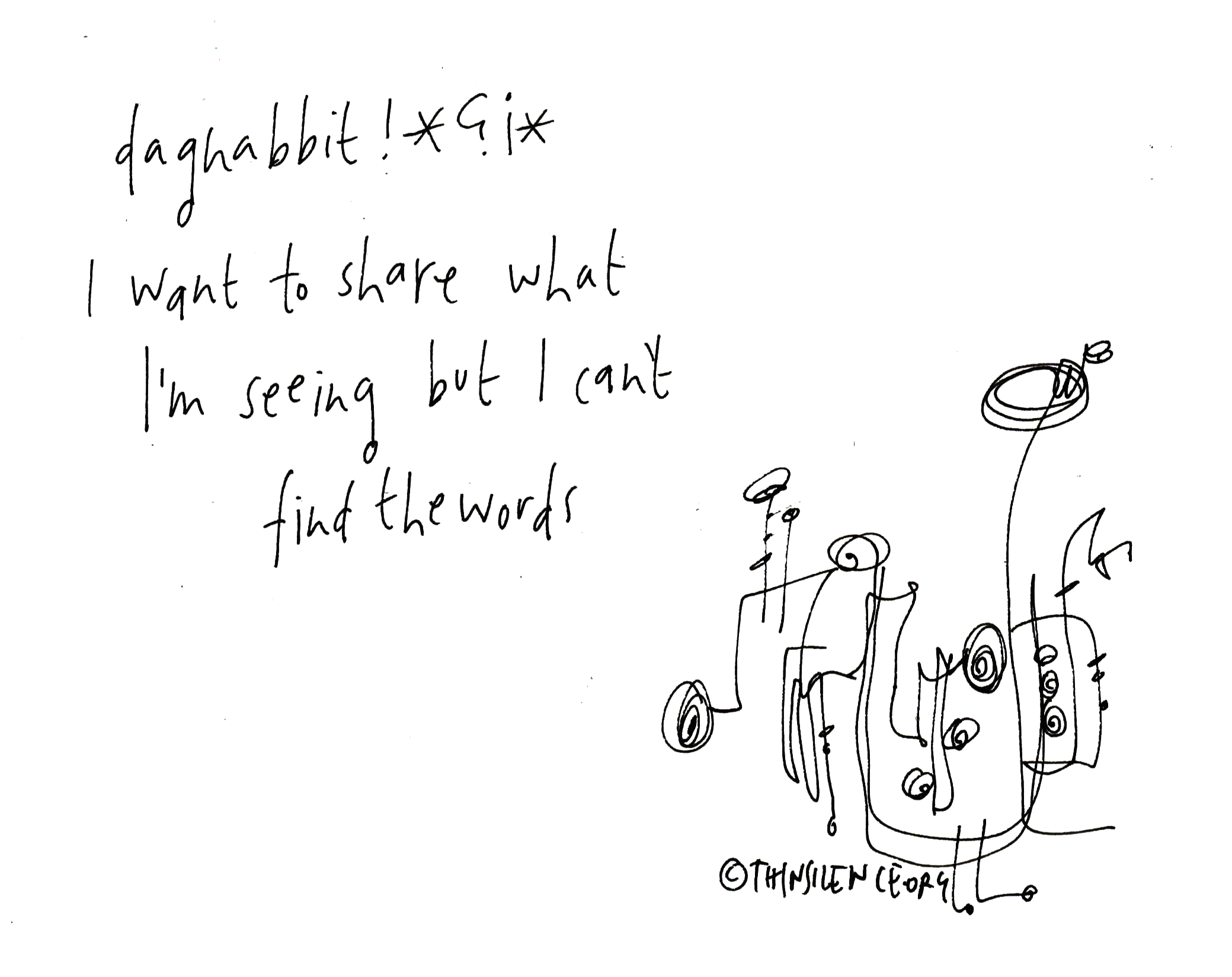
Words help us understand and enable us to share; The words of others have been light for us, So that we might not only see, but also know, and we can be light to others: Words make worlds.^
I would not give a fig for the simplicity on this side of complexity, but I would give my life for the simplicity on the other side of complexity.* Oliver Wendell Holmes
Our life experience will equal what we pay attention to.** William James
Some people lead simple lives, not daring to enter its complexity; Others enter into complexity and, becoming lost, Become trapped or overwhelmed; But some enter and, focusing on what gives them energy and joy, emerge into a life-in-all-its-fullness, Their guide for entering complexity and emerging many more times, Each time the richer.
Pay attention. Be astonished. Tell about it.* Mary Oliver
What we imagine to be aesthetic preferences are really survival instincts honed over millennia, instincts that helped us find promising place to forage and rest.** Annie Murphy Paul
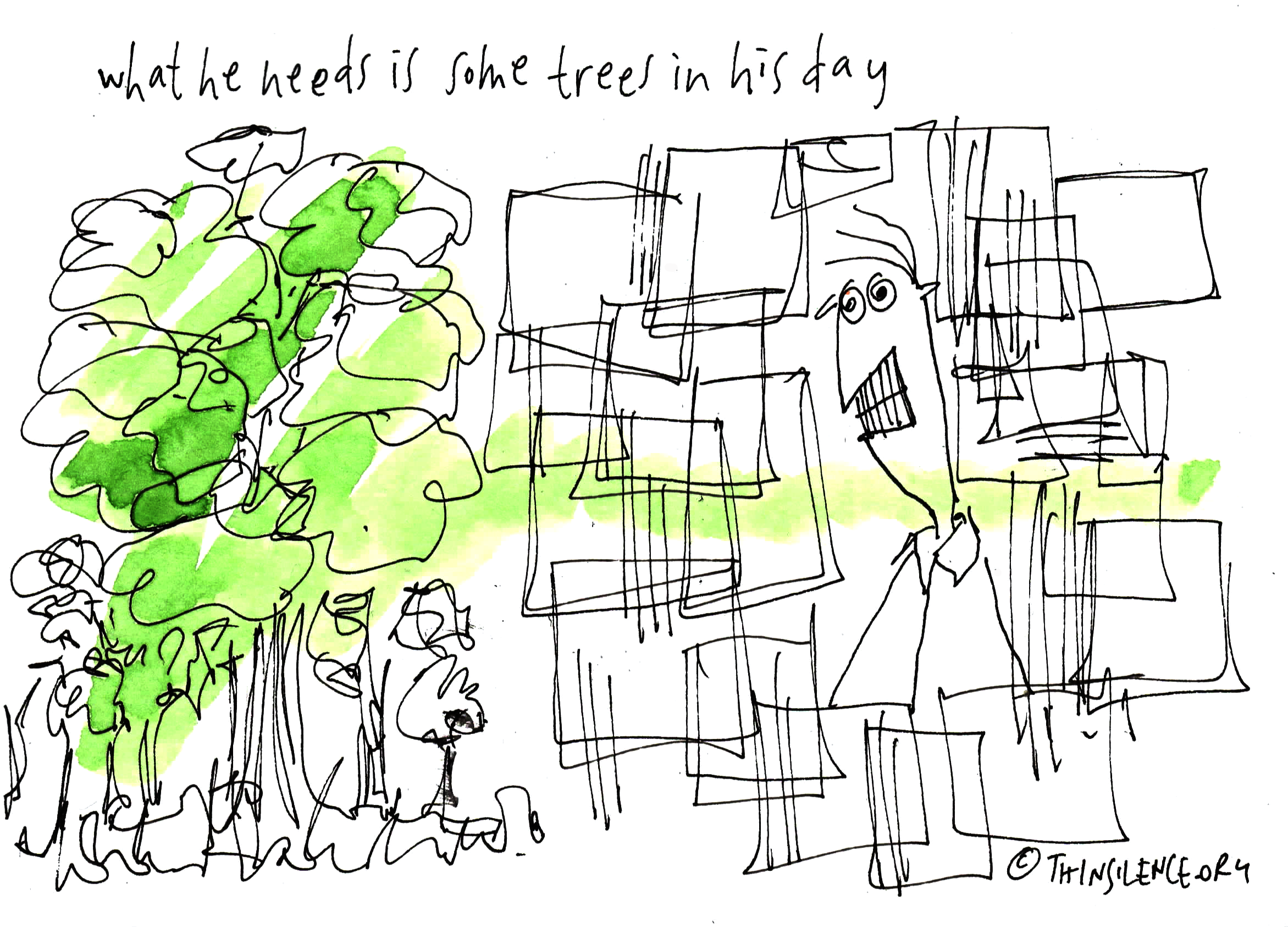
It is likely that whilst you read this, You are surrounded by the harsh, straight lines or perfect circles of human inventions. Beyond our walls, another world calls to us; Listen to it in birdsong, Here and here. Contact with the natural world releases oxytocins in us, reducing anxiety, yet we must also recognise that we have adapted too well to unnatural surroundings, even leaving some people over-anxious when in nature; as Viktor Frankl has pointed out: he retains a freedom, the human freedom to adapt to his fate, his environment, in one way or another^. We can do this life, but it’s better with some deep nature in it.
Each of the projects described in this book has at its centre something drawn by hand.* Quentin Blake
A positive thing that can come from anxiety is that it can be a sign that some things in your life, and in you, are out of alignment and need addressing.** Kate Sutton
Quentin Blake’s words form the opening sentence in the third book I’ve picked up from the illustrator so far this year – If you’ve ever read one of Roald Dahl’s tales then you’ll know Blake’s work. “Something drawn by hand” feels like a very healthy thing to do, Proffering a joining of our inside and outside worlds when the rush and noise of 21st century life refuses us rest and reflection. I’d also picked up a copy of Kate Sutton’s Drawing on Anxiety, a journal in which Sutton encourages drawing in a mindful way: Drawing calls for us to be more present, it allows the flow state, and to fully focus on the task at hand, which can be ever so soothing.** Here are some some of her examples: draw the things you find yourself doing when unhappy and anxious, and the things that make you feel calm, draw the things you hold tightly on to, and the things you would do if you weren’t afraid. Draw nature taking on a city, the things that help you sleep better, the things that help you in the morning, draw your inner critic, and some things your body has told you. This assumes that everyone can draw – And we can – It’s just that many of us gave up at a very early age; Lynda Barry asks: How old do you have to be to make a bad drawing?^ How old were you? We wrongly think that some can draw whilst most cannot, but drawing is more about seeing than drawing, Being present, paying attention, being led into a larger world. Don’t draw complicated, Draw simple (I call it doodling) – I love Blake’s images because they are uncomplicated, yet full of life. Here’re are a couple of things to be playful with: Take a number of objects out of your cutlery drawer and draw them as simply as possible; Search for “images of Quentin Blake” on your browser, Choose some images you really like and simply copy them. Now to find some words: Before writing and drawing were separated they were conjoined.^ I enjoy illustrating life with doodles and words – Even taking unhelpful thoughts and feelings, and doing something different with them, something more, so here’s a third thing to try: Re-member an unhelpful thought – This’ll never work, You’re rubbish at this, What a mess you’ve made, You don’t belong here; The internal critic is trying to protect us, but in a really unhelpful way, So we’re going to provide some help by inserting a word (or replacing negative words like “never” and “don’t”) from the following list:^^ (Self) Awarely Bravely Confidently Determinedly Energetically Fearlessly Gratefully Helpfully Imaginatively Joyfully Kindly Limitlessly Motivationally Nobly Perseveringly Quirkily Respectfully Strongly Thoughtfully Uniquely Vibrantly Worthily eXeptionally Youthfully Zealously. When we play with our sample thoughts, they become: This’ll work vibrantly, You’re fearlessly rubbish at this, What a thoughtful mess you’ve made, You bravely belong here. Create a picture to go with your sentence – perhaps something a la Blake, and maybe add a little colour, too. Notice what happens as you do this, as you playfully and imaginatively illustrate your life.
And the message of all these stories, the secret our poets and philosophers have been trying to tell us for centuries, is that our longing is the great gateway to belonging.* Susan Cain
As soon as humans had completed the evolutionary process, they found that a longing for transcendence was built into their condition.** Karen Armstrong
Our lives came with an ample supply of longing. Longing never runs out; We may bury it or misplace it, But we’re never far away from our inward longing – Who is my True Self? – and our outward lining – What is my Contribution?




You must be logged in to post a comment.