The width of seeing

Spiritual maturity is largely a growth in seeing, and full seeing seems to take most of your life time, with a huge leap in the final years.* (Richard Rohr)

The more we look the more we see, the more we see.

It’s not only a physical thing alone but it’s not a default in life, it’s a choice, and it’s available to everyone.

Every day.

When we do, something we can only describe as magical happens over a lifetime.

(*From Richard Rohr’s Falling Upward.)

Dreamlines and other paths available

The American man was captivated. ‘And can we go and look for these Dreaming-tracks? […].’

‘They can,’ she said. ‘You can’t.’

‘You mean they’re invisible?’

‘To you. Not to them.’

‘Then where are they?’

‘Everywhere,’ she said. ‘For all I know, there’s a Dreaming-track running right through the middle of my shop.’*

Only you can see your dreamline.

Each person must have the eyes of their heart wide open in order to see their own.

Dreamlines sound magical, but we have formed them with our values, talents, energies and experiences.

They are wild, foot-trodden ways and can be hard to follow with all the metalled and paved alternatives, but they run through every aspect and dimension of each person’s life:

A hero sets off in search of something elusive that has the power to change both their life and the world.**

(*From Bruce Chatwin’s The Songlines.)
(**From Chris Guillebeau’s The Happiness of Pursuit.)

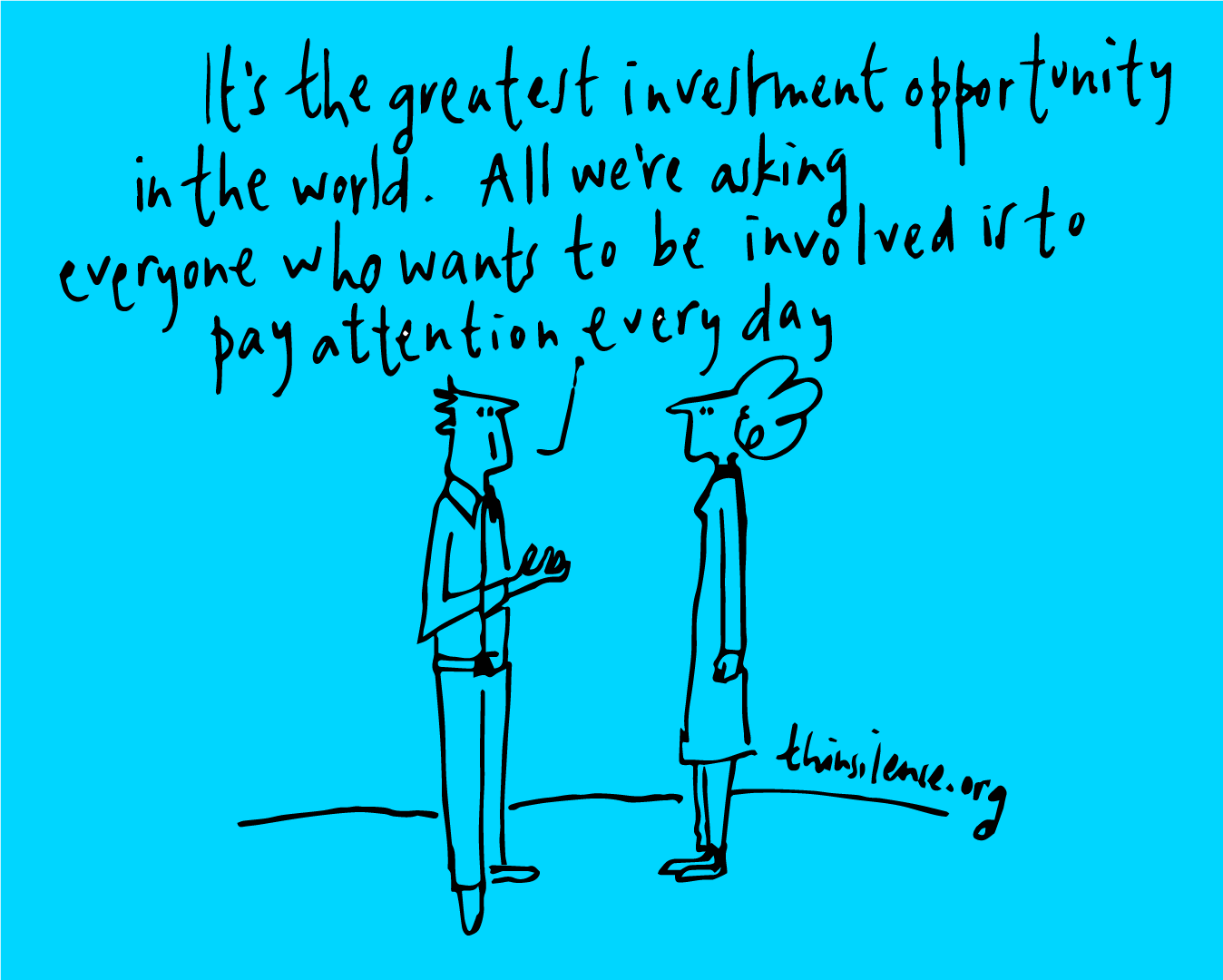
Time to pay attention

Attention is like energy in that without it no work can be done, and in doing work it is dissipated. We create ourselves by how we invest this energy. Memories, thoughts, and feelings are all shaped by it.*
(Mihaly Csikszentmihalyi)

Instructions for living a life. Pay attention. Be astonished. Tell about it.**
(Mary Oliver)

What kind of “estate” do you want to leave bequeath?

We know we can’t take anything with us once we have to give back the eighty or so years of energy we’ve been given. This proverb holds that right living are the most valuable to us when troubles come our way:

Riches do not profit in the day of wrath, but righteousness delivers from death.^

What we find is that there’s never the time to do right things. We have to make time. In this way it is both disruptive to us and to others in a valuable way. So, when Mihaly Csikszentmihalyi writes about attention being like energy we get it. Attention takes time. It’s the investment of who we are leaves behind memories, thoughts and feelings a burgeoning bank account never can.

Mary Oliver causes me to think about when we make time, when we invest energy, when we pay attention, we will be wowed, we will know ourselves to be rich, and then we must tell about it, which I take to mean, share it with others.

(*From Mihaly Csikszentmihalyi’s Flow.)
(**Mary Oliver, quoted in Sue Fan and Danielle Quigley’s Do/Inhabit/.)
(^Proverbs 11:4)

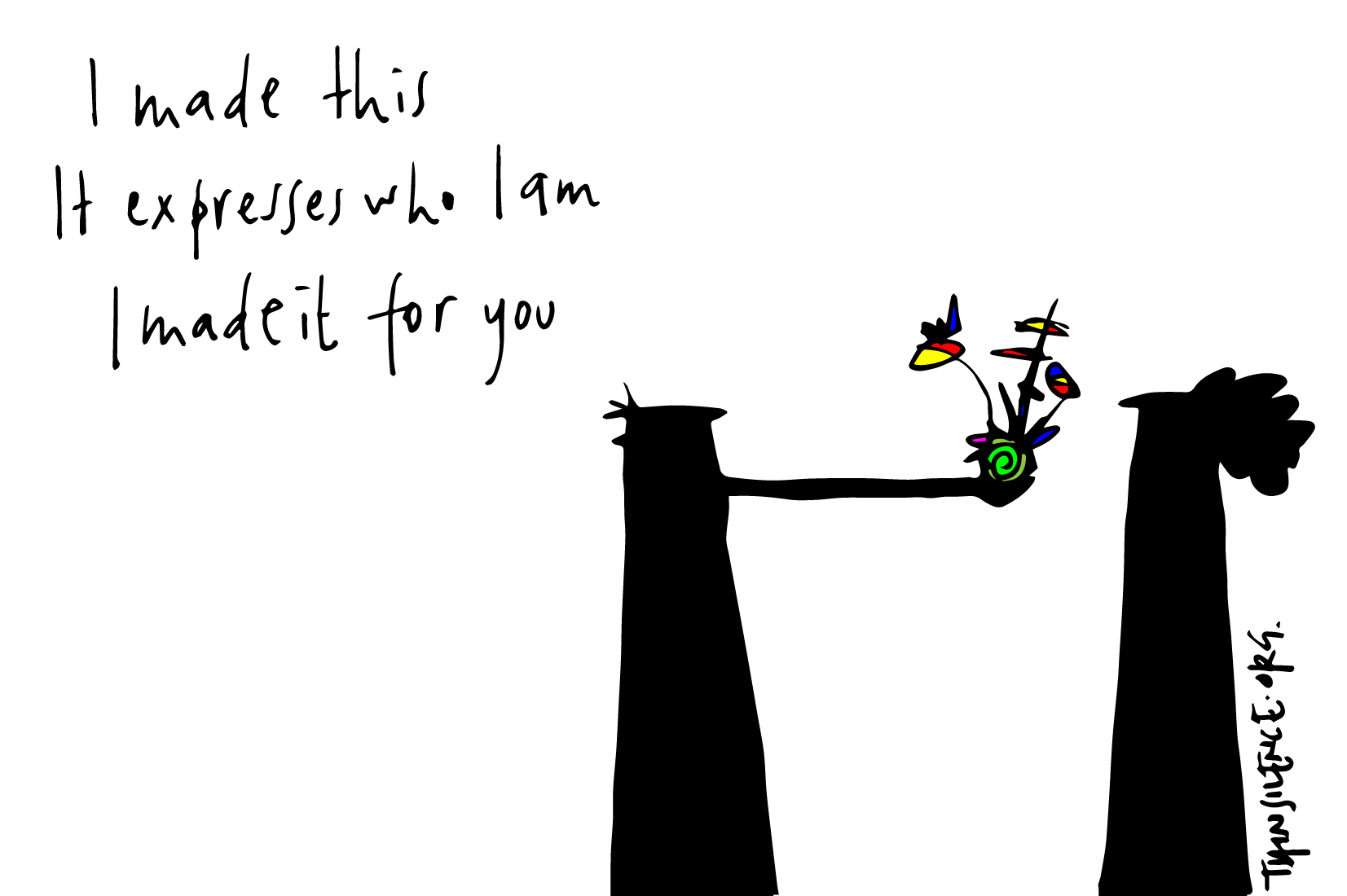
To bless the space between us*

Organisation is a means of getting things done. But it is also a way of living together.**
(Maureen O’Hara and Graham Leicester)

Everyone one the Planetary Team knows the moment. The moment when we knew our calling was to break boundaries and push humanity to the stars.^
(Peter Diamandis and Steve Kotler)

You can put a group of people together and call them a team. You’ve organised them. This is organisation as form.

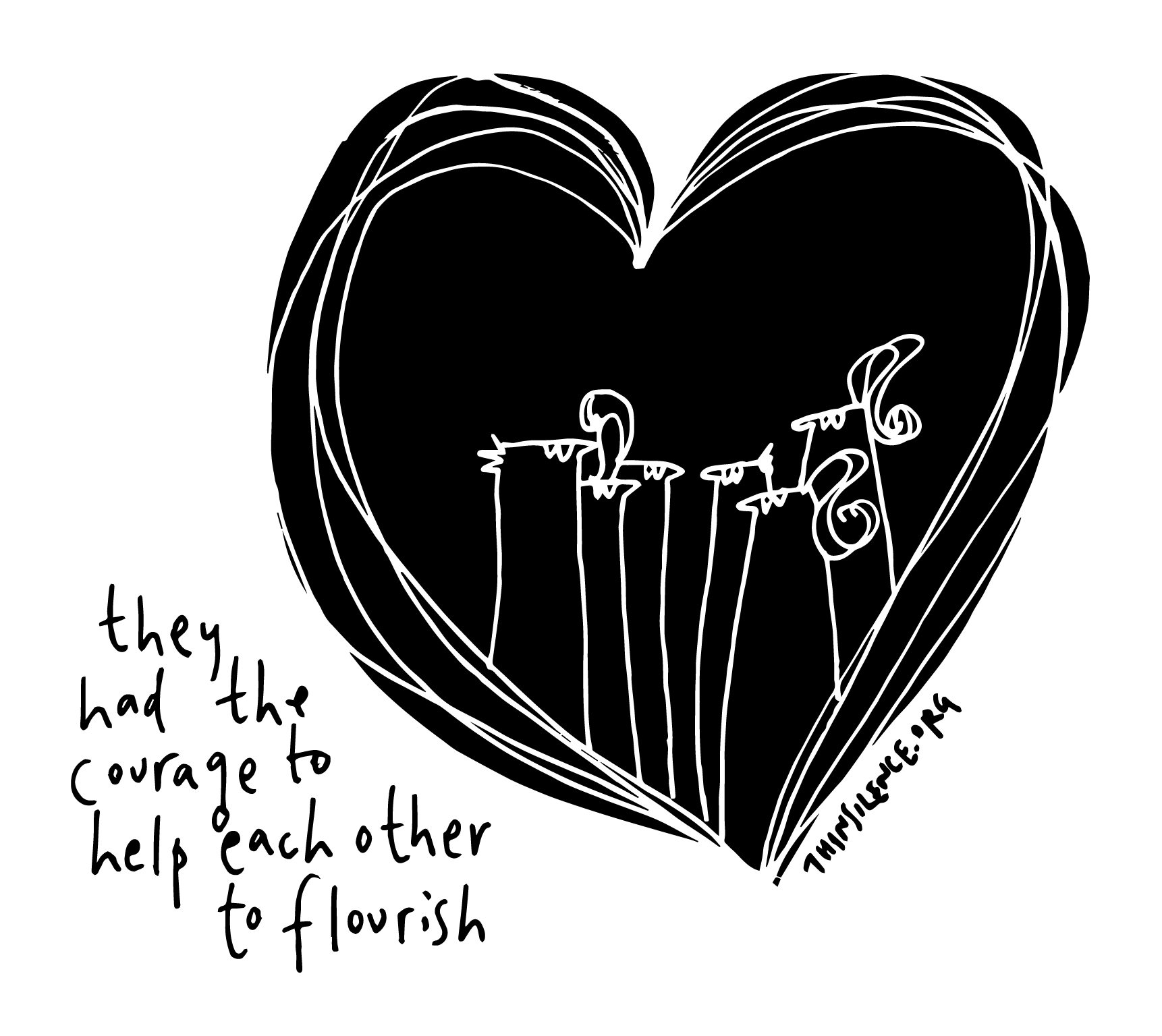
When a group of people find each other because of collectively recognised issue and when they begin to both commit to the task and to each other, you have what Victor Turner called communitas, a self-organising community, what I think of as a community of must.

These are the people who make change happen, the people Margaret Mead had in mind when she asserted:

Never doubt that a small group of thoughtful, committed citizens can change the world; indeed, it’s the only thing that ever has.^^

Never doubt that you will find yours … or maybe begin yours.

It is what we get up to on a really good day.

(*From John O’Donohue’s To Bless the Space Between Us.)
(**From Maureen O’Hara and Graham Leicester’s Dancing at the Edge.)
(^From Peter Diamandis and Steve Kotler’s Bold.)
(^^Margaret Mead, quoted by Brainy Quotes.)

Divergence is only the beginning

In your search for quality, you must create far more material than you can use, then destroy it.*
(Robert McKee)

He [Danny Boyle] restored to us the people we were before we made career choices – to when we were just wondering.**
(Frank Cottrell Boyce)

When it comes to who we are and what we can do, there’s far more to the basics than we imagine.

The first part of the work I engage in with others involves divergence, being open to and noticing of the many things in their lives that can lead to adjacent possibilities: values, talents, dreams, energising and enervating environments.

Divergence has to be followed by emergence, when the possibilities are honed down through acknowledging what the heart longs for, which is the convergence:

We will always need to be humble enough to accept that our heart knows why we’re here.^

Only then can we express the fullness of our own gifts,’^^ shaping our lives into a ‘gem-quality story.’*

Maybe the career-path kicked in too quickly and the heart isn’t in it, maybe we’re still trying to figure it all out. A good place to return to is the basics and to take a deeper look.

(*From Robert McKee’s blog: Why Writers destroy Their Work.)
(**Frank Cottrell Boyce, quoted in Maureen O’Hara and Graham Leicester’s Dancing at the Edge.)
(^From Paulo Coelho’s Aleph.)
(^^From Elle Luna’s The Crossroads of Should and Must.)

The gatherer, the alchemist and the producer

it is never too late to discover your inner alchemist*
(Rory Sutherland)

We connect to an inner place of wonder and thus we are open to recognising the spirit of wonder in the world around us.**
(Kelvy Bird)

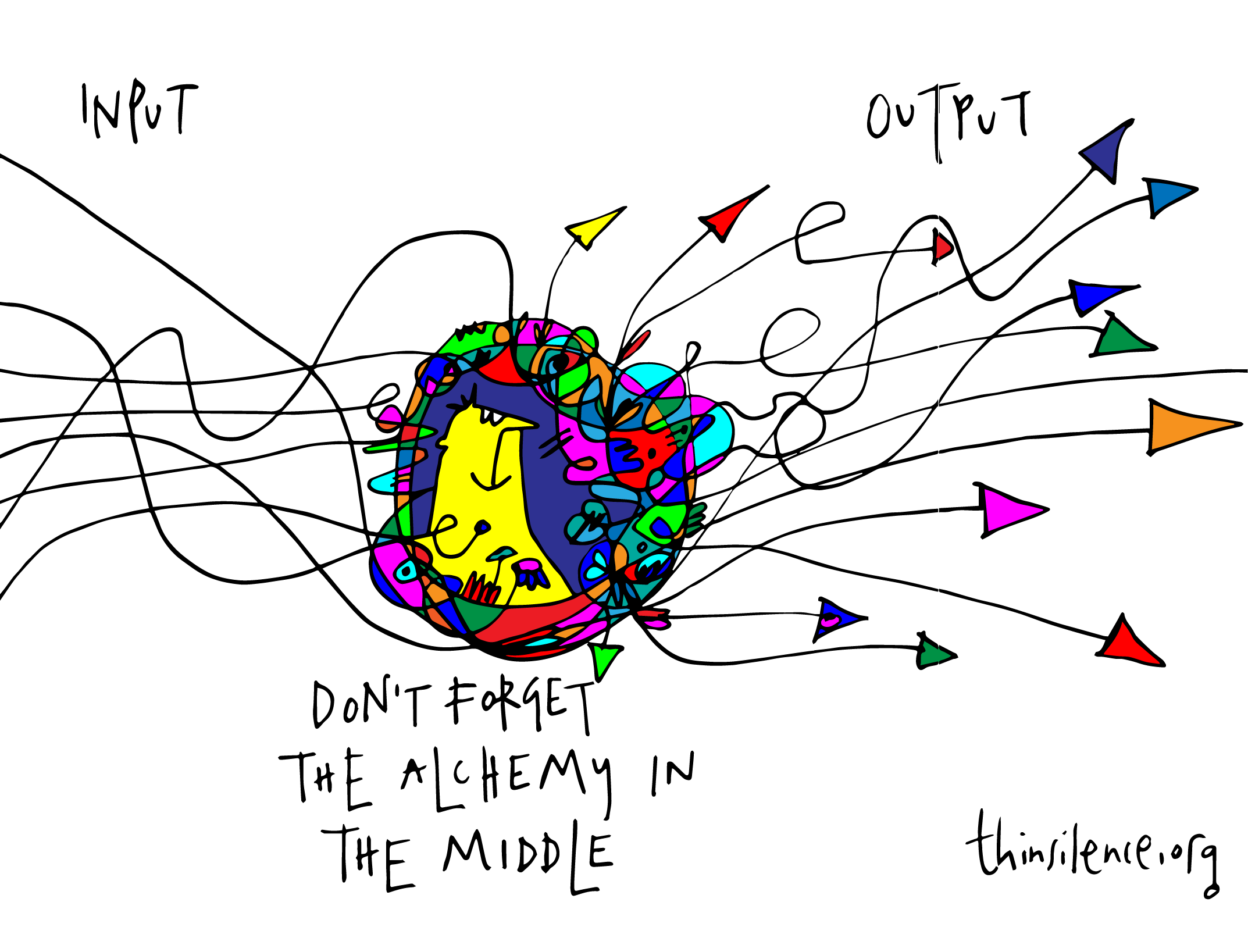
There are three challenges: the input, the output, and the challenge which lies between these, of making more out of what we have.

They’re everyone’s challenge because the gatherer, the alchemist and the producer are the same person. They’ve just been covered over and confused by our modern ways of working.

Freelancers get closest to recognising this on a daily basis but we can all have a freelance mindset when it comes to the work we do: gather more, produce more, and do that magical thing in the middle.

(*From Rory Sutherland’s Alchemy.)
(**From Kelvy Bird’s Generative Scribing.)

Allophilia

You can address anything as a “thou” – the trees, the stones, everything. You can address anything as a “though,” and if you do it, you can feel the change in your own psychology. The ego that sees a “thou” is not the same ego that sees an “it.”*
(Joseph Campbell)

No one can play a game alone. One cannot be human by oneself. There is not selfhood where there is no community. We do not relate to others as the persons we are; we are who we are in relating.**
(James Carse)

Allophila is the love or like of the other.

It’s a choice. It’s how we grow.

It’s how we can be at home between two opposing points of view, willing to see them both as true, knowing the creative place to be is in between.

Of course, the challenge is not only thinking this but also doing something.

(*Joseph Campbell, from Joseph Campbell and Bill Moyers’ The Power of Myth.)
(**From James Carse’s Finite and Infinite Games.)

The art of slack

People are hard to hate close up. Move in.*
(Brené Brown)

Systems with slack are more resilient.**
(Seth Godin)

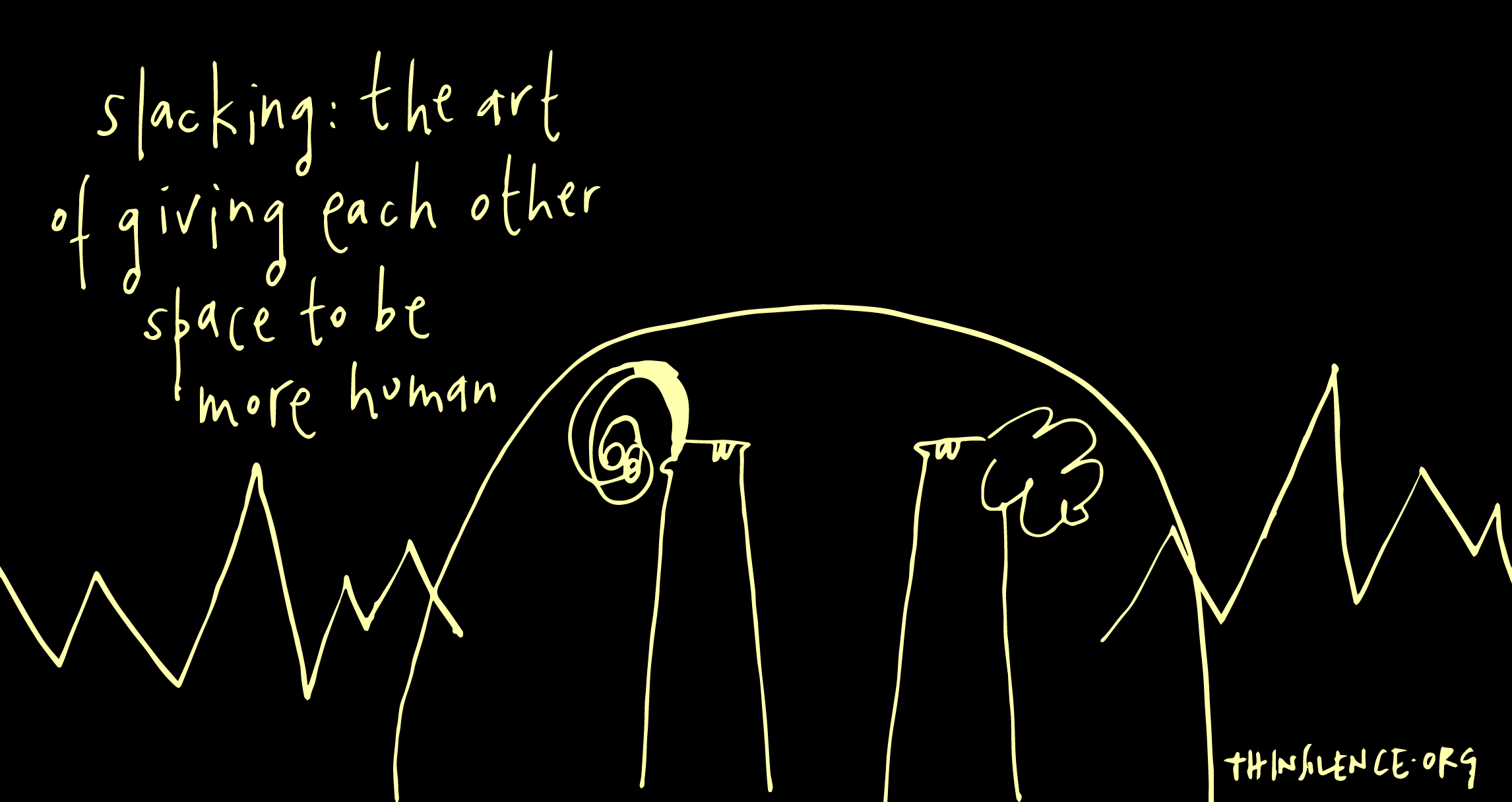
Seth Godin argues the enemy of slack is efficiency. Efficiency, when pushed to its limits, has no space for things to go wrong.

Watch out for the snap.

When it comes to human relations, getting close produces slack, using grace and mercy, love and compassion – the kind of things that don’t sound very efficient. But also the things can can avoid the snap.

(*From Brené Brown’s Braving the Wilderness.)
(**From Seth Godin’s blog: Investing in slack.)

What shall we become?

Vulnerability is the birthplace of love, joy, trust, intimacy, courage – everything that brings meaning to our life.*
(Brené Brown)

We know that we are evolving as a species, that evolution is not only something that happens to us but is selected by us. We are increasingly understanding that we don’t only get to measure our species by what we’re producing on the outside but also the kind of creatures we are becoming on the inside.

There’s remains, though, a big temptation to put ourselves down or to “big” ourselves up. To be your true self, however, is where we can be most hopeful for the future, hopeful as in, we get to choose. Maureen O’Hara and Graham Leicester hold that hope is a mark of the people of tomorrow:

they hold open the possibility of hope. Not optimism – which like pessimism rests on an assumption that we have no control over the future – but hope. The future is radically open, and it is shaped by who we choose to be in the present. Persons of tomorrow are remarkably patient and resilient: they are not waiting to achieve a vision, they are living it already.**

Such people understand that they don’t have to find an angle to win and speak things down or speak things up to achieve a win. They live out their care, love, humility, failure and vulnerability as means of navigating an increasingly complex 21st century. It’s why those who seek power as it has been traditionally expressed, will not be able to lead us towards a better future.

Of humility, Iris Murdoch writes:

Humility is not a peculiar habit of self-effacement, rather like having an inaudible voice, it is selfless respect for reality and is one of the most difficult and central of all virtues.^

Instead of sustaining individuality, tomorrow’s people understand the future is connected, relational, empathetic, collaborative – for which humility is very necessary:

persons of tomorrow, though fully alive as individuals, are also at home in their relationships. Capacities such as loyalty, partnership, friendship, altruism, empathy, solidarity, support, nurturance and followership, are necessary ingredients for thriving in the 21st century.**

The people of tomorrow are inside and outside people, with full integration.

(*From Brené Brown’s Braving the Wilderness.)
(**From Maureen O’Hara and Graham Leicester’s Dancing at the Edge.)
(^From Iris Murdoch’s The Sovereignty of Good.)