
In search of gratitude 4


Nothing is one thing. […] If you’re focusing on the part of your day that was just “fine,” then you’re ignoring the parts that were a miracle, or disappointing or thrilling.*
(Seth Godin)
May you discover you are more than you know.
Make a note whenever you are really energised by something, what you are doing, why you are doing it, who you are doing it with or for, and when you are doing it. In a few weeks you may have twenty to thirty different things on your list, probably small, but these are the best ones and will lead into worlds of possibility.
I’ll be exploring more of what things like this can mean in 2021, especially for those who have found themselves left by the pandemic without work. Spread the word.
In the meantime, however you will be celebrating at this time of year, may it be rich and meaningful.
I’ll be back shortly, but in the meantime, I’m posting pages from something I put together earlier in the year,
(*From Seth Godin’s blog: Nothing is one thing.)

A horizon is a phenomenon of vision. One cannot look at the horizon; it is simply the point beyond which we cannot see.*
(James Carse)
“Here, I made this.” […] These four words carry with them generosity, intent, risk, and intimacy. The more we say them, and mean them, and deliver on them, the more art and connection we create. And we create change.**
(Seth Godin)
We can get boundaries and horizons mixed up.
When we move beyond a boundary we encounter resistance; that’s why it’s a boundary. When we move towards the horizon, it moves.
Yes, there’ll be boundaries along the way, but by then we’ll have gained the self-knowledge and confidence to believe we can keep moving.
We will all see different horizons, defining the kind of change we will make.
(*From James Carse’s Finite and Infinite Games.)
(**From Seth Godin’s The Practice.)
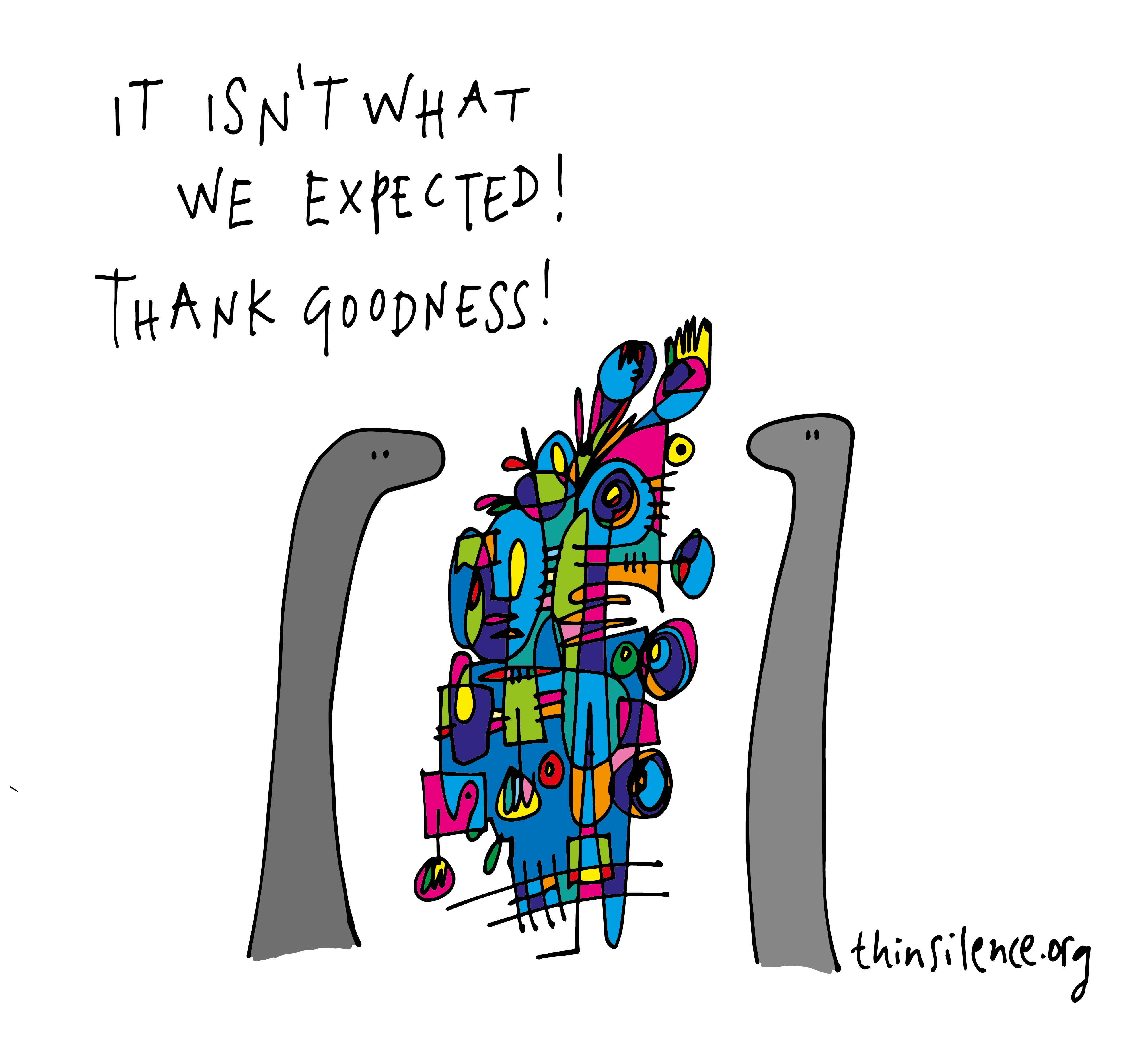
I don’t think learning is defined by a building or a certificate. It’s defined by a posture, a mindset and actions taken.
(Seth Godin)
Whoever takes possession of the objects of art has not taken possession of the art. Since art is never possession, and always possibility, nothing possessed can have the status of art. […] Art is dramatic, opening always forward, beginning so something that cannot be finished.**
(James Carse)
I may love habits and disciplines more than most, but I must remind myself, it is never about these per se but rather what they are supporting, especially when it comes to learning and art. These are primarily dynamic postures or attitudes, demanding new habits or containers to continue leaning into the future.
More than what is expected – which is the scripted life, may you continue to be an explorer of the dramatic.
(*From Seth Godin’s blog: source lost.)
(**From James Carse’s Finite and Infinite Games.)

We are each other’s sources.*
(Jan Snowden)
look everywhere for difference, […] see the earth as source, […] celebrate the genius in others,
[… be] not prepared against but for surprise**
(James Carse)
If enwondered were a word – and it should be – it would mean “caused to wonder.”
(*From Corita Kent and Jan Snowden’s Learning by Heart.)
(**From James Carse’s Finite and Infinite Games.)
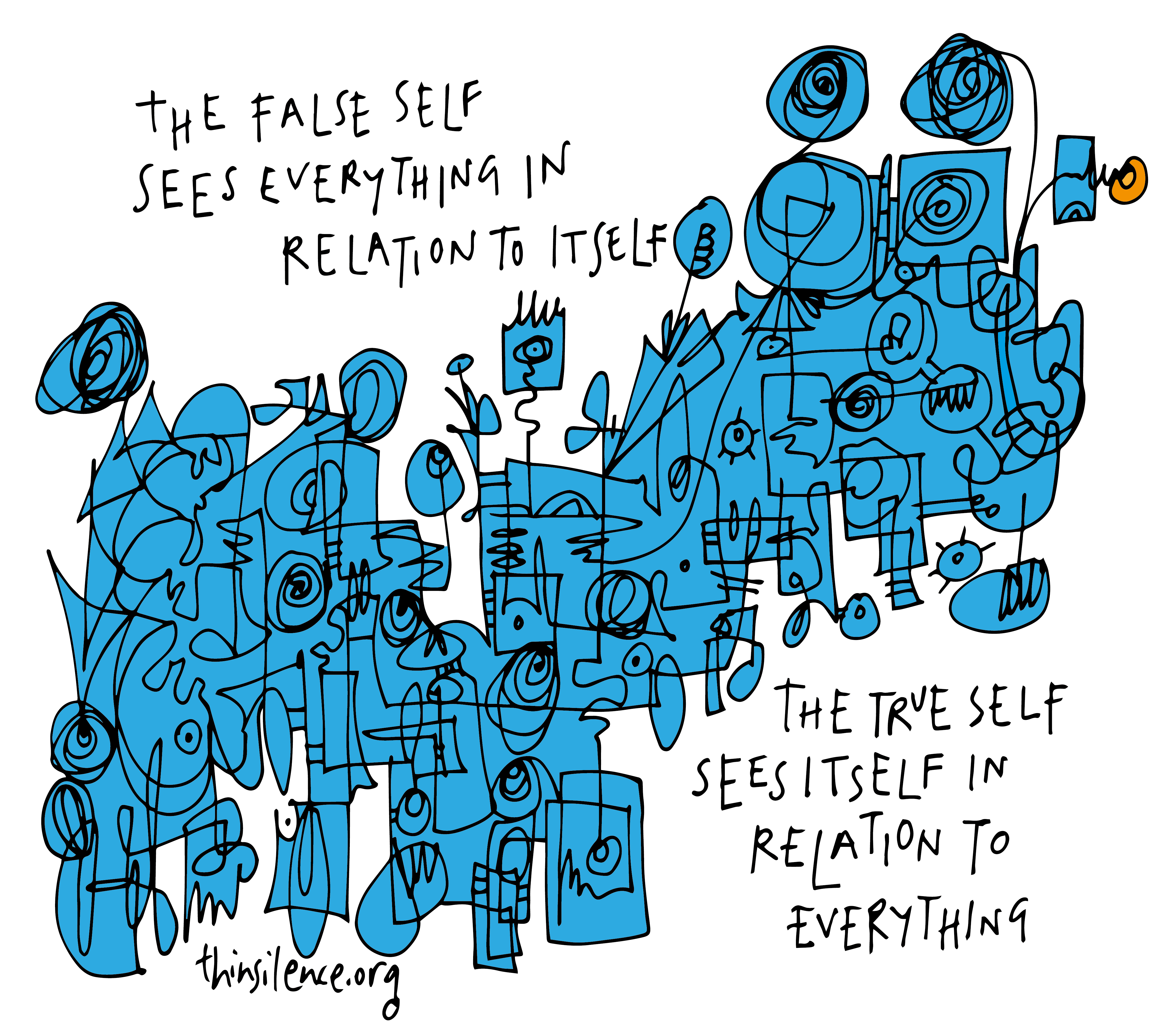
Our False Self is precisely our individual singularity in both its “Aren’t I wonderful! or “Aren’t I terrible!” forms. Both are their own kind of ego trip, and both take the tiny little self far too seriously.*
(Richard Rohr)
But art doesn’t seek to create comfort. It creates change And change requires tension.**
(Seth Godin)
Janine Benyus writes of the molecule:
A molecule’s goal in life [,,,] is to fall to the minimum energy level – to relax.^
When it does, it will find a complementary molecule and “snap” together minimising free energy. I want to say that it appears we desire comfort at a molecular level and the False Self is where we find this, even when for some it will mean working long days and sacrificing loved ones in order to achieve because its desirable to the truth they would have to face about themselves.
The True Self provides hospitality of discomfort. It says “You belong here,” but asks that we be more and bring more.
We can overlay this with James Carse’s finite and infinite games. It is more difficult, more uncomfortable to play an infinite game in which we include as many as possible for as long as possible and when these aims are threatened we change the rules. It is dramatic – we don’t know where this will take us next, demanding of us at it is to keep growing and stretching.
On the other hand, the finite game with its exclusivity, its clear goal and its rules is theatrical, that is scripted, and, therefore, comfortable. We know how it will end, sometimes on a daily basis.
As we’re approaching the festival of Christmas, we can note how one of the stories within Christmas fits this pattern of an infinite game. Jesus of Nazerath announces:
Those who are well have no need of a physician, but those who are sick; I have come to call not the righteous but sinners to repentance.^^
It can be read this way: people were being left out of the story – the sick and the sinner – so a rule change was made in the form of Jesus’ arrival to include people once again – repentance can mean realign, get back in the game, back in the story.
Art, when we understand it to be the gift or product from deep within a person, belongs to the infinite story or game:
Choosing to offer only comfort undermines the work of the artist and leader. Ultimately it creates less impact and less hospitality as well.**
This may be a uncomfortable but may you discover there is more to you than you know and more to what you are able to do than you can imagine.
(*From Richard Rohr’s Immortal Diamond.)
(**From Seth Godin’s The Practice.)
(^From Janine Benyus’ Biomimicry.)
(^^Luke 5:31-32)
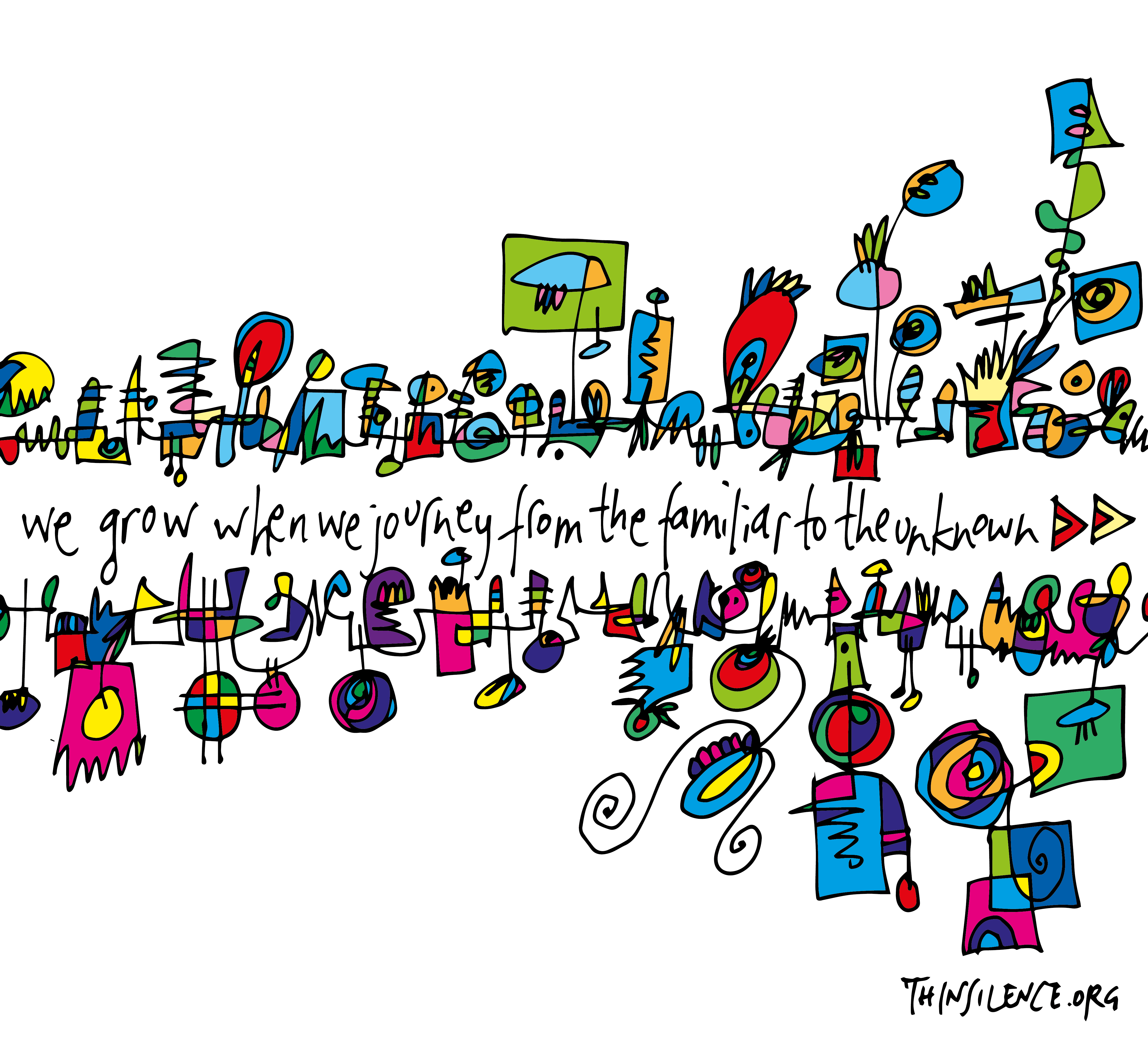
A finite game occurs within a world. The fact that it must be limited temporally, numerically, and spatially means that there is something against which the limits stand. There is an outside to every finite game.*
(James Carse)
We may think we’re right but the truth is there’ll be many more people who know more than we do about the things we know so much about.
Janine Benyus writes of Jorge Luis Borges’ The Library of Babel in which,
Borges asks us to imagine a huge library the contains all possible books, that is, each end every combination of letters, punctuation marks, and spaces in the English Language.**
In Borges’ library the first book we select may make no sense at all, just letters and punctuation marks, so we pick up the book next to it and perhaps find it makes a little more sense, perhaps a word, so we beginning follow the books in this direction until we come upon one that is complete sense.
The library provides a wonderful picture for us to see that, whilst we know plenty, there’re many more things to discover even about what we know a lot about. We must keep moving, knowing anything worthwhile and valuable in the earlier books will be contained in the later copies we pick up.
To use James Carse’s finite and infinite language, the necessary human experience is one of moving from the finite to the infinite.
We may be perfectly happy with what we know now, and I think that’s okay – as long as we allow for there being more we don’t know.
For those who want to keep exploring, though, there may be things needing to let go of or put down. The good news is, we’ll likely be surprised at how these things reveal themselves to us if we are prepared to give some time and effort to looking, as Corita Kent captures a profound truth in simple fashion:
Looking is the beginning of seeing.^
We may try some reflective journaling towards this. Have fun discovering outside.
(*From James Carse’s Finite and Infinite Games.)
(**From Janine Benyus’ Biomimicry.)
(^From Corita Kent and Jan Steward’s Learning by Heart.)


You must be logged in to post a comment.