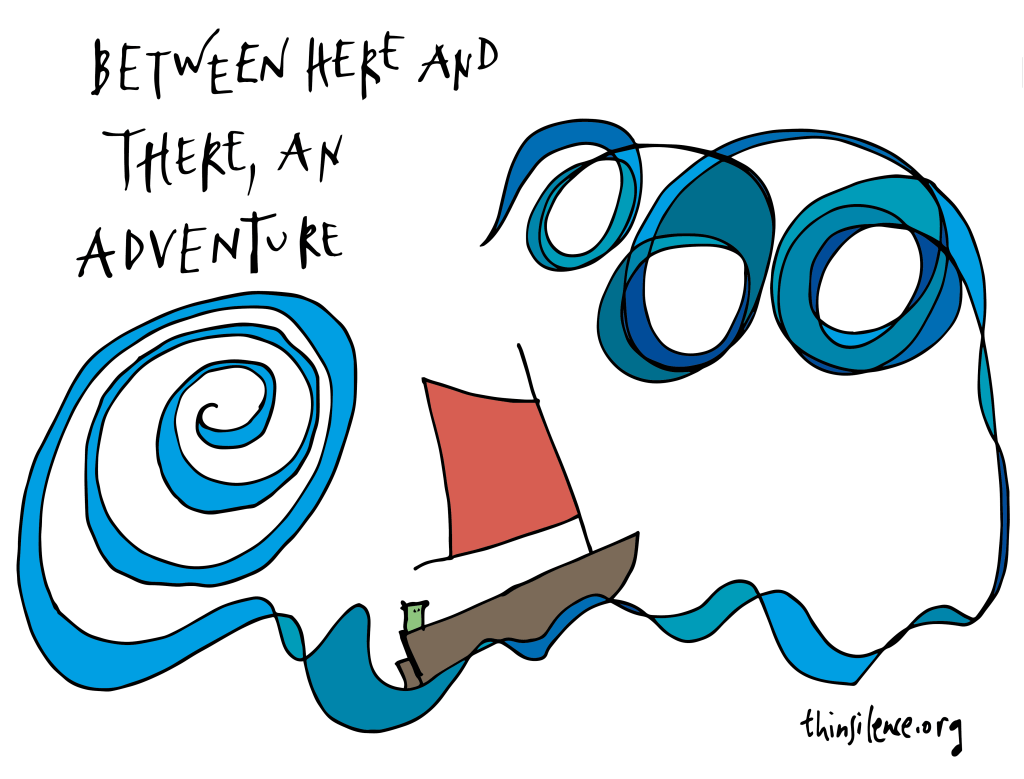
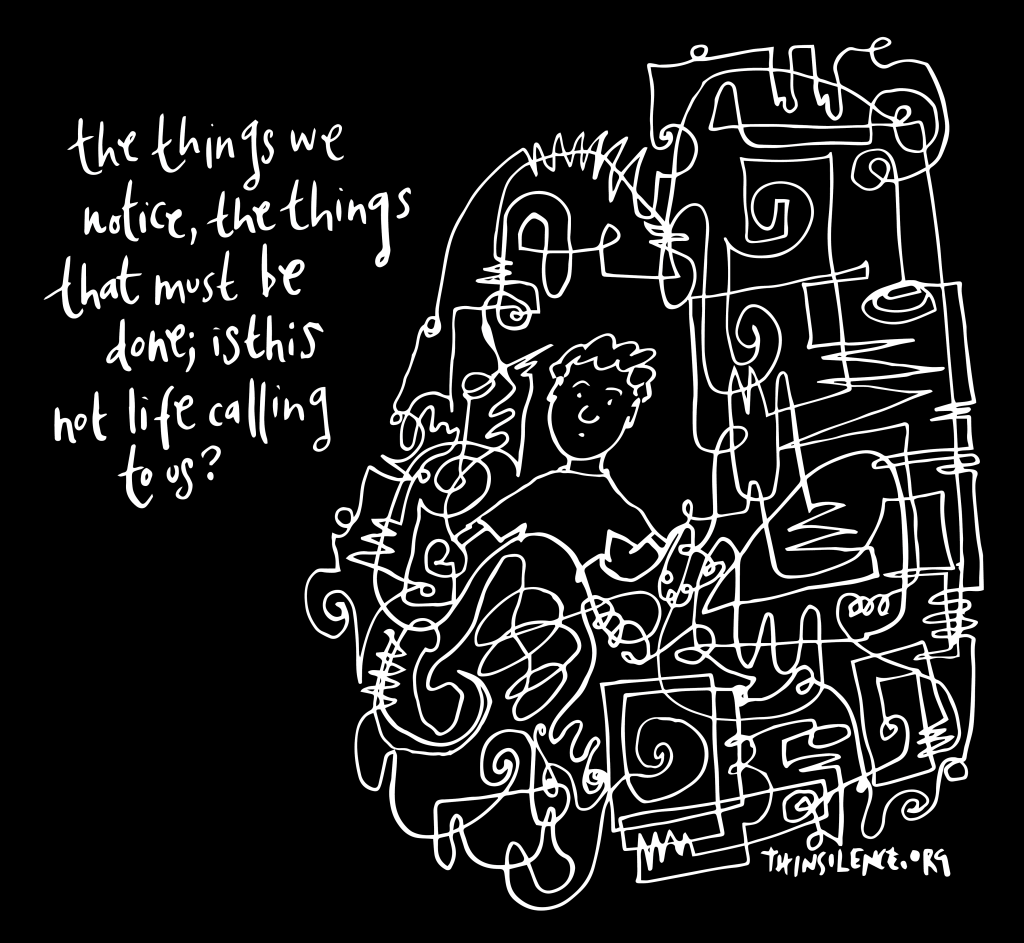
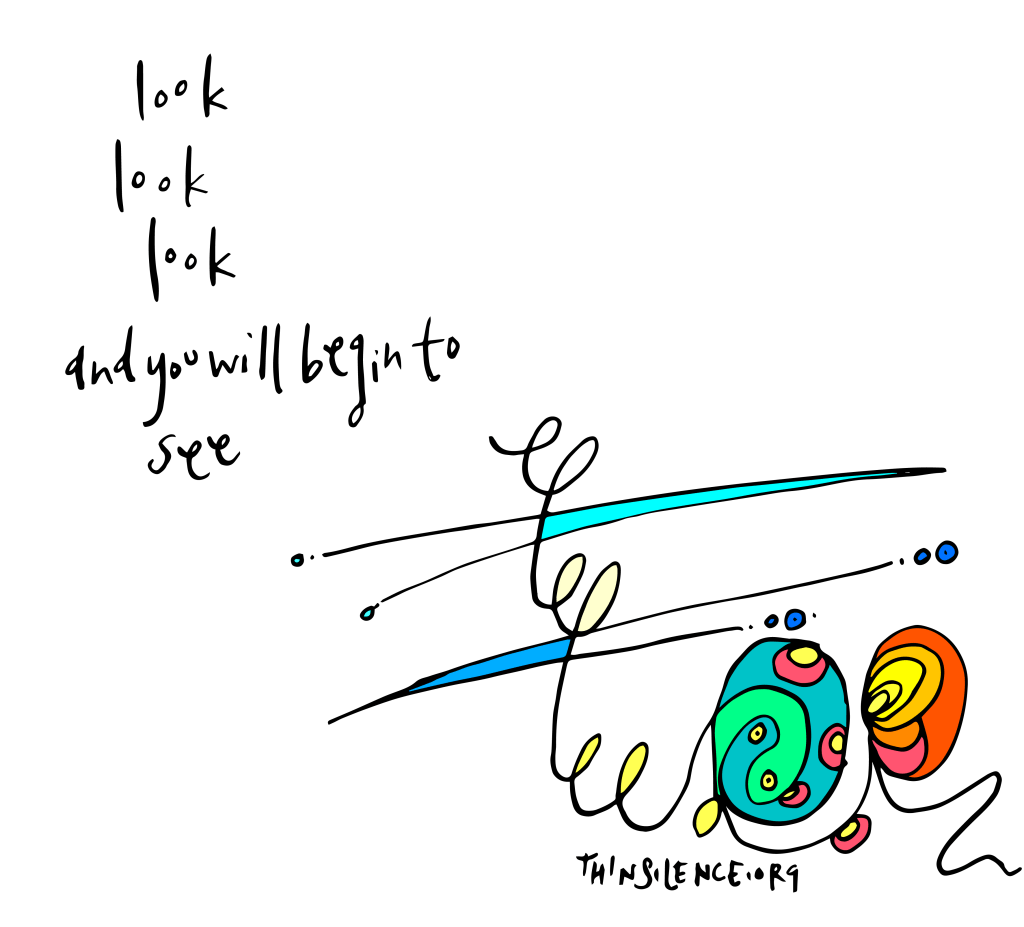
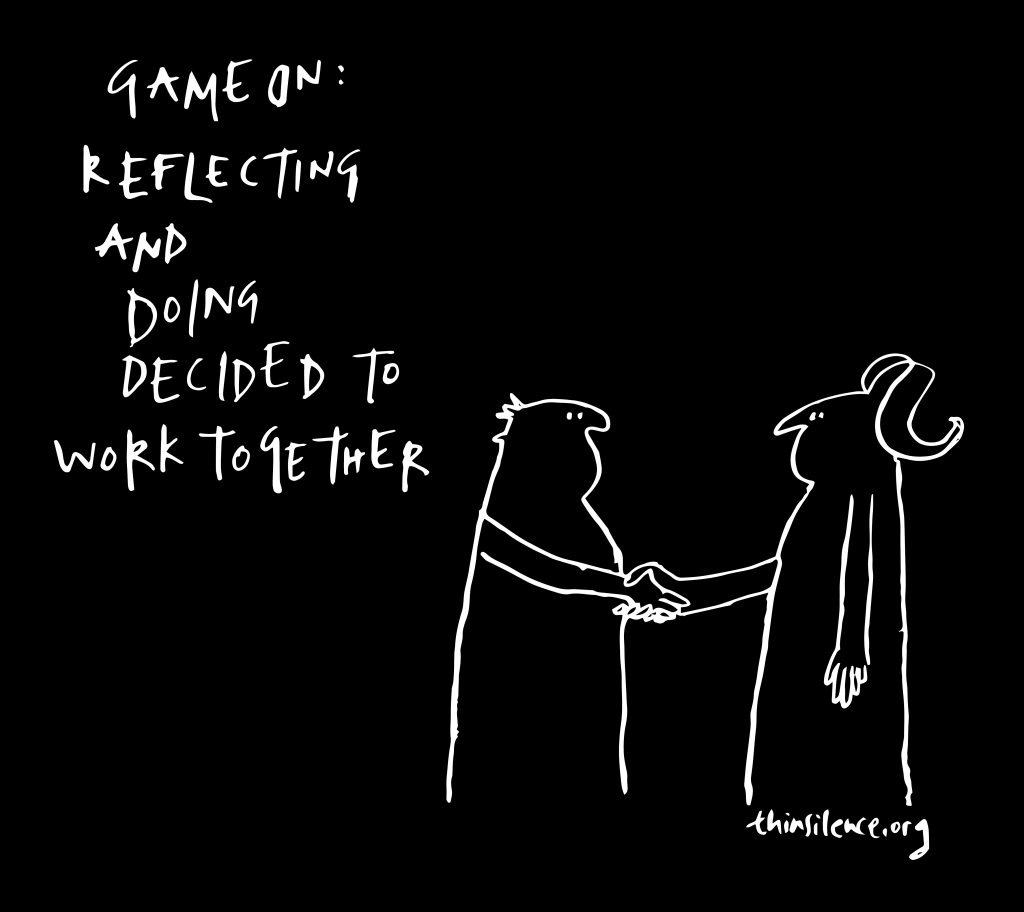
To follow your gift is a calling to a wonderful adventure of discovery. Some of the deepest longings in you is the voice of your gift. The gift calls you to embrace it, not to be afraid of it.* (John O’Donohue)
The problem with perfect is that when you fail, you have none of the more flexible human traits to fall back on.** (Seth Godin)
It’s not just about being invited – we’re all invited – but it’s how we turn up.
It’s like we’ve all been given a map, but it’s blank and we’re the cartographers.
We have all this territory to explore. Some of our discoveries we’ll want to include as key features on these personal maps and others ,we’ll leave out, or possibly include them but as warnings to ourselves.
We’ll get lost a lot and that’s okay because these can be times that are the most helpful, energising and defining to us.
Just make sure that on your map you don’t go back and forth along the same route and impress this upon your map in some deep rut.
Thank you so much for they journey into another world. Could we please do it again, soon?* (The girl with the green eyes)
Art is a leap into the void, a chance to give birth to your genius where there was no magic before. (Seth Godin)
There are those who want to use time against us.
It’s not time.
It is time.
Now.
Later.
You missed your time.
Time up.
We haven’t got time for that.
These are expressions of finite time, but there is also infinite time with characteristics of including as many as possible for as long as possible, playing with time, creating time, opening up moments of time.
The girl with the green eyes was a Jewish child secretly being taught by Helen Fagin in a Polish ghetto in the World War II. Fagin decided, this would be more than ‘dry information but hope,’* telling the children stories that were banned by the Nazis.^
Fagin’s is an extreme story about how we must question time, play with time, rail against time, in order to bring what we need most. It is unlikely we’ll have to face such severe times as Helen Fagin and her class of children, yet there comes a time when each of us must do what we must do, meeting our need and those of others, to bring our art, to make some magic happen where there was no magic before.
Fagin reflects on the reading of those stories in a description that feels to be an uncovering of infinite time:
There are times when dreams sustain us more than facts. To read a book and surrender to a story is to keep our very humanity alive.*
(Only four out of twenty-two children from Fagin’s class survived the Holocaust; the girl with the green eyes was one of these. The two would find each other many years later and they would meet agin in New York.)
(*The girl with the free eyes, from Helen Fagin’s letter to young readers: A Velocity of Being by Maria Popova and Claudia Bedrick.) (**From Seth Godin’s The Icarus Deception.) (^”Telling” because these books were clandestinely circulated within a trusted circle of people who had to read them in the night after which they had to be moved on.
Tallie teaches us to value everyone in her letter to young readers:
Books let us know we’re not the centre of the universe; the universe has many centres.**
When Walter Benjamin writes about how people can be ‘an expert in some minor matter,’^ I like to think he’s also revealing galaxies of expertise. We all know something others don’t. Be prepared for wonder.
Benjamin’s concern is the nature of original art and its reproduction, and he catches my attention when he writes about cultic and display values:
Works of art are received and appreciated with different points of emphasis, two of which stand out as being poles of each other. In one case the emphasis is on the work’s cultic value; in the other its display value.^
The cultic value belongs in its hiddenness or privacy of its creator, the display value is what it means for others when it becomes public.
This leads me to compare the cultic value to Joseph Campbell’s personal myth and the display value to the social myth. Campbell claims these to be the two most important myths, or stories, we each need.
When it comes to our lives, there is the story we tell ourselves and hold ourselves to and there is the representation of this story we are happy and relaxed to share with others. An example might be this post which is my display story but behind it lies my cultic journaling.
I mustn’t let the display value mess with the cultic value which is an unravelling adventure when it is free from the judgement of others.
I leave the closing words to Ekere Tallie, reminding you there is a galaxy within you to discover and to express:
Keep asking questions. Colour outside the lines. Draw your own maps. Create your own legends.**
As your muscles deteriorate, your brain is also deteriorating. Other malign changes occur too – in personality, in mood, in the very structure of the brain. And yet we have this wonderful in-built correction mechanism, a form of self-administered medicine, one without adverse events: movement.** (Shane O’Mara)
We all want big changes, but the best way to achieve this is to start small. Give Love, Take Pride.^ (Hugh Macleod)
Beyond imagining a possibility and being energised about it, when we put some action into it, we’re not only making something invisible visible but we’re also affecting change within ourselves at many levels.
When you think about it, that’s a big and wonderful thing. Just think about what we’ll imagine next.
It’s about turning up to what really matters^^ to us and let the small things accumulate.
There’s never been a more opportune moment in history to explore this, including it’s never too late for any of us to begin.
Today. We only get it once. Why waste it? We can spend it in fear, or we can create possibility for the next person. […] It only takes a day to make change happen. The ocean is made of drops.* (Seth Godin)
The more people have to attend to, the harder it is to get their attention. Attention is a precious resource. […] What if instead of showing up to get attention, we showed up to give it, without expectation? Imagine the resources we could build if we spent the majority of our time attending to how we could help instead of trying to be seen.** (Bernadette Jiwa)
Why sleep through a day, download another yesterday, autopilot the hours away … then wonder, How did I get here?^
Each day is full of wonder waiting to be discovered, knowledge to enrich our experiences and those of others. Attention behaves like a muscle: it can be developed. Each person’s attention has its own natural curiosities and interests, and these need to be explored.
I have my awakeners to all of this. People like Seth Godin and Bernadette Jiwa are my regulars and then their are “guests” like Brian Eno:
The enemy of creative work is boredom, actually […]. And the friend is alertness. Now I think that what makes you alert is to be faced by a situation that is beyond you control so you have to be watching it very carefully to see how it unfolds, to be able to stay on top of it. That kind of alertness is exciting.^^
Not only is boredom the enemy of creative work and the enriched life, so is speed. I came across Jim Loehr and Tony Schwartz first of all in their book On Form, a gift from a friend; I am now just beginning to read their book The Power of Full Engagement – here’s how they begin:
We live in digital time. Our rhythms are rushed, rapid fire and relentless, our days carved up into bits and bytes. We celebrate breadth rather than depth, quick reaction more than considered reflection. We skim across the surface, alighting for brief moments at dozens of destinations but rarely remaining for long at any one. We race through our lives either passing to consider who we really want to be or where we really want to go.*^
Their point will be: time is not our most precious resource but energy.
Alertness and attention are all about aligning our lives with our energy.
a city is composed of different kinds of men; similar people cannot bring a city into existence** (Aristotle)
Once upon a time, a farmer would sow seeds, harvest the crops, transport them to market and be the salesperson to those passing their stall. Today there’s a lot more people involved. As John Green was eating his broccoli, he found himself thinking about all the people who made it possible to get that vegetable onto his plate.
As we figure out how to work through the pandemic Covid19, we realise how working together will be essential – even when it means we stop seeing each other in the ways we have taken for granted.
We are appreciating not only our need to connect but also our desire to be connected – everything is connection:
Reading didn’t just offer escape; it offered connection.^
We have evolved to walk together, and social walking is demonstrative: it sends signals to others about our shared intentions and collective goals.^^
A good conversation is a constant stream of unexpectedresponses.*^
Here are three comments on connection I happened to come upon in my reading this morning: reading to find ourselves through the words of others, walking in rhythm with others and a conversation akin to a dance in which the choreography appears as we step out together.
If James Carse is right and there’s only one infinite game – in which we are all included and there is no single goal and we get to change the rules to include everyone for as long as possible – then there can be no “them” and “us.”
Then Aristotle’s words come to us as a lively challenge because although there is one game we are all different and yet our cities are evidence of our willingness to connect and work together.
Through the weeks and months ahead I believe we’ll see many ways being imagined for connecting and being together. When we are finally able to to be together in person once again, together will be quite different, hopefully altering us at a genetic level.
One way to connect, for those having to work at home, has been made available by Seth Godin. I’ve enrolled and look forward to connecting with people alongside the other ways and means.
Taking regular aerobic exercise enhances blood flow through the brain, as sell as making a marked difference to the structure and function of the brain.* (Shane O’Mara)
You have been given a task, have to come up with an idea, it’s your responsibility.
What do you do?
Freeze your brain with panic?
Cut out all distractions and sit in one place scrunching up your face with focus until an idea comes?
Or do you take a walk?
Shane O’Mara’s work uncovers how we have the ability to both focus on details and to mind-wander. There is a real possibility that creativity occurs when we perform these tasks simultaneously.
We’re full of ideas and information and experiences with millions of permutations for how these may come together:
One possibility as to why the flickering between these two modes of thinking lies at the core of creativity arises from the notion that in order to create something new, you must combine ideas some form of novel association. Mind-wandering allows the collision of ideas, whilst mind-focusing allows you to test whether it is nonsensical or interesting and new.*
Next time you’re responsible, why not take a notebook and pen and go for a walk? It’s what I’m going to be doing later today.
All of us have to learn how to invent our lives, make them up, imagine them. We need to be taught these skills; we need guides to show us how. Without them, our lives get made up for us by other people.* (Ursula Le Guin)
Myths, told for their own sake, are not stories that have meanings, but stories that give meanings. […] We resonate with myth when it resounds in us. A myth resounds in me when its voice is heard in mine but not heard as mine.** (James Carse)
We put our lives together from people we’ve met, places we have been, events we have immersed ourselves in, books that we have read, experiments that we have explored – there is no such thing as hermetically developed meaning and purpose.
Our guides are all around us.
We mix all of these together in a never before imagined way of creating a never-to-be-repeated life.
It’s not once and for all, which means, we haven’t missed our opportunity. It can happen any time in life and is possible every day.
In normal times, it’s easy to get into a rhythm of simply responding. Someone else setting the agenda. When things are uncertain, it’s easy to react. But now, right now, is the single best time to initiate. We’re in for a slog, but there will be an end to it.* (Seth Godin)
I’ve been trying all my life to find out what my limits are and I have never reached them yet. But then the universe doesn’t really help, it keeps expanding and won’t allow me to know it entirely.** (J)
Yes, there are times when we will need to react in order to stay out of trouble, other times when we will need to do as we are asked, but if we are not initiating, we will not develop as we are able to, nor will we bring this to others.
You must be logged in to post a comment.