Creativity is a dialogue between the ideas and the media in which they are being formed.*
(Ken Robinson)
Great storytellers hone their craft by having the courage to tell unpolished stories.**
(Bernadette Jiwa)
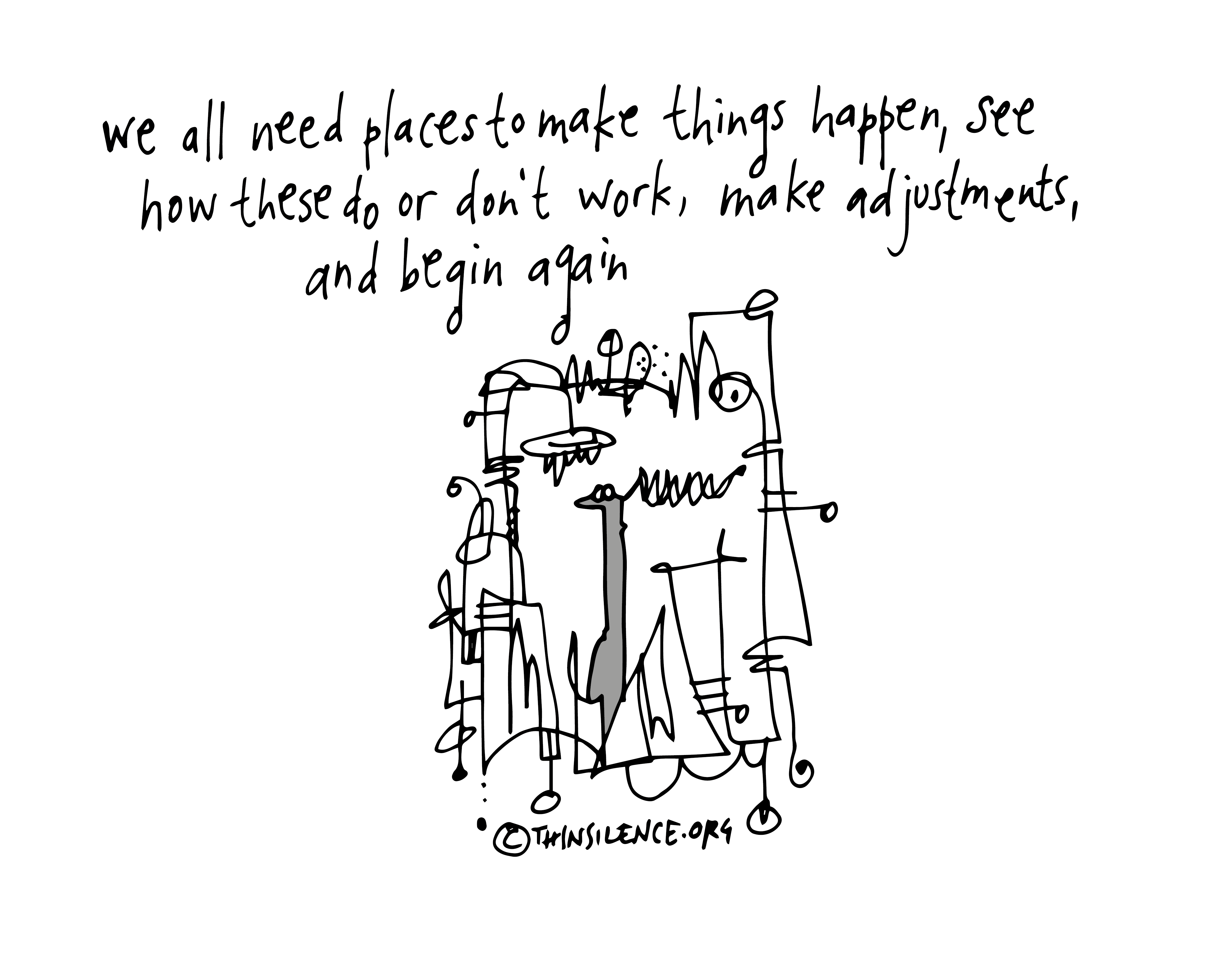
We must find our most flourishing environments.
Some years ago, I kept a note of all the most energising moments in a day. I didn’t sit down and concentrate to create the list, but carried it with me for about three weeks so that I could add to it when something happened that energised me.^
I would note down any or all of the following: what I was doing, why I was doing it, who I was doing it with or for, and when I was doing it – for instance, was I starting something.
What I was noticing were the experiences that were most satisfying and fulfilling to me. In noticing them, I would have the ability to make more of them happen with an increasing dexterity and knowledge.
When I reflected on my list’s noteworthy experiences I found three themes that have become my enriching environments:
To begin the day journaling as I expose myself to ideas from disparate sources: I love the idea that people who may never have a conversation in real-time for various reasons, end up having a conversation in my journal.
To begin turning these ideas into something that will be useful to others: this blog and doodle has become an expression of this as I explore possibilities; it also means bringing something into my work with others as soon as I can.
To work with people in 1:1 conversations of possibility completes my trio of enriching environments. These are not fixed experiences, but are intended to be open to surprise, for me as well as the other.
These three environments, or media as Ken Robinson would name them, can also be understood to be processes or systems.
Each has its shape and order that I can trust to produce something: I don’t have to hang around for inspiration.
I love inspiration, but it usually arrives as a result of one or more of these environments. Robert McKee identifies the work of research for a writer in a similar vein:
The mastery of story demands the invention of far more material than you can use, followed by astute choices of inclusion and exclusion. Why? Because experienced writers never trust so-called inspiration.^^
You can begin to keep your list today.
You’re looking for extremely energised experiences and you will probably notice these before or after you have been living them.
In a few weeks time, you’ll probably have twenty to thirty experiences on your list. You’re ready for the next stage.
For this, you may try the following method. Write each of your notes on a separate piece of paper and pop similar experiences into piles. Is there a phrase within each pile that summarises what it contains? If not, come up with one. What are you left with?
Do some of the themes fit together? In which case bring them together and come up with a new label. Take another look.
I tend to work with threes when it comes to things like this, being both memorable and providing complexity. Themes can be: connecting with nature, centring or grounding activities, talking with others about ideas in an open way, working deeply by yourself without interruption … .
Take these for a test run. Come up with one small articulation for each environment or medium and see how it goes in a day.
Robinson sees two dimensions to creative processes: the generative and the evaluative, anticipating John O’Donohue’s words on imagination:
The imagination has a deep sense of irony. It is wide awake to the limitation of its own suggestions and showings.*^,
Here are four questions you can ask of our experiences:
Am Is successful when I do this?
Do I do this intuitively?
Do I grow as a result of doing this?
Does this meet a need in me?
Have fun.
*From Sir Ken Robinson’s Out of Our Minds;
**From Bernadette Jiwa’s What Great Storytellers Know;
^I also kept a list of things that robbed me of energy in a more than normal way;
^^From Robert McKee‘s newsletter: Where To Find True Inspiration;
*^From John O’Donohue’s Divine Beauty.




You must be logged in to post a comment.