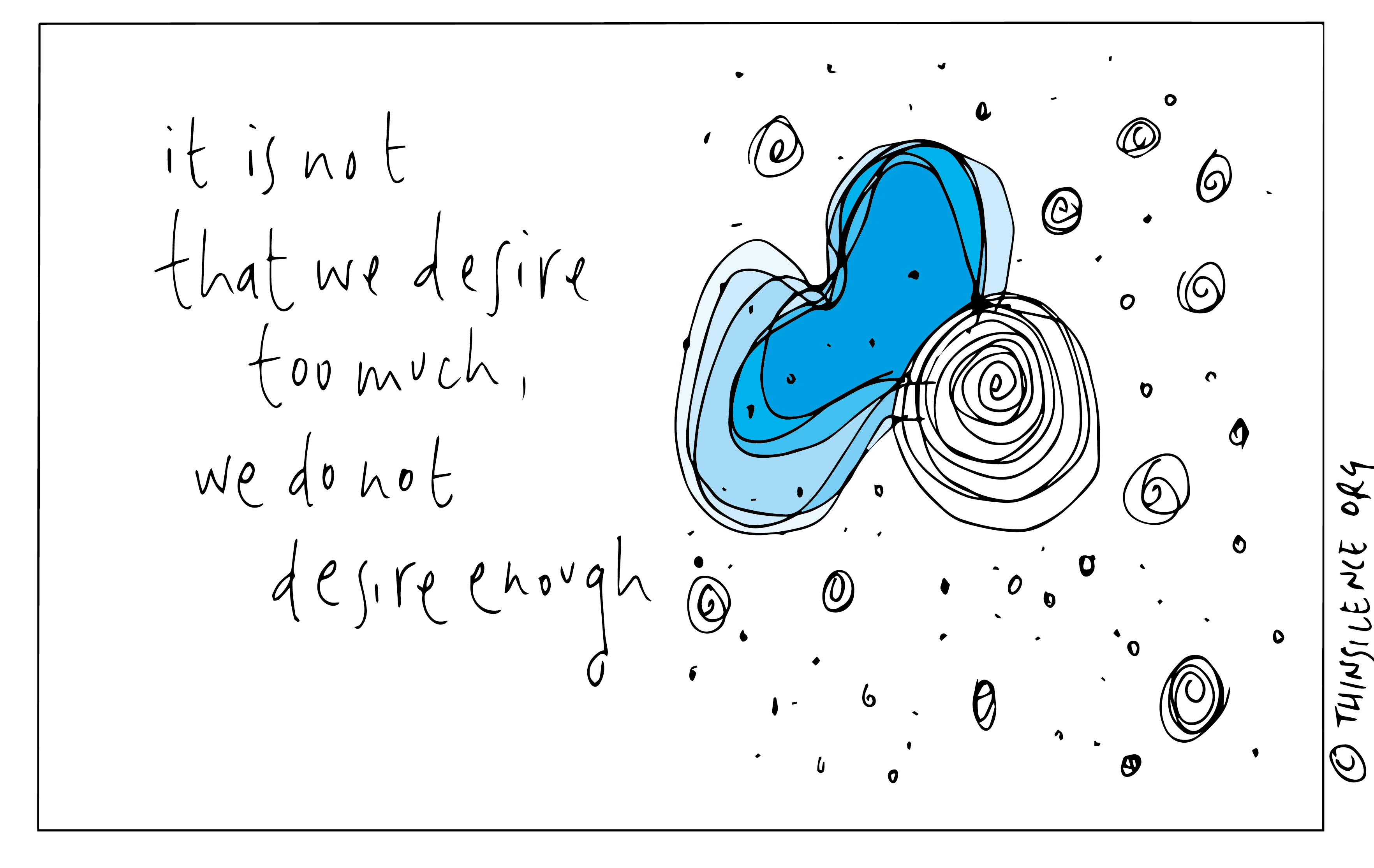
They want the things that are truly worth wanting. They elevate their desires. The world tells them to be a good consumer but they want to be the one consumed. – by a moral cause.* (David Brooks)
We are creatures of desire because we are creations of desire.** (John O’Donohue)
I am reminded of what a caterpillar goes through to become a butterfly, as described by Sam Anderson:
Terrible things happen in there: a campaign of grisly desolation that would put most horror movies to shame. What a caterpillar is doing, in its self–imposed quarantine, is basically digesting itself. It is using enzymes to reduce its body to goo, turning itself into a soup of ex-caterpillar — a nearly formless sludge oozing around a couple of leftover essential organs (tracheal tubes, gut).^
What’s the cause that consumes you and is turning you into a different kind of person?
As in the case of lines, you are likely to stop when you are no longer sure you should go further – at the rear edge of the region of uncertainty.* (Daniel Kahneman)
When man is born, the human race as well as individual, he is thrown out of a situation which was definite, as as definite as the instincts, into a situation which is indefinite, uncertain and open.** (Erich Fromm)
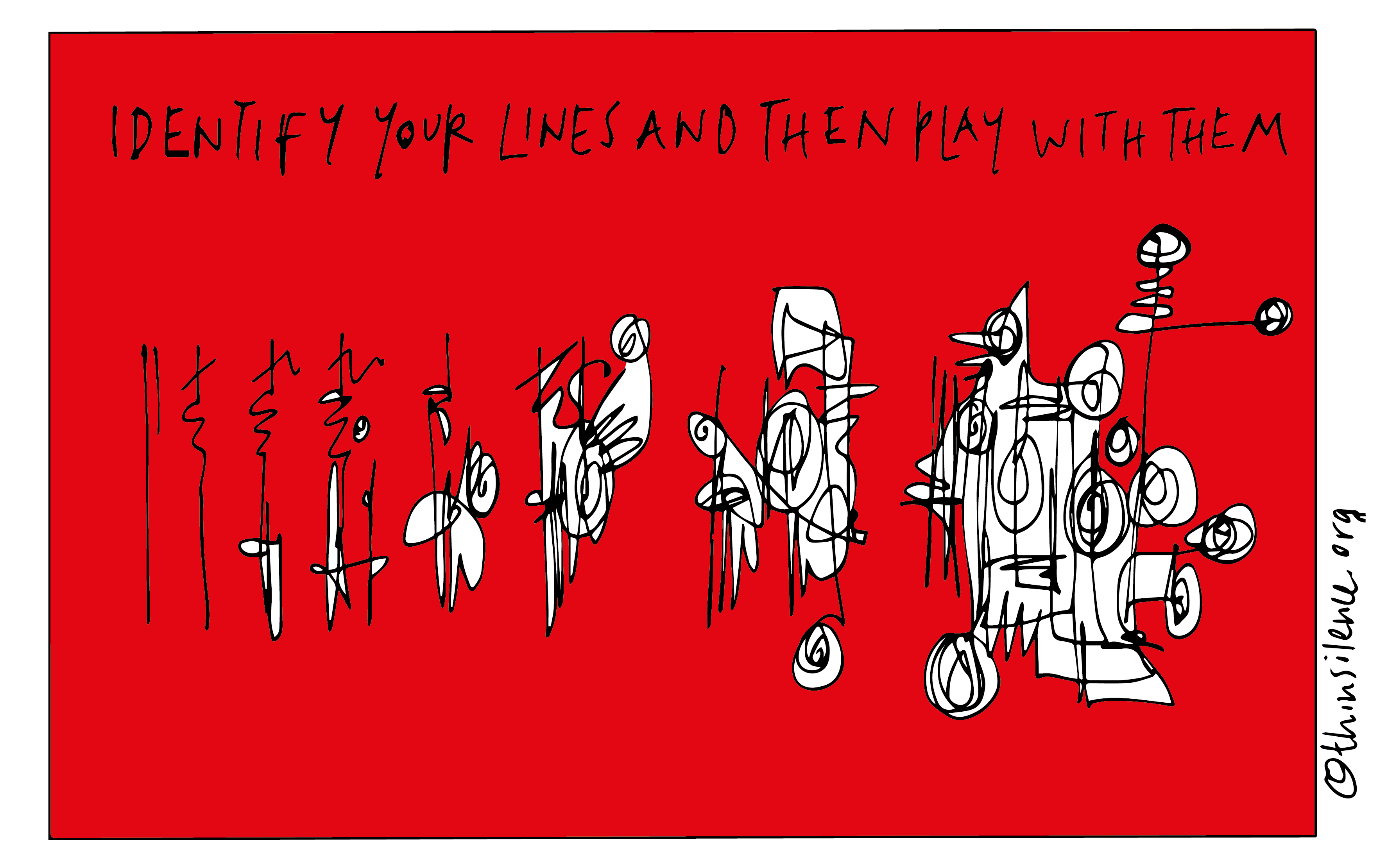
We’re born into a world of lines.
Some are fine just the way they are: such as gravity and love.
But there are many more we can play and get bendy with: such as talents, purpose and stories.
A blessing to begin a day of playing with lines:
May the games of your belonging be generous enough for your dreams.^
In the most elegant complexity possible, everything in creation exists not for itself but for everything interconnected to it.* (Erwin McManus)
Looking at social mentalities and archetypes in general, theorists have recognised that “the innate” is only the potential and the social world we live in and the relationships that surround us guide and help develop our archetypal potential.** (Paul Gilbert)
It can be tempting to think that focusing on ourselves – on our talents, energies, values – is something of a self-absorbent thing to do.
What we may be missing is bringing the very best of ourselves when it comes to being helpful to others:
We’re only as much as what we can give to others.^
It doesn’t matter who a person is, their background, their path so far in life, there are things to be discovered by them. All they need is the right environment for this to happen. We might be just the environment they need, and, when we do, we find ourselves stepping into an ancient story.
Therefore, I often remind those I work with that there is nothing indulgent in understanding more about ourselves and our calling to others:
Life is hard You’re not as special as you think Your life is not about you You are not in control You are going to die.^^
There’s a reason why this may feel self-absorbent at first. The new things we’re uncovering about ourselves need to be handled with increasing skill, but then we fall into wondering just what we might do with all of this for the good of others:
Beginners are always looking at themselves. … The better you get, the farther away you start to look.*^
I find this again and again in those I work with, the wonderful hopes they have of serving a cause greater than themselves. My hope each day in writing is to provide something that will feed, guide or remind.
I leave you with a blessing for your discovering:
Awaken to the mystery of being here and enter the quiet immensity of your own presence. … Respond to the call of your gift and the courage to follow its path.^*
When it’s over, I want to say: all my life I was a bride married to amazement. I was the bridegroom, taking the world into my arms.
I don’t want to end up simply having visited the world.* (Mary Oliver)
The way we store energy is through our desires, values, passions, hopes, dreams, and aspirations, and ultimately our greatest capacity for energy storage is through what we love. […] I have come to realise that people do not bring the same level of energy with them.** (Erwin McManus)
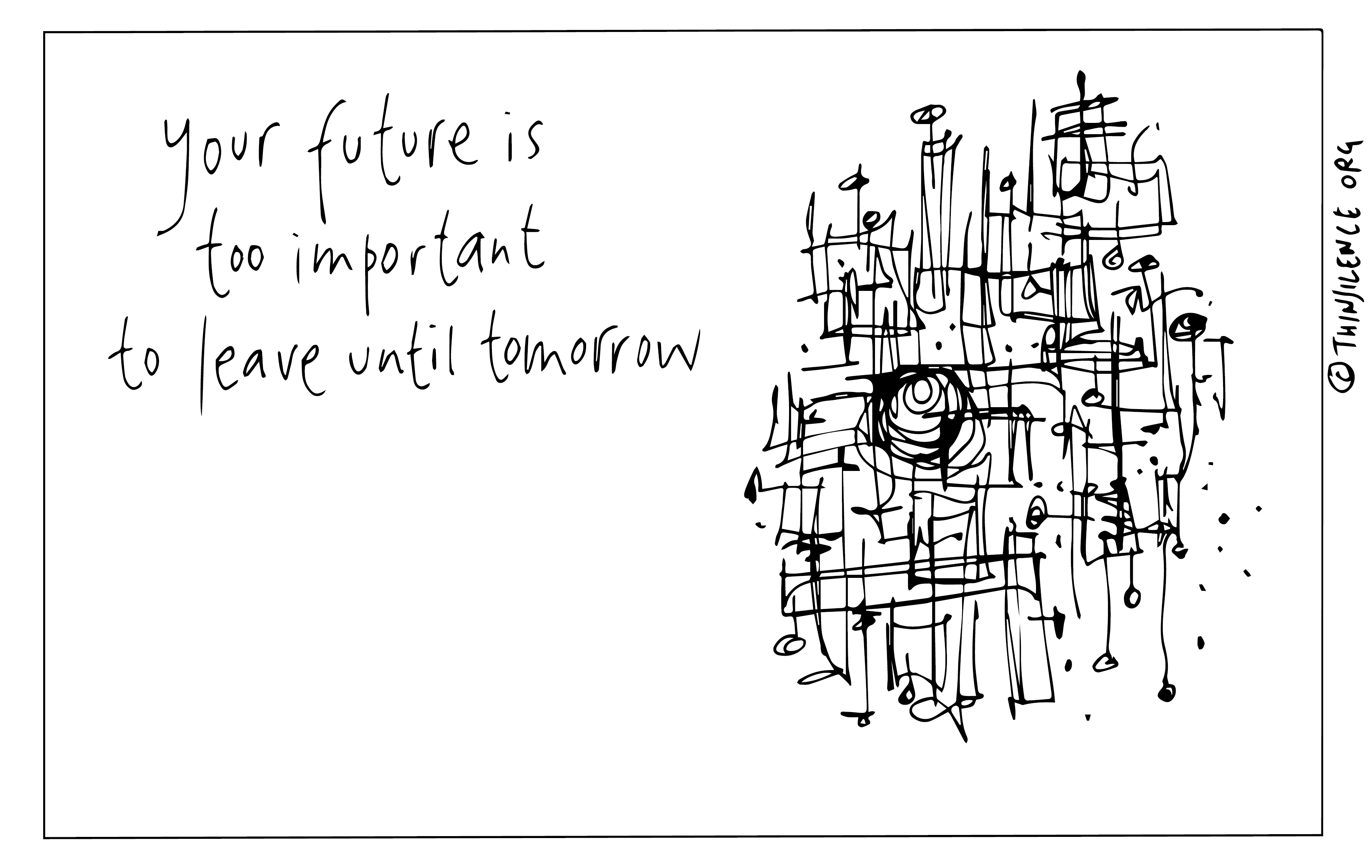
As we were brought up to appreciate, tomorrow never comes.
It’s always today.
This is where the future lies.
Yes, we travel into possibilities that do not yet exist, but we do this so that we may bring them back into today… and begin.
The best place to begin, as Erwin McManus proffers, is in identifying and exploring our desires, values, passions, hopes, dreams and aspirations, and, above all, love.
Along with these we’ll find astonishing talents and abilities shaped through our years, waiting for their next adventure.
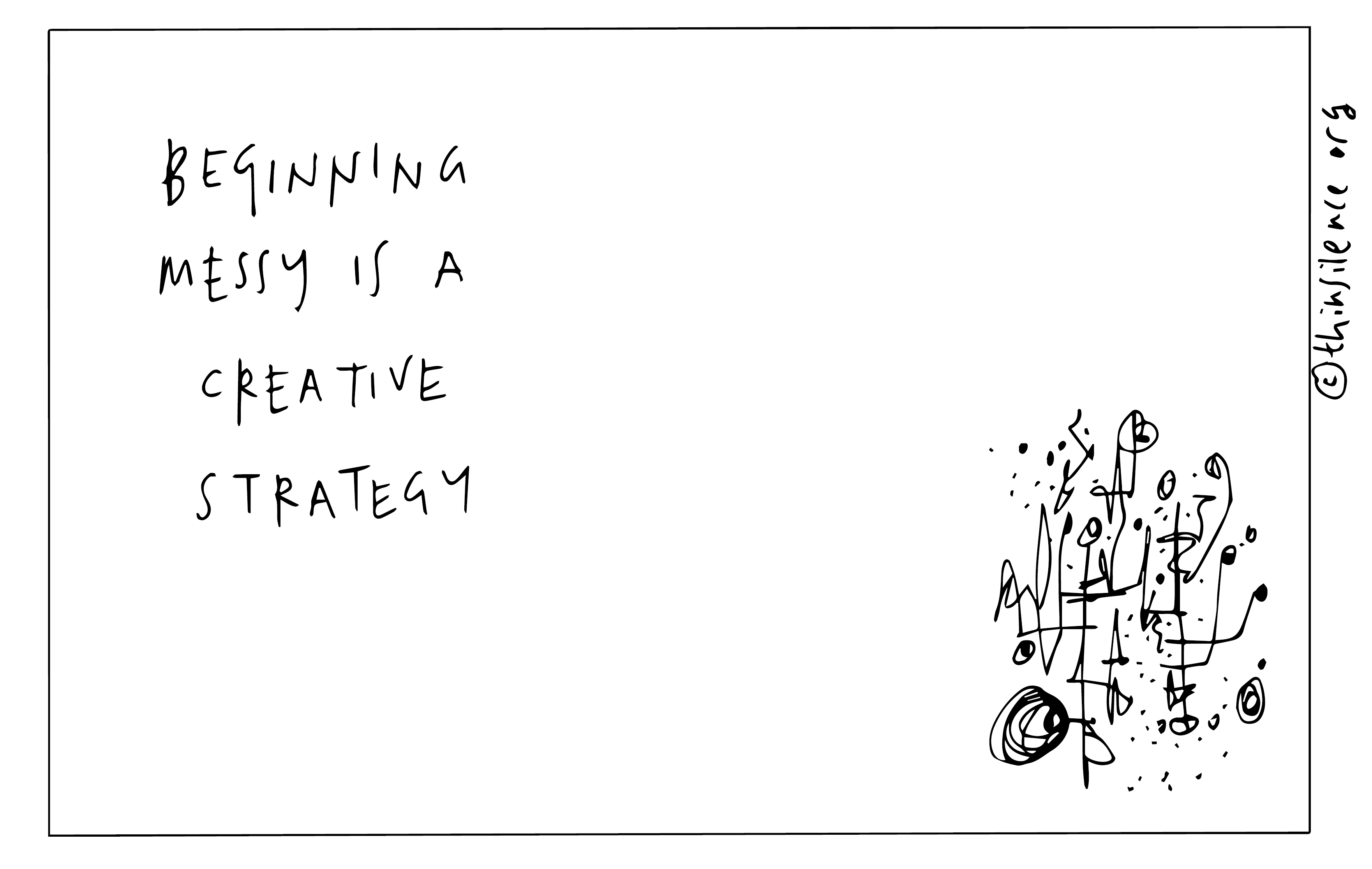
It’s going to sound ugly before it sounds pretty, but it has to sound ugly.* (Danielle Amedeo)
There’s no such thing as writer’s block. There’s simply a fear of bad writing. Do enough bad writing and some good writing is bound to show up. And along the way, you will clarify your thinking and strengthen your point of view. But it begins by simply writing something.** (Seth Godin)
Singing, writing, beginning the day, or whatever we need to get to. We could sit here, waiting for some inspiration to come to us, or we could dive in, make a noise, take a pen for a journey across a page, be some sunshine to a grey, lifeless day, or the task we have to perform.
It doesn’t matter what it sounds like or reads like or looks like, we’ve made a start, and that provides you with a distinct advantage to not having done anything. Our minds and our hearts have something to work with.
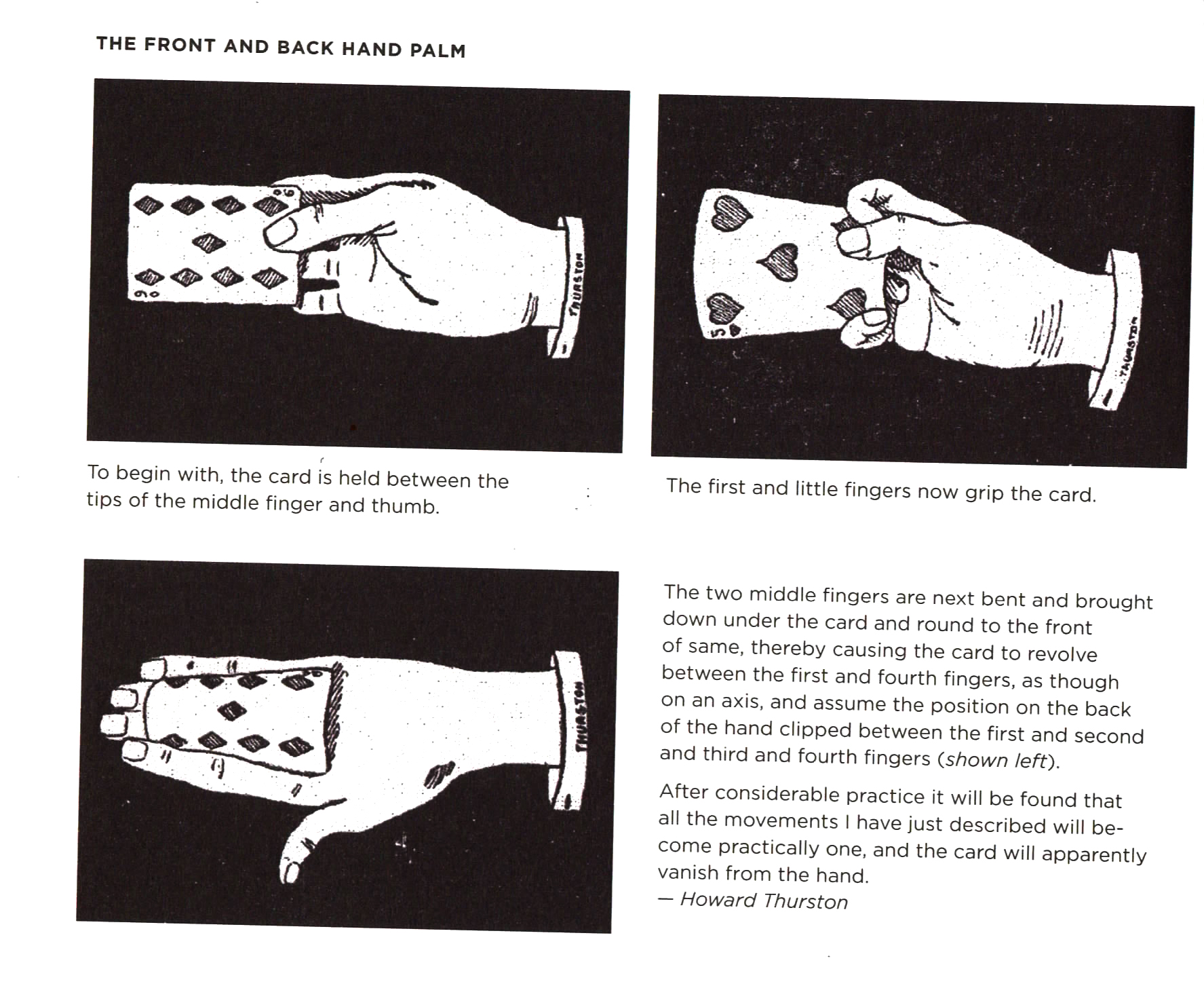
In his latest book A Muse and a Maze, Peter Turchi includes how to complete the front and back hand palm illusion – a playing card that disappears. We could say, I can’t do that, or we can search for the playing cards and start practising.
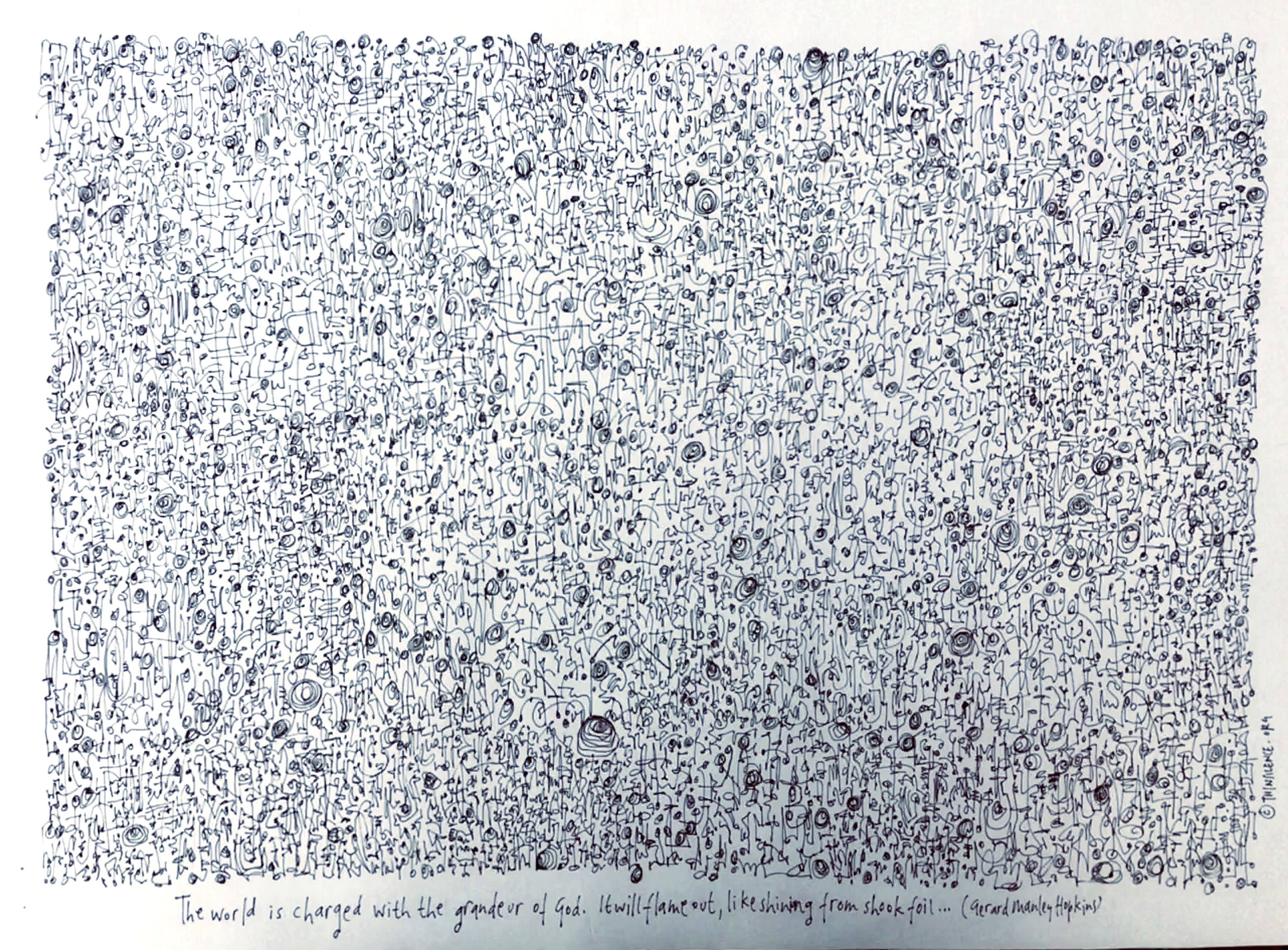
The world is charged with the grandeur of God. It will flame out, like shining from shook foil; It gathers to a greatness, like the ooze of oil Crushed. Why do men then now not reck his rod? Generations have trod, have trod, have trod; And all is seared with trade; bleared, smeared with toil; And wears man’s smudge and shares man’s smell: the soil Is bare now, nor can foot feel, being shod.
And for all this, nature is never spent; There lives the dearest freshness deep down things; And though the last lights off the black West went Oh, morning, at the brown brink eastward, springs — Because the Holy Ghost over the bent World broods with warm breast and with ah! bright wings.
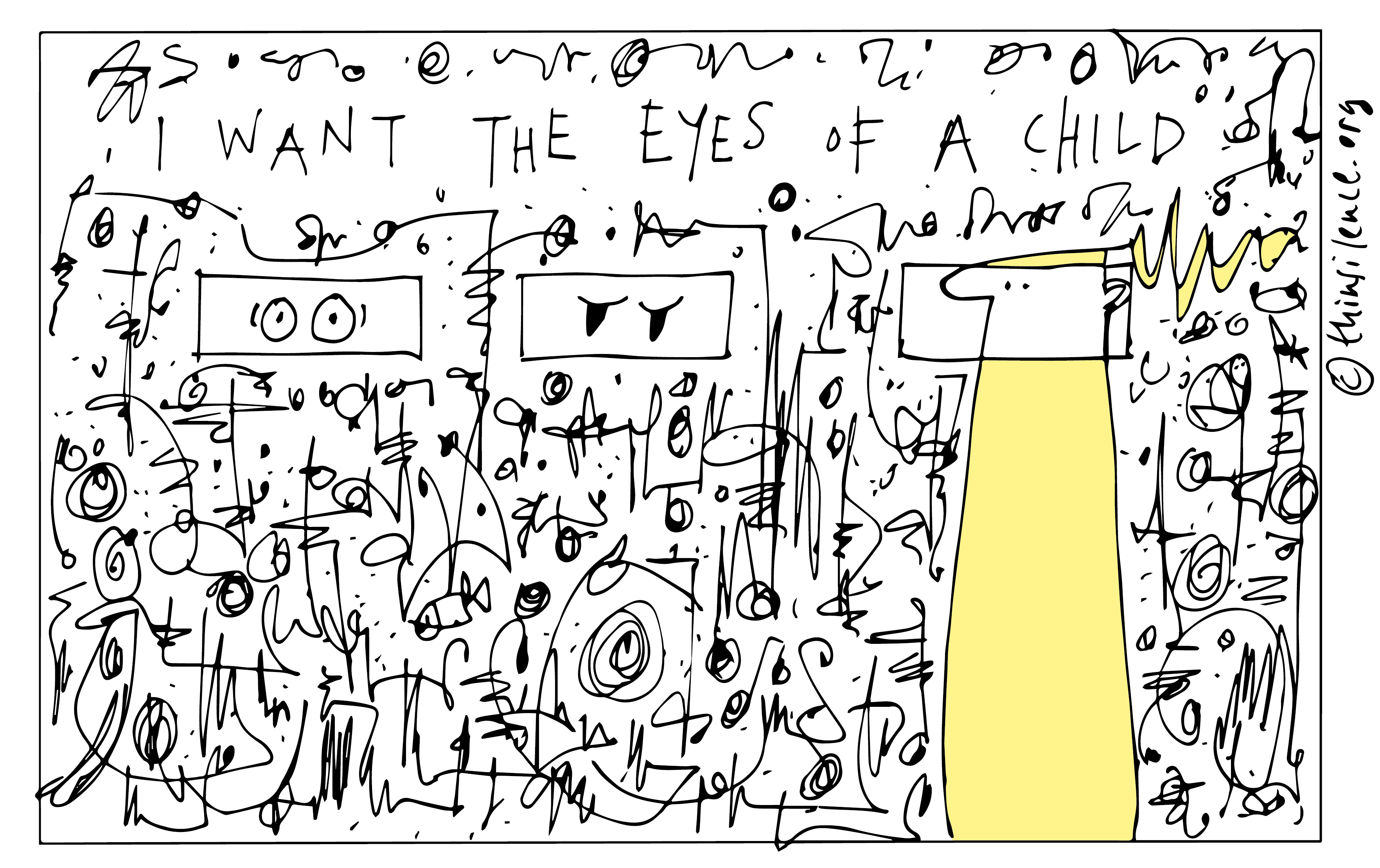
Children, in a very real sense, have beginners’ minds, open to wider possibilities. They see the world with fresh eyes, are less burdened with preconception and past experience, and are less guided by what they know to be true. They are likely to pick up details that adults might discard as irrelevant.* (Tom Vanderbilt)
May the Angel of Awakening stir your heart To come alive to the eternal within you, To all the invitations that quietly surround you.** (John O’Donohue)
So many things in this day are familiar, there are so many things on my mind, and I have so many things to do – and it isn’t 8am yet.
But this day is a wonderful thing, full of new delight and hope and possibility.
*From Tom Vanderbilt’s Beginners; **From John O’Donohue’s Benedictus: A Blessing of Angels.
Ambition, competition, and greatness can, and in fact must, exist in the same universe as humility, selflessness, and servanthood.* (Erwin McManus)
After each episode of flow a person becomes more of a unique individual, less predictable, possessed of rarer skills. (Mihály Csikszentmihalyi)
Some are tempted, when they see the toxic nature of competition, to replace it outright with cooperation.
Cooperation is good, our goal, but misses the edge competition brings for everyone, those we work with and those we seek to deliver to.
Yet those who only pursue ambition, competition and greatness lose out on how much farther we can travel when we pursue humility and selflessness and servanthood, too.
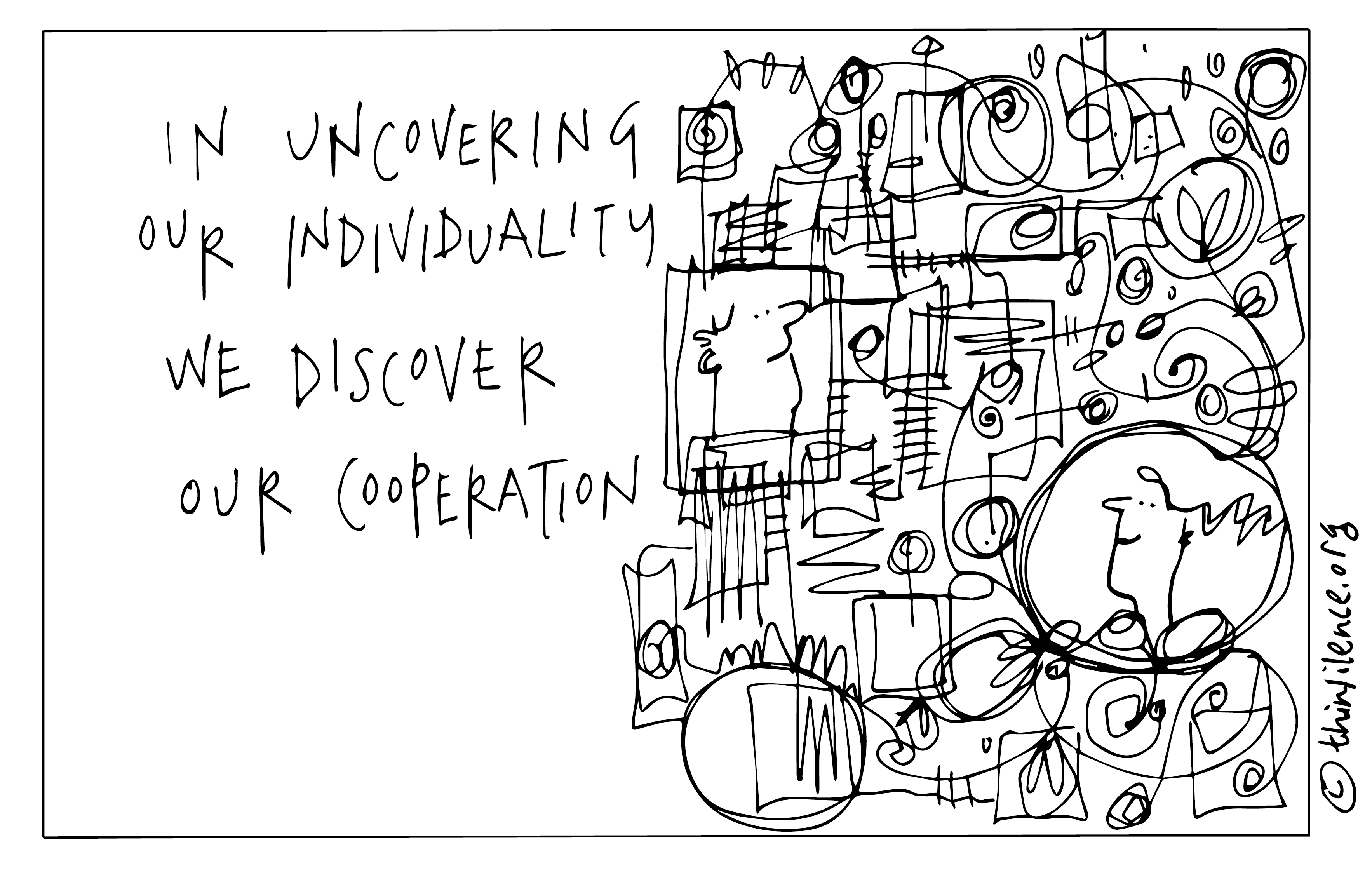
By these means, in uncovering our individuality, we find our cooperation.
You were made and set here to give voice to this, your own astonishment.* (Annie Dillard)
With the increasing specialisation of knowledge, and professionalisation of everyday life, suddenly being delighted by something, or loving something, was seen as vaguely disreputable.** (Tom Vanderbilt)
Tom Vanderbilt is reflecting on how the meanings of dilettante (from the Italian dilettare – “to delight”) and amateur (from the French aimer – to love”) have changed over time.
The work I’ve been developing for more than twenty years is about helping people to develop their talents into strengths, to focus on what they are good at and passionate about, but as Vanderbilt ponders,
What new passions might there be out there that you’ve yet to discover?**
It’s a good question that provides me with both nuance for my work and a personal challenge.
Quoting Winston Churchill, he encourages me to turn to other things which I can both love and delight in. Not in order to become an expert but, as I would suggest, to wander through:
It may well be that those whose work is their pleasure are those who most need the means of banishing it at intervals from their minds.^
The other delightful and lovely part of this is that we have no idea as we begin just what will be added to to what we love and delight in most of all.
*Annie Dillard, quoted in Rob Walker’s The Art of Noticing blog: Olfactory Work; **From Tom Vanderbilt’s Beginners: ^Winston Churchill, quoted in Tom Vanderbilt’s Beginners.
In the beginner’s mind there are many possibilities. In the expert’s mind there are few.* (Shunryu Suzuki)
Being of any real sort appears to require limitation. Perhaps this is because Being requires Becoming, as well as more static existence – and to become is to become something more, or at least something different.** (Jordan Peterson)
If we are to become more, we must become less.
To learn new things is to be one without knowledge and expertise, our place of limitation.
At first we are incompetent, clumsy, mistake-ridden, but a different you and a different me will emerge.


 THIN|SILENCE
You must be logged in to post a comment.