Would you like some pictures with that?

Of course it’s a difficult problem. All the easy ones are already solved. Difficult problems are precisely what we signed up for, right? […] Difficult problems are rarely solved immediately, and sometimes they’re not solved the way we might have imagined, but with effort, they often yield.*
(Seth Godin)

What if we altered our value system so that the priority was place on soul-enhancing, skill building, self-sufficiency, exploration, mind-expanding tasks?**
(Keri Smith)

We don’t find the life we want or believe we are made for by solving easy problems.

The worthwhile problems are probably those that require us not to use only words but also pictures:

Pictures and words together make a third thing.^

Just a thought. When we’re taking on the kind of problems that transform things, pictures help us to see things differently: stories are the closest things words can be before they become pictures.

Such pictures and images and illustrations can help us to keep moving against the things that prevail when words fail us.

Until we break through:

Kids don’t call it art when they’re throwing things around – they’re just doing stuff.^

We can all draw; don’t let anyone tell you that you can’t.

(*From Seth Godin’s blog: Of course it’s a difficult problem.)
(**From Keri Smith’s The Wander Society.)
(^John Baldessari, quoted in Austin Kleon’s blog: A brief appreciation of John Baldessari.)
And I, I did not know

Why is it possible to learn more in ten minutes about the Crab Nebula in taurus, which is 6,000 light years away, than you presently know about yourself, even though you’ve been stuck with yourself all your life.*
(Walker Percy)

Life is always a configuration of abundance, even as individual lives might experience scarcity.**
(Graham Leicester)

Walker Percy’s words reminded me of Laurence Kushner’s book God Was in This Place and I, I Did Not Know, focusing on the biblical character Jacob’s encounter with God in a dream told in several ways.

The thing I want to draw out from this, when we experience the most amazing things in life, we are left standing in front of it, wondering who we are.

This is both humbling and awesome.

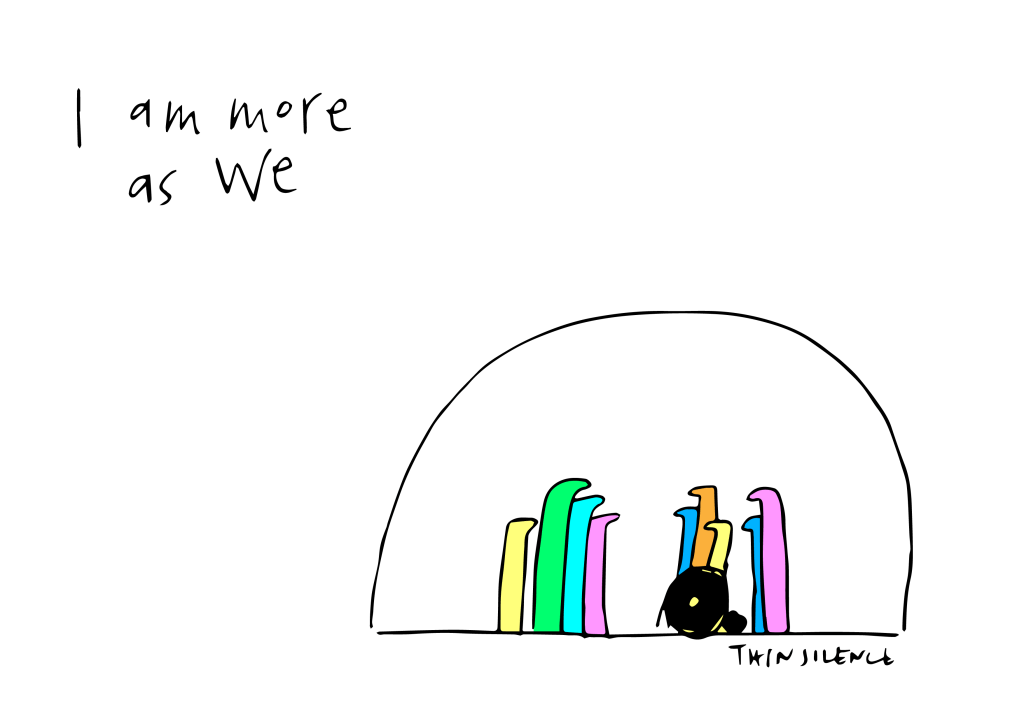
Especially when we see how it is in relationship with each other that we can be even more.

Again, humbling and awesome.

We end up in trouble when we believe we are everything we need and we have no need of each other.

(*From Walker Percy’s Lost in the Cosmos.)
(**From Graham Leicester’s Transformative Innovation.)

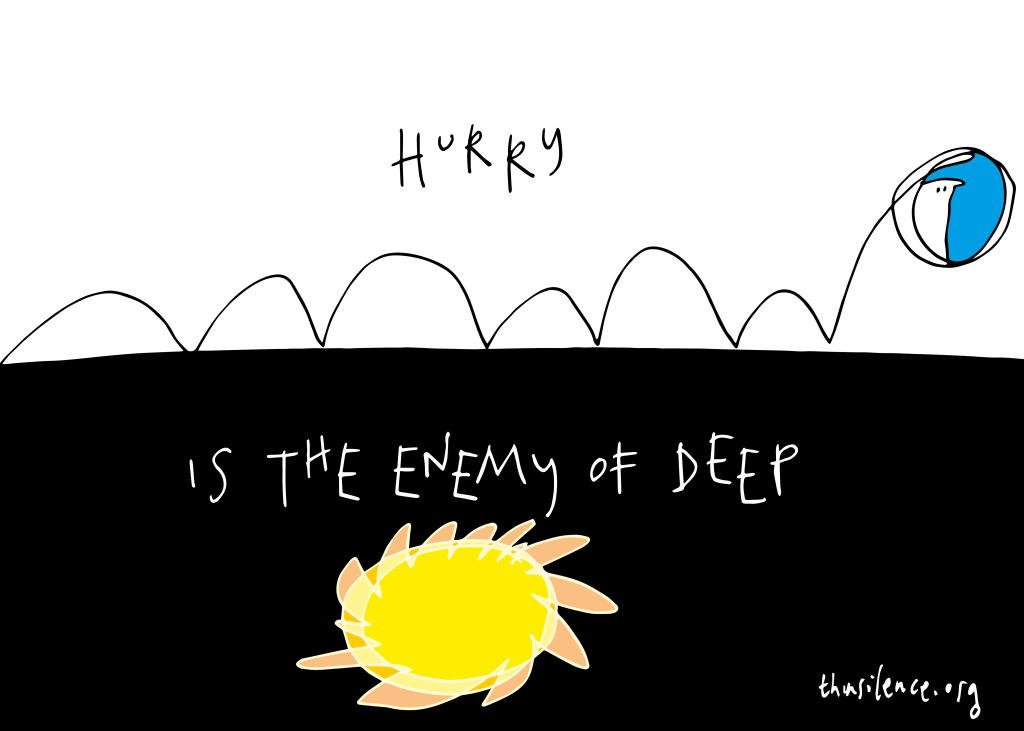
Hurry-worry

The first horizon is dominated by the quantitive sense of time as duration, a limited resource. […] By contrast, the third horizon is characterised by a qualitative awareness of time as a defining moment, a moment of decision. […] the second horizon is a committed choice in the context of the moment, and attempt to capture the flow.*
(Bill Sharpe)

All three horizons are present to us right now: the first horizon of how we have always done things, the third horizon of different future possibilities and the second horizon of capturing and giving form to this future.

This may be something within society, within our work or within our personal lives.

Our overwhelming experience is that we’re likely to give more time to the first horizon of how things have always been when we need to slow down and pay attention to what can be.

(*From Bill Sharpe’s Three Horizons.)

Deep work

It is a constant effort and hard work – and inexplicably life-affirming – to honour who you are, what you believe, and why you are here.*
(Elle Luna)

When our possibility for growth is linked with quests for nobility, honour and enlightenment, we’re engaging in deep work** and fruitfulness will follow in the form of courage, generosity and wisdom.^

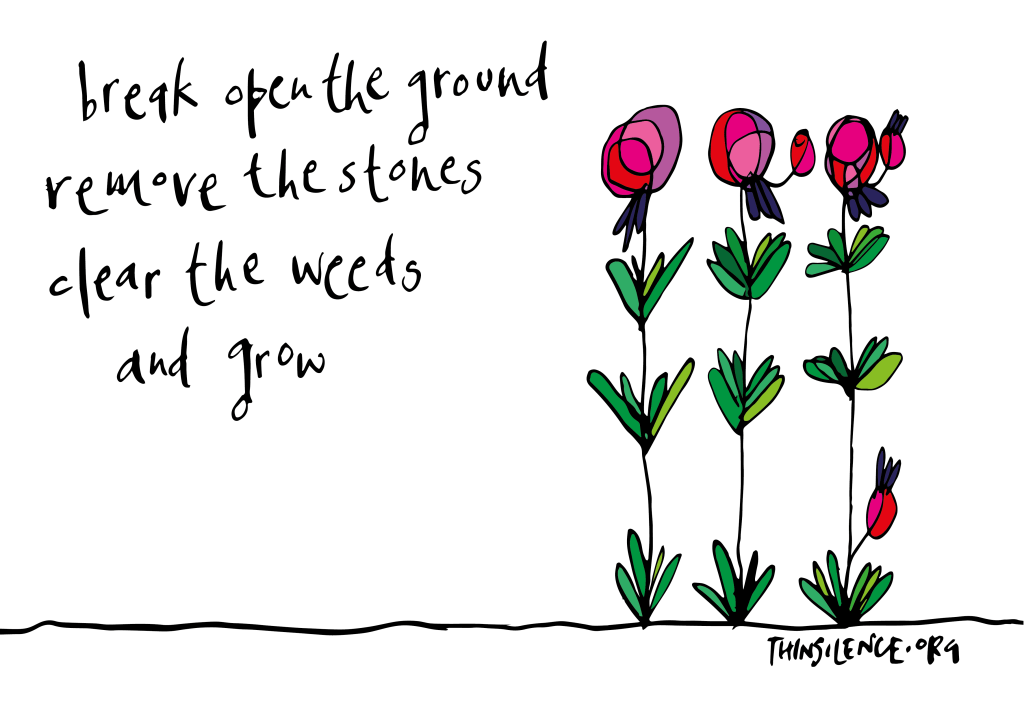
I am reminded of my father’s hard work of double-spading^^ our back garden when we moved on his retirement, removing so many stones that he was able to build a wall the whole length of the garden, including a walled enclosure full of stones at the end of the wall.*^

The result was a highly productive garden full of vegetables and flowers, far more than our family could consume and enjoy.

Cal Newport writes about the places people as diverse as Carl Jung, Michel de Montaigne, Woody Allen, Bill Gates, J. K. Rowling and Mark Twain would take themselves in order to engage in deep work.

There is no less a need to take ourselves to an undistracted place when it comes to the deep work of becoming more who we are.

Where do you go to dig deep, remove the stones and clear the weeds from your life?

(*From Elle Luna’s The Crossroads of Should and Must.)
(**Deep Work is the title of Cal Newport’s book of rules for success in a distracted world.
(^See Erwin McManus’ Uprising.)
(^^Digging two spade-depths deep.)
(*^He probably should have sold it as hardcore – possibly missed a trick there.)

Making a name for ourselves

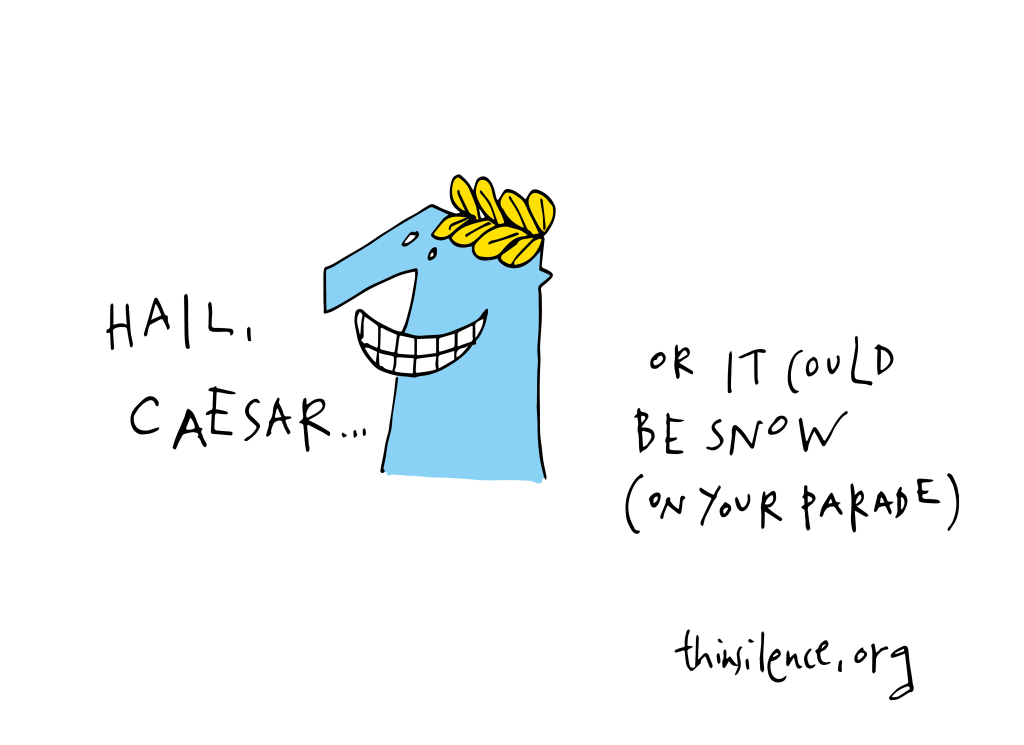
One Caesar – Domitian – had a choir that followed him everywhere he went, singing,

You are worthy, our Lord and God, to receive glory and honour and power.*
(Rob Bell)

People are still trying to make a name for themselves, but the most important name is the one given to us by those who know us best.**

The best names of all come to us through lives of humility and service.

(*From Rob Bell’s What is the Bible?)
(**I belong to an organisation that provides names for one another based on they discover and know one another. You cannot suggest your own name, only accept, or not, the name offered.)

Full participation

Figure out what it means to put flesh and blood on it.

In your place,
at your time,
in your world,
figure it out.*
(Rob Bell)

The thing you really want will require everything.

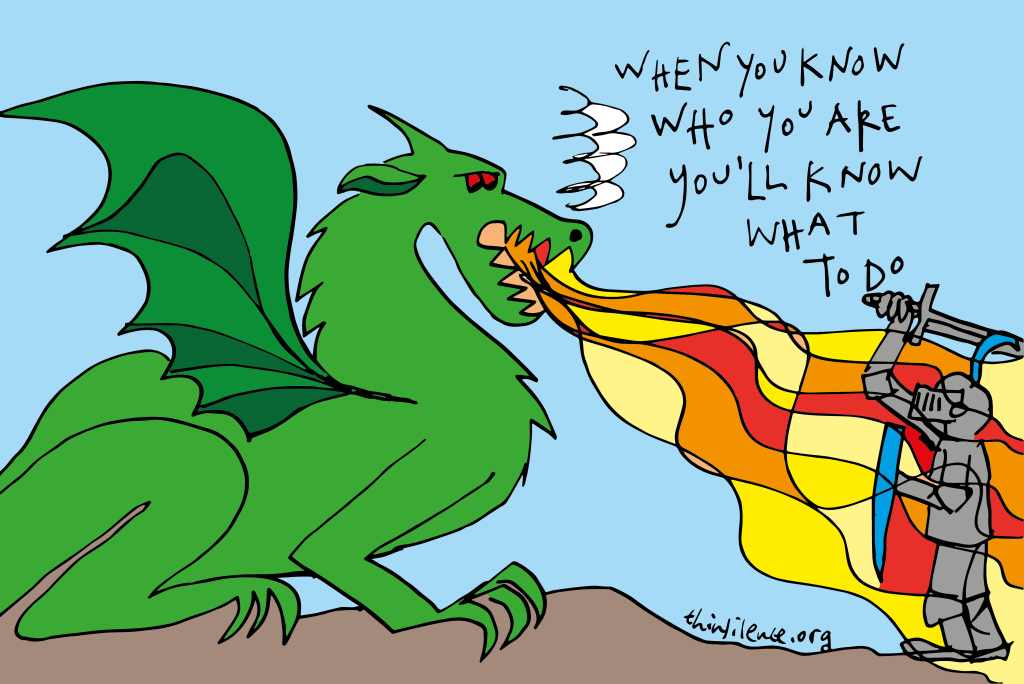
There are many borders to cross, challenges to face, people to encounter, before you will come to the fullness of what it is you desire, found in the I-in-now:

The revolutionary force in this century is the awakening of a deep generative human capacity – the I-in now.**

This is the fourth of Otto Scharmer and Theory U‘s “I-in” stages.

We begin with I-in-me – a necessary and important world, though small.

Larger is the world of I-in-it in which we discover there is more than we possibly knew.

Beyond this growing world is I-in-us, the discovering of deeper and richer worlds of one another.

Now we are able to arrive at I-in-now, a world of many possibilities made possible because we each are bringing all and everything we are – especially our courage, our generosity, our wisdom.

I feel Martin Buber commentating on this more when he writes:

Those who experience do not participate in the world. For the experience is “in them” and not between them and the world.^

The experience is most-important to us but is not the end of our questing, merely the beginning.

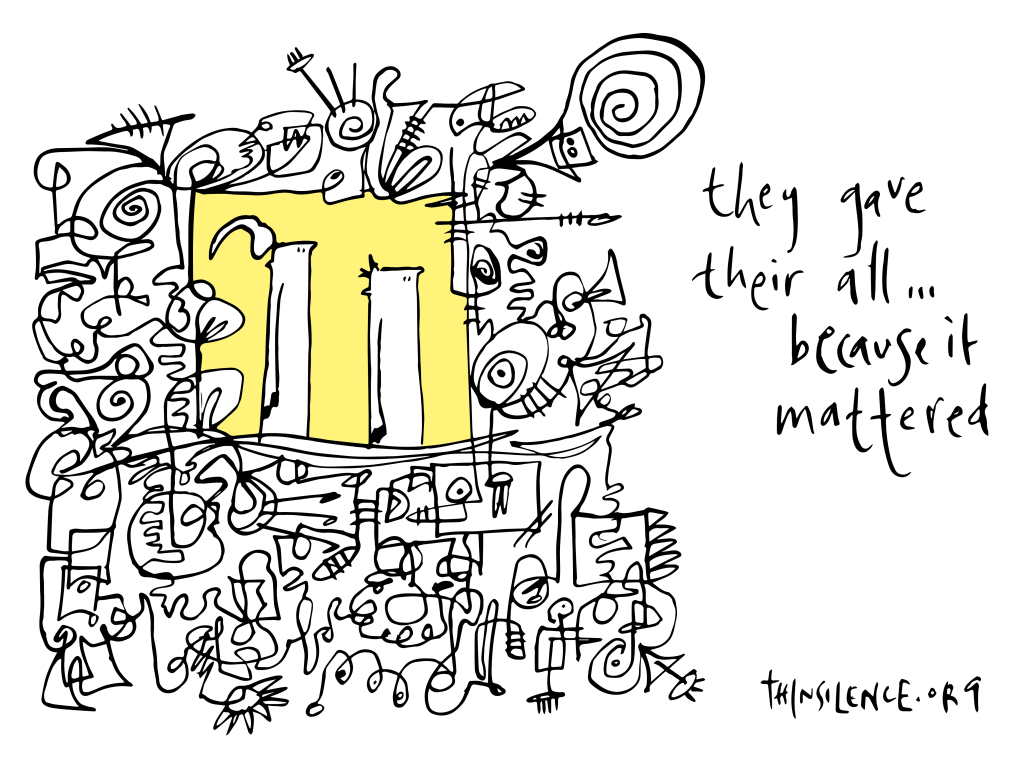
We are glimpsing a different and very possible human future made possible when we are prepared to give everything:

Once you’ve seen, you can’t unsee.*

(*From Rob Bell’s What is the Bible?)
(**From Otto Scharmer’s Theory U.)
(^From Martin Buber’s I and Thou.)

Such a waste

Often, we choose to be selfish because we feel insufficiency. […] The single best way to find sufficiency and confidence and trust and forward motion is to do precisely the opposite of what our instincts might tell us. In an economy based on connection, trust and attention, the posture of generosity is not only the highest-yielding strategy, it’s also the right thing to do.*
(Seth Godin)

Disruptive innovators thrive on making a difference first and focus on growth later.**
(Bernadette Jiwa)

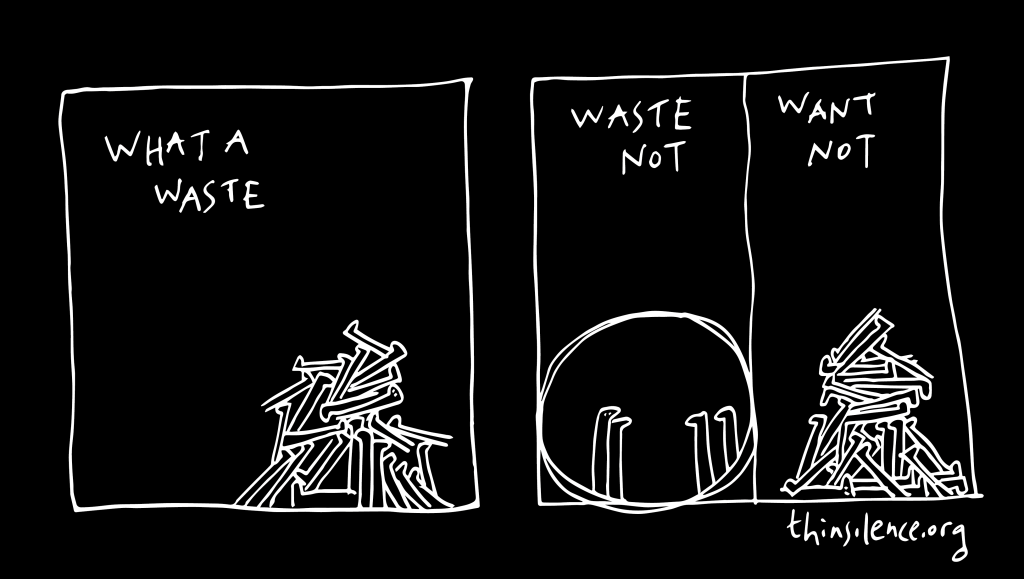
Waste is a product of our finite games. James Carse explores what waste really is in his book concerned with the bigger games we can play:

Society regards its waste as an unfortunate, but necessary, consequence of its activities – what is left when we have made essential societal goods available. But waste is not the result of what we have made. It is what we have made.^

What we are blind to, when it comes to waste, Carse brings out into the open:

It is this repeated parallel that brings us to see that the society that creates natural waste creates human waste. Waste persons are those no longer useful as resources to a society for whatever reason and have become apotrides, or noncitizens.^

To such people, Carse argues, we donate our waste, our leftovers:

Waste is the antiproperty that becomes the possession of losers. It is the emblem of the untitled.^

This is the extreme but there are many people who are considered unimportant or invisible by our societies.

But no one is a waste of space. We’re talking about creatures that may be, as far as we presently know, the most complex entities in the universe.

Yet we sort and stack our children as soon as we possibly can and once in this industrial system of education, it’s difficult to break out.^^

We need to open up different ways, means and possibilities:

Reading opens up worlds inside your head, worlds you can explore, play with, roam around in. Worlds that are in your and that become part of you. When you read, you become bigger.*^

(*From Seth Godin’s blog: The paradox of selfishness.)
(**From Bernadette Jiwa’s Meaningful.)
(^From James Carse’s Finite and Infinite Games.)
(^^Also check out Seth Godin’s thesis: Stop Stealing Dreams.)
(*^Martha Nussbaum’s letter to you readers from A Velocity of Being.)

Adventure that

Mine was a journey of learning to trust not knowing and to stay open to what appears – and to help others find their own next steps.*
(Bob Stilger)

You leave the world that you’re in and go into a depth, or into a distance or up to a height. There you come to what is missing in your consciousness in the world you formerly inhabited. […] The adventure is symbolically a manifestation of [your] character.**
(Joseph Campbell)

We don’t have to travel to far away places for one of Joseph Campbell’s vision-quest adventures that change us.

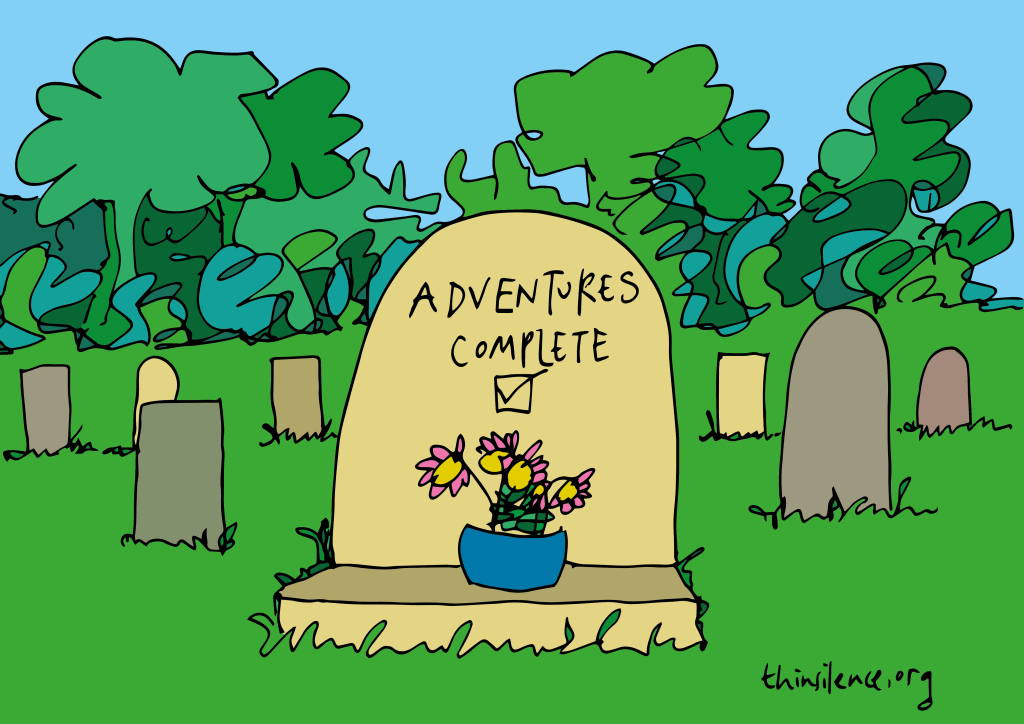
Whatever your day is about why not adventure that?

Go deeper, go further, go higher, be open to what is wanting to emerge.

Every day, we can leave behind our old ways of thinking, of feeling, of behaving.

(Bob Stilger, from Drawn Together Through Visual Practice.)
(From Joseph Campbell and Bill Moyers’ The Power of Myth.)


Incomparable

The thing about comparing ourselves with others is that they’re probably using a completely different yardstick to the one we require if we are to see the significant and critical things about your curiosity, values and alchemistic abilities.

The re-set

When everything falls apart, we must invite our hands and our hearts to come out to play, and ask our analytical minds to wait.*
(Bob Stilger)

Perfection would be nice but little in life is perfect.

For everything else there’s the re-set – a dimension of the infinite game – and one of its biggest dimensions of the game is forgiveness.

(*Bob Stilger, from Drawn Together Through Visual Practice.)