But owning genius requires admitting that we can be exceptional or extraordinary in our own way and accepting that means we have a responsibility to do something with it.* (Bernadette Jiwa)
We are what remains after everything we are not.** (Maria Popova)
Bernadette Jiwa asks,
‘When did one day become never?’^
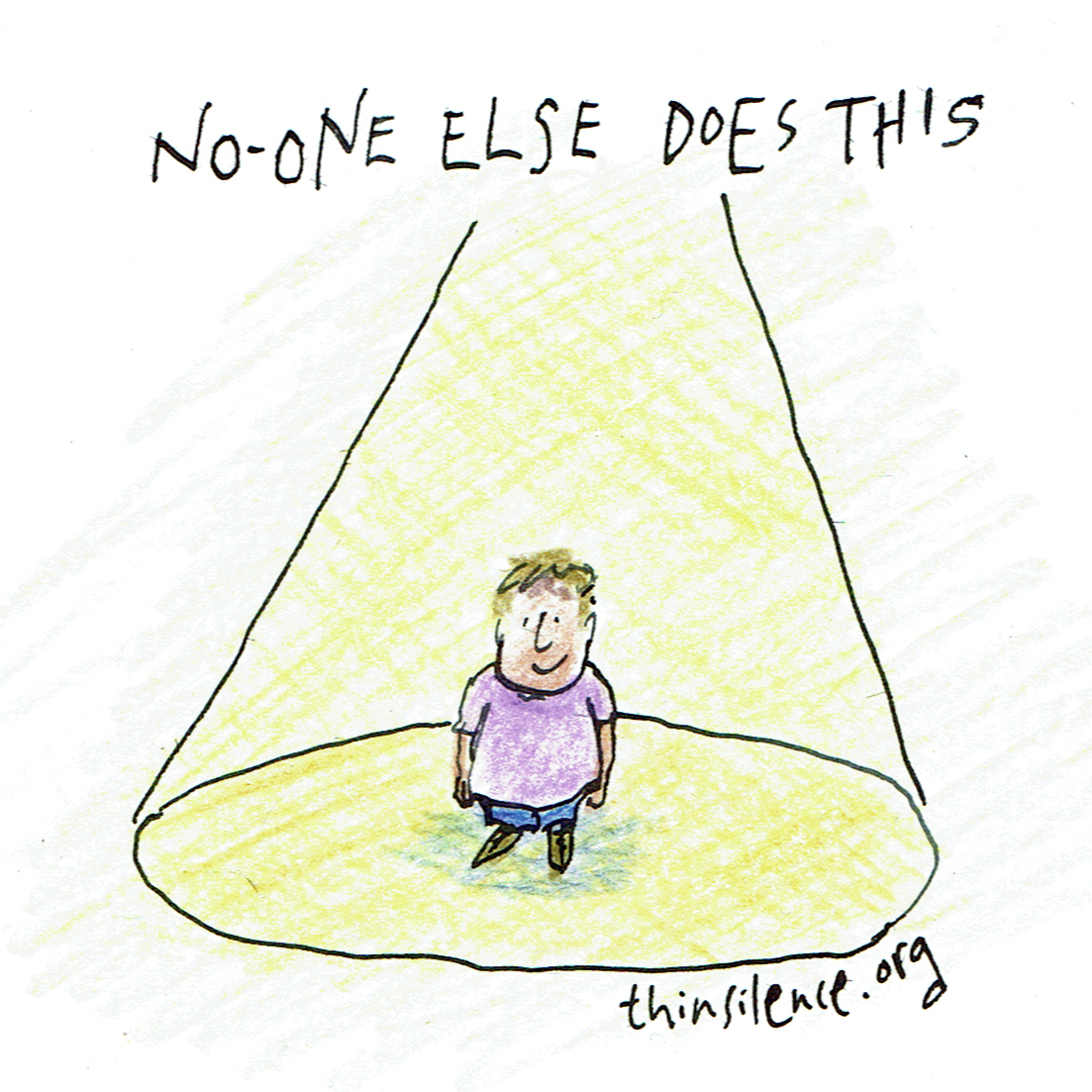
By genius, I’m not thinking big and dramatic, rather, something we love and have honed and no-one else has done.
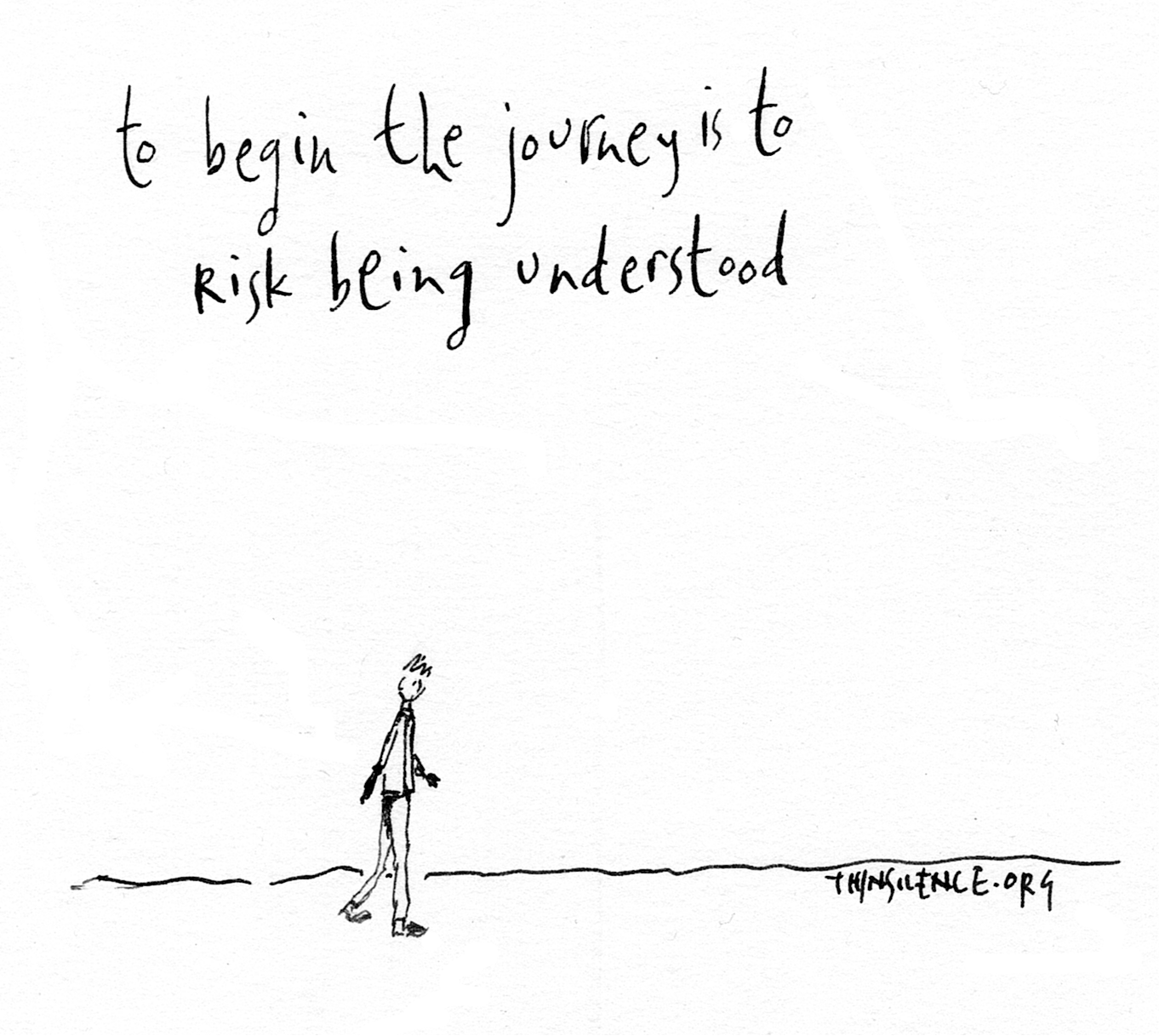
We can only find out just what it might be if we take it on a journey.
Jiwa answers her own question:
‘One day becomes never when we fail to take the first step.’*
God against man. Man against God. Man against nature. Nature against Man. Nature against God. God against Nature. Very funny religion.* (D. T. Suzuki)
the vast changes required by a regenerative society will not be achieved just by reacting to crises after they arrive. They will require inspiration, aspiration, imagination, patience, perseverance, and no small amount of humility** (Peter Senge.)
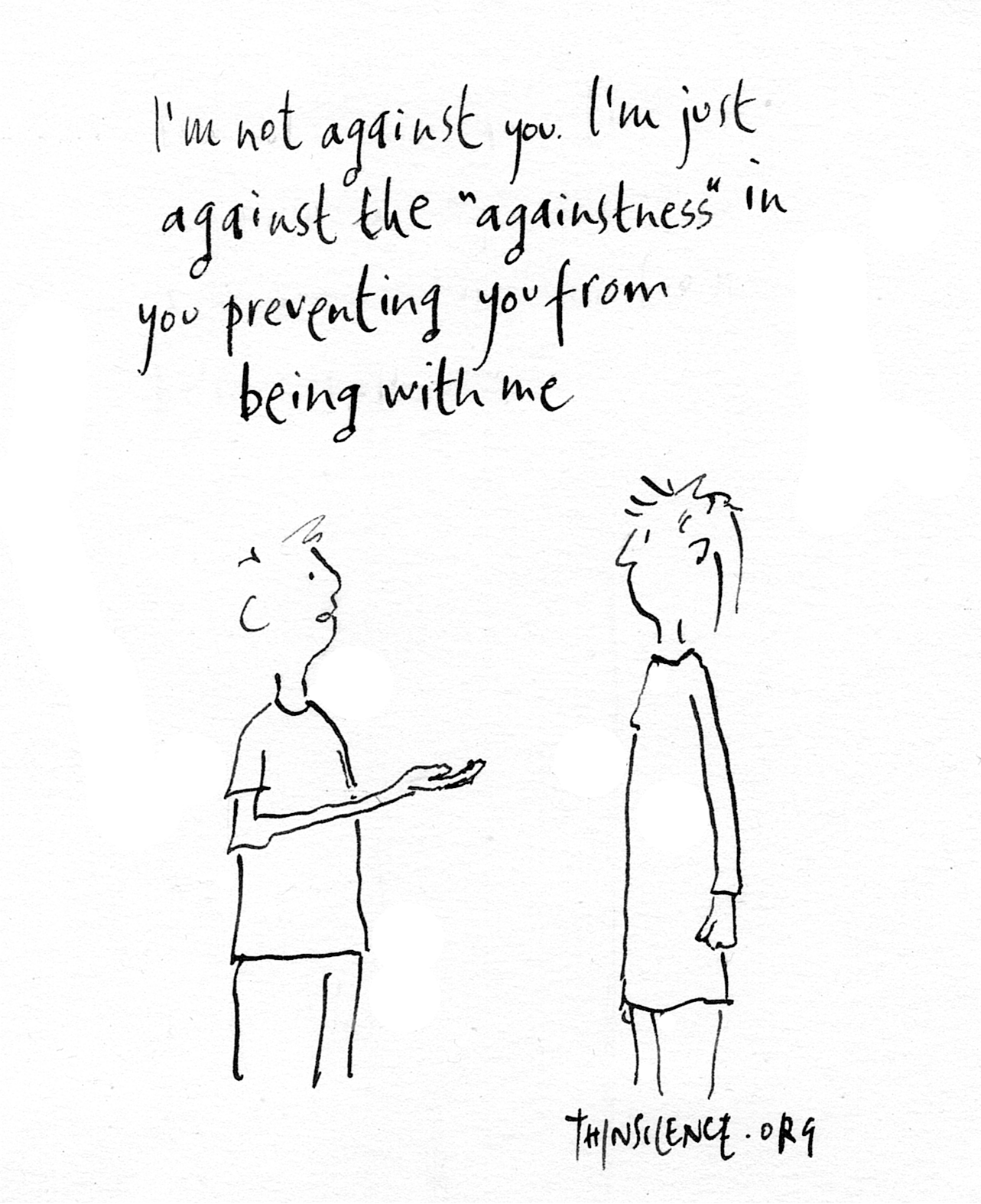
Once upon a time “against” ensured we wouldn’t be eaten by the proverbial sabre-toothed tiger, but now it gets in the way of a world that could be bigger for everyone.
In the modern world “against” leads us into competition with one another, in small to big ways.
“With,” though, is an infinite game.
We can still bring the things that make us different but we get to use our different smarts against the things we really do need to be against: poverty, illiteracy, disease, conflict, injustice, and, definitely, climate change.
A question from Audre Lord invites us to explore a smarter with and against:
“Where does our power lie and how do we school ourselves to use it in the service of what we believe? […] How can we use our differences in or common battles for a lovable future?”^
This is the essence of intuitive heuristics: when faced with a difficult question, we often answer an easier one instead, usually without noticing the substitution.*
There was a sudden tingling in my toes. It felt as though something tremendous might be going to happen.** (Billy)
The Duke of Hampshire has just asked Billy a question:
“But what about you, my lad? I am wondering if you happen to have just one extra special little wish all for yourself. If you do, I’d love you to tell me about it.”^
Billy didn’t substitute the question for something smaller and easier:
‘”There is an old wooden house near where I live,” I said. “It’s called The Grubber and long ago it used to be sweet-shop. I have wished and wished that one day somebody might come along and make it into a marvellous new sweet-shop all over again.”‘**
I’m loving reading books at almost sixty that I never got to read when I was a child. There’re such simple but special things to come upon.
Billy was to be the one who re-opened the sweet-shop, and I can’t help but think there’s something you want to see happen, and maybe you’re the one to do it.
Maybe you’ve just swapped the difficult question for an easier one.
Bernadette Jiwa asks, ‘Can you describe your company in three words?’*
How about your life? Three words to keep you on track, to open up a space of possibilities?
A word can convey a journey from something as well as to something. Where three words intersect is a powerful place within space and time.
When we stay focused through the story these words tell we bring something no-one else can:
‘No matter your chosen medium, remember this: it will take you ten years to master your art. Ten years of unforgiving, relentless and thankless work, dawn until dusk.’**
On the other side of this – though, really, it’s ongoing – is something quite remarkable.
The three words of the title are some I came across as I was reading this morning. They each describe the journey I mentioned from something to something. Imagine being not he receiving end of a life lived in this way; imagine what you want to bring into being and give as a result.
What are your three words?
(*From The Story of Telling: Tell Me About Your Company.) (**From Robert McKee’s email: The Story of a Writer: Part 3
We’re getting worse at looking where we’re going at every turn. […] Technology is hijacking our minds. As a result, we’re noticing less and missing more. […] We’re spending most of our waking hours reacting and responding to external inputs that we allow to steal our attention – those important, not urgent emails and notifications that draw us in.* (Bernadette Jiwa)
Take me down to the spring of my life, and tell me my nature and my name.** (George Appleton)
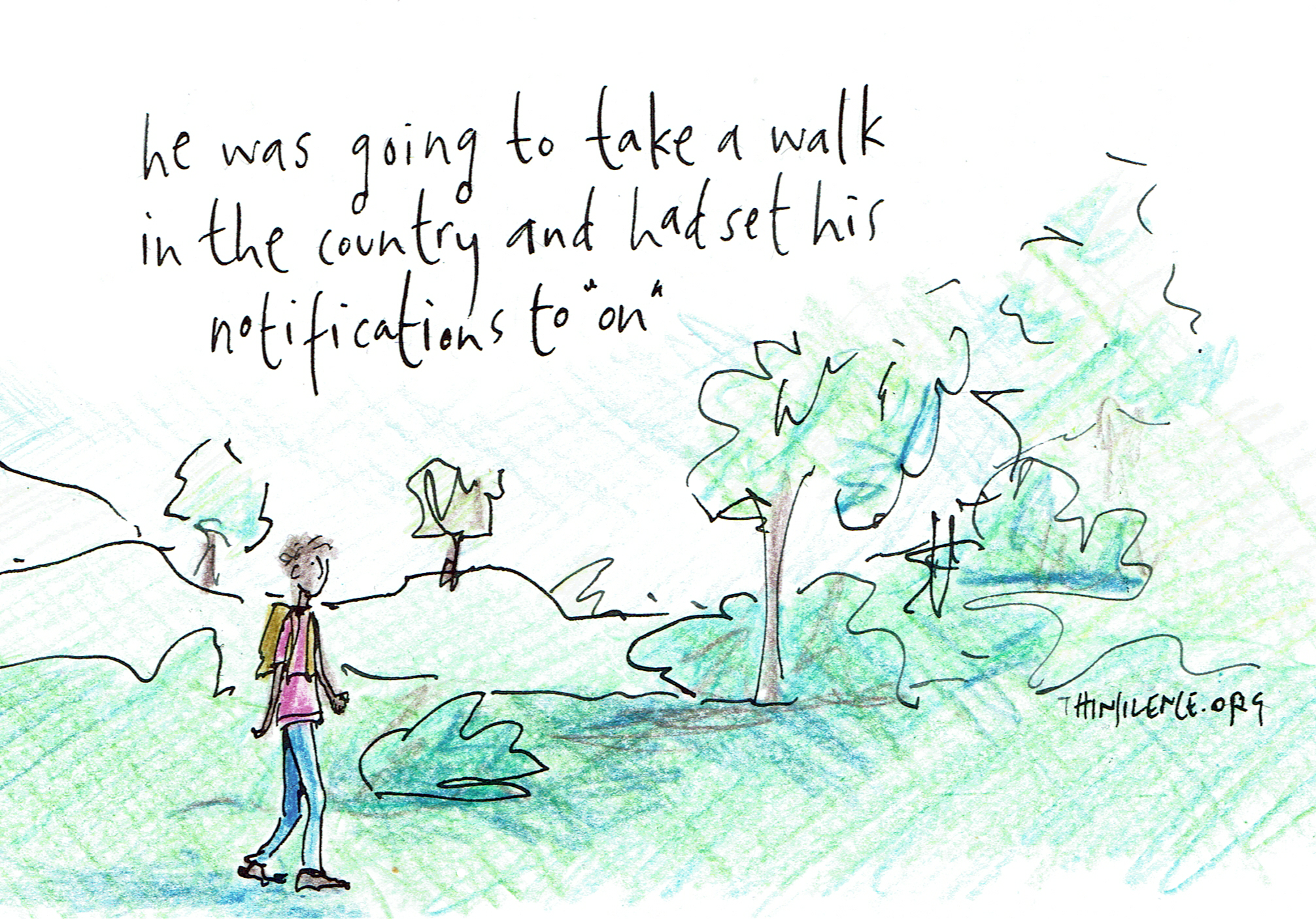
There have always been notifications, coming from without and coming from within.
When we do not listen to the notifications (whispers) coming from within we lose our names, or replace these with titles, but it is our name and the living of our name that brings the imbalance and asymmetry we need you to bring into the world.
The protagonist descends into an unfamiliar world where they discover who they are even as they are overcoming great challenges, finally obtaining the boon they must return with. This is our gift:
‘Gifts are the essence of art. Art isn’t made as part of an even exchange, it is your chance to create imbalance, which leads to connection.’^
It isn’t as if it’s once and for all, the listening goes on, as Lauren Elkin proffers:
‘I had already learned that self-discovery is a lifelong experiment.’^^
There are so many notifications that came to us from without; it’s as though the universe has something to say to us across our lifetime and is not content to wait. Bruce Chatwin speaks of this through his explorations of the native Australians songlines:
‘In theory, at least, the whole of Australia could be read as a musical score. There was hardly a rock or creek in the country that could not or had not been sung.’*^
All of these signals and messages will be lost to us unless we turn notifications on in our lives to more than compensate for those on our internet devices, so that we can connect to life-in-all-its-fullness.
But the severed It of institutions is a golem and the severed I of feelings is a fluttering soul-bird. Neither knows the human being; one only the instance and the other one only the “object.” Neither know person or community. Neither knows the present: these, however modern, know only the rigid past, that which is finished, while those, however persistent, know only the fleeting moment, that which is not yet. Neither has access to actual life. Institutions yield no public life; feelings, no personal life.* (Martin Buber)
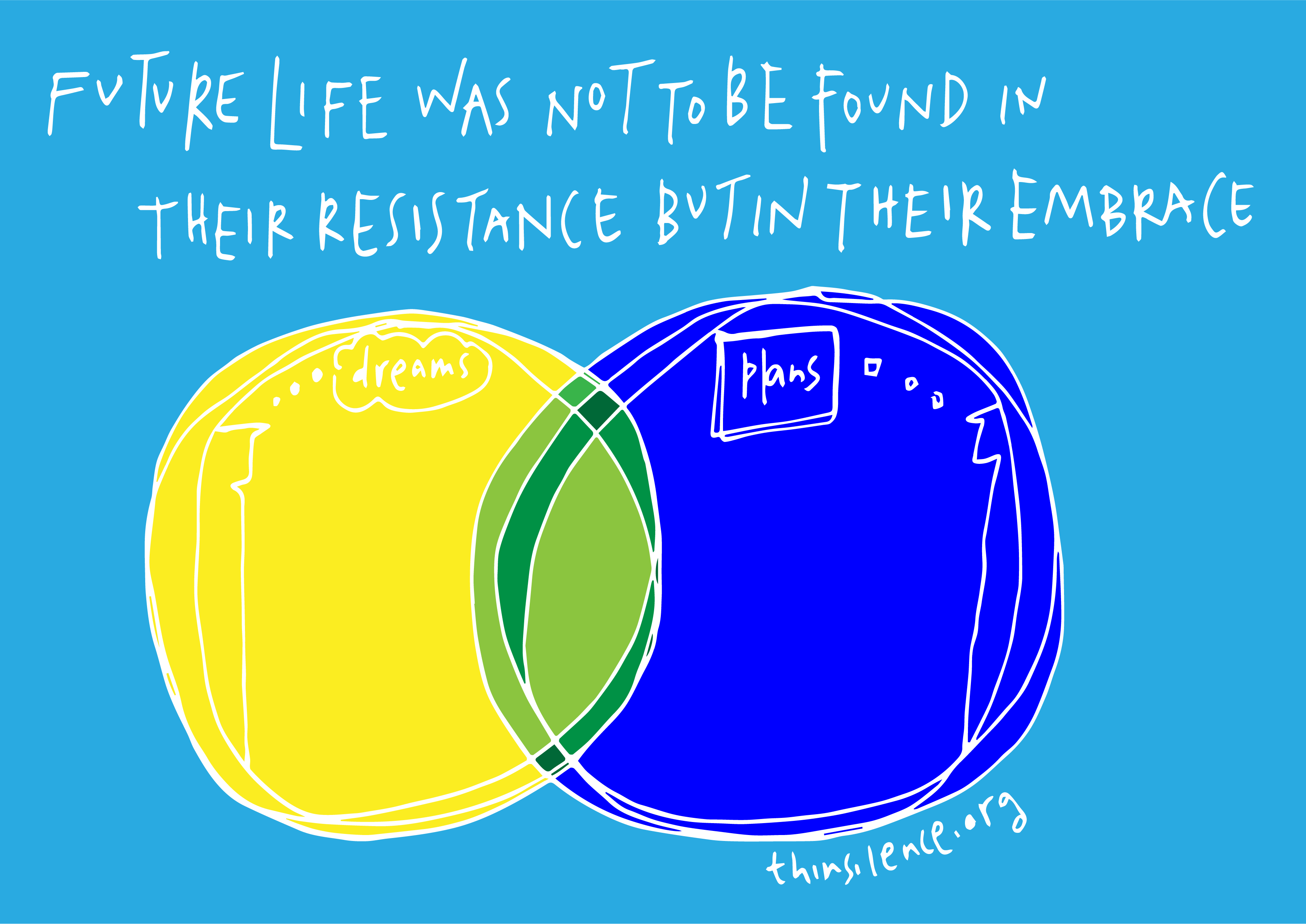
A plan is the product of a particular design studio. The sketch, on the other hand is something made by a particular person and bears the traces of its own making.** (Annie Pirrie)
One without the other is a finite game: one over-plans and solidifies, the other over-dreams and evaporates.
Together, though, an infinite game takes form, as James Carse would want us to remember:
‘We do not play against reality; we play according to reality.’^
When we do – remembering Wallace Stevens speaks about bringing the power of imagination to the pressure of reality – we are bring openness to our planning and substance to our sketching.
Christian Schwartz would recognise something of a description of his dynamic and static poles in the words of Buber, Pirrie, Carse and Stevens, believing that the dynamic (I, sketches, infinite, imagination) must produce the static (It, plans, finite, reality), else it is “spiritism,” a “fluttering soul-bird,” and the static must stimulate the dynamic, else it becomes institutionalised, a “golem.”
One should not overcome the other, but they must work together. Wallace Stevens sees new possibilities emerging out of the power of imagination playing upon the pressure of reality, and James Carse clarifies:
‘Infinite players do not oppose the actions of others, but initiate actions of their own in such a way that others will respond by initiating their own.’^
Some will be happier sketching, others planning; all are involved in a greater game, one of including the other, allowing the other’s presence rather than forcing their absence in the end just a healthier way to live:
‘Positive mental health is a presence, the presence of positive emotion, the presence of engagement, the presence of meaning, the presence of good relationships, and the presence of accomplishment.’^^
(*From Martin Buber’s I and Thou.) (**From Anne Pirrie’s Virtue and the Gentle Art of Scholarship.) (^From James Carse’s Finite and Infinite Games.) (^^From Martin Seligman’s Flourish.)
I draw from the absurd three consequences, which are my revolt, my freedom, and my passion.* (Albert Camus)
All products are windows into other possible worlds …** (Hugh Macleod)
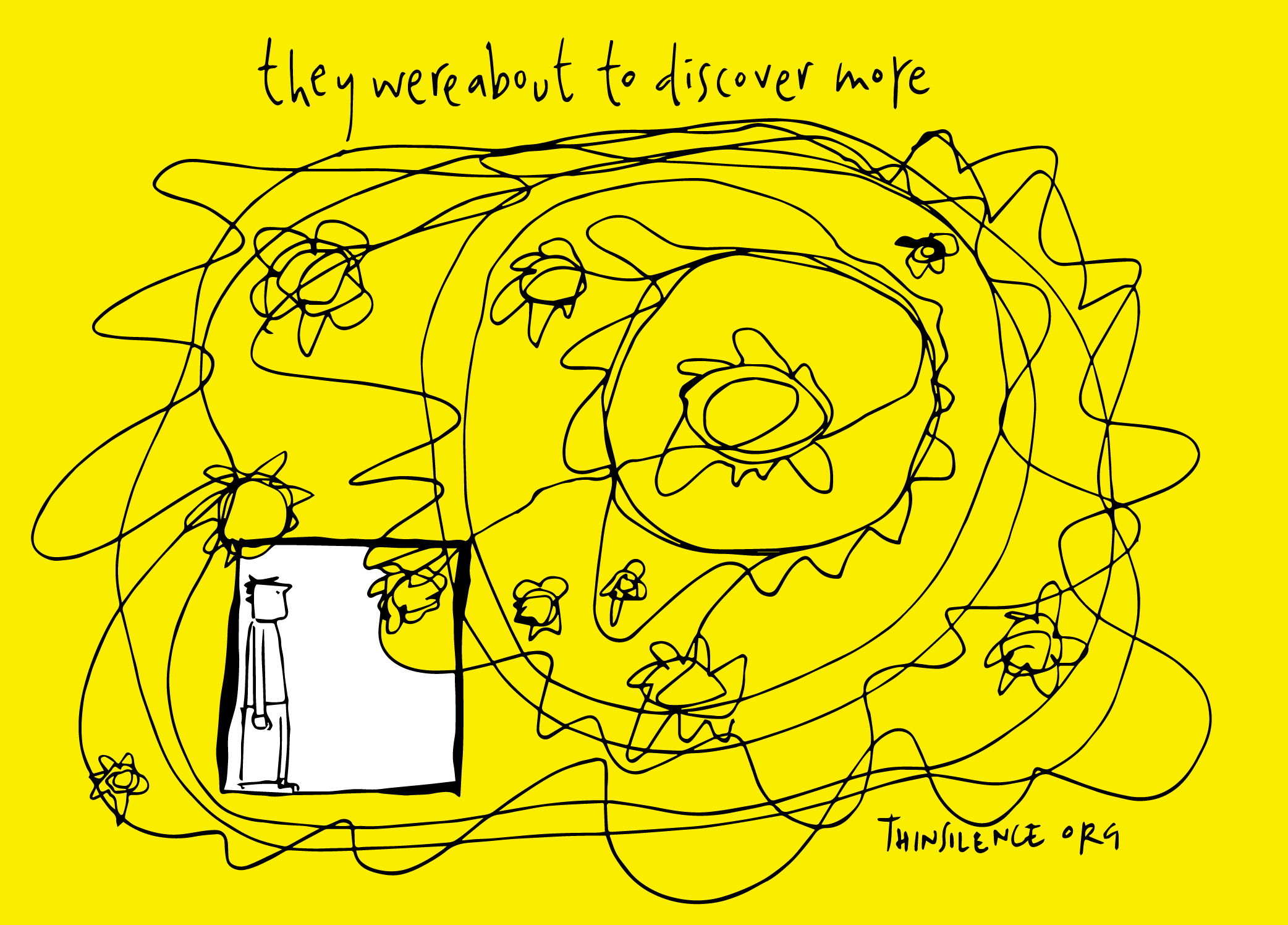
As long as there remains the diversity of human curiosity, this will never be it.
Though, to find what Albert Camus describes as our revolt, freedom and passion within our peculiar curiosity will require our willingness to become lost, moving from what we know to what we do not know. Not only to be lost on the outside but on the inside too.
Some are willing to accommodate the former but not the latter.
There is always more and the important thing is to choose the path that keeps unfolding, taking us to new places and people and possibilities we hadn’t imagined.
This is the journey which will take us from judgement to openness, from cynicism to compassion, from fear to courage.
Only those who risk going too far can possibly find out how far one can go.* (T. S. Eliot)
For wherever you are, there is somewhere further you can go.** (Tim Ingold)
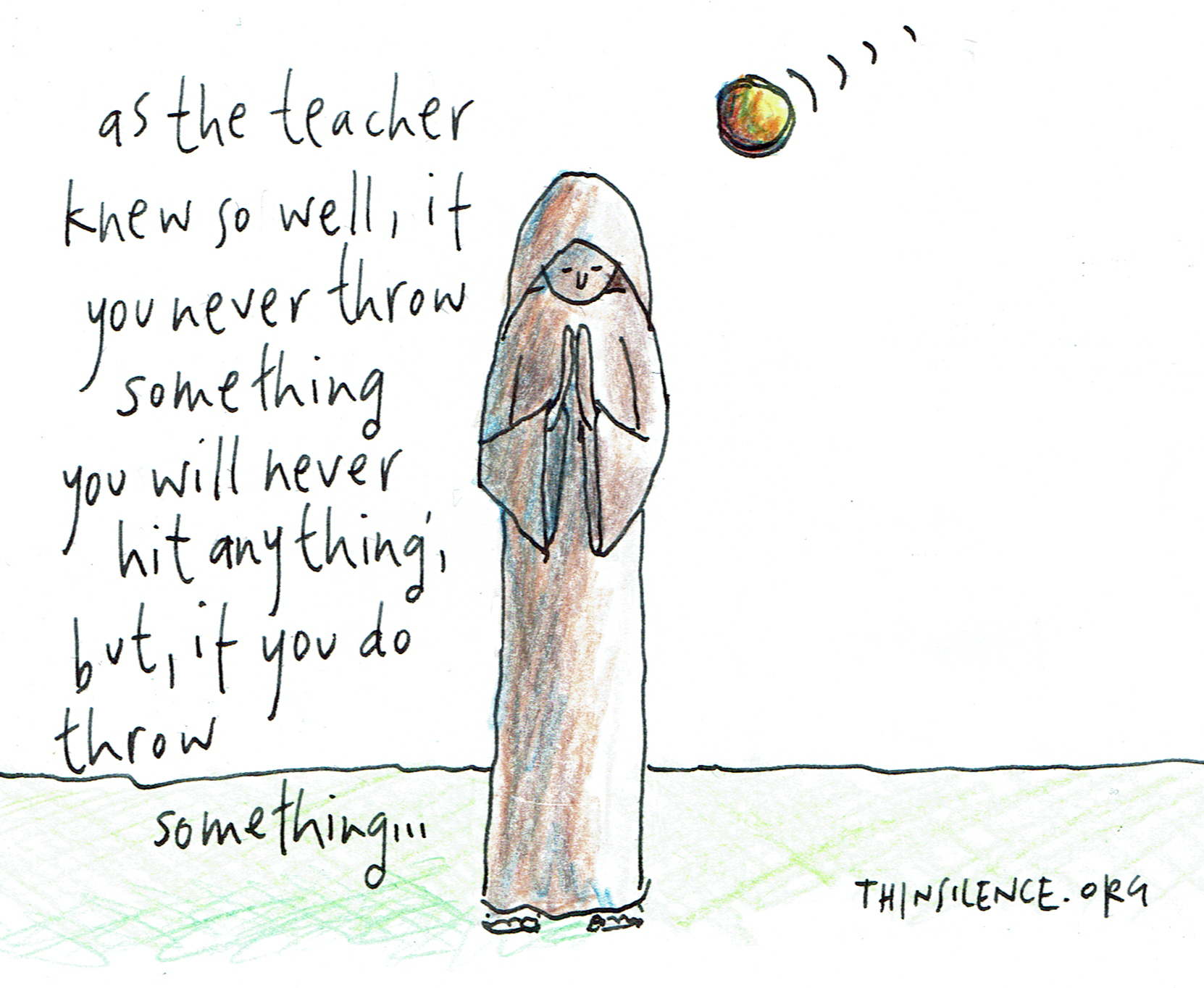
We hang around just to see what happens, we read a book, catch the TEDtalk, take the free online course, connect with others … and then we throw something and watch to see what it hits.
If I were to wish for anything I should not wish for wealth or power, but for the passionate sense of what can be, for the eye which ever young and ardent sees the possible.* (Sören Kierkegaard)
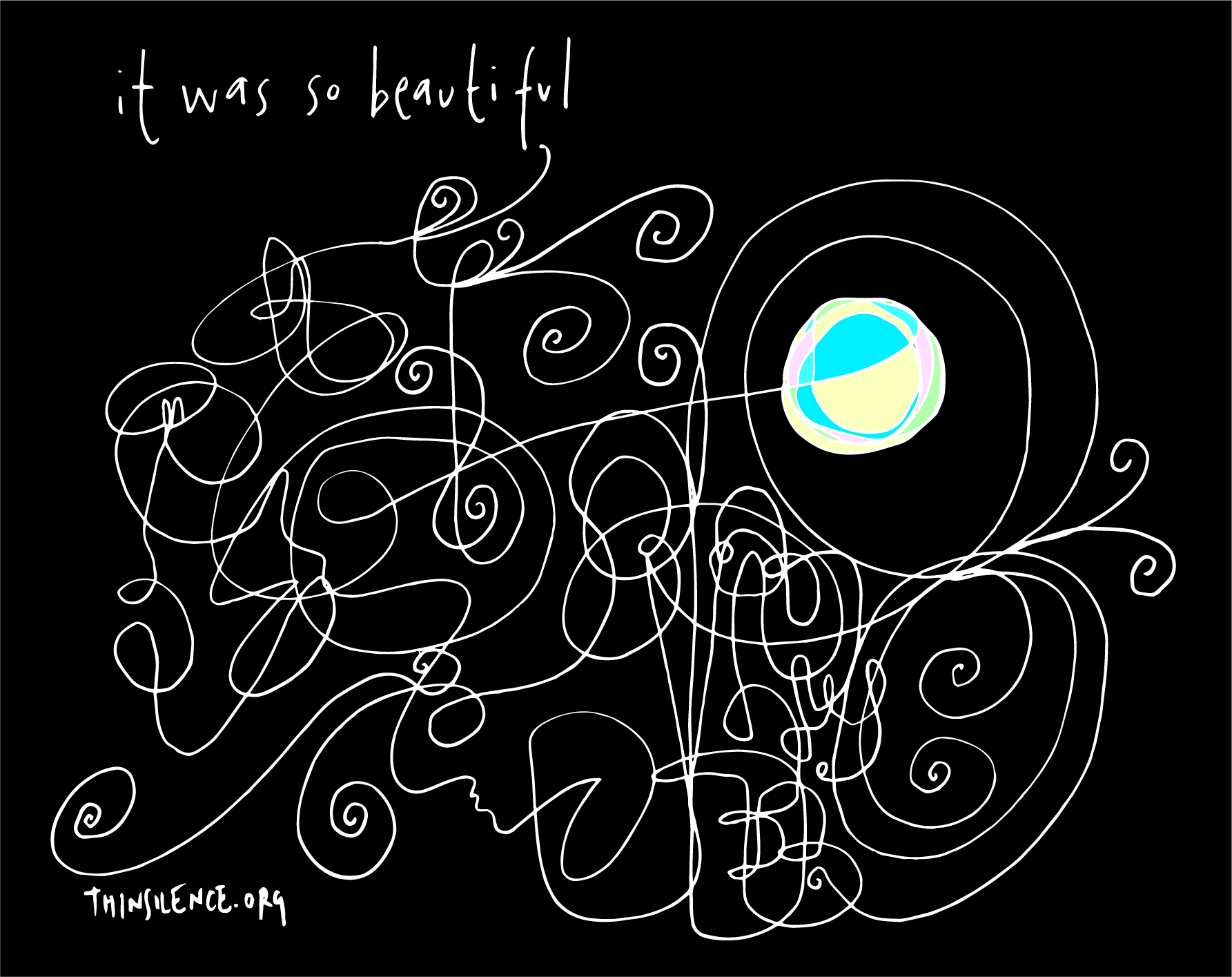
The recognition of beauty was one of the most significant events in the evolution of human consciousness. The feelings of joy and love are intrinsically linked to that recognition.** (Eckhart Tolle)
We have the saying, “Beauty is in the eye of the beholder.”
Whilst everyone sees beauty differently, Jonah Lehrer reminds us:
‘We make our eyes lie.’^
Our brains are telling us what to see, filling in what we cannot see:
‘But we are blind to our own blind spot: our brain unfailingly registers a seamless world.’^
Perhaps we need to doubt what we see as beautiful and not beautiful, to be open to each person’s beauty. Khalil Gibran’s prophet, speaking to the people of Orphalese, encourages them to see the beauty around them and also their own beauty:
‘People of Orphalese, beauty is life when life unveils her holy face. But you are life and you are the veil. Beauty is eternity gazing at itself in a mirror. But you are eternity and you are the mirror.^^
The beauty in these words is disruptive, causing us to stop and notice more. As Anne Pirrie points out, reflecting on the words on the words of poet Alistair Reid:
‘we need to face up to the fact that it is not curiosity that will cause is to die, but the lack of it.’*^
It is not only about being open to more knowledge, even about one another, but what we then do with this:
‘it is not merely a question of what one knows (despite previous references to a well-stocked mind) but of how one knows, or rather how one manifests understanding’.*^
Beauty grows in many different ways when following opening our minds with the opening of our hearts, we then open our wills, becoming producers of beauty for whoever may see.
You are awake. When you interact with a stranger you’re not in your own head, you’re not on autopilot from here to there. You are present in the moment. And to be present is to feel alive.* (Kio Stark)
Things are coming alive around you all the time. There is a life pouring into the world, and it pours from an inexhaustible source.** (Joseph Campbell)
We do not only want to breathe; we want to breathe deeply.
We want to know we’re awake and that life is something not only acting upon us but being acted upon by us.
For this we need stranger things – the new, the different, the unfamiliar, some incompetence – for this to be.
When Walt Whitman writes about immortality it feels like being fully awake:
‘I swear I think there is nothing but immortality! That the exquisite scheme is for it, and the nebulous float is for it, And all preparation for it … and identity is for it … and life and death are for it.’^
It is here, too, in the words of Peter Altenberg:
“Little things in life supplant the “great events.”^^
How else might we see and value the little things save that we are fully awake?
Whatever life has been on autopilot, we are invited to live otherwise.


 THIN|SILENCE
You must be logged in to post a comment.