The exhibitionist


‘Busyness is not a virtue.  Our value is measured by the outcomes we deliver.’*
(Sean Heritage)

‘To be somebody or to do something.  In life, there is often a roll call.  That is when you will have to make a decision.  To be or to do.  Which will you choose.’**
(John Boyd)

I think we all need to be someone and do something.  To be is an inside thing.  To do is an outside thing.  I get what John Boyd is saying hear: things go wrong when we make an inside thing an outside thing.

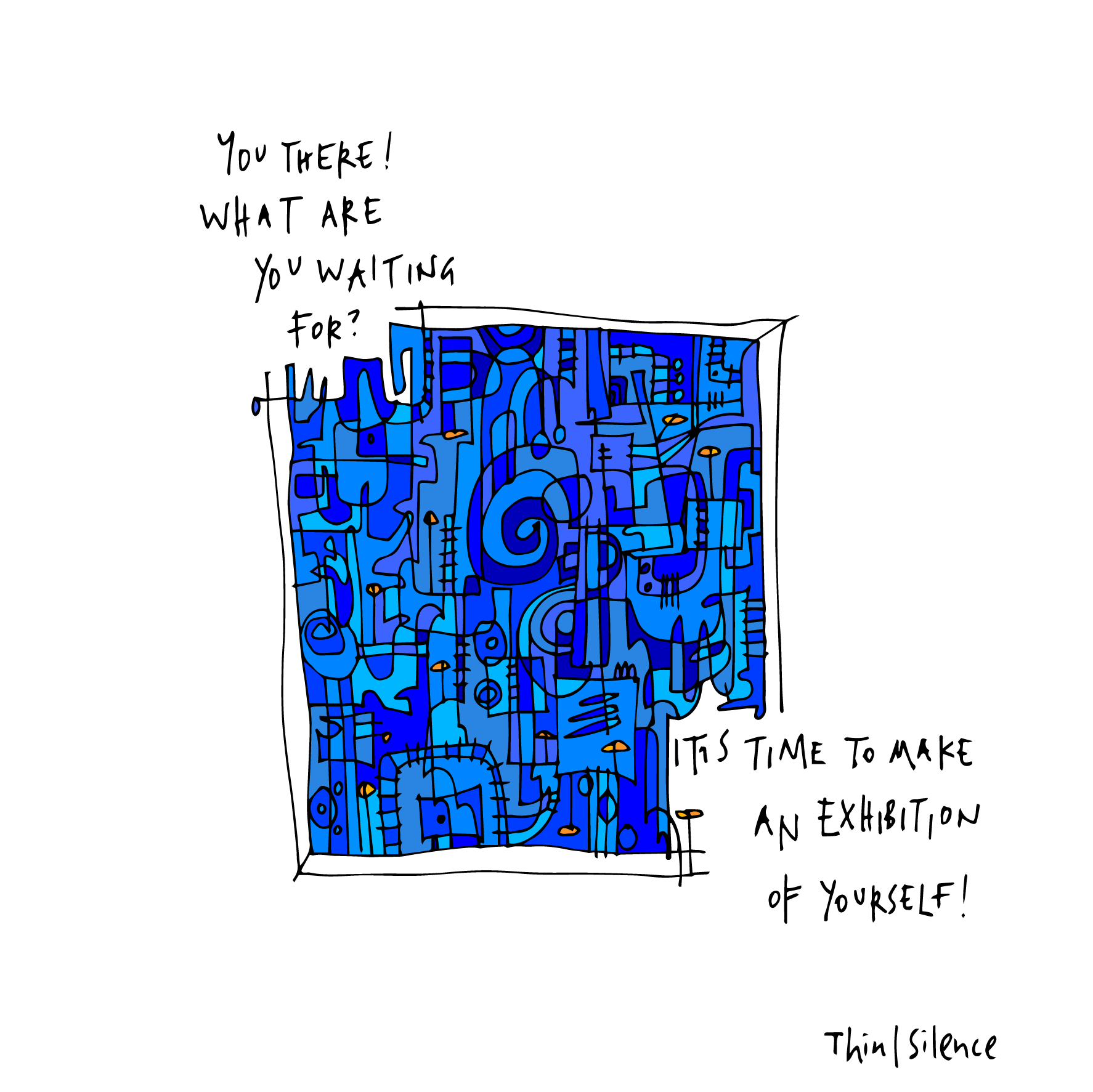
Sooner or later, the artist needs to exhibit her work before others, the poet looks towards having a “reading” of his poetry and, one day, the craftsperson must set out their stall.  Here, an exhibitionist is someone who makes their art or artisanship available to others – this is how we make an exhibition of ourselves.

I know an artist who worked on a theme for a third of a year; by the time it came to exhibiting her work, she’d invited more than thirty other people to exhibit their art.  I love this expression of everyone bringing their own work and making a larger whole.  Another way this can happen is everyone bringing their artistry into the syncretising bowl of teamwork.

In the 18th Century, Denis Diderot and colleagues set out to create the first Encycopedia.  Their aim was to celebrate everyone’s skills and artistry:

‘In the Encyclopedia, Diderot and his colleagues celebrated the vitality rather than dwelled on the suffering of those deemed socially inferior.  Vigour was the point: the encyclopédistes wanted ordinary workers to be admired, not pitied.’^

How we need this to happen again.

Towards this, not only do we need a recognition of everyone’s skills, whether these are more subtle or not, we also require more playfulness for developing skills and artistry further and further (I’d include wandering and doodling with playfulness):

‘We have our own playground!  Our Makerspace is where you can develop, prototype and test your brilliant ideas.’*

I’ve been including thoughts from Sean Heritage’s handbook for the US Navy, a surprising source for turning rules around from being things not to do, into the things team members must do, including:

‘Take time off to do something that inspires, excites and energises you.’*

And how about this further encouragement in describing the course on Leadership Agility:

‘Rolling on the floor, being silly, and laughing until you cry is encouraged.’*

I wonder whether the culture or context that is unable to include playfulness or have fun is one of the most dangerous of all.

All for this is towards doing something, to make an exhibition of yourself.

So, what are you doing when you are an exhibitionist?

(*From Sean Heritage’s Navy Cyber Defense Operations Command.)
(**John Boyd, quoted in Sean Heritage’s Navy Cyber Defense Operations Command.)
(^From Richard Sennett’s The Craftsman.)
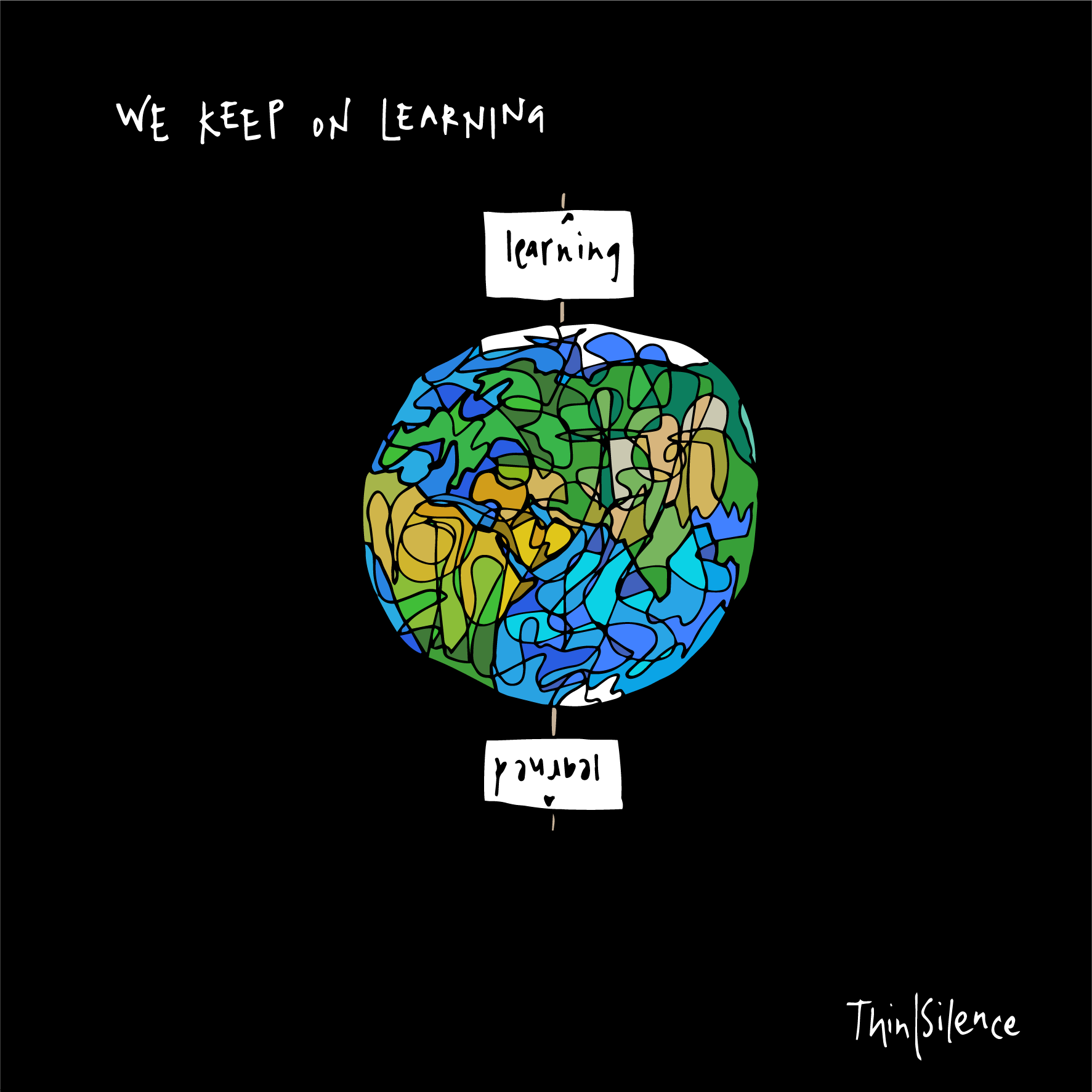
Learning or learned

‘When a bureaucrat or authority figure refuses to explain ‘why’, he is showing fear (because he’s not sure why) and contempt (because he doesn’t have to care).’*
(Seth Godin)

‘These are the sensory impulse and the formal impulse, both of which aim at truth, and neither of which gets there without the other.’**
(Harriet Harris)

Some believe they have learned all they will ever need to learn.  What they know will suffice for the rest of their lives.

Others are learning butterflies – moving from one new things to the next, never stopping lot embed their discoveries into their lives.

It’s not about being learning or learned; it’s about learning and learned.  The riches life is found between the two.

(*From Seth Godin’s blog: The respect of “why.”)
(**From Harriet Harris’ The Epistemology of Feminist Theology.)

Personal best

image

The only way to personally grow, to hit your personal bests in whatever field you enjoy, is to be yourself.

You can’t be someone else, but you know yourself and can push yourself further … and further again.

That’s it.  Have fun.

From the rising of the sun …

“Storytelling is a tool for knowing who we are and what we want, too. If we never find our experience described in poetry or stories, we assume that our experience is insignificant.” (Ursula Le Guin)*

‘Rejoice with those who rejoice; weep with those who weep.’ (Paul of Tarsus)**

We are all artists able to help one another find our stories through making sense of the highs and lows of our days.  As James Baldwin proffers:

“an artist is a sort of emotional or spiritual historian [whose] role is to make you realise the doom and glory of knowing who you are and what you are”.^

There’s nothing better in life than to be able to do this.

(*Ursula Le Guin, quoted in Maria Popova’s Brain Pickings.)

(**Romans 12:15)

(^James Baldwin, quoted in Maria Popova’s Brain Pickings.)


Beyond the beyond the beyond …

“The daily routine of most adults is so heavy and artificial that we are closed off to much of the world. We have to do this in order to get our work done. I think one purpose of art is to get us out of those routines. When we hear music or poetry or stories, the world opens up again.”*
(Ursula Le Guin)

‘She worries that she does not have time to take her time on the things that matter. […] And it is hard to maintain a sense of what matters in the din of constant communication.’**

We’ve realised the ability of creating more stuff to cover up what we know is most important to us.  Most of us would list things like relationships, meaning and purpose, and having a soul amongst those things most important.

Reading, writing, art, walking, conversation – these are some ways we can dig down through the layers life has become for us:

‘In fact, Thoreau insists he isn’t a walker but a saunterer, a word derived from saint-terry or holy land, so that a saunterer is lis literally a religious pilgrim.’^

Whatever you’re up to today, it’s likely there’s something really important covered up within it or by it.  What is that?

(*Ursula Le Guin, quoted in Maria Popova’s Brain Pickings: Ursula K. Le Guin on Art, Storytelling, and the Power of language to Transform and Redeem.)
(**From Sherry Turkle’s 
Alone Together.)
^From Geoff Nicholson’s The Lost Art of Walking.)

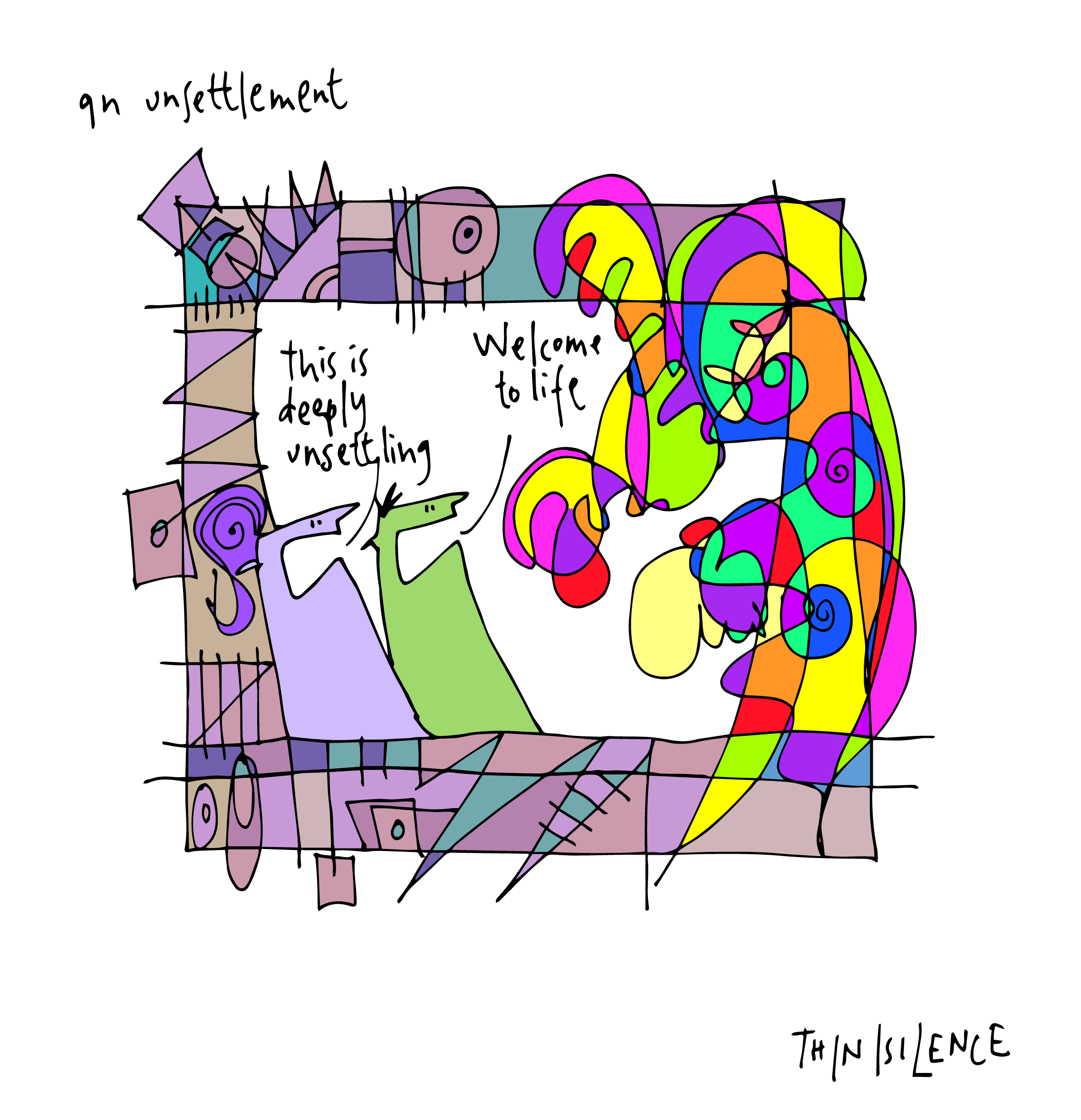
This is deeply unsettling

“People wish to be settled; only as far as they are unsettled is there any hope for them.”*
(Ralph Waldo Emerson)

‘Creating the future does not begin with a plan, it begins with a dream.  And when someone actions a dream, it begins with a spark.’**
(Alex McManus)

Yuval Noah Harari writes about how we have settled into something dangerous both for us as humans and for our planet.  Harari charts how the industrial revolution made it possible to produce more after cheaper, which has left us with a problem.  Who will buy everything that’s being produced?  We’ve taken on board the naturalness of consumerism and believe frugality to be unnatural as a solution:

‘Our green and blue planet is becoming a concrete and plastic shopping centre.’^

If were possible to weigh all seven billion humans we would top the scales at 300 million tons.  If we were able to weigh all the animals needed to feed this population they would weigh in at an incredible 700 million tons.  Compared with this, the combined weight of all existing larger wild animals would come to only 100 million tons.  A 10:1 ratio to our species and its needs.  The planet is becoming more and more human, and as we see, that isn’t necessarily good.

Hope is often found when we we begin to join the inside and outside of life, creating a field of what wants to be.  As William James articulated this unsettlement:

“It was deep calling unto deep – the deep that my own struggle had opened up within being answered by the unfathomable deep without.”^^

Settlement is endangering our planet and, with it, our existence.  Time to be unsettled by imagination. All are welcome to bring theirs:

‘Hardly anything does this for us more powerfully than art — it unsettles us awake, disrupts our deadening routines, enlarges our reservoir of hope by enlarging our perspective, our grasp of truth, our capacity for beauty.’*^

(*Ralph Waldo Emerson, quoted in Maria Popova’s Brain Pickings: Ursula K. Le Guin on Art, Storytelling, and the Power of language to Transform and Redeem.)
(**From Alex McManus’ Makers of Fire – eBook version.)
(^From Yuval Noah Harari’s Sapiens.)
(^^William James, quoted in Alan Lightman’s The Accidental Universe.)
(*^From Maria Popova’s Brain Pickings: Ursula K. Le Guin on Art, Storytelling, and the Power of language to Transform and Redeem.)

A solid position of self

We each carry a story within.

Wherever we are, whatever we are doing, whoever we are with.

We encounter or avoid, we connect or disconnect through this story – whether we carry it consciously or unconsciously.

The story is not fixed, though.  Three ways in which we can significantly alter it are through developing our character, being open to diversity and identifying a purpose greater than ourselves with which to wrestle and overcome.

The best stories have deep character, are diverse and varied, and involve conflict – there is something to overcome.

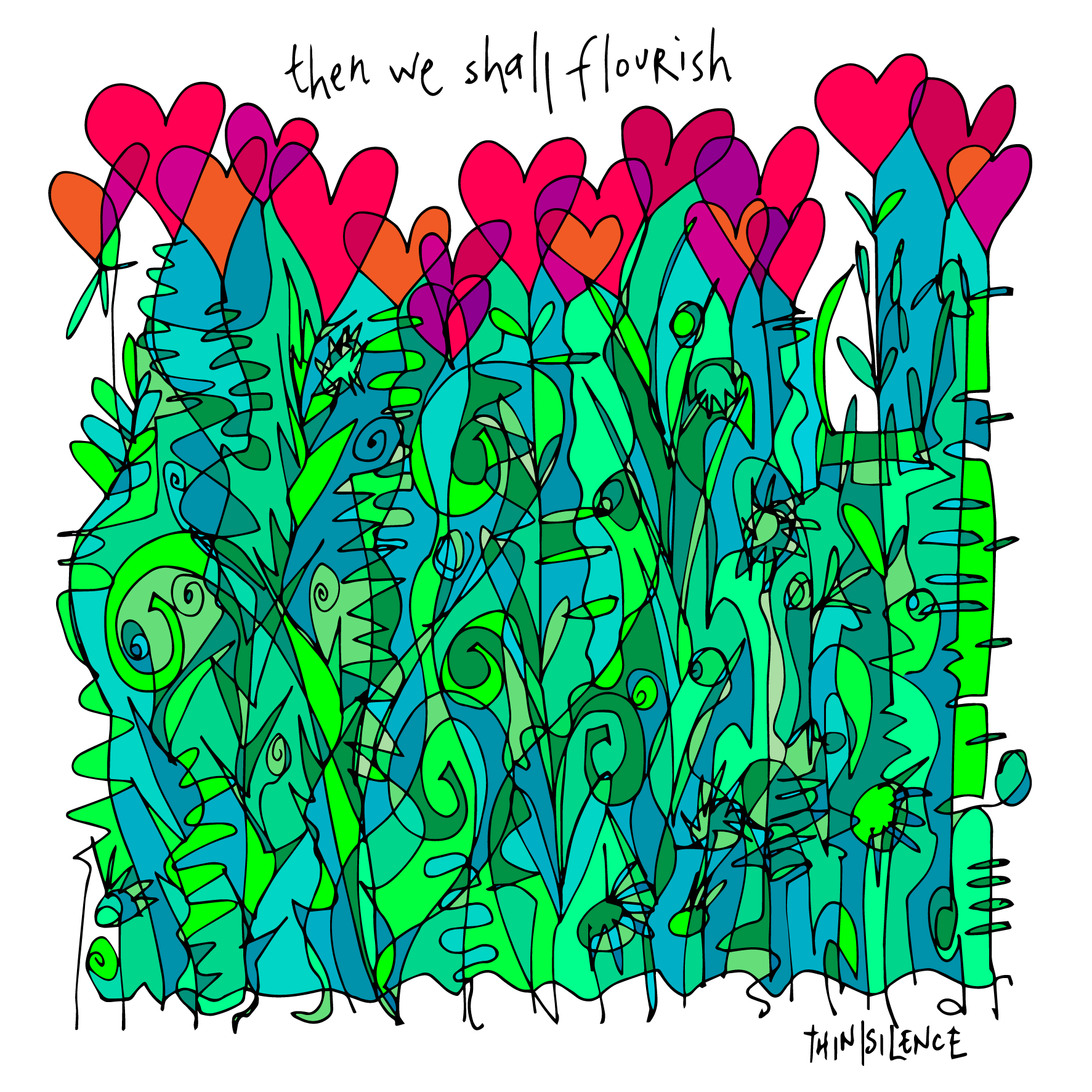
All three together make for a story that makes fire and brings change.


Go protagonate

‘In real life, true empathy drills down into unhappiness.’*
(Hugh Macleod)

‘It is fashionable to espouse the latest cynicism.  If we live in hope, we go against the tide.’**
(Eugene Peterson)

What if you’re not the victim, what if you’re meant to be the protagonist?

This is a story shift, to move from powerlessness to power, defined by Martin Luther King Jr. as:

“the ability to achieve our purpose and to effect change”.^

It involves creating a different kind of story to live in, about power being able to be fully present, not a half-person.  Whilst we all need help to get there, to differing degrees, only we can author the new story from within own lives and it best be today, just some small steps will begin it:

‘Despair is a spiritual condition.  It’s the belief that tomorrow will be just the same as today.

[…]

Hope happens when we can set goals, have the tenacity and perseverance to pursue those goals, and believe in our own abilities to act.’^^

To imagine the future, to have the grit to reach for them and to know we have abilities that will help us, is a powerful thing.

When we begin to break it down, we see how hope isn’t something floating in the ether and some catch it and others don’t, rather it is something we can learn.

We know there’s power in literacy, but there’s a new literacy for those understanding the greater possibilities:

‘The illiterate of the 21st Century will not be those who cannot read or write, but those who cannot LEARN, UNLEARN,and RELEARN.’*^

I’m just beginning an online story writing course and have read that there are five practical elements that have to be accomplished first of all: planning, setting, viewpoint, plotting and characterisation.  If we are to write a better story that makes it possible for us to move from being a victim to protagonist, we have to do the behind the scenes work.  Why not work on:

PLANNING: What small thing will you change today?
SETTING: Where will you accomplish this, who with?
VIEWPOINT: Who do you trust to be able to help you, including reflect on this
PLOTTING: Where will it lead you next; how does it connect with your story?
CHARACTERISATION: How will it help you grow as a person?

‘Storytelling allows us to get perspective on what we can create in the long term instead of always being limited to just seeing there to six months ahead.’

(*From gapingvoid’s blog: Let people in on the secret.)
(**From Eugene Peterson’s Run with the Horses.)
(^Martin Luther King Jr., quoted in Brené Brown’s Rising Strong.)
(^^From Brené Brown’s Rising Strong.)
(*^Alvin Toffler, quoted in Sunni Brown’s The Doodle Revolution.)
(^*From Patrick Dodson’s Psychotic Inertia.)


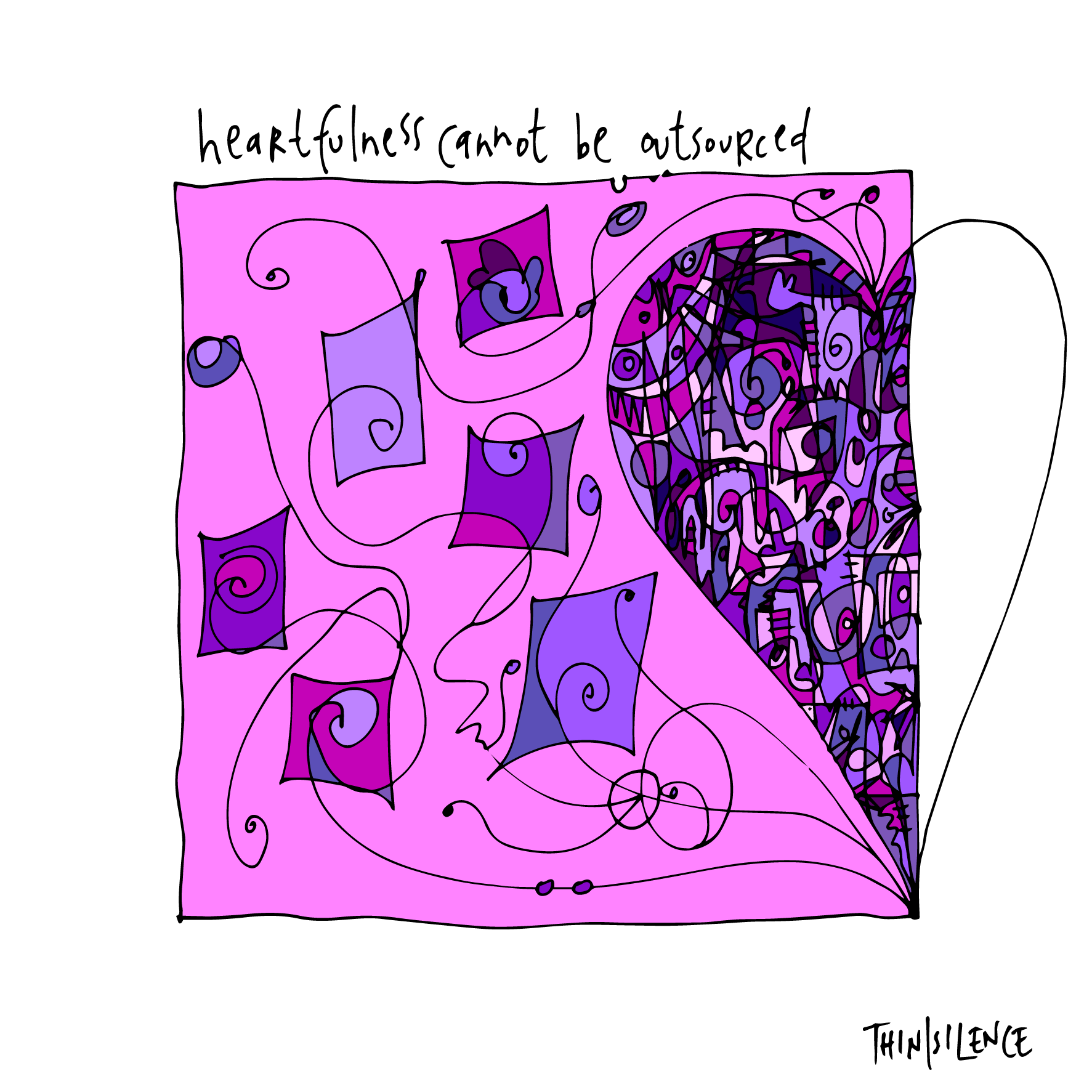
HEARTFULNESS

Put up a print to encourage your people to bring their full self to work.  Your team is even more amazing than you know

A square canvas from £40 (25x25cm) to £100 (61x61cm)

Where I live, and what I live for

‘Who knows but if men constructed their dwellings with their own hands, and provided food for themselves and families and simply and honestly enough, the poetic faculty would be universally developed, as birds universally sting when they are engaged.’
(Henry David Thoreau)

What is most important?  What we do?  Or who we do it for?

I want to bring these more and more together into a synchronicity.

The essayist and philosopher Henry David Thoreau impresses me as he builds his own home, digging the cellar, setting in place the chimney’s foundations, raising the major structure with the aid of others, and as he does, ponders life:

”It would be worth the while to build still more deliberately than I did, considering, for instance, what foundation a door, a window, a cellar, a garret, have in the nature of man, and perchance never raising any superstructure until we found a better reason for it then our temporal necessities even.’*

I didn’t build the house I live in.  This was erected by people I will never be able to name, back in 1950.  A solid council house, my wife and I had the luxury of slowly getting it ready to move into – slowly because of our skills-level, but we got there and it was a close as we might get to building our own home.

It was the garden where I was able to introduce more novelty, losing myself in thought as I took a year or more to move tons of stones so I could work on what what beneath, and then moving them back, washing them by hand on the way.  This followed by creating beds and planting shrubs.  I enjoyed this time, finding myself thinking about all kinds of things to do with life, work and health.  I think this is a little of what Thoreau was imagining.

In our complicated society, though, others build, make or grow things for us, and we are separated from this natural synchronising of activity and thought.

Reading Thoreau, I’d come to wonder about how this building of a home offers itself as an analogy for lends itself for building our own lives.

We have a home we probably have not built, but we also have opinions we have come to without direct contact with others and we live within stories we have not written.

It seems the same thing was running through Thoreau’s mind:

‘Where is this division of labour to end? and what object does it finally serve?  No doubt another may also think for me; but it is not therefore desirable that he should do so to the exclusion of me thinking for myself.’*

Life is about removing the separations and creating the synchronicities.  To take back the responsibility of writing our own stories, of identifying choosing and living out our talents and passions.  Joseph Jaworski might say we have given up so much for:

‘We are partners in the unfolding of the universe.’**

And Alex McManus sees that we are more than enough to meet the challenge:

‘We are a mystery wrapped in a question.’^

Life may certainly be simpler when we outsource it but, as Nassim Taleb reminds us, it is ‘simplification that is dangerous’.^^

(*From Henry David Thoreau’s Where I Lived, and What I  Lived For.)
(**From Joseph Jaworski’s Source.)
(^From Alex McManus’ Makers of Fire – eBook version.)
(^^From Nassim Taleb’s Fooled by Randomness.)


OWN THIS PRINT

A square canvas from £40 (25x25cm) to £100 (61x61cm)

Get in touch at geoffrey@thinsilence.org to find out more