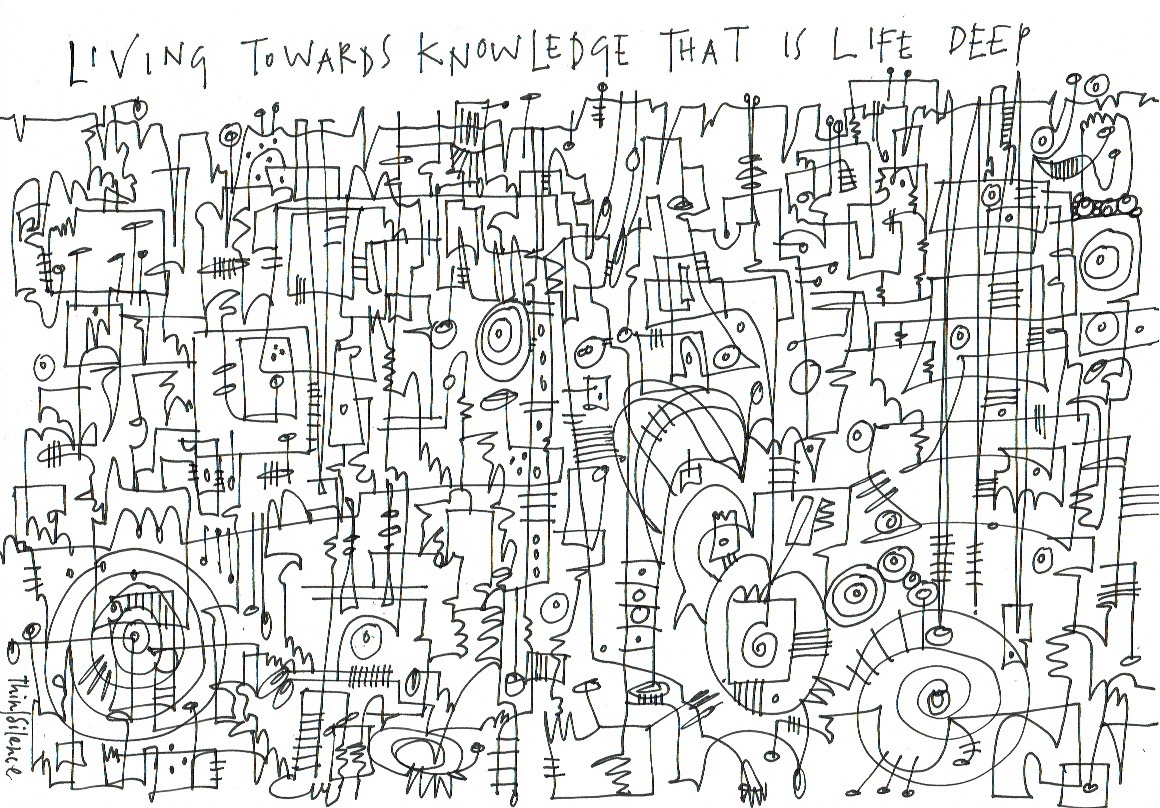
I knew that!

“And there’s an ideal beauty that is harder to define or understand, because it occurs not just in the body but where the body and the spirit meet and define each other.”*

I wonder whether there are three basic forms of knowledge: general, specific, and deeper.

General knowledge is what we are picking up throughout our lives, it includes everything we take in from the people and world around us; its higher forms includes reading and writing and numeracy.

Then there is specific knowledge made up of the kind of information and skills which we apply to life in roles and and careers.

Deeper knowledge is when all of the general and specific knowledge is brought together into something that embracers the complexity and perplexity of ourselves and others and our relationships with all things, through space and time.

What Ursula Le Guin expresses in the opening words for today suggests to me a way of touching our deeper knowing: where the physical and spiritual (non-physical) meet and define each other.

Philosopher Rebecca Goldstyn captures something of this when she claims:

“a person whose one loves is a world, just as one knows oneself to be a world”.**

Maria Popova brings out how important our mortality is for understanding ourselves and others, claiming:

‘it is death that illuminates the full spectrum of our beauty’.^

Perhaps it is for our knowledge too that death with be the definer.  Le Guin tells of the beauty of her mother’s life beyond her painful experience with cancer of the spleen:

“I see her rocking, weeding, writing, laughing — I see the turquoise bracelets on her delicate, freckled arm — I see, for a moment, all that at once, I glimpse what no mirror can reflect, the spirit flashing out across the years, beautiful.

That must be what the great artists see and paint. That must be why the tired, aged faces in Rembrandt’s portraits give us such delight: they show us beauty not skin-deep but life-deep.”*
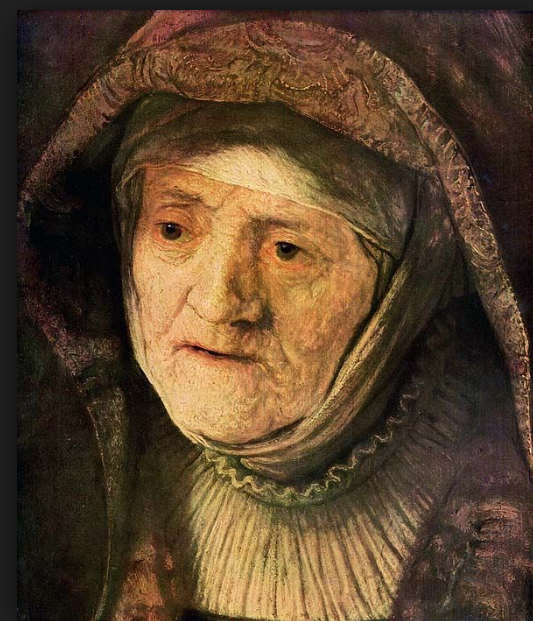
Rembrandt’s mother

In the presence of such beauty we might reflect how, for all there is so much general knowledge and even specific knowledge, it can be skin-deep compared to the deeper knowledge that creates life as a work of art.

We cannot go back.  We cannot unknow.  There’s only forwards.

I read more from Sherry Turkle’s Alone Together, as she identifies what she names the “nostalgia of the young”:

‘We have seen young people walk the halls of their schools composing messages to online acquaintances they will never meet.  We have seen them feeling more alive when connected, then disoriented and alone when they leave their screens.  Some live more than half their waking hours in virtual places.  But they also talk wistfully about letters, face-to-face meetings, and the privacy of pay phones.  Tethered selves, they try to conjure a future different from the one they see coming by building on a past they never knew.  In it, they have time alone, with nature, with each other, and with their families.’^^

Here is an illusion of deep knowledge.  At the same time, Alex McManus senses that we are deepening our knowledge at least in knowing something is wrong and we’re trying too put it right – whoever right means:

‘Yes, we are broken, but at the same time we are awakening to our brokenness.’*^

It is to be seen whether our burgeoning personal technology will help or hinder us.  At the moment it seems we do not know how to live with it, Alan Lightman describing the world it offers as a prison:

‘I believe I have lost something of my inner self.  By inner self I mean that part of me that imagines, that dreams, that explores, that is constantly questioning who I am and what is important to me.  My inner self is m true freedom.  My inner self roots me to me, and to the ground beneath me.  The sunlight and soil that nourish my inner self are solitude and personal reflection.  When I listen to my inner self, I hear the breathing of my spirit.  Those breaths are so tiny and delivcate, I need stillness to hear them, I need aloneness to hear them.  I need vast, silent spaces in my mind.  Without the breathing and the once of my inner self, I am a prisoner of the world around me.  Worse than a prisoner, because I do not know what has been taken away from me, I do not know who I am.’^*

There’s a deeper knowing in all of us waiting to be discovered.
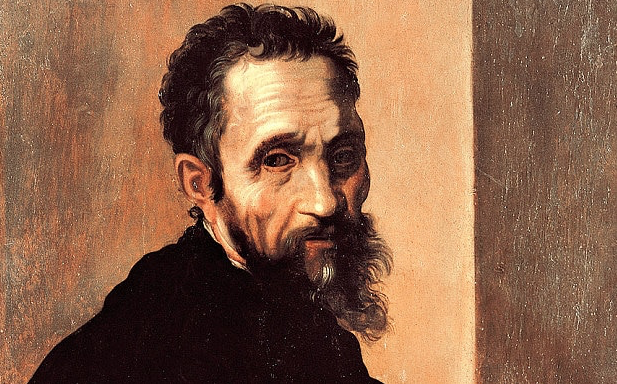
Michelangelo Buonarroti


I have spoken many times of the power of Michelangelo’s unfinished statues for me, four huge figures straining to be released from their prison of stone.

The four unfinished captives

Irving Stone’s Michelangelo, in his biographical novel The Agony and the Ecstasy is asked, “How did you make that astonishing figure of Night?”:⁺

“I had a block of marble in which was concealed that statue which you see there.  The only effort involved is to take away the tiny pieces which surround it and prevent it from being seen.  For anyone know how to do this, nothing could be easier.”⁺

Michelangelo’s Night

This same sense of knowing lies in Carl Jung’s remark:

“The treasure lies in the depths of the water.”⁺⁺

Philip Newell, who is quoting Jung, reflects how:

‘When Jung speaks of our consciousness, he is referring to what we already know, to what we are aware of or fully conscious of.  By the unconscious, on the other hand, he is referring  to what we do not yet know or what we have forgotten.  He is pointing to that vast realm of unknowing, the the world upon worlds within us that have yet to emerge into the light of awareness.’⁺*

A life-deep wisdom is waiting to emerge.

(*Ursula Le Guin, quoted in Maria Popova’s Brain Pickings: Ursula K. Le Guin on Ageing and What Beauty Really Means.)
(**Rebecca Goldstyn, quoted in Maria Popova’s Brain Pickings: Ursula K. Le Guin on Ageing and What Beauty Really Means.)
(^From Maria Popova’s Brain Pickings: Ursula K. Le Guin on Ageing and What Beauty Really Means.)
(^^From Sherry Turkle’s Alone Together.)
(*^From Alex McManus’ Makers of Fire – eBook version.)
(^*From Alan Lightman’s A Sense of the Mysterious.)
(⁺The protagonist Michelangelo, in Irving Stone’s The Agony and the 
Ecstasy.)
(⁺⁺Carl Jung , quoted in Philip Newell’s The Rebirthing of God.)
(⁺*From Philip Newell’s The Rebirthing of God.)

Sweet expectations

“Live the questions now.”*

‘Stay curious.  Never settle.  Amen.’**

Of high expectations, Seth Godin remarks, ‘nothing will be good enough,’ and of low expectations he says they are ‘sad indeed’.^

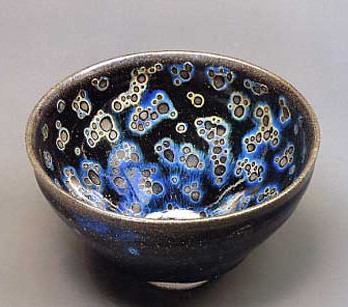
It’s thought there are only three starry bowls in existence.  These yon tenmoku were valued by shoguns more than anything else and remain national treasures for Japan.  They’re possibly the accident of a certain kind of pottery production but there are those who are seeking to replicate the process and, they hope, the bowls.  They are searching for a particular answer.

In Jean-Pierre Siméon and Olivier Tallec’s wonderful story This is a Poem that Heals Fish, the protagonist Arthur must discover what a poem is so he can save his fish Leon from boredom.  He asks bike shop owner Lolo what a poem is:

‘- A poem, Arthur, is when you are in love
and have the sky in your mouth.’^^

Arthur can only reply:

‘ – Oh…? Okay.’^^


Arthur continues his quest.

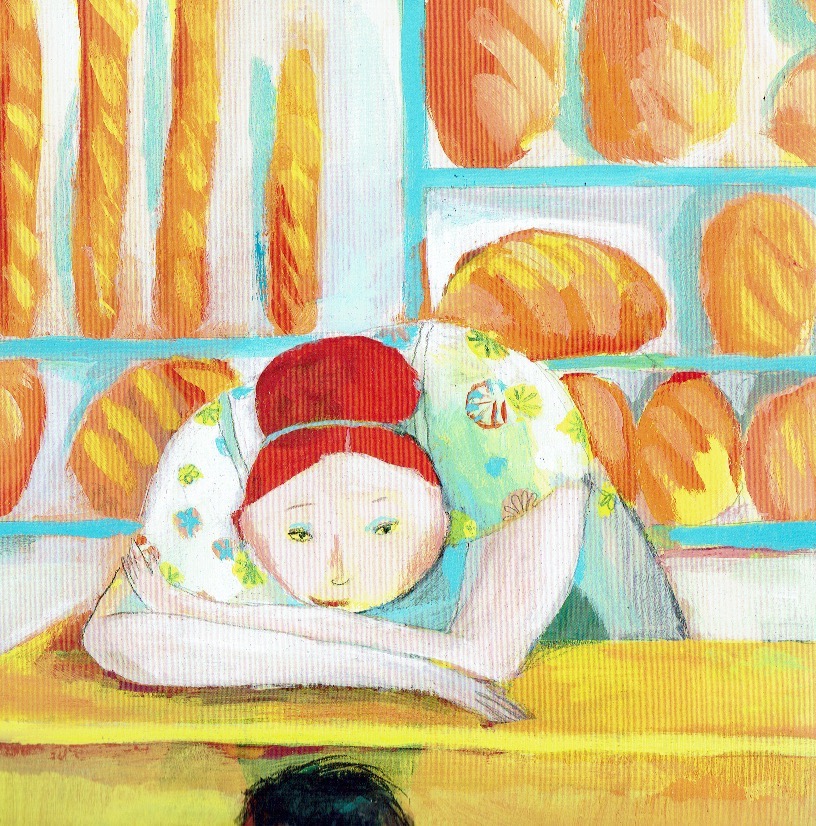
Mrs. Round the baker tells Arthur:

‘- A poem?
I don’t know much about that.
But I know one, snd it is hot like fresh bread.
When you eat it, a little is always left over.

-Oh…?  Okay.’^^

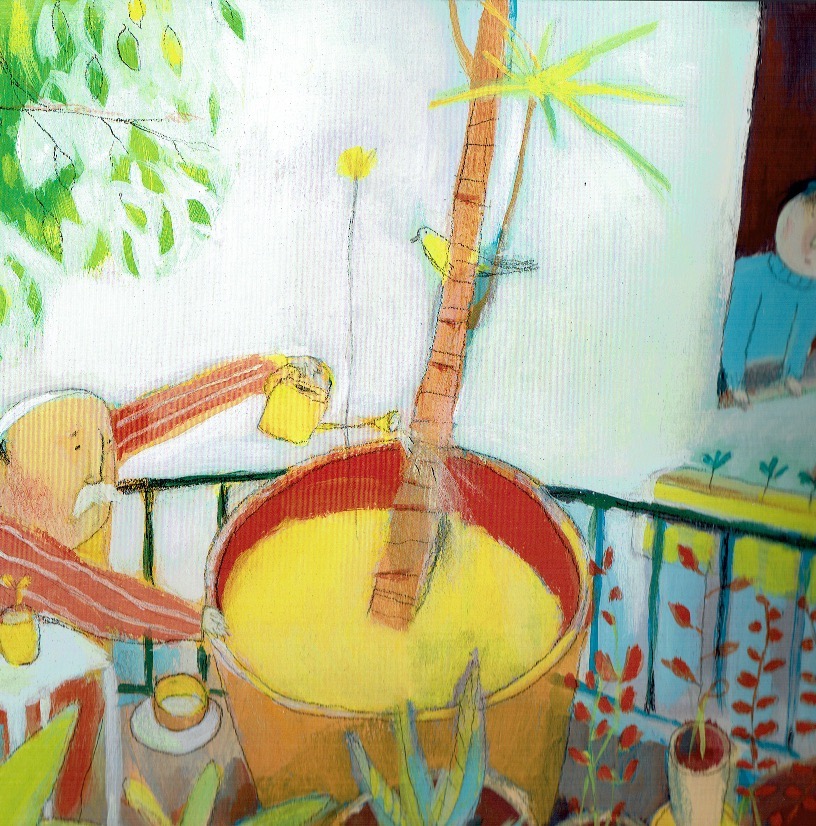
Arthur asks Mahmoud ‘who comes from the desert andwters his rhododendrons every morning at 9 o’clock’:

‘Mahmoud replies without hesitation:
– A poem is when you hear
the heartbeat of a stone.’

– Oh…?  All right.’^^

(More from Arthur’s quest come.)

Questions can contain such sweet expectation.

(*Rainer Maria Rilke, quoted in the Northumbria Community‘s Morning Prayer.)
(**From gapoiingvod’s blog: Stay curious.)
(^From Seth Godin’s blog The trouble with high expectations … .)
(^^From Jean-Pierre Siméon and Olivier Tallec’s This is a Poem that Heals Fish.)

30 days

“If you want to live life free
Take your time, go slowly,
If you want your dream to be
Take your time, go slowly.”*

‘Just at that moment, something miraculous happens.  You realise there is actually further depth to the quality you are pursuing.  There is a breakthrough, or the production of something completely different.’**

Seth Godin names TV, specifically TV advertising, as the engine of our discontent – and social media is ‘TV times 1,000.’^  We want another person’s life.  That’s how advertising works.  And we forget the life we have.

The Jesuit way was to send a novitiate away for thirty days to figure out with his God what the purpose was he had to give his life to.  What if we were to somehow take thirty days in solitude to see one’s life for what it is rather than to compare it with what others have and are doing?

Ken Mogi explores thinking small as a pillar of ikigai, the Japanese way to finding purpose in life.  With the identification of our kadawari no ippinour “signature dish.” there is the possibility of small improvements.  If I might mix metaphors out of Mogi’s illustrations: we are able to cultivate a rare fruit.  Small improvements have been used to develop exquisite and expensive fruit in an area of Japan – a slice of a certain mango might cost you £80.  But you have to eat it to appreciate it, or, as Mogi points out:

‘In other words, you need to destroy it, in order to appreciate it.’**

This means we have to be present in the moment.  As Mogi points out, we are unable to take a taste-selfie.

I take this as a picture of the improvement of our lives over a lifetime, the beauty of our lives.  Of human beauty, Ursula Le Guin asserts:

“The beauty ideal is always a youthful one.”^^

The most important ideal is to know where we begin and end in space and time, and that this is different to where others begin and end:

“It’s not that I’ve lost my beauty — I never had enough to carry on about. It’s that that woman doesn’t look like me. She isn’t who I thought I was.

[…]

We’re like dogs, maybe: we don’t really know where we begin and end. In space, yes; but in time, no.”^^

The real movement doesn’t come from imagining something, though I totally honour Steven Covey’s notion that to imagine something is the first creation, but to “turn our hand to something” is where the wonder of a human life is to be found:

“The hand is the window on to the mind.”*^

So wrote, Immanuel Kant.  Frederic Wood Jones took this further, though, looking beyond the hand to what is actually happening:

“It is not the hand that is perfect, but the whole nervous mechanism by which movements of the hand are evoked, coordinated, and controlled.”^*

What is in the m ind only shapes us so far; what is in the hand shapes us further.  Which is to say, pursuing the small ideas that come to us opens up life to us.

(*Donovan Leitch, quoted in the Northumbria Community‘s Morning Prayer.)
(**From Ken Mogi’s The Little Book of Ikigai.)
(^From Seth Godin’s blog, The engine of our discontent.)
(^^Ursula Le Guin, quoted in Maria Popova’s Brain Pickings: Ursula K. Le Guin on Ageing and What Beauty Really Means.)
(*^Immanuel Kant, quoted in Richard Sennett’s The Craftsman.)
(^*Frederic Wood Jones, quoted in Richard Sennett’s The Craftsman.)

Gait

Gait: a manner of walking, stepping, or running.

“Too many people, guilt-stricken, wounded,
walk in regret,
feeling bad about failing,
apologise even for breathing.”*

A dramatic walk is a walk full of sensing – that is, open to more, presensing – open to what the more is bringing from the future; and, realising – making something happen with this more.  Every time different.

A theatrical walk is scripted, perhaps by others, perhaps by self, as a way of controlling, or providing predictability, or both.  Repeatable.

In Maria Popova’s article on Ursula Le Guin’s writing about true beauty, Le Guin marks the differences between cats and dogs. including how dogs don’t know their true size: imagine the chihuahua taking on a caucasian shepherd dog because it thinks it’s the same size or the same shepherd dog snuggling down on your lap because it thinks its just the right size. Cats, though,  know how big they are, how, if they are attacked, they need to make themselves look bigger – turning side-on and puffing themselves up to look twice the size.  They also know where they look best – just look at where they pose themselves.

Le Guin imagines people to be like dogs and cats:

“A lot of us humans are like dogs: we really don’t know what size we are, how we’re shaped, what we look like. The most extreme example of this ignorance must be the people who design the seats on airplanes. At the other extreme, the people who have the most accurate, vivid sense of their own appearance may be dancers. What dancers look like is, after all, what they do.”**

Of a dancer observed, Le Guin remarks:

“He inhabits his body as fully as a child does, but much more knowingly. And he’s happy about it.”

Popova considers what’s happening here.  This is not about wanting to look perfect but to be satisfied within one’s life:

‘What dance does, above all, is offer the promise of precisely such bodily happiness — not of perfection, but of satisfaction.’^

My twenties were long ago – and I’ve never been able to dance.  What hope for someone in their late fifties?  What we can all have is a deeper satisfaction making it possible to take a dramatic and not a theatrical walk.  Eugene Peterson perhaps senses this when he writes:

‘Life is ambiguous.  There are loose ends.  It takes maturity to live with the ambiguity and the chaos, the absurdity and untidiness.’*^

When we’ve found our way of walking, are comfortable in the dramatic walk that is right for us and which continues to unfold throughout our lives, then we can be about some of our most creative wor.  It is made up of our unique talents and passion and experience, and alchemy therein:

“I’m a firm believer in the chaotic nature of the creative process needing to be chaotic.  If we put too much structure on it, we will kill it.”*^

(*Andy Raine, quoted in the Northumbria Community‘s Morning Prayer.)
(**Ursula Le Guin, quoted in Maria Popova’s Brain Picking’s Ursula K. Le Guin on Ageing and What Beauty really Means.)
(^From Maria Popova’s Brain Picking’s Ursula K. Le Guin on Ageing and What Beauty really Means.)
(^^From Eugene Peterson’s Run with the Horses.)
(*^Liindsey Collins, quoted in Ed Catmull’s Creativity, Inc..)

Different scales

‘there is a sweet spot, between the known and the unknown where originality happens; the key is to be able to linger without panicking’*

Theoretical physicist Alan Lightman writes about how we know we are progressing as a species:

‘One measure of the progress of human civilisation is the increasing scale of our maps.’**

I would add, another way of knowing is the decreasing scale of our personal maps to show up the incredible detail there is in each and every life, indicating talents, passions, experiences, and relationships. showing how everything relates to everything to make us uniquely who we are.

Somewhere between the increasing scale and decreasing scale maps of our lives something wonderful takes shape.

“When a great moment knocks on the door of your life,
it is often no louder than the beating of your heart,
and it is very easy to miss it.”^

(*From Ed Catmull’s Creativity, Inc..)
(**From Alan Lightman’s The Accidental Universe.)
(^Boris Pasternak, quoted in the Northumbria Community‘s Morning Prayer.)

You’ve gotta know the facts

“Take me down to the spring of my life, and tell me my nature and my name.”*

Kodawari is a personal standard for which the individual adheres in a steadfast manner. […] Kodawari is personal in nature and it is a manifestation of a pride in what one does.’**

To know more about ourselves and what we can do opens up life – an amazing world of people and things..  Some are content with knowing only so much about themselves and that has to be okay, but what if David Shenk^ is right to say we don’t know what our limits are as yet – the things that would transform every day.  Frans Johansson looks on a universe full of random possibilities and offers:

‘Every minute, every hour there is another surprise around the corner.’^

What we’re giving ourselves to is freedom – freedom to grow.  We won’t catch all the serendipitous moments but will miss less as we become people who find ourselves able to bring our critical curiosity and inquiry to them.

So what if drilling down to core of who we are allows us to see the kind of detail that makes it possible to develop the kodawari no ippin, the signature dish of our lives for others to enjoy even more.

(*George Appleton, quoted in the Northumbria Community‘s Morning Prayer.)
(**From Ken Mogi’s The Little Book of Ikigai.)
(^See David Sheik’s The Genius in All of Us.)
(^^From Frans Johansson’s The Click Moment.)

Into the small things

‘By practice, we mean doable habits or rhythms that transform us, revising our brains, restoring our inner ecology, renovating our inner architecture, expanding our capacity.  We mean actions, within our power that help us become capable of things beyond our power.’*

Those people around you who seem to have superpowers have probably discovered something that is available to all of us.

It’s likely they know that the thing getting them up every morning needs to be poured into all the small things the day contains – with “consistent emotional labour,” as Seth Godin describes it.**

There ‘s something that matters to each of us and defines our lives.  It connects us to ourselves but we will know it because of how it connects us to everything else: our god, our worldview, other people, our planet.

I’m inclined to believe that when you live the contribution you want to make in the world into the small things of the day something even more powerful will happen (which isn’t the same as big).

(*From Eugene Peterson’s Naked Spirituality.)

What is on your mind?

Once it didn’t matter.  Nobody wanted to know.  Now we all want to know.  This is eco beyond ego, the importance of the one to the many and the many to the one.

We bring asymmetry to one another, and life grows richer – the adjacent, something we were not expecting.  We can roll with it or reject it but we suspect that life is richer if we roll.

The finite games of life are symmetrical.  All tidy and economical, but the infinite, the including of everyone for as long as posse, as untidy as the asymmetrical is, is welcomed.

We find that life isn’t only about having an option, though, but following a path with a heart.

When we grow up

‘As generalists, we must be curious.  Curiosity is what makes things come together in that unique way, where “innovation” happens.’*

‘If we are looking for something specific, we set aside anomalies and remain focused.’**

My hope is that life is becoming more interesting for more people.   I was born at the end of the 1950s and have increasingly realised how I have lived through what feel like seismic shifts in our understanding of everyone’s capacity to open their minds, hearts, and wills with artists and passion.

‘In each new epoch – perhaps every generation, or even every few years, if the conditions in which we live change that rapidly – it becomes necessary to rethink and reformulate what it takes to establish autonomy in consciousness.’^

I don’t see a flowing in one greater, stronger direction.  There are cataracts and eddies and white-water and meanderings along the way.  We don’t know yet how much our increasing reliance on technology will impoverish our consciousness.  This is the simply the adventure of life we find ourselves in.  Astronomist Vera Rubin reflects:

“If there were no problems it wouldn’t be much fun.”^^

In this remark, Rubin is commenting on how how here discovery of dark matter was not so welcome at first:

“I think many people initially wished that you didn’t need dark matter.  It was not a concept that people embraced enthusiastically.”^^

As Alan Lightman points out about Rubin’s work:

‘As in her earlier work on the bulk motions of whole galaxies, dark matter would require a revision in cosmological thinking.’*^

We are curious, we explore, we discover, our thinking shifts.  In the cosmological world but also in the amazing universes that are human lives.  Rubin had wanted to be an astronomer from childhood, some of us figure out what it is we want to do in our forties.  We have to be noticing.  It’s something we can all do, even if it’s to relearn it. Jamil Mahuad points out:

“Possibilities can be disguised.  They can be blurred, and the most important thing – they flicker.”^*

The most important expert we can be is an expert in ourselves.  You being an expert in you.  Me being an expert in me.  E.E. Cummings encourages us towards this when he writes about the courage to be ourselves:

“As for expressing nobody-but-yourself in words, that means working just a little harder than anybody who isn’t a poet can possibly imagine. Why? Because nothing is quite as easy as using words like somebody else. We all of us do exactly this nearly all of the time — and whenever we do it, we’re not poets.”⁺

Cummings says, don’t let people say you can’t be a poet.  Rubin despairs at the the kind of gender stereotyping that robs science of female scientists, something that takes hold at such an early age.  Rubin’s granddaughter at the age of three had cried out at an uncle “Boys can’t be girls”- he’d suggested he be the nurse and she be the doctor when treating a sick rabbit:

“So you may talk about role models and your thinking about colleges but this happens at the ago of three.  I think its a terrible problem.  It sets in very young.  Somehow or others, you have to raise the little girls who have enough confidence in themselves to be different.”^^

This is where we are, rethinking consciousness of self, helping others to explore the Self they can be.  Cummings, on seeing what everyone else was fitting in with and the kind of world that might result, reflects:

“And so my advice to all young people who wish to become poets is: do something easy, like learning how to blow up the world — unless you’re not only willing, but glad, to feel and work and fight till you die.

Does that sound dismal? It isn’t.

It’s the most wonderful life on earth.

Or so I feel.”⁺

What do you want to be when you grow up?

I am 58 years old and, in one sense, I still don’t know, but I am certain that when we explore our consciousness then, as Eugene Peterson points out:

‘The larger the world we live in, the larger our lives develop in response.’⁺⁺

(*gapingvoid’s blog: Generalists vs experts.)
(**From Frans Johansson’s The Click Moment.)
(^From Mihaly Csikszentmihalyi’s Flow.)
(^^Vera Rubin, quoted in Alan Lightman’s A Sense of the Mysterious.)
(*^From Alan Lightman’s A Sense of the Mysterious.)
(^*Jamil Mahuad, quoted in Frans Johansson’s The Click Moment.)
(E.E. Cummings, quoted in Maria Popova’s Brain Pickings: The Courage to be 
Yourself.)
(From Eugene Peterson’s Run With the Horses.)

Writing better lives

The story we have for our lives may not be great but we have one and we can work on it.  We only need to own the reality that we create our own character arcs.  Our lives are unfolding.  Nothing is set in stone:

‘”You’re doing it all wrong.”  But at least you’re doing it.  Once you’re doing it, you have the chance to do it better.  Waiting for perfect means not starting.’*

Mihaly Csiszentmihalyi writes about the “control of consciousness” determining our lives.  What he is describing relates to determining our story:

‘The most important step in emancipating oneself from social controls is the ability to find rewards in the events of each moment.  If a person learns to enjoy and find meaning in the ongoing stream of experience in the process of living itself, the burden of social controls automatically falls from one’s shoulders.  Power returns to the person when rewards are no longer related to outside forces.’**

I happened to hear cricketer Andrew (Freddie) Flintoff speaking about how the nerves that were so difficult to overcome for other cricketers, when batting or bowling, were the feelings he loved; he understood his nervousness differently, making them a special part of who he was.

When it comes to feelings, E.E. Cummings claims:

“Almost anybody can learn to think or believe or know, but not a single human being can be taught to feel. Why? Because whenever you think or you believe or you know, you’re a lot of other people: but the moment you feel, you’re nobody-but-yourself.”^

Whatever we can learn or believe or know has to be connected at a heart level.  Getting to know our heart, and allowing this to create a better story is what we have the opportunity of doing every day of our lives.  I leave the last words to Cummings:

“To be nobody-but-yourself — in a world which is doing its best, night and day, to make you everybody else — means to fight the hardest battle which any human being can fight; and never stop fighting.”^

(*From Seth Godin’s blog “You’re doing it wrong”.)
(**From Mihaly Csikszentmihaly’s Flow.)
(^E.E. Cummings, quoted in Maria Popova’s Brain Pickings: The Courage to be Yourself.)