hate the box, love the box

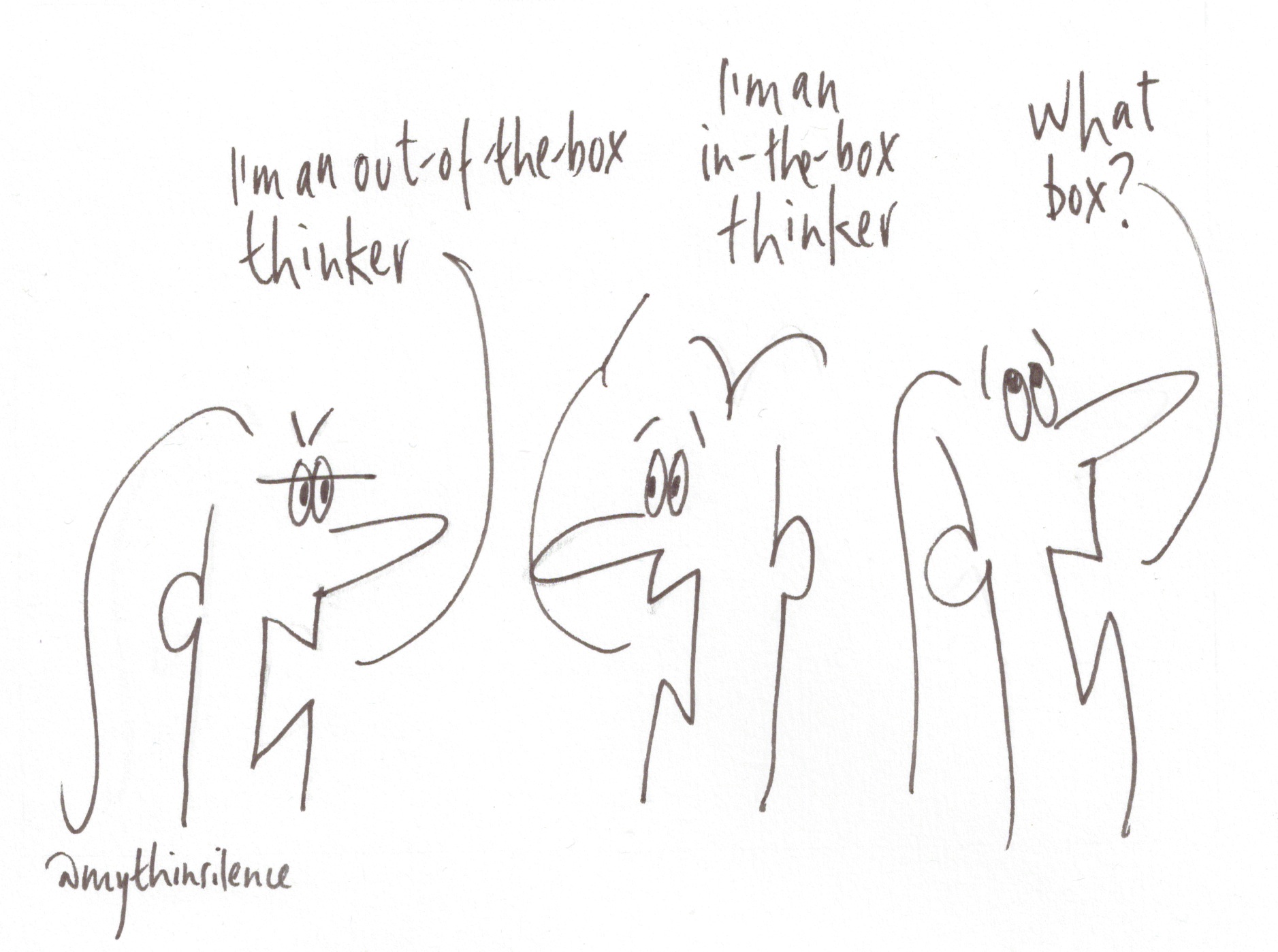
11 what box?

I guess we’ve all heard the refrain: “We need more out the box thinking!”

Sometimes the call is for more in the box thinking?

There’s always a box.

The first half of life is about growing ourselves to be lifelong learners and contributors.  For this we need the creative tension of boundaries (the box) and freedom (curiosity, questions, and imagination).  Everyone frames their response with boundaries, whether they or others set these:

What’s the problem?
How many people do we have?
What’s our budget?
When do you need this by?
Who do we report to?
How far into the future are we looking and thinking?
What resources are available?

These questions, and more, are attempts to define the reality of the box, more than anecdotally or first perception.  The best boxes invite us to become “one with the box,” responding to deep wisdom, inviting better questions over easy answers.  But even poor or nightmarish boxes are places in which we can learn: see Viktor Frankl‘s experience of boundaries and freedom in work-camps and death-camps.

Each of us has grown up within different boxes, which we have defined, explored, understood, and learnt from.

We all start within a box but we are not meant to stay there.   In the second half of life (which isn’t about years but growth) we get to move beyond the box.  I’m slow, so I’ve spent thirty five years within the box of my institution; I’ve learnt a lot, but am about to move beyond the box.  It will still be there, but in a different way.  When we move beyond the box we create larger boxes for others to explore.*

The Industrial Age demanded people stay within the box – and away from the boundaries – but the new age which we all find ourselves in, ‘demands citizens who are self-learners, who are creative and resourceful, who can adjust and adapt to constant change.’**

(*See Thomas Kuhn’s The Structure of Scientific Revolution for a very helpful explanation of how in the box and out the box thinking works.)
(**From Warren Berger’s A More Beautiful Question.)
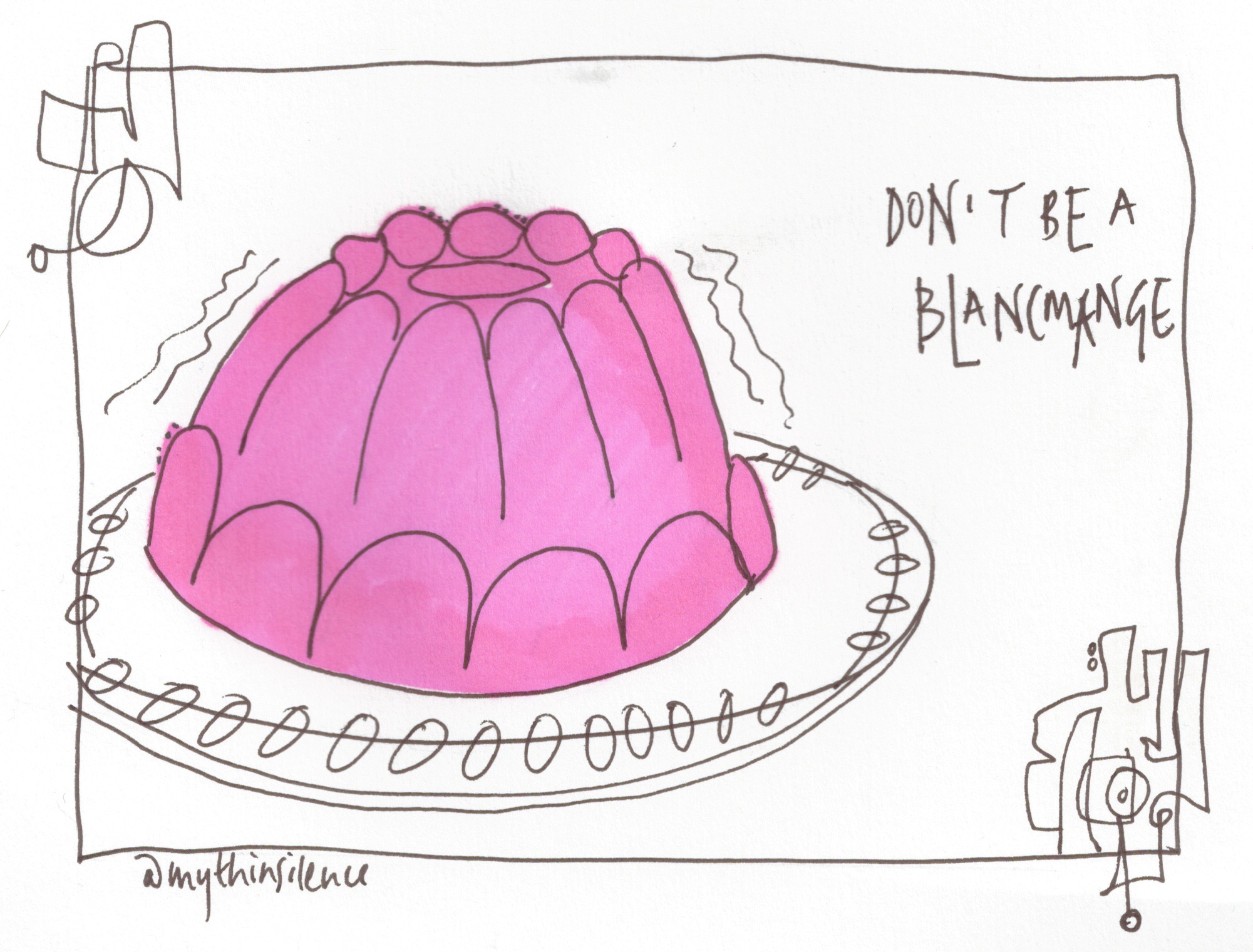
will you?

10 don't be

Weak-willed or strong-willed?

Willfulness is often thought of as negative, yet without it we might as well be a blancmange.

‘Will is our internal power, which can never be affected by the outside world.  It is our final trump card.’*

We have to be strong-willed enough to do what it is we must do – which is to leave our present self to journey towards others, towards our world, and towards our future Self.  It’s like the power of a rocket needed to break away from the gravitational pull of the Earth.

‘In actuality, will has a lot more to do with surrender than with strength.  True will is quiet humility, resilience, and flexibility; the other kind of will is weakness disguised by bluster and ambition.’*

Interesting.

The person whose will is weak will not take the risk to leave.  Neither the person who is too strong-willed – they have too much to lose.

Willfulness is an art we must learn if we are to engage the second half of our life.**  When we get it right, we get to make our art for others, living with creativity, generosity, and enjoyment.

‘To make our lives a creative act is to marry ourselves to risk and failure.’^

‘The process of discovery in creating something new appears to be one of the most enjoyable activities any human can be involved in.’^^

(*From Ryan Holiday’s The Obstacle is the Way.)
(**This is not about years but maturity.  I’m maturing late in life.)
(^From Erwin McManus’s The Artisan Soul.)
(^^From Tina Seelig’s Ingenius.)


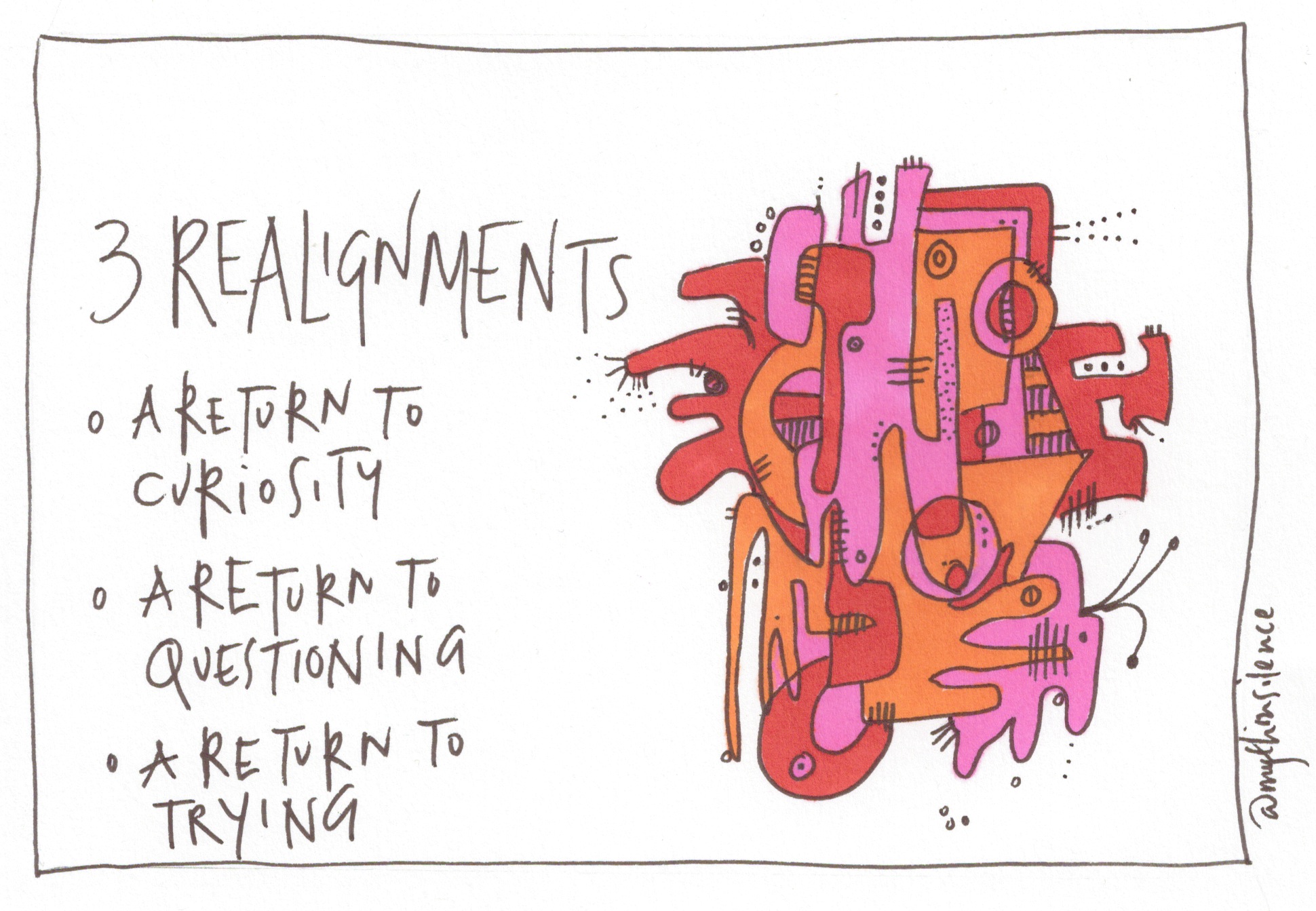
realign

9 3 realignments

realign
riːəˈlʌɪn/
verb
  1. change or restore to a different or former position or state.
    “they worked to relieve his shoulder pain and realign the joint”
    • change one’s opinion with regard to.
      “he wished to realign himself with Bagehot’s more pessimistic position”

I am thinking of finding our way again.

Fate declares everything is predetermined, is meant to be, but really:

‘The future is dynamic, active, interactive.’*

The protagonist moves towards a larger understanding of how every person is creative and can be an artist or artisan of something – an almost infinite number of possibilities is mind-blowing and inspiring at the same time.

Looking back into the myths and legends of history, Richard Rohr notices how, ‘The hero or heroine is by definition a “generative” person.’**  There is in every person an “engine room” capable of producing a ‘surplus or an abundance of life.’**

When our protagonist realigns, she falls through life as it is into something deeper, into what Rohr deliciously calls deep time – where past, present, and future exist at once: ‘all of us can live in the present as if we’re back from the future.’*

This falling through, or realigning, begins when she opens her mind to more than WYSIATI (What You See Is All There Is); opens her heart to feel all of what the lives of others, the world, and her future life are opening to her; and, then, to face the crucial realignment, posed in the question What will you do with this new life?

She helps us to see the ancient, present, and future experiences of the hero: the protagonist does not know what will happen until she enters the journey, then she allows the journey to speak to her, and, then lets go to be able to take hold of what is emerging.

The entry points to the journey may be some change in circumstance, or a growing discontent, or an anger at some injustice, or a crisis,^ or an irritating itch of curiosity, or even a word at a particular moment which resonates.

Whatever the call, the protagonist seizes the moment.

(*From Erwin McManus’s Uprising.)
(**From Richard Rohr’s Falling Upward.)
(^Maybe we ought to see midlife crisis as a positive call?)


there is no path

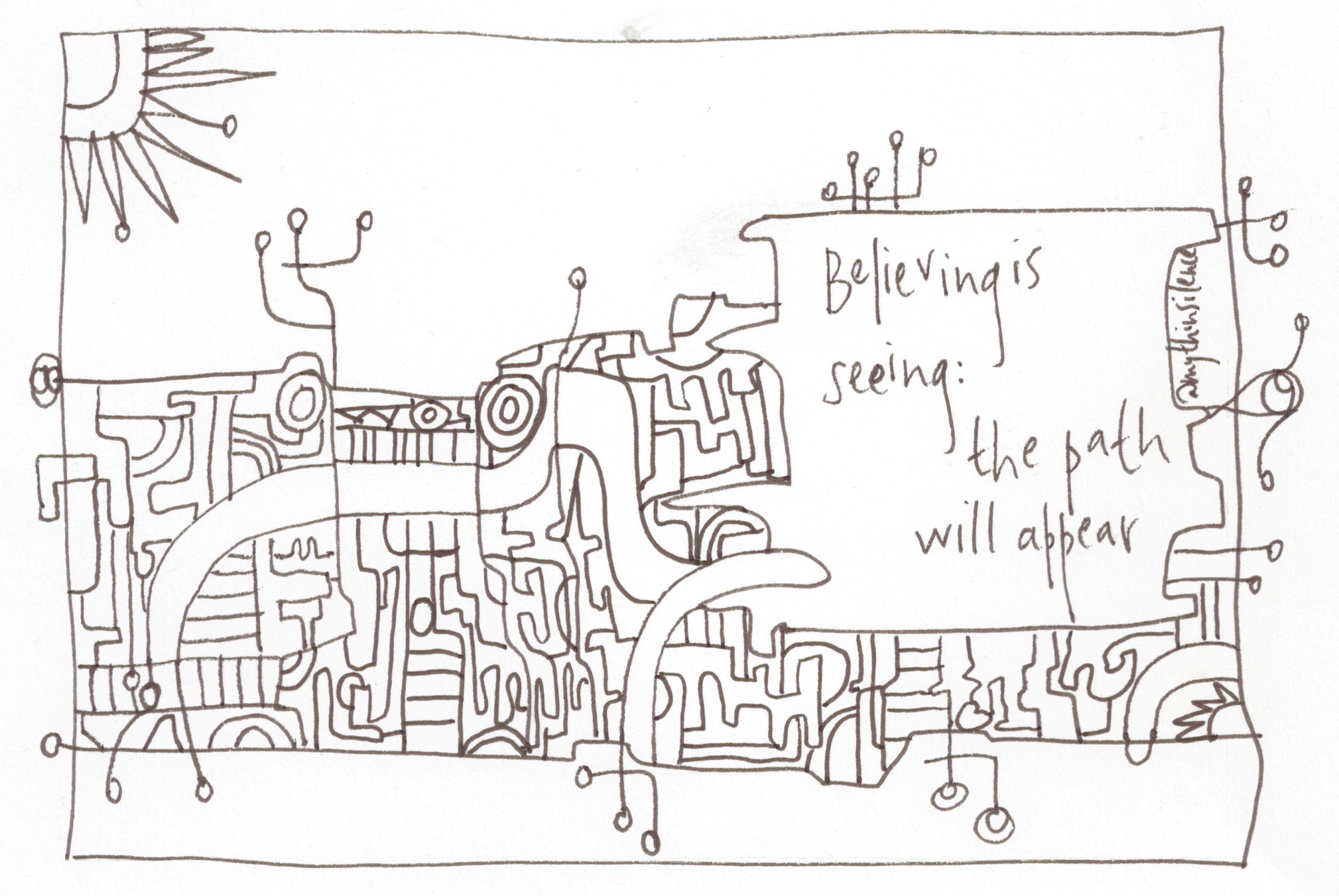
8 believing is seeingBut you are capable of making one.

Caminante, no bay camino, se bace camino al andar.

“Traveller, there is no path, the path must be forged as you walk.”*

8 believing is seeing 2

A closed mind cannot see the future path.

A closed heart cannot hear the future path calling.

A closed will cannot let go in order to take this future path.

8 believing is seeing 3

The journey before us, though, is from closedness to openness; from invulnerability to vulnerability; from fragility (through resilience) to antifragility.

believing is seeing 4

If the liken the Future Self to a seed, the open mind allows it to penetrate our seeing and understanding; the open heart allows it to go deeper into our feeling and connecting and knowing – where it might germinate into possibilities of who we can become and what we can do; and, the open will understands it must let go of the good for the best, otherwise the new possibility with be suffocated before it can grow.

(*Antonio Machado, quoted in Brené Brown’s Daring Greatly.)
(Today’s cartoon will appear over time.)

the second journey

7 in the journey

Leaving again?

Odysseus put the odyssey in odyssey.  He’d finally made it home: to his wife and son and father and dog.  But then he’s called to a second journey.

This second journey was not across water but to the mainland and a journey inland, or, we may say, inward.

Myths hold before us the great Human narrative of life and death, with all its inexplicable and paradoxical content.  Through these stories we make sense of who we are and the Human journey.  Appreciating their generalities rather than their specificities, we understand them to be as powerful as ever.

I’ve often seen myself as on a “slow journey in the same direction,” not a linear one but leading me somewhere.  Just recently I’ve come upon my own myth-like elements in this.  I recently wrote about an old gentleman visited in hospital who told me how he voted for me to go into training for the work at the same meeting he was retiring at.  Two days ago, he died – some thirty six years after he voted for me.  At the same time, I realise I have a second journey to make.  I am thankful for this man’s graceful life and how he shared these things with me in the last few days.

I don’t know what Odysseus must have felt like as he set out again.  Had he hoped for a Happy Ever After ending?  Do I?  Or do I relish the opportunity of doing what I love to do which takes me on again.*

‘Wisdom unleashed our capacity to create the good.  Wisdom not only sees the good that must be done now, but catalyses such events that result in a good future.’**

(*It might be some difficult thing which awakens us to the second journey.  Quoting Barack Obama’s 2008 election advisor Rahm Emanuel, Ryan Holiday brings encouragement in this direction: “You never want to let a serious crisis go to waste. … A crisis provides the opportunity for us to do the things that you could not do before” – The Obstacle is the Way.)
(**From Erwin McManus’s Uprising.)

hopeful seekers

6 the zen doodler

Are proactive characters.

Rather than waiting for things to happen to them, they make their move.

Towards movement, they have a true understanding of who they are and what they can do – neither inflated or deflated; they know the true value of their resources; and, they daily figure out ways of expressing themselves around the purpose they’ve come to know their life must be about.

‘We have significantly more influence over the direction and outcomes of our lives than we realise.’*

Hopeful seekers are pursuing what Richard Rohr has called the second half of life.  They have come to the place of knowing the purpose or call of their lives; from a first half of life perspective, this can seem risky and scary, but from this new place of seeing risky and scary is staying where they are: ‘Seeking things was risky.  But no longer.  Now, of course, safe is risky.’**

This is not to say the hopeful seeker will not find herself in a struggle, but hope is born of adversity.

‘Adversity can harden you.  Ot it can loosen you up and make you better – if you let it.’^

I’ve seen people go through difficult things and become controlling and cautious.   I’ve also seen people see these as opportunities needed to step into what they really want to be about.

Dan Ariely writes about how people can be blind-sided by FREE!  It’s connected with loss-aversion.  We are more inclined not to lose something than to gain something, but FREE! is loss-free, is risk-free, is fear-free.  Or is it?  If we’ve been blind-sided, to jump may be the wisest option.

The hopeful seeker understands her hope ‘isn’t an emotion, it’s a way of thinking or  cognitive process.  She progresses by setting realistic goals, exercising her ability to figure out how to get to these, and believes she is able to.^^

‘Hope is learned.’^^

Here are some questions to explore:
If hope is a thinking process of setting realistic goals, figuring out how to reach them, and believing in your ability, do you believe you could learn hope?
How has a difficult experience made you stronger?  (Break it down to identify your learnings and how you changed as a result.)
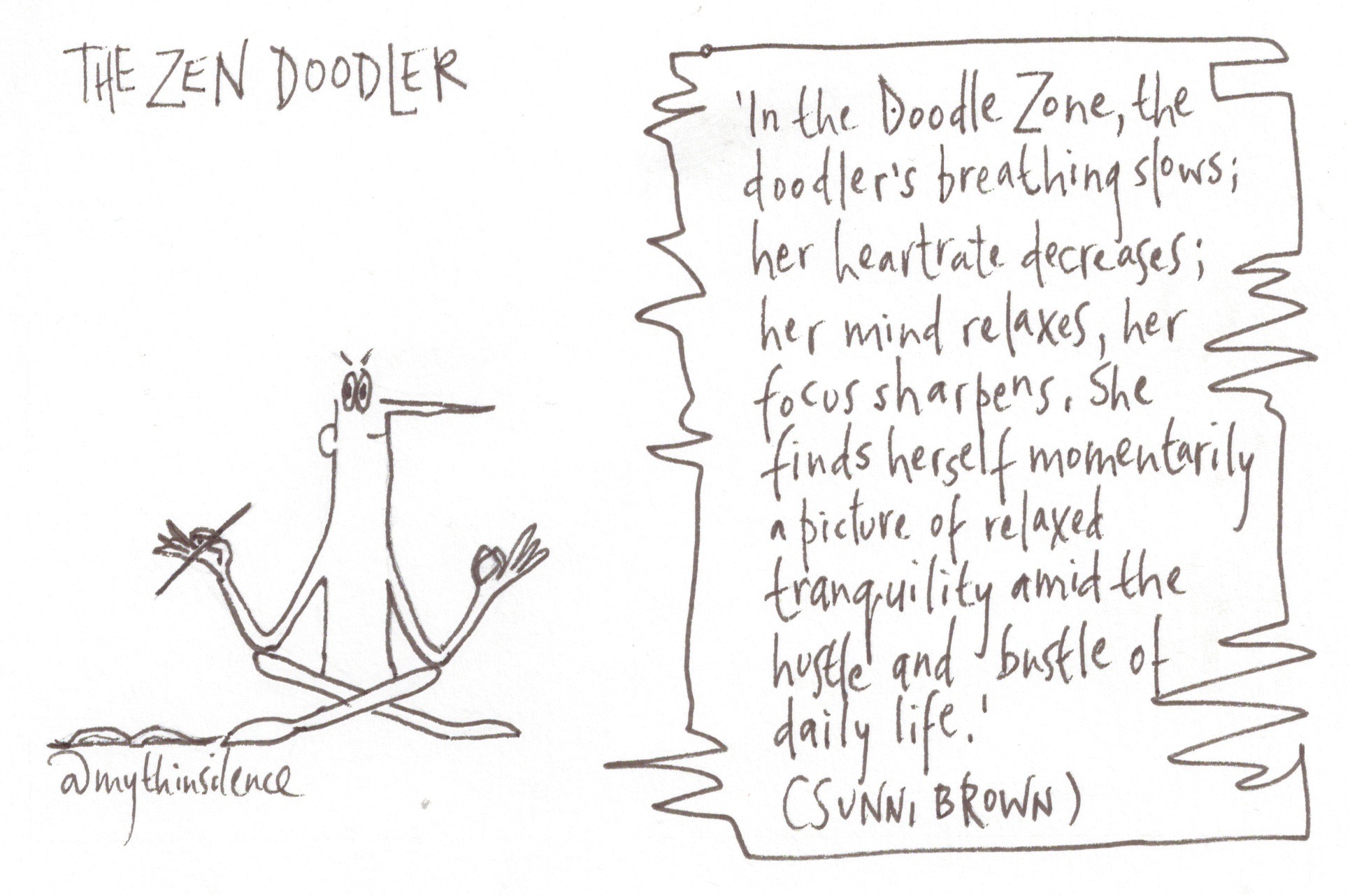
Whatever is on your mind at the moment, what would it look like if you doodled it?

(*From Sunni Brown’s The Doodle Revolution.  So too, the quote in today’s cartoon.)
(**From Seth Godin’s Whatcha Gonna Do With That Duck?)
(^From Ryan Holiday’s The Obstacle is the Way.)
(^^From Brené Brown’s Daring Greatly.)

the perfect explorer

5 all great

Is a young child.

Their brains are still growing, connecting, and with their developing language skills, they can ask question after question about everyone and everything.  They do not have categories and labels for much of what they see and feel and hear and smell, so they explore.

Comparatively, adults have categorised and labelled much of their world, and have no need of more searching questions.  What we know as adults, in the language of Dan Ariely, might be understood to be “anchors.”  How we believe, belong, and behave are governed by these anchors of seeing and understanding which, Ariely claims, are difficult to break away from, once established.

One of the things Ariely observed in his research was how people could trade a more valuable something for a less valuable something because its starting (anchor) price was set low – finding it difficult to ignore once established.  What if we are vulnerable, then, to valuing our past over our future?  Anticipating more of what has already been, rather than the possibility of something new.

Questions disrupt the hold anchors on us.

The problem, though, is most of us  stop our expansive questioning at an early age.  Some educationalists believe teaching children information before they’ve asked their questions could be a factor in this.  There’s also a big difference between feeling able to ask a question in a home environment and in a class environment.  However, when children’s natural curiosity isn’t inhibited or burdened with information, they appear more creative and curious.

There also appears to be a link between the reduction in children’s questions and their engagement in education.  And what about adults, then?  If I am not able to ask my questions, follow my curiosities, then am I unable to delve deeper into something I otherwise would want to, and I disengage?

We need better questions to lead us toward better solutions necessary to the problems and needs around us.

The good thing is, we can develop our curiosity and our questioning; we can, in this way, become children again.  And when we find one another in this, hope is born, a different future promises to emerge:

“Three can become a full-fledged conspiracy.”*

Any questions?

(*Organisational developer Richard Beckhard, quoted in Peter Senge’s The Necessary Revolution.)


suffused

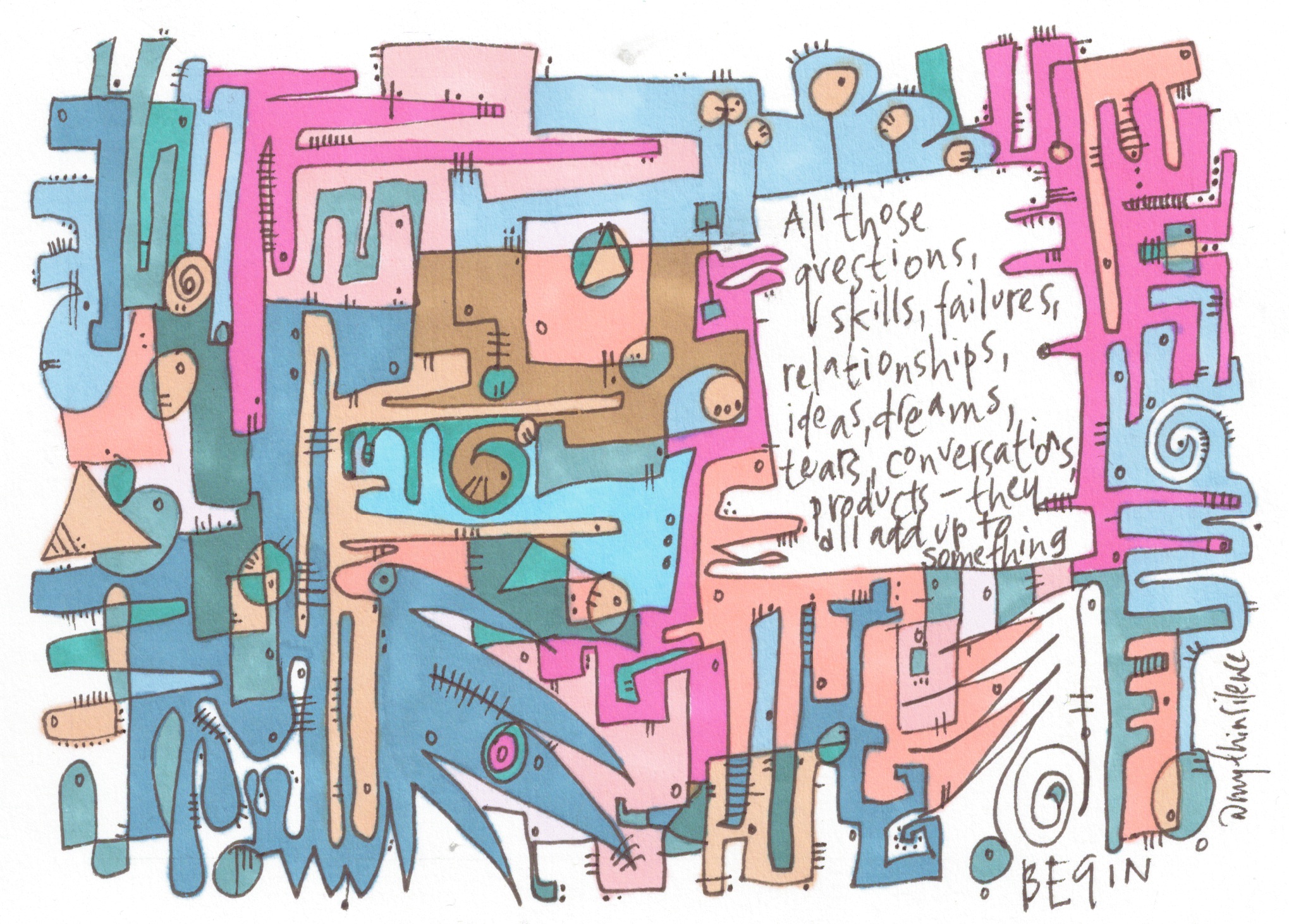
4 all those

4 all those - colour

We cannot join what we are already participating in:

‘The first half of life is discovering the script, and the second half is actually writing and owning it.’*

These two lives are not made up of years so much as experiences.  Because of the things we have been curious in, the skills we have honed, the experiences we have lived, there is something which emerges for us, something which comes to us.  Martin Seligman thinks of this as a mystical thing and uses an old term:

Vocation – being called to act rather than choosing to act – is an old word, but it is a real thing.’**

Seligman is describing how positive psychology chose him rather than he chose it.

This has been described by others in various ways, for example, Ken Robinson speaking of our element^ and Otto Scharmer describing the emergence of our future Self – out of the practices of presencing: opening our mind and opening our heart^^ – what Rohr would name the first life.

Integrity is more than honesty and transparency, it is also about connection: inwardly and outwardly.  The second life Rohr speaks of, or the opening of our wills as Scharmer says, is about all things lining up towards a purpose, and with this, comes hope.

Some discover this at a young age.  I believe I’ve discovered mine in middle age and it’s why I’m a dream whisperer, listening for what a person’s life is asking of them – it’s what I MUST do.  I have shared conversations with people who have given in and embraced their life’s call, but also with many who haven’t – showing how it can be hard to step upon a new road, even if it’s one we’ve prepared for ourselves.

So, I wonder, what are the whispers of your life calling you to?

‘We persevere in the confidence that we ourselves are being transformed.  Perseverance produces character, and character hope.  And hope, we will discover, is the ultimate gift gained in wisdom.’*^

‘So get ready for some new freedom, some dangerous permission, some hope from nowhere, some unexpected happiness, some stumbling stones, some radical grace, and some new and pressing responsibility for yourself and for our suffering world.’*

(*From Richar Rohr’s Falling Upward.)
(**From Martin Seligman’s Flourish.)
(^Ken Robinson’s The Element.)
(^^Otto Scharmer’s Theory U.)
(*^From Erwin McManus’s Uprising.)

fitting in

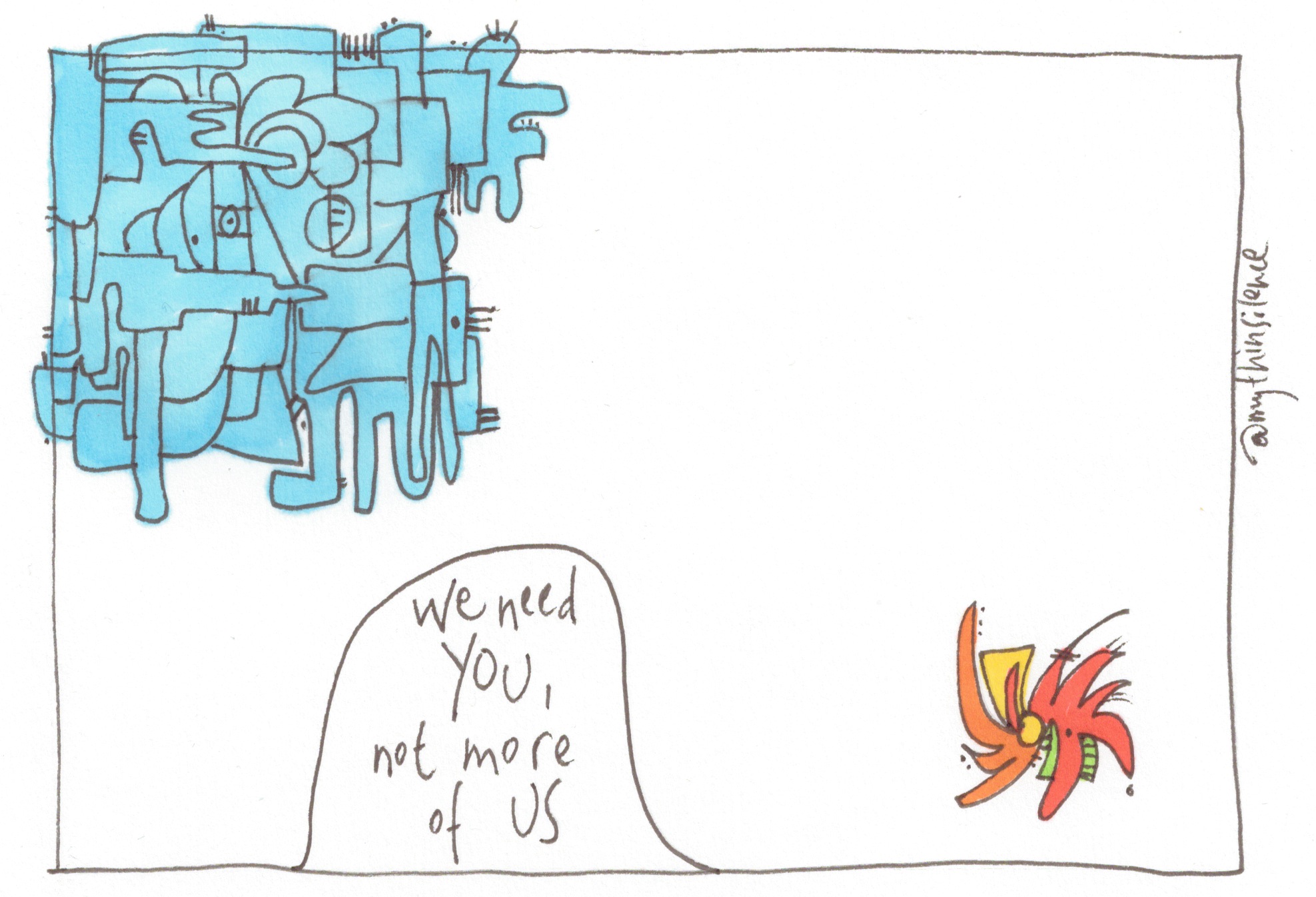
3 we need you

Is not the same as belonging.

Sometimes we can be so grateful for being allowed in and to be accepted we’re prepared to fit in.  But it comes at a cost.  We never really belong, if belonging is ‘the innate human desire to be part of something larger than us.’*

“We need you to be like us.”

Sometimes it’s been said to me outright, more often it’s been a subliminal message: We need you to fit in, otherwise we have nowhere for someone like you.  

Belonging is being welcomed and accepted for being who you are.

We need to have different perspectives on our world and work, not only the one: some companies bring in new employs because they’re different and not to fill a role.  This is the genius of each bringing their unique perspective to the whole:

”Merciless criticism often makes us dig in our heels in defiance, or worse, makes us helpless.  We don’t change.  We do change, however, when we discover what is best about ourselves and when we have specific ways to use our strengths more.”**

Tina Seelig suggests art ‘is about how to observe the world with great attention to detail, to internalise those observations, and then to give expression to them in the chosen medium.’^

Each of us is capable of creating worlds of belonging rather than those others are expected to fit into: worlds were people can be more who they are and not less.

It won’t be easy to change the fitting-in culture, though Ryan Holiday offers a helpful move from the world of martial arts.  When asked to belong, our impulse is to give in or push back, but if we’re to create belonging we must pull instead: ‘We can’t push back, we have to pull until our opponents lose their balance.  Then we make our move.’^^

Except we’re not trying to over-balance our opponent, but enable everyone to find their true balance – more of a dance, really.

(*From Brené Brown’s Daring Greatly.)
(**Appreciate Inquiry’s founder David Cooperrider, quoted in Martin Seligman’s Flourish.)
(^From Tina Seelig’s Ingenius.  Seelig is identifying the same moves as Theory U: observing, presencing, identifying, creating.)
(^^From Ryan Holiday’s The Obstacle is the Way.)


animateur

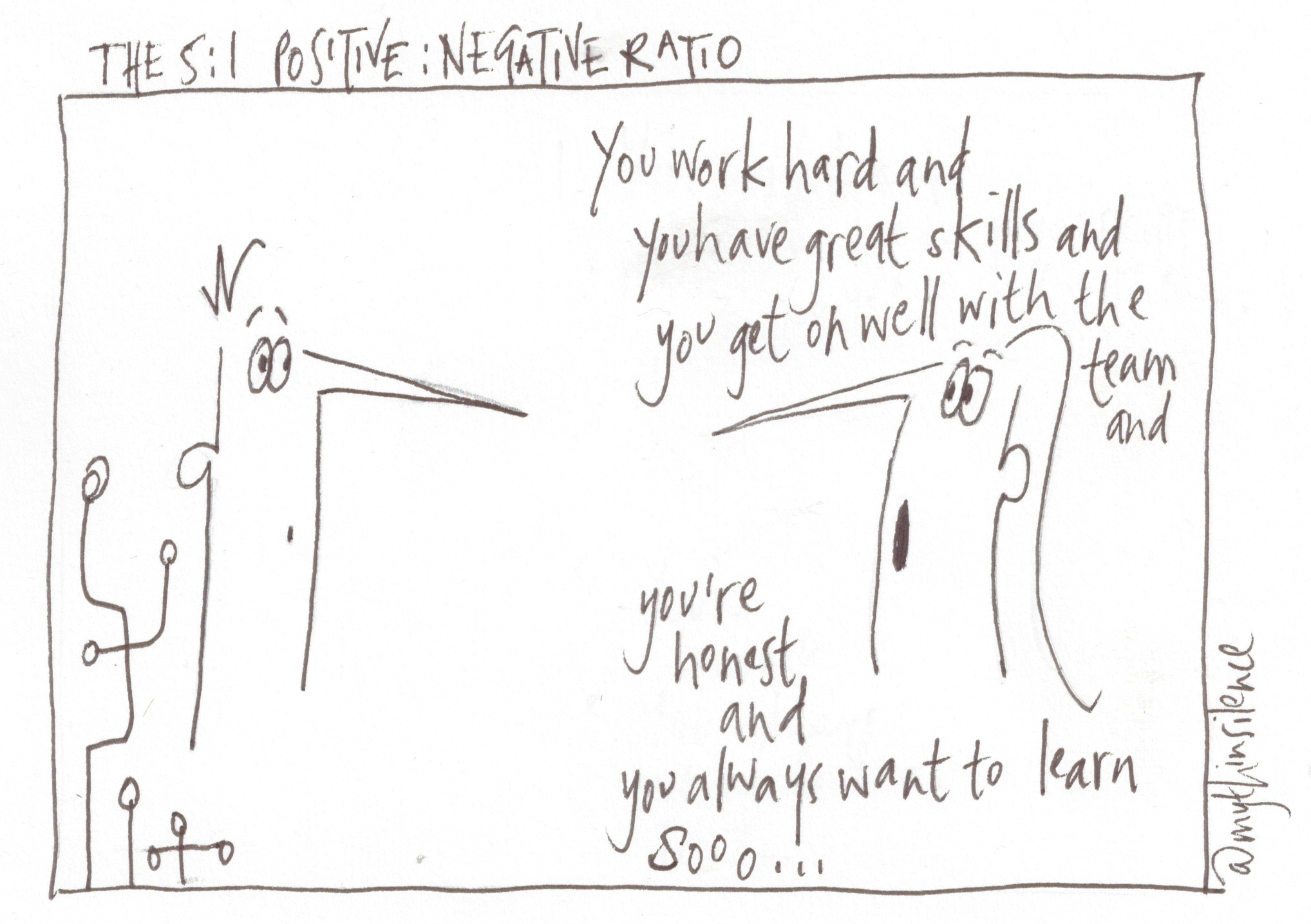
2 the 5 to 1

3:1 is good.  5:1 would be better.

These are ratios of positive to negative input we need for our lives to be healthy.  3:1 is just the right side of healthy/unhealthy.  When we slip below this,* things begin to get toxic.

When it comes to my work of dreamwhispering,** I’m seeking to bring positive and encouraging whispers (thin|silences) into a person’s life, not in some fictitious way, but refocusing on their good, even great, talents and passions and experiences.

‘When we feel good about the choices we’re making and when we’re engaging with the world from a place of worthiness rather than scarcity, we feel no need to judge and attack.’^

We give one another a better chance to flourish when we recognise who we each are and what we each can do.  We’re really expressing faith in each other – faith as a future-orientated sense – to be the very best we can be.  We can add to one another’s sense of disconnection and unworthiness and emptiness, or we can build each other up with our whispers.  We’re not looking for perfection or completeness, but enoughness: ‘Think progress, not perfect.’^^

In the same way as there is no future, there is no past.  But there are possible futures whilst there’s no returning to the past.

Peter Senge offers animateur as the name for the person who ‘seeks to bring systematic change … someone who “brings to life” a new way of thinking, seeing, or interacting that creates focus and energy.’*^  Whilst Senge is thinking of the professional person who steps in-between business and the environment to create new ways forward, his animateur is something we can all aspire to.

(*According to Martin Seligman in his book Flourish, in the United States, ‘Law is the profession with the highest depression, suicide, and divorce rates,’ as litigation requires they are fighting all the time.)
(**You can find out more about this at geoffreybaines.com.)
(^From Brené Brown’s Daring Greatly.)
(^^From Ryan Holiday’s The Obstacle is the Way.)
(*^From Peter Senge’s The Necessary Revolution.)