shades of yellow: the colour of hunger

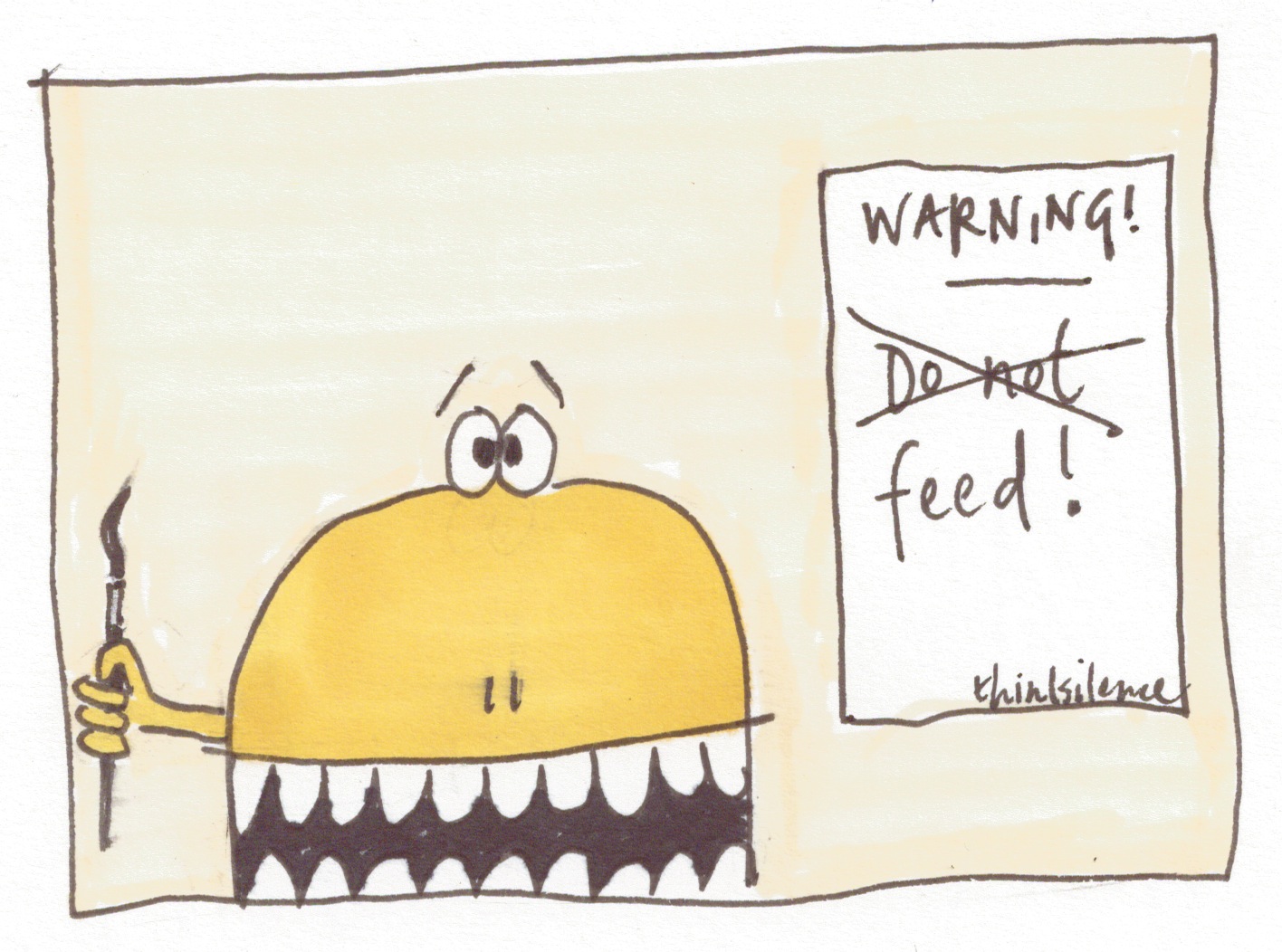
11 warning …feed

It’s not that some people are creative and others aren’t.  Everyone is creative: you can’t be Human and not be creative.

It’s not that creativity is always good, or our imagining which precedes it.  Human creativity can be the vehicle for evil as well as good.

It is about what we do with it.

We can now imagine and create a lot more than ever before; Ramez Naam anticipates this when he writes; ‘We stand poised on the brink of the largest ever explosion of human mental power, a second Renaissance more transformative, more far-reaching, and more inclusive than the first.’

The last phrase – ‘more inclusive than the first – means you too.

McNair Wilson sets us off in the right direction when he says, the question is not whether we have imagination, but: ‘Do you use your imagination, your natural sense of wonder and curiosity to make a difference?’

We remember there is no such thing as the future, there are only possible futures.

More than ever before, the world we find ourselves in allows us the opportunity to say what kind of future we want, and then live for it, to use our imagination and creativity to choose the world we hope for.

To have this, though, we may have to lose something.

Albert Espinosa, in describing his yellow world, writes out: ‘The first discovery of the yellow world: losses are positive.’*

We need to let go of those things we cannot have (or perhaps, should not have), for something we can – the something which engages the skills and the passions we have, and finds others and causes with which to connect.  The thing you might be wanting to do could be the very thing getting in the way of what you need to do.

As I write this, I’m thinking of sixteen years I tried to give to something because I thought it was what I should do.  Three times I failed; the third time I decided to give this hope up.**  I now know my Hunger and I’m trying to feed it every day.

Hugh MacLeod describes the thing we each must do as the Hunger.  It’s a good word for what consumes us:

‘The Hunger will give you everything.  And it will take
from you everything.  It will cost you your life, and
there’s not a damn thing you can do about it.  But knowing
this, of course, is what ultimately sets you free.’

(*Albert Espinosa shares how he had to lose a leg when he was fifteen, and how he was encouraged to have a party for this.  So he did, inviting all the people, and a dog, that had some connection to his leg; the next day, his leg was taken away.)
(**I cannot put a price to what I learnt, mind.)
yellow

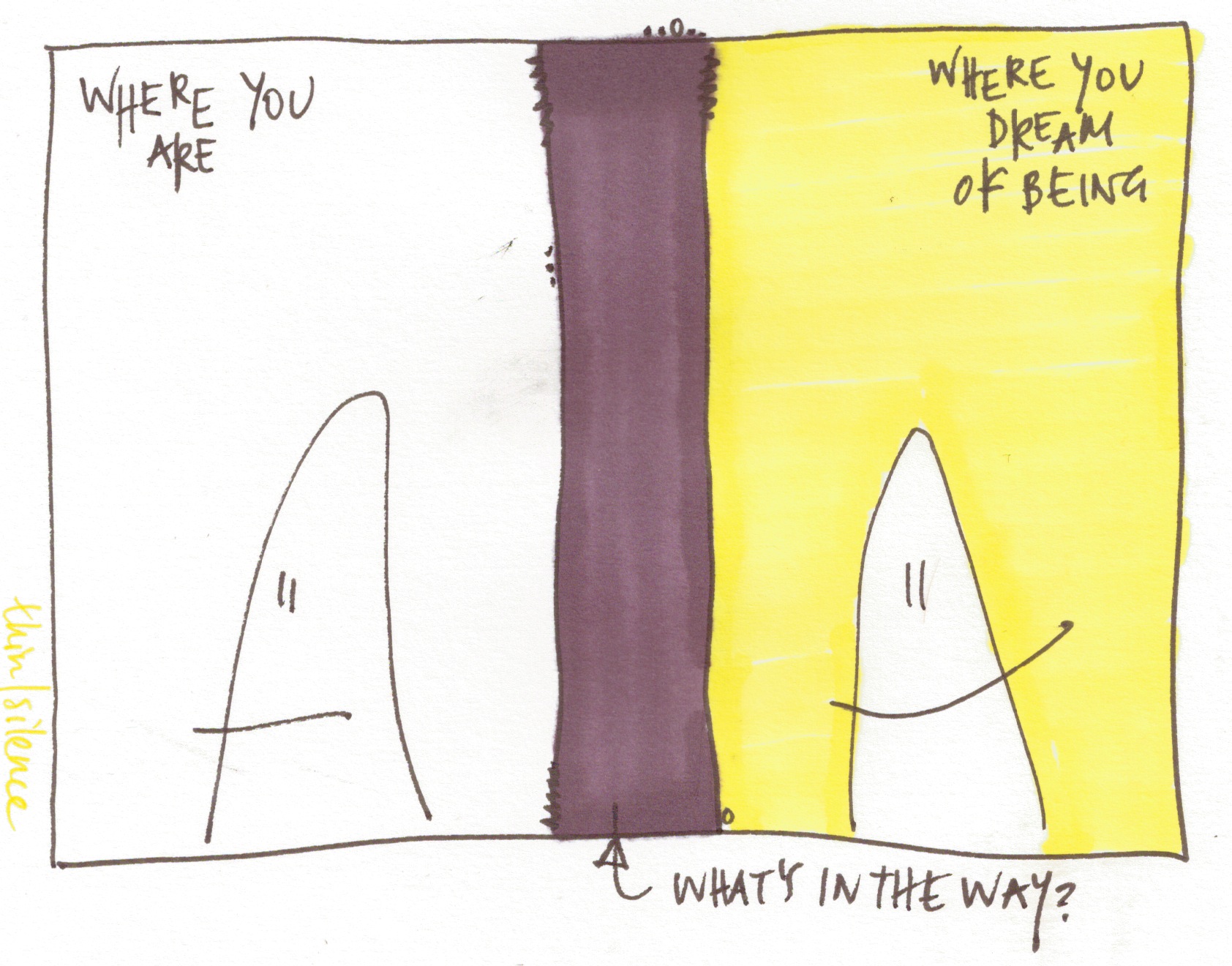
10 what's in the way?

Steve greeted me with a high five.

It turns out my favourite colour is the same as his.  Yellow.  High five.

A day or so later a link arrived from Steve for Albert Espinosa’s The Yellow World, in which the author describes his ‘way of living, of seeing life, of nourishing yourself with the lessons that you learn from good moments as well as bad ones.’  What is most remarkable is that Espinosa struggled for ten years with cancers which took a leg, a lung and part of his liver.

If you’ve been to my  home, you’ll know it’s painted yellow – not the outside, the inside, but it would be good to have a yellow outside too.  As I’m typing this morning I’m wearing a yellow T-shirt, so you might say I heavily lean towards yellow.

For me, yellow is about openness and choice.  These are both hard or robust words and more.*  I think yellow is a hard-working-colour.  Yellow can be thought of as a bit of a luxury and has to work hard to be noticed and included.

Openness is tough word which does the hard work of suspending judgement because there’s always more to know about people, about the world, and about ourselves.  Choice is a tough word because it means we can’t blame anyone or anything – it’s our choice (or, lots of little choices).

Choice is also about freedom. Not the kind of freedom to do whatever we want to – the world is way more complex than that – the kind of choice which allows us to respond with goodness and rightness and kindness no matter what happens to us and around us.

Yellow also used to be what you were called if someone thought you a coward.  I think yellow is a very brave colour.

(*They feel like antifragile words for me – words which allow us to grow not matter what – see Nassim Taleb’s Antifragile for more.)


the science of happiness

9 letitia worked really hard ...

Here are a few thoughts I had this morning which perhaps add up to one thought.

I signed up for edX’s course on The Science of Happiness yesterday.*  What I’m about is an ongoing exploration of this and the thought of getting a “Certificate in Happiness” at the end of it makes me smile.

I don’t want to anticipate what will be taught in the course, but I’m guessing hard work and engagement and tears and determination will be mentioned somewhere along the way.  Humans desire autonomy (freedom) times mastery (skills) times a purpose greater than self (contributing).**

One of the most important things we can do is simply turn up to what it is we must do – every day, until days turn into years, and keep going.

We can struggle to embrace the possibilities life provides because we still live with a “factory” mentality (and before that the serf mentality) – the factory brought stability and guaranteed income but it didn’t stimulate motivation and creativity.  Now we find the factory is not so safe and stable – shipbuilding, coal-mining, Kodak, Motorola, British Leyland.

The means by which we can produce and share the art we love have just got bigger – whether we choose to pursue our passion to gain an income or not.  Pinterest, Twitter, Facebook, and Instagram make it possible for us to share with tens, hundreds, and thousands more than we were once able to.  We underestimate the value of the long tail to what we have to contribute.^

The same technology makes it possible for us to find each other and for collaboration to follow – tribes with purpose.  Cities have always been the innovative places because of how they have made it possible for high numbers of people to interact – the Web is a great big city.

There have always been Humans who have made journeys to faraway places, pursued ideas others hadn’t thought of or asked questions when others were content with answers.

Perhaps the one thought is this: when we identify our dream (hope, idea, question, purpose, art …) and pursue it every day of our lives with effort and determination, making the most of the means available to us to share with others and to connect with those who share a similar dream, and we offer it to the world with innovation and sustainability, then, perhaps, we have found happiness.

(*How we learn is changing; this is me trying it out.  Check out more from Seth Godin in his free to download Stop Stealing Dreams.)
(**He’s an interesting tweet from Austin Kleon highlighting something he’s reading which questions unrealistic optimism in favour of depressive realism.  I prefer optimistic realism!)
(^The Long Tail is the phrase coined by Chris Anderson and is the unlimited choice made available by the internet.  The future doesn’t lie in the high end “hits” at the of a curve but in the “misses” found in the long tail where many niche interests are to be found.)
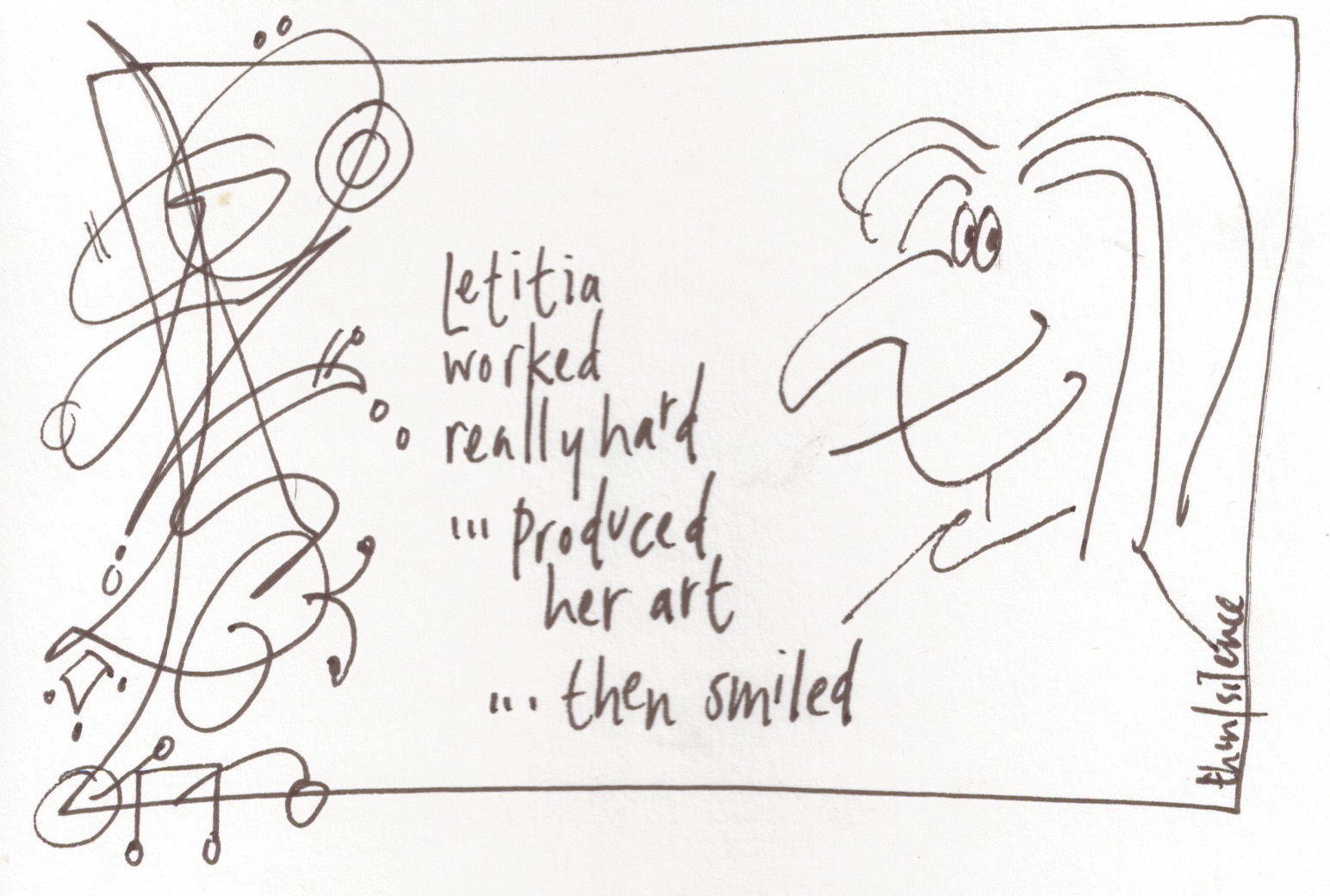
(Cartoon: Letitia is Spanish for “Happy.”)

interesting

8 if you don't love ... 1

Imagineer NcNair Wilson writes, ‘I’ll bet you could tell me the names of the “creative people” in your organisation.’

Have you just thought of those in your organisation?

The question Wilson is really getting to is, What about everyone else?  Why aren’t they being creative?

‘People working at the top of their intelligence will affect the bottom line.’*

Moments later, I came across this from Creative Thinker Edward de Bono, saying that: ‘whatever you are doing, no matter how humble, is capable of being interesting.’

We may be in the 21st century but creativity doesn’t appear to be running out.  And when I consider the all the things we Humans are fascinated in, I never cease to be amazed … and interested.

When you get really creative around the things you’re interested in, imagining and innovating in unique ways, you’re becoming a leader, even if it is a leader of one other.  You have to love and value what you’re interested in, create a story, connect with others, and live it, every day, passionately.

My friend Alex McManus writes in his newly published Makers of Fire that we require fuel, oxygen, and heat to create fire; he uses this picture to argue for how we’re makers of fire – fuel is the world we’ve received, oxygen is the meaning we give to our world, and heat is about the spark of creativity we bring:

‘Heat is all about the way that you engage with your
unique genius, talent, and passion the Fuel that settles
at your feet and the Oxygen that swirls around you.’

Interested?

(*From McNair Wilson’ Hatch.)

the futures walk with us

7 dai just discovered ...

An American Indian proverb states: “We do not inherit the earth from our ancestors.  We borrow it from our children.”

Our futures walk with us.

I’ve previously mentioned there’s no such thing as the future – there are possible futures.

These futures have always intrigued but more recently I’ve been on a journey from imagining to shaping.  In particular, my fascination lies with the possible futures someone can identify and live towards, which makes it possible for them to live with greater creativity, generosity, and enjoyment.

There are different understandings about the futures we need to grasp.  Beginning with the kinds of futures lying before us, we’ll trace these back towards the present.

There are possible futures, expected futures, and preferred futures.

Possible futures emerge out of scenarios we have worked upon, the result of being imaginative in response to events taking place around us (natural or of Human origin – though most of us probably didn’t see these events approaching, even if someone did*).

Expected futures emerge out of the extrapolation of certain data, resulting from observing what is predictable and defined through scientific means, out of exploring the trends which are at large from the past into the present.**

Preferred futures emerge out of individual or group vision-casting and planning, resulting from the courage and creativity pulled together by people who believe they are able to choose their future.

You’ve probably spotted how there can be an interplay of all three of these ways of thinking about the future: for example, a predicted future may be rejected and, instead a group of people begin to identify a future they prefer, leading to a movement of people as an event in Human history – such as the Civil Rights Movement in the United States (organised), or the fall of Communism in Easter Europe (unorganised).

At any time, these futures walk among us, adjacent possibilities for how we might live our lives.  Perhaps, most importantly, is how we use these possibilities – as ways to shape the future, wherever possible, with foresight, intention, and love.

(*Think Nassim Taleb’s Black Swan: unforeseen, impactful, and we write a back-story to say we knew there was a Black Swan all along.  A futurist resists the temptation to write a back-story and, instead, begins to write future-stories.)
(**This is probably how we mostly think about the future, yet it perhaps is the most vulnerable way: for an expected future to be realised, nothing must change.  Daniel Kahneman and, again, Nassim Taleb offer important reasons to be cautious about the predictions of experts.)
(Cartoon: Dai is a Vietnamese name meaning “great.”


prudence and discretion

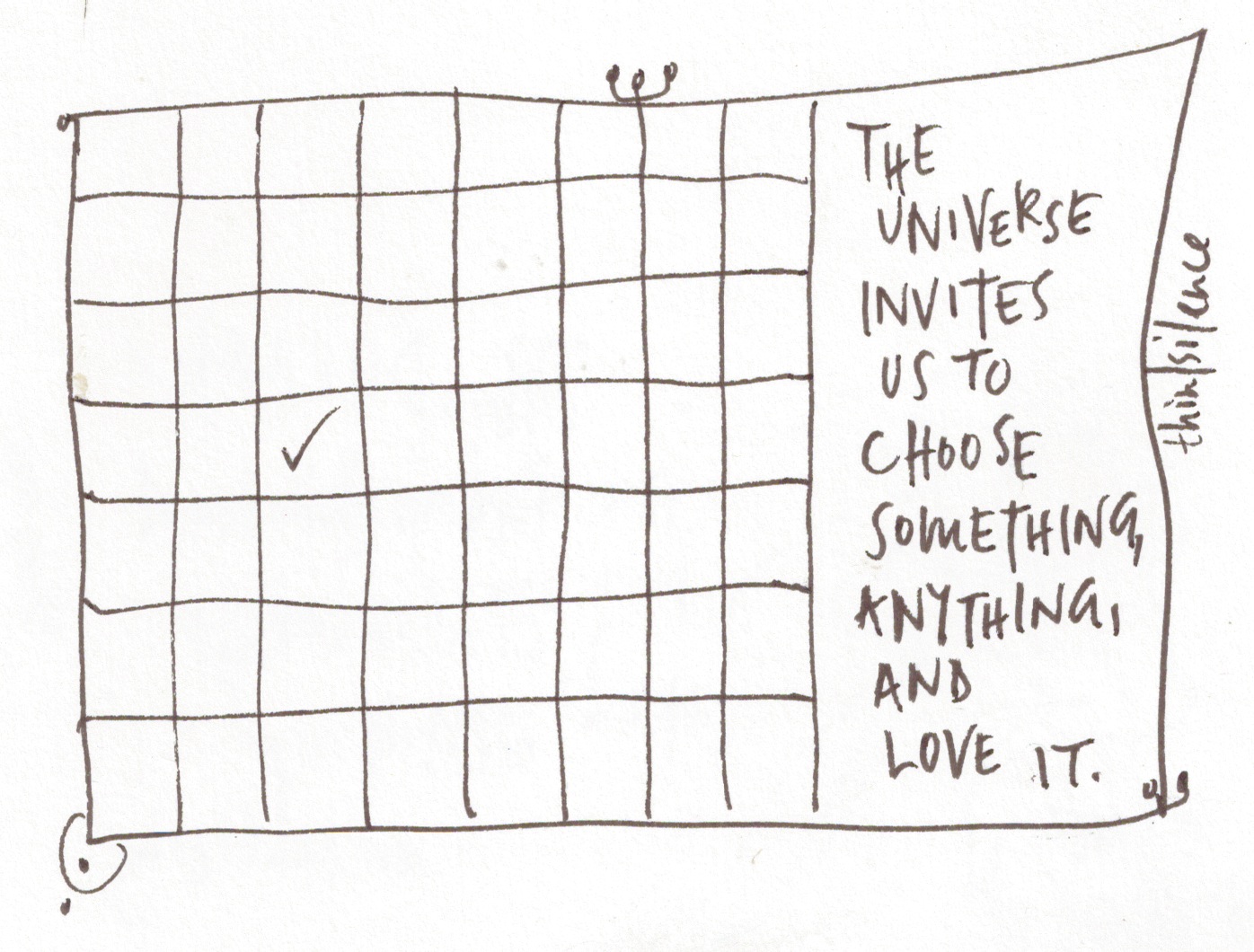
6 the universe invites us ...

On first viewing, these words suggest caution and care be taken.  On closer observation, though, they suggest living out purposefully, with courage and generosity.

I’ve been reading the story of someone who experienced a dramatic turnaround in her life, from drugs and alcohol to caring for people struggling with these addictions.  It’s a moving and important story, and the kind we love to read.  But I found myself wondering about the huge numbers of people who need to have their lives transformed from some or other pale blandness.

Will you be doing something today which connects with a fire burning inside  of you – t maybe to do with music, or counselling, or cake-baking, or river-kayaking – or will you put it off until tomorrow or next year?

Choosing nothing is not an option.  Life is asking all the time: Do you want to do this?  Maybe this?  You might like this?  Or, then here’s something you once thought about?  We need to be partial to something, we have to choose something and reject other things.

Lots of possibilities – try listing all the things you’re really interested in, whether they are considered work or leisure or something else – be as divergent as possible.

Look at your list – identify the most powerful drivers for you – the things which emerge from the rest as being more important than other for you.

Which of these will you pursue today – the things which see the converging of passion and skills?  This is where prudence and discretion really help us, saving us from doing nothing or the wrong things -because there are too many options or no options, making it possible to do something which connects for us (and matters to others).

the end of wysiati

5 okay, who's ...

What You See Is All There Is.

This is the only way to understand this … see this … do this.

There’s nothing more we can discover here.

You are what you are and you’d better get used to it.

It isn’t broken …

Nothing’s going to change …

It’s the way of the world.

I don’t want to know.

I have nothing you could possibly want.

I’m just looking forward to my retirement.

Things are changing and you’re invited to the party.

We’re all leaders of something.  There’s something you do, or know, or make that can be taken further and can put an end to WYSIATI: ‘Do you believe in what you do?  Every day?  It turns out that belief happens to be a brilliant strategy.’*

Daniel Kahneman warns us that WYSIATI takes away the important edge of competition,** and, when combined with our preponderance to substitute an easier question for the one being asked, leads to the above-average effect – we think we’re doing better than we are, that our lives are better than average.

We are in a new time of challenging these assumptions, to open our minds and hearts and wills in a plethora of movements and initiatives.  We can all be a part of this.  Interested?

(*From Seth Godin’s Tribes.)
(**Dave Logan, John King, and Halee Fischer-Wright’s Tribal Leadership tells of how competition is something we can join in and benefit from together, rather than being against other people, instead taking on the huge challenges facing our planet with all its species.  The three authors track tribes whose mantras include “Life sucks.” “My life sucks,” “I’m great,” “We’re great,” to “Life is great.”)

how to complete this sentence?

4 ajali knew ...

As I started the day, I’d been thinking about how there’s more to us than we know and what this means for the future in way of new possibilities before us:

‘When you are too familiar with who you are, you
have become, in fact, a stranger to your self.’*

I took notice of this because I realise I’m being challenged to step out of the familiarity of me.  There is a fear in this.  I see this fear in others too – a fear towards …

I couldn’t complete this sentence.

What is it we fear?  Change?

Even when there’s a possibility of moving away from dissatisfaction or frustration or hurt or loneliness we can find it hard to move.

We probably feel more uncomfortable about change rather than fear it.

So, is it the unknown that we fear – the unknown we find in ourselves and the unknown we may find if we leave the predictable road?

John O’Donohue describes the unknown as our closest companion.  Interesting.  If he means I walk each day inhabited and surrounded by so many things I don’t know, he’s right.  My future Self calls to me through the unknown; I moved towards it when I live in awareness and innovation and love and courage

‘Wisdom is the way you learn to decipher the unknown,
and the unknown is our closest companion.  So wisdom
is the art of being courageous and generous with the
unknown, of being able to decipher and recognise its treasures.’

More than theory, this is a path I find myself on.  Seth Godin has got it right:

The question isn’t, Is it possible for me to do that?  
Now the question is, Will I choose to do it?

Encounters with the new and the unknown allow us to see more of who we are.

Over to you.

(*From John O’Donohue’s Anam Cara.)
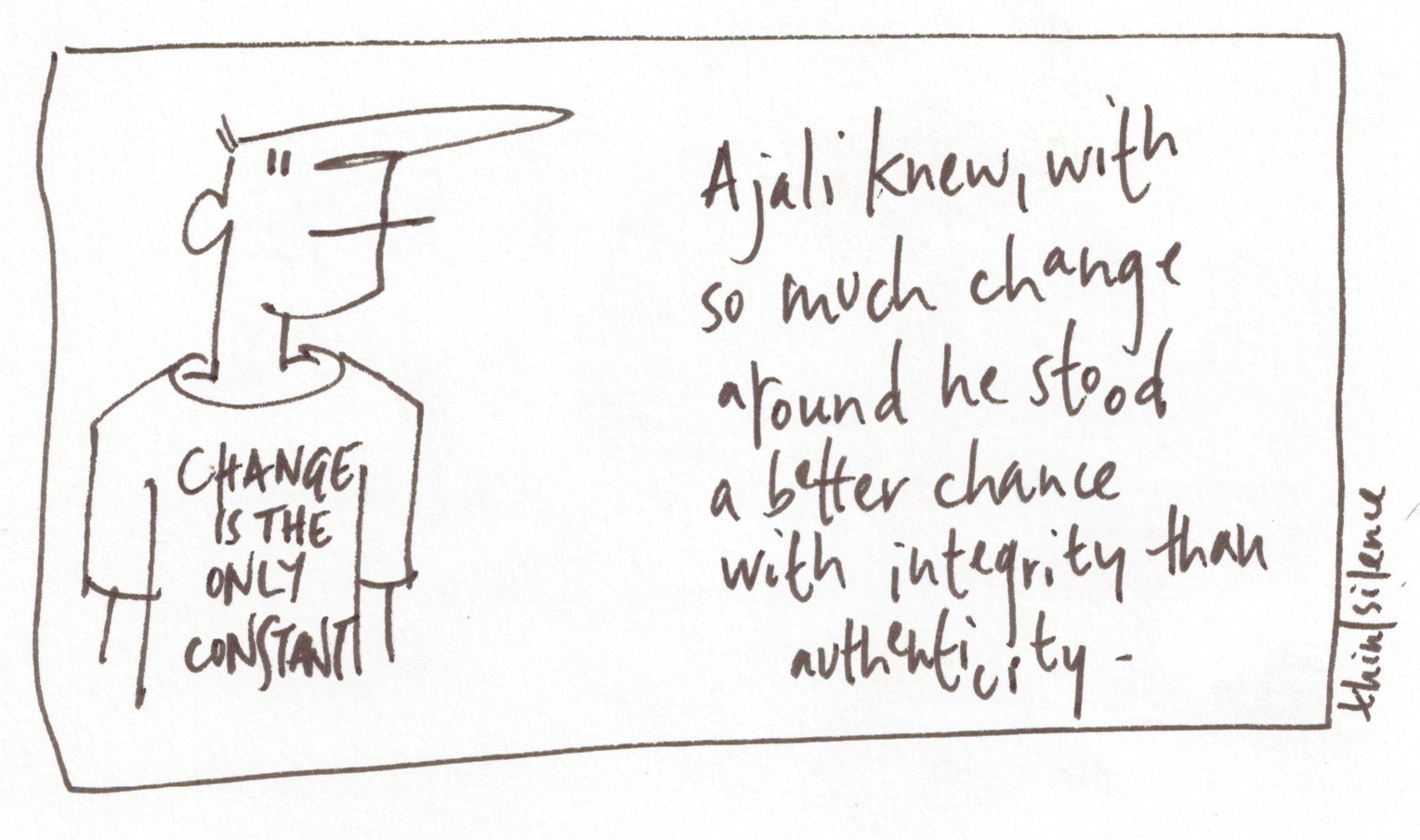
(Cartoon: In his blog, Seth Godin writes, ‘Perhaps the only truly authentic version of you is just a few days old, lying in a crib, pooping in your pants.’  After that it’s all change, by choice.)


tribes of possibility

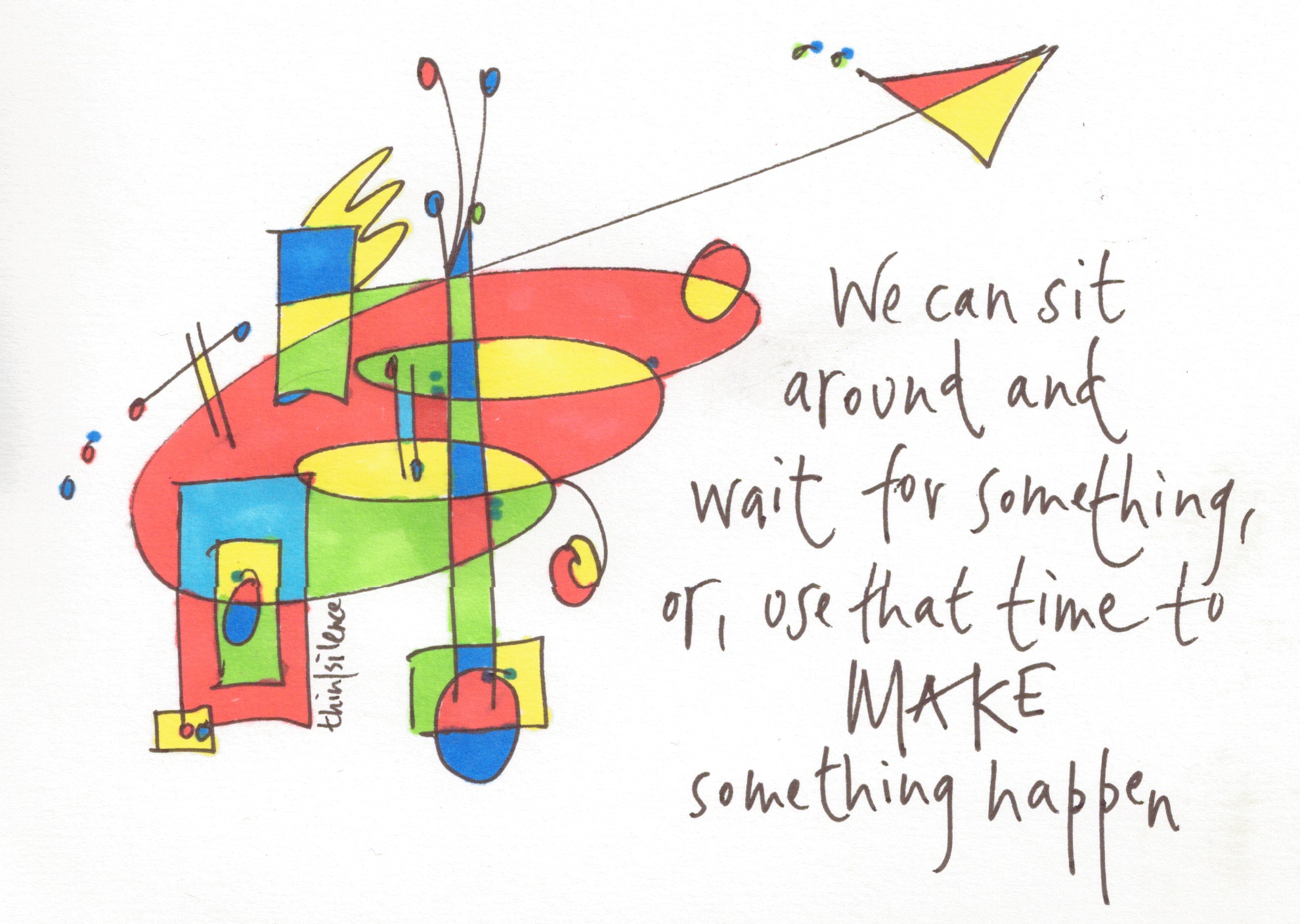
3 we can sit around and wait ...

What we are able achieve together is greater than what we can as individuals.*

It might well be that for many a group for creativity is the best way to be released into imaginative and creative work, proffering opportunities people might never have imagined or picked up on otherwise.

More than this, there is evidence to show that people being fascinated and absorbed in something greater than themselves, a cause that is worthy, noble, and brave, allows them to deal with their own wounds and failures in a way that is better than therapy.**

From this perspective, everything we’ve experienced in our lives has potential value towards creativity and generosity.

We all have a choice.

We can regret that our lives appear to be aimless and opportunities come to others but never  to us, or, we can make something happen with others – even trying to find others to engage with in a quest makes things happen.

Don’t wait for something to happen.  Find a tribe, or start a tribe, and make something happen.^

‘Frequently in a journey of the soul, the most precious
moments are the mistakes.  They have brought you to
a place which you would otherwise have always avoided.’^^

(*There are caveats which need to be attached to this – there are elements of creative development which can be better pursued individually, it requires everyone to fully contribute their genius, … things like that), but basically scalability and sustainability require more bodies.)
(**Whilst therapy for many is crucially important, for many it can be what John O’Donohue labels woundology – the ongoing reopening of wounds, never allowing the more natural healing of lives, valuing all things as experiences to be invested in a greater mission.)
(^Seth Godin’s Tribes is a great resource.  I’m about to read it again because of what I’ve been thinking about today.)
(^^From John O’Donohue’s Anam Cara)

we are our memories

2 you can live your life ...

We ponder our memories so we might live more presently to our lives and environments and relationships, integrating as much as we can so we might be fully awake and, so, fully alive.  The mindful person not only wants to experience something but to discern the meaning of it.

In his novel Invisible Cities, Italo Carvalo has his character Marco Polo describing a bridge to Kublae Khan stone by stone.  The Khan responds, “Why do you speak to me of the stones?  It is only the arch that matters to me.”  Polo simply replies, “Without stones there is no arch.”

Like the stones which form the arch, our lives are formed by our memories, including those from our future.*

The question which forms out of the importance of being mindful to the memories which form our lives, is this: If I am not grateful for who I am, can I have a proper understanding of myself, and will I then go on to do the things I must do?

(*The narrative arc of a story, like the arch of a bridge, is made up of words, sentences, sequences, scenes, and acts.  Robert McKee in his significant Story points out that what a good story does is help us to reflect upon our lives, not just to experience it.)
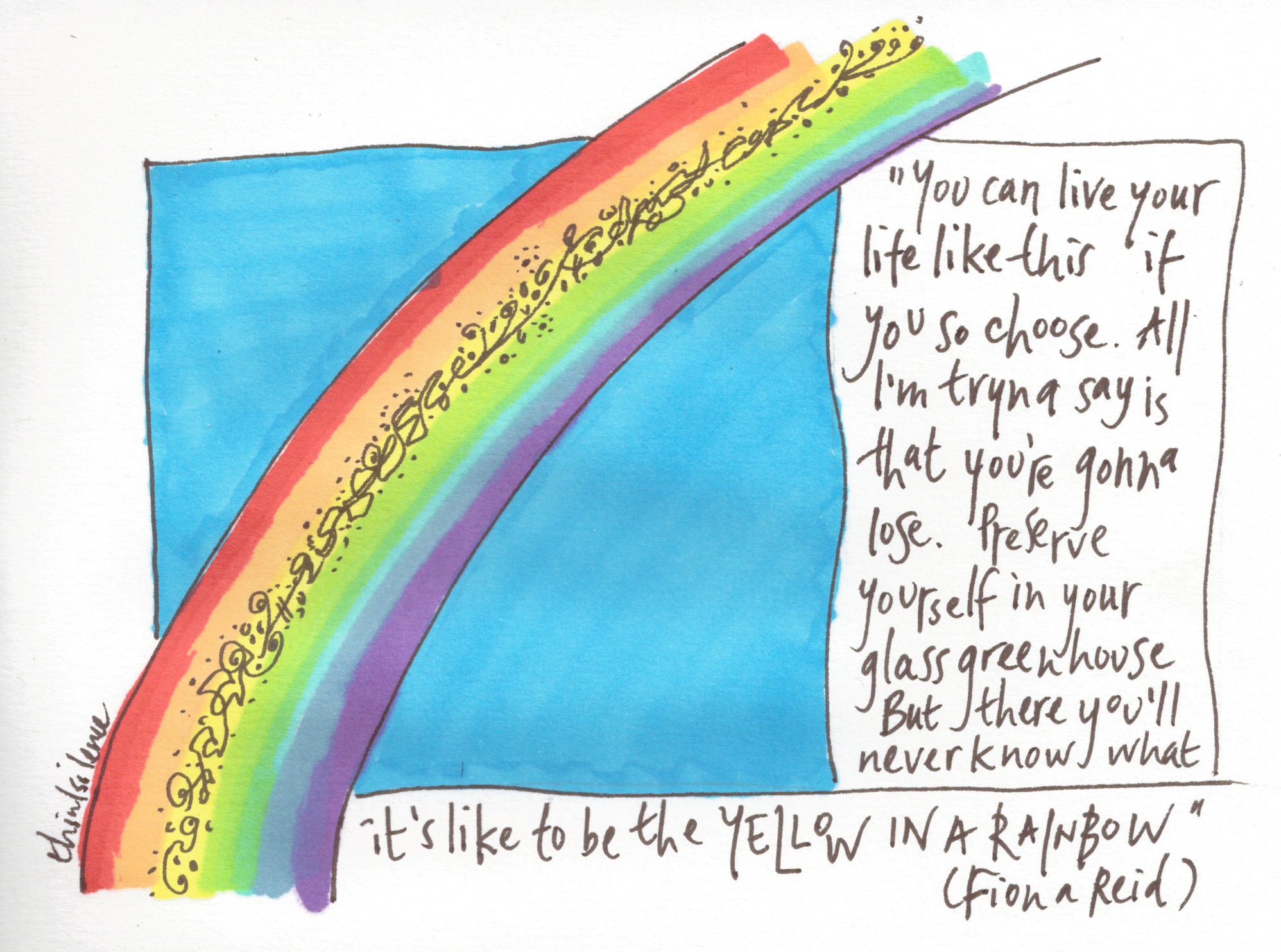
(The words on today’s cartoon are the lyrics from a song I loved on first hearing, by Fiona Reid – Yellow in a Rainbow (you can check out more of Fiona great sound and songs here).