of societies and tribes

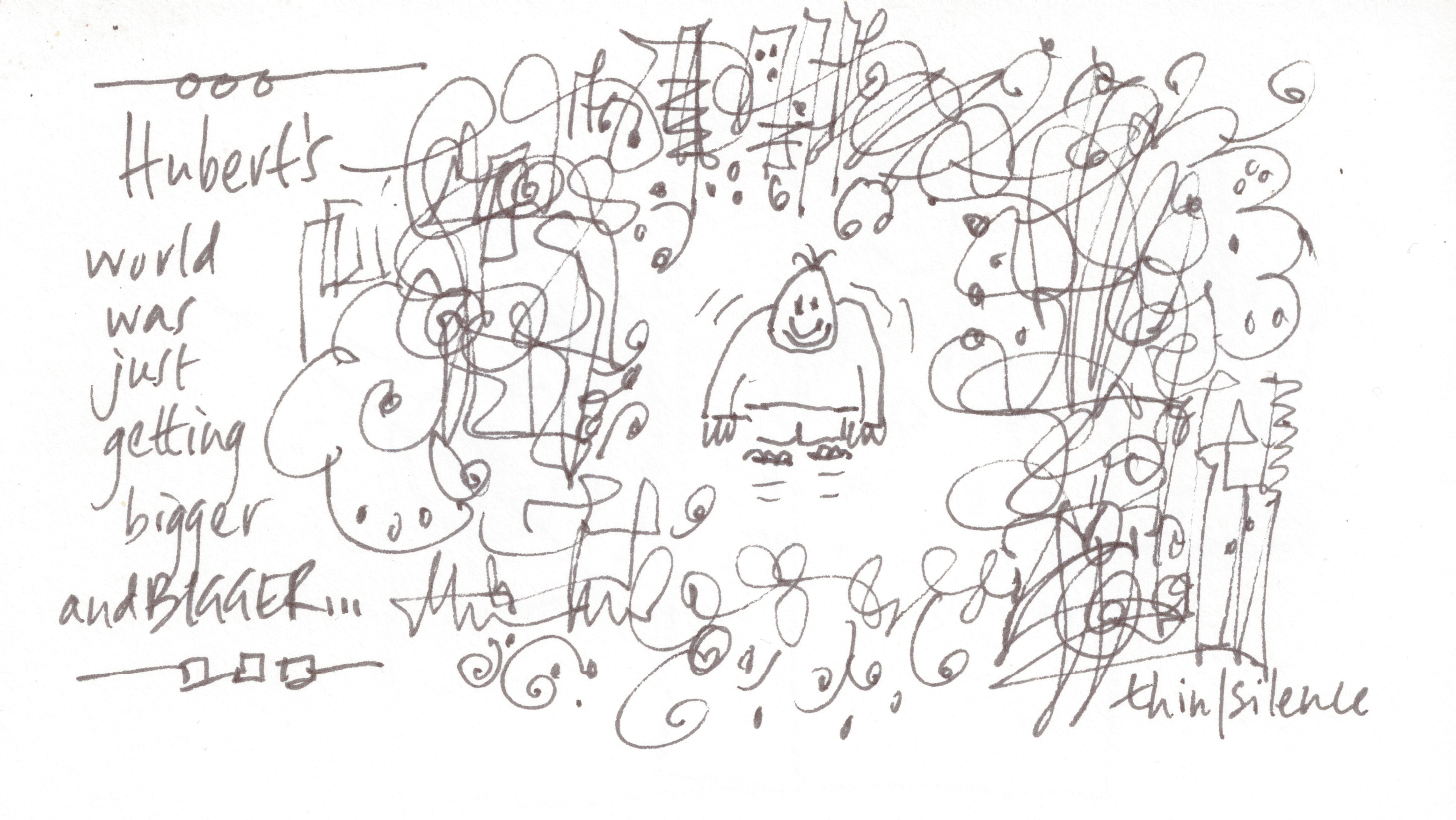
hubert's world was just getting ...

This is some of the “technical” stuff behind what I’ve been writing about over the past days.

Please just skip if it isn’t for you – I thought some might like to see a little bit more of what’s lies in the background.

Generally speaking, this is about how ideas from different people overlap, nuance, and develop each other.

Specifically, it’s about the thinking provided by Otto Scharmer and Katrin Kaufer about how we can be more present to the emerging future, through becoming more present to our world, each other, and to our future Self, and it’s about the thoughts of Dave Logan, John King, and Halee Fischer-Wright on the different tribes to be found in organisations.

Scharmer and Kaufer introduce Society 1.0 (organises around hierarchy – “bring us order and we’ll do what you tell us”).  This society lacks dynamism and freedom.  It doesn’t mean people don’t complain.  I found myself in a context once upon a time where the people would tell me I was the one who was supposed to come up with the ideas, and then they would let me know what they thought about my ideas.  Logan, King, and Fischer-Wright introduce a tribe whose mantra is “My life sucks” – the caveat being “Yours is okay, but if you had the background, opportunities and people in your life that I have, your life would suck too.”  These “tribe-members” cannot see how there lot can be changed.

Then there’s Society 2.0 (organising around competition – the state takes more of a back seat and let’s the economic forces get on with it, largely); whilst having dynamism and freedom, this society is often blind to, or, unconcerned with, the externalities of its actions (the make more-faster madness).  The corresponding tribe holds the mantra “I’m great!” – the caveat this time being “but you’re not.”  It can be about the survival of the fittest, and in an extreme form, sees success as a scarcity so you you may have to be brutal.

Society 3.0 (organised around interest groups – takes up the problems of the externalities – labour rights, eco-concerns, the rich-poor divide).  The problem is, those too slow or unable to organise themselves, for a host of reasons, miss out.  The tribe which connects with this Society have the mantra “We’re great!” – the caveat being “but they are not.”  Although people are more aware of one another, it’s more likely to be within the special interests of the group, organisation, or culture.

Then Scharmer and Kaufer describe Society 4.0 (organised around the emerging whole – seeing and understanding all the people, all the issues, on the levels of the world, people, and the future-Self everyone must be empowered to explore).  Although, Logan, King, and Fischer-Wright claim there to be further developments to come, their corresponding tribe has the mantra “Life is great.”*  Together, the real competition to life on earth is taken on: disease, illiteracy, poverty, injustice, natural disasters.

The good news is, Humans are on a journey into an emerging future – this is what we’re exploring.

There is another tribe.  It comes before the first one mentioned and it’s mantra is “Life sucks.”  This tribe corresponds, in part, to the Society which Scharmer and Kaufer see forming when beliefs and views become more fixed, then delusion follows, and then destruction – here is where we find the fundamentalisms.

(*By this, I certainly don’t deny pain and suffering, rather, it is about everyone being able to explore a life of Creativity, Enjoyment, and Generosity.)
want to know more?

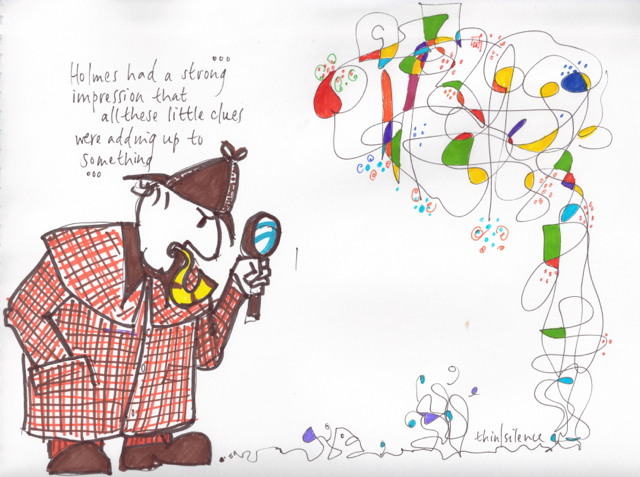
holmes had a strong impression

I saw this framed poster in a gift shop I passed yesterday: “Blessed are the curious for they shall have an adventure.”*

The trouble is, curiosity soon feels like hard work.  It turns into a lot of reading, conversing, investigating, pondering, journeying.

Two options.

Option One:

Humans struggle with complexity.  We download from past experiences to explain our present ones – or the experience of others, and we evolve heuristics, like, A bird in the hand is worth two in the bush.  That’s fine – if you want to cage the bird in your hand, but if you’re a bird conservationist, you might prefer the birds being in the bushes.

The temptation is to stay where you are, in  a world more determined for you than by you; okay, it may lack dynamism and adventure, there may not be a lot of creativity to it, but you know how things are and what will and won’t happen.   From time to time you may take the opportunity to blame others for this world when it doesn’t work, or blame the system, the politicians, the employer.**

Option Two:

Identify your curiosity – it may be something which excites you or angers you.  Either way, it’s a beginning.  Find out more this thing.  It’s the age of google, so this part isn’t hard.  Start following clues and leads.  See where you’re taken – the adventure has begun.

Before I finish, two things.  Firstly, I wish I could tell you it’s not going to be hard, but future hopes and possibilities don’t exist yet, they lie beyond the present-moment frustrations and struggles, and they need you to bring them into existence.  Secondly, I know something about you.  I know you have amazing talents and abilities and can tell you what they are.

Curious?

(*I just had to include this from a friend who has become very curious; it feels to fit well here.  She describes it in this way: ‘Like Alice following the white rabbit, I had come to a crossroads, and found myself having a conversation with the Cheshire Cat.  “Would you tell me, please, which way I ought to go from here?” I said.  “That depends a good deal on where you want to get to,” the cat said back to me.  “I don’t much care where….” I said.  “Then it doesn’t matter which way you go,” said the Cat.  “….so long as I get somewhere,” I explained.  It all starts with knowing you can’t stay here and knowing you can’t go back there.’  You don’t know where you’ll end up, but it’s better than here.)

(**One of the things which comes from being curious to find out more is we discover things don’t work because of us, not because of others.)

can you take the truth?

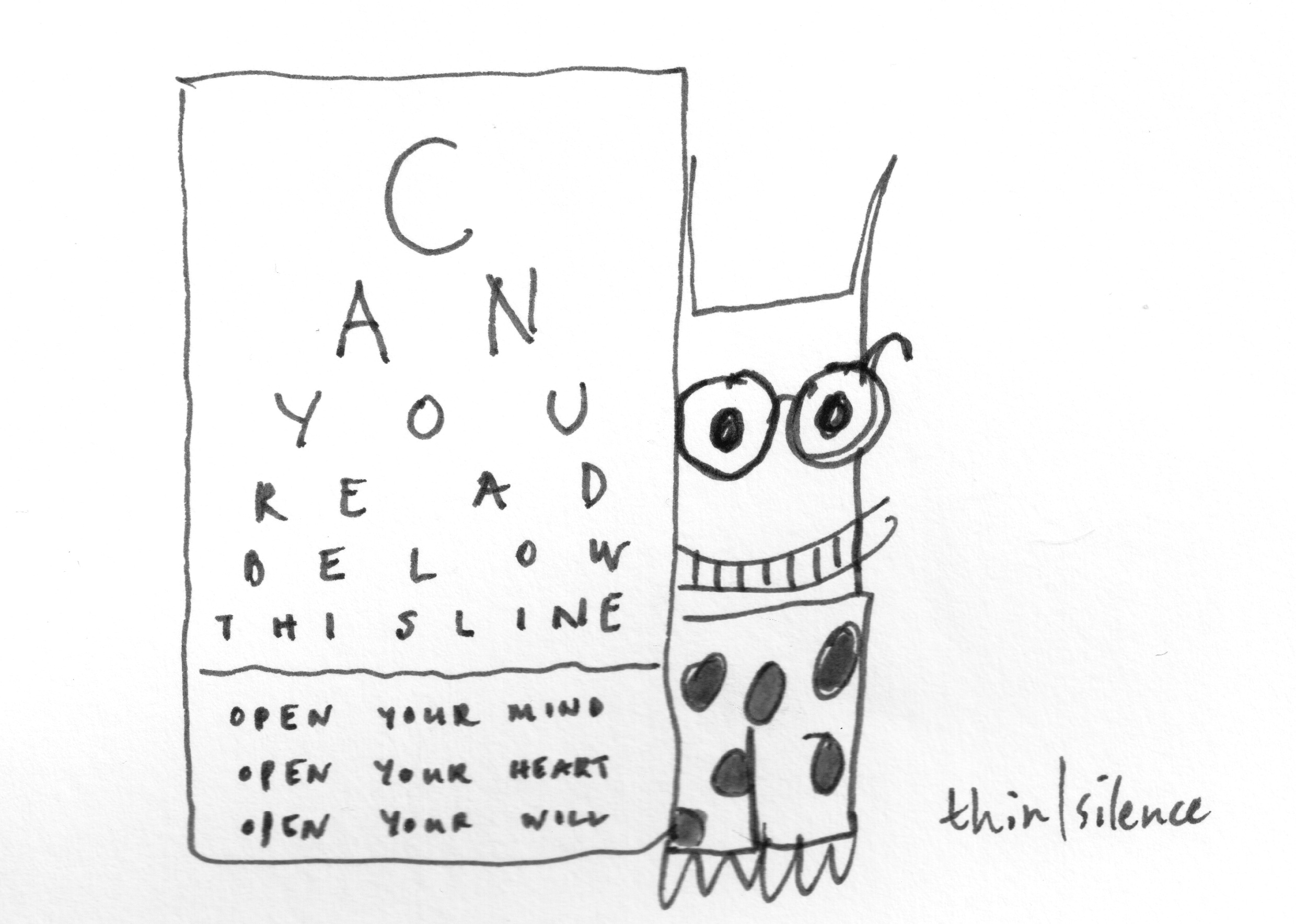
can you read below this line 1

I’m not going to try and tell you what the truth is, just that there’s a lot more of it out there than we know, and a lot of it effects you.

The trouble is, folk are blind to it.

The inside story of what happened in the hours following the nuclear explosion of Chernobyl got me thinking about this.

Mikhail Gorbachev tells of how he first heard of the real magnitude of the problem from … Sweden.  High radiation readings had set off alarms at the Forsmakr Nuclear Plant more than a 1,000 kilometres away.  Until then, all Gorbachev had been told by local sources, had been, there’s been an accident, a fire – no explosion.

Blindness to nuclear truth is found in two relating stories.  Nuclear experts were given all they needed to work on the problem, but set up their base in a hotel by the Chernobyl plant, even though they should have known better.  Later, Gorbachev realised another blindness.  If radiation from the plant seeped into the groundwater beneath the reactor then there were consequences for all Europe.  It dawned on the regime that the Soviet’s SS-18 nuclear missile was equivalent to 100 Chernobyls, and the Soviet Union possessed 2,700 of them.  Eighteen months after Chernobyl, all missiles with a range of 500 to 5,000 kilometres were retired.

There’s a lot of truth out there and being open to it is critical to life.  That the blindness I’ve just iterated was found in amongst people with keen minds.  It’s a warning for all of us.

I suggest three areas of blindness exist: our relationship to the world in which we find ourselves (ecological blindness), our relationship to one-another as Humans (socio-economic blindness), and to ourselves and the  future Self (spiritual-cultural blindness).  A cameo for each of these: our production of more, faster from finite resources; while it can be said the life of the poor is improving, the gap between the richest and the poorest is increasing across the world and within countries; and, we have never had so much to improve life and never been more despondent as a species.  Three more cameos: we can heal the planet; we can improve the lives of others; and, we can live a life of creativity, enjoyment, and generosity.  (I’ve included some books, below, which spell this hope out better than I can.)

Truth matters, and if we can take it, there is a deeper connectedness to our world, one another, and to our selves coming to us from the future.

Ecological Resources:
The Infinite Resource (Ramez Naam)
Abundance (Peter Diamandis)

Socio-Economic Resources:
The Infinite Resource (Ramez Naam)
The International Bank of Bob (Bob Harris)

Spiritual-Cultural Resources:
The Talent Code (Daniel Coyle)
Mindset (Carol Dweck)

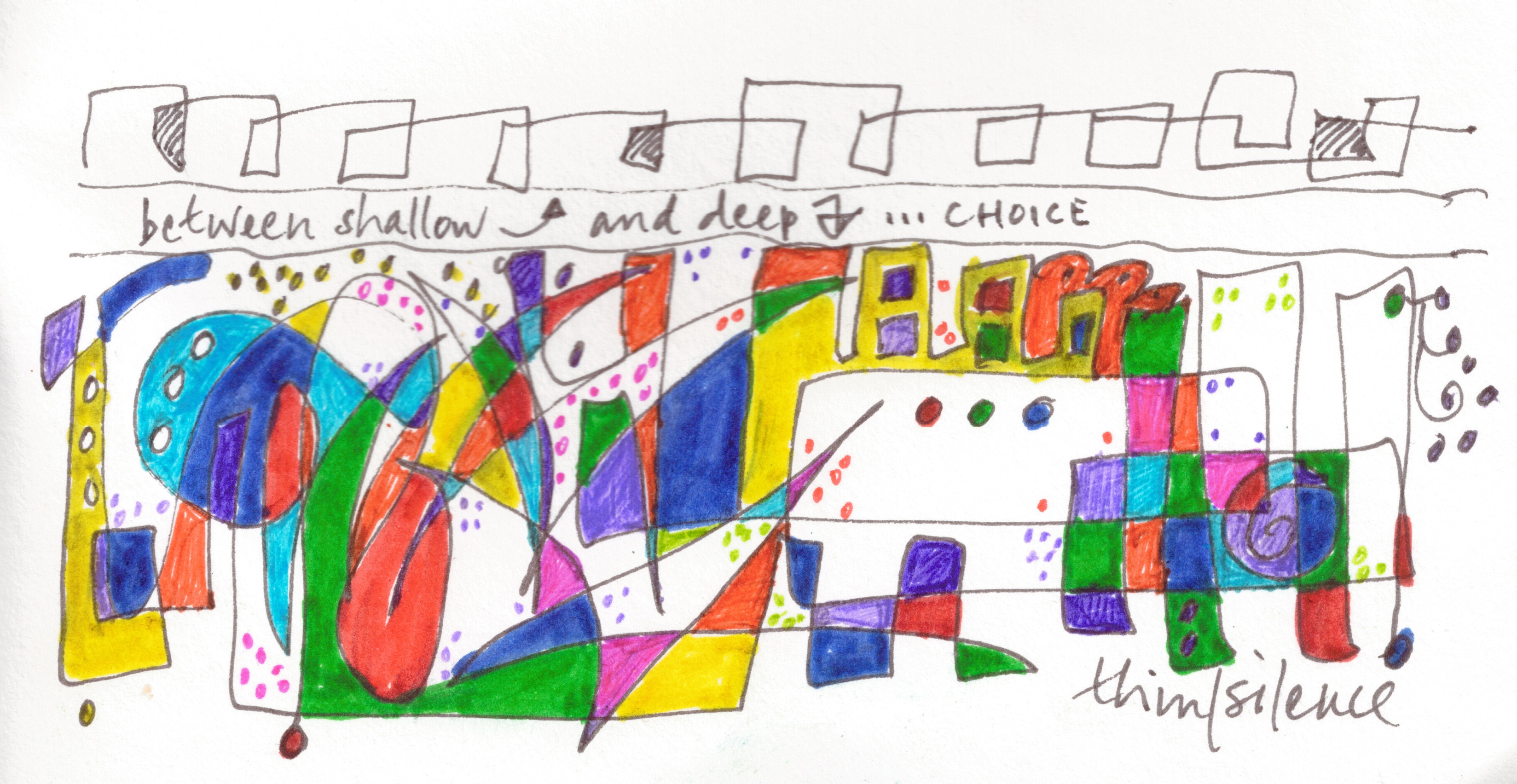
the thin line that is choice

between shallow and deep

Life is meant to be lived deeply, with passion.

A shallow life or a passionless life are not great to be around.

We’re not meant to be pushing the barriers of deep all the time – we all need time to chill – and it’s not healthy to live with adrenaline-pumping passion every moment, but I guess we’ve all met people who never get excited about anything, or the conversation which never dives beneath the surface of whatever is being talked about.

A little bit of detail to what I’m thinking about when I use the word deep.  I mean an increasingly open mind, heart, and will – an open heart is deeper than an open mind because it’s inviting change at a deep personal level, and an open will is deeper than an open heart, because it’s actually living out what is happening to us, and practice fees us stuff even more than feeling it.

It’s no wonder Otto Scharmer identifies the battle between self and Self – who we are now and who we might become – as the primary battle of our century (individually and collectively).  It is a battle for increasing openness, and where we lose the battle the voices of doubt, cynicism, and fear grow stronger.  Think about the people you know who are not prepared to explore more, to be changed, and to act upon (or the organisation) and see if you don’t find doubt, cynicism, and fear being voiced.

As I was pondering all of this, I happened to listen to a report on BBC Radio 5 looking at the growth of cyber bullying of children.  I listened to children speaking of their own experiences and it’s hard to deny what they were on the receiving end of was closed minds, hearts, and wills, which, in the most extreme cases are extremely destructive of all concerned.

I do not want to see people as a problem to be solved but as a mystery expressed in beauty (for me, creativity, enjoyment, and generosity).  We give ourselves opportunities as we go beyond how we see and understand in this moment, to seeing through the eyes of others (Donald Miller shares how he didn’t like jazz until he saw how much someone else loved it), and we act out this greater world.

Everyday becomes a gift towards this destination of deep and passionate.

dealing with the push-back

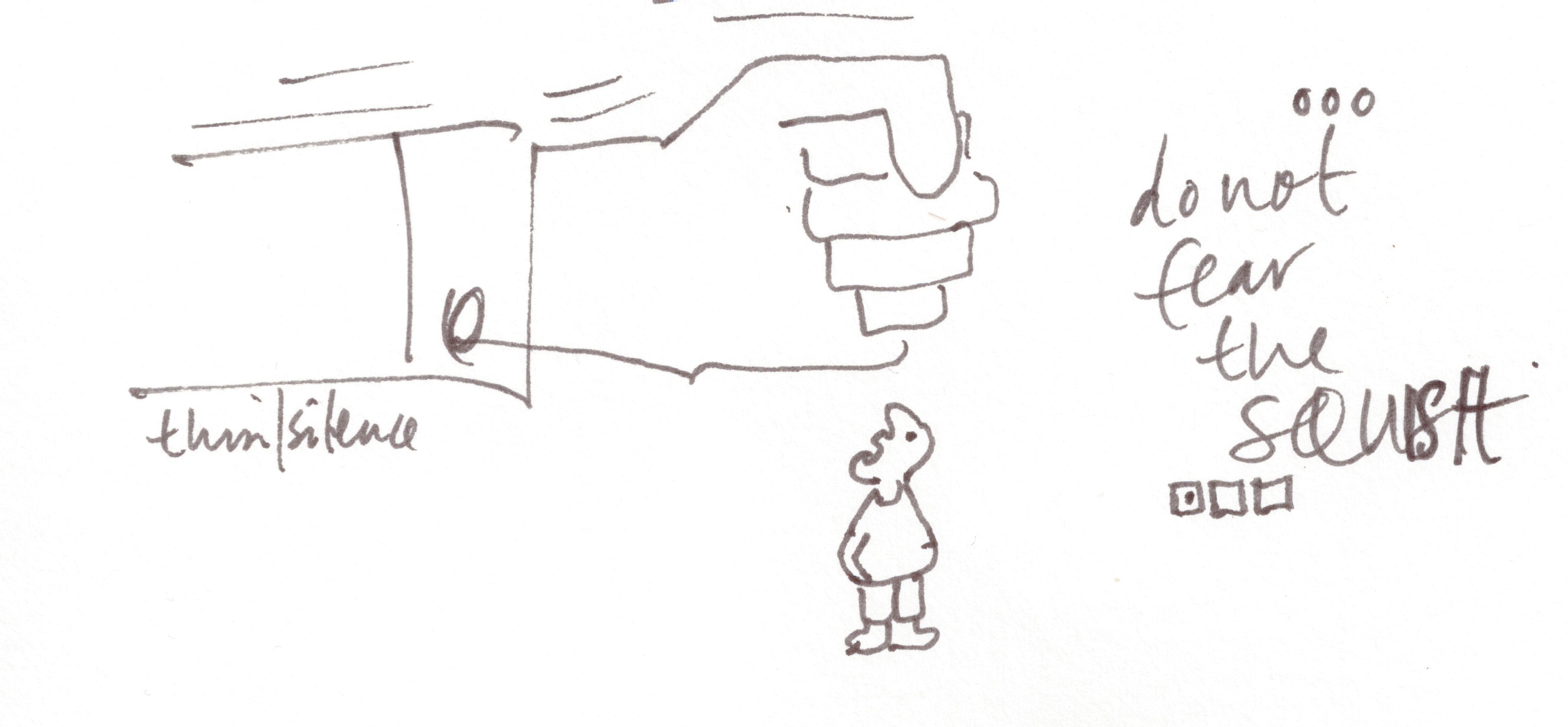
do not fear the squish

There’s something you need to know if you’re going to be exploring your bright, emerging future – all the things you’re able to do with your passions and skills.

There’s a push-back.

The push-back is the reaction you experience to going further and deeper with the purpose of your life.  It may come from outside – by pushing into your emerging future, you unknowingly challenge others whose lives are held in stasis, you make others uncomfortable in their organised rut, and, subtly, they can bring pressure on you to show their disappointment.

Or, the push-back may come from within.  You begin to doubt your ability to increasingly connect, as you’ll be invited to,  with other people, with the big world in which you live; you doubt the capacity of “the well” which holds all you need; and, you question you ability to keep doing these these things because it’s exhausting.

Let’s name these things so we can know them more.

The first is Integrity, by which I mean our increasing oneness and connectedness with others, with our world, and with our true Self – including for some, spiritual ideals and faith.

The second is Wholeness, by which I mean our capacity to love and be creative.  It’s not the same as being complete or perfect – if such states exist.  You have enough right now to set out on an amazing journey, which, when embraced bring wholeness.

The third is Perseverance, by which I mean our capacity to keep going and achieving more.  Like the marathon runner, you have honoured the small steps and found you can travel further than imagined.

None of these are set, each can extend and develop and grow.

If the push-back comes from others, it’s likely they’ve a fixed view of who they are and what they can do, or maybe don’t want to do the hard work of bringing themselves into a bigger world: possibly connection problems (integrity), a belief they don’t have enough to draw on (wholeness), and giving up too soon (perseverance).

When the push-back comes – and it will – the only solution is to push on.  You don’t know your limits or capacities because you’ve not been there yet.

Read more (some quickly assembled book suggestions, below), meet with like-minded person, connect with a group that “gets it,” do something amazing (even if it’s a small something), keep checking in – we need each other.

Anything by Seth Godin, including:
Poke the Box
The Icarus Deception

From Ken Robinson:
The Element
Finding Your Element

A little more demanding:
The Genius in All of Us by David Schenk
Creativity by Mihaly Csizsentmihalyi

time to choose

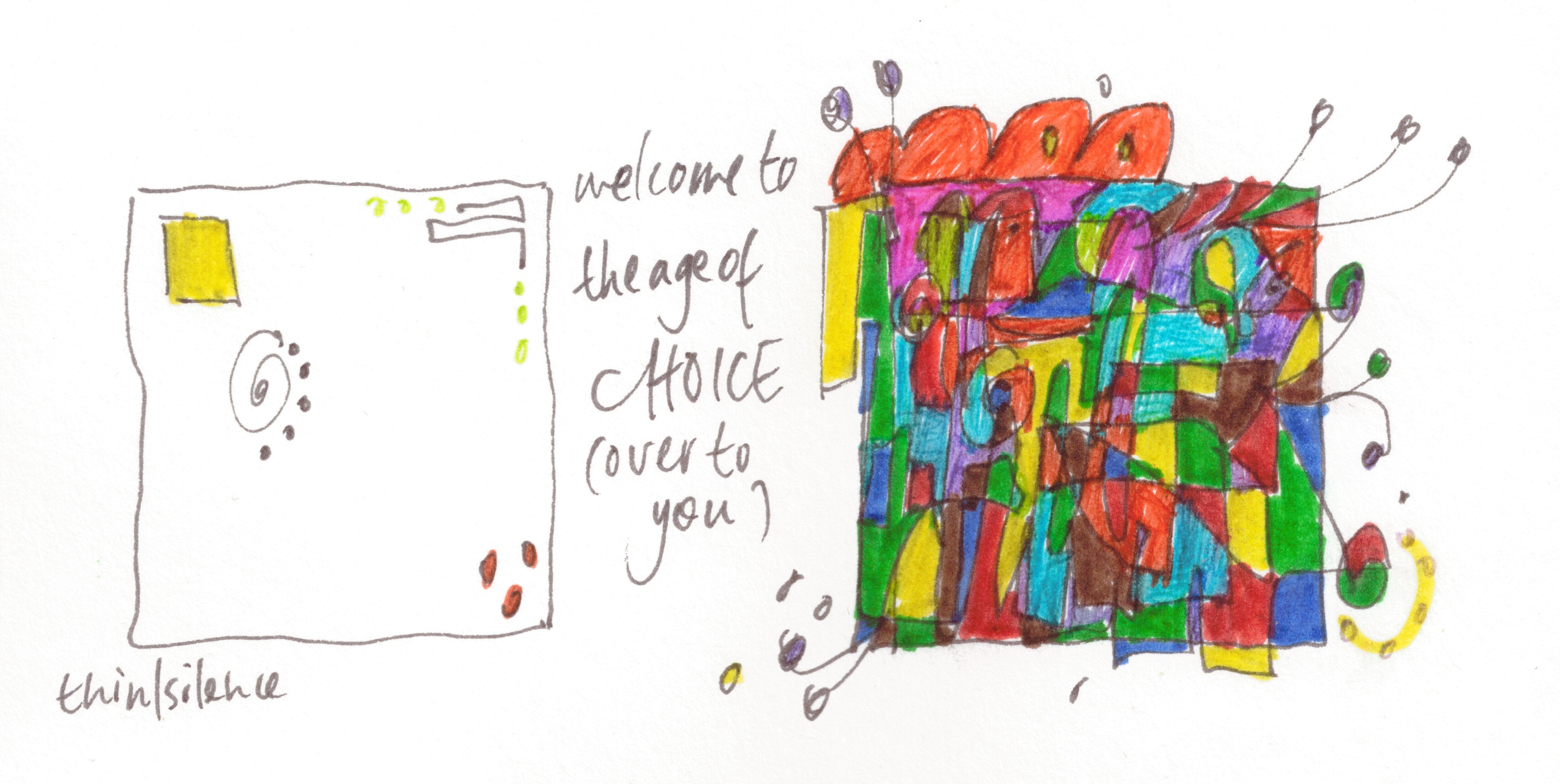
the age of choice 1

Today you get the chance to start over.

Who told you that you couldn’t?

It was probably you.

At least, it’s you buying into an industrial way of thinking – education prepares you for a life of work of producing more, cheaper, then you retire.

It used to be that a good job was one that would last thirty to forty years, but this is not how it is now.  An undergraduate was telling me it’s so hard when it comes to a future job … because there are so many things she could do.  We’re in the age of growing choice.

It’s your choice to do something amazing, something no one else can do in quite the way you do.

In the classic myths, legends, and stories, the hero must get past the the gatekeeper or guardian to progress on their quest.  The guardians of who succeeds and who doesn’t are diminishing in influence.  These are the ones who have determined whose art is important and whose isn’t.  They’ve good reason to, they need to guarantee income, but that’s not the same as encouraging great art – and it’s not to say they haven’t promoted a lot of great art along the way.

Yesterday, I mentioned a small group of people who bring their knitting to a cafe.*  They may not each start up a bespoke knitting company – or they may – but they do get to work on some great designs which excite them and thrill the people they gift them to, they enjoy one another’s company and eat great cakes, and no-one down-talks another.  I sense this group could get up to some exciting things, and their enthusiasm released in this way probably spills over into their day jobs in terms of increased energy.

It doesn’t have to be a knitting group, of course, and it doesn’t have to be a group in which everyone focuses on the same thing.  The important thing is by getting together they potentially are taking out the gatekeepers.

Who told you that you couldn’t start over and begin to do something amazing today?

It’s your choice.  You can change the inner place from which you view the world and act.

And you can begin by identifying the things which energise you – really energise you.  (Write them out, and don’t let the industrial voice tell you that you can’t do these things.)  The likelihood is you can, then find others and you’ll do even more.

(*I was checking my meet-up suggestions for different subjects and themes, and lo and behold, the knitting group’s there because I clicked Hobbies and Crafts.  If there isn’t one, start one.  And if it’s in Edinburgh, I’ll come.)

the art of generous

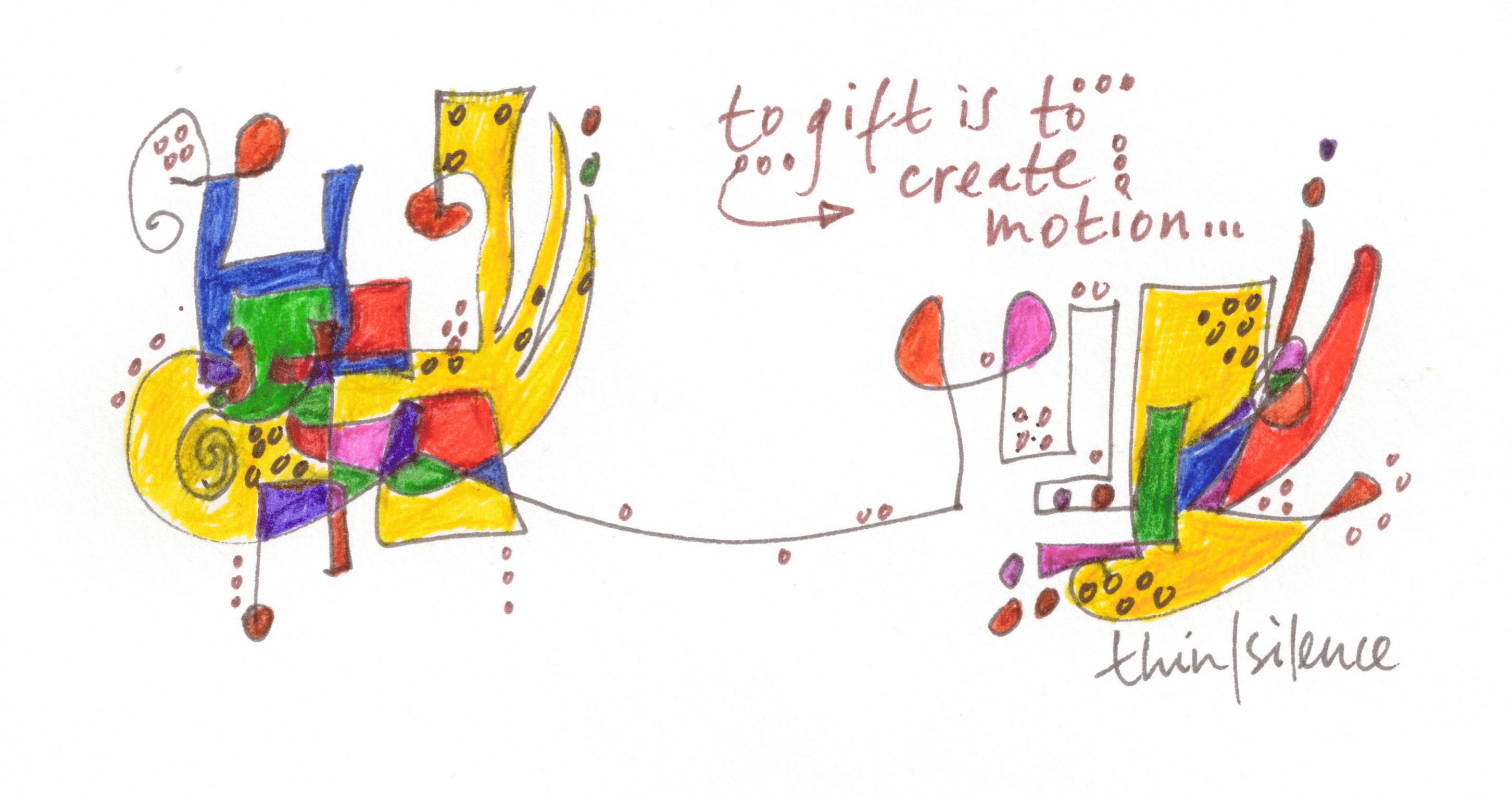
to gift is to create motion ...Gifting is one of the most powerful forces for good and for change we have in the world.

I found myself sitting in a knitting group yesterday.*  The conversation turned towards the value of the different things they were creating, how, they couldn’t turn it into a business because they wouldn’t be able to charge for the hours they poured into producing these items.  But if they made something for you, what a gift.

There’s always a risk.  If a person doesn’t appreciate just what they’re getting, they might not value the gift.

The art of gifting has two major elements.

The desire to give something of great value to another is the element we can control.  The other we can’t.   It is the willingness of another to receive the gift as just that, and to use it extravagantly.

Two further thoughts.

Whoever we are with whatever we have – we can gift another.  The person who spends more time to speak encouraging things to someone  in need is just one way.

The other thought is how we need others to create and shape this economy of giftedness – we are not self-sufficient.  Someone may try and gift something to you today.  Be ready to receive it.

When we enter this new economy, something deep within resonates – beyond believing it the right thing to do, even beyond feeling it to be right.  We are connecting with our deep Humanness.

(*I’m no knitter.  I was with a couple of others doing some crafting when we found ourselves in the knitting group’s usual meeting place and we hung around with them.)

future emerging

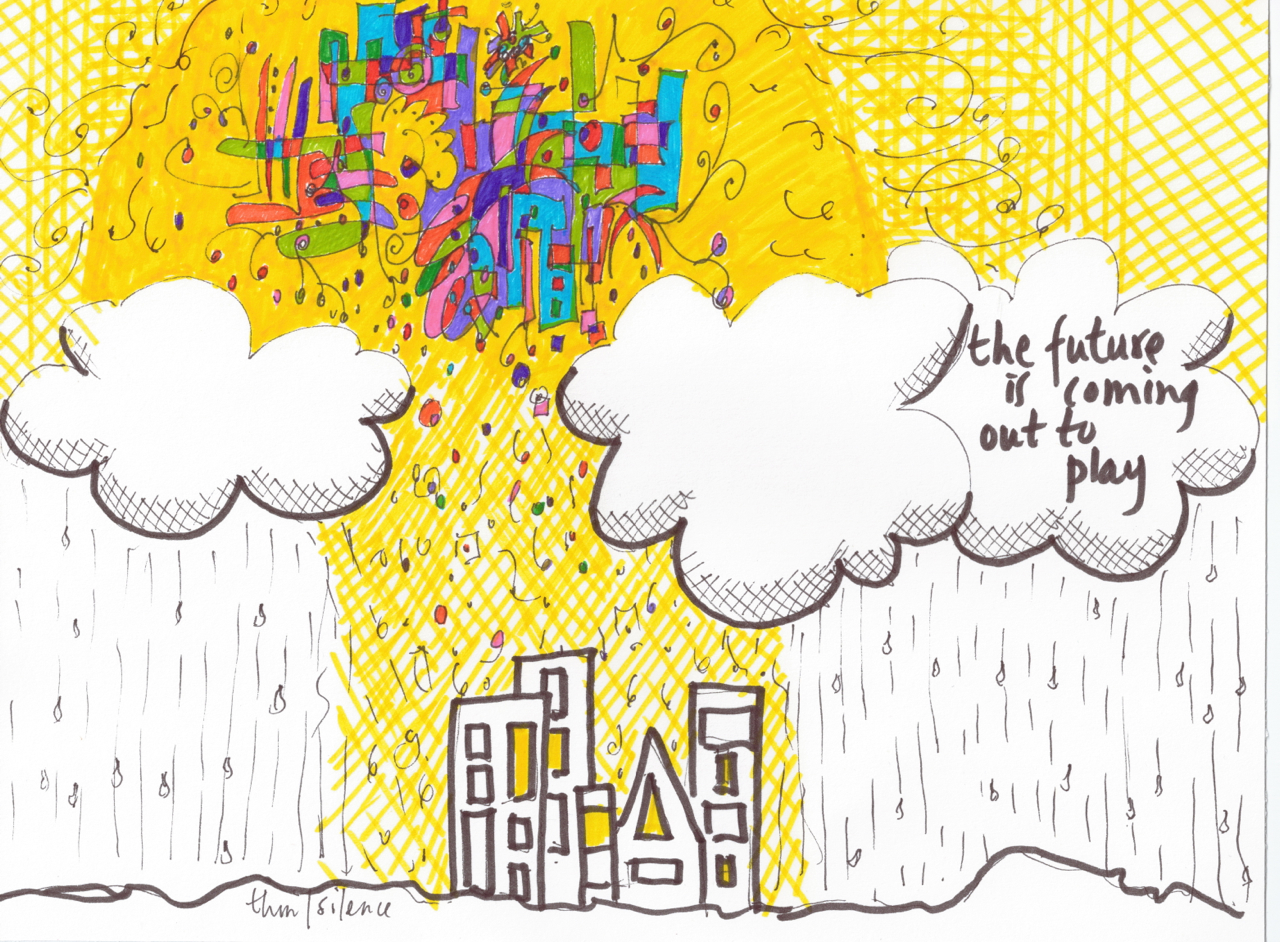
the future is coming out …(2)

To be Human is to want to make the world a better place and to feel guilty when we don’t try.

As far as we know, these thoughts and feelings are not experienced by any other creature.  It’s how things are and it’s a bitter-sweet thing.  Every day, without exception, we wrestle with this Human condition.

It causes us to take risks and to fail often.  The best leaders of movements toward a better world are those who tell us the whole story: accidental successes, numerous failures, self-doubt and sleepless nights, and the breakthroughs.  There’s no other way.  We cannot be part of making the world better without moving towards this better world ourselves.

An accidental blessing is that we happen to be  in a place and time when we’re asking what it means to be Human.  On the one hand, there are those who see pharmaceutical, technological, and genetical enhancements as the future of what it means to  be Human.   Notwithstanding what is happening in these developments, on the other hand, there are those who feel we’ve just begun to discover the unexplored depths of being Human.

These discoveries involve the more accessible-for-all opening of minds, hearts, and wills, moving us from our little worlds (what Otto Scharmer refers to as the ego-system), to a greater world (Otto Scharmer’s eco-system, from the Greek oikos – the whole house) in which we understand ourselves to be a small but significant part of something very big … and wonderful.

An article passed on to me about young entrepreneurs caught my attention with a comment about how many of these wanted to begin businesses with social good included.  Interesting.  The world is changing around us.

Your relationship with the world, with me, and with your greater Self (what you and I can be as Human) is all changing – it’s simply part of being Human.  You wake up to it every day.  Including today.

So, to offer a question offered by Seth Godin: What are you trying to change?  Why?

time to do that thing?

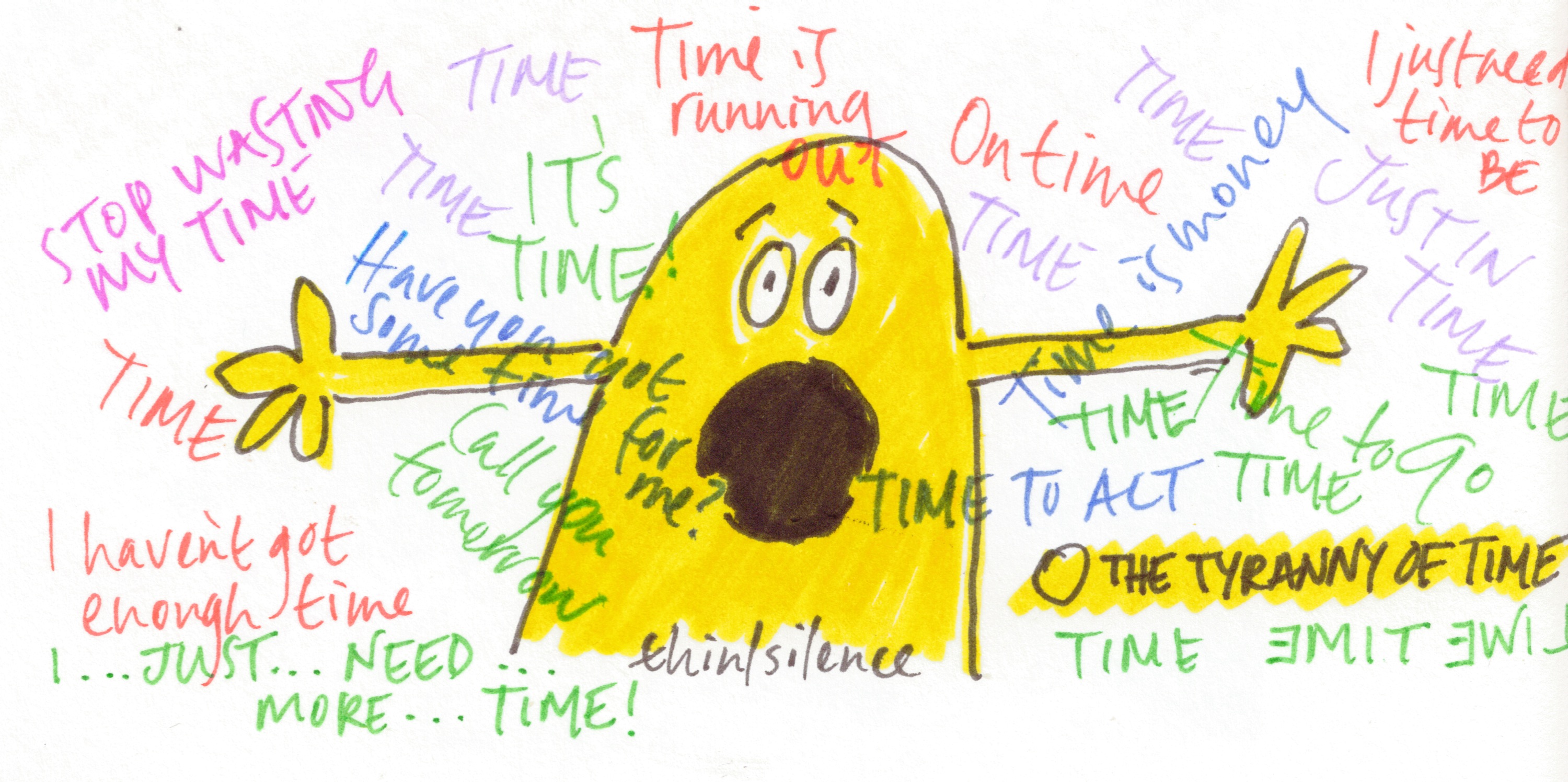
the tyrnanny of time

Significance comes with time.

Humans are the only species with a developed consciousness which allows us to know there’s a tomorrow – as far as we know.

Time changes everything.  When you can imagine there’s a tomorrow, you’ve begun to engage your creativity, you’ve seen something which doesn’t exist.  We’ve generated all manner of things as a result: clothing, housing, agriculture, banking – the list is endless – because there’s tomorrow.

And then we want to know we’ve used our time well, that our life matters, that it’s made a difference.  It’s been pointed out that Humans want autonomy, to master skills, and have a purpose and meaning beyond themselves.

A good place to start living significantly is to take the skills we have – be they thinking, relational, actioning, or influencing skills – together with the thing which sets our pulse racing, and zoom it – take it further, abstract it, innovate it.

You still have time.  If you begin right now, you can shape tomorrow.

Seth Godin suggests there are two important things when it comes to time and doing something significant: turn up on time, and cherish the time of others.  Good advice because it highlights the best time of all is the time shared with others.


scary dreams

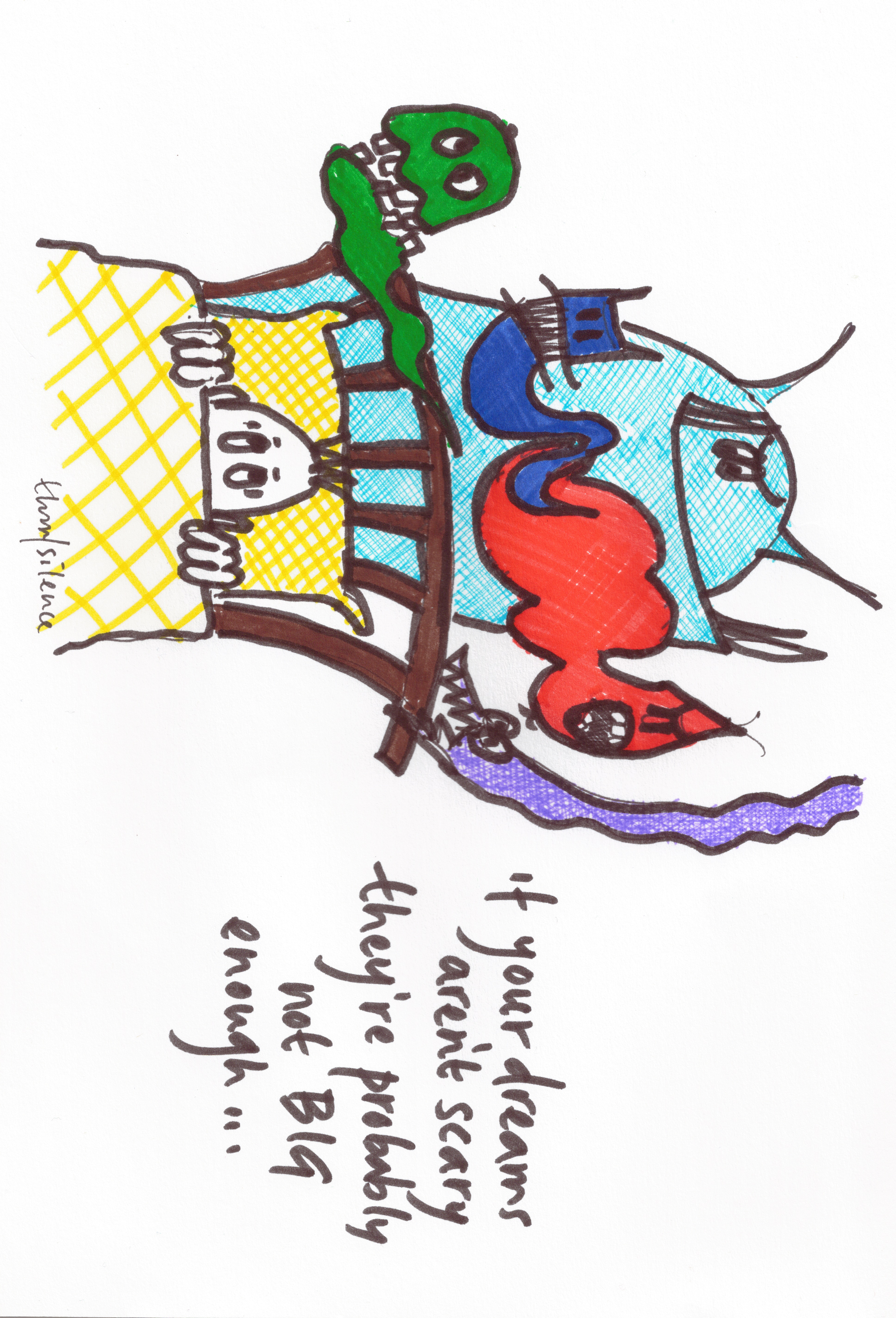
if your dreams aren't scary ...

Last night I struggled to get to sleep, instead playing over in my mind obstacles and problems to something I’m working on.

(When Old Lizard Brain* gets to work we more readily imagine failure than we do success.)

It’s simply the reality of working on something bigger than me.  If you’re experiencing this, it’s more than likely telling you you’re on the right track, something having a purpose beyond you.

Your first reaction can be to go back to the same old same old – the thing which doesn’t keep you awake in the night or stretches you painfully during the day.

The problem is, you’ve seen the future, and to give up on this now is to give up on what it means to be you.  By imagining this better future, you’ve already been changed, the better world you’ve imagined makes you feel more alive.

Better to embrace the fear.

Find some way of expressing it – someone you can speak your fears out to, or some way of journalling it – perceptions change dramatically when we can do this.  And dream about the difference you’re going to make.

Daily, find ways of reconnecting to the best you – the really energised you; be grateful for who and what you have in your life; and, turn up, doing the small things which are step-by-step crucial to delivering what you’re working on.

You are the person to do this, you have all you need, and, you can do way more than you’ve so far imagined because you’ve already come further than you thought possible.

Old Lizard Brain is the oldest part of our brain, reacting most quickly to perceived threats – the fight or flight part of the brain.)