Plot-driven stories put major turning points, especially the inciting incident, beyond the character’s control … Character-driven stories do the opposite. They put major events in the character’s hands.* Robert McKee
Perhaps the best strategy for lottery tickets is not to buy one. Your odds go up when you do useful and remarkable work for people who care.** Seth Godin
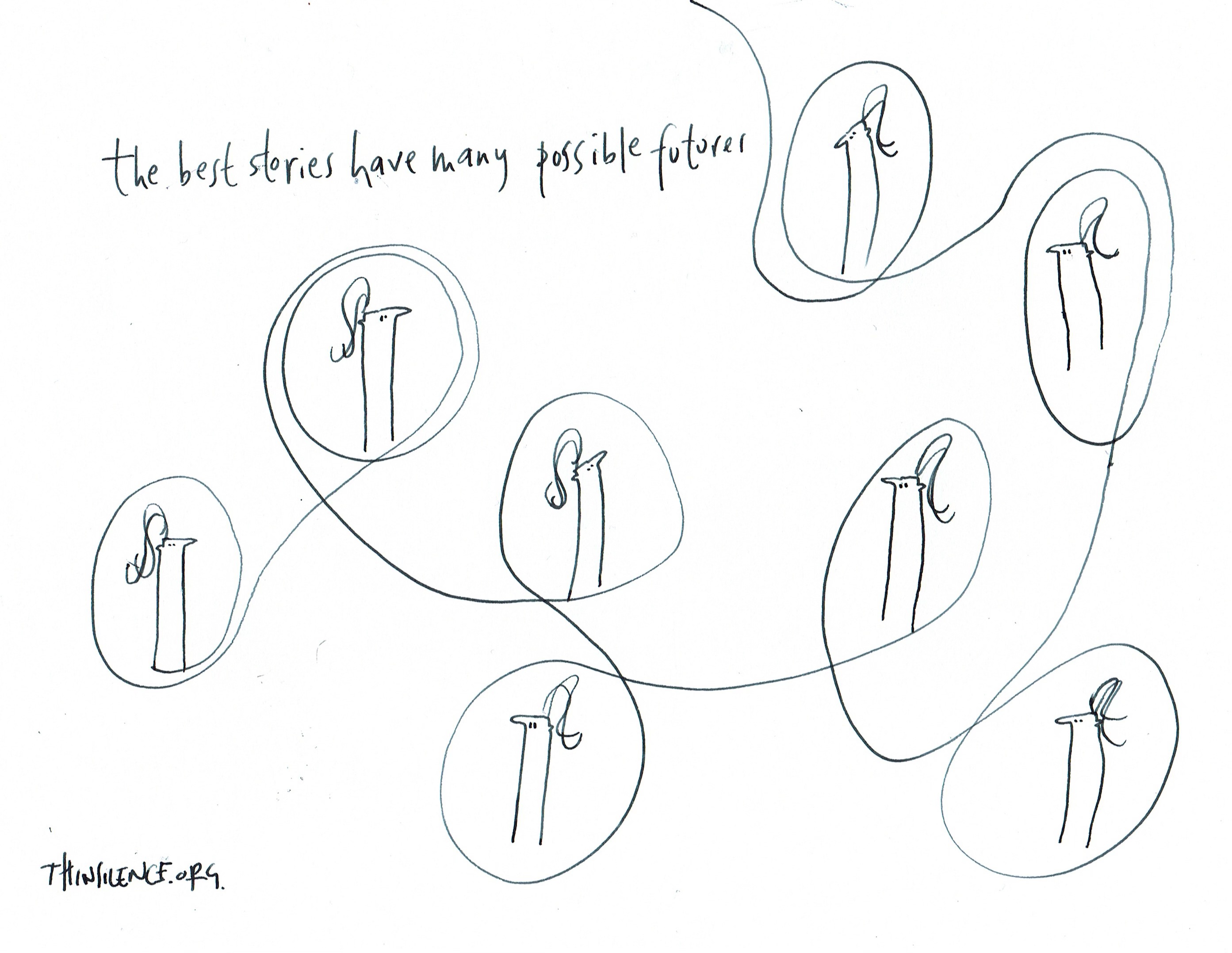
In reality, our stories are a mix of the plot-driven and character-driven, yet what they hold in common is the possibility of bringing and developing our best self.
Marcus Aurelius shares some habits he found to be helpful: 1. Accept only what is true. 2. Work for the common good. 3. Match our needs and wants with what is in our control. 4. Embrace what nature has in story for us.^
The apostle Paul adds to these with some personal virtues that aided him in imprisonment: Humility, gentleness, patience, Forbearance, and love.^^
From the disparity between the immensity of the possible and the smallness of the human being there springs the torment and the energy of the flâneur. Persecuted by frustration, he is sentenced to a sort of perpetual motion.* Federico Castigliano
Why shouldn’t an anonymous career spent quietly helping a few people get to qualify as a meaningful way to spend one’s time? Why shouldn’t an absorbing conversation, an act of kindness, or an exhilarating hike get to count. Why adopt a definition [of achievement] that rules such things out?** Oliver Burkeman
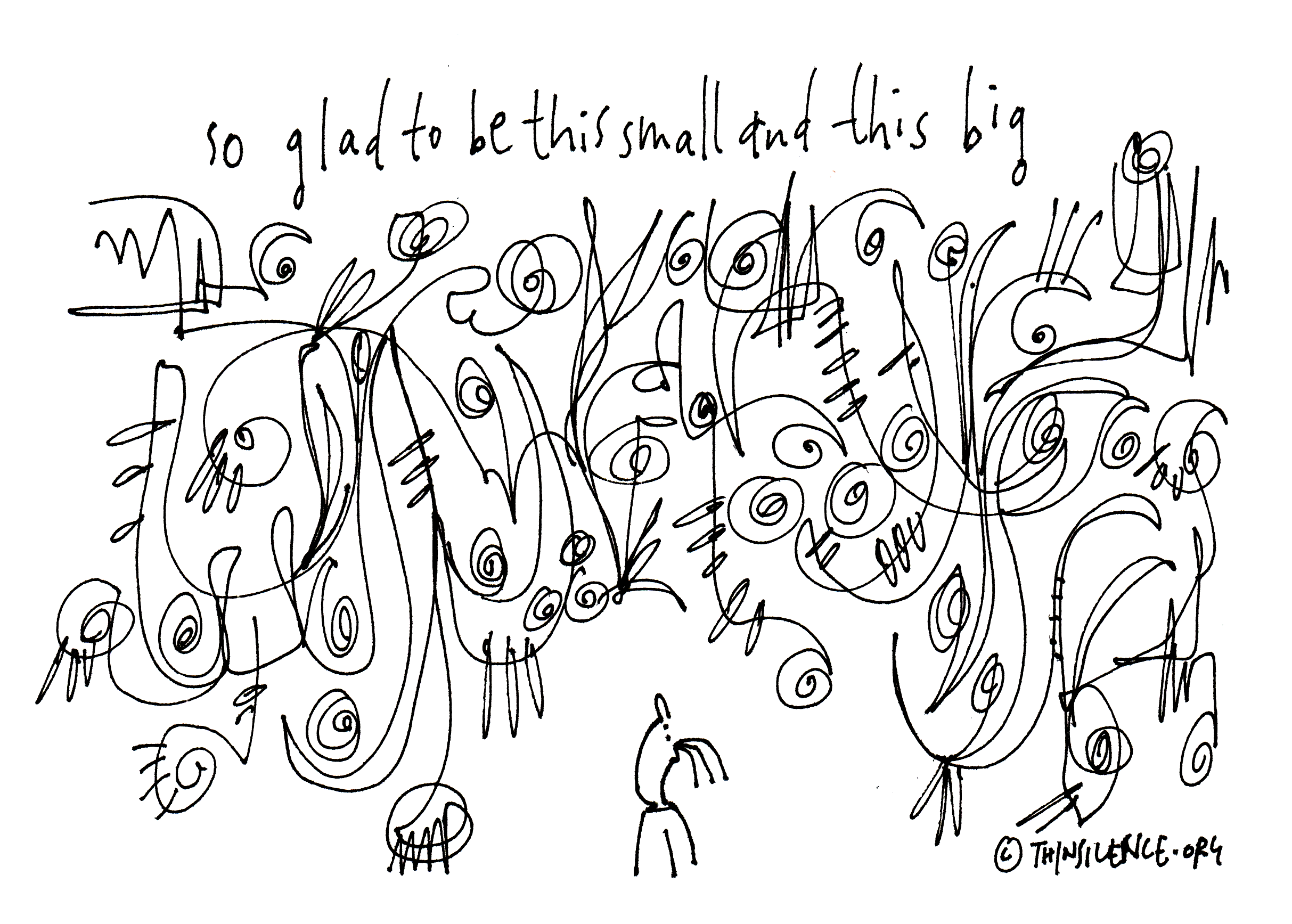
We may never achieve “great” things – As others see them, We may not accomplish everything we want, We may never finish the “to do” list or empty the inbox – And all of this is okay, the reality of our smallness and finiteness.
Whilst the spirit of the flâneur and the flâneuse illustrates the importance of wandering and slowness, openness and wonder, curiosity and questioning, this doesn’t have to result in persecution and frustration, Rather, in embracing rather than fighting our finitude, we may ease into the meaningful and satisfying life that awaits us.
Movement gets us unstuck. It restores agency by giving us a feeling we’re acting on our situation.* Bruce Feiler
although it may appear paradoxical, in order to acquire a profound view of things, you most first of all move randomly** Federico Castigliano
Keep moving; Against stuckness, Stand up, turn around, or go for a walk, Have a doodle pad by your writing, Open a book for a page or three, Have a conversation with someone.
To your “steps” add randomness, Welcome nonlinearity, And make the steps smaller and allow them to be slower: A long time is not the same as never.^
Move with randomness, smallness, time, and keep things simple: ‘How do you do it?’ said night ‘How do you wake up and shine?’ ‘I keep it simple,’ said light ‘One day at a time’^^
noun: hello; plural noun: hellos; noun: hallo; plural noun: hallos; noun: hullo; plural noun: hullos used as a greeting or to express surprise
To meet with someone – whether we know them or not – is an occasion for surprise, They are, as my friend Alex reminds me, A mystery wrapped in a question, Always, So enjoy.
A daemon is a calling, obsession, a source of lasting and sometimes manic energy … when you are looking for a vocation, you are looking for a daemon … You are trying to find that tension or problem that arouses greatness of moral, spiritual and relational energy.* David Brooks
The fairy godmother replied that true magic is to help each thing become its best and most free self.** Rebecca Solnit
Herminia Ibarra suggests that when it comes to who we want to become, we ought to: Test and learn, not plan and implement.^
Don’t rush into deciding “This is it!” nor believe that you are stuck in who you are where you are, It’s okay, cut yourself some slack.
Then you may begin to notice your truest energy, wrapped around the gloriously inscrutable problem inviting your attention and focus.
We may want it to be swish, but the most real and meaningful things are more likely full of lostness, incompetence, failure, and messiness before the imperfect beautiful emerges.
We may think to put this off, but as Oliver Burkeman suggests, there is a difference between working towards sanity and “working from sanity”^^ – The place and time is here and now.
Free and alone in the maze of the city, the flâneur craves a revelation that might change his life and destiny.* Federico Castigliano
Spray lifts from the coast Who loves truly lives Who lives loves most And most of all, forgives** Lemn Sissay
The flâneur and flâneuse practice their seeing towards change; We do not require their city nor Lemn Sissay’s coastline to begin, It is not our geography, but our noticing that leads more deeply into something more, to love what we see, A love able to forgive where necessary – Whom and where and what – Especially ourselves, That love will lead us into an unfathomable life.
You pick something you genuinely care about, and then, for at least a few minutes – a quarter of an hour, say – you do some of it. Today. It really is that simple.^
*Federico Castigliano’s Flâneur; **Lemn SIssay’s let the light pour in; ^Oliver Burkeman’s Meditation For Mortals.
You must be logged in to post a comment.