The conversation

We need at every stage in our journey through work, to be in conversation with our desire for something suited to us and our individual natures.*
David Whyte

the will to be oneself is heroism**
José Ortega y Gasset

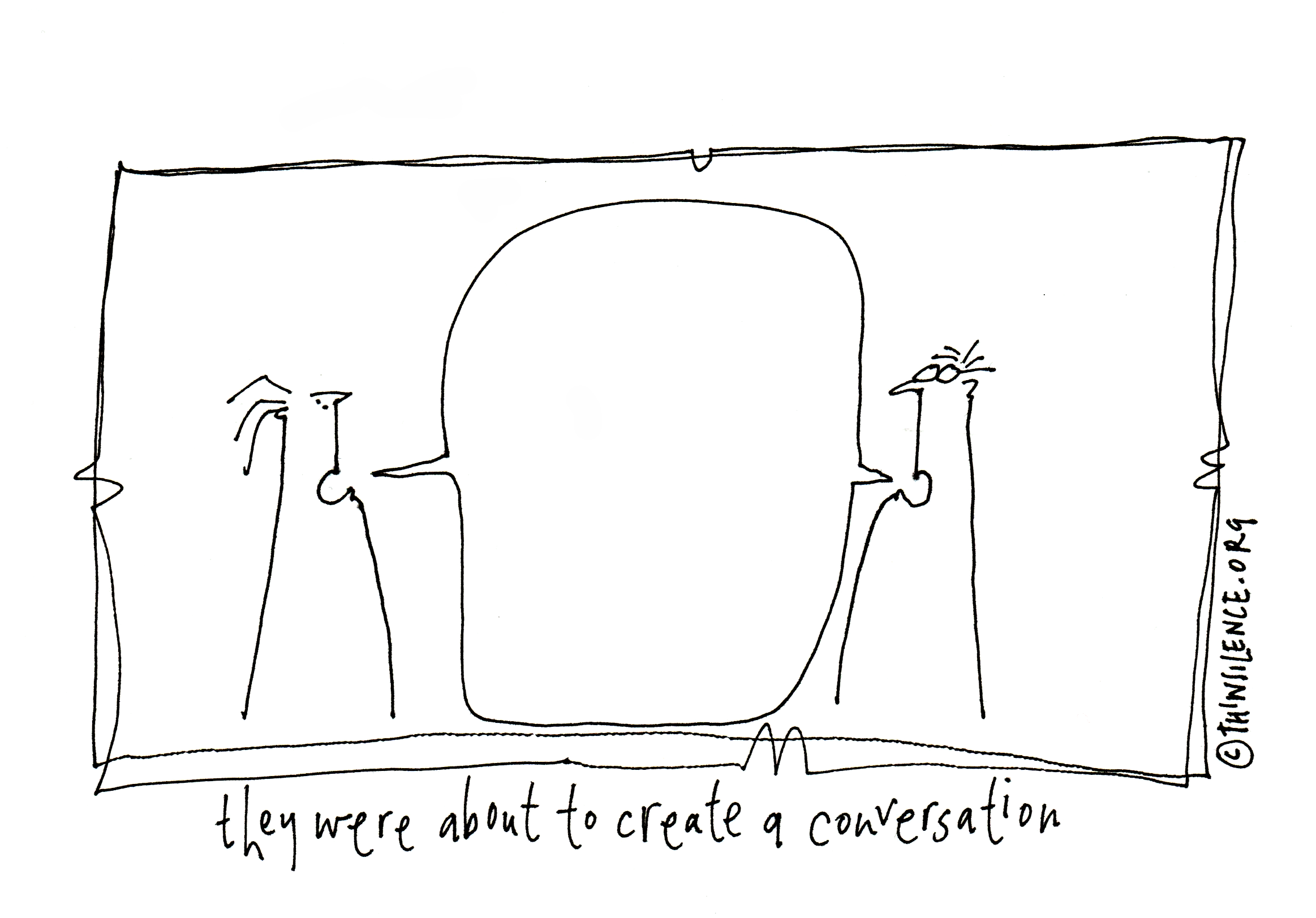
My work is a conversation
between myself and another towards that person developing
the most important conversation of all –
The one they will have with themselves every day.

In the 1970s, Julia Cameron introduced us to morning pages for this purpose,
A way to be present to oneself and the day;
An updating of journaling and meditation and presence –
Practices wrapped in religions for thousands of years.

At the heart of this conversation we have with ourselves, we are exploring
our identity, resilience, creativity,
Out of which flows the possibility of a life-changing conversation
with another.

When you find what you’re meant to do, you do it.^

*David White’s Crossing the Unknown Sea;
**Joseph Campbell’s The Hero’s Journey;
^Ryan Holiday’s Discipline is Destiny.
Making good progress

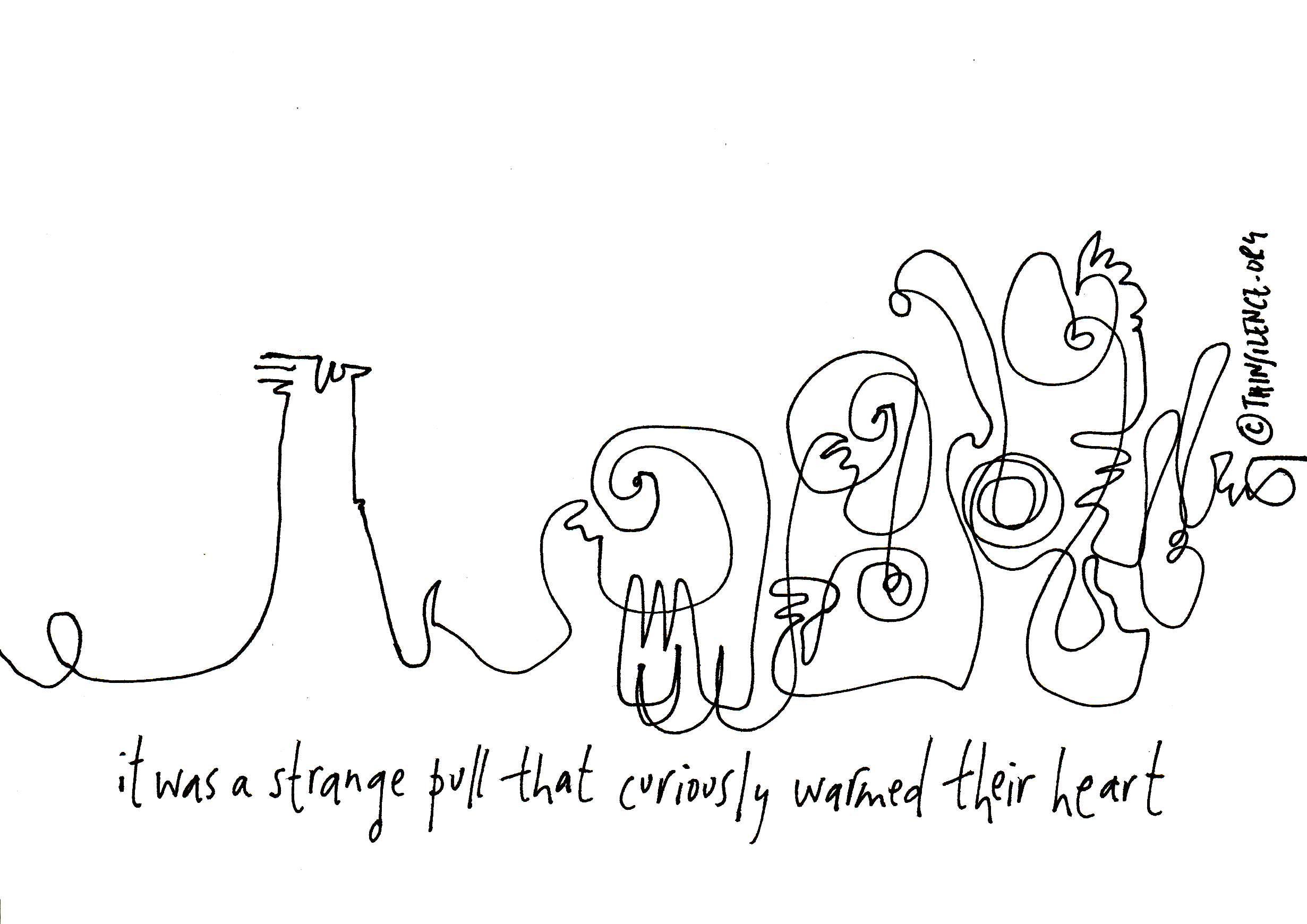
Let yourself be silently drawn by the strange pull of what you really love. It will not lead you astray.*
Rumi

The desire itself translated step by step, day by day, into action is enough to propel us enormous distances.**
David Whyte

There are plenty of things around to hinder our progress –
Failure can do it, success too,
Fear or feeling lost,
Things happening in other parts of our lives,
A loss of motivation or inspiration –
So we must reacquaint ourselves with what matters most to us,
To what Rumi named our strange pull,
But it will require nuance,
Lots of small steps we can pick up on
and replicate, for today and for tomorrow,
And we’ll keep moving even when we don’t feel like it –
Turning up, putting the time in, trusting our ritual –
Like sowing seeds,
Believing in the harvest.

*Elle Luna’s The Crossroads of Should and Must;
**David Whyte’s Crossing the Unknown Sea.

Just a doodle 144

It is interesting to ask: what are the limits you have set for your life?  Where are the lines of those limits?  Why do you think you cannot go beyond them?  How real are they?  Did you construct the  limits out of fear and anxiety? … The awakening of the beauty of your creativity can totally change the way you view limits.*
John O’Donohue


*John O’Donohue’s Divine Beauty.

Asking questions

Modern biology has shown that each living creature is locked within his specific environment and is unable to break out of it. For all that man may occupy an exceptional position, for all that he may be unusually receptive to the world, and that the world itself may be his environment – still, who can say that beyond this world a super-world does not exist?*
Viktor Frankl

Have patience with everything unresolved in your heart,
and try to love the questions themselves
as if they were locked rooms
or books written in a very foreign language.

Do not search for the answers, which could not be given to you now,
because you would not be able to live them.
And the point is to live everything.
Live the questions now.
Perhaps then, someday far in the future,
you will gradually,
without even noticing it, live your way into the answer.**

Rainer Maria Rilke

What are your questions?
The ones that you have no answer for as yet?
Do you try to ignore them?
Or are you walking into them?
Who are you speaking with?
What are you reading?
What are you learning?
What are you starting?
What are you finishing, or ending?
What are you gathering up along the way?
How are you more selfless?
More grateful?
Wiser?
Do you want the questions to end?
Or life to continue?

*Viktor Frankl’s The Doctor and the Soul;
**The Northumbria Community‘s Morning Prayer: Day 11.

What mustn’t you forget?

Sankofa is a term in Twi, a dialect of the Akan language in Ghana. It means “go back and get it.”*
Seth Godin

There was a daimon in me, and in the end its presence proved decisive … I had to hasten on, to catch up with my vision. Since my contemporaries, understandably, could not perceive my vision, they saw only a fool rushing ahead.**
Carl Jung

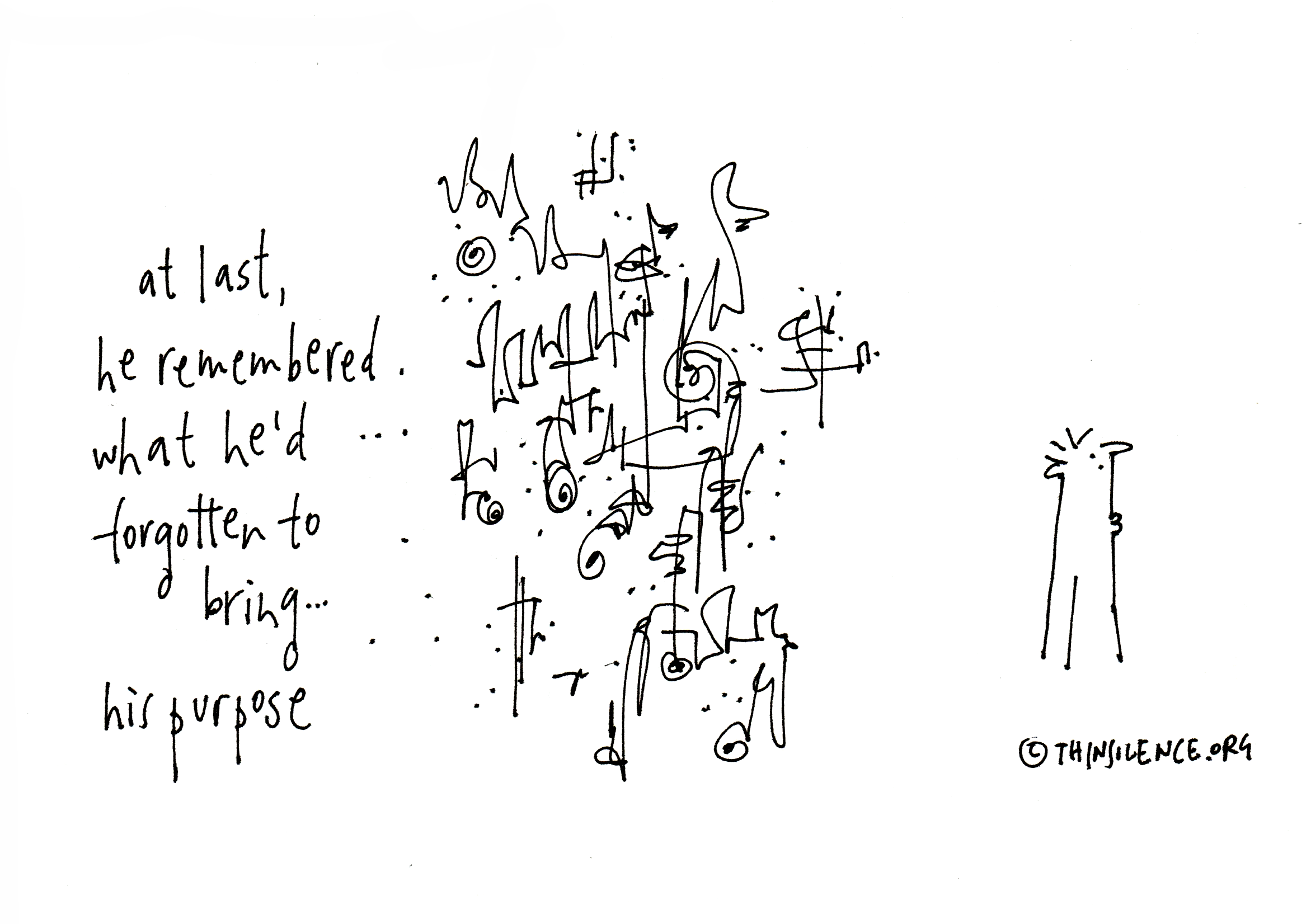
I always forget something when I go on a trip or a journey,
But fortunately the kind of thing I can get by without or replace;
What I can’t get by without, or find some substitute for, is
my purpose –
I’ve got to take it everywhere, so if I forget it for a moment,
Please excuse me while I go back and get it.

*Seth Godin’s The Song of Significance;
**Victor Strecher’s Life on Purpose.

One arm, one leg, one nod of the head …

When you see the limit not as a continuing barrier, but as a threshold, you are already beyond.*
John O’Donohue

I suggest that in the creative transcendent experience, we are exploring both the outer world beyond ourselves and the inner world of our minds.**
Alan Lightman

Keep moving,
Keep exploring,
Outside of the lines that you have accepted
or have set for yourself;
In this incredible universe, the end of something
is the beginning of something more:
the universe will always be much richer
than our ability to understand it^

And there you have it, if you ever wondered about
what lies unrevealed within you,
Sculptured in unremarkable clay, you are an expression of
a rich, unknowable cosmos,
And though you’ll never know everything about
what’s out there and in here, your exploring will
certainly reward you, as Dorothy exhorts:
If you walk far enough,
we shall sometime come to
someplace.^^

*John O’Donohue’s Divine Beauty;
**Alan Lightman’s The Transcendent Brain;
^Carl Sagan, from Maria Popova’s The Marginalian blog: Nick Cave on Music, Mystery, and the Relationship Between Vulnerability and Freedom;
^^Seth Godin’s The Song of Significance;

Bespoke imagination

The human mind cannot be programmed by a computer. Our imagination is our greatest hope for survival.*
Keith Haring

The who-ness of someone can never be finally named, known, claimed, controlled or predicted.**
John O’Donohue

Imagination isn’t some off-the-peg human characteristic
some have while others don’t;
It is how we all engage with and
navigate existence –
The product of our talents and values and passions,
But also our characters and environments.

Feeding these different parts of who we are alters
our “who-ness” –
Synonymous with imagination:
There are no two imaginations alike.

*Keith Haring’s Keith Haring Journals;
**John O’Donohue’s Divine Beauty.