


If it were not imagined
It could not be made
Therefore imagination
Must not be afraid*
Lemn Sissay
I’m good for something, so what is it?**
Vincent van Gogh
If we’re involved in doing something, we’ve
already imagined it –
Going to the shops, cutting the grass, what
we’ll be eating later –
For most of us, a little picture will have appeared;
Beyond the everyday, imagination enables us to
determine our True Self and what our
contribution will be –
Sometimes others push our imaginations, or perhaps
we notice something that we feel compelled
to act upon –
By definition,
a life task is something
your life is asking of you …^ –
Everyone has a different imagination to bring
into play, something you can do and that
you enjoy:
You have to like your work.^^
Of course,
It is possible to imagine unhelpful, negative, and
destructive things, or become distracted by the everyday,
By the status quo and normality, so we need to intentionally
grow and develop our imaginations –
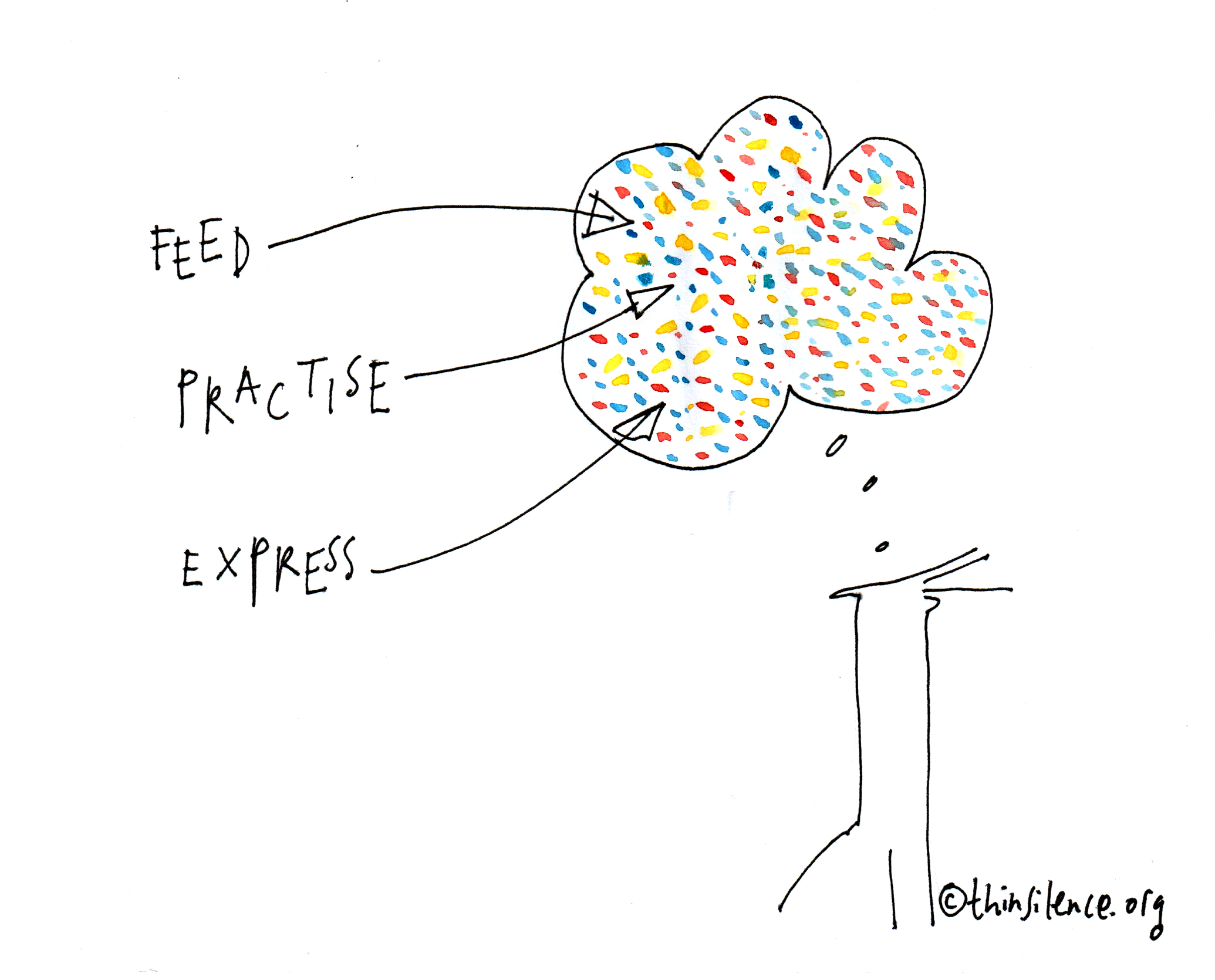
A good, wholesome diet,*^
Then to playfully practise, to fail and learn,^*
Before giving full expression to what we have envisaged.
*Lemn Sissay’s let the light pour in;
**Davie Epstein’s Range;
^Oliver Burkeman’s Meditation For Mortals;
^^Gabe Anderson‘s You Have to Like Your Work;
*^What and who are we reading, watching, listening to?;
^*Remembering that we imagine something perfect, but in reality this can never be reproduced.

Each of us is responsible for finding our own reason to live.*
Bruce Feiler
True choice is a dilemma … A choice between two irreconcilable goods, or the lesser of two evils.**
Robert McKee
How to choose? –
To go for one option is to dismiss the other or others,
But what we swap choice for is
intensity of heart:
When you commit you deepen presence.
Though your choice narrows
the range of possibility now open to you,
it increases the intensity of chosen possibility.^
Wholeheartedness –
Carlos Castenedas passes on ancient wisdom when he records,
Does this path have a heart? If it does, the path is good;
if it doesn’t, it is of no use.
Both paths lead nowhere; but one has a heart,
the other doesn’t … One makes you strong;
the other weakens you.^^
My own experience, after
choosing to focus on helping others
to know their heart, is that more choices follow,
A wholehearted life keeps on bringing them to us.
*Bruce Feiler’s Life Is In the Transitions;
**Robert McKee‘s newsletter: The Beauty of Character Dilemma;
^John O’Donohoe’s Eternal Echoes;
^^Carlos Castenedas’ The Teachings of Don Juan.
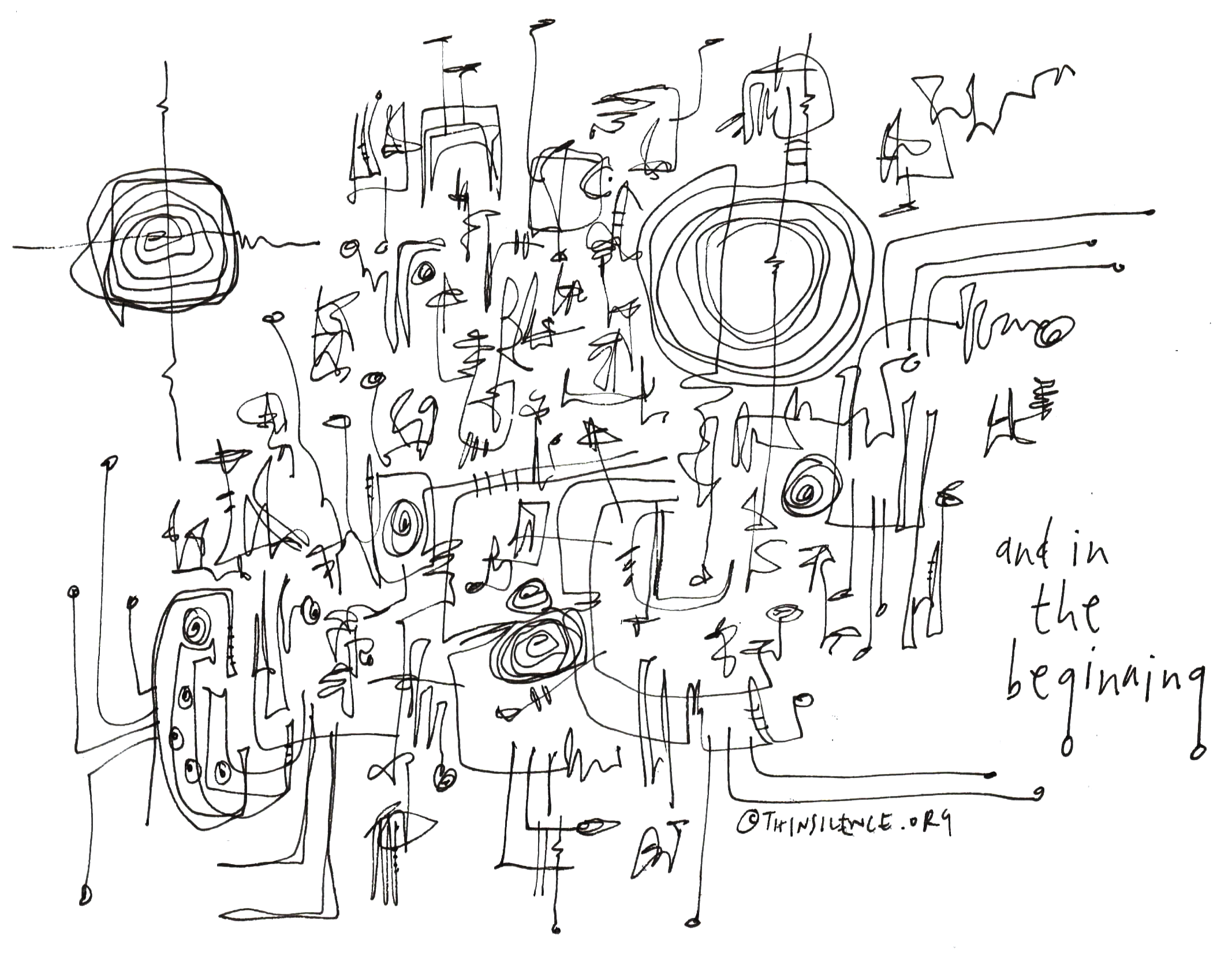
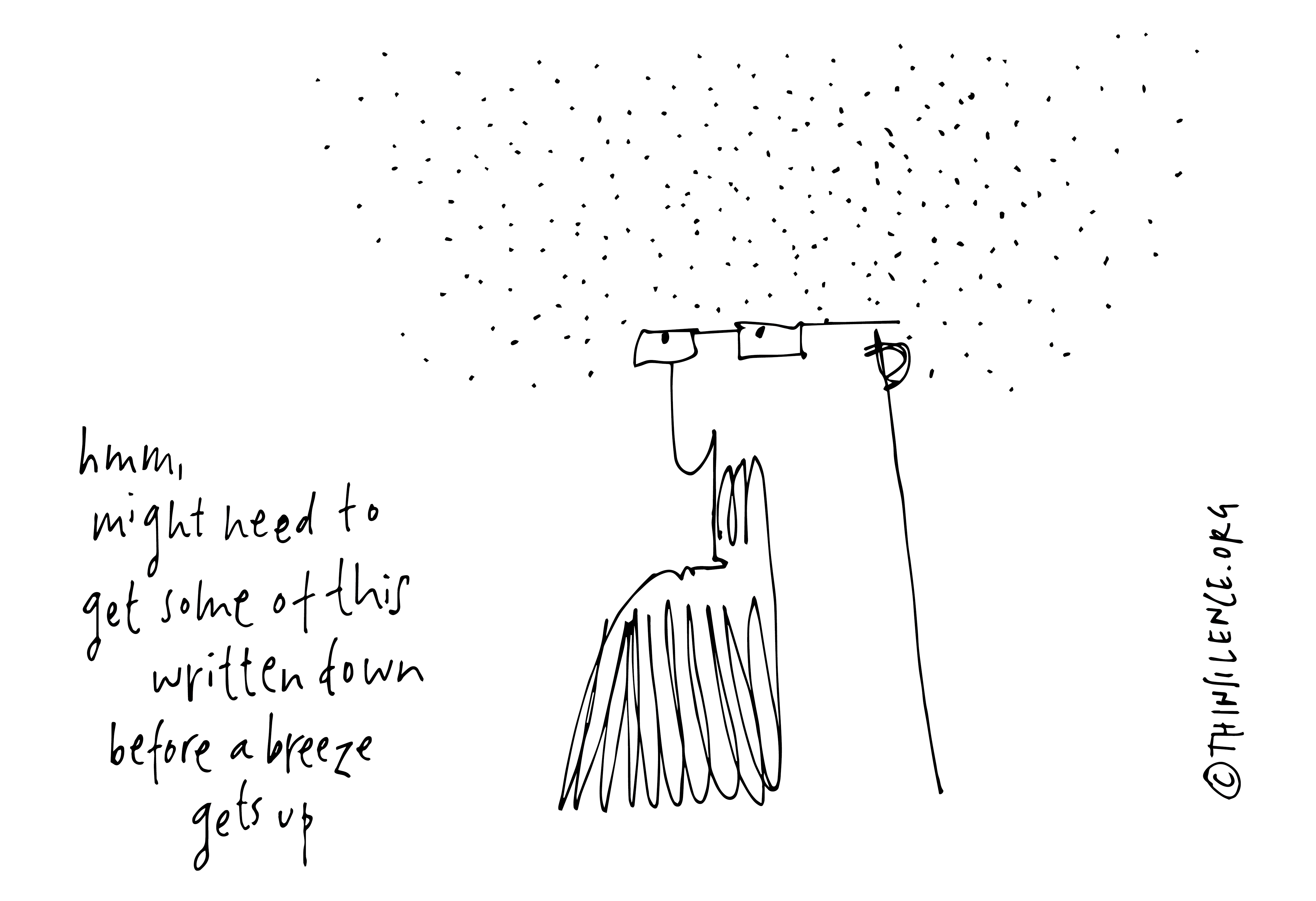
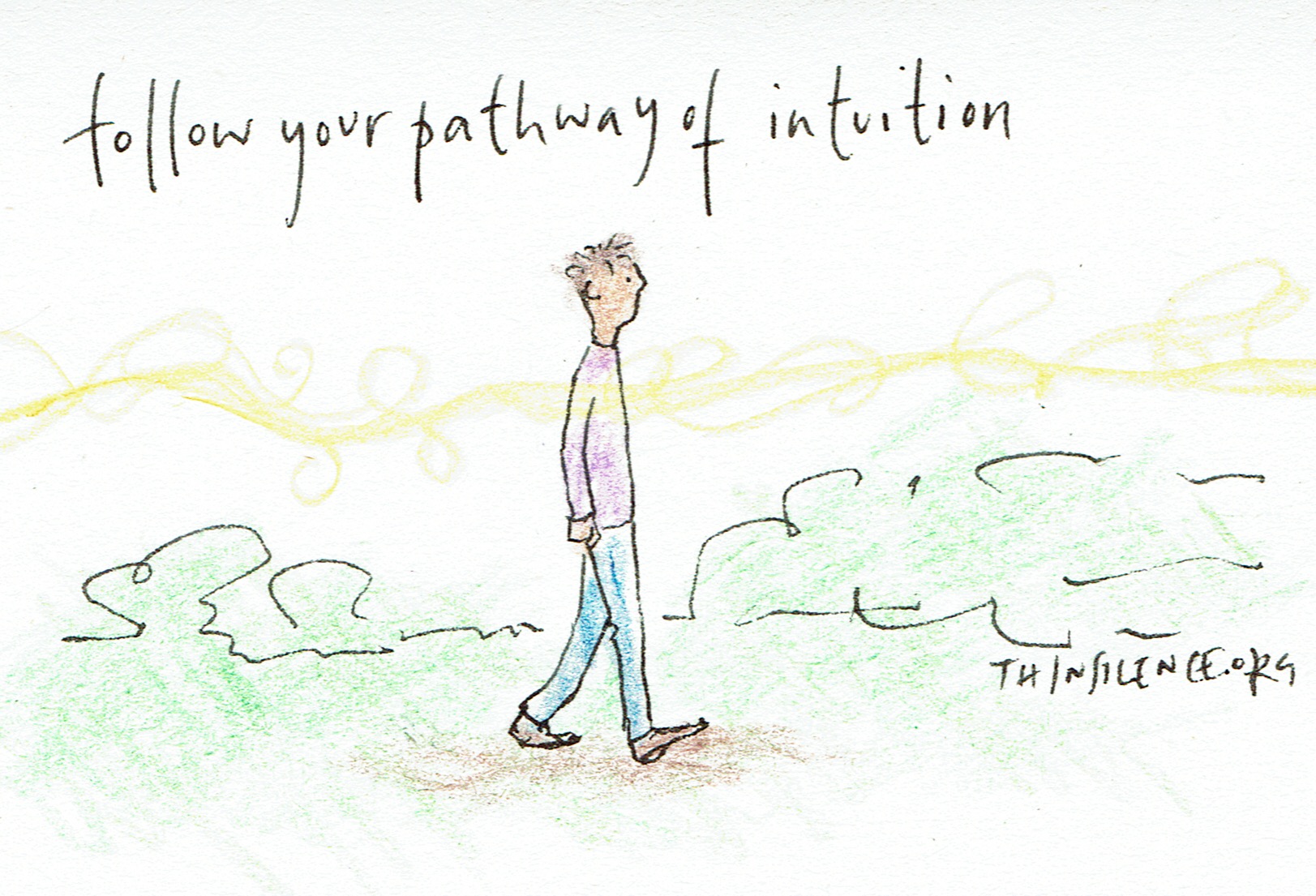
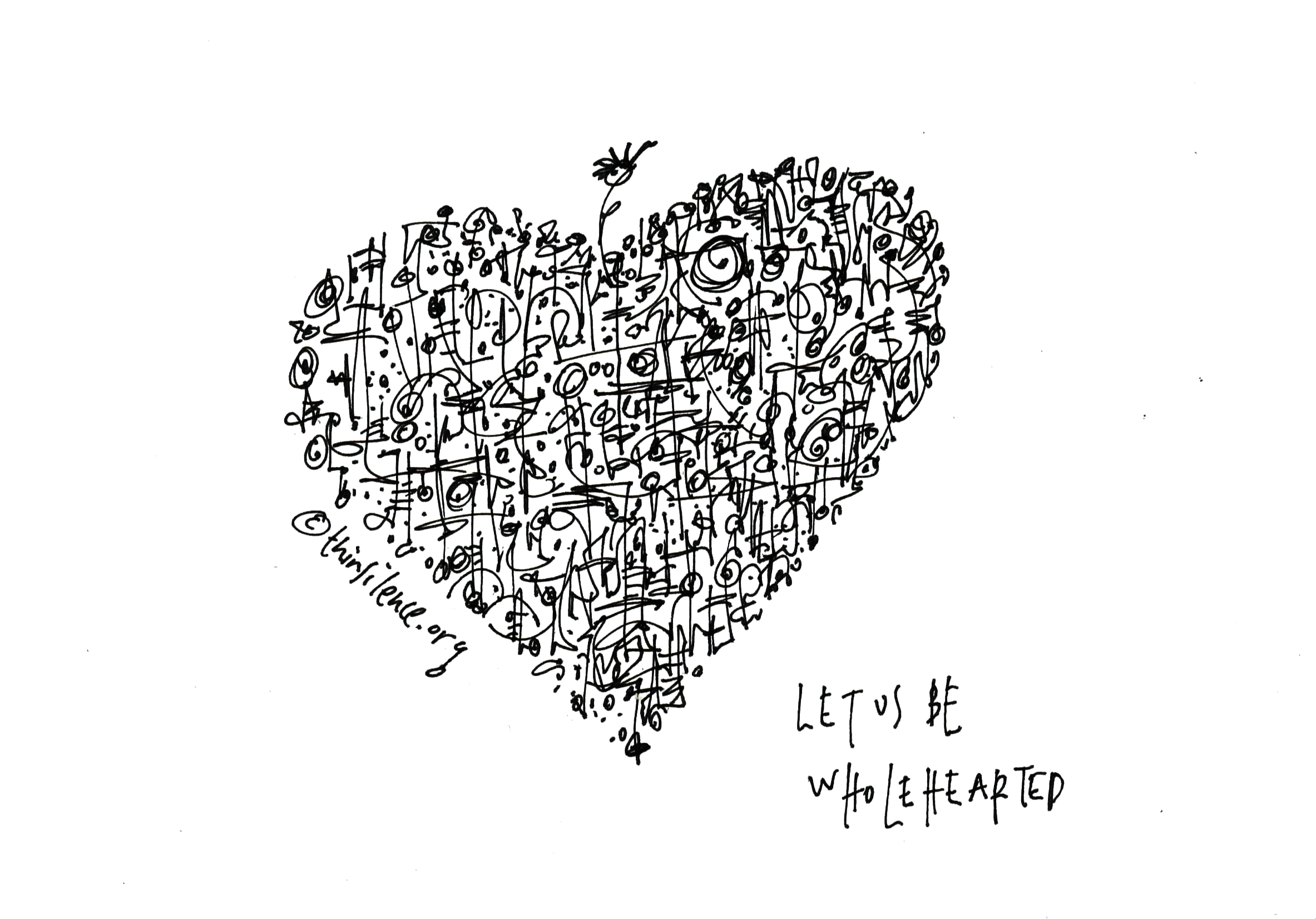
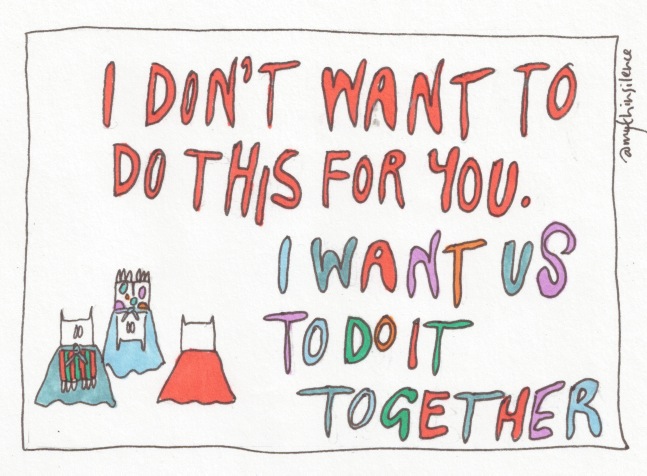
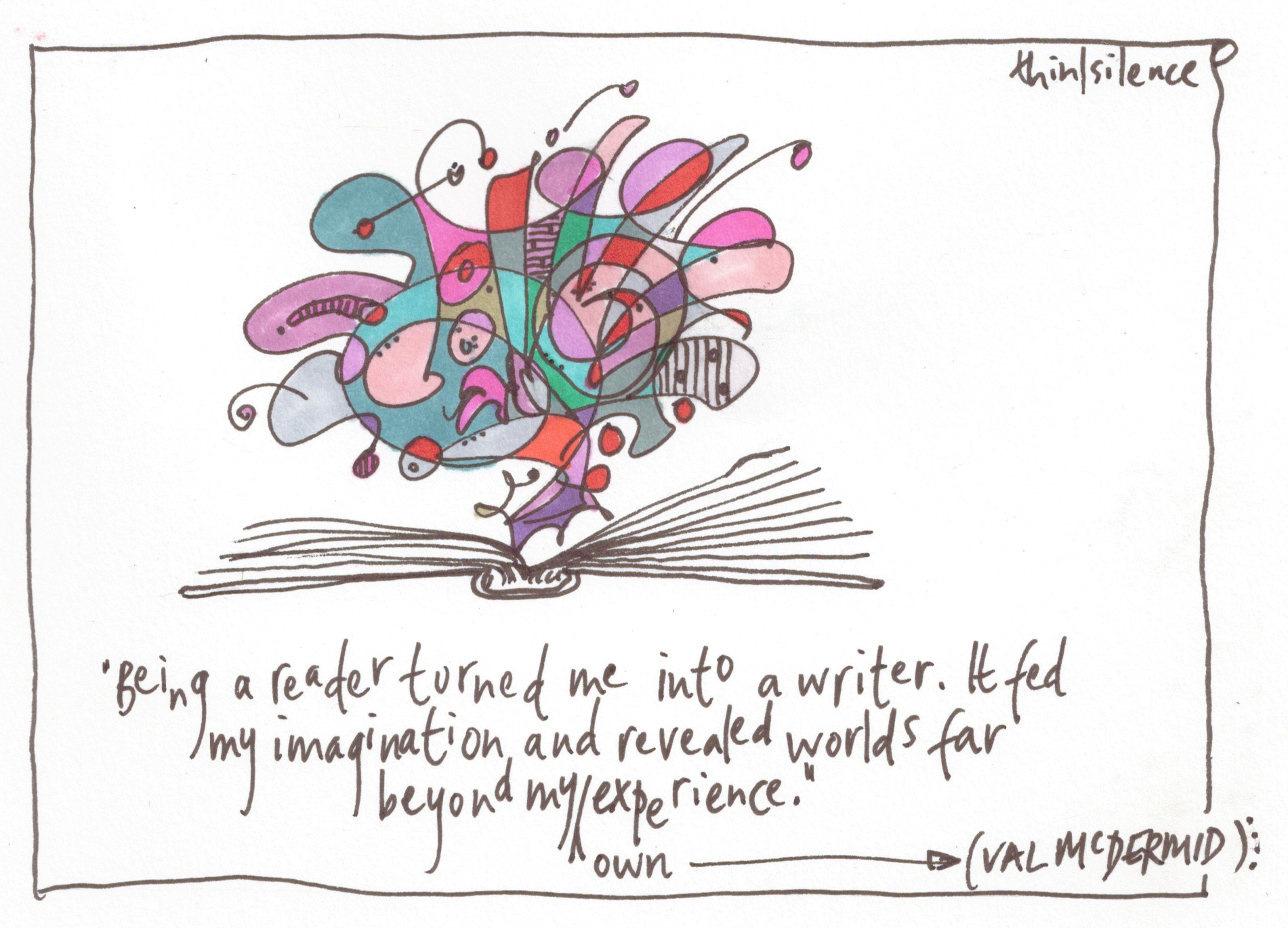
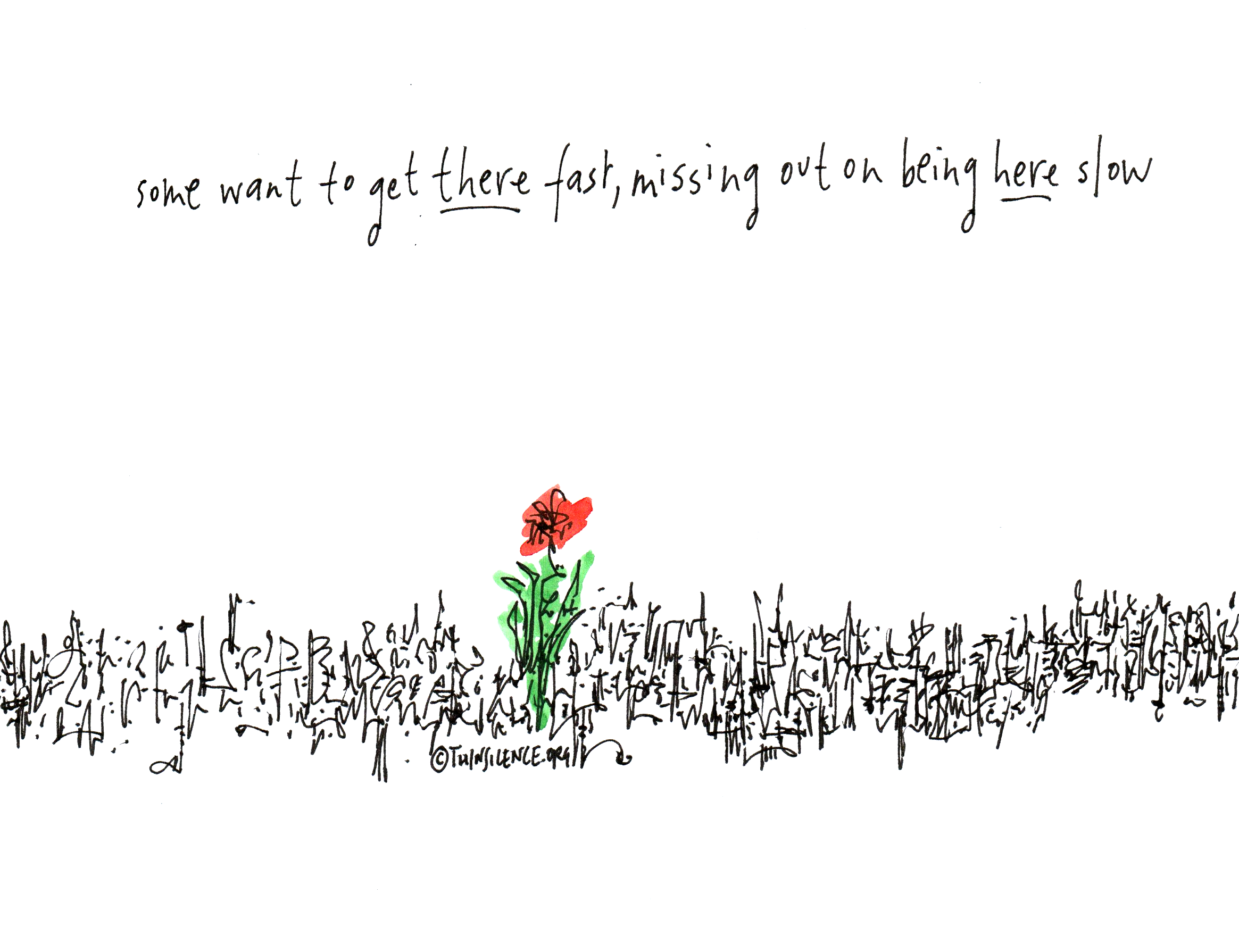
Another day of doodles across the years.


Happiness is essentially a state of going somewhere, whole-heartedly, directionally, without reservation or regret.*
William Sheldon
But to be what I am, to live, to want to sound like no one else, to yield the blossoms dictated by my heart: this is what I want and surely this cannot be arrogance.**
Rainer Maria Rilke
You have always been
your destination –
Beyond place and achievement
and recognition –
Though you may never arrive for
you are always becoming
for the sake of others.
*David Brooks’ The Second Mountain;
**Rainer Maria Rilke’s Letters On Life.
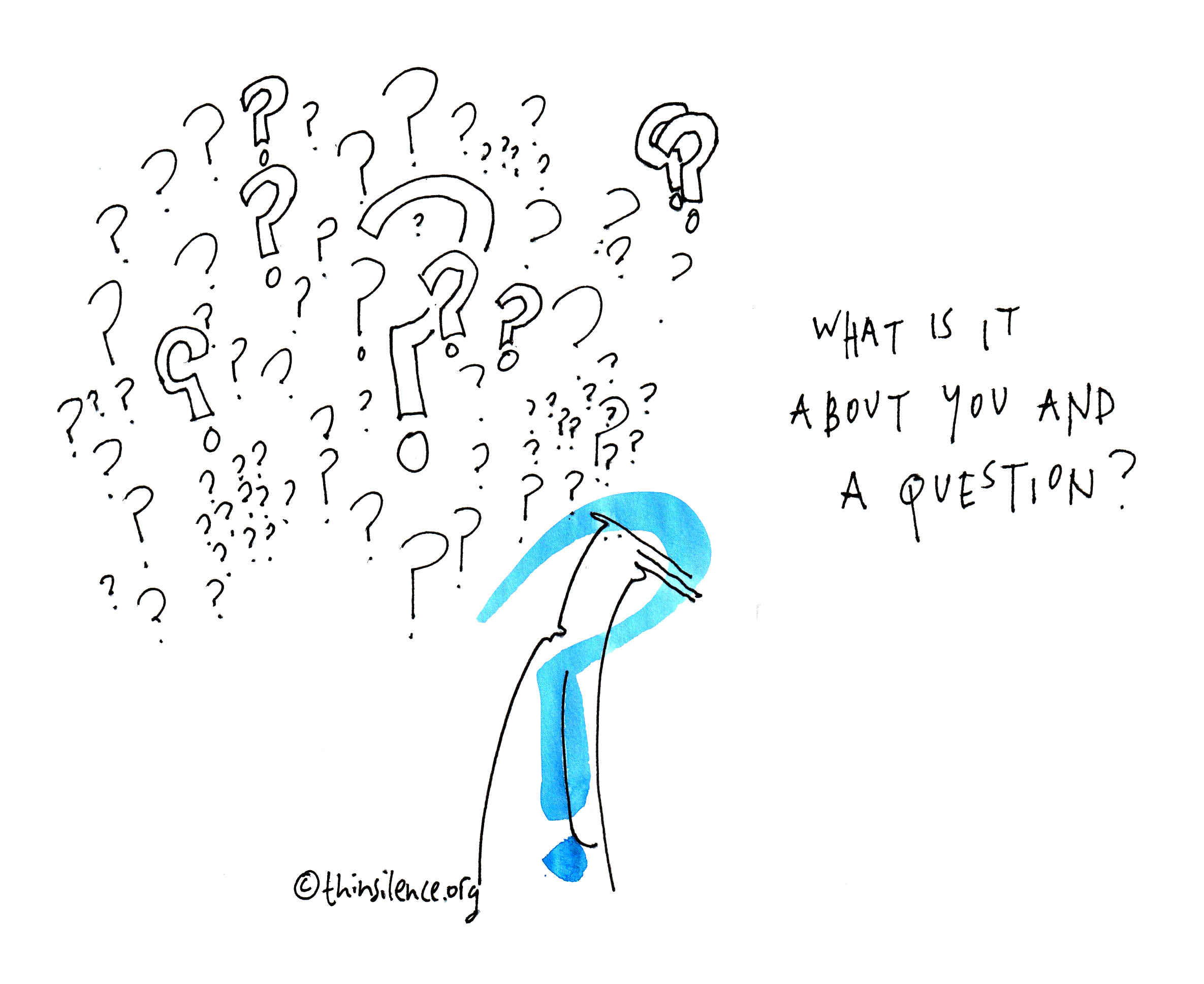
Out of asking the right questions and living the questions will come right actions that preset themselves in compelling ways.*
Henri Nouwen
I think when you’re self-taught you experiment more, trying to find the same sound in different places, you learn how to solve problems.**
Jack Cecchini
Life is all about questions –
Imagine if you could never be curious or wondering again about anything.
Would life be closing in around you rather than
opening out, blossoming?
Even a problem is a question trying to find a voice, and
its voice maybe yours.
Anyone can ask a question, without the need to ask permission,
But if you want to be super-polite, you may begin with “May I ask a question?”
And if you can ask a question then you can explore, and
if you can explore, you can experiment.
What are you most curious about? –
A question born of curiosity is a very personal thing.
We haven’t got time to question everything – in an age of information overload,
It’s okay to allow most of this to float on by.
Some ask questions that create beginnings, others ask questions right at the end;
We need all of them- what’s yours?
*Henri Nouwen’s Spiritual Direction;
**David Epstein’s Range.
The valley is where we shed the old self so the new self can emerge. There are no shortcuts. There’s just the same external three step process the poets described from time eternal: from suffering to wisdom to service.*
David Brooks
We thrive when we find a goal and a metric that’s resilient and easily replenished. It turns out that making a contribution is something we can do, again and again, and it never gets old.**
Seth Godin
The valley lies between two mountains,
One of getting, the other of giving:
The getting of stuff or being noticed or achieving something more or bigger,
Or not being the imposter or avoiding being thought less of or feeling bad about ourselves,
To knowing ourselves and noticing others, and appreciating what we have and imagining
how to make this available to others, again and again, because
we are this gift’s endless source.
*David Brook’s The Second Mountain;
**Seth Godin’s blog: Choose your fuel wisely.
Courage is the most important of all virtues, because without courage you can’t practice any other virtue consistently.*
Maya Angelou
The things we do to impress others rarely impress them for longer than five minutes. But the things we do to provide value for others can last a lifetime. In the long run, one of the most impressive things you can do is provide exceptional value.**
James Clear
When we embrace that courage is
“of the heart,”
We respect the vitality of
what it is we must do that
others do not –
Then we will show up, stumble,
make a fool of ourselves, learn
all we can, start over,
Keep going until we
lay the gift at the threshold of
another.
*Martha Beck’s The Way of Integrity;
**James Clear’s 3-2-1 newsletter: On impressing others, the power of the mind, and the hidden costs of success.

No one knows how to tell their story anymore … The Linear life is dead … life is filled with chaos and complaint, periods of order and disorder, linearity, nonlinearity … loops, spirals, wobbles, fractals, tangles and turnarounds.*
Bruce Feiler
The essential trouble … is that the driving force of modern life is that fatally misguided idea that reality should be made ever more controllable – and that peace of mind and prosperity lie in bringing it ever more fully under our control. And so we experience the world as an endless series of things we must master, learn, or conquer.**
Oliver Burkeman
Optimisation of the everyday life is
an illusion, the fourth elemental truth stating,
You are not in control^ –
Better to create a story that dances imaginatively,
Playfully, meaningfully with reality.
At the heart of this pirouetting story stand two major themes,
Wrapped around questions that will
never be completely answered –
Who is my True Self? and
What is my Contribution? leading us
into an infinite story unable to be
completed in a single lifespan.
*Bruce Feiler’s Life Is In the Transitions;
**Oliver Burkeman’s Meditations For Mortals;
^Richard Rohr’s Adam’s Return.
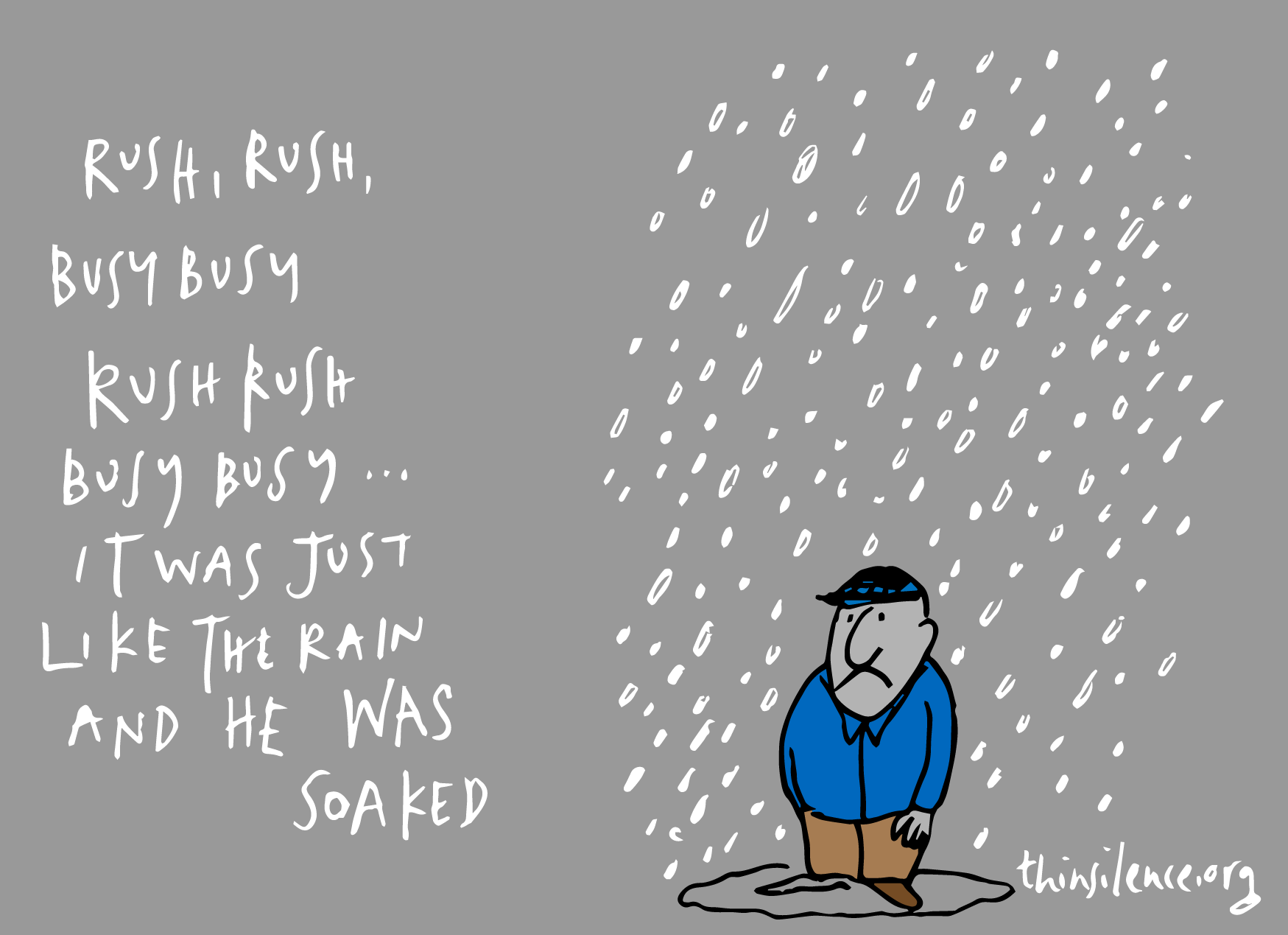
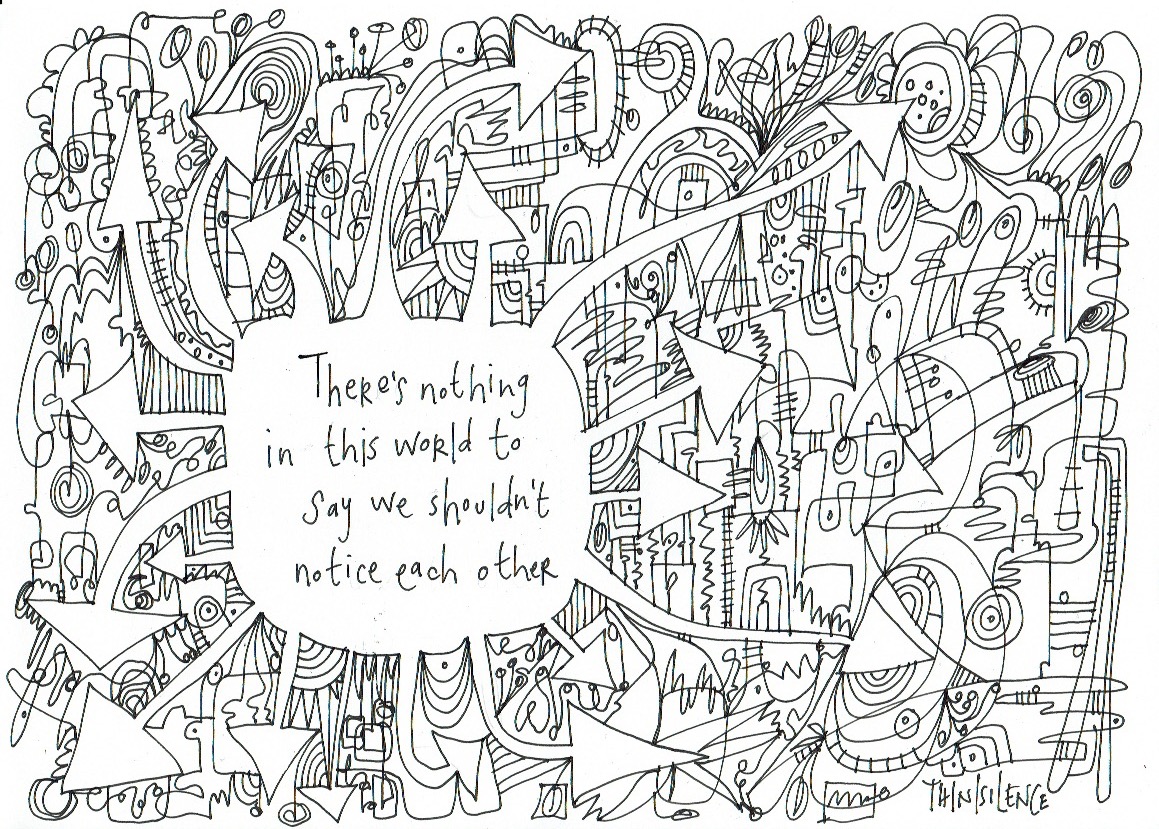
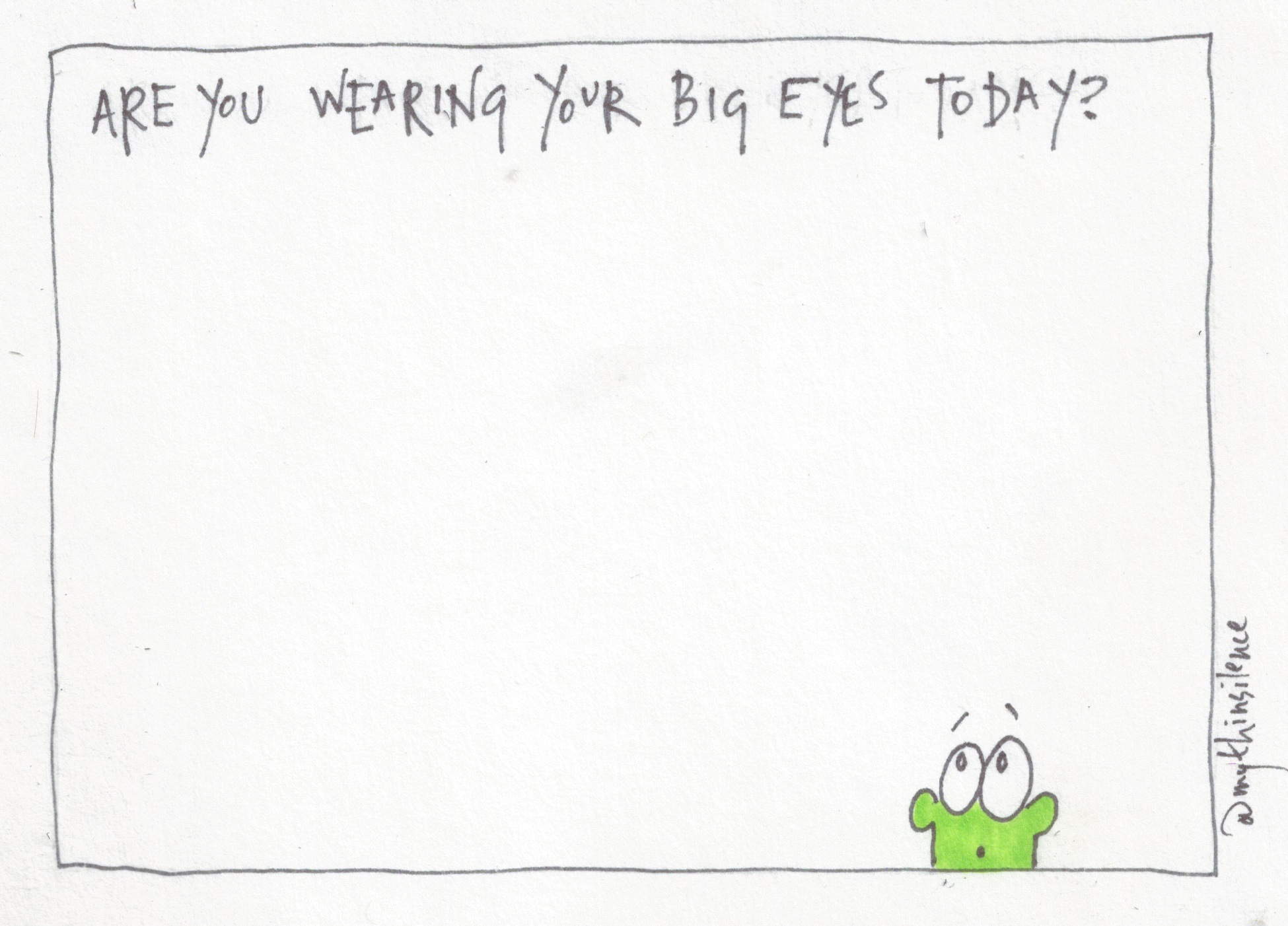
As I approach 4,000 thin|silence posts,
I thought to occasionally revisit past offerings
made on particular days;
Here are some of the doodles that have
appeared on the 1st November since 2014.



 THIN|SILENCE
You must be logged in to post a comment.