Have we got a story for that?

In some sense man is a microcosm of the universe; therefore what man is, is a clue to the universe.*
David Bohm

A story isn’t about what happens in the world. A story is about what happens in the protagonist.**
Lisa Cron

Until we have a story for the amazing stuff outside of us and
within us, it’s unlikely these wonders will inhabit us in
a life-altering way,
And stories form around our emotional
engagement with whatever phenomenon we’re encountering, so it’s
worthwhile turning towards and noticing what’s happening
in our bodies as well as our heads.

*Jean Houston’s The Wizard of Us;
**Lisa Cron’s Story or Die.

The lifelong mystery

And there’s our tragedy, that we have to resolve all mystery. We can’t let it be. We can’t rejoice in it. We can’t celebrate it. We can’t affirm it as an aspect of our lives. Because, after all, mystery is an aspect of our lives.*
Robert Coles

The self is the ultimate mystery, because no matter where you grab hold, it shifts, expands, evolves, evaporates, and leaks off into the shadows down below and light up above. If myth accomplishes only one thing, it is to expose human beings as multidimensional creatures.**
Deepak Chopra

I ask people to take a journey into
who they are but do not know, appreciating that to do this
only increases their mystery;
None of us is optimising our life –
Although it may seem so on the outside where we’re stretched, short of time, and
ready to snap –
Beneath the surface there are depths and widths to call upon,
A vastness to both discover and develop.

I recently asked a group of educators on their awayday to create
a doodle-image of themselves, and then, for the following week,
To develop this image each day with a text stating
something they are good at;
I am intrigued, then, to find this is Jean Houston’s advice in
her already excellent book The Wizard of Us
(I’m only on page 23 and am loving it),
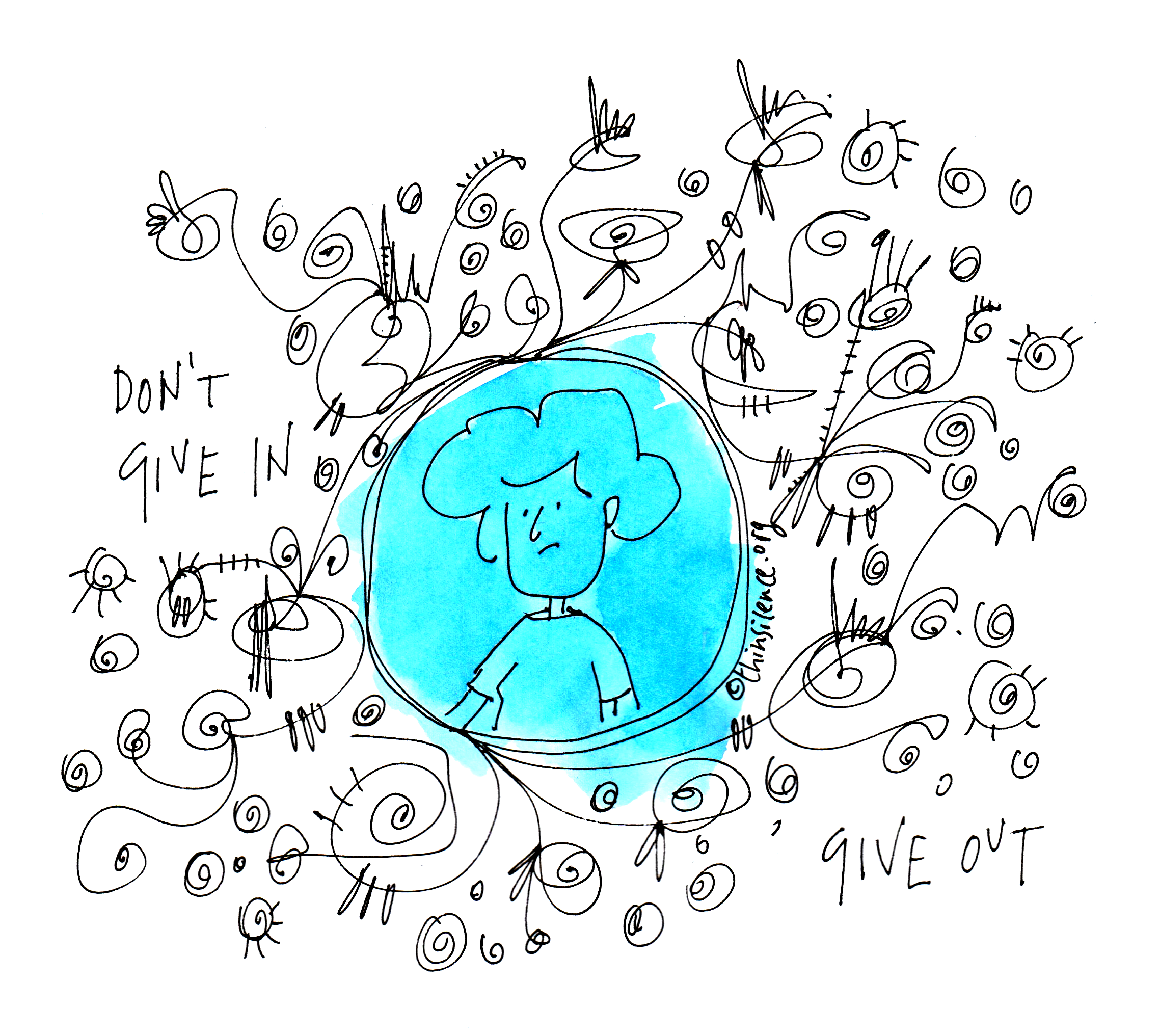
So I leave this with you,
To create a doodle-image of yourself
(my own is in today’s doodle), and then
develop it over the next week –
Head, head and shoulders, front-on, side-on, full length –
Including a text declaring something that you’re good at –
If I can help, let me know
(that’s why I’m here).

*Krista Tippett’s Becoming Wise;
**Jean Houston’s The Wizard of Us.

On the hook

The mysticism of our seeing and knowing is precisely what our nafs tries to hide from us. Our nafs wants its world to stay fixed, opaque, hostile to deeper vision. At the same time, and paradoxically, the nafs is a creation of our mystical longing for oneness – or as we usually experience it, familiarity.*
James Carse

Every little action toward our Future Self is you more fully being your Future Self now.**
Ben Hardy

The Sufi nafs is the self
I often speak of the Self as being false or True, whilst
Sufism considers its existence along a continuum of seven stages;^
That we each can grow and become is both exciting
and troublesome,
For whether we believe in god or not, we are both
on the hook and effort is required
for expanding our talent and character:
This possibility overlaps with our mythic life,
The greater story we at times find that
we are longing for:
The old way of doing things are
no longer working. We are now seeking
the emergence of
the deeper story. We are seeking
our mythic lives.^^

*James Carse’s Breakfast At the Victory;
**Ben Hardy’s Be Your Future Self Now;
^Inciting, self-accusing, at peace, inspired, pleased, pleasing, and pure;

^^Jean Houston’s The Wizard of Us.

Begin the begin

But if the patient should object that she does not know the meaning of her life, that the unique potentialities of her existence are not known to her, then we can only reply that her primary task is just this: to find her way to her own proper task, to advance towards the uniqueness and singularity of her own meaning in life.*
Viktor Frankl

Attention without feeling is only a report.**
Mary Oliver

Our unique and singular meaning comes to us en route,
As we pay attention to
why this excites us, but not that, why
we are prepared to persevere, even fail, at
that, but not this;
Often requiring that we move from
the familiar to unfamiliar, even the unknown,
There will. be much to be attentive to:
In the new person we encounter, the fresh ideas
in what we read or listen to, the different
experiences we engage in, the new places we
travel to –
We cannot expect to discover the soul-deep meaning
available to all of us by
circling within the familiar.

Life is created by the onwards rush of life over the curved wing of the soul.^

*Viktor Frankl’s The Doctor and the Soul; italics to indicate a gender change;
**Maria Popova’s The Marginalian: The Art of Divination: D.H. Lawrence on the Power of Pure Attention;
^Robert Macfarlane’s The Old Ways.

Not the obvious powers

Silence is audible to all men … She is when we hear inwardly, sound when we hear outwardly.*
Henry David Thoreau

By the pressure of reality, I mean the pressure of an external event on the consciousness to the exclusion of any power of contemplation.**
Wallace Stevens

Here are three powers that can developed and employed by anyone:
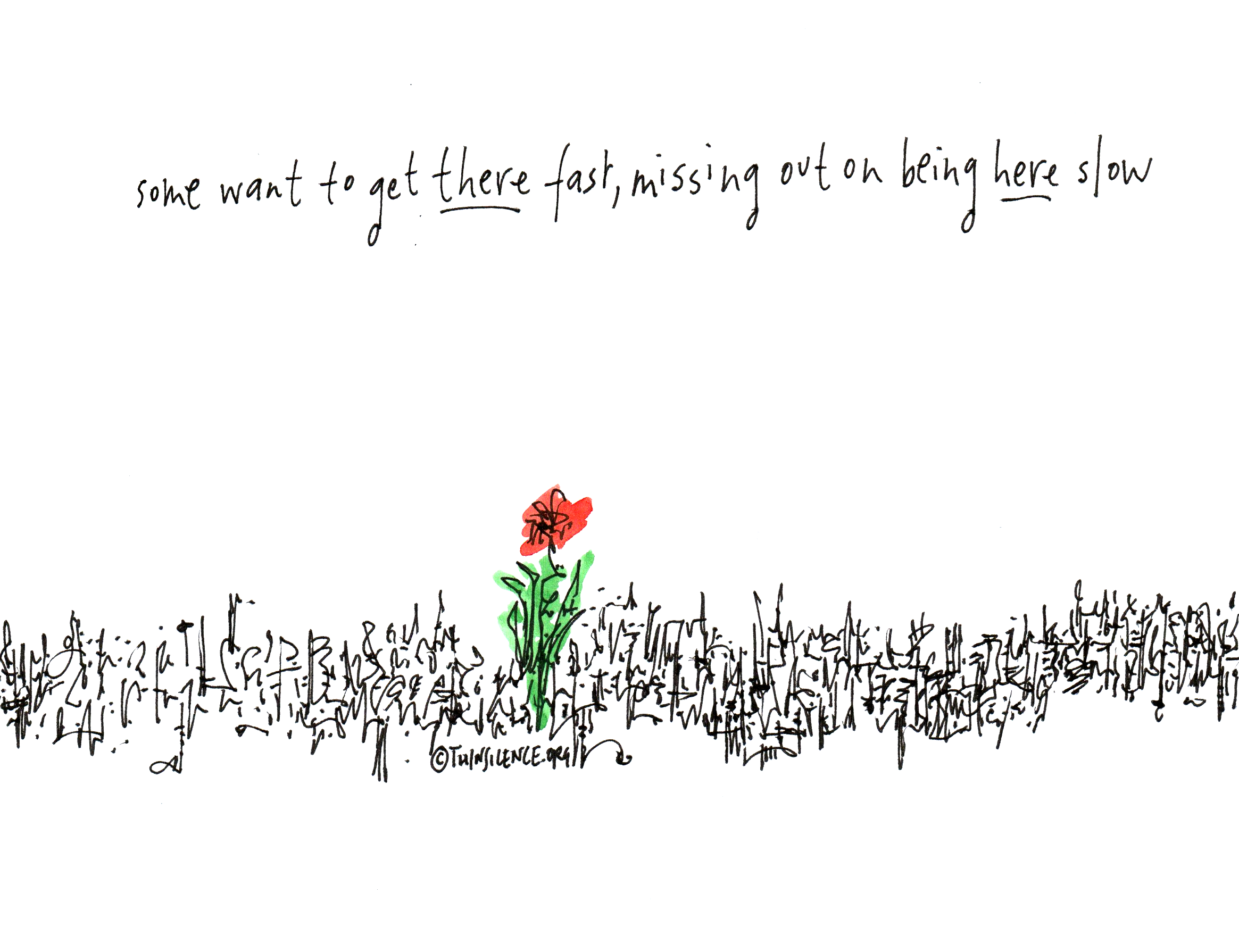
Silence, solitude, and slowness –
Allowing for reflection and imagination to be brought to
The increasingly forceful pressure of reality we find ourselves facing:
personal identity, workplace
challenges, relational issues, cyber
crime, climate
concerns, loss of
meaning, political forces, world
events, and everything in between.

*Lewis Hyde’s Common As Air;
**Wallace Stevens’s The Necessary Angel.

The gift of boredom

In my experience, boredom is often close to epiphany, to the great idea … boredom is boredom until it’s not.*
Nick Cave

In a world fearful of boredom, cluttered with the stimulation of
endless noise and busyness,
Boredom comes to us as space,
Space for all kinds of possibilities to come to heart and
to mind.

*Nick Cave and Seán O’Hagan’s Faith, Hope and Carnage.

The grail

But the myth also offers powerful, soul-changing ways of healing the wasteland in ourselves as well as in our society. For we are all the wounded Fisher King, each one of us is Parsifal, and every human being is a Grail of the most sacred life.*
Jean Houston

What had to be done here was to lead the particular person in her concrete situation to the unique and singular task of her life.**
Viktor Frankl

Yes, the grail is a myth –
That’s the point, and the myth is
your meaning, containing what you require to
make you whole, whilst also contributing to
the wholeness of others;
Viktor Frankl would probably call our particular “grailness” our
responsibility to life, our singularity –
Name it, write it down, develop it,
Play it every day.

*Jean Houston’s A Mythic Life;
**Viktor Frankl’s The Doctor and the Soul.

You too

To share your weakness without caring what others think is a kind of superpower.*
Arthur Brooks

When you admit that something went wrong, your audience is thinking, Wow, me too! I make that kind of mistake all the time. We’re more alike than I thought.**
Lisa Cron

One thing for sure is that we all have weaknesses,
We all make mistakes;
Of course, the first person we need to admit these to are ourselves,
Be a little more empathetic towards ourselves,
Because empathy is one of the things that occurs when we share
our stories with others –
You too, I thought it was only me
And what we want to do is learn and grow.

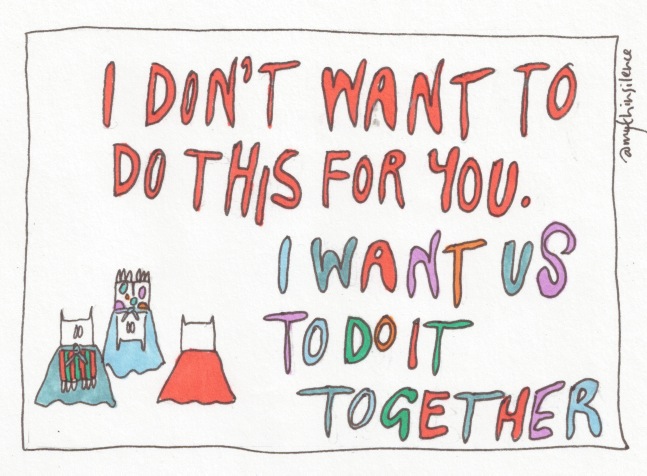
We’re in this together,
We’re human.

*Arthur Brooks’ From Strength to Strength;
**Lisa Cron’s Story or Die.

Sticking at it

Commitment gets us through frustration, and frustration is the partner of learning.*
Seth Godin

Whatever pain you can’t get rid of, whatever joy you can’t contain, make it your joyful offering.**
Susan Cain

Learning isn’t easy, but
the pain and frustration may be telling you that
you’re exactly where you need to be, and
something important is about to be born
through you.

Values which are realised in creative action we should like to call ‘creative’ values.^

*Seth Godin’ blog: While standing on one foot;
**Susan Cain’s Bittersweet;
^Viktor Frankl’s The Doctor and the Soul.

Just a doodle 158

In Japan, there is the term wabi-sabi. Wabi-sabi posits that the beauty of an object is found in its imperfection. In direct contrast to the western perspective which tends to conflate perfection with beauty, wabi-sabi celebrates transience, individuality, and the flawed nature of a thing. These are the qualities that make it unique, genuine, and beautiful.*
Ryder Carroll


*Ryder Carroll’s The Bullet Journal Method.