I’ve always believed in the power of poetry to explain people to themselves.* William Seighart
Budded from the matrix of psyche, we bloom out of imaginal worlds from which we arise coded in myth and symbol.** Jean Houston
Poems are not wasteful with their words, Their locution is expansive and sharp, Fullness and calling, Honest and hopeful; Our lives are like poems – When the extraneous is removed, we see both who we are and yet can be.
I tried to get mad at people. They lied. They betrayed me. They disappeared. Do you hear the pattern? “They this, they that” … But one day I tried thinking of everything as my fault … What power! Now you’re the person who made things happen, made a mistake, and can learn from it. Now you’re in control and there’s nothing to complain about.* Derek Sivers
How would I live if I was exactly what’s needed to heal the world?** Rachel Naomi Remen
The apostle Paul counsels, Be angry but do not sin; do not let the sun go down on your anger^ – But how?
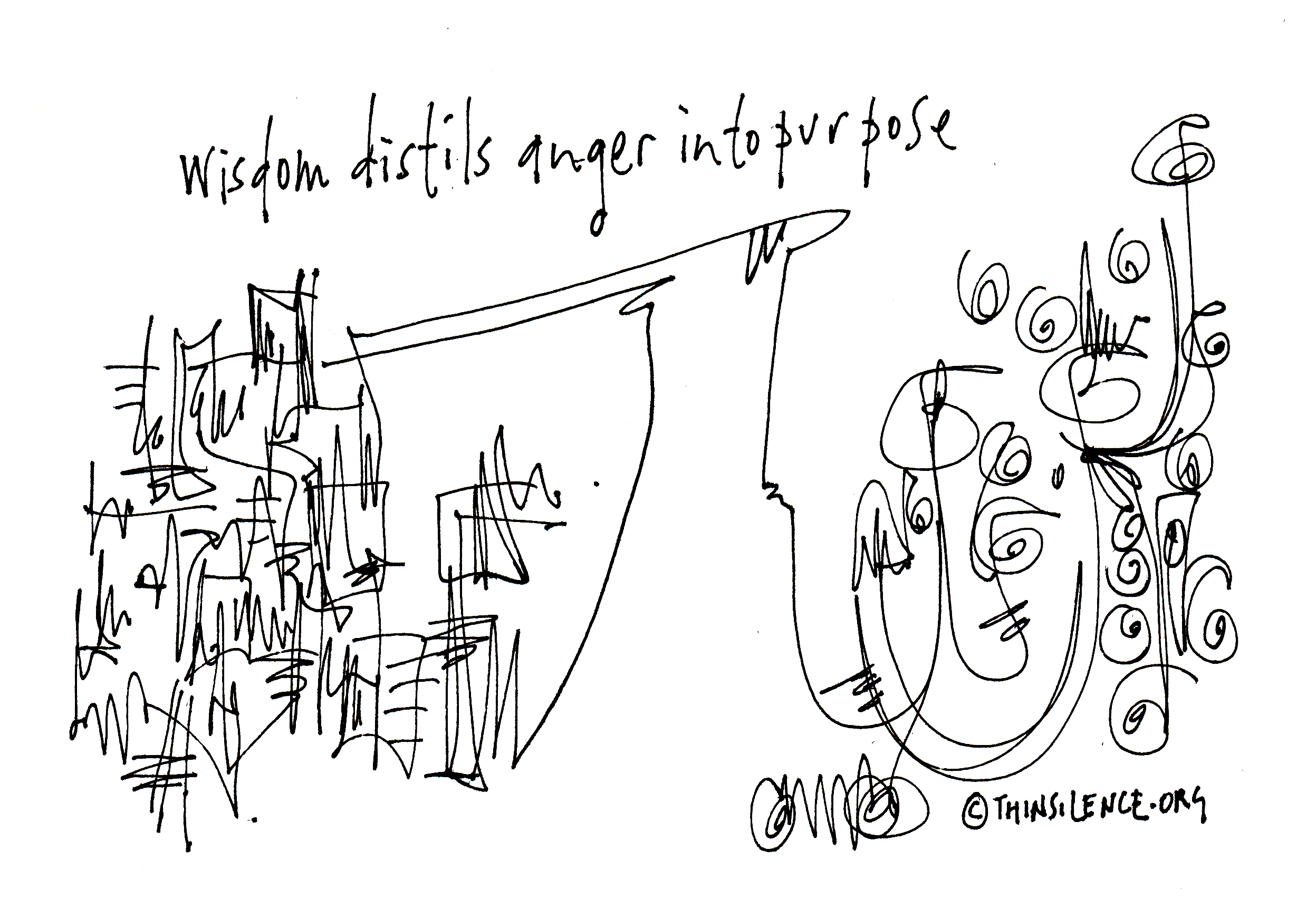
Wisdom takes anger on a journey through opening the mind, the heart, and the will: How did I contribute to this? What does the other want to see happen? What can I now make happen to improve things?^^
Anger is a sign that something is wrong, but when we take it on a journey, we can make it count, we can arrive at a better place, even to identifying the contribution we can make in the world.
Two thousand years ago, Paul was telling people that if they took anger for a walk it could even become kindness, gentleness, and forgiveness – Which is godlike.
I guess we didn’t expect to get there from here.
*Derek Sivers’ Hell Yeah or No; **Krista Tippett’s Becoming Wise; ^Paul’s Letter to the Ephesians 4:26; ^^There are plenty of questions for opening the mind, heart, and will; these are only for starters; *^Paul’s Letter to the Ephesians 4:32.
Keep death and exile before you every day, along with everything that seems terrible – by doing so, you’ll never have a base thought nor will you have excessive desire.* Epictetus
Imagine what it’s like to be the silver medalist. If you’d just been one second faster, you could have won the gold! Damn! So close! … Now imagine what it’s like to be the bronze medalist. If you’d just been one second slower, you wouldn’t have won anything! Awesome!** Derek Sivers
A friend shared how his old job had recently been split into three, and he had been hired for one of these roles; I asked him if he got the part he enjoyed the most – he did.
This got me to wanting to ask you a question – I’ll ask it in a few parts, and perhaps take a moment to reflect and write out each response:
If your present job was reimagined as three new roles, What would they be?
Which of these is the role you’d want to be rehired into?
How would you walk with this, then run, then fly?
Here’s your bronze medal^ – You already have this job, so why not begin to make happen what you have just imagined; My guess is that it will change the other two parts of your work.
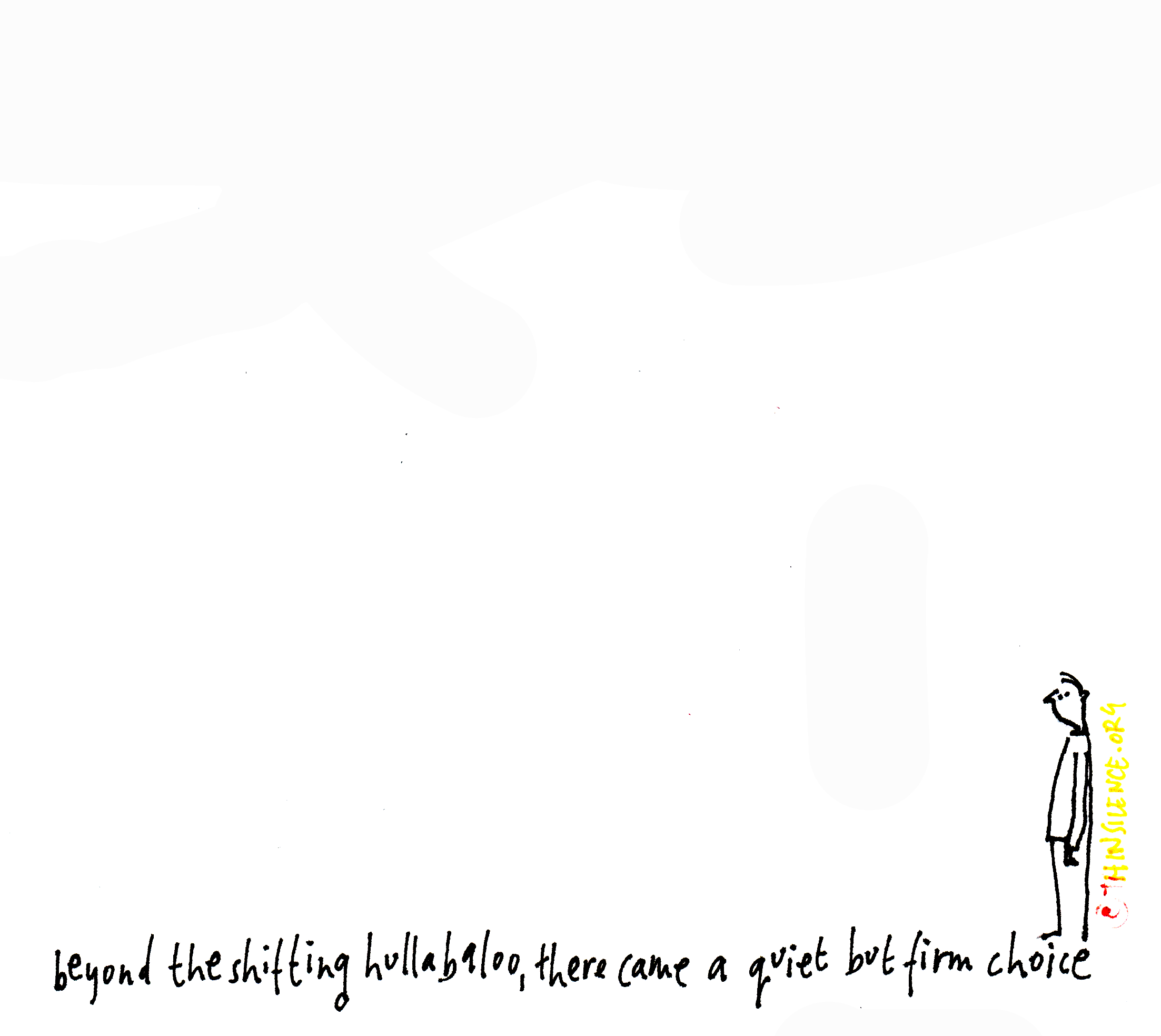
At some point the big reasons run out and then all you’re left with is your own quiet decisions … Big reasons run out. The power of your decisions does not.* Gabe Anderson
Anything that can be prevented, taken away, or coerced is not a person’s own – but those things that can be blocked are their own.** Epictetus
This is about the difference between musts and shoulds: The reasons, or the shoulds, come from outside of you, but those sending them your way aren’t bothered enough with you to keep telling you everything you ought to be doing; The decisions, or musts, are always coming from inside of you, fed by your talents, energies, and values, they’re always there to guide you and keep you going when the way becomes tough – just when the reasons are likely to say as they flee, “Estás solo mi amigo.”
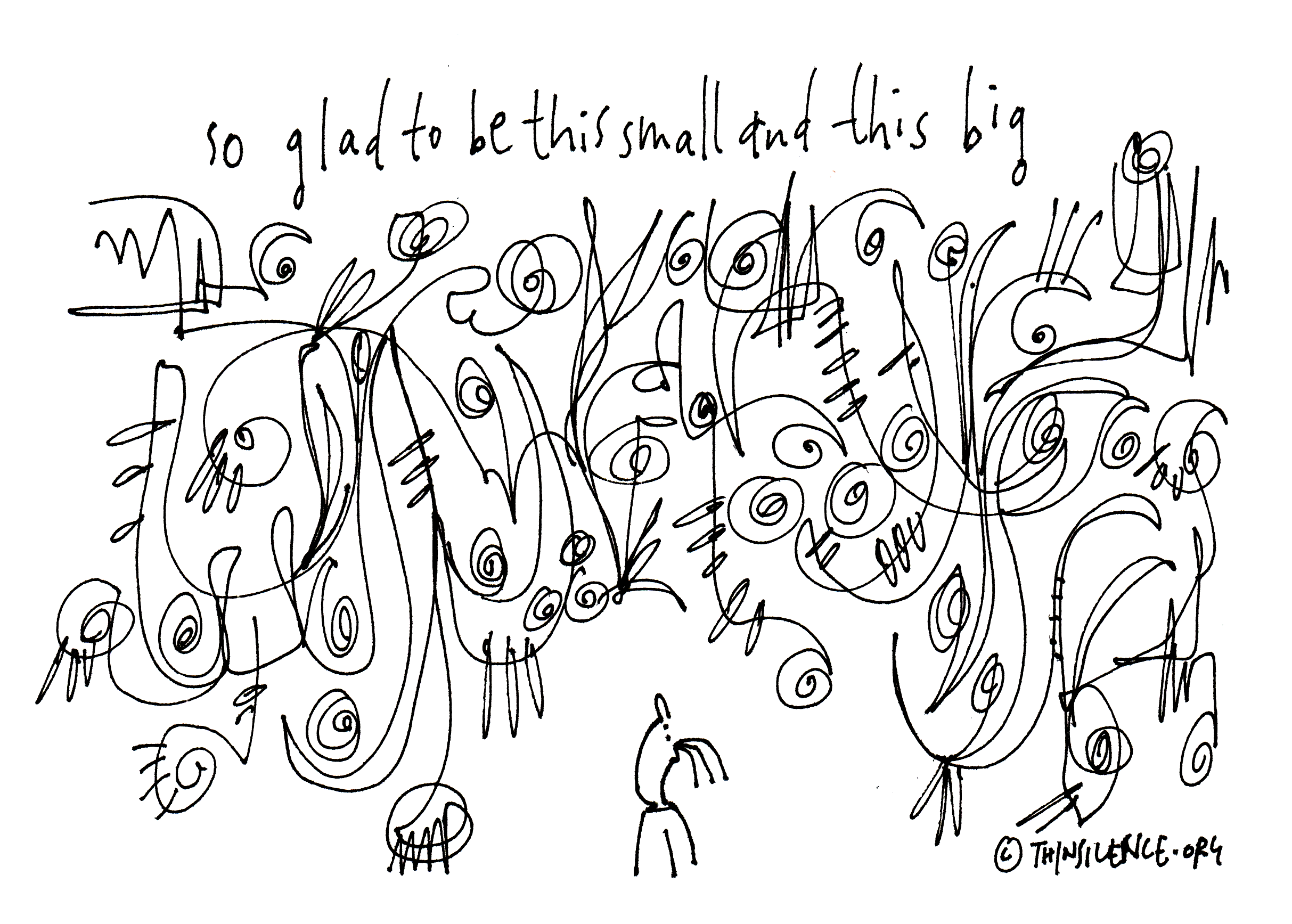
Awe is a feeling we have when we encounter the monumental or immeasurable. We experience a sudden shrinking of the self, yet a rapid expansion of the soul.* Nick Cave
In silent companionship with the life of the Galapagos, I had come to the conclusion that our personal identity, which we think is based on our beliefs and opinions, is actually more of a function of our ability to pay attention to the world around us. If we had very little in the way of attention for the world, then we actually had very little in the way of real existence.** David Whyte
I had just read these words when it was time to pop my wife into work because I needed the car to get to my volunteering in a university one town over … And there it was, A gentle giant sky with clouds painted in soft oranges and mauves, and, when a break appeared between the buildings and trees, A molten bank of clouds wearing pale yellow and cream, Embracing the newly born sun.
When we think about what’s worth doing, we usually think of big things. But when you hear the stories of how people got successful, they usually start with one little action … That one little action changes how you think about yourself.* Derek Sivers
I think that only daring speculation can lead us further and not accumulation of facts.** Albert Einstein
We think that we cannot do something that is important to us because it has to be big, but we don’t want to hear that it need only be small because then we don’t have anywhere to hide.
Because it’s not for you. It’s for them. Generosity unlocks doors inside of us.* Seth Godin
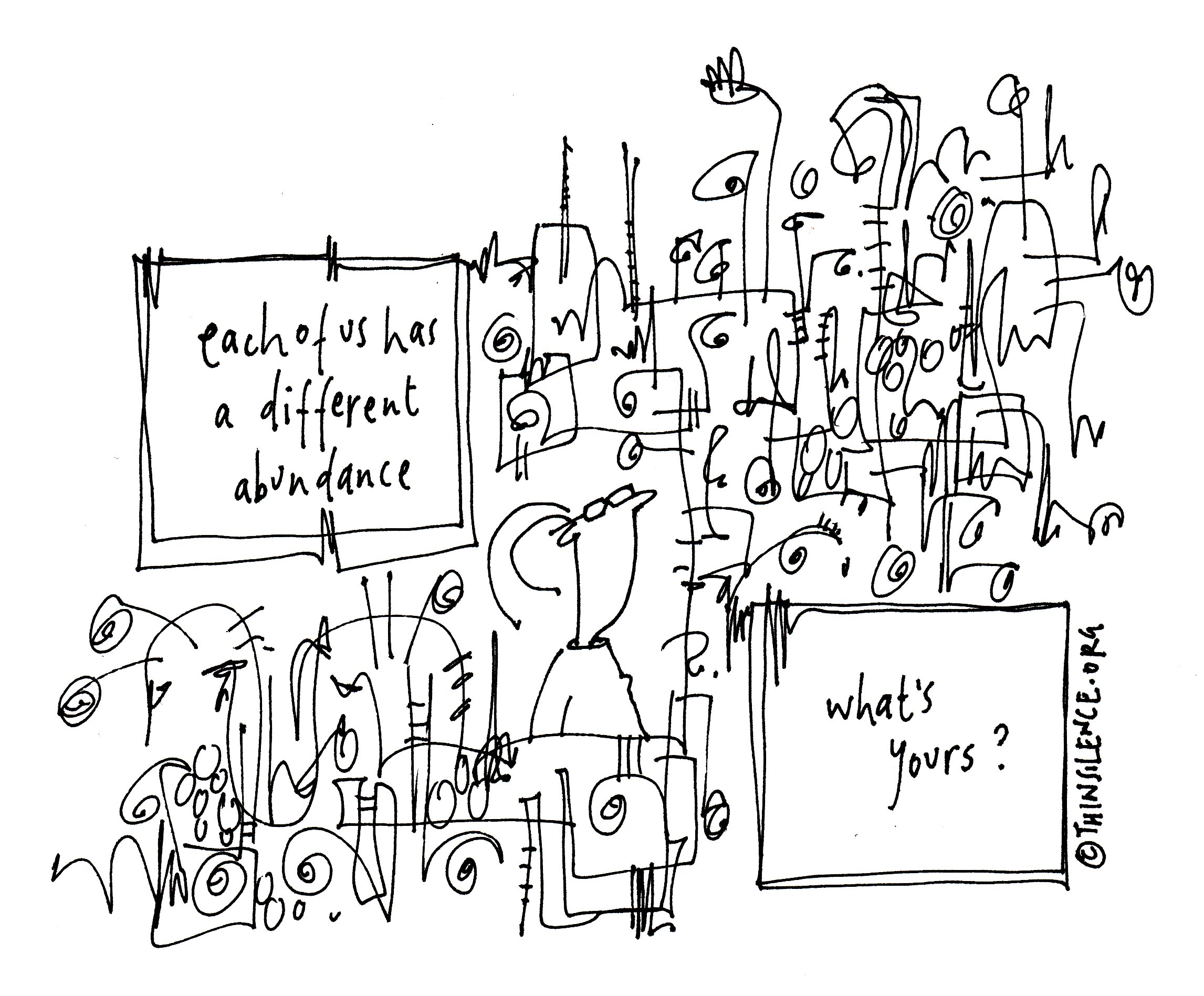
In reality, the secret is simple. When the heart is aligned with its eternal image, abundance cascades forth from the place of origin, infinitely more powerful than the scarcity and constriction of this world.** Cynthia Bourgeault
Don’t believe the messages that reduce or demean or limit, you are an abundance, nothing less – Everyone is.
I’ve come to believe in the power of writing down your vision. I don’t believe in writing down a vision for your life creates any sort of magic in the universe, but I do believe it sets a general compass for your subconscious.* Donald Miller
Trying to reach everyone is the same as trying to reach no one, and it has just about the same effect. That’s because there is no “everyone.” There are just individual people, who band together based on their common interests and beliefs, with the goal of survival, whether physical, social, or both.** Lisa Cron
Thank you for making it to this four thousandth edition of thin|silence; It’s kept me on track with what I love and am fascinated by.
My hope has been that it would quietly find its way to those it may resource and help, making it a little more possible to explore each day creatively, generously, and enjoyably – as it does me.







 THIN|SILENCE
You must be logged in to post a comment.