The Self is not a punitive force that rushes about punishing women, men, and children. The Self is a wildish God who understands the nature of creatures.* Clarissa Pinkola Estés
Flight from the self allows for avoiding a confrontation with the void of self … We need new types of leisure that allow for contemplation and meditation. To this end, man needs the courage to be lonely.** Viktor Frankl
May we not run away from ourselves, There is nothing to fear, Only a wonderfully plastic being capable of great compassion, Who can learn from failure, Begin again countless times, Keep dreaming, and, finally, Bring something wonderful and beautiful into the world, Someone’s world.
The more we unself by widening the aperture to let the world in, the less we suffer.* Maria Popova
Are you breathing? Are you here? Did you just take a breath? Are you about to take another? Do you have a habit of regularly doing this? Gift. Gift. Gift.** Rob Bell
I do not judge, I seek no opinion, I will remain open.
I am learning to be open to the wonder of sunshine and growing things.
I am realising wonder does not ask me to cover great distances.
Unfortunately, those who refuse the call don’t have a life. Either they die, or in trying to lead more mundane lives, they exist as nonentities, what T. S. Eliot called “hollow men.”** Joseph Campbell
Our human restlessness – our search for meaning, our drive toward extreme adventures, our compulsion to create something of lasting value – these are not separate from longing for genuine connection. Blue moments reveal that our existential quests and our relational hungers spring from the same source.* AleXander McManus
There are more people waiting to meet you– Your adventures will lead you to them.
Mihaly Csikszentmihalyi wrote^ about how we are born with contradictory sets of instructions:
One is a conservative instinct for preservation and energy-saving, The other is expansive, Embracing risk and exploration.^^
Whilst the former comes easily to us, The latter demands energy and may be resisted, After which it withers, hiding in shadows.
Yet when we respond to this call, this need, this itch or urge, There awaits an esprit de corps With those we meet along the way.
Differing from the communities we set out from, Victor Turner preferred to name these fellow travellers communitas.*^
Just as our hunger to feed our conservative instinct will include others, so our desire to feed the expansive will bring us into deep connection around a common purpose.
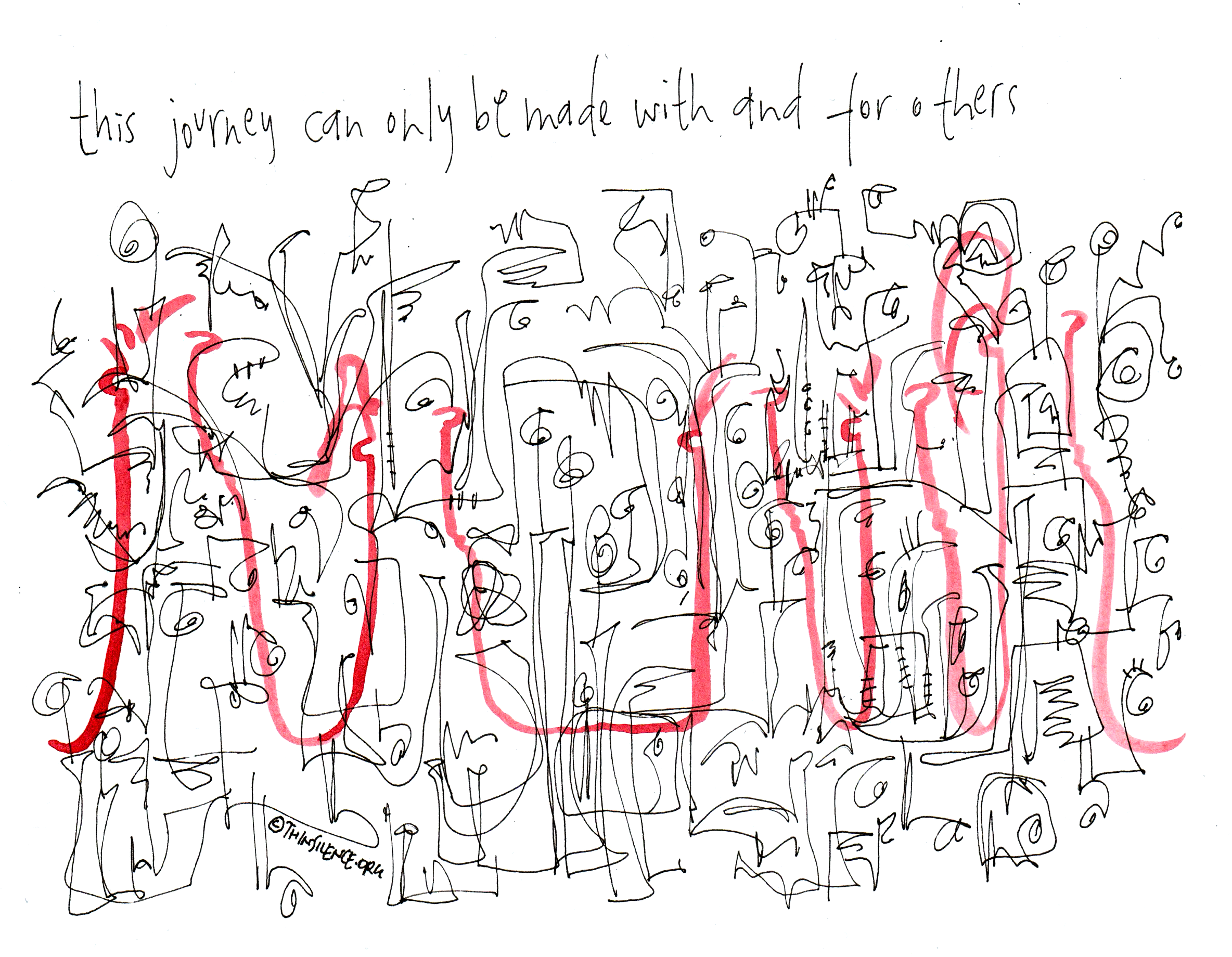
Whether at home or abroad, There is no making of us without others, our stories being replete with those who share our days.
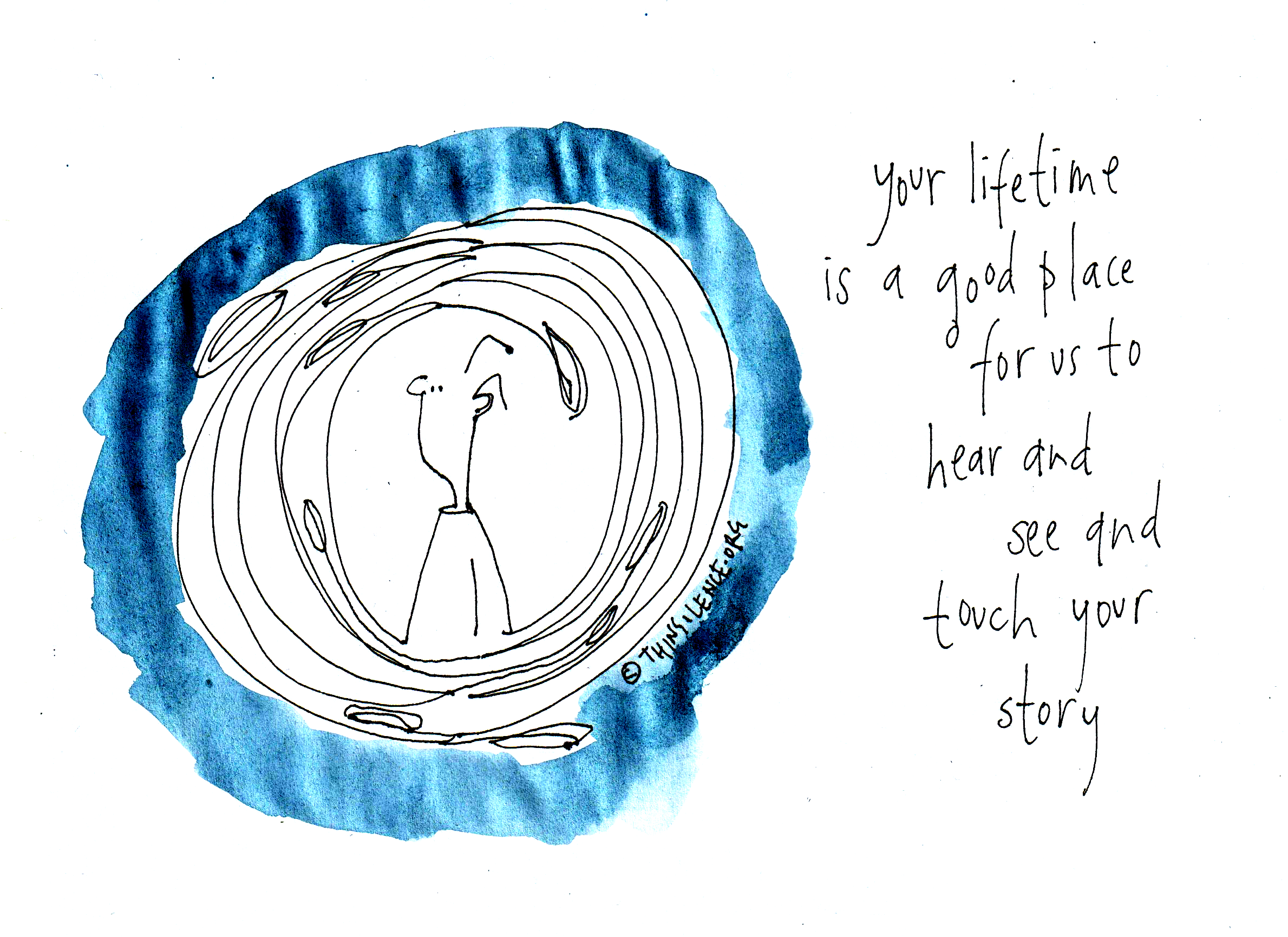
And if I want to know myself, to gain insight into the meaning of my own life, then I, too, must come to know my own story … through our personal myths, each of us discovers what is true and what is meaningful in life.* Dan McAdams
Culture defeats tactics, every time, and culture is the most resilient component of a system.** Seth Godin
It’s not that we decide one day To write a story about ourselves or not– We toddled into stories, Exploring worlds of “me and everything else.”
We come to find ourselves in familial educational institutional societal, and national narratives.
There are more than enough ideas coming at us to last a lifetime, To live inside someone else’s life: We must decide how to write our own life-myths– Any other tactic will not work.
To understand the narrative character of one’s own life is therefore to understand its inherent mysticism.* James Carse
Sometimes a prayerful, painful approach to a difficult day may mean stopping and starting a hundred times until we learn, like a virtuoso, the thorough, attentive, rhythmic presence of the true musician. David Whyte
The most powerful of stories– Those with the complexity and tenacity of a myth, Form around an experience of awe and wonder, Whether awesome or awful.
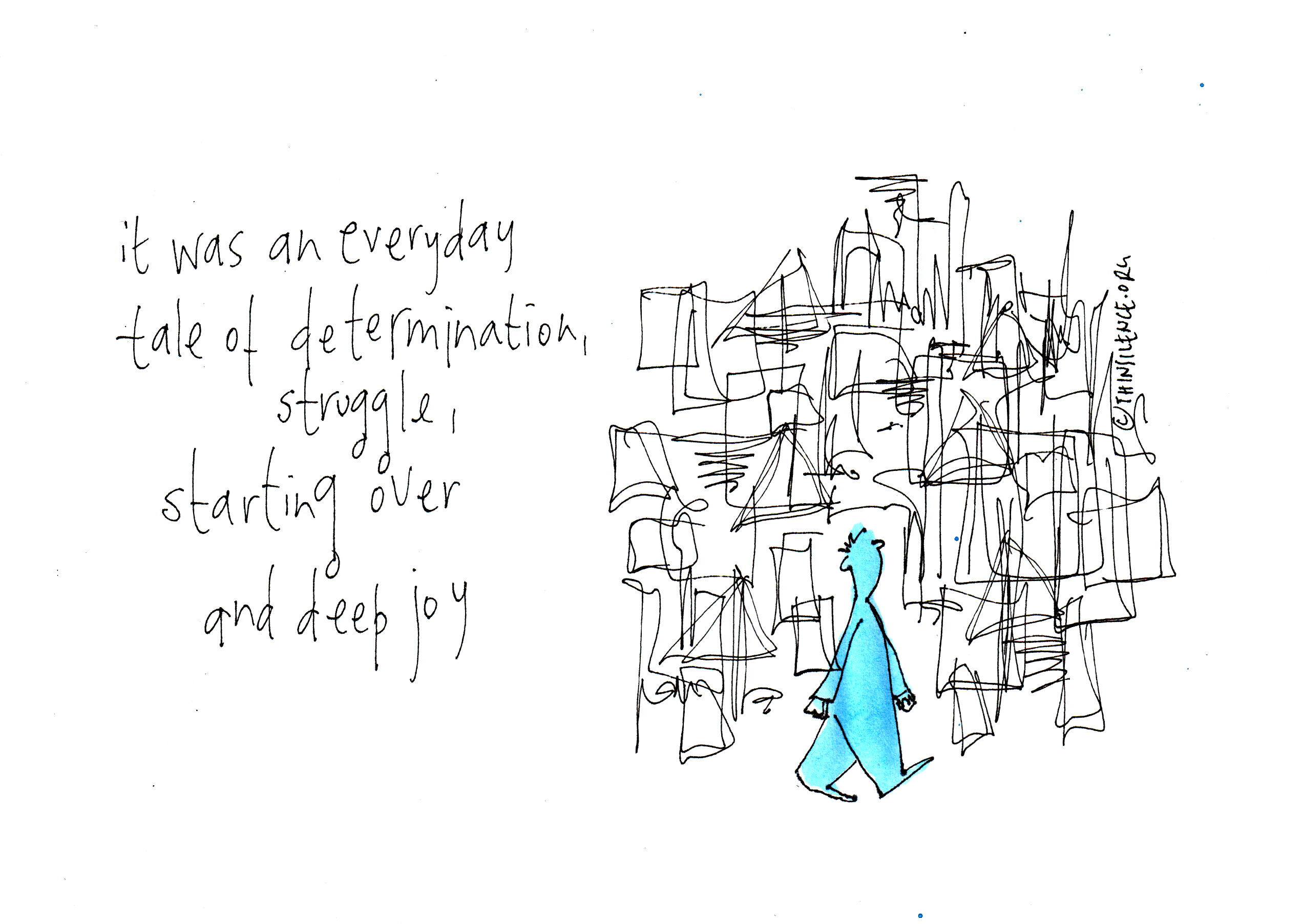
The story’s power is forged in talent and grit, In the struggle and discomfort of living our tale into the everyday, Proffering into someone’s world.
I saw that those who are supposed to be powerless – writers and scholars, grass-roots organisers and movements, visionaries, the disparaged and overlooked – have changed the world again and again.^
I learned this, at least, by my experiment: if you advance confidently in the direction or your dreams and endeavour to live the life you have imagined, you will meet with success unexpected in common hours. You will put things behind you and pass an invisible boundary.* Henry David Thoreau
None of them has outrun uncertainty. They’ve simply found a way to stop treating it as the enemy. It turns out that not knowing is a necessary part of being alive in the world … Not knowing is part of the adventure.** Bernadette Jiwa
Your imagination promises some escapade, But you’ll need to experiment^ to avoid falling into a daydream.
You don’t know where this will end or even if it will work, But it’s as though you’ve awakened.
*Henry David Thoreau’s Walden (adapted by Nicholas Bone); **Bernadette Jiwa’s Briefly blog: On Certainty; ^What would be the smallest iteration of what you’re imagining?
Don’t set your mind on things you don’t possess as if they were yours, but count the blessings you actually possess and think how much you would desire them if they weren’t already yours. But watch yourself, that you don’t value these things to the point of being troubled if you should lose them.* Marcus Aurelius
Our keys (skills, talents, traits, interests) are best utilised when we try enough things to figure out some doors that they’ll open.** Gabe Anderson
Have you ever wanted someone else’s talents, role, status, reward?
Have you ever wondered if someone else is looking at you in the same way?
Downplaying and undervaluing what we have and do is a damaging, even dangerous, game to play.
Better to notice and develop what we have so that adventures may open through our deepest joy.^
(Deepest joy being a way of describing where our talents, energies, and values meet.)
This is our power and love for bringing change to someone’s world.
Radical engagement works with power and love to collaborate to bring about fundamental change.^^
Nature runs on sunlight. Nature uses only the energy it needs. Nature fits form to function. Nature recycles everything. Nature rewards cooperation. Nature banks on diversity. Nature demands local expertise. Nature curbs excesses from within. Nature taps the power of limits.* Jean Houston
We’re surrounded by problems. Problems create the arc of our days, and so solving them creates value for ourselves and for others.** Seth Godin
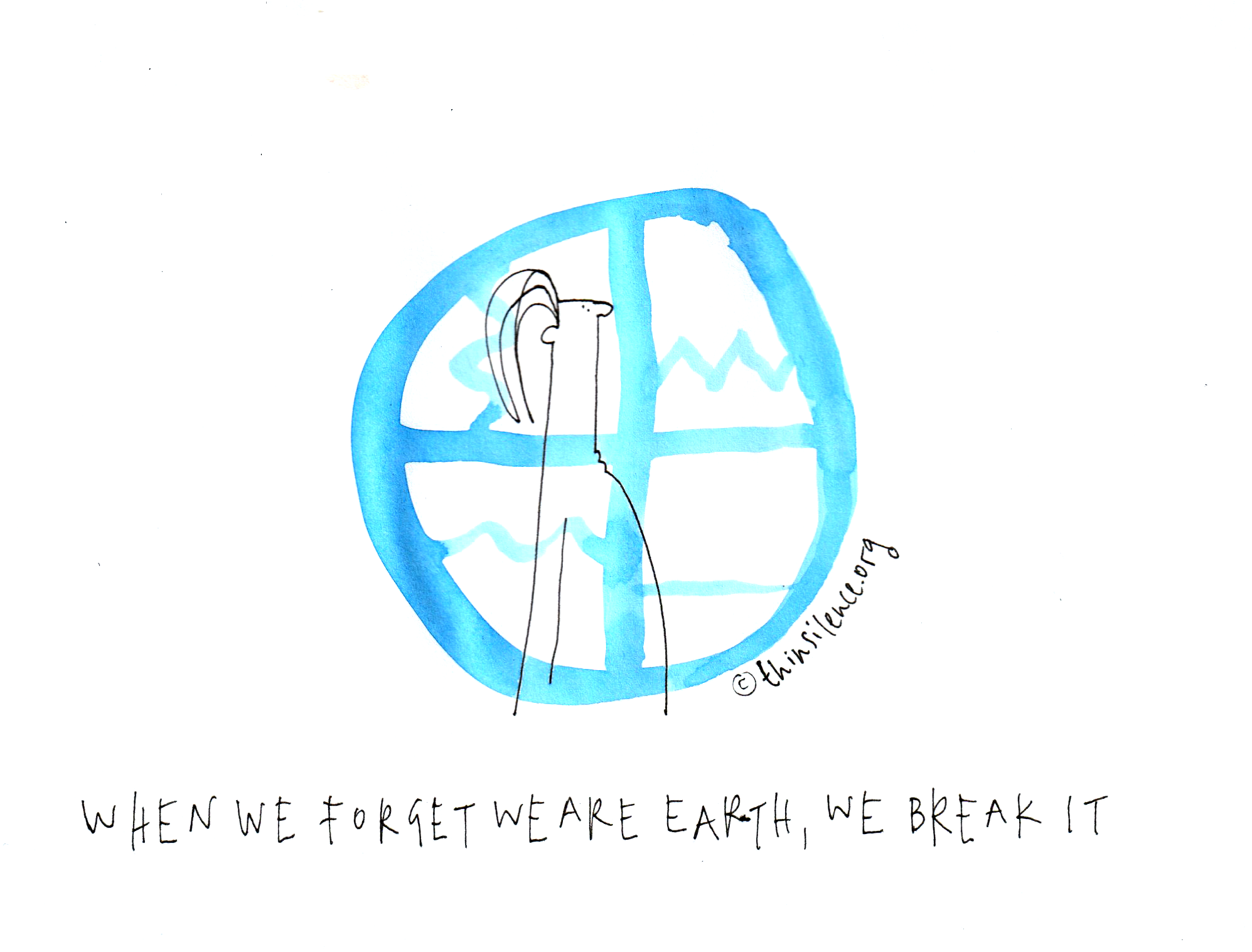
Earth is smarter than us– When we think of ourselves as some super-species apart.
Though when we understand ourselves to be Earth, we get to be smart, too.
The journey into the heart of the natural world is a journey into reverence. It is a journey into seeing the I-am-ness of every life-form and every human being, and never reducing the other to a category of being, whether that be of gender or religion, of race or nationality. I am who I am. And I will be who be who I will be.^
The secret to designing growth loops is not better knowledge or skills, but your ability to think about your own thinking, question your automatic responses, and know your mind.* Anne-Laure Le Cunff
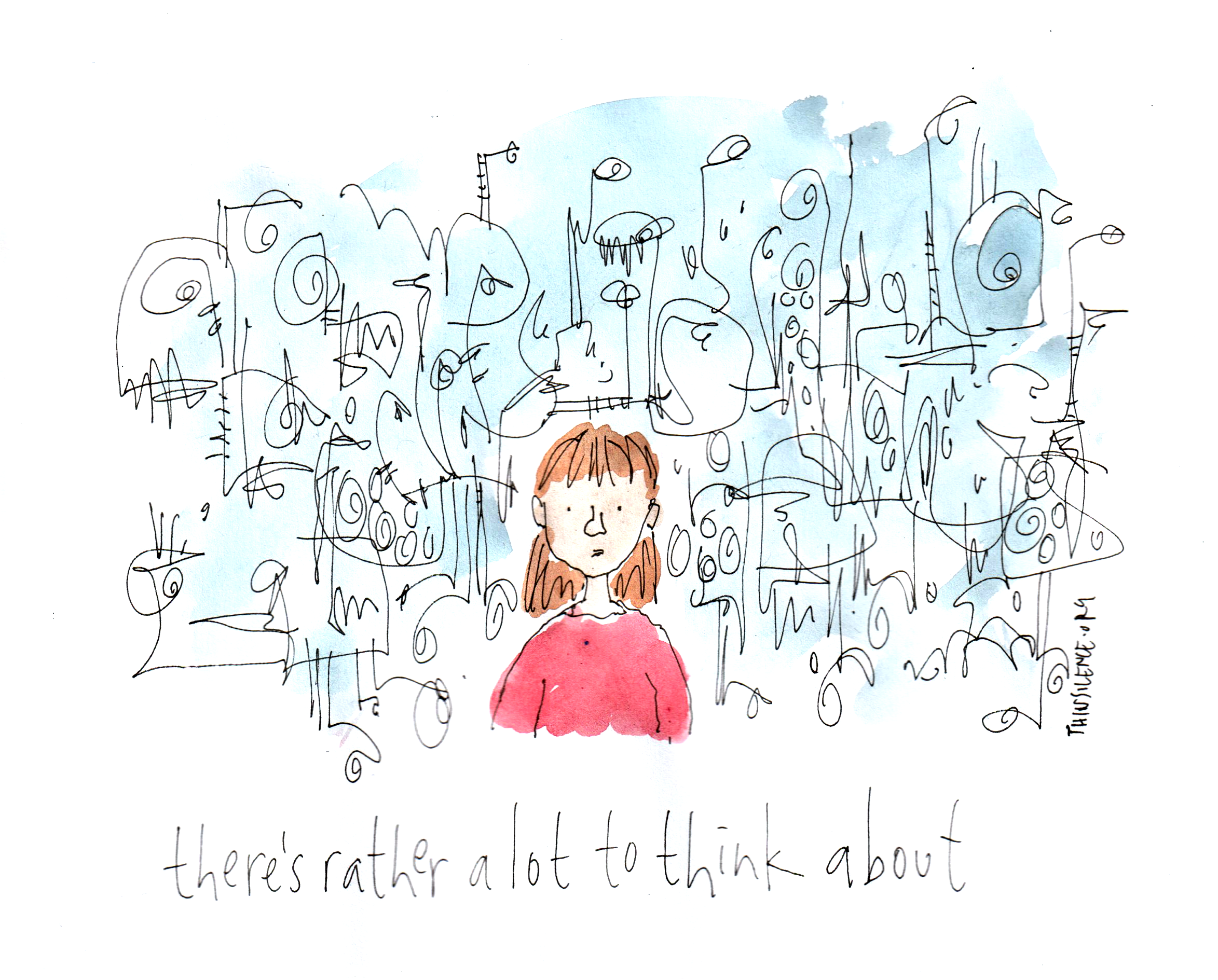
We’re thinking all the time, But do we make time to think about what we’re thinking?
However we go about it, Thinking about our thinking will slow us down– and there’s the problem.
Thinking about thinking in a fast world feels like a luxury, But “slow is smooth and smooth is fast” works in practise.
How we think not only affects the direction of our growth in what we see as positive, It also enables to deal with our anxieties and stress.
Some write their thoughts out in lists and/or journals, others speak them out to hear what they sound like.
There are many ways– Some label it slow thinking,** Others write about elephants and their riders.^
Explore, experiment, Beyond knowledge and skills, Towards your deepest way of thinking.
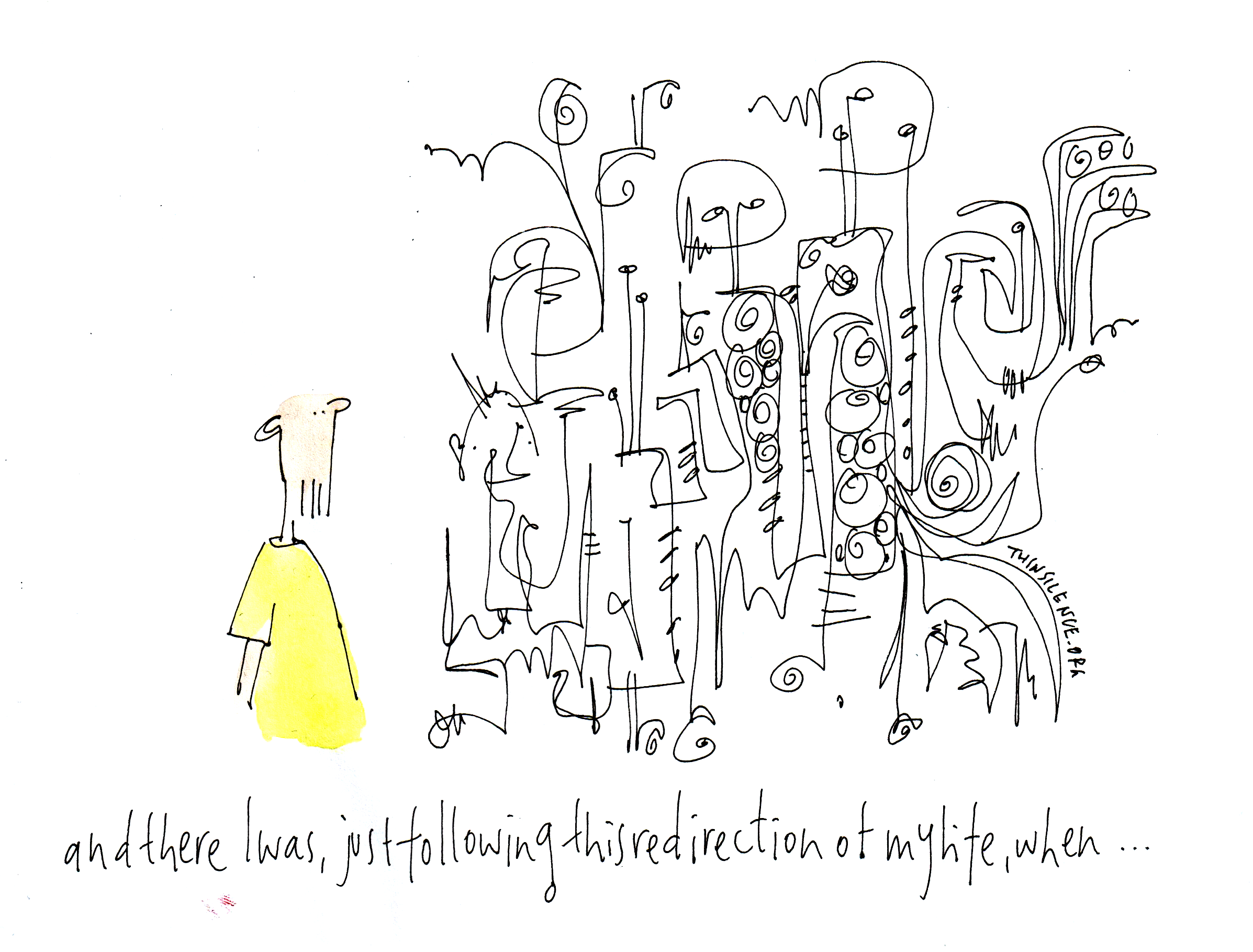
Another obvious case of a call to adventure occurs when something – or someone – has been taken away and you go in quest of it into the realms of adventure. Always the realm of adventure is one of unknown forces and unknown powers.* Joseph Campbell
I must know that I am, at least in part, the very thing I am seeking.** Richard Rohr
Perhaps we find our life most of all through quests– Something is missing and we set out to find it.
The universe asks what will we do with our lives, And whilst some answers come to us, It is more likely a question will ask us to trust our discomfort and need.
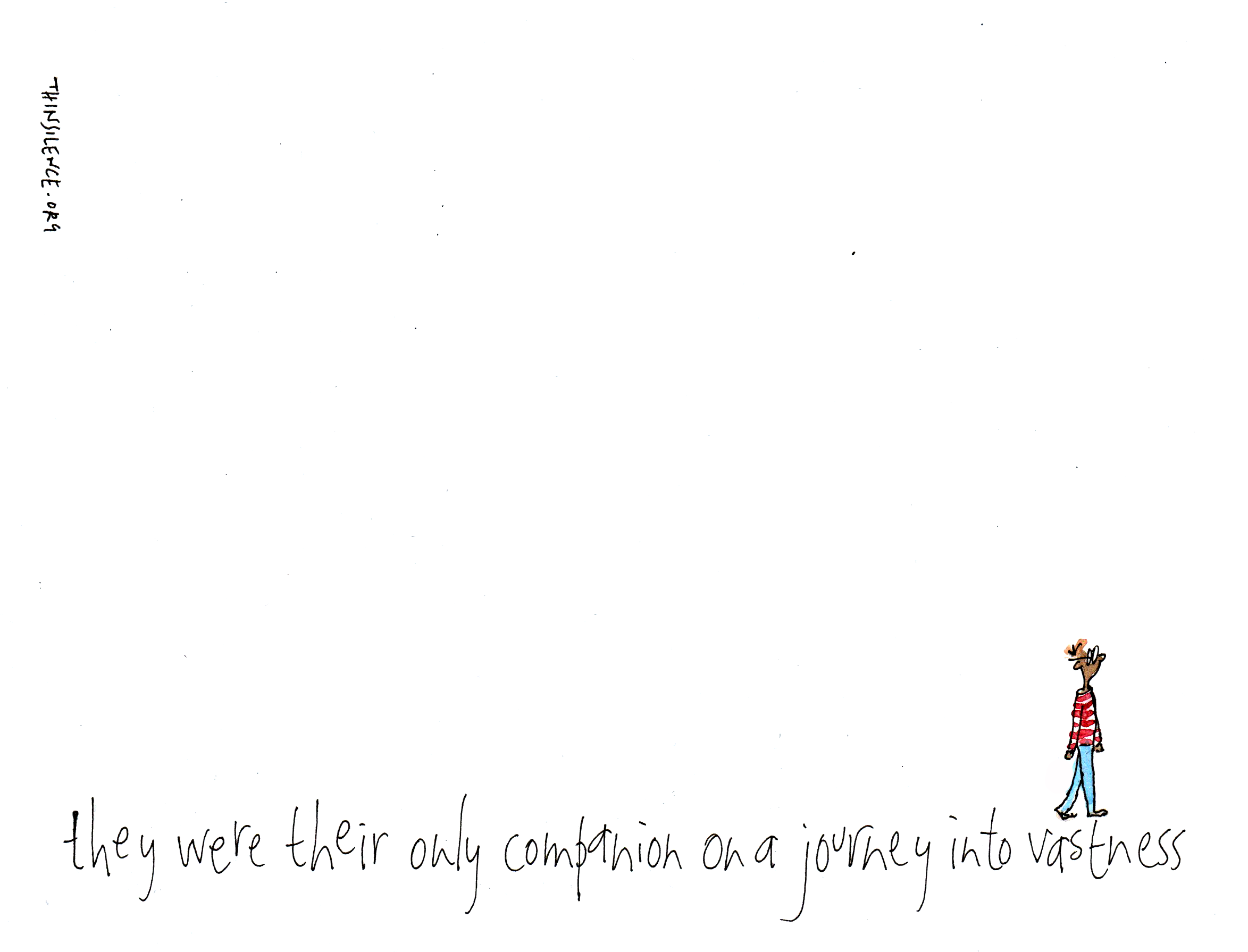
There’ll be companions and guides along the way, But we will likely be joined by a more selfless, generous, Wiser form of ourselves as we progress.
The question to always ask is what is everyone ignoring right now?^



You must be logged in to post a comment.