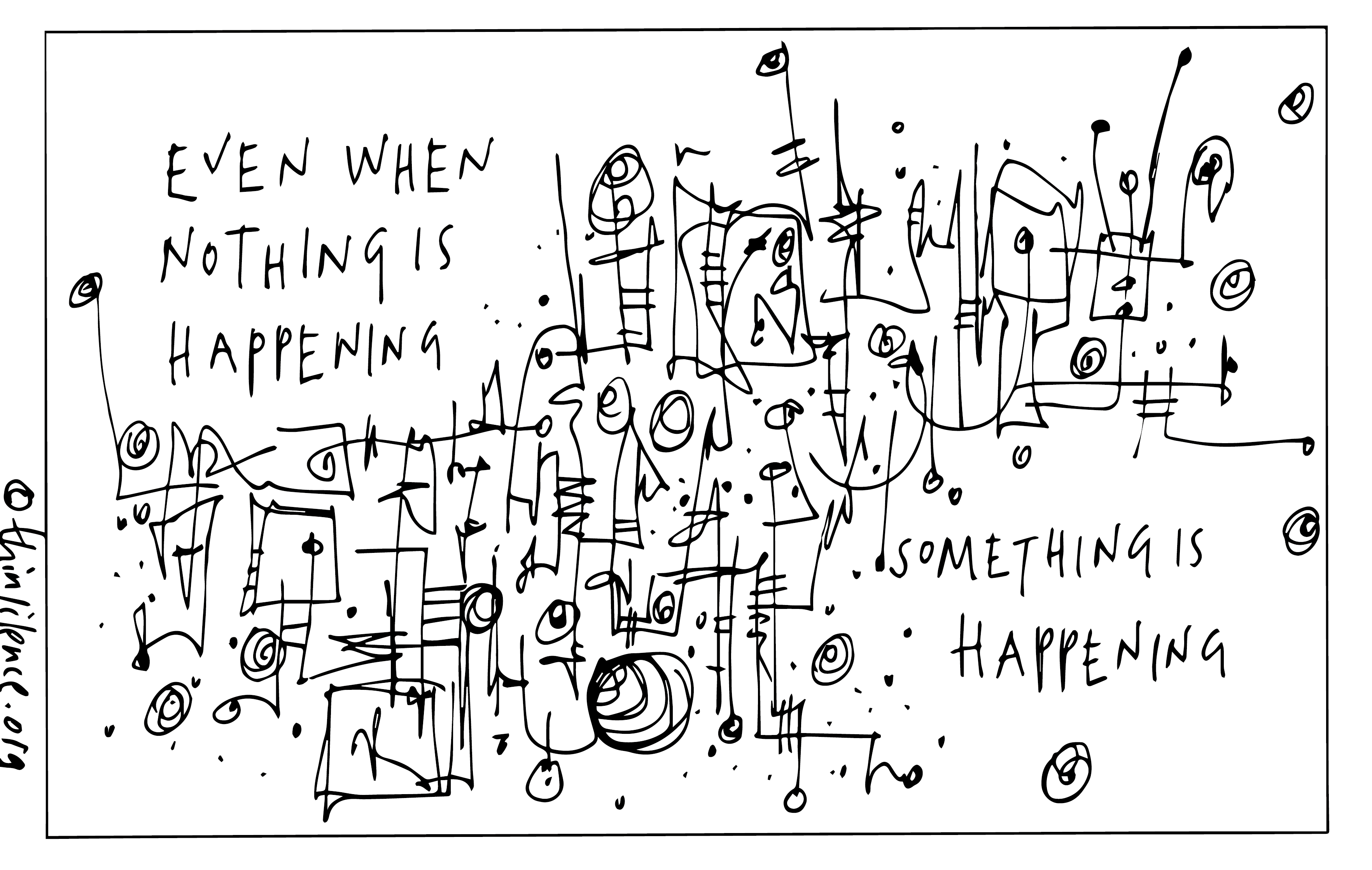
Let’s be still and listen for a while.

Let’s be still and listen for a while.
Afraid of being alone, we struggle to pay attention to ourselves. And what suffers is our ability to pay attention to each other, we lose confidence in what we have to offer others.*
Sherry Turkle
Getting hit by lightning, finding the perfect job, having a djinni grant three wishes–these are all lotteries. … The problem with lottery thinking is that it takes us away from thinking about the chronic stuff instead. The pervasive, consistent challenge that will respond to committed effort.**
Seth Godin
There is more to the inside of us than we know. We’re full of all kinds of whispers: felt senses as Eugene Gendlin named them.
To be with our true self can be an uneasy, uncomfortable and unfamiliar thing, but paying attention to what lies beneath our physical and emotional feelings, and our storyline thinking leads us to both the good friend we can be for ourselves and the accentuating of what we have to bring to others.
Here’s something to narrow the gap between where we are and where we can be, and it only needs a few moments:
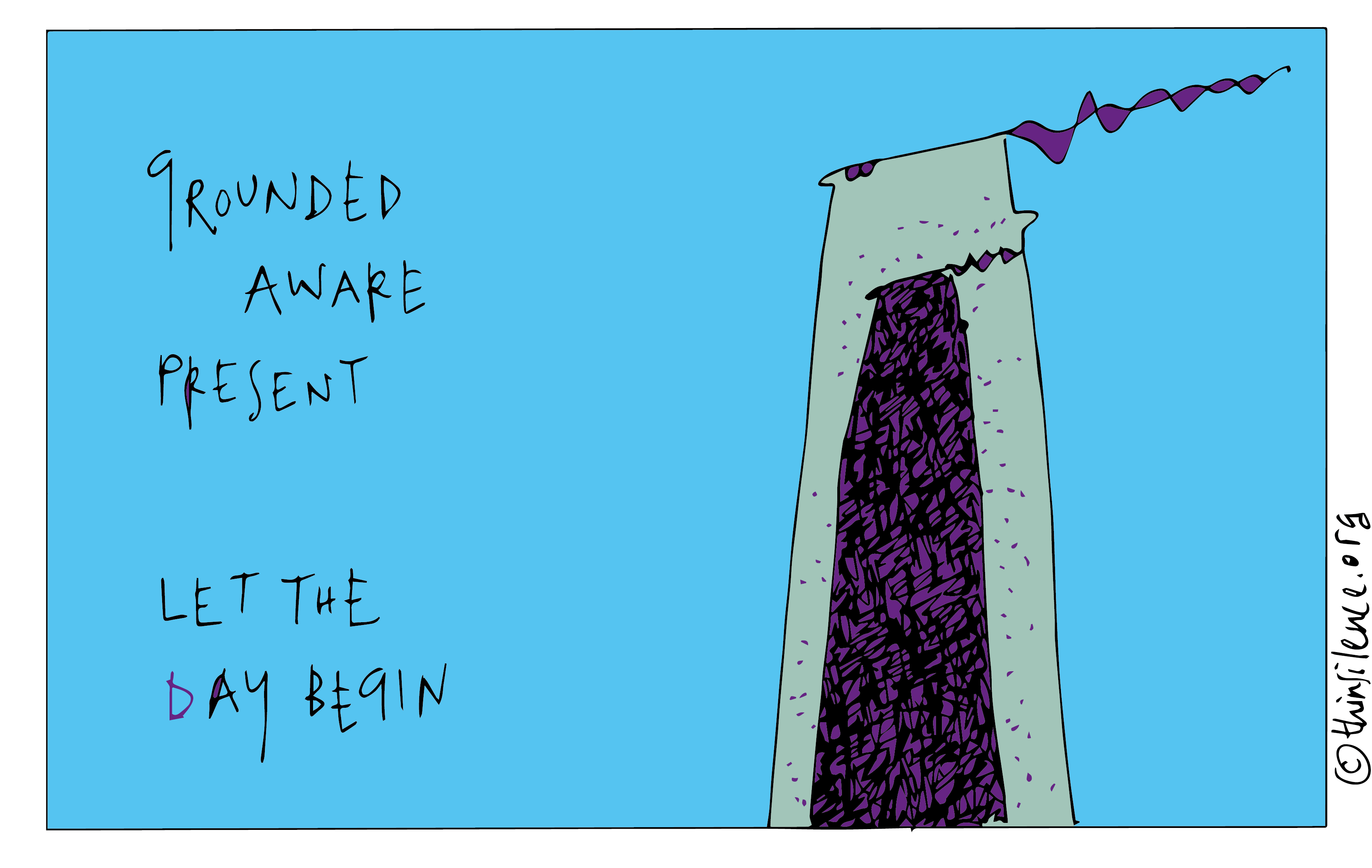
Sit upright and comfortably, closing eyes, with both feet on the floor and notice bring your attention to the weight of your body, most noticeable in the seat and feet. Continue to gently notice this and when you feel able to, say within, Grounded.^
Then bring your attention upwards to your hearing and allow yourself to be aware of all the sounds you are able to hear: perhaps your breathing, technology, trees in the wind, birds. Don’t try to block these out but receive each as part of a symphony of sound. Continue to gently notice and when you feel able to, say within, Aware.
Let your attention now move to the centre of your chest, place your hand over your heart and notice your the beating and your breathing:
You are simply here, alive, breathing, feeling, experiencing your basic existence. It is happening right now, at this very moment.^^
When you are able to, say within, Present.
Extend your awareness to hold the feeling of each: grounded weight, sound awareness and breathing, beating, feeling presence. When you are able to, say within Grounded Aware Present.
Then, when you are ready, open your eyes and take in your surroundings. Reflect on and note if anything has altered or changed, however small.
*From Sherry Turkle’s Reclaiming Conversation;
**From Seth Godin’s blog: Lottery thinking;
^If you go for a walk then simply feel the weight down through your feet;
^^From David Rome’s Your Body Knows the Answer.
And where would be the fun in making something you knew would work*
Neil Gaiman
Lift is created by the onwards rush of life over the curved wing of the soul.**
Robert Macfarlane
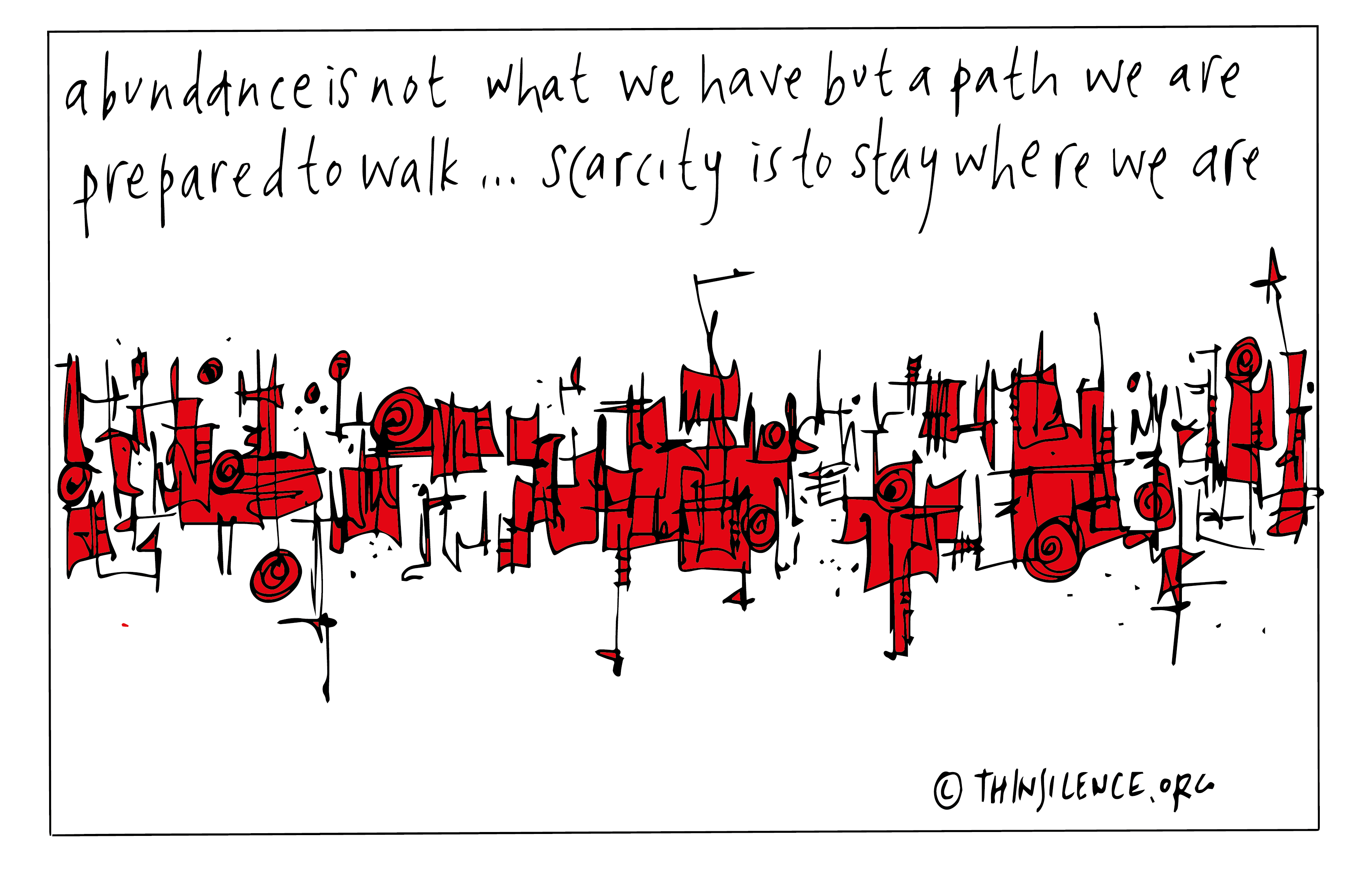
… is also the magical middle.
It is also where failure, doubt, uncertainty, frustration, anxiousness, anger, despair and more are to be found.
There is excitement at the beginning and celebration at the end, but Walt Whitman understood how art and work at its best will have “bare spots and darkness:”
no artist or work of the very first class may be or can be without them^.
Yet it is here in the messy middle that something happens to us.
In its basic form, we become more skilled, but in its most extreme expression, we are transformed.
Like setting of from the certainty of one shore for what will become the surety of another, we can feel lost at sea in the equally unfamiliar and challenging middle. It will ask of us both who we are and what we have, and to trust these. It is, then, where we find flow, and as Mihaly Csikszentmihalyi encourages:
Following a flow experience, the organisation of the self is more complex than it had been before. It is by becoming increasingly complex that the self might be said to grow. ^^
*From Neil Gaiman’s Art Matters;
**From Robert Macfarlane’s The Old Ways;
^From Maria Popova’s Brain Pickings: Beloved Writers on Nature as an Antidote to Depression;
^^From Mihály Csikszentmihalyi’s Flow.
Insight thinking … involves storing information that, for one reason or another, we believe could be useful; recognising relationships between that stored information and what is currently in front of us; and realising combinations of information that aren’t explicit.*
Peter Turchi
Opportunity is another word for a problem to be solved. And opportunity is often there, but it rarely knocks.**
Seth Godin
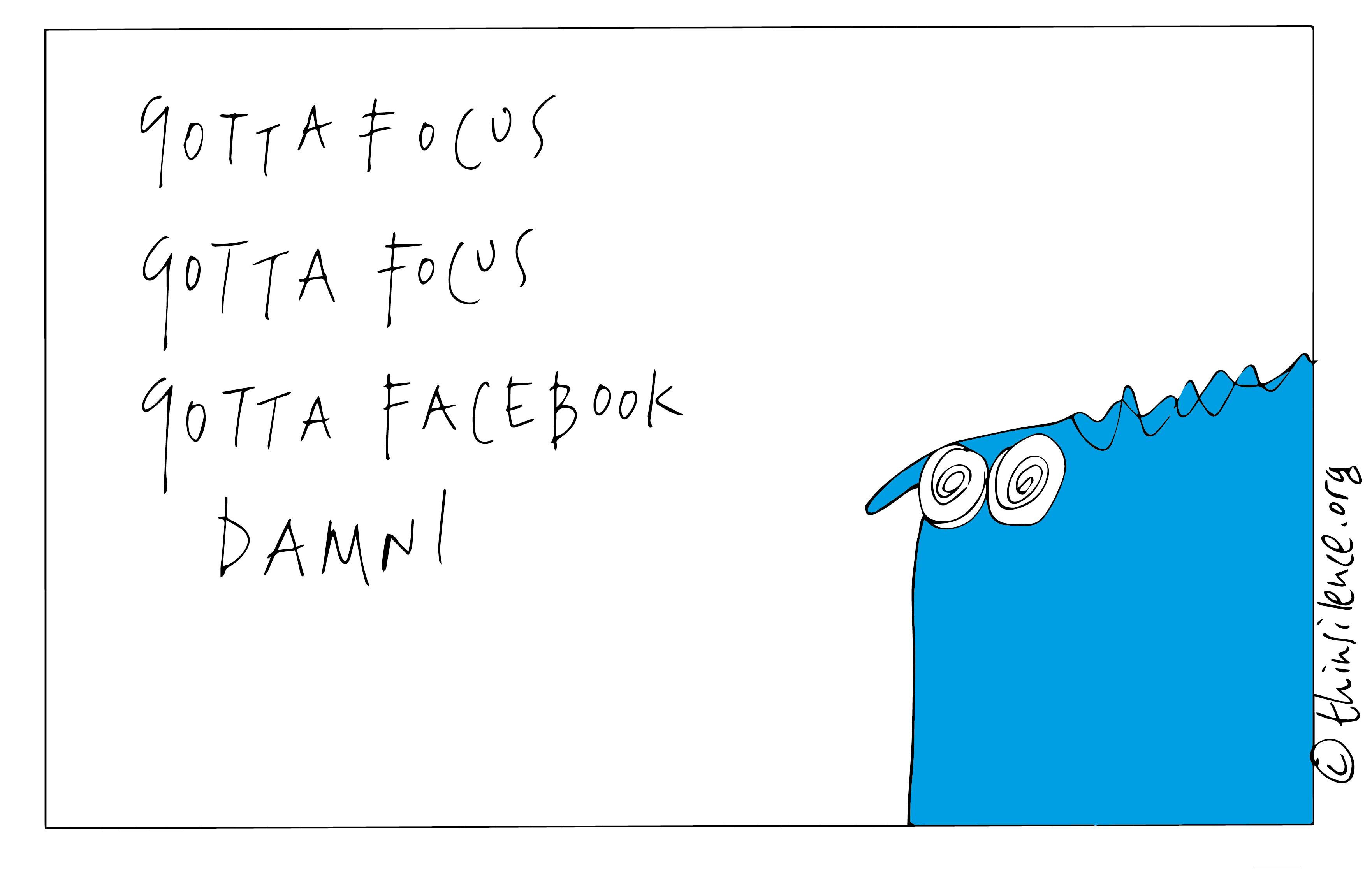
We are well capable of noticing, receiving and storing, a way to prepare for a problem that hasn’t come to us yet, but may well turn into an opportunity if we are able to bring the power of our imagination to bear.
Wallace Stevens notices how the pressure of reality can destroy, or at least, interrupt, our powers of contemplation:
By the pressure of reality, I mean the pressure of an external event or events on the consciousness to the exclusion of any power of contemplation.^
Even as I have been reading and journaling, I notice how my ability to focus and reflect is being restricted by my having to watch the time, knowing that I will soon have to be out into the busyness of the day and all it seems to have been gathering through the week.
Pushed along, I find it impossible to rush contemplation.
Anthony Bourdain catches my attention momentarily, like a branch across a hurrying river rushing me along:
There is art left to be made in this world.^^
How easy to lose the beauty of our artfulness to functionality, or worse, expediency, rather than contemplate and imagine ourselves towards an elegant solution to the problem that has visited us.
*From Peter Turchi’s A Muse and a Maze;
**From Seth Godin’s blog: The chance you’ve been waiting for;
^From Wallace Stevens’ The Necessary Angel;
^^Anthony Bourdain, quoted in Austin Kleon’s blog: There is art left to be made in this world.
The curious paradox is that when I accept myself as I am, then I can change.*
Carl Rogers
To listen takes time, … to learn to hear the world within and the world without, to attend to the quiet voice of life and heart alike.**
Maria Popova
When responsibility showed up in my list of talent themes it made a great deal of sense, except in a back-to-front way. Although I could be in a group, when a question was asked or a volunteer sought, I felt as if I was being asked directly.
I now realise that taking psychological ownership for what I do is important to me, but I can also chose what that is, and it comes to me from inside: what I must do rather than what I should do.
We’re all responsible for something; part of the adventure of life is identifying just what this might be.
*Carl Rogers, quoted in David Rome’s Your Body Knows the Answer;
**From Maria Popova’s Brain Pickings: An Illustrated Ode to Attentiveness and the Art of Listening as a Wellspring of Self-Understanding, Empathy for Others, and Reverence for the Loveliness of Life.

It is this, I think, that draws us to books in the first place, their nearly magical power to transport us to other landscapes, other lives.*
David Ulin
There comes amount in doIng your reading where your work begins to rhyme, When you start to see the connections.**
Seth Godin
Robert Macfarlane visits Miguel and Elena Angel Blanco’s Biblioteca del Bosque (Library of the Forest) made up of “books” that are reliquaries of forest items gathered “as a pilgrim, not a conqueror.”^
Miguel instructs Macfarlane as he partakes of this beguiling library:
Choose three books from the library. The first tells you of your past, the next shows your present and the last will see you future.^
Elena continues:
the books will choose you, not the other way round.^^
I found myself wondering about the books that have had a significantly directing influence on my life, that I felt had been written just for me.
Though I retain many books in my “library,” I know there are some that are more important to me than others: my reference library.
What’s in your reference section?
*From David Ulin’s The Lost Art of Reading;
**From Seth Godin’s blog: On doing the reading;
^Miguel Angel Blanco, quoted in Robert Macfarlane’s The Old Ways;
^^Elena Angel Blanco, quoted in Robert Macfarlane’s The Old Ways.
there’s a lot of pressure to be the one who’s sure, the person with all the answers. Far more valuable is someone who has all the questions. … Rarest of all is the person with the humility (and confidence) to realize that even the list of questions can remain elusive. Finding the right questions might be the very thing we need to do.
Seth Godin
If we have more questions than answers at the end of our lives does it mean that we have journeyed to the edges rather than settled for the centre?
*From Seth Godin’s blog: All the answers

we live in a culture of compliance, that we are ever more conditioned to accept orthodoxy as normal, and to accept that there is only one way of doing it*
Ursula Franklin
Good to know.hughcards
Look beneath the surface of who you are and what you do and you’ll begin to see your life at a values times talents times energies level. This is where we can make some changes.
*From Ursula Franklin’s The Real World of Technology.
Where one great harmonía joins together nature, society and heaven, trickster meddles with the harmoí. … unmaking old harmonies and sometimes, especially if he has a lyre of his own, singing new ones to fill the ensuing silence.*
(Lewis Hyde)
Inquiry: What’s so brilliant about learning?
Reply: We can learn how to do that?
I’m not aware of being prepared for learning at school, or helped to make much sense of what was happening to me there. School and learning was something that happened to me, as it had been for my parents, born in 1909 and 1919.
There were four surviving children in my immediate family and only one went on to university, and it wasn’t me.
I came to learning much later, in my late thirties, but I will now be a learner until the day I die, and, who knows, maybe beyond.
I had asked my question about the genius of learning to someone exploring their talent themes** and this had been their answer.
Wonderful!
The thing is, the more we learn the more we can meddle, leaving things better than we found them.
*From Lewis Hyde’s Trickster Makes This World;
**See Gallups’s StrengthsFinder.
Joy tends to involve some transcendence of self. … Joy often involves self-forgetting. … We can help create happiness, but are seized by joy. We are pleased by happiness, but we are transformed by joy.*
David Brooks
Worry less about making a mark. Worry more about leaving things better than you found them.**
Austin Kleon
Knowing ourselves becomes foundational to opening up life and finding our purpose, which is another way of saying: to make a difference for others.
Robert McKee links knowing ourselves with the ability to create human characters for believable stories, but I hope we can also use them as encouragement for knowing ourselves so that we can produce something valuable for others:
The only self you ever know is yours, and even then there are limits. Self-deception distorts self-awareness, and so you never know who you are as well as you think you do. Self-knowledge is imperfect, but it’s all you have. If you know yourself only in part and other people even less, how can you create original, complex characters?^
I recently shared that I am more okay about being forgotten. Thank you to Lewis Hyde for this.
What I do find myself increasingly wanting is to make a difference for others when it comes to becoming more who they are and can be. Therefore, when David Brooks writes about self-forgetting being an outcome of joy, I am more determined to move into those activities that mean I shall be seized by joy, in making a difference for others but also working its strange alchemy in me for the better.
This is for you.
*From David Brooks’ The Second Mountain;
**From Austin Kleon’s Keep Going;
^From Robert McKee‘s newsletter: The Key to Character Creation.
 THIN|SILENCE
You must be logged in to post a comment.