If you’re unwilling to interact with uncertainty, then you’ve greatly limited who you are and what you’ve become. You’ve limited your ability to make choices, because all choices involve uncertainty and risk.** Ben Hardy
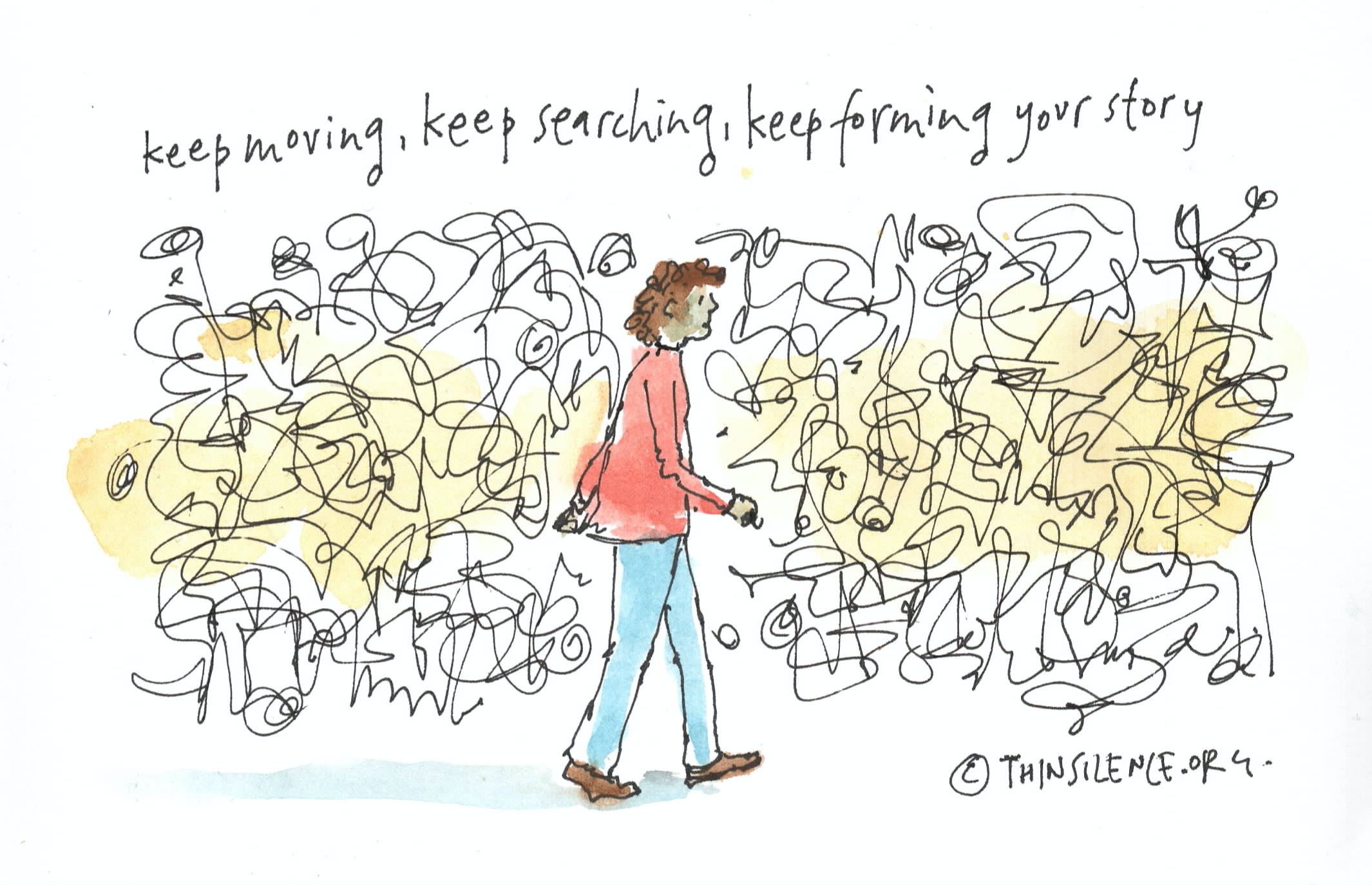
There’ll come a time when it’s necessary to move on, When the risk of remaining within your familiar is greater than that of moving into the unknown.
“Good story” means something worth telling that the world wants to hear. Finding this is your lonely task.* Robert McKee
Do we also recognise that we already have within us everything we need for our own becoming?**
The unique life does not come to us whether we are rich or poor. Each must explore towards its discovery:
writers of unique characters underpin their creativity with research^.
Journeying both outwards and inwards, Paying attention, asking questions, Gathering riches, trading wonders, imagining, curating, Offering a gift to someone, somewhere.
Our deep joy meeting someone’s great need.
*From Robert McKee‘s newsletter: Why a Love of Good Stories Is Not Enough; **From Mary Ruth Broz and Barbara Flynn’s Midwives of an Unnamed Future; ^From Robert McKee‘s newsletter: The Secret of One of a Kind Characters.
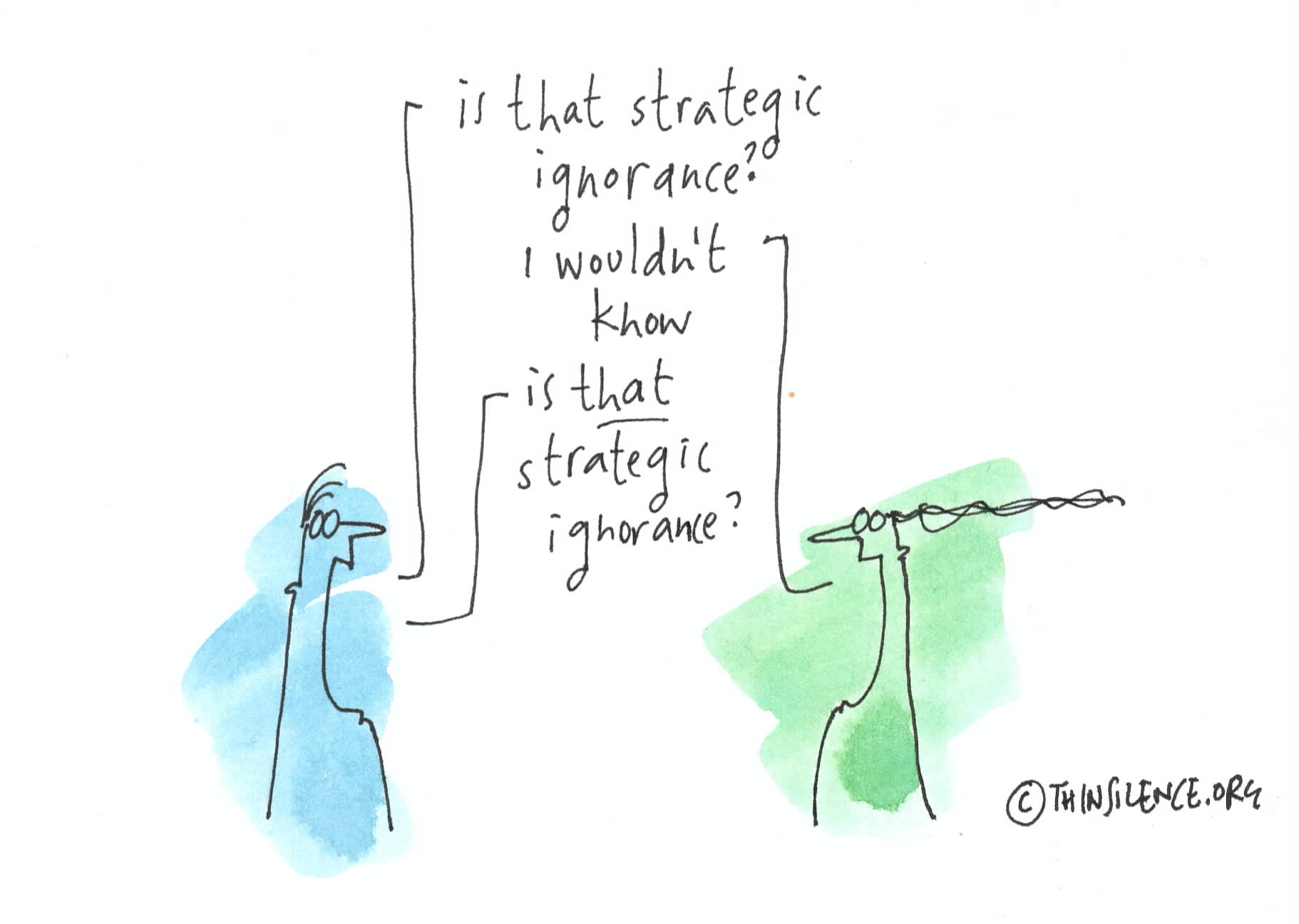
Strategic ignorance is not being close-minded. … Selective ignorance is not avoidance of learning. … It’s knowing what to avoid.* Ben Hardy
Generally my feeling is towards less: less shopping, less eating, less drinking, less wasting, less playing by the rules and recipes. All of that I want in favour of more thinking on the feet, more improvising, more surprises, more laughs.** Brian Eno
Choose your way well, Be unmovable, Pulled neither to the left or to the right.
There will be many things that are less but are dressed as more, Promising but disappointing.
Being a writer is a act of self-authorisation. No matter who you are. Only you can authorise yourself. You do that by writing well, by constant discovery.^
More vitally, This is true for being human. We choose our way And we live well: Imaginatively, creatively.
Sometimes we lose our way And we live badly. Then it is time to be kind and to forgive. To begin again, Even to be born again, And, having discovered more, Carry kindness and forgiveness with us.
There are many difficult riches trapped in the shadow side. Jung said the shadow held 90 per cent gold.* John O’Donohue
With vision above and reality at the base, creativity resides between the two.** Kelvy Bird
I found myself exploring two themes this morning.
One: the need to do the creative bit in the middle, between reality and imagination.
Two: the need to get on with people by engaging the “gratitude tense“:
Don’t fight with people, study them.^
I wondered whether these themes might come together in some way?
Perhaps we imagine a different reality but we have to somehow give it form.
Unexpected others may be the best way into this creativity.
May we listen gratefully for as long as we are able.
*From John O’Donohue’s Divine Beauty; **From Kelly Bird’s Generative Scribing; ^A slightly altered phrase from Austin Kleon’s advice for Thanksgiving “Don’t fight with your family., study them: A gratitude zine.
Lisa Germany wanted to put on a photography exhibition. The result was “In My Backyard.”
The work of ten local photographers of Nuuk, Greenland, the only limitation was an extension of the backyard to 300 metres from their homes, vertically as well as horizontally.*
What if you were to engage in something similar?
What would you want me to see from your “backyard.”
Never one to miss a metaphor when it offers itself: what about the things from your life that you have come to appreciate over the years, though perhaps hadn’t at first?
How would you represent these?
A story, a picture, a doodle, a sculpture, a planting?
Ben Hardy offers five steps for making the shift from something missing in our lives – a gap – to something important – a gain:
Shift past meanings from Gap to Gain
Think of 1-3 Negative Pat Experiences
List all the benefits of these
Have a conversation between pas and future self
Change the past self’s identity narrative.*
*The project also encouraged Nuuk locals to participate with their own pictures. **From Ben Hardy’s Personality Isn’t Permanent.
My past is working for me, not Against me, Not to me. My constant companion, I welcome some of what it shares and regret others, And yet it is my teacher, guide, encourager To live today well, And where I don’t, It will be there for me tomorrow, My helper and loyal friend.
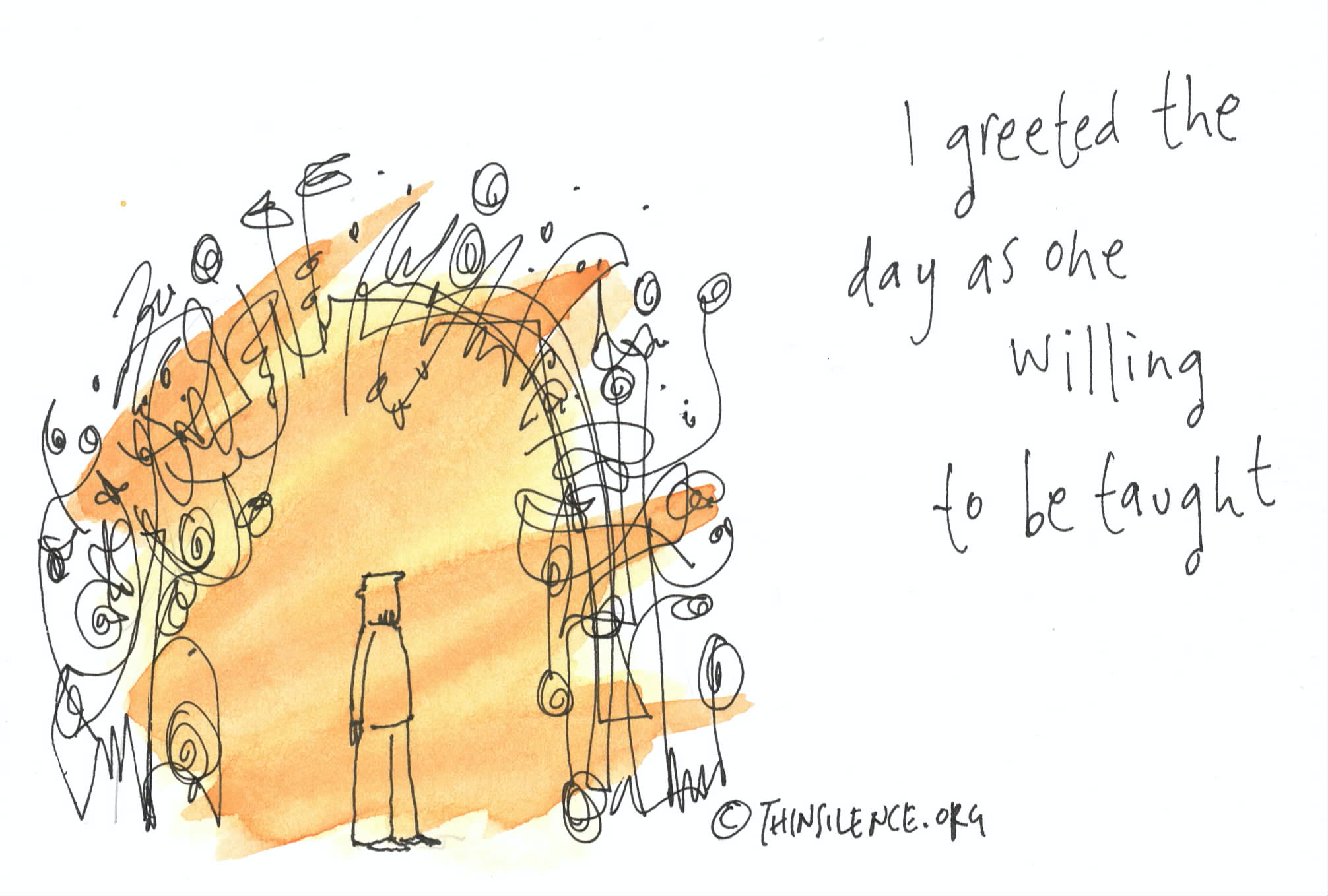
I know I am not the person I need to be, Nor the person I could be – there is still possibility, thankfully; If I am willing to learn, If I humble myself before my teachers, Today, And again, tomorrow.
Writing well and reading well mean paying attention to all the subtleties embodied in a sentence In its exact form and no other.* Verlyn Klinkenborg
Notice everything about your life.
Say it all to yourself and hear everything..
The pain as well as the joy, The trauma as well as the triumphs:
Trauma in a variety of forms, is part of each of our lives. It includes any negative experience or incident that shapes who you are and how you operate in the world**
We may believe that to live our desirable life there must be no shadow, no darkness. Stephen Gilligan and Robert Dilts suggest that we not only carry a gift within us, But also a woundedness.^
We are not only our gift, We are not only our woundedness:
Works of art are born from the conflict of life. … Life is about the ultimate questions of finding love and self-worth, or bringing serenity to inner chaos, of the titanic social inequities everywhere around us, of time running out.^^
So we pay attention to all these subtleties embodied in our lives, Somehow creating from this unlikely mix our lives-in-all-their-fullness.
If a woman holds on to this gift of being old while she is young and young while she is old, she will always know what comes next.* Clarissa Pinkola Estés
Pursue clarity … . In the pursuit of clarity, style reveals itself. Your clarity will differ from anyone else’s without your intention to make it differ.** Verlyn Klinkenborg
When I was younger, I used to say that I was born old.
I was trying to live wisely and have enough discipline as a young man not to mess up (too often).
Now I’m old, my hope is to have enough vitality. Enough joy, too:
Now is the time to free the heart, Let all intentions and worries stop, Free the joy inside the self, Awaken to the wonder of your life.^
May the discipline continue. To stay curious, explore some things deeply, keep talking with and learning from amazing people of all ages, try out some new things.






 THIN|SILENCE
You must be logged in to post a comment.