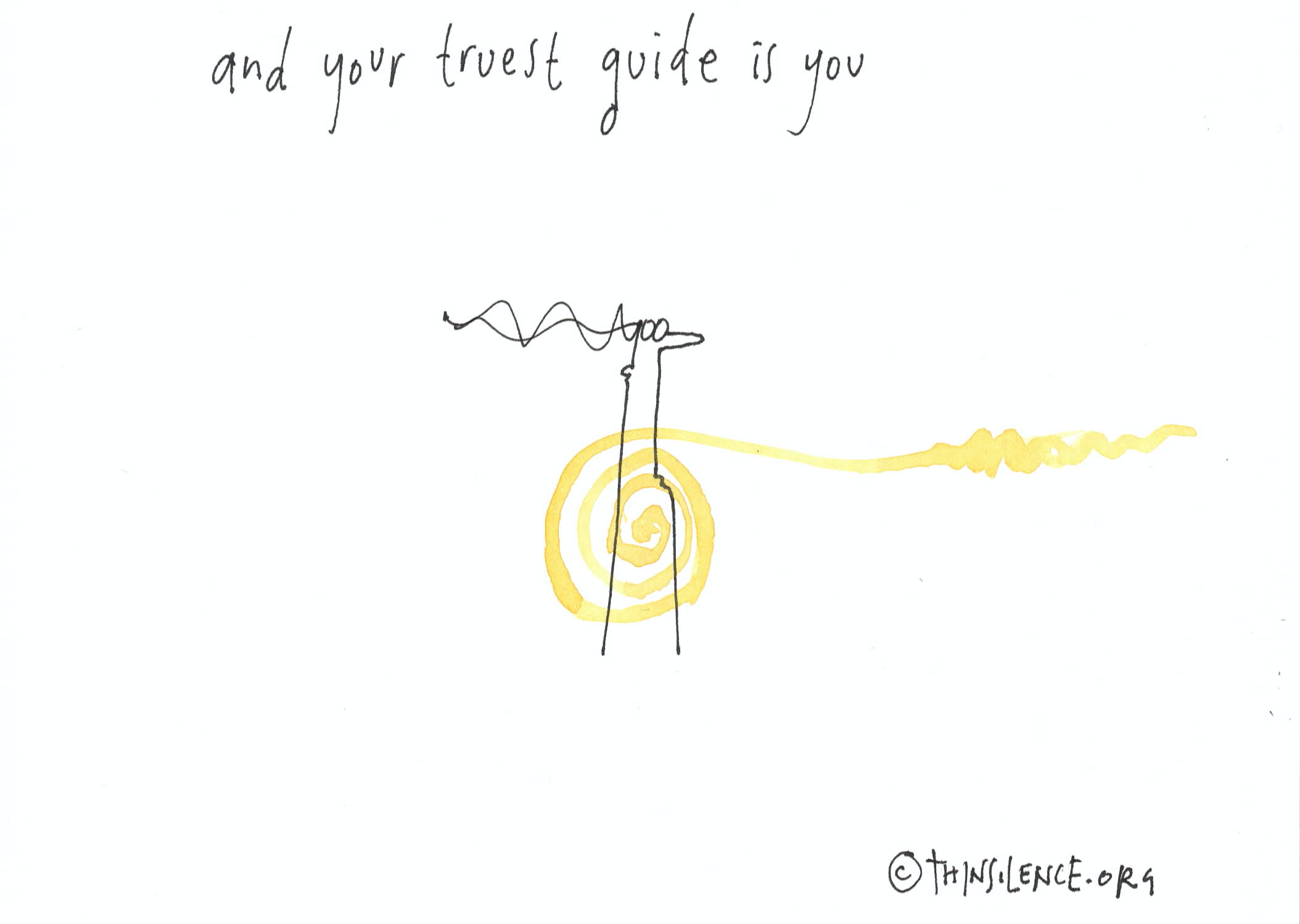
There is something in every one of you that waits and listens for the sounds of the genuine in yourself. It is the only true guide you will ever have.* Howard Thurman
The relationships of thinking and feeling are at the heart of the creative process in all fields, including the arts and the sciences.** Ken Robinson
This is the story we find ourselves in.
Members of the hive, Each is also one, Genuine, Unique.
Your genuine is not mine and my genuine cannot be yours, The something–different in every one of us.
In our thinking, But beyond it. In our feeling, And yet beyond it. Beyond, In our openness to all and everything and everyone.
I think what we’re seeking is an experience of being alive, so that our life experiences on the purely physical plane will have resonance within our innermost being and reality, so that we actually feel the rapture of being alive.* Joseph Campbell
I want to know I have lived.
The important thing may not be for me to see the fruit, Perhaps I will have to take these by faith.
The important thing, Or so it seems, Is to know I am doing the right things, Most of the time, For the sake of others.
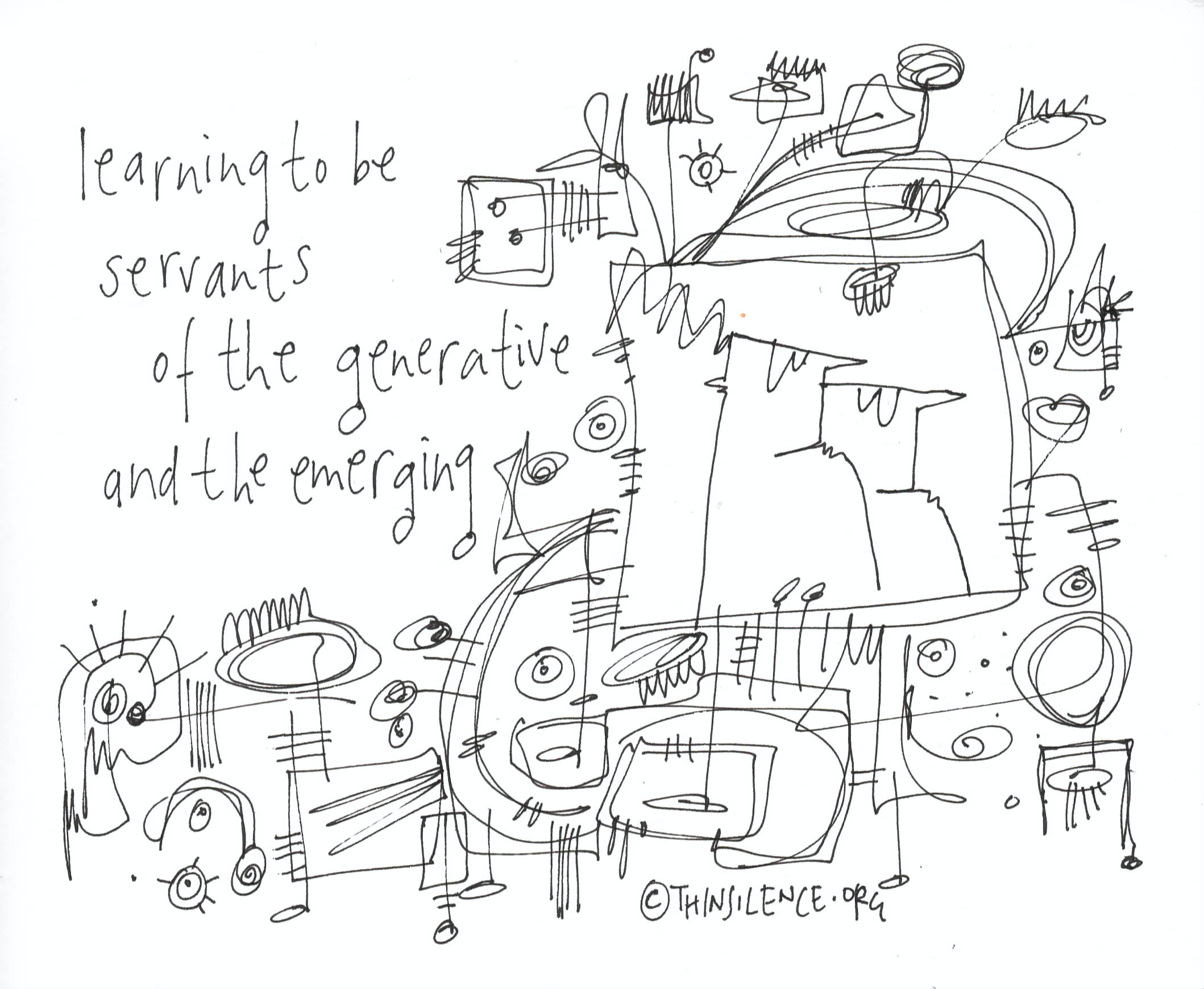
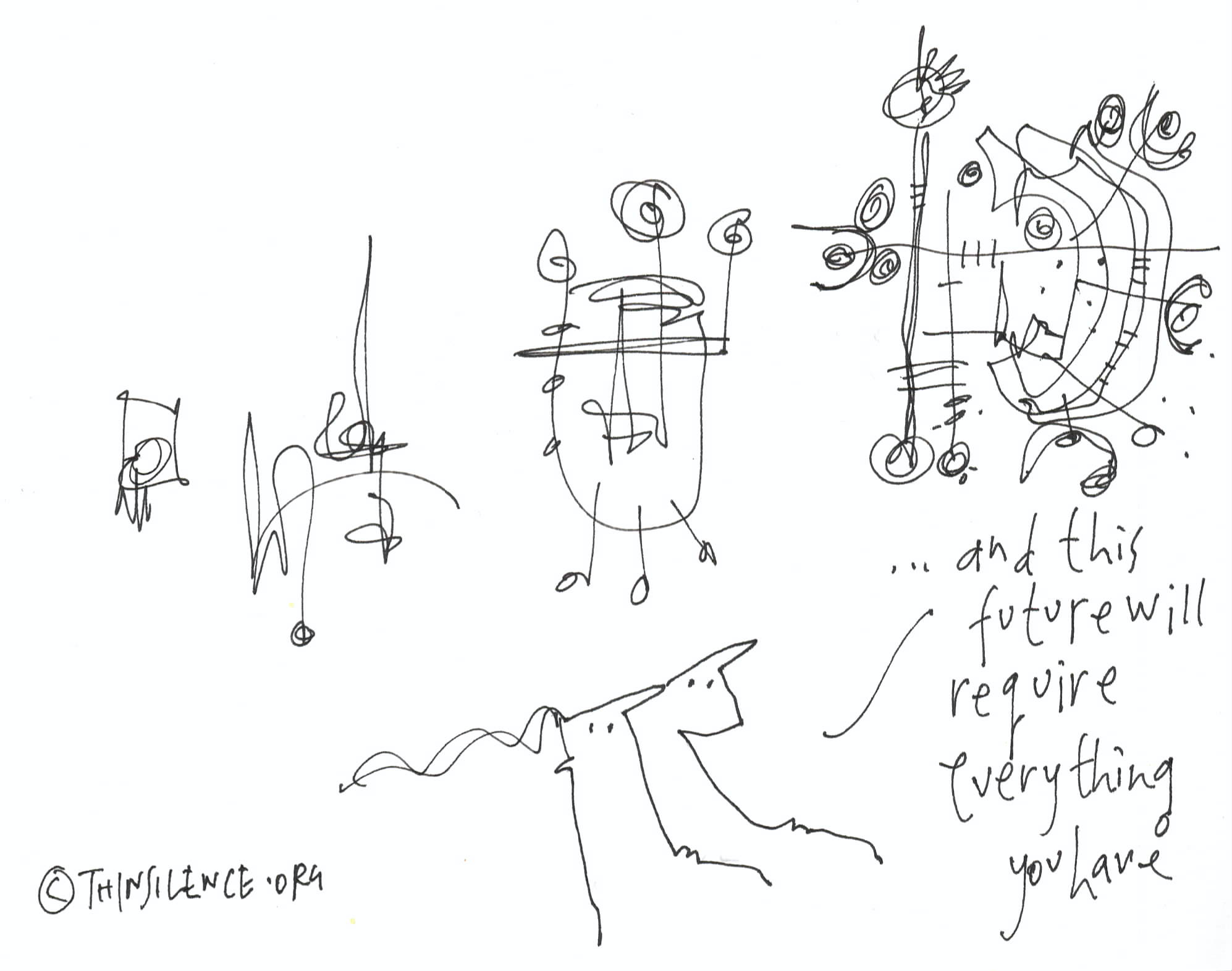
For this, I open my mind: Thoughts, thoughts, thoughts. I open my heart, Feelings, feelings, feelings. But beyond these, A generative field field of possibility, possibility, possibility.
religion and philosophy what I’d learned in the churches and schools were all too heavy for this travelling life all that remained to me was poetry but a poetry as unobtrusive as breathing a poetry like the wind and the maple leaf that I spoke to myself moving over the land**
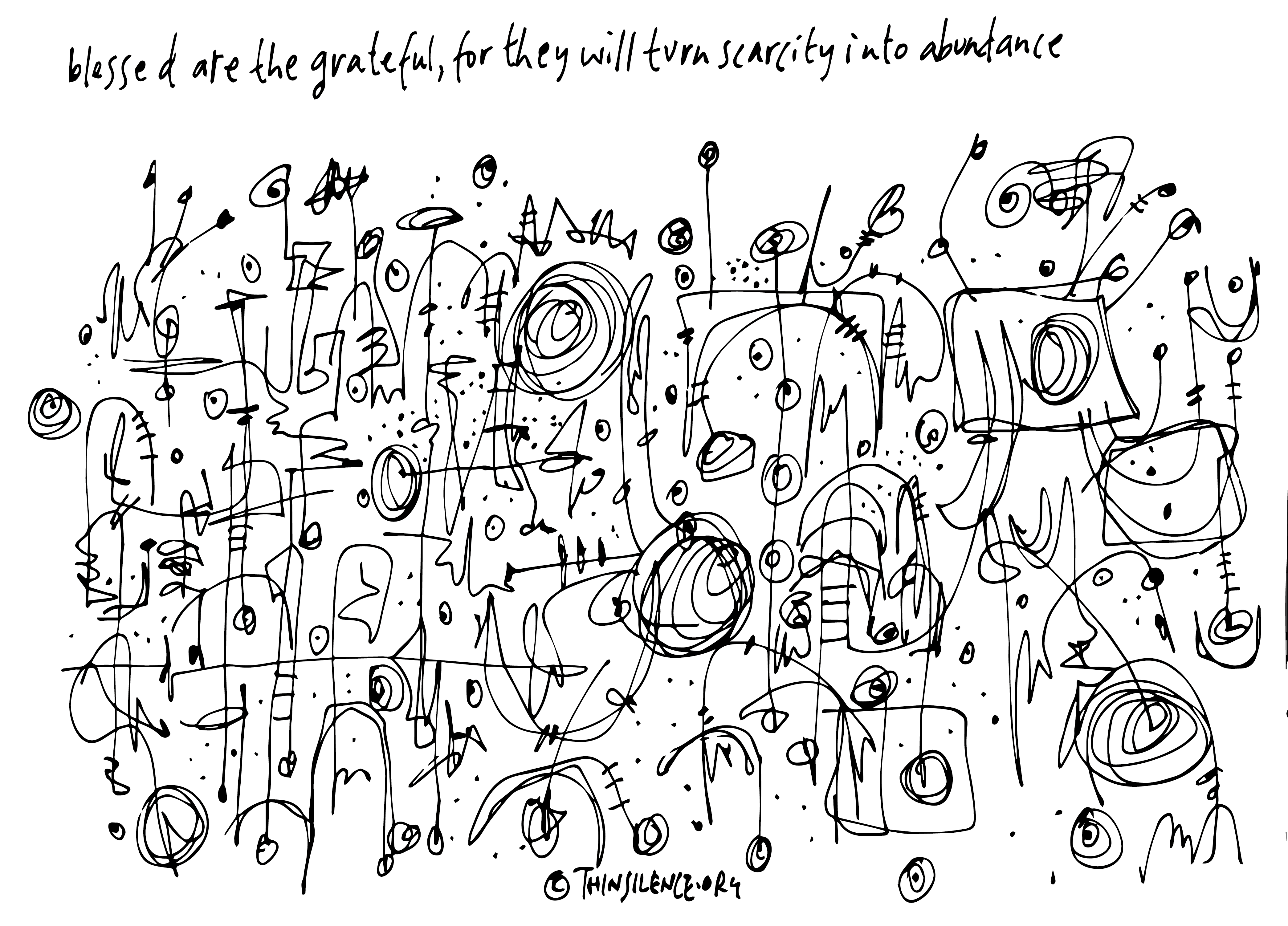
Everything changes once you see how the universe is designed for abundance and not for scarcity. It not only changes the condition of your life but it changes you.** Erwin McManus
To be generative, you cannot be only serious. You’ve got to be able to play.^ Robert Dilts
It has been said that we live in a universe in which life eats life. It isn’t difficult to see where the notion of the universe being a place of scarcity comes from.
The first elemental truth states that life is hard,^^ But … .
The but is important, It’s where something quite wonderful can take place.
In one sense, the universe is neither a place of scarcity nor abundance, It is what it is.
Scarcity and abundance exist in our higher consciousness, How we see and how we behave makes all the difference.
Quite unaware, The universe has opened a field of possibility for us, Resulting in our species’ unmatched awareness, With all of its inquisitiveness, questioning, imagining and creativity.
Quite simply, we are generative beings, Capable of opening or withholding fields of possibility both for ourselves and for others.
Not to put too fine a point on it, Abundance and scarcity are found in our hands.
Therefore, many beliefs, faiths, philosophies and religions encourage us to play.
devote yourself to nourishing this animating spirit. Bring all your enthusiasm to bear on the development of that good and essential force*^.
Being creative is not only about thinking: it is about feeling. … Feelings, hunches, subconscious perceptions and intuitions can all play a central part in creative work, and not only in the arts.* Ken Robinson
In which areas of your life are you still holding back until you feel like you know what you’re doing?** Oliver Burkeman
I’d rather stay in here, thinking, Then be out there, feeling.
People get hurt out there all the time. Sometimes they never recover.
Perhaps missing out on possibility is a price worth paying, But is this life?
Maybe this is the greatest quest of all, Outside of myself, In the endless undiscovered?
Perhaps that was the real guest of this adventure, the infinite quest for connection with everything, everyone, everywhere, always – the quest to let down my barriers, let go of my agendas and expectations, and simply be open to who and what may come, now and next.^
Karen Armstrong assures me there are three outcomes to this stepping out of myself, This experience of ekstasis, And they are:
(1) to recognise and appreciate the unknown and unknowable; (2) to become sensitive to over-confident assertions of certainty in ourselves and other people; and (3) to make ourselves aware of the numinous mystery of each human being we encounter during the day.^^
It feels like this could be quite a day.
A simple exercise to try: At an appropriate moment, Stop what you’re doing, Take one step forward as a physical expression for stepping outside of yourself. Whether you are looking upon a natural or human scene, Allow it to come to you without preconceptions or labels. Simply be curious, For a moment, And see what happens, Or wantS to happen.
I am not what has happened to me. I am what I choose to become.* Carl Jung
But true healing and transformation come from being able to sponsor the wound, sponsor the demon, sponsor the shadow.** Robert Dilts
We too easily dismiss parts of our lives as unimportant, Or undesirable, Or unpleasant.
We hide them away, Not wanting to afford any light to these, For our own sake, And certainly not for others to know of them or to see them.
It’s not the strongest of the species that survives, more the most intelligent that survives. It is the one that is most adaptable to change.^
There is the possibility that we are limiting our story –
a story is an account of a character, in a set of circumstances, facing choices, who undergoes change^^ –
The possibility that our largest story involves making a space for our wound, our demon, our shadow, To hear what it wishes to speak to us, or to show to us, or simply to hold us in. Beyond it’s clumsy and crass way of catching our attention.
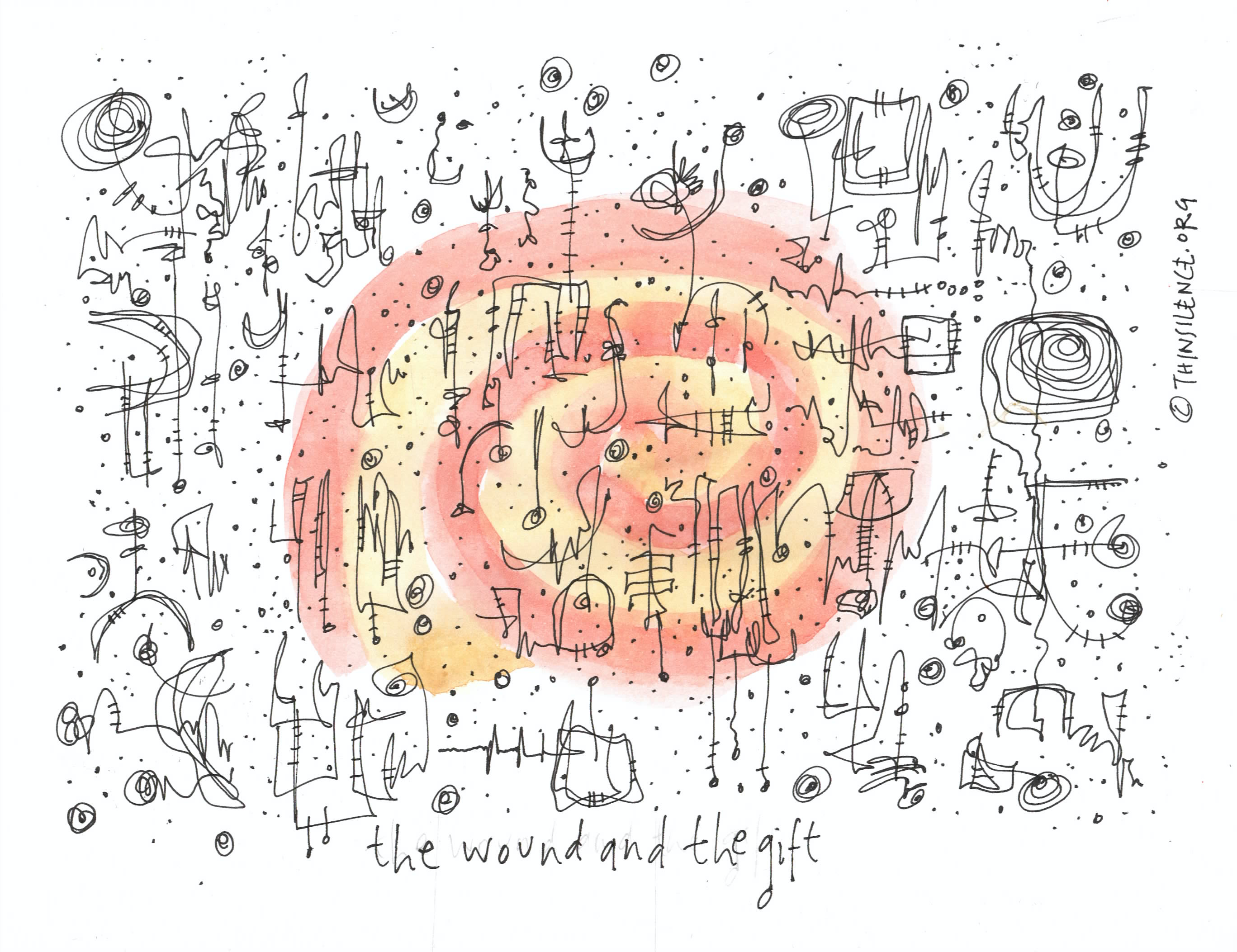
We each carry within a wound and a gift. Sometimes our wound is our gift.
We may first need someone to be our sponsor, Or be this sponsor to ourselves. Without judgement, Curious, listening, inquiring, allowing for transformation. Making it possible for us to unwrap our larger story that is our unique version of life-in-all-its-fullness.
If you’re serious about changing yourself and your life, you must change your environment.* Ben Hardy
your ordinary ego mind isn’t enough for your hero’s journey** Robert Dilts
You have set out on your hero’s journey, You are living your story, And then comes the obstacle, the issue, the problem.
It’s spoilt everything. Or has it?
What if the interruption is the story, That you need this to become the person you must be to realise your calling?
It has always been so.
There is no pre-laid super-highway of destiny or fate, Only the grafted path shaped by the feet of the one who must walk this way, even while it shapes the character of this soul.
Time is where eternity unfolds. The contemplative has always recognised the morning as the time to welcome the new day with a sense of creative expectation and openhandedness.* John O’Donohue
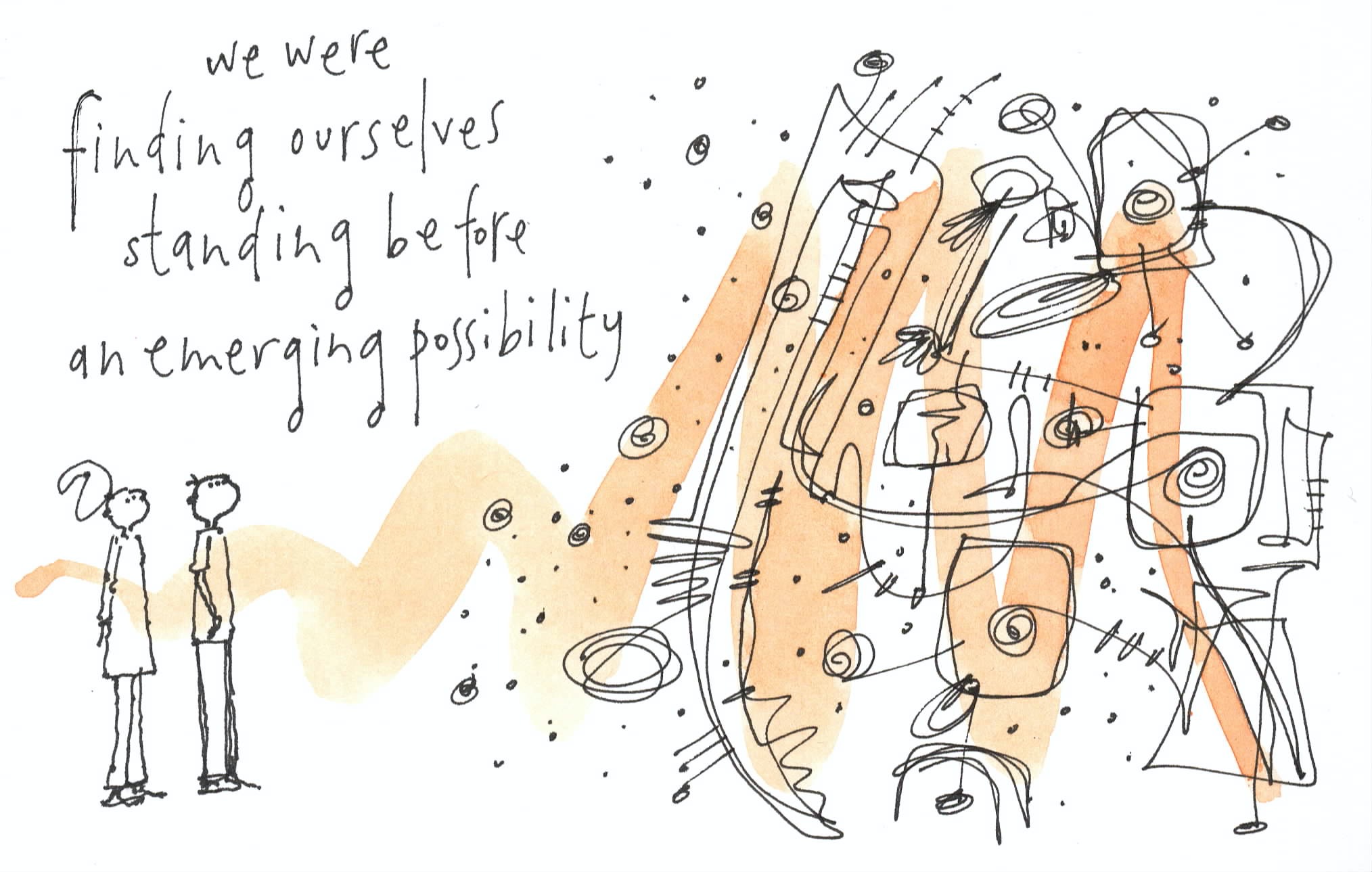
it is essential to put yourself in the unconditional service of the future possibility that is wanting to emerge. Viewed from this angle, prancing is about a dialogue with the future possibility that wants to emerge** Otto Scharmer
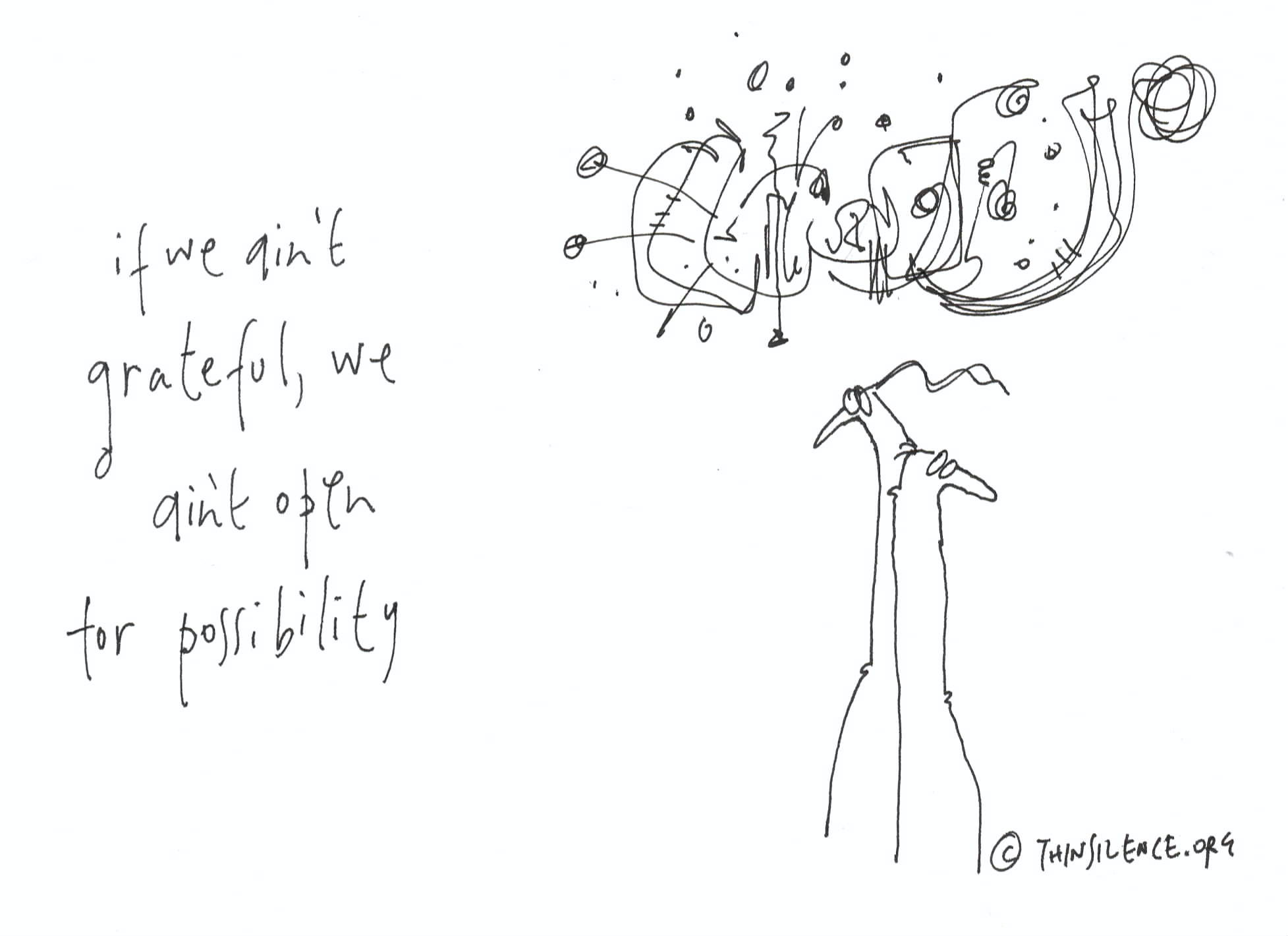
I have noticed that gratitude creates in me an openness to possibility.
Rather than something we have or do not have, Gratitude is a life skill developed through paying attention to more. To the small and ordinary things especially, So much more to play with than previously imagined towards generosity.
You need an environment that continually calls to mind your future self. If your environment doesn’t continually bring your future self to the forefront, then your environment is activating a different you.* Ben Hardy
I am constantly being bombarded with influences from my environment. I only wish to throw some of them back. To create energies/influences that will affect others, as theirs affect me.** Keith Haring
Each day contains many influencing environments, Noticed and unnoticed, Unfamiliar or familiar, Systems, organisations, people.
The prime environment, however, Is one’s calling, A space where talents and values and energies concentre in an indefatigable and imaginative bond, And which we carry wheresoever we go.
It is not mysterious. We do not have to go on some globe-scouring odyssey. Closer than breathing, It reveals through slow attention in a loud and busy world.
So your threshold is the point at which you’re going to go into a new and challenging territory that you’ve never been in before, and there’s no turning back.* Robert Dilts
You will never regret offering dignity to others.** Seth Godin
Each carries within a wound and a gift.
The victim only feels the wound, And desires to be rid of it, They wait to be rid of it.
The agent feels both their wound and gift, And in understanding their symbiotic relationship have moved across a threshold into a new world.
Sometimes other’s have been their guides, Sometimes they have found their own way, Sometimes they have become guides to others:
Sponsorship is about holding what’s there in a way that allows other possibilities to emerge … true healing comes from being able to sponsor the wound, sponsor the demon, sponsor the shadow. *



 THIN|SILENCE
You must be logged in to post a comment.