In terms of character traits, other studies have found that awe is correlated to traits like gratefulness, a love of learning, creativity, and appreciation for beauty.* Jonah Paquette
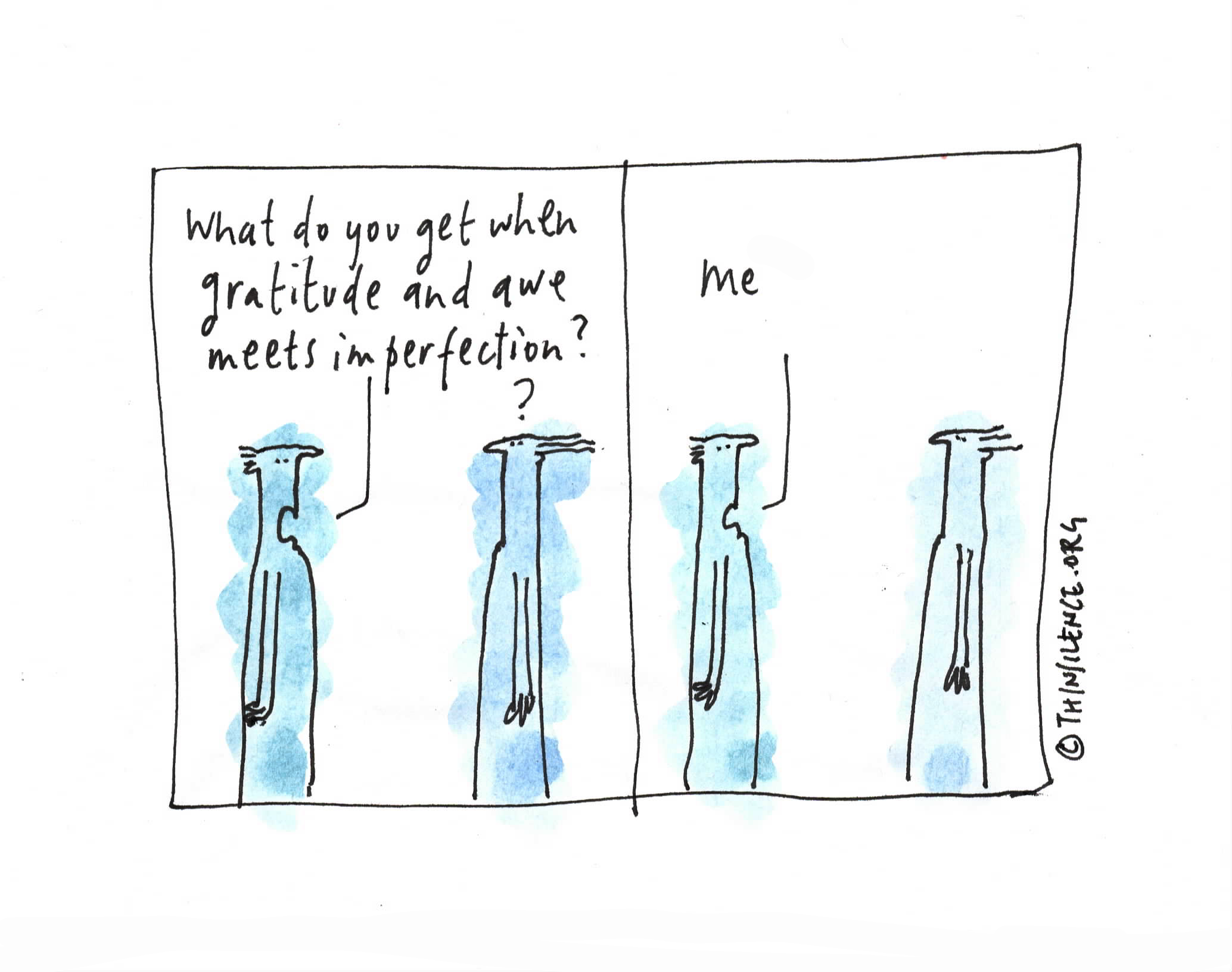
And now to the question of the meaning of our imbalances: let us not forget that each person is imperfect, but each is imperfect in a different way, each “in his own way.” And as imperfect as he is, he is uniquely imperfect. So, expressed in a positive way, he becomes somehow irreplaceable, unable to be represented by anyone else, unexchangeable.** Viktor Frankl
Water is H₂0, hydrogen two parts, oxygen one, But there is also a third thing, that makes it water And nobody knows what it is.* D. H. Lawrence
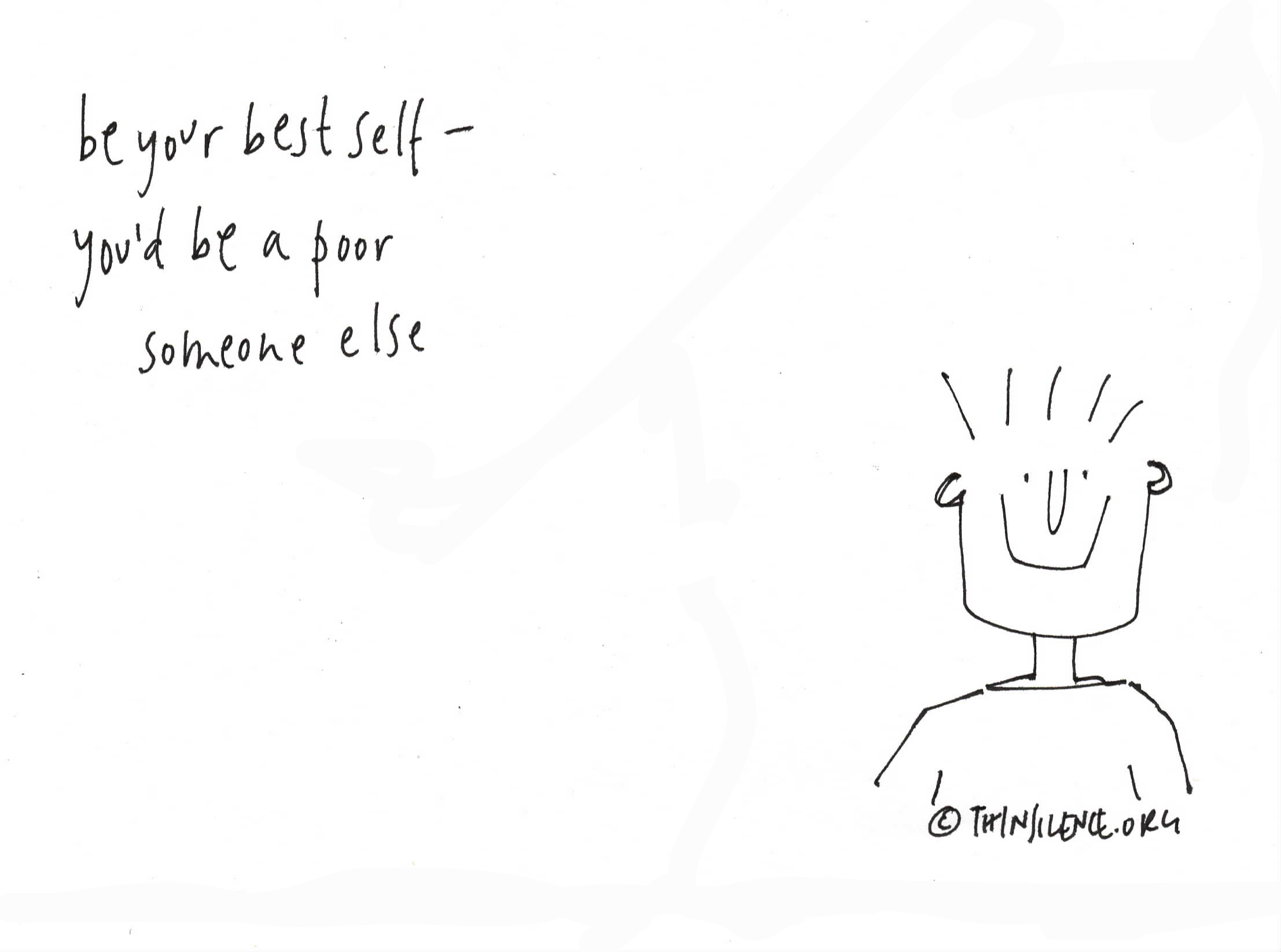
Ultimately the goal is to become the best in the world at being you. To bring useful idiosyncrisity to the people you seek to change, and to earn a reputation for what you do and how you do it. The peculiar version of you, your assertions, your art.** Seth Godin
Whilst the Enlightenment sounded the death knell for traditional myths, in reality it substituted its own: What the Enlightenment did was to develop its own set of myths, striking pictures whose attraction usually centres on the lure of Reduction – the pleasure of claiming that things are much simpler than they seem.^
I understand this to be a highlighting of how humans need myths or stories to live by – We cannot imagine a world, Or our existence within it, without our stories; The good myth retains the mystery, though a helpful definition of a myth reminds us in timely fashion: a partial truth based on an imaginative vision fired by a particular set of ideals, a dream that can help us to shape our enterprises, but will mislead us if we trust it on its own.^
To be our fullest self, though, We shall require our myths that allow for more than the ordinary, connecting us to the mystery we encounter within.
We are all sculptors and artists, and out material is our own flesh and blood and bones.* Henry David Thoreau
The challenge then is to have one super power. All out of balance to the rest of your being. If, over time, you develop a few more, that’s fine. Begin with one.** Seth Godin
Through life, we learn skills, Developing these into patterns of skills, or talents and abilities; When we notice what these are and how they are made, we can grow them into strengths, that is, Superpowers – The more talent-details we notice, the more we can propagate.
The stories of gods or heroes descending into the underworld, threading through labyrinths and fighting with monsters, brought to light the mysterious workings of the psyche, showing people how to cope with their own interior crises. Karen Armstrong
Mythological images are the images by which consciousness is put in touch with the unconscious. That’s what they are. When you don’t have your mythological images, or when your consciousness rejects them for some reason or other, you are out of touch with your own deepest part.** Joseph Campbell
Joseph Campbell’s contention is that we need myths to connect us with ourselves and with others, The problem is that although the old myths no longer serve us, and so we have discarded them, We struggle to find their substantial replacements; As story-making animals, we are not without our narratives to make sense of our everyday worlds – Worlds of finance, of work and occupation, of relationships – But these struggle to recognise and understand the deeper and more mystical parts of our being, Not daring to speak of your great abilities and powers of creativity and forging warm values in a cold universe.
Direct your eye right inward, and you’ll find A thousand regions in your mind Yet undiscovered. Travel them, and be Expert in home-cosmography.** Henry David Thoreau
You are enough, Never tell yourself otherwise; Explore this inner terrain, gathering your discoveries into stories or maps, Returning to these often – Even every day if possible – Training yourself to see yourself and the world more as they are.
Here are two modern archetypes: The flâneur and flâneuse have trained themselves to wander, If they vacillate or dither it is only because they have more than enough to prospect: he or she is indecisive, unsure of where to go, embarrassed by his or her choices;^ The Infinite player has more than enough time because: Time does not pass for the infinite player. Each moment of time is a beginning of a period of time. It is the beginning of an event that gives the time within its specific quality.^^
Surprise is the great enabler of seeing.* Alan Jacobs
We care most about the things we have struggled to understand.** Leon Festinger
“I don’t have any imagination.“
She was older than me, and I couldn’t leave her affirming such a thought for even more of her life, So I basically suggested the following: We don’t have to have imagination or creativity that fits on some archetypal list – Notice the things that energise you, See how your your imaginative around these things, and make more of them happen: Seeing is the great enabler of surprise.
In art, so in life: resistance prompts us to think.* Richard Sennett
Inauthentic means effective, reasoned, intentional. It means it’s not personal, it’s generous.** Seth Godin
Perhaps the resistance you meet will aid you towards a better response or answer – Different, inauthentic – that ease would not have uncovered.
Here are five major resistances to contemplate: Life is hard, You are not as special as you think, Your life is not about you, You are not in control, You are going to die.^
This is a fascinating, perhaps distinctlvely iGen idea: the world is an inherently dangerous place because every social interaction carries the risk of being hurt. You never know what someone is going to say, and there’s no way to protect yourself from it.* Jean Twenge
The world is full of magic things, patiently waiting for our senses to grow stronger.** William Butler Yeats
Is the world a dangerous place? Yes: Is the world a magical place? Yes; Perhaps, as we grow the depth and wonder and glory of who we are, we may see and name this world, This life, Sacred: a way of seeing that is based on what the soul already knows, that both the earth and every human being are sacred^.
This life will not come to us, We must go find it, As Viktor Frankl proffers: Life no longer appears to us as a given, but as something given over to us, it is a task in every moment. This therefore means that it can only become more meaningful the more difficult it becomes.^^
We must be vulnerable to life, To the danger as well as the magic – Though not the chaos – as poet David Whyte helps us to see as he writes: We try and construct a life in which we will be perfect, in which we will eliminate awkwardness, pass by vulnerability, ignore ineptness, only to pass through the gate of our lives and find strangely that the gateway is vulnerability itself. The very place were are open to the world whether we like it or not.*^



 THIN|SILENCE
You must be logged in to post a comment.