Significance

Many indigenous peoples share the understanding that we are each endowed with a particular gift, a unique ability. Birds to sing and stars to glitter, for instance. It is understood that these gifts have a dual nature, though: a gift is also a responsibility.*
Robin Wall Kimmerer

To this quality of aliveness, the shan-shui artists gave the name zi-ran, which might be translated as “self-ablazement,” “self-thusness” or “wildness.”**
Robert Macfarlane

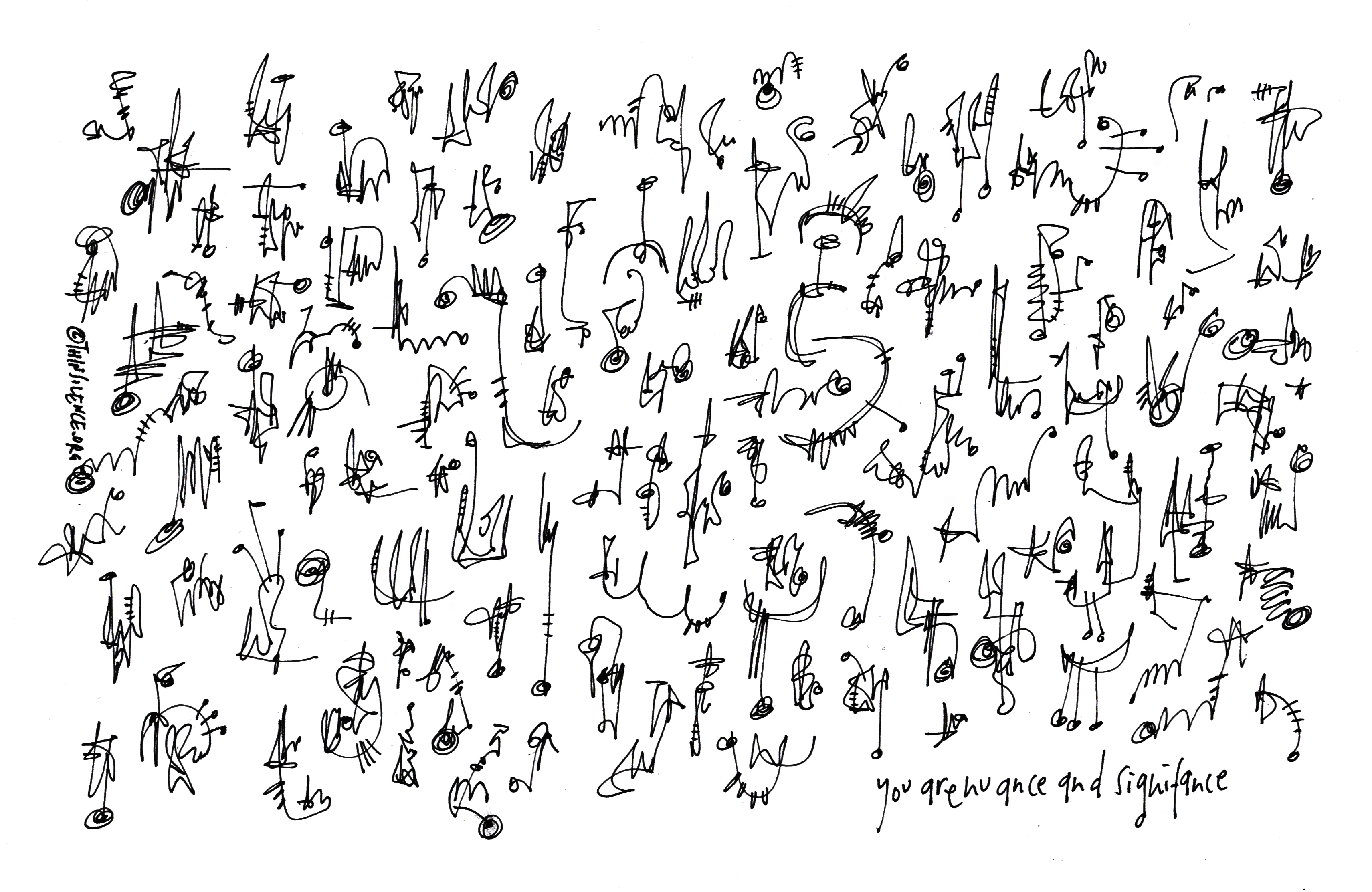
That thing you love doing – which
interests you so much that you have
invested and sacrificed to hone it
across the span of your life
so that it defines you –
That is what we need;
It is where significance lies:
the future we imagine is just that:
not an alien anything, but what we imagine,
what we can imagine.
And often it’s what we
can’t imagine that we’re most in need of.^

*Robin Wall Kimmerer’s Braiding Sweetgrass;
**Robert Macfarlane’s The Wild Places; the shan-shui are “rivers and mountains;”
^Alan Jacobs’ Breaking Bread With the Dead.
Nuance and wonder

Tools can create efficiency, but value can only come from change, from humanity, and from the rare form of connection that comes with significance. …

Humans are not a resource.
We are not a tool.
Humans are the point.*

Seth Godin

Helping others live within their significance
is entirely the point;
Giving our lives for such a cause
is where we encounter our own meaning.

*Seth Godin’s The Song of Significance.

Inconvenient

We need to see the subtle difference between the truth and the true. Truth is about accuracy, whilst being true is about intention.*
Erwin McManus

The dream of prayer and art is to come nearer, even to slip through to dwell for a while in the vicinity of the essence.**
John O’Donohue

Yesterday, my wife and I
found ourselves on the wrong end
of the M6 motorway being closed all day;
It wasn’t that we had an impossible task returning home, but
it was going to take longer and
put on a load more miles.

If you find yourself wondering if you’re in the wrong place,
Or doing the wrong work, or you’ve made a critical mistake,
Or have lost that sense of purpose that once was yours,
The good news is that
returning to where you need to be is not impossible,
It’s just inconvenient, and yet,
Being true to yourself is always worth it.

*Erwin McManus’ The Genius of Jesus;
**John O’Donohue’s Divine Beauty.

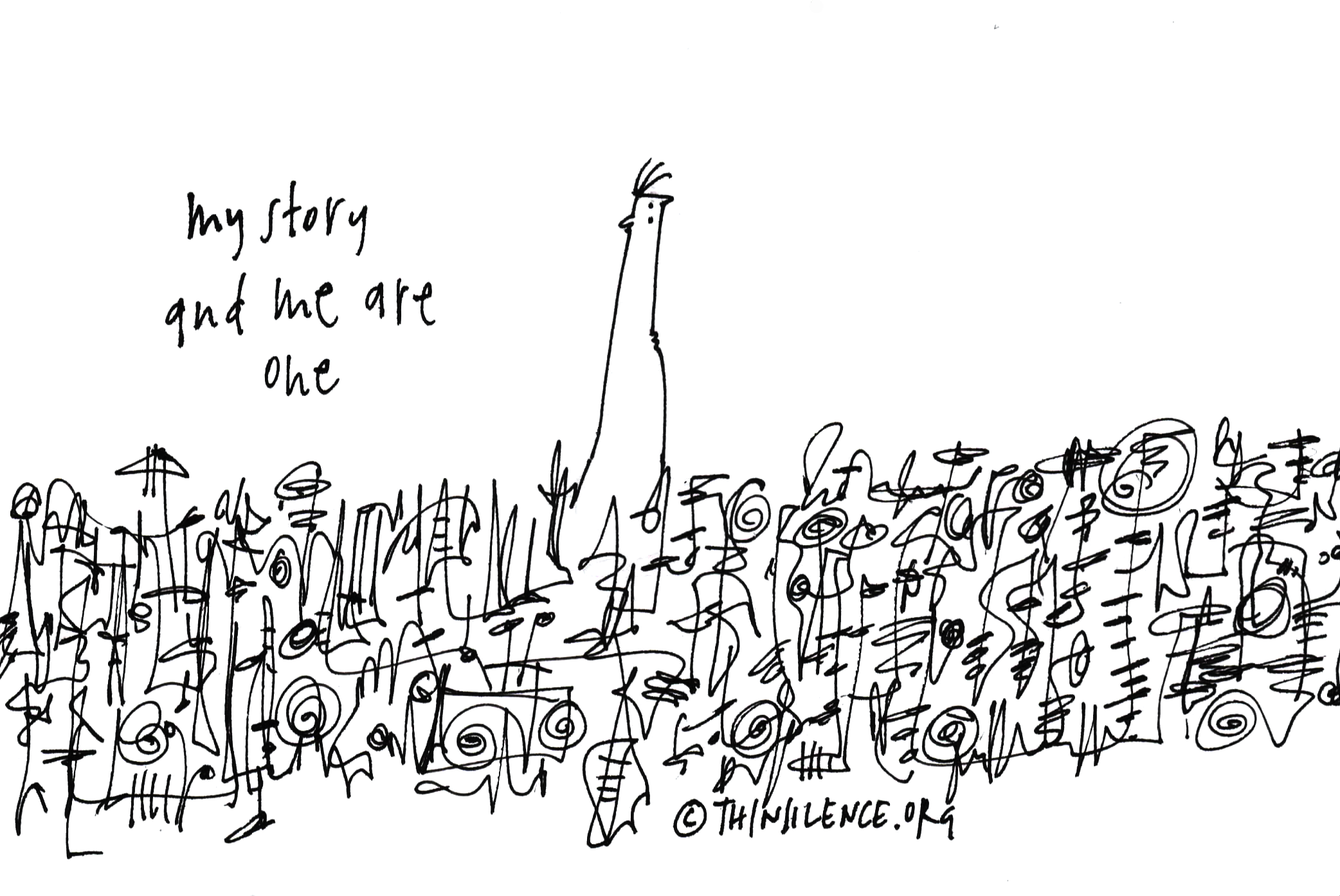
Getting your story straight

(This is Friday’s blog and doodle (30 June): I must have got distracted at the important part of actually posting it! Apologies.)

Without mythic keys we have neither culture nor religion, no art, architecture, drama, ritual, epic, social customs, or mental disorders. We would have only a grey world, with little if anything calling us forward to that strange and beautiful country that recedes even as we try to civilise it.*
Jean Houston

Whenever we attempt something difficult there is always a sense that we have to wake some slumbering giant inside ourselves, some greater force as yet hidden from us.**
David Whyte

All that we think of as human life
Resides upon story –
Stories we tell ourselves collectively, and
individually.

David Whyte tells us that work is a story that
provides us with safety from
“the wilder, nonhuman forces of existence,”**
And Robin Wall Kimmerer’s telling of the Skywoman myth
assures us that we will survive:
we are always falling …
spinning into someplace new and unexpected.
Despite our fears of falling,
the gifts of the world stand by to catch us.^

Our stories help us to understand our falls,
To pick ourselves up,
And to keep going.

Whyte goes on to ponder the modern-day lives that have become
mythical for us:
Parks, Churchill, King, Mandela,
How they were simply living into or upon
their own stories –
Something we too must aspire to;
Not to live their lives, for we cannot,
But to daily live upon our stories.

*Jean Houston’s A Mythic Life;
**David Whyte’s Crossing the Unknown Sea;
^Robin Wall Kimmerer’s Braiding Sweetgrass
.

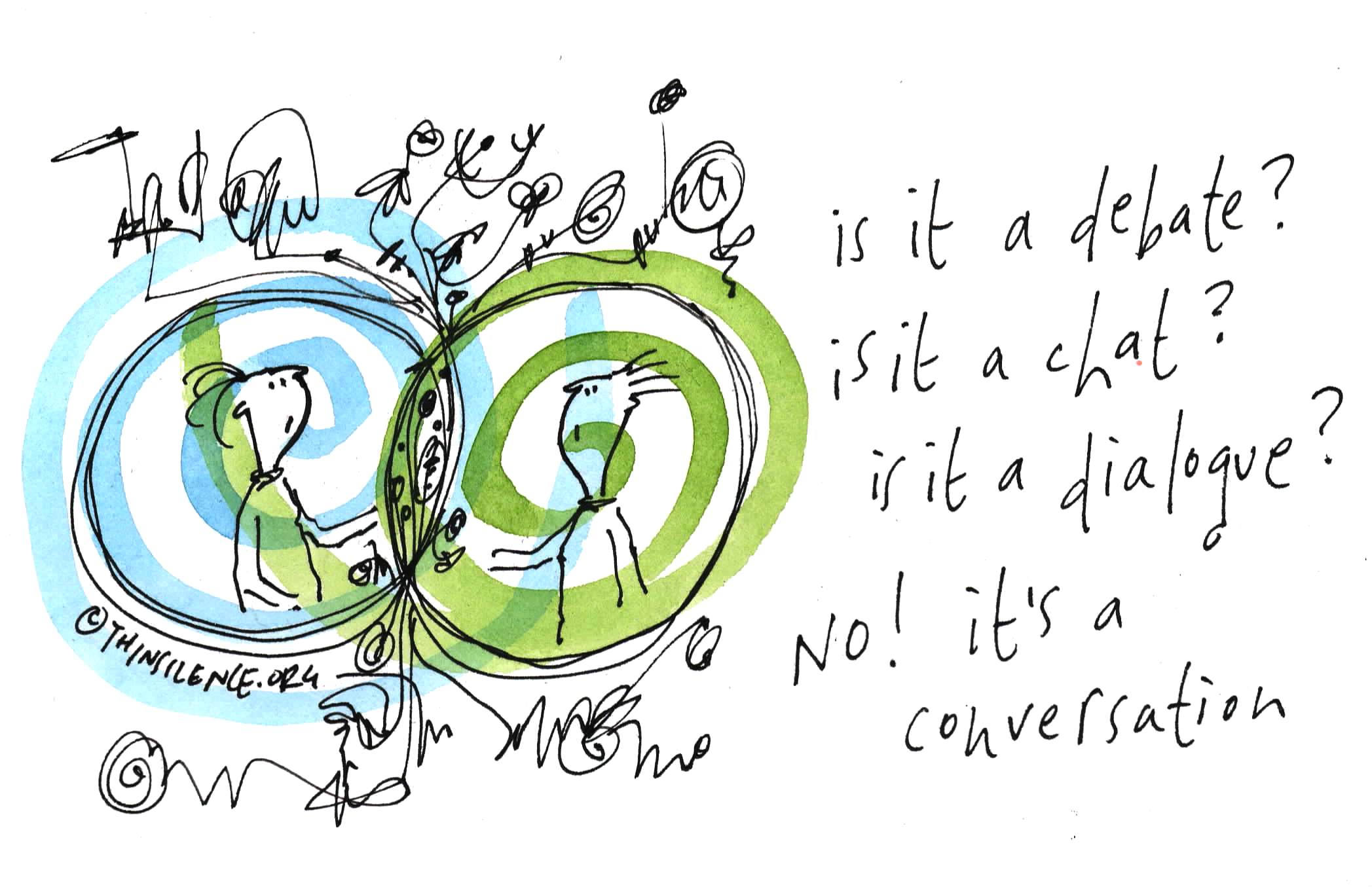
There’s nothing like a timely conversation

conversation (n.) mid-14c., “place where one lives or dwells,” also “general course of actions or habits, manner of conducting oneself in the world,” both senses now obsolete; from Old French conversacion “behaviour, life, way of life, monastic life” 

In the farmhouse all those years ago, I stumbled into conversational intimacy with a stranger and felt the whole course of my life pivot in the encounter.*
David Whyte

Conversations are becoming endangered –
Texts and voicemails and tweets are pushing them
to the edges of our lives,
Small screens in buggies cause us
to wonder where the skills will be learned.

We are losing the
“I had no idea we were going to
talk about this when we began” for
“I’ll tell you what I think (and
I’m not interested in what you think)” –
At-ness not with-ness.

I have a sense, though, that
conversation will make a comeback because
we are human, and
this is where we desire to live most of all:
I’ve found that every want
can be distilled down into one:
connection.**

(Dreamwhispering is,
Firstly and foremostly
a journey of conversations.)

*David Whyte’s Crossing the Unknown Sea;
**Katherine Morgan Schafner’s The Perfectionist’s Guide to Losing Control.

The freedom of the open road

When you’re present, you don’t have control, and you don’t care. When you’re connected to your power, you don’t need control. … What matters is that you understand that being open is powerful.*
Katherine Morgan Schafler

Between stimulus and response there is a space. In that space is our power to choose our response. In our response lies our growth and our freedom.**
Viktor Frankl

The fourth elemental truth^ states
You are not in control,
And yet this does not mean that you are not
powerful;
Learning for life,
The endless openness to more,
Without and within, is about
learning to be powerful –
Openness provides choice and
choice is powerful:
Education is personal or it is nothing.^^

Surely we ought to know our minds?,
Doesn’t openness suggest weakness?

We learn to be our own person,
Our true person, and using the
whole of life rather than some smaller part
to make this so:
A creative person.
initiating, enacting.
Using their lifetime to find
their original face,
to awaken their own voice,
beyond all learning, habit, thought.
When the human community finally knows itself,
it will discover that it lives at the centre.
People will be artists in their life and labour.*^

*Katherine Morgan Schafler’s The Perfectionist’s Guide to Losing Control;
**Ben Hardy’s Be Your Future Self Now;
^Richard Rohr’s Adam’s Return;
^^Ken Robinson’s Out of Our Minds;
*^M. C. Richards’ Centering; I have replaced Mary Richards’ use of the masculine pronoun to highlight this is for everyone.


Notice it and focus it

It is the nature of the earth and our dust to be in constant contact with the impulse of life. If we listen, we will hear the continuous tread of love, moving up our limbs like sap, like an electric current impelling is to “stir and step out.”*
M. C. Richards

Art is the human act of doing something that might not work and causing change to happen. Work that matters. For people who care. Not for applause, not for money. But because we can.**
Seth Godin

When it comes to what to ask,
Which door to knock on,
Where to begin looking,
What is already inside of us will guide us.

The inside of you is akin to the warehouse
pictured at the close of
Indiana Jones and the Lost Ark.

What you have to ask,
The doors you will knock,
The places you look
will make the kind of difference that
we need.

Notice it and focus it:
How much of the beauty of
our own lives is about
the beauty of being alive?
How much of it is
conscious and intentional?
That is the big question.^

*M. C. Richards’ Centering;
**Seth Godin’s The Practice;
^Joseph Campbell from Joseph Campbell and Bill Moyers’ The Power of Myth.