Can I, as the Sufis ask, “be who I am before I was”? … To be who I am before I was. It was an impossibility; at least it was the rational, ego awake intelligence. To that intelligence the phrase doesn’t even make sense.* James Carse
If it’s unimportant, never do it. If it’s important, do it every day.** Derek Sivers
We are born in possibility, we must not die in disappointment.
Do we follow the trail of shoulds and miss the path of musts?^
Being creative is not only about thinking. It’s about feeling … Feeling, hunches, subconscious perceptions can all play a central part in creative work, and not only in the arts.* Sir Ken Robinson
Conceptualisation isolates consciousness from its object, thought from experience, and the local consensual reality, from the larger Reality about.** Jean Houston
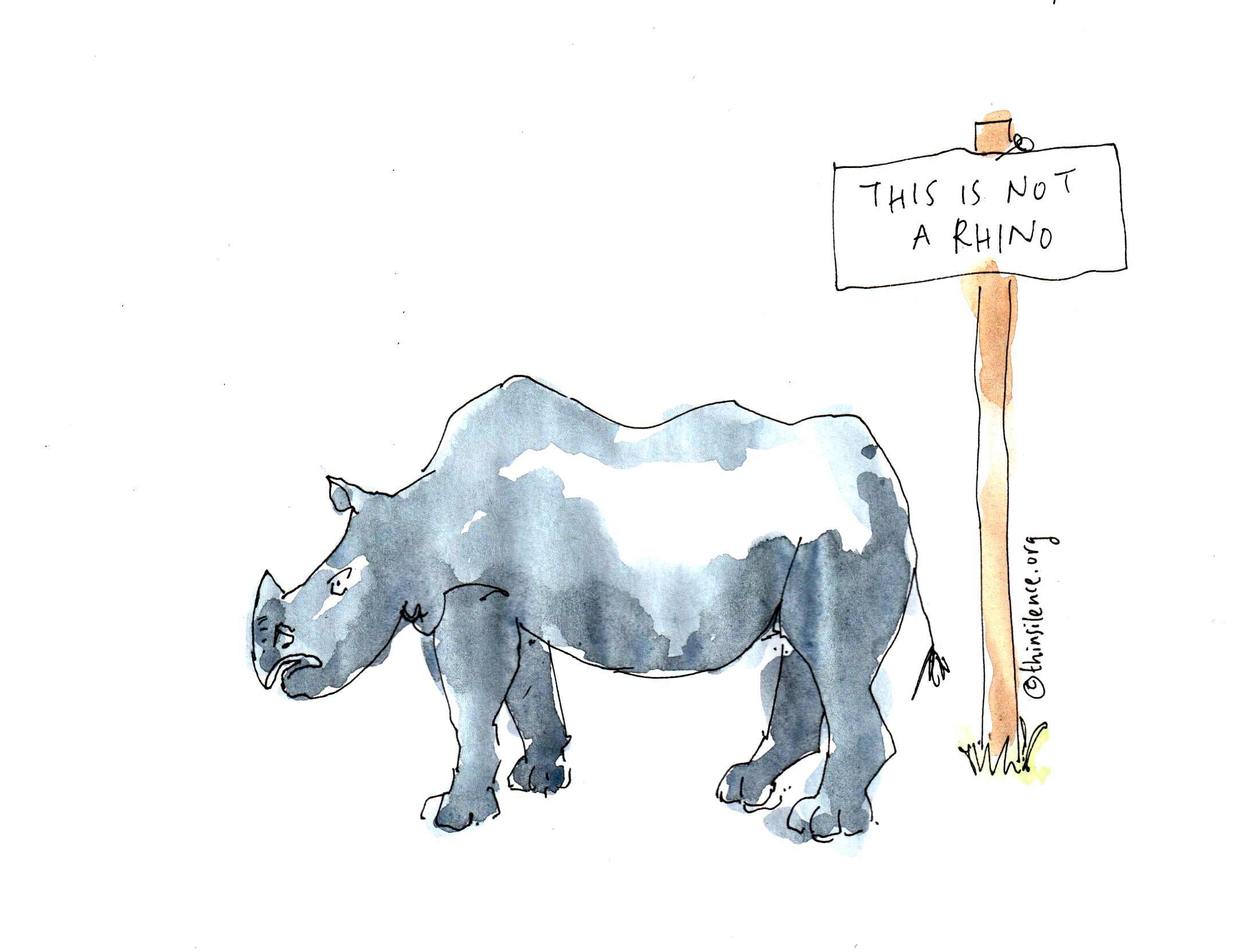
I had found myself fascinated by a Greater One-Horned Rhinoceros^ in Edinburgh zoo, I wanted to feel its presence by being still and watching it move, but I could also have deepened my listening, my feeling, my smelling – Perhaps I would have more fully sensed what we call a rhino but is far more.
When we discover something then we quickly follow with a name, And when we think we know something we have a shortcut for understanding that leaves a lot of knowledge behind, The kind that may help us be more creative; It’s understandable for anything from fitting everything into a day to having a picture of our world, from communication to human progress, But sometimes we need to be open to our senses.^
*Ken Robinson’s Out of Our Minds; **Jean Houston’s The Possible Human; ^Whose name is Qabid; ^^A simple playful exercise based on John cage’s 4′ 33″ symphony, that you may like to try, involves setting a timer to four minute and thirty three seconds, closing one’s eyes, listening deeply, adding feeling (the sensation of breeze, etc.), followed by smelling, and then opening eyes.
After all, a life without a cause is a life without affect.* Paulo Coelho
Entelechy, a Greek word meaning the dynamic purpose that drives us forward toward realising our essential self, that gives us our higher destiny and the capacities and skills that our destiny needs for its unfolding.** Jean Houston
I am not my cause and you are not yours – Please, god, save us from ourselves; It doesn’t matter what the cause is – We can try different ones until we find one that sticks; What matters is that we can spend ourselves in service to it – that is, to others – and in our spending discover our never-spentness, and everyone can bring entelechy to what they do.^
No choice is inherently the best. What makes something the best choice? You. You make it the best through your commitment to it. Your dedication and actions make any choice great.^^ Living for others is how to live.*^
*Paulo Coelho’s Aleph; **Jean Houston’s A Mythic Life; ^Myths have helped people through millennia to figure out the best ways to live. Perhaps try rewriting your own story as a myth: the challenges you must do something about, what you learn about yourself as you engage with these, especially your talents, energies, and values. ^^Derek Sivers’ How To Live; *^Derek Sivers’ Hell Yeah or No.
Perhaps the purpose of the dream isn’t to be attained but to help us keep going. And keeping going is a priceless gift.* Gabe Anderson
Shallow happy is what you want now. Deep happy is what you want most. Shallow happy serves the present. Deep happy serves the future.** Derek Sivers
A true dream^ is too big to be realised today, or tomorrow, perhaps too big for a lifetime; It keeps life big, Colourful, Fascinating, Generous, and keeps us growing, Becoming – Just what, we don’t know yet: there’s a true dream in everyone.
*Gabe Anderson’s blog: The Dream Gap; **Derek Sivers’ How To Live; ^Not only something to inspire and direct us, a true dream is something we give expression to each day and we are changed by.
If we are looking for the mystical, we need go no further than the Victory, no further than the most ordinary of our ordinary experiences.* James Carse
It is essential to put yourself in the unconditional service of the future possibility that is wanting to emerge. Viewed from this angle, presenting is about a dialogue with the future possibility that wants to emerge.** Otto Scharmer
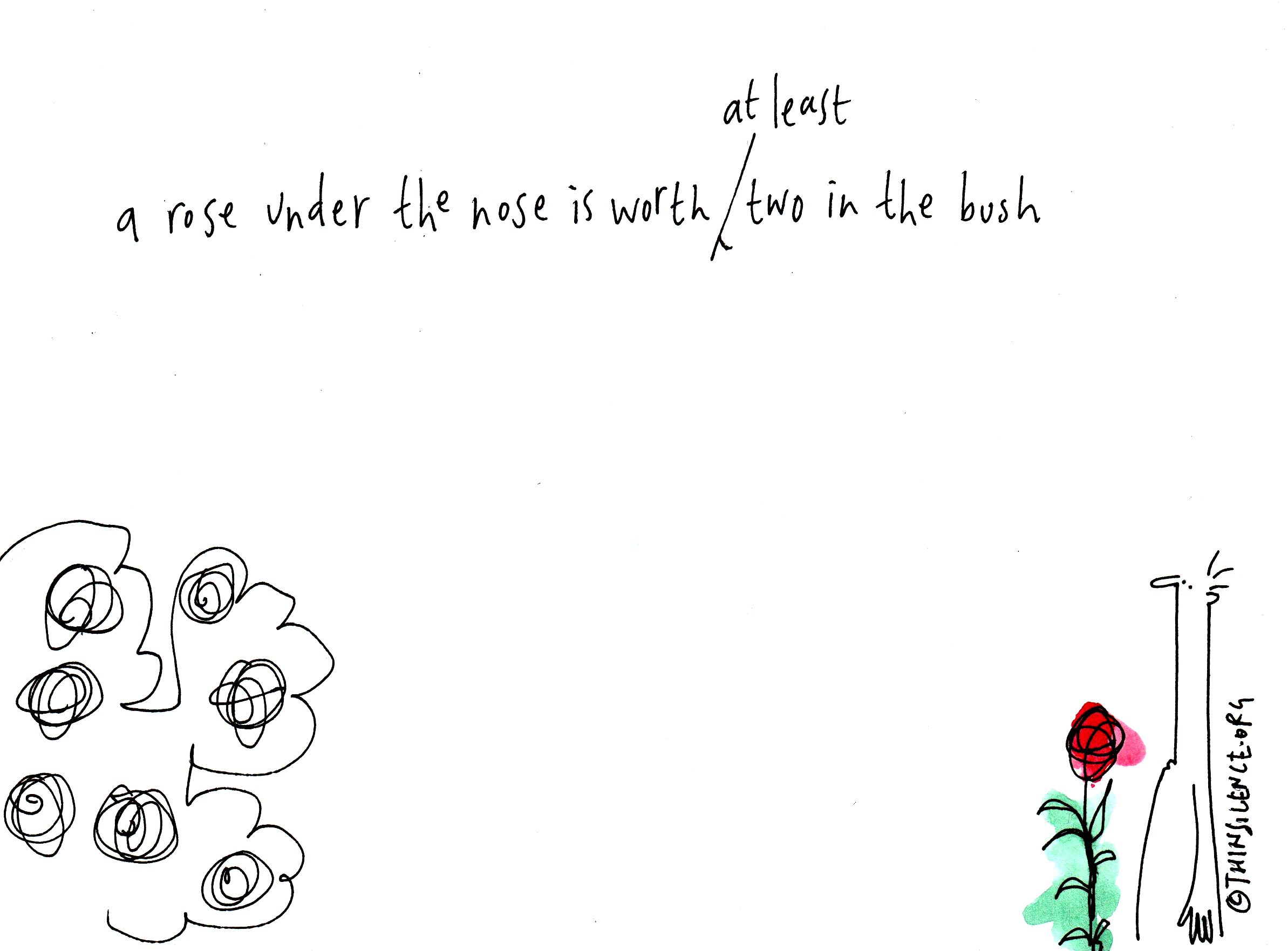
We underestimate what is under our noses and overvalue what lures us from a distance, but the future we want to become the present is likely to be found in the ordinary immediately around us – This is where I work: in what is already there but unnoticed.^
*James Carse’s Breakfast at the Victory; the Victory being a post WWII diner in Manhattan, a whirl of wonderment in the ordinary; **Otto Scharmer’s Theory U; ^You’re welcome to drop me a line to find out more.
Plerosis (filling) rather than kenosis (emptying) has been my spiritual practice.* Jean Houston
Before the first chord is written, the song can be anything you want. The possibilities are endless. Finishing the song is the process of eliminating possibilities, and having the guts to do it.** Gabe Anderson
It is not possible to have it all, oftentimes we must let go of something for something else to come, but even these stories of emptying may be gathered up to become our most precious tales of all.
You will never regret offering dignity to others.** Seth Godin
We can’t really give dignity to anyone, We either notice their inherent dignity or not – If anything, when we do, we’re providing ourselves with dignity.
The Victory had become what Ernie did without doing it. There was a centre to all this activity; it was a still centre. It’s no wonder that we overlooked it. We overlooked it because there was nothing to see. It was the nothing that made it mystical.* James Carse
Monotony is the enemy. Novelty is the solution.** Derek Sivers
When flow^ turns into something repititious, When one’s ego-self becomes visible, It may be time to try something disrupting, awkward, uncomfortable, Until a new centredness and effortlessness is entered.^^
*James Carse’s Breakfast At the Victory – The Victory was a Manhattan diner that revolved around the disabled WWII veteran and proprietor Ernie; **Derek Sivers’ How To Live; ^Wu-wei is very similar to flow; ^^A 4% stretch should do it – this is the amount of unfamiliarity apparently necessary to evoke flow. This also sounds very much like the hero’s journey from the old status quo to the new, which in turn will become the old, and a new call to adventure is heard.
Caring puts us on the hook and caring offers a chance to contribute. When we care, we get to make a difference, and that creates meaning, the path to significance.* Seth Godin
We need myths that help us to realise the importance of compassion, which is not always regarded as being sufficiently productive or efficient in our pragmatic, rational world.** Karen Armstrong
Caring about something is risky, we may be disappointed or upset, we may fail and look foolish, we may need to commit more resources, time, energy, but these same things mean that we’ve found something that really matters, and when it matters to others, too, then we’ve found the mother-load of all meaningfulness.







 THIN|SILENCE
You must be logged in to post a comment.