You’re a legend

Seemingly superhuman forces always call on individual human beings to simplify themselves. A kind of simplification, achieved day by day, hour by hour, in our own work, right into the essence of what needs to be done.*
David Whyte

Thus, in the journey of transformation, we participate in these symbolic dramas and actively engage in archetypal existence. We form a powerful sense of identity with the archetypal character, and this mythic being becomes an aspect of ourselves writ large.**
Jean Houston

What is this simplicity? –
Well, it is not less but more;
M. C. Richards captures well what is being accomplished in
the person who cannot help but be transformed by the journey:
I am not concerned with what we like.
I am concerned with our power to grasp,
to comprehend,
to penetrate,
and to embrace.^

This is a person who has entered the complexity
and has both discovered and generated their essential self,
That is, their archetypal character and story,
not a fairy tale, but a legend,
not for for themselves, but for others.

*David Whyte’s Crossing the Unknown Sea;
**Jean Houston’s A Mythic Life;
^M. C. Richards’ Centering.
Wasteful

It is the time you have wasted for your rose that makes your rose so important.*
The fox to the Little Prince

The cliff edge is a frontier where passions, belonging, and need call for our presence, our powers, and our absolute commitment.**
David Whyte

Now is not the time to pull back
but to give everything –
Others may think it wasteful, but
it is the gift of your creativity,
And once we have figured out what we must
do to make our contribution, then we can never give less,
But more:
More time, more effort, more input, more connection,
More imagination.

*Antoine de Saint-Exupery’s The Little Prince;
**David Whyte’s Crossing the Unknown Sea.

Our true nature

In this modern age, very little remains that is real. Night has been banished, so have the cold, the wind, and the stars. They have all been neutralised: the rhythm of life itself is obscured. Everything goes so fast, and makes so much noise … .*
Gaston Rebuffat

Work provides safety. To define work in other ways than safety is to risk our illusions of immunity in the one organised area of life where we seem to keep nature and the world at bay.**
David Whyte

We are nature:
Though we may create our illusions of distinctiveness,
Isolating ourselves from the natural world,
We do so at our peril;
As Tanqigcaq discovered for herself in the ancient northern story
of the sealwoman who has her sealskin stolen
by the man she has agreed to be with to alleviate his loneliness.

As the years extend, without her sealskin she is unable to return to the sea,
Her skin begins to flake,
Her eyes dull, she becomes dangerously thin;
But the sealwoman is saved by their son Ooruk
who accidentally comes upon her hidden sealskin
and returns it to her,
And she slips back into her natural world.

Like the old, lonely man,
The unnatural, modern world promises many things
to our detriment,
But within each of us is Ooruk,
Making it possible to reconnect with the natural world
of stars and cold and wind –
But also sunshine warmth and sweet breezes.

We do not have to be in nature for long
before our bodies respond positively –
Our thinking self might try to tell us another story,
But take a moment longer to notice how
your body responds to sunshine or rain,
The trees and plants;
Outside is always just beyond our door,
And we don’t have to climb mountains or swim rivers
in order to benefit from reconnecting
with our true nature –
It may be a gaze upwards, nurturing a window box,
Finding the local parks and walkways.


The life we receive is not short, but we make it so,
nor do we have any lack of it, but are wasteful of it.^

*Robert Macfarlane’s The Wild Places;
**David Whyte’s Crossing the Unknown Sea;
^Seneca, from Victor Strecher’s Life on Purpose.

From eternity to here

Work, after all, at its best, is one of the great human gateways to the eternal and timeless.*
David Whyte

But do you find yourself in a place where time just … goes away? Where you’re win a flow state?**
Victor Strecher

Funny how religions ponder eternity as
existence without labour,
Though, when we think about it,
The moments when we have experience eternity
are those filled with deep and satisfying work.

It’s not just doing anything,
But the work arising where competency, passion
and values converge;
And the magic usually begins with hard work:
Inspiration is for amateurs.
The rest of us just show up and get to work.^

This isn’t everything, though,
For it is important to also have contemplation
as a counterbalance to work –
Moments of quietness and solitude to make sure
we’re in the right place
doing the right work
in the right direction and
honouring relationships.

*David Whyte’s Crossing the Unknown Sea;
**Victor Strecher’s Life on Purpose;
^Chuck Close, from Mason Currey’s Daily Rituals.

The conversation

We need at every stage in our journey through work, to be in conversation with our desire for something suited to us and our individual natures.*
David Whyte

the will to be oneself is heroism**
José Ortega y Gasset

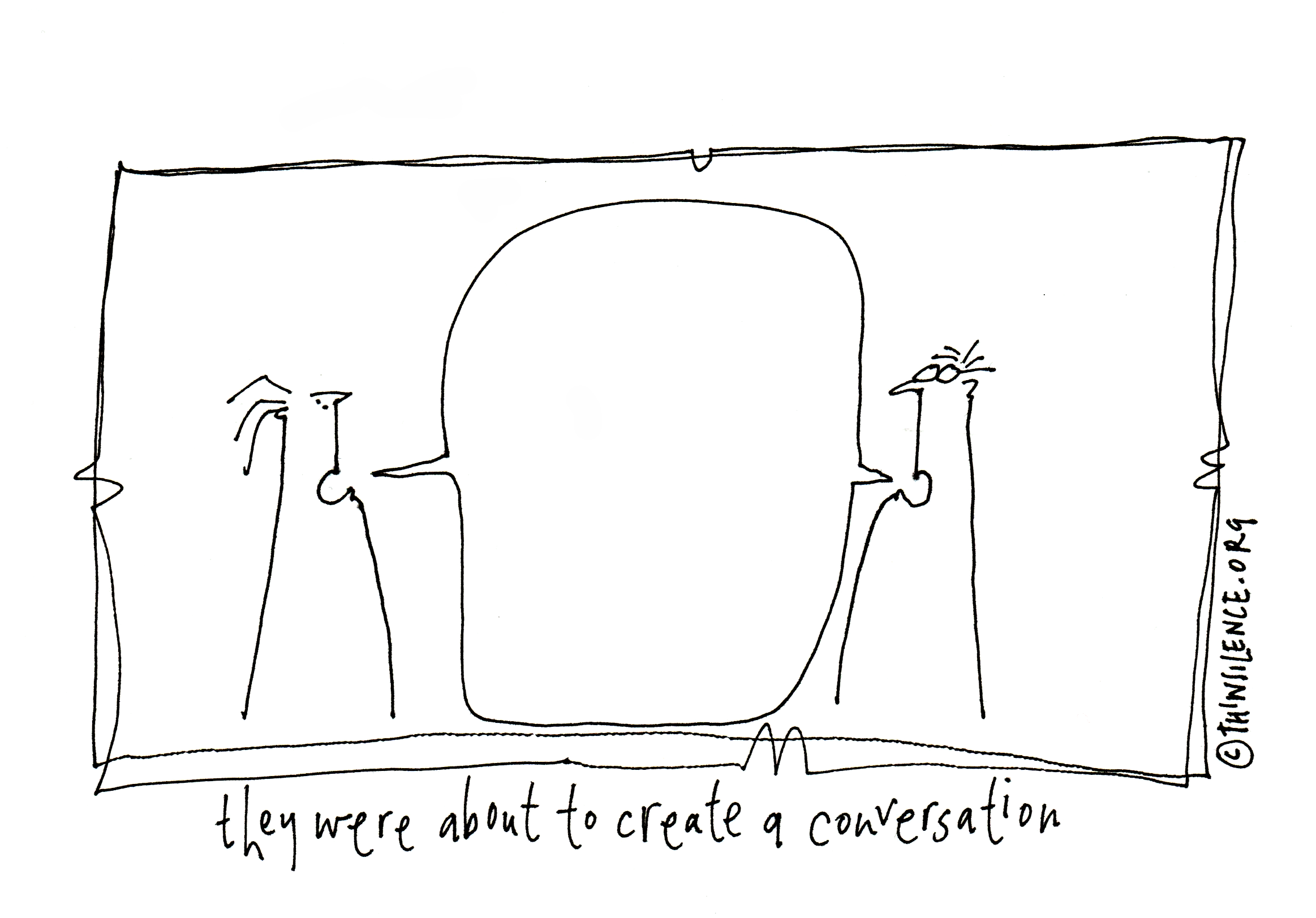
My work is a conversation
between myself and another towards that person developing
the most important conversation of all –
The one they will have with themselves every day.

In the 1970s, Julia Cameron introduced us to morning pages for this purpose,
A way to be present to oneself and the day;
An updating of journaling and meditation and presence –
Practices wrapped in religions for thousands of years.

At the heart of this conversation we have with ourselves, we are exploring
our identity, resilience, creativity,
Out of which flows the possibility of a life-changing conversation
with another.

When you find what you’re meant to do, you do it.^

*David White’s Crossing the Unknown Sea;
**Joseph Campbell’s The Hero’s Journey;
^Ryan Holiday’s Discipline is Destiny.

Making good progress

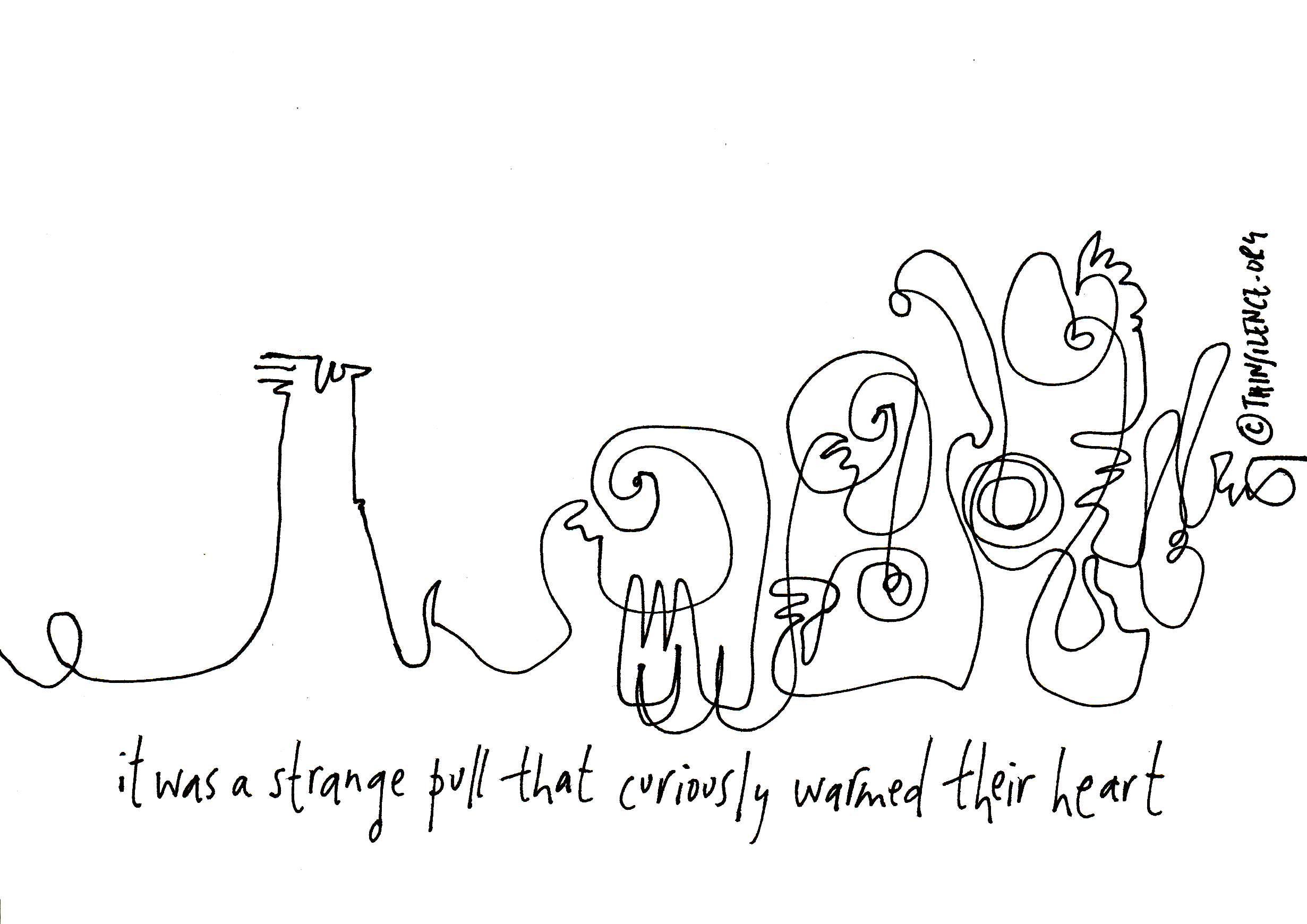
Let yourself be silently drawn by the strange pull of what you really love. It will not lead you astray.*
Rumi

The desire itself translated step by step, day by day, into action is enough to propel us enormous distances.**
David Whyte

There are plenty of things around to hinder our progress –
Failure can do it, success too,
Fear or feeling lost,
Things happening in other parts of our lives,
A loss of motivation or inspiration –
So we must reacquaint ourselves with what matters most to us,
To what Rumi named our strange pull,
But it will require nuance,
Lots of small steps we can pick up on
and replicate, for today and for tomorrow,
And we’ll keep moving even when we don’t feel like it –
Turning up, putting the time in, trusting our ritual –
Like sowing seeds,
Believing in the harvest.

*Elle Luna’s The Crossroads of Should and Must;
**David Whyte’s Crossing the Unknown Sea.

Just a doodle 144

It is interesting to ask: what are the limits you have set for your life?  Where are the lines of those limits?  Why do you think you cannot go beyond them?  How real are they?  Did you construct the  limits out of fear and anxiety? … The awakening of the beauty of your creativity can totally change the way you view limits.*
John O’Donohue


*John O’Donohue’s Divine Beauty.