We look but we do not see, because our traditional common-sense assessment of abilities distracts us from what is actually there.** Sir Ken Robinson
The imagination awakens the wildness of the heart.^ John O’Donohue
Sometimes we need to move beyond common-sense; There lies a wildness in each of us Waiting to be noticed, waiting to be expressed – We’re waiting to see what you have for which there is no comparison: I settled on a game called I am a contribution. Unlike success and failure, contribution has no other side. It is not arrived at by comparison.^^
Where to begin: Come up with the smallest iteration of the idea that is forming in you, And then play it out, Watch what happens, Adjust if necessary, Repeat.
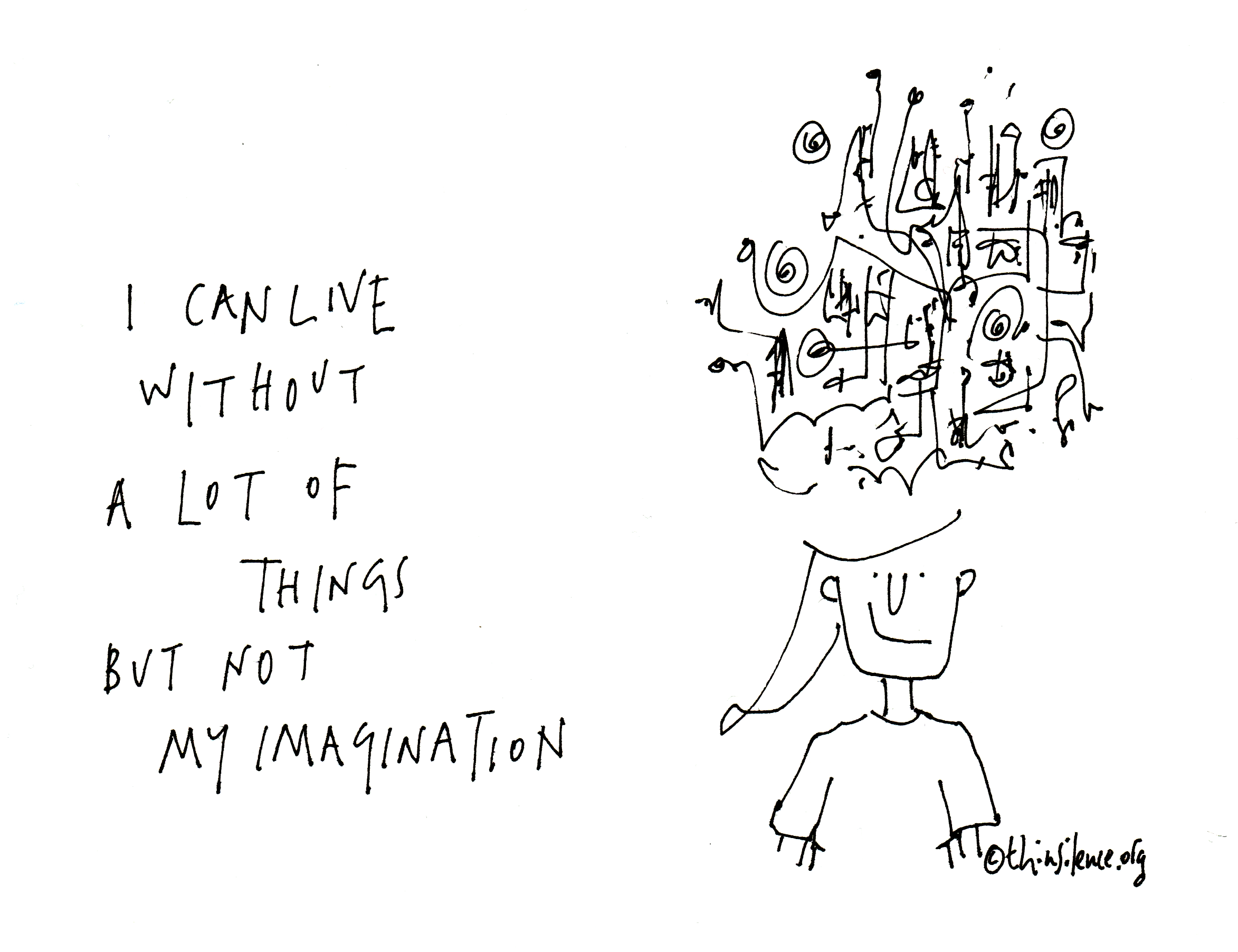
How quickening is a lively imagination; When it begins to wain, so do we – We look after our bodies, considerate of what we feed them, Why not our imaginations?
David Abram proffers how the imagination isn’t a thing in itself, Thereby implying ways we might nurture and grow our foreseeing: That which we call imagination is from the first an attribute of the senses themselves; imagination is not a separate mental faculty (as we so often assume) but is rather the way the senses themselves have of throwing themselves beyond what is immediately given, in order to make tentative contact with the other sides of things that we do not sense directly, with the hidden or invisible aspects of the sensible.^
Accordingly, we open ourselves by unfolding our senses to new thoughts, places, and people, Or we go delve into the unexplored and unknown hinterlands of what and who we thought we knew, then noticing what our minds begin to see or ask or construct, Employing these as further ways of prospecting and sharing and creating.
There aren’t many things I desire in this world, But an animated imagination is one.
What do you want to say? Why does it need to be said? What if you could say it in a way that has never been done? How might you do that?* Warren Berger
Where in your life or your work are you currently pursuing comfort, when what is called for is a little discomfort? … Choose uncomfortable enlargement over comfortable diminishment.* Oliver Burkeman
I profoundly believe that we don’t grow into creativity; we grow out of it.** Sir Ken Robinson
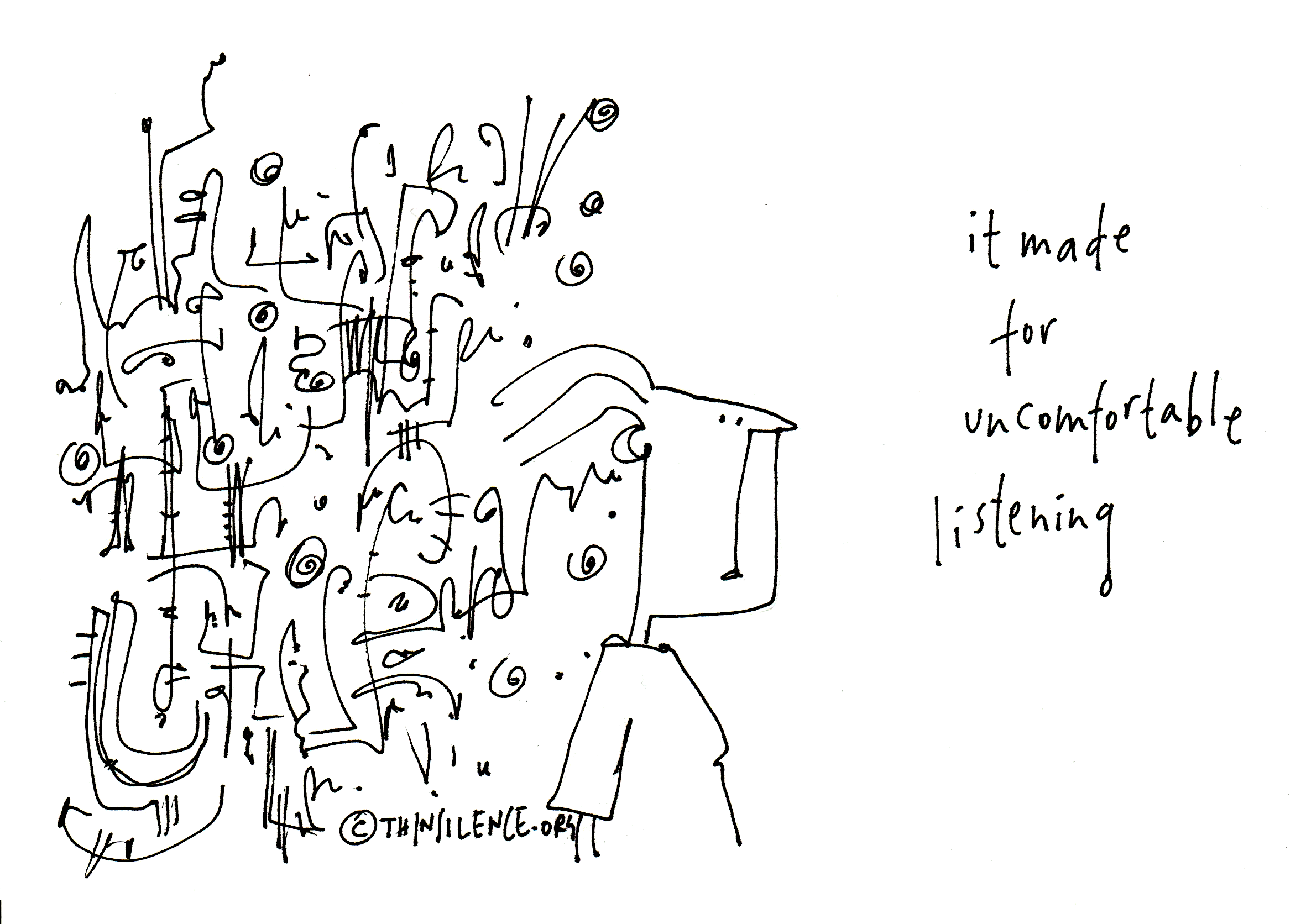
An uncomfortable place for us to begin is to listen, to notice, to pay attention; We want to move on, but, Perhaps, just maybe, This will be an opportunity to grow and gain more substance towards a weightier, more meaningful life, Where we shall sharpen our superpowers and make a difference: this older and more experienced self knows that the painful things are often the things that ultimately give substance and meaning to life.^
What if we became experts in the field of grace? What if we made it our language, our essence, our genius?* Erwin McManus
The moments when it’s most difficult to be kind are the moments where it matters the most.** Seth Godin
Grace can describe how a person moves, More critically, it’s how we treat each other – Grace … Doesn’t squash the one in error, Finds another chance, another opportunity from somewhere, Doesn’t have to be waited for, Is future-opening, Sees the best person, Builds connection, Can inspire and motivate others … And sometimes we need to offer it to our own self.
Far from being effortless, this kind of grace is effortful, and yet it still produces a crop greater than the original investment; Grace is good news: The thing is, no one is born graceful. It’s a choice.^
While practise makes us more graceful over time, We carry a resistance that must be overcome by the continuing choice.
Nothing opens the mind like the glimpse of new possibility.* John O’Donohue
As we stand at such thresholds, life itself is commissioning us to move onto a new stage of our Becoming. Something at the core of our being is urging us forward … as surely as the onset of labour pain and the breaking of the waters commission the expectant mother to begin the process of birthing.** Margaret Silf
The psalm declares for us, In old age they still produce fruit; they are always green and full of sap^ – And why not?; Nature always finds a way of succeeding even against the odds, Here Robert Macfarlane describes peering into a limestone gryke: We lay belly down on the limestone and peered over the edge. And found ourselves looking into a jungle. Tiny groves of ferns, mosses and flowers were there in the crevasse – hundreds of plants, just in the few yards we could see, thriving in the shelter of the gryke: cranesbills, plantains, avens, ferns, many more I could not identify, growing opportunistically on wind-blown soil.^^
And we are nature dealing imaginatively with the little wind-blown soil of time that we have, More than able to overcome the resistance and cross the thresholds we come to as we put on age; On facing resistance, Katherine Morgan Schafler counsels: The remedy for resistance is not discipline; it’s pleasure. Pleasure is an antidote for so much. Find what brings you real pleasure and you will find your way home to yourself.*^
We identify the things that fascinate, bring wonderment, And satisfy our deepest desires … To this, I would add generosity, The drive to be a gift to others, Without which our story would be incomplete.
If you’re unwilling to interact with uncertainty, then you’ve greatly limited who you are and what you’ve become. You’ve limited your ability to make choices, because all choices involve uncertainty and risk.* Ben Hardy
When you get to be older, and the concerns of the day have all been attended to, and you turn to the inner life – well, if you don’t know where it is or what it is, you’ll be sorry.** Joseph Campbell
We increase the possibility of our becoming by stretching ourselves into the unknown and unfamiliar around us – Not knowing what will happen is part of the deal – AND By nurturing and ordering our inner world; It’s not either/or – We need both/and – For we bring our discovering into a place of reflection and transformation, which in turn impels us outward Into new places, ideas, relationships, roles, actions and behaviours.
Do we also recognise that we already have within us everything we need for our own becoming?* Mary Ruth Broz and Barbara Flynn
We no longer know how to manage our mythical lives in a way that is spiritual and transformative.** Karen Armstrong
Humans possess a sense of becoming that stretches through the decades of our lives, More than developing our talents and abilities upwards and to the right, We possess an itchy inkling that transcendence lies in connection beyond ourselves, to others, to our world and universe, And perhaps to god: More self, less connection to a larger world.^
My own sense … is that there is something deeply built into us that needs story itself. Story is such a source of nurture that we cannot become really true beings for ourselves and for each other without story – and without finding ways in which to tell it, create it, to encourage younger people create their own story.* Vincent Harding
Being a writer is an act of perpetual self-authorisation. No matter who you are Only you can authorise yourself. You do that by writing well, by constant discovery.** Verlyn Klinkenborg
Story may be the most defining characteristic of what it means to be human, For being different to other species – How might we explore consciousness without story, Able to change our lives, live with deep meaning, turning failures into triumphs, connecting with one another?: Both ordinary, day-to-day, errand-filled life and special, value-drawn, making-a-difference life are comprised of story … And if we fail to write our own, others will write some narrative or other for us – Mistakenly thinking that’s what they’re here to do – another badly written story.
It’s perhaps worth noting that this year’s Eurovision Song Contest was won by Nemo telling their story.
Only you can create your compelling and gratifying story, The kind that will be helpful to others.




 THIN|SILENCE
You must be logged in to post a comment.