When we satisfy our need for wild awe, it is good for our minds; we concentrate better, handle stresses with more resilience, and perform better on cognitive tests of different kinds.* Dacher Keltner
The walks were magical and full of delight. Mr. Tayer seemed to have absolutely no self-consciousness, and he was always being carried away by wonder and astonishment over the simplest things. He was constantly and literally falling into love. … “Jeanne, look at the caterpillar. Ahhhhh!” I joined him on the ground to see what had evoked such a response.** Jean Houston
We do not have to live in wild places to encounter wild life; It is all around us, and perhaps all the more awesome for it: I want what Mr. Tayer had, A life orientated towards surprise and wonder … And a falling into love wherever I am: look everywhere for difference … See the earth as source … celebrate the genius in others, be not prepared against but for surprise.^
Is the life I’m living the same as the life that wants to live in me?* Parker Palmer
Myth has always demanded action.** Karen Armstrong.
“Next time it will be different,” But this time wasn’t, and next time, well, it may be, but, really, we know what we’re doing is putting off having to admit that it won’t be; The alternative is to do something different for the sake of things turning out differently.
We don’t know what our lives can be until we allow wonder to break in, Allowing ourselves to be changed by awe, and led into new explorations, so, Perhaps a walk in nature (large or small), would be somewhere to begin – And if you tell yourself, “That’s not the kind of thing I do” – Exactly!: Encounters with images of nature lead to the activation of dopamine networks in the brain, which animate … exploration and wonder.^
*Sunil Raheja’s Dancing With Wisdom; **Karen Armstrong’s A Short History of Myth; ^Dacher Keltner’s Awe. ^^The doodle: After pondering this theme, I heard Jennifer Lopez’s character Kat Valdez, in Marry Me, deliver this line.
The sages taught their disciples to look within themselves for truth and not to rely on the teachings of priests, and other religious experts.* Karen Armstrong
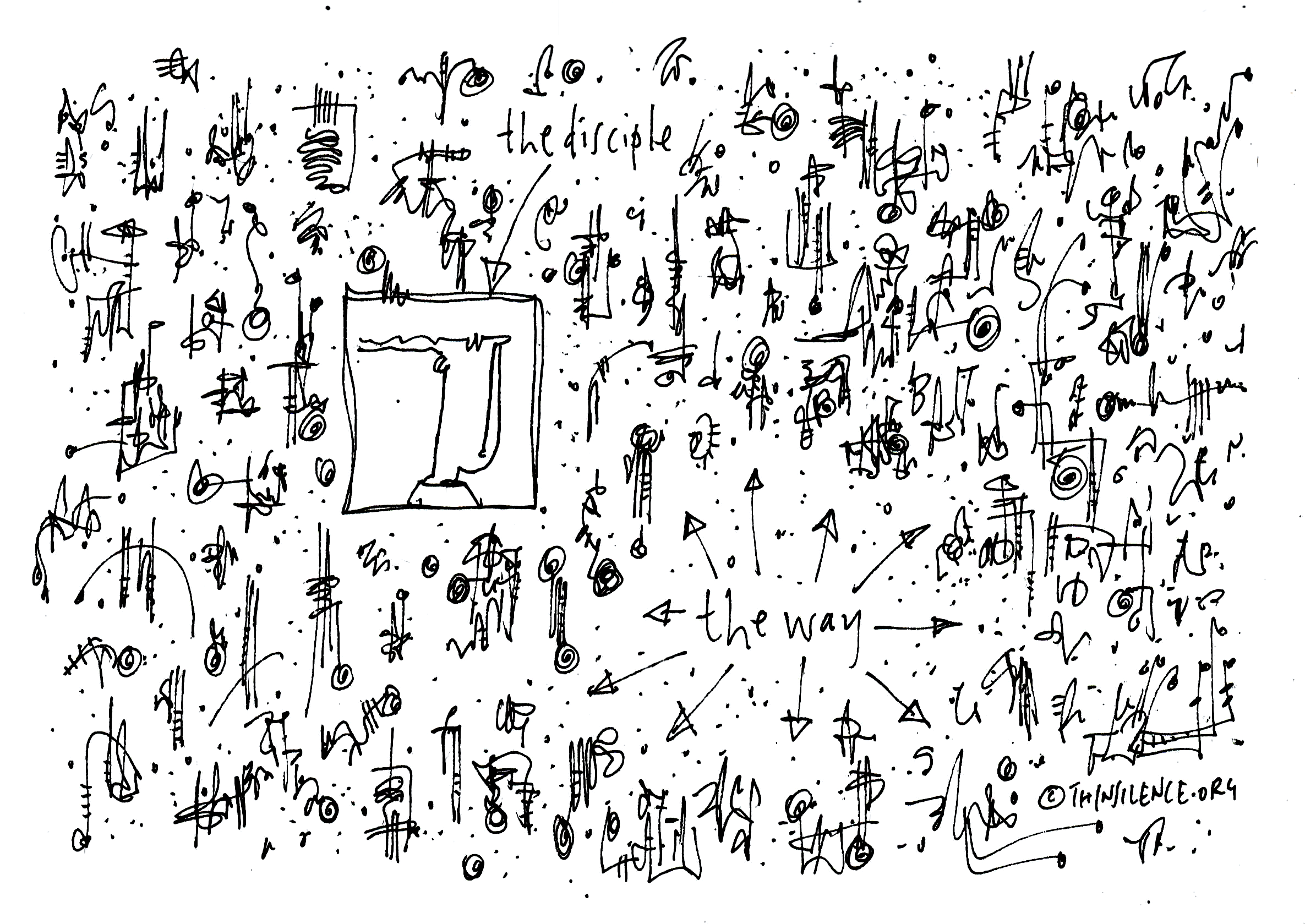
Before we conclude that truth lies within everyone, It is important to note that we must first be a disciple, a padawan – One submitting and embracing a discipline, a way, a school, an order; Formal or informal does not matter, Only that we are seekers of truth in mind, heart, and body: Myth has always demanded action.*
Evolution favours species that move their bodies in the way they were meant to move.* Dacher Keltner
Flow is a symptom of the work we’re doing, not the cause of it.** Seth Godin
Sunil Raheja offers four signs of egocentricity: We compare ourselves with others; We are defensive; We need to display our brilliance; We need to be liked and accepted.^
Our movements become unnatural and distorted, and whilst we need to develop ego to become an independent person, When we become stuck in our individuality, It’s like dragging a ball and chain.
Interdependence frees us into who we are uniquely, To immerse ourselves in what we must do and bring to others, And to value how we could not do this without each other: Near the end of March 1845, I borrowed an axe and went down to the woods by Walden Pond … It is difficult to begin without borrowing.^^
That’s what humans do: We make and remake our stories, abandoning the ones that no longer fit and trying on new ones for size.* Katherine May
As our circumstances change, we need to tell our stories differently in order to bring out their timeless truth.** Karen Armstrong
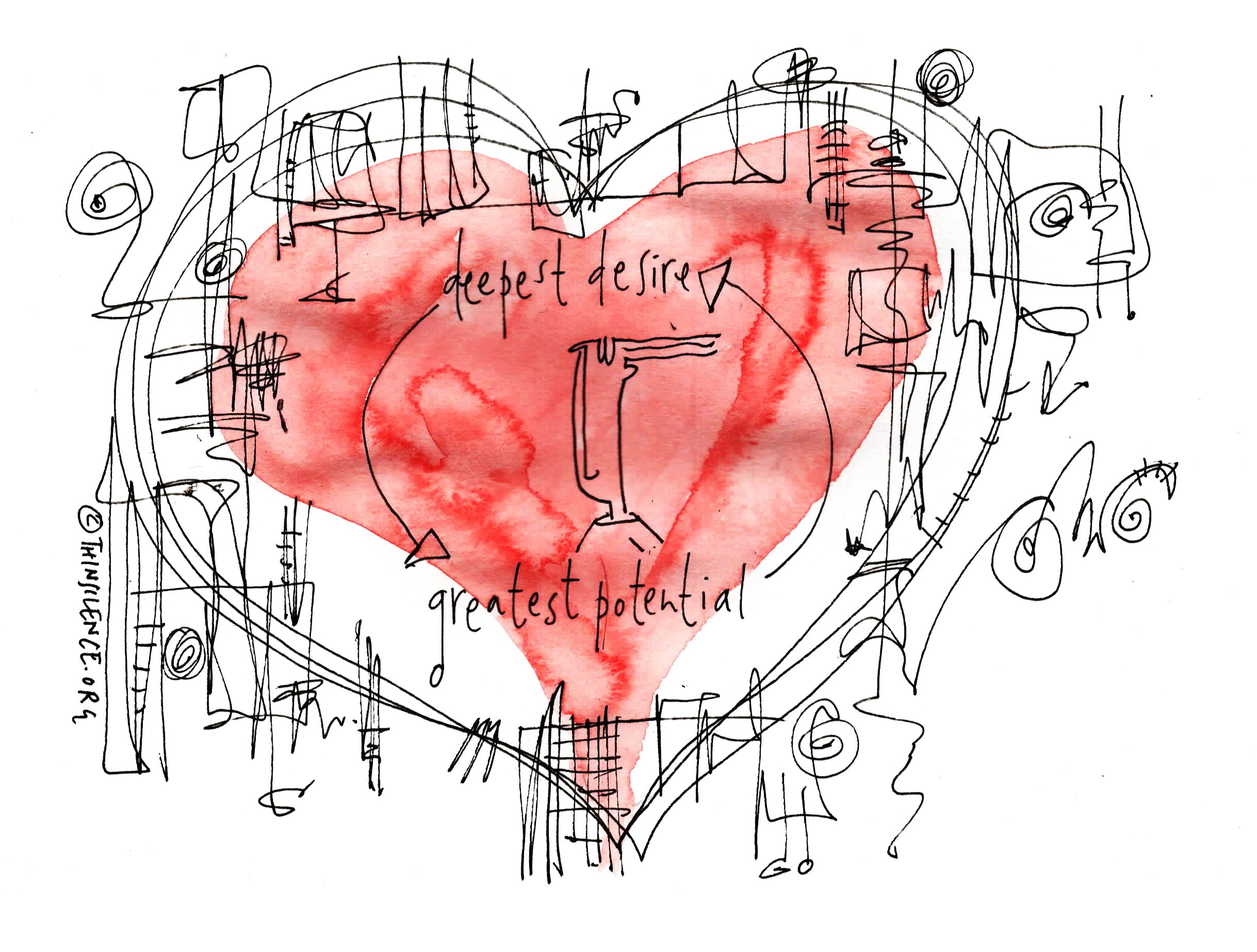
This adapting, unfolding, growing nature of story is really important for me to embrace right now: I am newly retired, I have moved my home two hundred miles, Yet there is something I must do – My timeless truth – and I must do all I can to keep sight of this, So I keep coming to this quiet place each morning to reimagine: I thought of the old Latin root of the word desire, meaning de sider, of the stars. To have a desire in your life literally means to keep your star in sight, to follow a glimmer, a beacon, a disappearing will-o’-the-wisp over the horizon into someplace you cannot yet fully imagine.^
The whole idea is that you’ve got to bring out again that which you went to recover, the unrealised, unutilised potential in yourself.* Joseph Campbell
I thought of the old Latin root of the word desire, meaning de sider, of the stars. To have a desire in your life literally means to keep your star in sight, to follow a glimmer, a beacon, a disappearing will-o’-the-wisp over the horizon into someplace you cannot yet fully imagine.** David Whyte
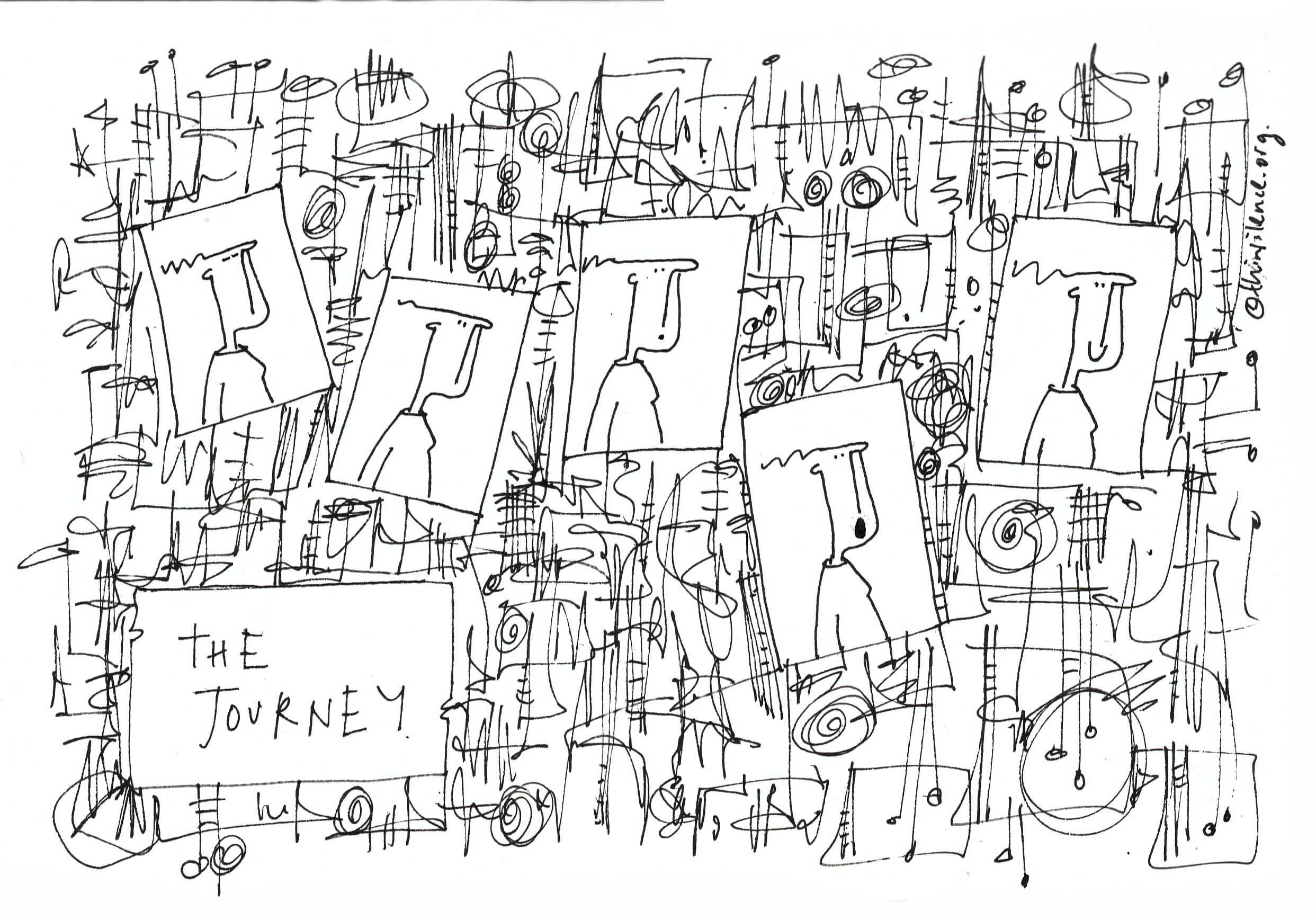
The thing about potential is we won’t know what it really is – It begins with a desire, but then we must set out to release it, to realise it, And much can change on the journey: How vain it is to sit down to write when you have not stood up to live. Methinks that the moment my legs begin to move, my thoughts begin to flow.^
Potential takes us on a wilder journey of mythological proportions towards that unimaginable someplace.
Art is what we call it when we are able to create something new that changes someone.* Seth Godin
Our society does not teach us how to be an effective giver of gifts. The schools don’t emphasise it. The popular culture its confused by it.** David Brooks
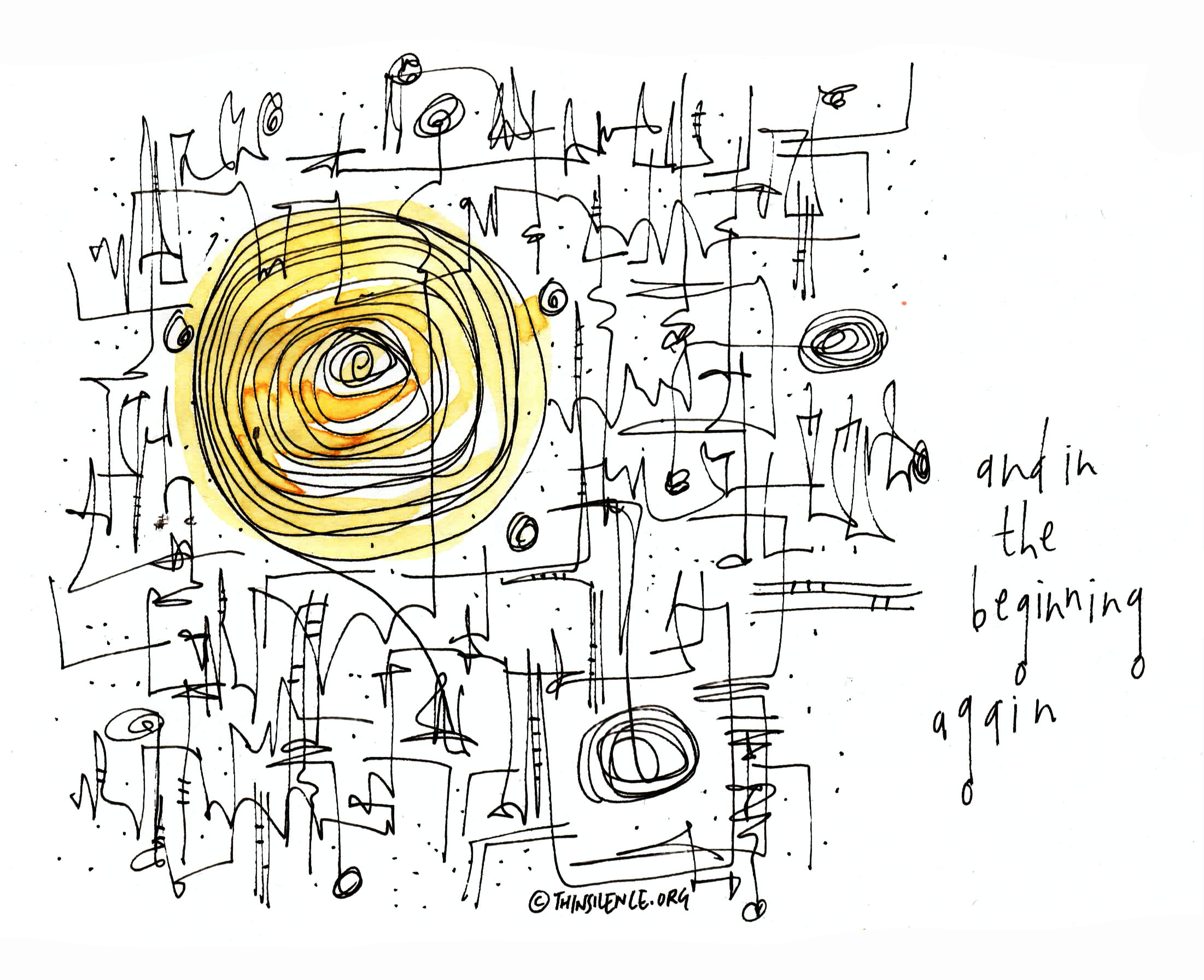
The possibility of beginning again – Just sounds too good to be true – Yet beginnings are the gift I long to bring – It’s the receiving that is the hardest thing.
Puhpowee, she explained, translates as “the force which forces mushrooms to push up from the earth overnight.* Robin Wall Kimmerer
Not for mushrooms, but there’s a kind of puhpowee force that drives each of us to bring an elegant solution into the world to meet some problem that has caught our attention; How would you describe yours?




 THIN|SILENCE
You must be logged in to post a comment.