The time when I have stopped drawing, put my arms down, turned around to connect with the speaker, paused, tuned in to the moment – whether to notice rain on the roof or the light bouncing on a wall at a certain angle or the cool temperature of the air – are when my internal rhythms start to slow down, to make way for a finer sensibility to come online, my aperture of awareness opens, and more of the moment can come through me.**
(Kelvy Bird)
Having practiced some of the visual scribing Kelvy Bird excels at, I know how special is the place she’s describing. Visual scribes can find themselves deluged by a relentless torrent of information needing to be captured and expressed. To think of stopping drawing and letting arms fall is almost unthinkable, and it’s why I don’t do it too often as it’s so tiring.
Yet what Bird describes is the presencing of ability that she has honed for so many years, making it possible for her to relax into her natural rhythms.
Through life, we all have been developing our own natural rhythms, and to take the time to notice just what these are and how they’re comprised will be invaluable. Lydia Davis’ words about writing connect for me here in a wider sense:
Always work (note, write) from your own interest, never from what you think you should be noting, or writing. Trust your own interest. […] Be mostly self-taught. There is a great deal to be learned from programmes, courses, and teachers. But I suggest working equally hard, throughout your life, at learning new things on your own, from whatever sources seem most useful to you.^
What are your interests? How have they developed through the years? Where have these things brought you to? Can you feel your rhythm?
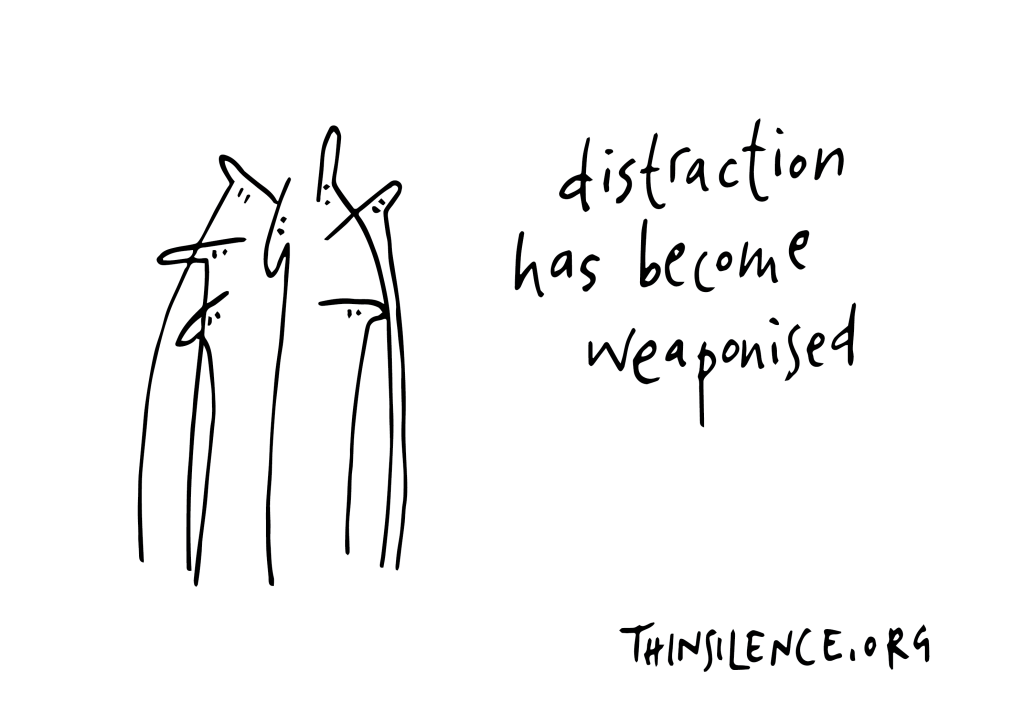
My more focused read for April will be Cal Newport’s Deep Work. Not only are we thinking about rhythm, but how rhythm is forged in our deepest work. The opposite of deep is, of course, shallow, and too much of our technologically generated work is shallow, exacerbated by distraction:
The ability to perform deep work is becoming increasingly rare at a time it is becoming increasingly valuable in our economy.^^
My interest, though, is primarily in personal value rather than economic value, as Joseph Campbell articulates for me:
The ultimate aim of the quest must be neither release nor ecstasy for oneself, but the wisdom and power to serve others.*^
There’s never been a better time not only to identify or discover your rhythms, with all their attendant skills and passions and experiences, but also to develop these more widely and deeply:
Men of genius themselves were great only by bringing all their power to bear on the on on which they had decided to show their full measure.^*
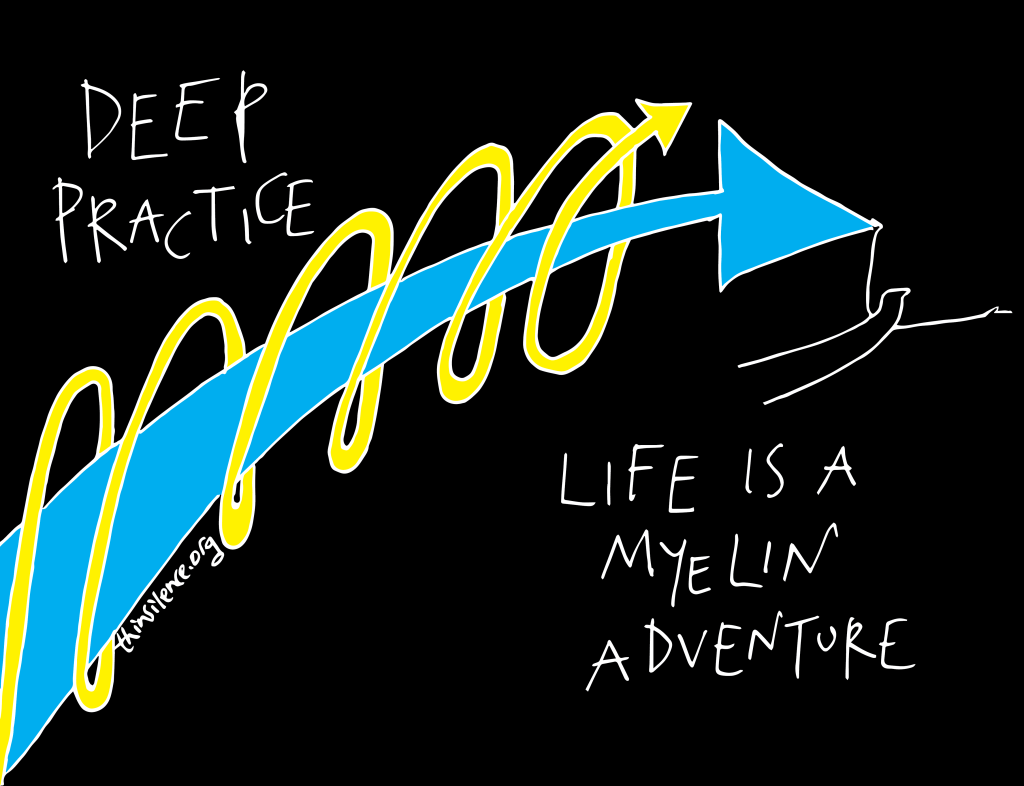
Unless your “deep” is technology, you’ll need to switch it off. Deep work, the focusing on something and not everything, requires brain circuits to be isolated in order to fire again and again, leading to the wrapping and insulating of the circuit with myelin. If you’re listening to music, or being distracted by the phone, you’re not able to isolate the circuit and deep will evade you.
(*The music in my head is George Gershwin’s I Got Rhythm, here sung by the incomparable Ella Fitzgerald. I had to turn it off after a while so I could focus.)
(**From Kelvy Bird’s Generative Scribing.)
(^From The Literary Hub’s article: Lydia Davis: Ten of My Recommendations for Good Writing Habits.)
(^^From Cal Newport’s Deep Work.)
(*^From Joseph Campbell and Bill Moyers’ The Power of Myth.)
(^*Antonin-Dalmace Sertillanges, quoted in Cal Newport’s Deep Work.)

 THIN|SILENCE
You must be logged in to post a comment.