I mean it

And the point is to live everything.
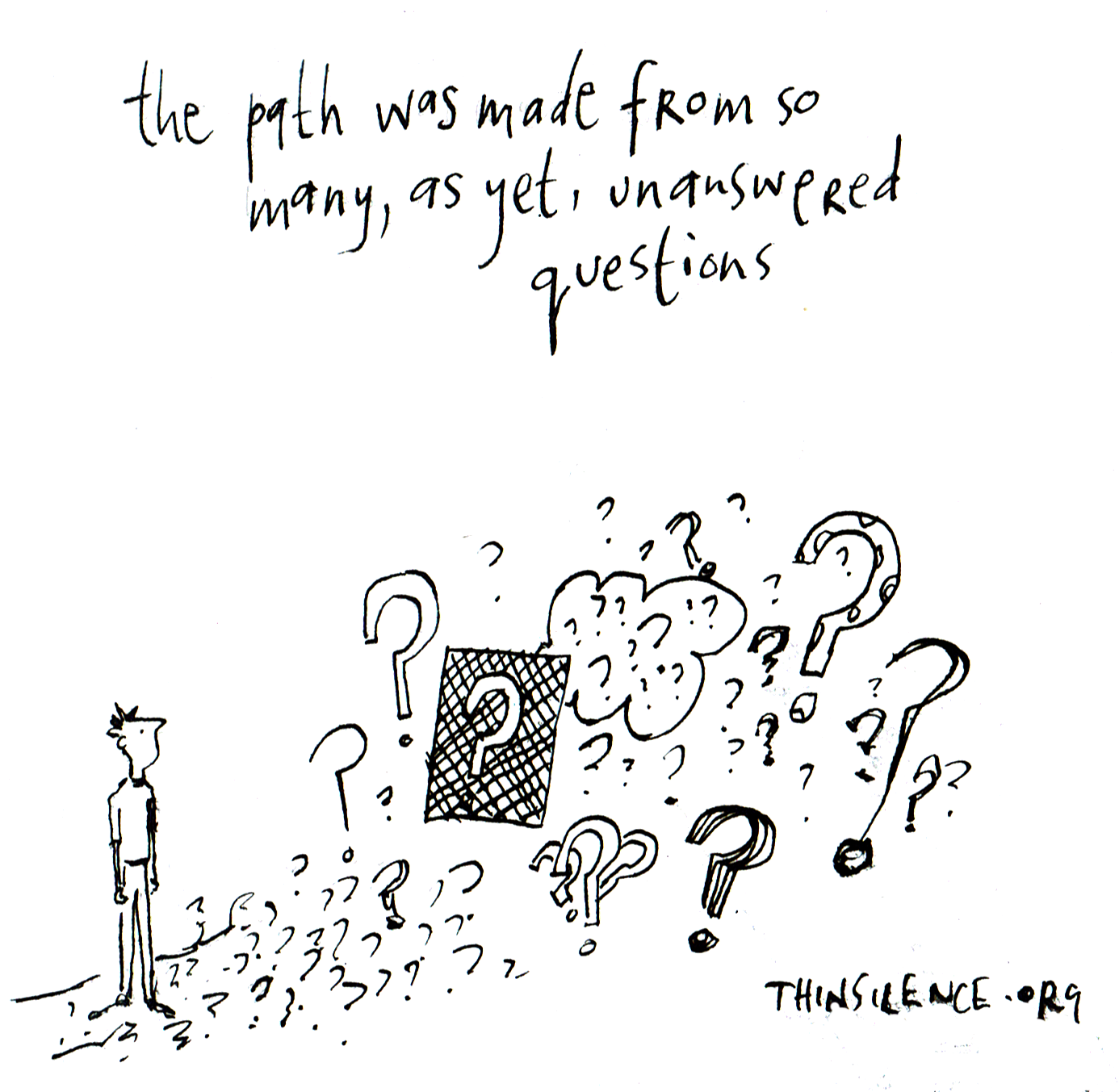
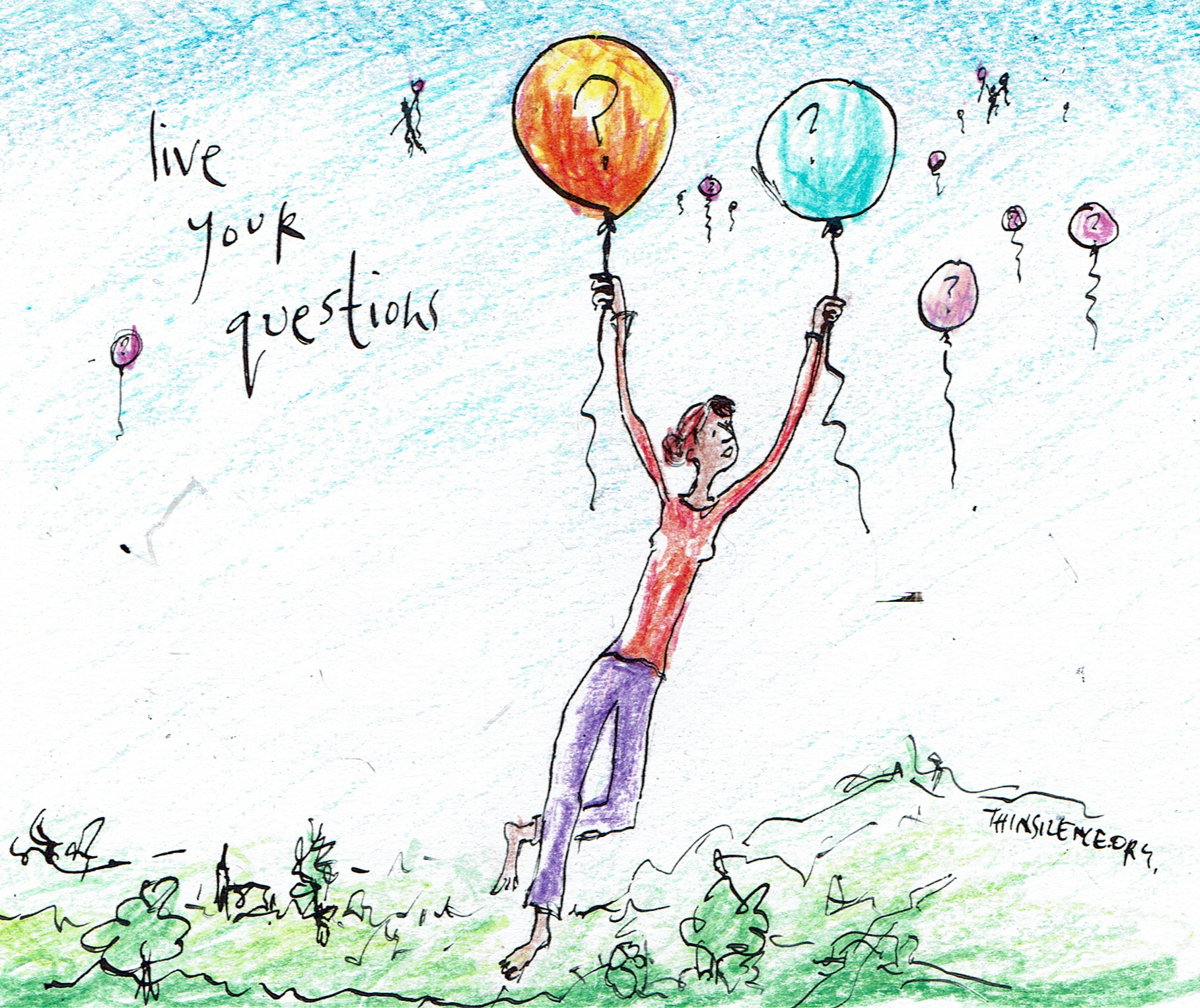
Live the questions now.
Perhaps then, someday far in the future,
you will gradually,
without even noticing it, live your way into the answer.*
(Rainer Maria Rilke)

So what don’t we have enough of?  It’s not stuff!  Short answer: Mattering.  Making a difference.  Doing something important.**
(Hugh Macleod)

There’s a lot of talk about whether we ought to pursue our passions and dreams.  A lot of it is polarised.  Hugh Macleod helpfully distils the issue down:

‘the thing you don’t want to do is work at a job that you hate and not prosper in the process.  That is purgatory’.^

He’s right.  It has to be the worst of all scenarios.  Play this out against what Johan Huizinga extracts from his studying of ancient agonistic play.  By the time I read the following words about an earlier age, he’s already pointed out that play preceded civilisation, not only being a part of human life but also that of other species:

‘Our point of departure must be the conception of an almost childlike play-sense expressing itself in various form, some serious, some playful, but all rooted in ritual and productive of culture by allowing the innate human need of rhythm, harmony, change alternation, contrast and climax, etc., to unfold in all richness.’^^

There’re some important words here for our understanding of work and passion, sharpening the focus on whether there is playfulness in what we do.  Playfulness seen in the forms and iterations of rhythm, harmony, change alternation, contrast and climax.  There are more words to add to these.  Huizinga continues to describe this earlier time:

‘Coupled with this play-sense is a spirit that strives for honour, dignity, superiority and beauty.  Magic and mystery, heroic longings, the foreshadowing of music, sculpture and logic all seek form and expression in noble play.  A later generation will call the age that knew such aspirations “heroic.”‘**

Playfulness is how we become more human, if such means we’re exploring honour, dignity, superiority (mastery),beauty, magic, mystery and heroic longings.

Macleod suggests we’re not searching for more stuff but more mattering.  Mihaly Csikszentmihalyi would probably include success as simply being more stuff:

‘Don’t aim at success – the more you aim at it and make it your target, the more you are going to miss it.  For success, like happiness, cannot be pursued; it must ensue … as the intended side effect of one’s personal dedication to a course greater than oneself.’*^

If you’ve ever seen the Peanuts cartoon in which Charlie Brown paints targets around the arrows he’s already fired into the fence – so he hits the bulls-eye every time – then maybe you’re thinking Charlie didn’t have it all wrong.

What matters to you more than anything else?  What are your questions?  What have you been up to all these years and maybe not noticed everything it comprises?

The inductive life wins over the deductive.  What’s important to you is likely to be already inside you, a story wanting to get out.  Perhaps passion is just the name we give to this when it breaks out.

It’s hard, though.

Humans have returned to explore this in one way or other throughout the millennia – I’ve not blogged about it once or twice but for more than five years with over 1,800 articles.  It takes time and effort – forget anything that promises easy steps:

‘The best moments usually occur when a person’s body or mind is stretched to its limits in a voluntary effort to accomplish something difficult and worthwhile.  Optimal experience is thus something that we make happen.’*^

Don’t give up on passion.  Grab your biggest questions and go with them.

(*Rainer Maria Rilke, quoted in the Northumbria Community‘s Morning Prayer.)
(**From gapingvoid’s blog: Our infinite need to be meaningful.)
(^From gapingvoid’s blog: For the love of work.)
(^^From Johan Huizinga’s Homo Ludens.)
(*^From Mihaly Csikszentmihalyi’s Flow.)
It’ll be the death of me

human motivation is actually based on a timescale that is long, sometimes even longer than our lifetimes*
(Dan Ariely)

The hero or heroine is by definition a “generative” person.**
(Richard Rohr)

The generative person knows that something must die for something to begin.  The classic hero and heroine know they cannot return the way they came, they can only go forward.

We hold on to all kinds of things that we think define us but few things do – we’re just going through the contents of the loft, so many things we haven’t thought of, never mind touched, in the last four years.  We can hold on to an old life in a similar way, instead of letting go, letting some things die, like seed falling into the ground, dying as a seed but growing something new and flourishing.

In his book The Art of the Graphic Memoir, Tom Hart shares something of his own harrowing story of the loss of his two year old daughter Rosalie, his writing and drawing becomes transformative for him:

‘the act of making your book or project or story shouldn’t merely be one of “telIing a story.”  It should change you. […] I had to create a new relationship with my dead daughter.’^

If we overlay James Carse’s “template” of finite and infinite games some powerful things come into focus more.  Remembering that a finite game includes a selected or elected group of people towards a goal with a deadline and who always play by the rules, Carse offers:

‘If the prize for winning finite play is life, then the players are not properly alive.  They are competing for life.  Life, then, is not play, but the outcome of play.  =Finite players ply to live; they do not live their playing.’^^

We may think of ourselves when we just want to get through the day for the evening, or the week for the weekend escape, or work for retirement when we’ll be able to do the things we want to do.

An infinite game, though, includes as many as possible for as long as possible and when the rules threaten either of these, they are changed.  Of the infinite payer, Carse writes:

‘Infinite players die.  Since the boundaries of death are always part of the play, the infinite player does not die at the end of play, but in the course of play.’^^

The infinite player or generative person knows they give of themselves, when they let go in order to let come, something will happen.  Every life is valuable in this way, every person generative.

(*From Dan Ariely’s Payoff.)
(**From Richard Rohr’s Falling Upward.)
(^From Tom Hart’s The Art of the Graphic Memoir.)
(^^From James Carse’s Finite and Infinite Games.)

Wordplay

There, there, he said.  The universe is not all suffering and sadness.  There is much happiness in the thing.  Isn’t there, Nephew.  There is joy, and there is music, and there is spirit.  Yes, I said, all these things.  It is a beautiful universe.*
(Alan Lightman)

When you remove your meaningless words, the power of your words go up.**
(Seth Godin)

We know the power of words, able to break or make, to close doors or open possibilities.

(Johan Huizinga’s Homo Ludens makes for fascinating reading about how we play with words, for example, ‘Greek tradition has numerous traces  of ceremonial and festal slanging matches.^)

What words want to come into being?

As you listen to the other person speaking words you may have heard so many times before, perhaps playing out the same old same old, or, sharing their pain or hope, what words do you want to bring into being?  Words that may make it possible for the other to hear new words wanting to be birthed?

In this moment, you have the power to change everything.

(*The characters Uncle Deva and Nephew in Alan Lightman’s Mr g.)
(**From Seth Godin’s blog: Meaningless.)
(^From Johan Huizinga’s Homo Ludens.)

It’s a wondering life

People overvalue their knowledge and underestimate the probability of their being wrong.*
(Nassim Taleb)

Take me down to the spring of my life, and tell me my nature and my name.**
(George Appleton)

Better to ask a question than give an answer or advice:

‘the unquestioned confines us to smaller and smaller compartments of ourselves’.^

It’s not that we’ll ever run out of wondering, whether about things “out there” or “in here”:

“One of the reasons that we wonder is because we are limited, and that limitation is one of the greatest gateways to wonder.”^^

May we awake each new day wondering.

(*From Nassim Taleb’s Fooled by Randomness.)
(**George Appleton, quoted in the Northumbria Community‘s Morning Prayer.)
(^From Maria Popova’s Brain Pickings: A Gentle Corrective for the Epidemic of Identity Politics … .)
(^^John O’Donohue, quoted in Maria Popova’s Brain Pickings: A Gentle Corrective for the Epidemic of Identity Politics … .)

All your heart, soul, mind and strength

Traveller, there is no path, the path must be forged as you walk.*
(Antonio Machado)

the process of living itself, if you please, is a work of art, as a masterpiece of anybody’s life holds the optimal strength and growth, and which in his life is the most important thing**
(Erich Fromm)

Your life is powerful.

Listen to what it is saying.

There is no path waiting for you.

Only the path you will make.

(*Antonio Machado, quoted in Brené Brown’s Daring Greatly.)
(**From Erich Fromm’s The Art of Listening.)

Don’t take away the oboes

Think small and act small and we will get bigger, think big and act big and we’ll get smaller.*
(Herb Kelleher)

true belonging only happens when we present our authentic, imperfect selves too the world, our sense of belonging can never be greater than our level of self-acceptance**
(Brené Brown)

Seth Godin asks the question, ‘Does an orchestra need an oboe?’^

Which instrument wouldn’t be missed next?

‘The little fillips, the extraneous extras, the indispensable nice bits – they count for more than we know.’^

Herb Kelleher built an airline on looking after its employees, telling them they mattered.  He, and those around him, knew that if you look after your employees then you could trust them to look after the customers.  And that’s what happened, year after year after year, until SouthWest Airlines were transporting more passengers than any other airline.

Each of us matters.  The things we’re curious about and get interested in, they things we pursue with a passion and get to making, they all matter.

True competition is found in complementariness.

Think small and act small and the world gets bigger.

(*Herb Kelleher, quoted in gapingvoid’s blog: The way we fly – a tribute to Kelleher, co-founder of SouthWest Airlines.)
(**From Brené Brown’s Braving the Wilderness.)
(^From Seth Godin’s blog: Does an orchestra need an oboe?)

The imperfect game

I am a work in progress.*
(Anthony Weeks)

Real mathematicians understand completeness, real philosophers understand incompleteness, the rest don’t formally understand anything.**
(Nassim Taleb)

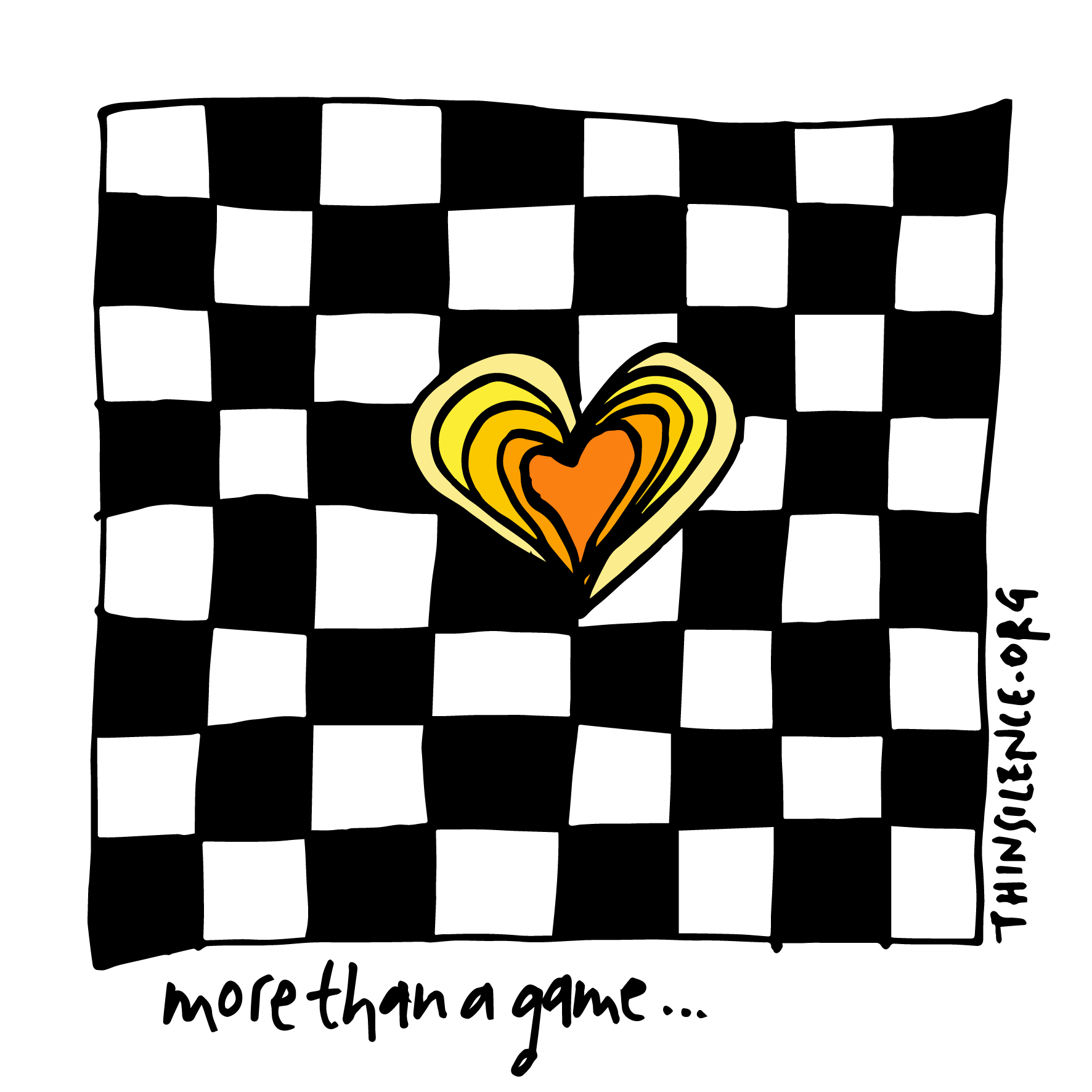
We play be use it’s more than a game.  Johan Huizinga notes how play is not only something our species engages in:

‘all the basic factors of play, both individual and communal, are already present in animal life – to wit, contests, performances, exhibitions. challenges, preening, strutting, and hosings-off, pretences and binding rules. […] Woodcocks perform dances, crows hold flying-matches, bower-birds and others decorate their nests, song-birds chant their melodies’.^

He connects this with the expression life is:

‘Thus competitions  and exhibitions as amusements do not proceed from culture, they rather precede it.’^

Watch any sport or game and there’s a way of describing it as “just this” or “just that.”  On the surface, these are empty and somewhat meaningless things.  But we know there’s more to a game, the way it can engage, challenge, bring out life performance, clarify goals in life, point us towards meaning and purpose.

We are the species that has taken game-playing to new levels, many games have become life for people.  Seeing it the other way around, though, that games help us to explore what life can be, allow us to face the incomplete, the tensions, the difficulties and find a more vibrant life:

‘When we are talking about emergence, disruptions, discontinuous storylines, and points of divergence and convergence, I light up.’*

(*Anthony Weeks, from Drawn Together Through Visual Practice.)
(**From Nassim Taleb’s The Bed of Procrustes.)
(^From Johan Huizinga’s Homo Ludens.)

Play

when we contemplate the whole globe as one great dewdrop, striped and dotted with continents and islands, flying through space with other stars all singing and shining together as one, the whole universe appears as an infinite storm of beauty*
(John Muir)

(We recall Plato’s conjecture that the origins of play lies in the need of all young creatures, animal and human, to leap.**
(Johan Huizinga)

There is something more primal and truthful in play than in the earnest stories we have come to tell ourselves.  Play connects us with the universe of which we are made, Martin Buber claiming:

‘The You knows no system of coordinates.’^

I read “coordinates” to be the stories we tell ourselves and live within as cultures and societies.  Johan Huizinga holds that these stories have arisen from play but then have lost their playfulness.

Without playfulness, they become our prisons, at worst dictating our places and functions, at best, limiting these.

But the universe has given you the capacity to leap and you must leap – each of us in our different way.

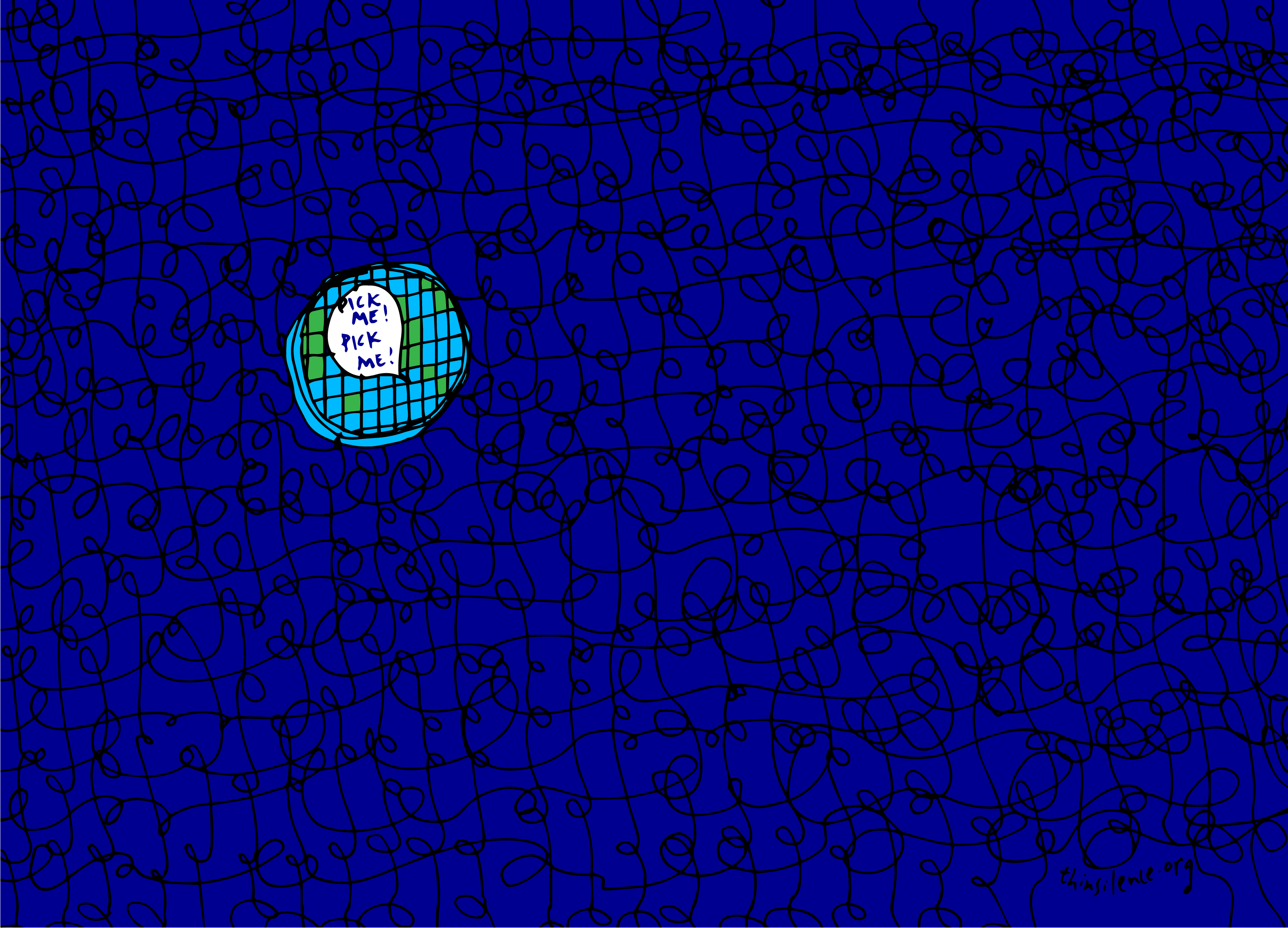
Don’t wait to be picked.  Pick yourself.

(*John Muir, quoted in Maria Popova’s Brain Pickings: The Universe as an Infinite Storm of Beauty.)
(**From Johan Huizinga’s Homo Ludens.)
(^From Martin Buber’s I and Thou.)

Playing with treasure

Silence will speak more to you in a day than the world of voices can teach you in a lifetime.
Find silence.  Find solitude – and having discovered her riches, bind her to your heart.*
(Frances Roberts)

Most of us then default to one of a handful of templates and filters for all their experiences; everything gets pulled inside of what my little mind already agrees with.**
(Richard Rohr)

It’s not just that we live in an amazing world, making each and every one of us rich.

It’s not only that humility and gratitude and faithfulness open these riches to us.

It’s that our ability and willingness to play make these things available to us more quickly and permanently:

“Scientists have recently determined that it takes approximately 400 repetitions to create a new synapse in the brain – unless it is done with play, in which case, it takes between 10-20 repetitions.”^

Then this new year begins to look different, what it might also be, not only what it already is.

(*Frances Roberts, quoted in the Northumbria Community‘s Morning Prayer.)
(**From Richard Rohr’s The Divine Dance.)
(^Karyn Purvis, quoted on Speech and Language Therapy Lanarkshire‘s Facebook page.)