
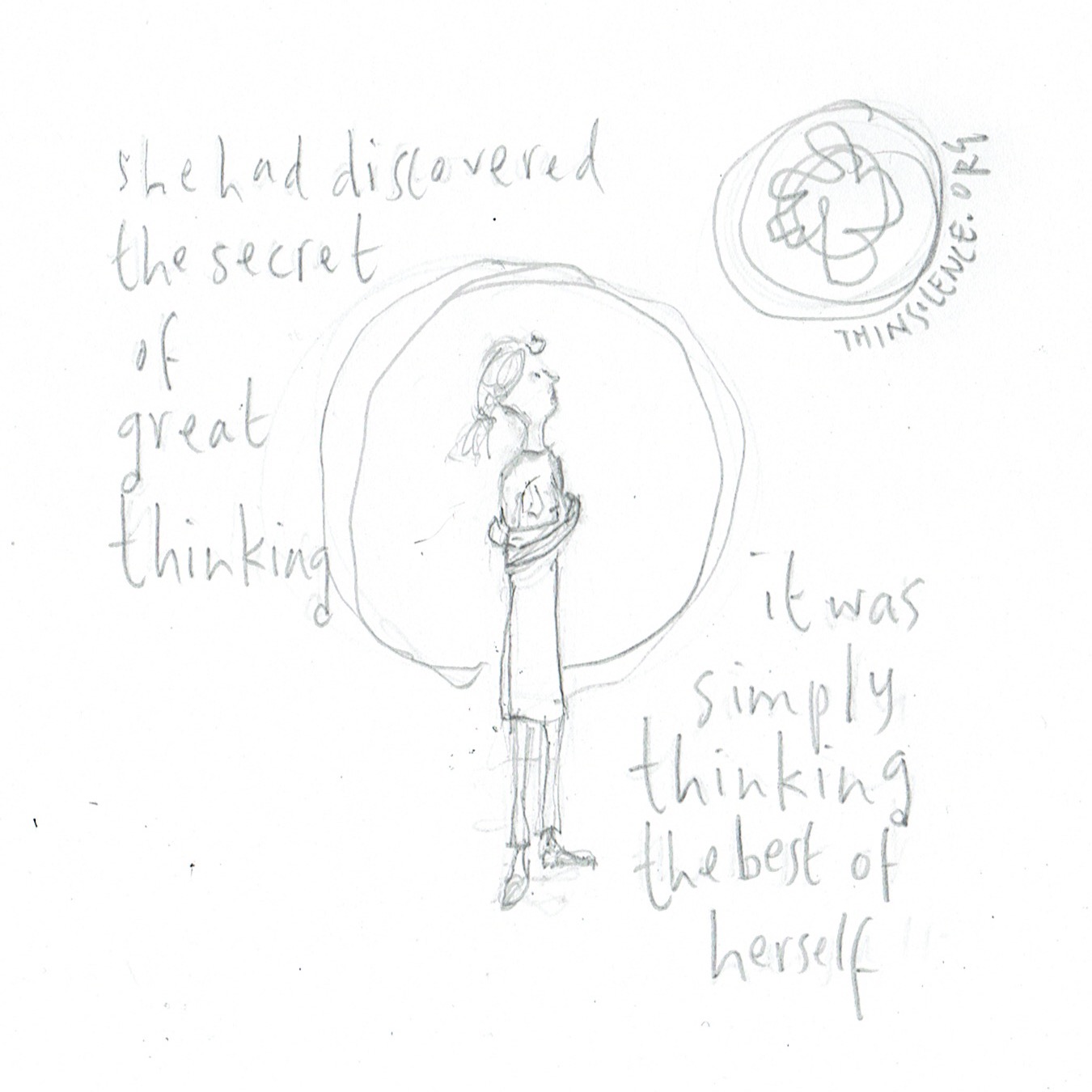
When you focus on what others are thinking about what you are thinking, you aren’t thinking. Not very well.*
(Nancy Kline)
The mind, once stretched by a new idea, never returns to its original dimensions.**
(Ralph Waldo Emerson)
Being more concerned with what others think about you will prevent your best work. Anxiety, anger, hurt, worry and perfectionism will all prevent our best thinking and feeling and best work.
Thinking improves after ‘kindness, clarity, ease and genuine interest,’ claims Nancy Kline. Writer Neil Gaiman admits that for fifteen years or so he was worrying about the next thing and he didn’t enjoy the ride at all. It’s not about taking pleasure but finding happiness.:
‘Pleasure is short-term, addictive and selfish. It’s taken, not given. It works on dopamine. Happiness is long-term, additive and generous. It’s giving, not taking. It works on serotonin. […] More than ever, we control our brains by what we put into them. […] Scratching an itch is a route to pleasure. Learning to productively live with an itch is part of happiness.’^
Happiness is ultimately about being okay about who we are and what we have and what we are able to imagine out of these and make happen. Whatever others think about us.
(*From Nancy Kline’s More Time to Think.)
(**Ralph Waldo Emerson, quoted in Ben Hardy’s article: How to Fully Commit to Goals that Terrify You.)
(^From Seth Godin’s blog: The pleasure/happiness gap.)
 THIN|SILENCE
You must be logged in to post a comment.