objective and imagined

11 be the one

The line between the two is difficult to define.

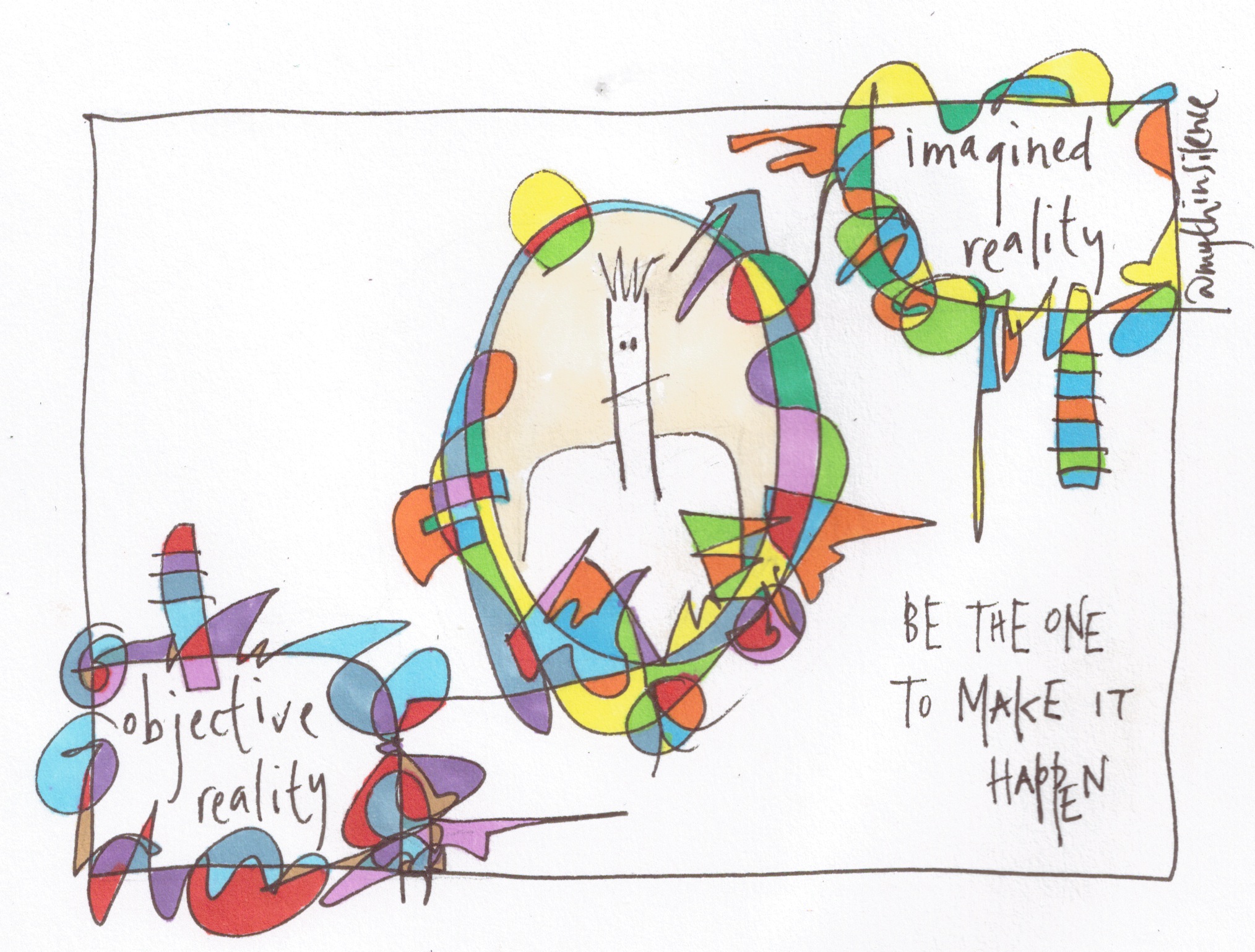
Objective is the way things are.  We imagine and when things work – not everything we imagine happens or works – we become creators of objective reality.

In the beginning there was physics, and physics begat chemistry, and chemistry begat biology, and somewhere in all the biology there was a cognitive revolution so that biology begat history, and history begat cultures and societies: artefacts and worldviews – or fuel and oxygen for firemakers.  And firemakers ask, How much more can we imagine?  Not just the next step but the step beyond the next?

The impression this leaves us with is, we’re moving both towards something and away from something:

‘The whole of history takes place within the bounds of this biological arena. … However, this arena is extraordinarily large, allowing Sapiens to play an astounding variety of games.  Thanks to their ability to invent fiction, Sapiens create more and more complex games, which each generation develop and, elaborates even further.’*

Where’s the future in this?  In our imaginations.  Now we not only are we children of the past, but because of our imaginations we are children of the future too – an art which produces infinite games:

‘To be playful is not to be trivial or frivolous … . On the contrary, when we are playful to each other we relate as free persons, and the relationship is open to surprise …’.**

(*From Yuval Noah Harari’s Sapiens.)
(**From James Carse’s Finite and Infinite Games.)
 

the gossiping ape

10 once upon a story

How do you keep up to 150 Humans bonding together?

Gossip.

According to Yuval Noah Harari, gossiping is what makes it possible for larger numbers of Humans to stick together than other ape groups.

To keep even larger numbers together we resort to myths and stories to believe in together:

‘Yet none of these things exists outside the stories that people invent and tell one another.’*

Harari doesn’t differentiate between myths which have an initiating event and those which do not, but when he mentions stories he highlights something crucial to Human life:

‘As far as we know, only Sapiens can talk about entire kinds of entities that we have never seen, touched, or smelled.’*

Who wants to live in an unimaginative now that we have been intoxicated by the possibility of life getting bigger and better: a story we’re gossiping every day.

Who are we becoming when we pursue and live out our stories?
What about stories which allow us to love the stranger?
How do we become creatures which make all of life thrive?
Which stories will we pursue alone and together?
Where will the stories we participate in take us as a species in the two hundred or five hundred years?
Where will our evolutionary journey (which is one we hold in our own hands because of the stories we have lived) take us next?

(*From Yuval Noah Harari’s Sapiens.)

words words words

9 uh

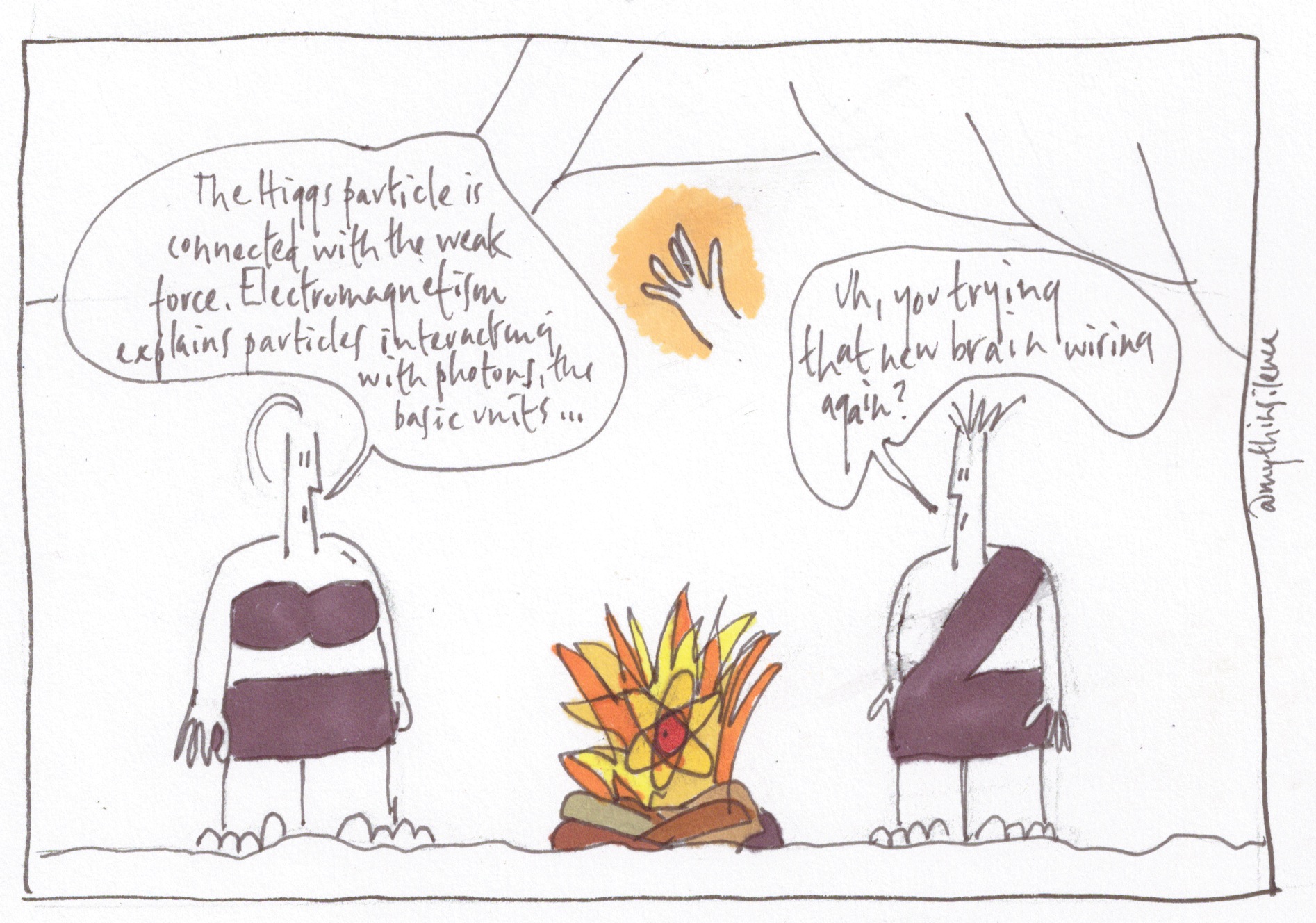
Somewhere between seventy and thirty thousand years ago something happened to the wiring of Human (Sapiens) brains: a cognitive revolution.

This thought from Yuval Noah Harari is influencing my thinking today.

Harari’s words are in a book I’m reading at the moment, yet another person who’ll never step inside my home but will influence me with his words.  I’m surrounded by hundreds of such people as I write.

The power of words: the power of language.

We might take this amazing Human development for granted: our worlds are full of language form, content, and meaning.

‘The most commonly believed theory argues that accidental genetic mutations changed the inner wiring of the brains of the Sapiens, enabling them to think in unprecedented ways and to communicate using an altogether new type of language.’*

Words open up possibilities for life not as we know it.**

“Tell me, what is your plan to do/With your one wild and precious life?”^

Perhaps flourish?

(*From Yuval Noah Harari’s Sapiens.)
(**Sorry for the Star Trek allusion.)
(^From a poem by Mary Oliver, quoted in Mindfulness by Mindfullybeing.)

winners and losers

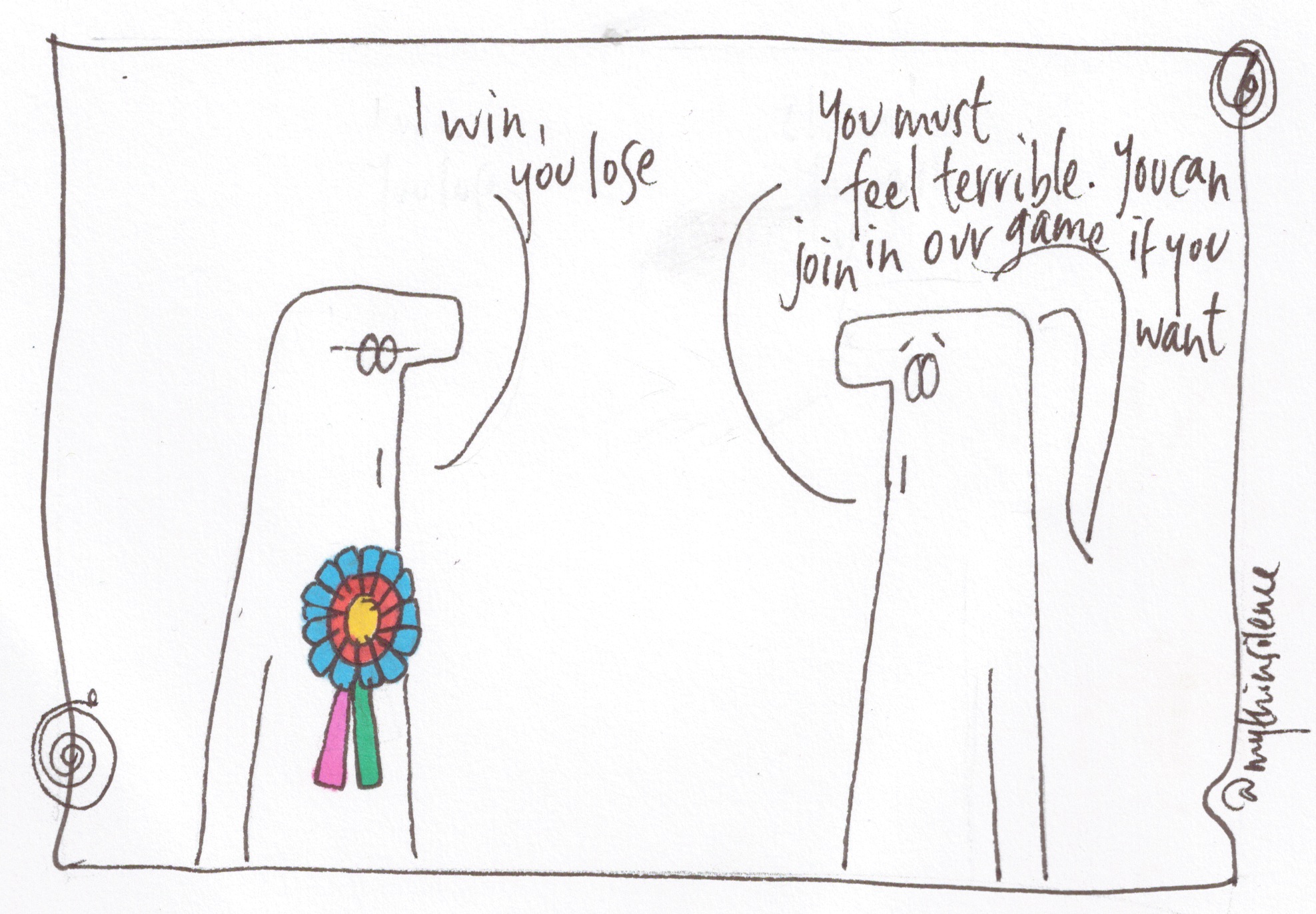
8 i win you lose

It’s one of the biggest finite games.

As I write, the United Kingdom is coming to terms with the results of the 2015 Election.

What if more people played an infinite game?:

‘Finite games can be played within an infinite game, but an infinite game cannot be played within a finite game.’*

An infinite game includes as many people as possible for as long as possible, and when the rules threaten to exclude from or conclude the game, they’re changed.

A finite game, though, is played by an exclusive group of people and has a sharply defined goal, and the game must be played by the rules.

We have to wait until 2020 for another political election for the United Kingdom but each day we get the chance to play an infinite game.  Each day we get to connect who we are and what we have with our imagining for what we can do with these:including people, changing things for the better.

Every infinite player brings something unique and beautiful things, and is encouraged to play in a heart, soul, mind, and strength kind of way.

As people were voting yesterday I began a course on mindfulness.

The aim of mindfulness is to help people live more in the present moment and to be more aware and alive to their lives, rather than going through life on automatic pilot = downloading, WYSIATI (What You See Is All There Is), SOSO (Same Old Same Old).  If it’s one more way to help more people play the infinite game because its empowering, great.

The finite game disempowers; only a few people win and even they lose if they can’t see the infinite game is the bigger one.

‘Mindfulness is not about trying to get anywhere – but simply being aware of where you are – and allowing yourself to BE there and AS you are.’**

(*From James Carse’s Finite and Infinite Games.)
(**From Mindfulness by Mindfullybeing.)

catching up

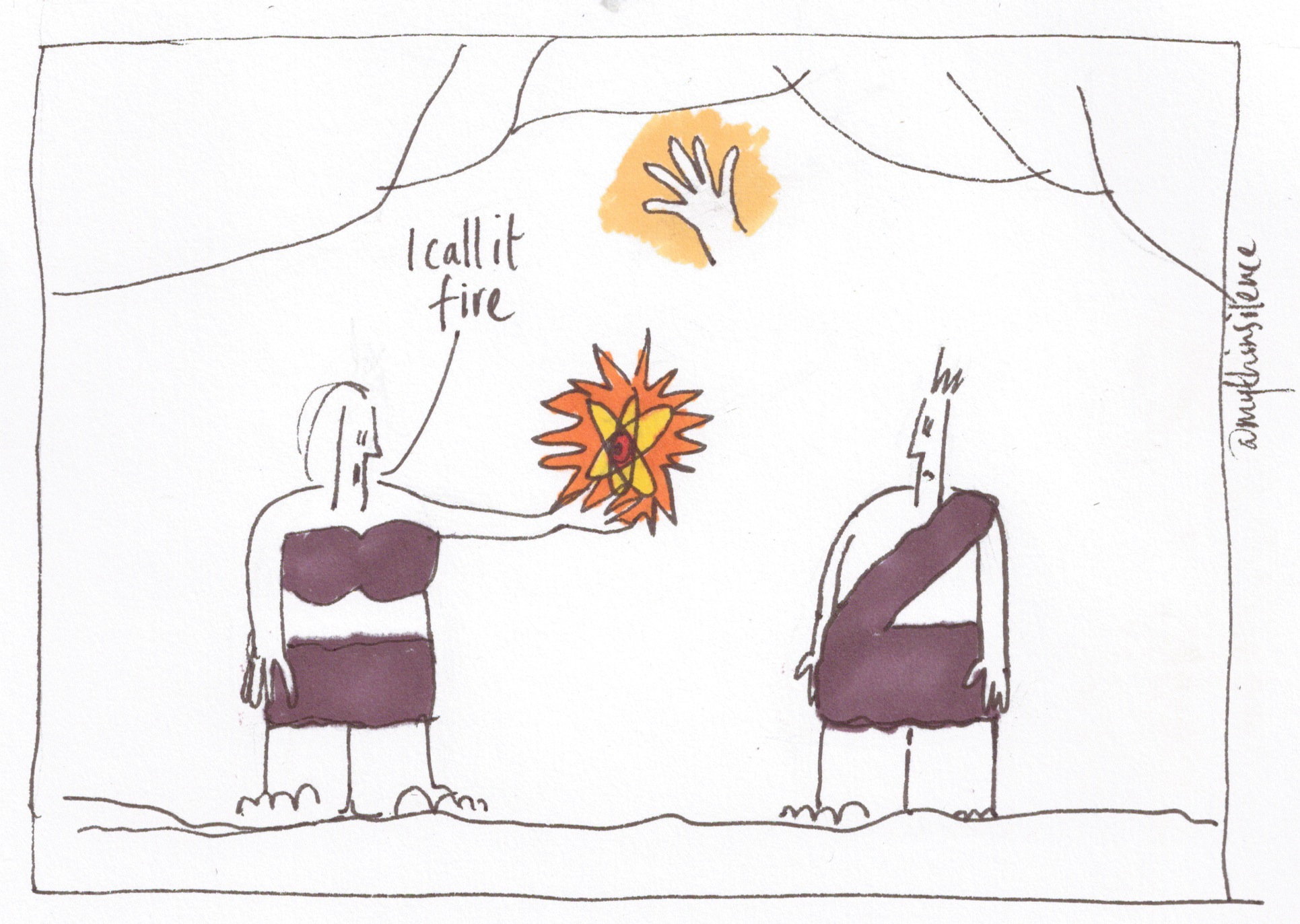
7 i call it fire

Good news.  Humans are no longer in the middle of the food chain.  One of the major contributors towards this has been the harnessing of fire.

The world changed:

A lack of powerful muscle no longer disadvantaged our species.
Food, when cooked, became easier and faster to eat, and more nutritious.
This reduction in time needed to catch and eat drastically left us with time on our hands to, well, think about things – including thinking about what we could do with fire.  

With rapid brain development comes with the question about how far we can progress (see Lucy as a modern take on this).  Some suggest we are Human Becomings.

We can do so many things, and no doubt will continue to progress our technologies, but we’ve always struggled to keep up with our being or character.  (Twitter trolls are able to use the technology but we feel something else is struggling to catch up.*)

Humans have been around in different forms for millions of years.  As our knowledge of genetics now provides us with the ability to step outside of natural selection, we enter a period of incredible Human development.

What if this were to see our being and doing coming together in ways which allow us to identify and express the idea that to be Human means all we touch and make can thrive and flourish?

The most important question, as we explore these early years of the twenty first century, appears to be What does it mean to be Human?

(*Check out this article by AJ Jacobs to see what we have to negotiate in our thinking every day.)

a question of life

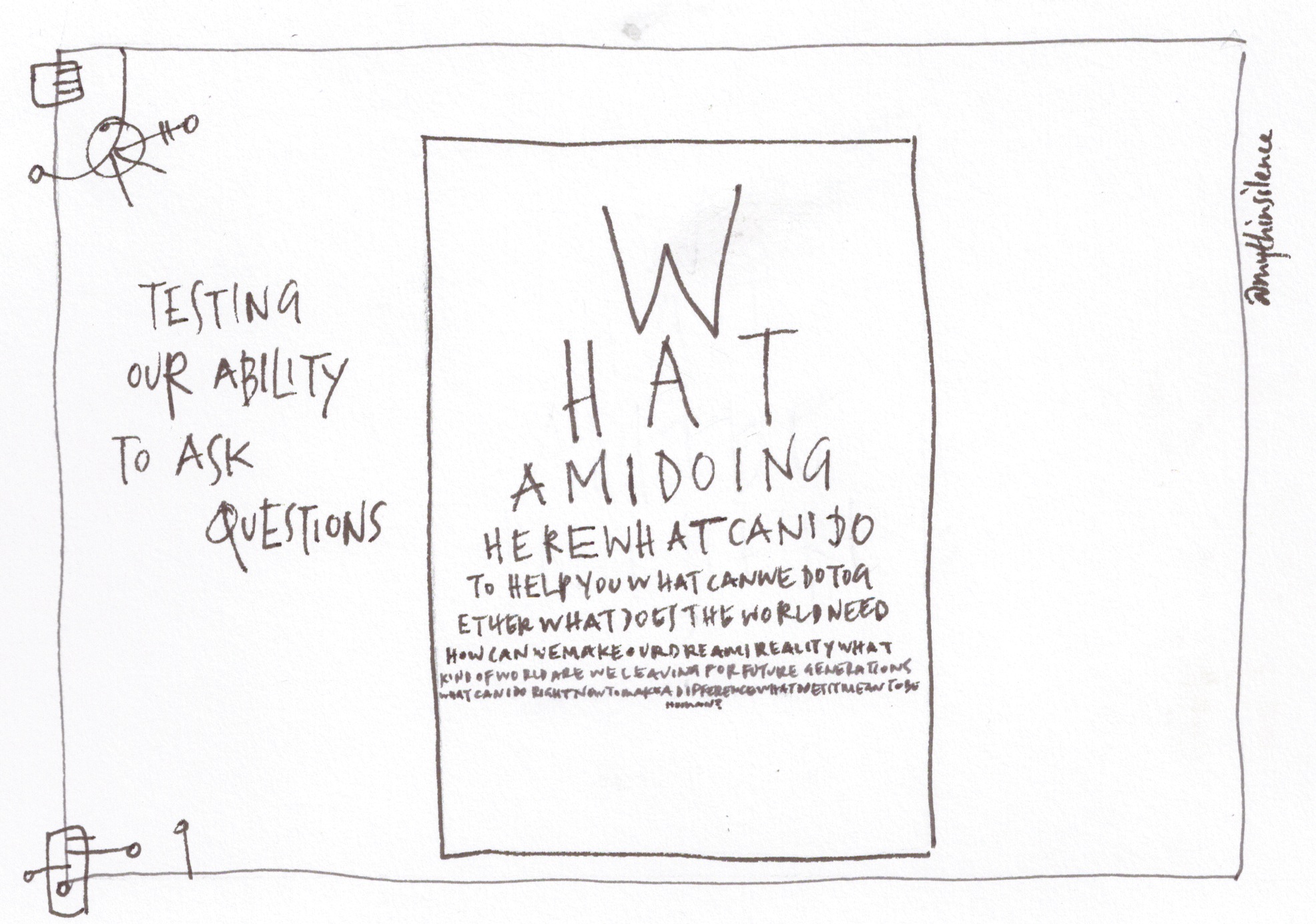
6 testing our ability

Could Human life be expressed more powerfully in a question than in anything else?

There is a restlessness to life, as though, if we were to find the answer, life would be less.  Some live as though they are only waiting for death:

“All around you, people will be tiptoeing through life, just to arrive at death safely.  But dear children, do not tiptoe.  Run, hop, skip, or dance, just don’t tiptoe.”*

There is so much we don’t know, about each other, about our world and universe, about ourselves.  It has provoked author Stuart Firestein to ask, ‘What if we cultivated ignorance instead of fearing it?’**

Our questions cause us to reach out to one another and to keep moving in a healthy and life-provoking pursuit – so we might not be overtaken by apathy or cynicism.

‘Questions learn to love that great unknown – it’s the land of opportunity, in terms of creativity and innovation.’^

Yuval Noah Harari points out how Humans, having bigger brains than other species,  have, through natural selection, favoured smaller heads and comparatively premature birth for their young because of the hazards of child-birth.^^

Human youngsters, then, have been left with years of development outside of the womb, not only being dependent for longer but expressing great adaptability and plasticicity as we interacted with our environments – a plasticity we can continue throughout our lives.

So it would seem our questions are the ideal way of exploring this big world and universe.  They existed in our lives in their hundreds every day when we were younger; we’ve just forgotten how to ask them.  The good news is, this essentially Human ability can be recovered and developed.

Have you identified your beautiful question yet?

(*College professor, quoted in Shane Claiborne’s The Irresistible Revolution.)(**Quoted in Warren Berger’s A More Beautiful Question.)
(^From Warren Berger’s A More Beautiful Question.)
(^^From Yuval Noah Harari’s Sapiens.  Harari describes the problem of large heads is compounded by Human females requiring narrower hips in order to stand upright resulting in a narrowing of the birth canal.)

the question of others

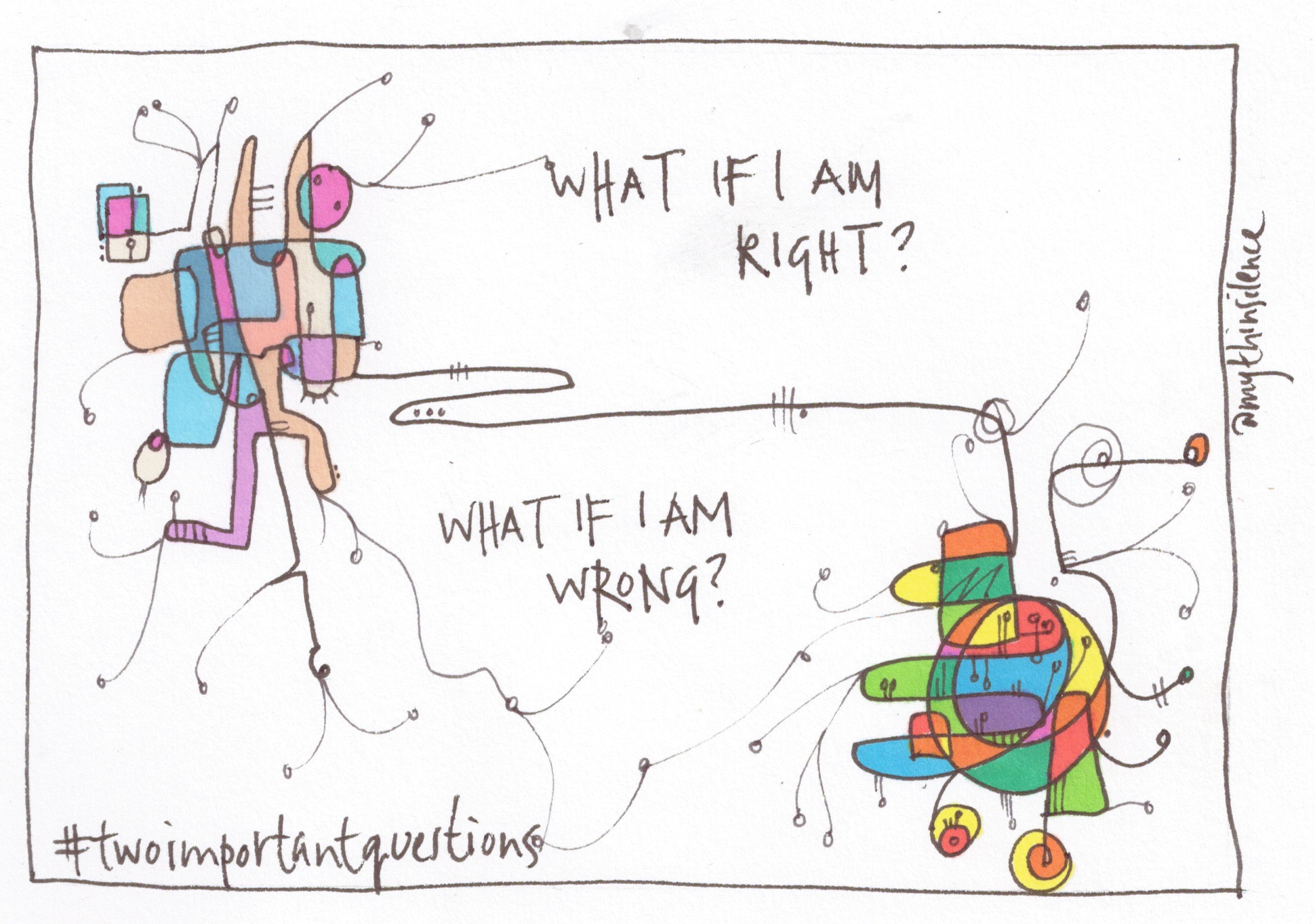
5 #twoimportantquestions

Microsoft engineer Michael Corning uses the question, What are the odds I’m wrong?, to make sure he doesn’t become over-certain in his own views.

What if someone else is right about something we’re so certain about?

We can miss a lot of things when we’re certain.  I wonder what I’ll know in ten years time that I don’t know now because of being open to the perspective of others?

We can push this further to this question:

Is there a question others are asking which might help me to find my beautiful question?

“I think most of us find purpose when we engage with something bigger than ourselves.”*

If we embrace this idea then we’ll have to be open to others, and to views and questions which are different to our own.

I’m trying to get a handle on how many people are wandering through life without finding their beautiful question.  What if one percent, even half a percent, more of the world’s population were to find their beautiful question, how would things change?

When we begin to ask others about their questions, it’s amazing how many more questions begin to appear for us.

What is the question which propels you?

‘Articulating a personal challenge in the form of a question … allows you t0 be bold and adventurous because anyone can question anything.  You don’t have to be a recognised expert; you just have to be willing to say. I’m going to venture forth in the world with my question and see what I find.‘**

(*Retired Trader Joe CEO Doug Rausch, quoted in Warren Berger’s A More Beautiful Question.)
(**From Warren Berger’s A More Beautiful Question.)

provenance

4 my five year old

What if you could not fail?*

A question made up of six short words.  Having a simple and beautiful form, it’s been used by many people.

It was made popular by church pastor Robert Schuller at the end of the twentieth century, ‘In the past few years, the question has had another surge in popularity’.*

I love the idea of a question, like a piece of art, having provenance, a documented history because it is so valuable.

It has spawned other questions:

What if I succeed?**

What’s truly worth doing whether you fail or succeed?^

Humans are at their best when they are asking questions.

Here are three linked questions which lead to really interesting adventures:

Who am I?
What do I have?
What should I do (in the light of my answers)?

Some think the first of these questions isn’t very helpful.  It’s the third one which is the most important.

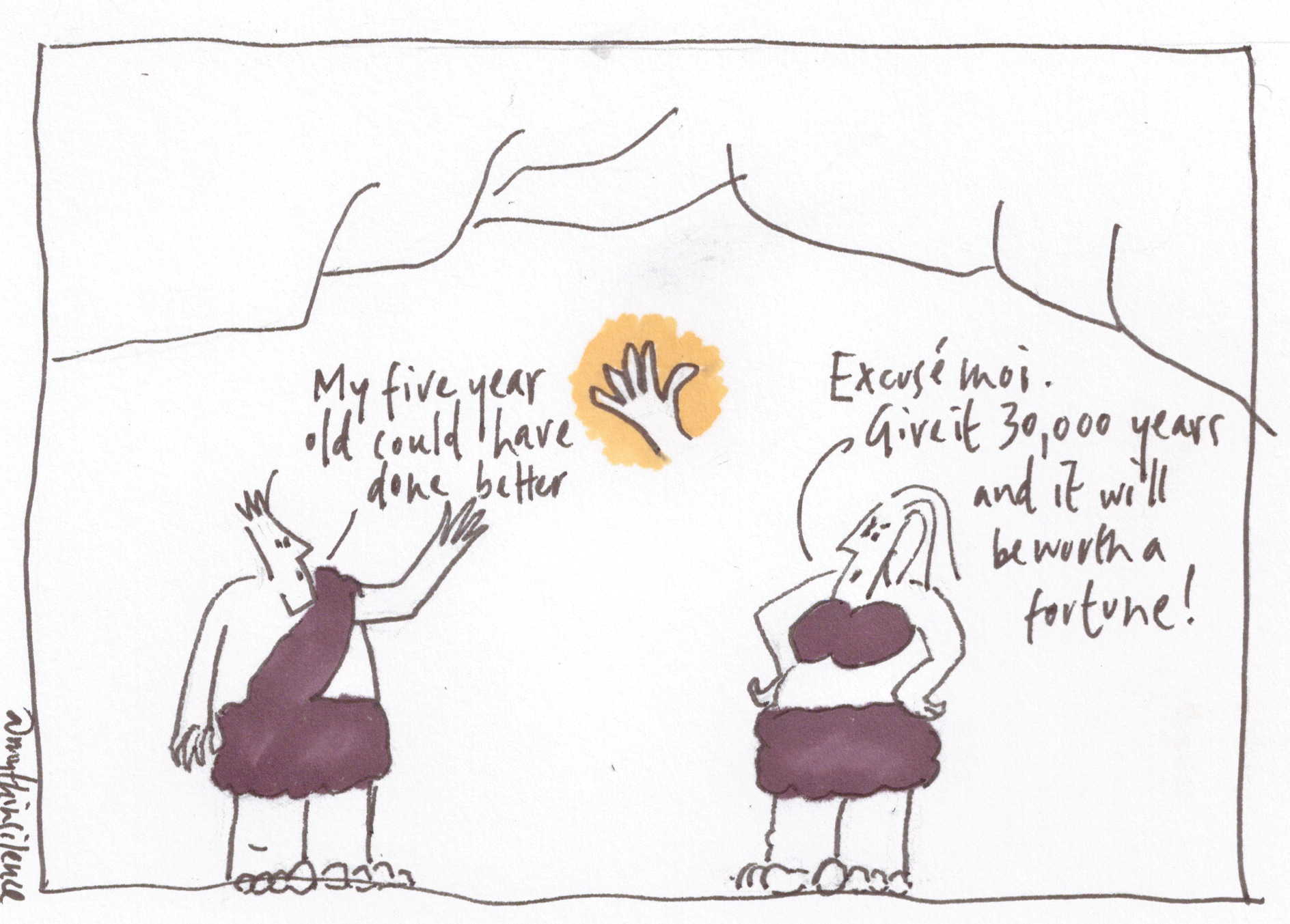
Yuval Noah Harari opens his book Sapiens with an image of a handprint discovered in the Chauvet-Pont-d’Arc cave in southern France.  Believed to be 30,000 years old, Harari suggests, ‘Somebody tried to say, ‘I was here!”^^

Gripped by this image, I lay my hand down on the work-surface by my laptop is on roughly in the way I imagine this ancient artist must have done tens of thousands of years ago, and wonder if this was the result of a question forming in someone’s mind.  Perhaps, Why am I here?  (Or, maybe) an attempt to answer in the form of, I’m here for more than eating and procreating. 

Why am I here? is a question we still use to figure out what we ought to do today, which, as I write, happens to be Monday.

(*From Warren Berger’s A More Beautiful Question.) 
(**Author Jonathan Fields, quoted in Warren Berger’s A More Beautiful Question.)
(^Author Chris Guillebeau, quoted in Warren Berger’s A More Beautiful Question.)
(^^From Yuval Noah Harari’s Sapiens.)

experiment, experiment, experiment

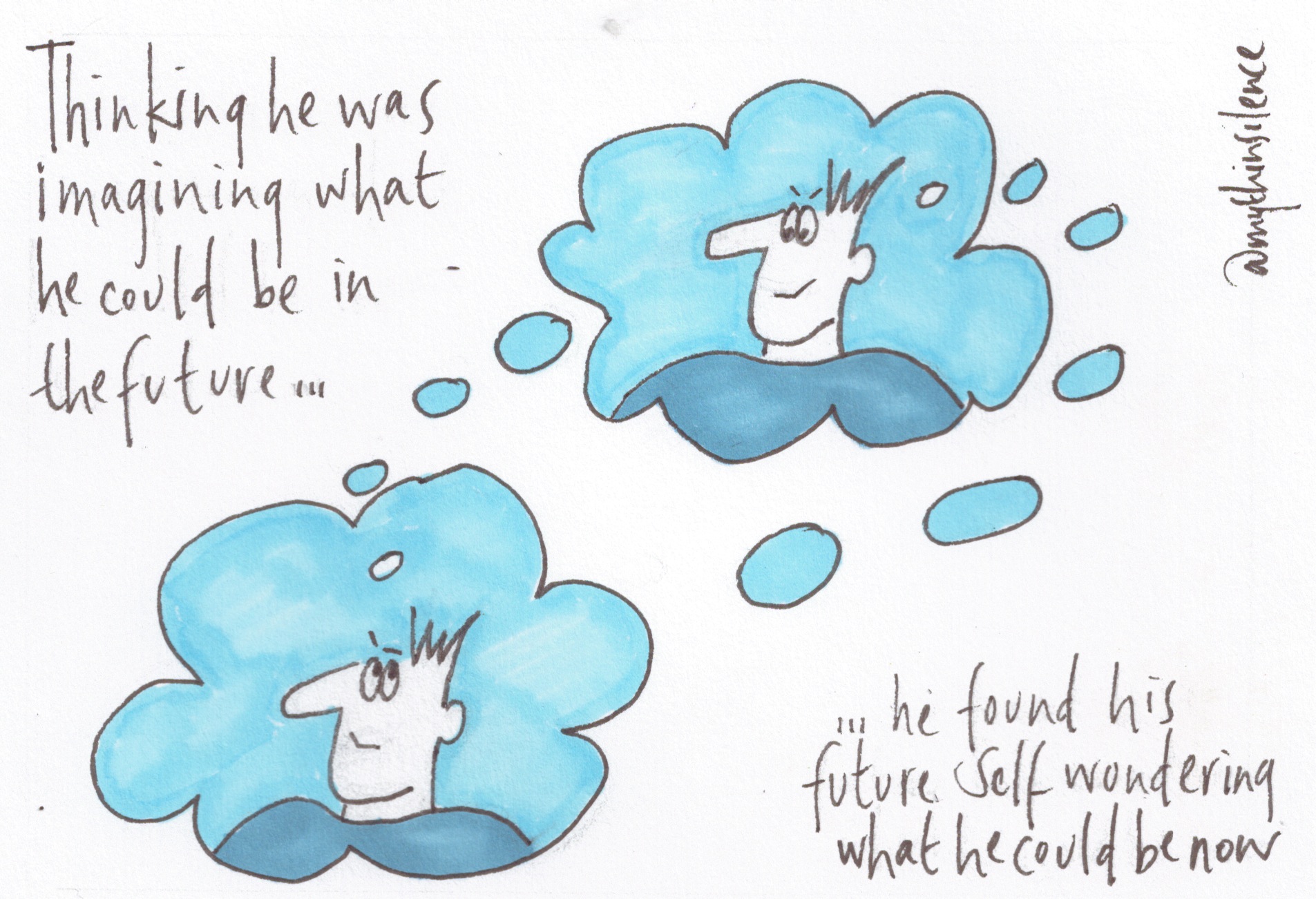
3 thinking he was

We can’t live someone else’s life.  (Many wish they could.)

We have something better.

We are able to experiment with our own lives.

The intensely curious AJ Jacobs has done this with his life in many ways, including living biblically for a year and outsourcing his life for others to live.  In The Rationality Project, Jacobs was questioning why he did the things he did – using Crest toothpaste because when he was twelve a friend told him it was cool – and he began to make changes in his life.

Fontainbleu professor Herminia Ibarra suggests trying out the question: What if I try this?*

Whilst the bad news is you can’t live someone else’s life, the really good news is there are many ways to live your life.

If you don’t, it would be like having the blessing of a new car but only going back and forth to the same place at the same speed for the same reasons at the same time of day.

Why not begin today:

Pick up a book you’d never have thought to read.
Change something around in your routine.
Try out AJ Jacob’s experiment of asking why you do the things you do, going as far back as you can.
Get to know someone new.
Encourage someone.
Figure out how to serve someone.

We think we have to have it together – like all the other people – before we can do something more, something different, but it’s the other way around.

‘But the main thing is to get testing and learning underway as soon as possible.’**

‘If people show low failure rates, be suspicious.  Maybe they are not taking enough risks, or maybe they are hiding their mistakes, rather than allowing others in the organisation to learn from them.’^

(*Quoted in Warren Berger’s A More Beautiful Question.)
(**From Warren Berger’s A More Beautiful Question.)
(**From Frans Johansson’s The Medici Effect.)

ikigai

2 ikigai

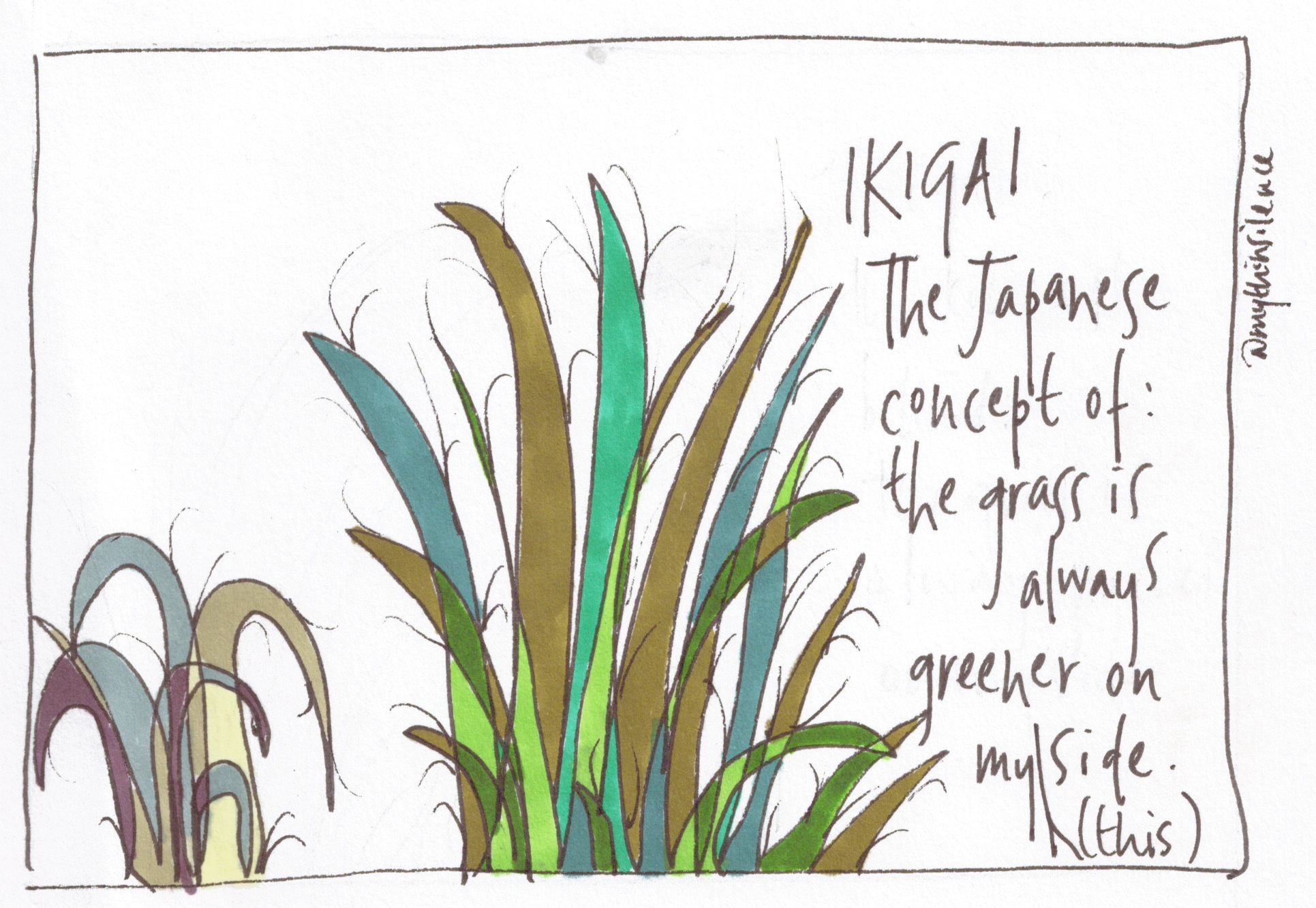
‘This Japanese concept means have something worth living for, and ikigai is intimately related to the meaning element of flourishing … .’*

There it is again.  The thing I love.  My ikigai is to help others find their ikigai.

Seven Covey spoke about “finding our voices and helping others to find theirs” as the most important habit for life.**  Each of us has ikigai and is able to help others find theirs.

“It’s important to think about that time and place and activity where you shine, where you feel most alive.  I get all kinds of different answers – when I’m solving a problem, when I’m creating, when I’m connecting with someone, when I’m travelling.”^

For me, I love to read and write and doodle and meet people and hear their stories, and when people speak of not knowing what to do with their life, I want to help them find it, to help them listen to what their life is saying to them.

Whatever you hear and love, do it:

‘Obsessively specialise.  No niche is too small if it’s yours.^^

(*From Martin Seligman’s Flourish.)
(*From Steven Covey’s The 8th Habit.)
(^Quoted in Warren Berger’s A More Beautiful Question.)
(From Seth Godin’s Whatcha Gonna Do With That Duck?)