is the universe a holodeck?

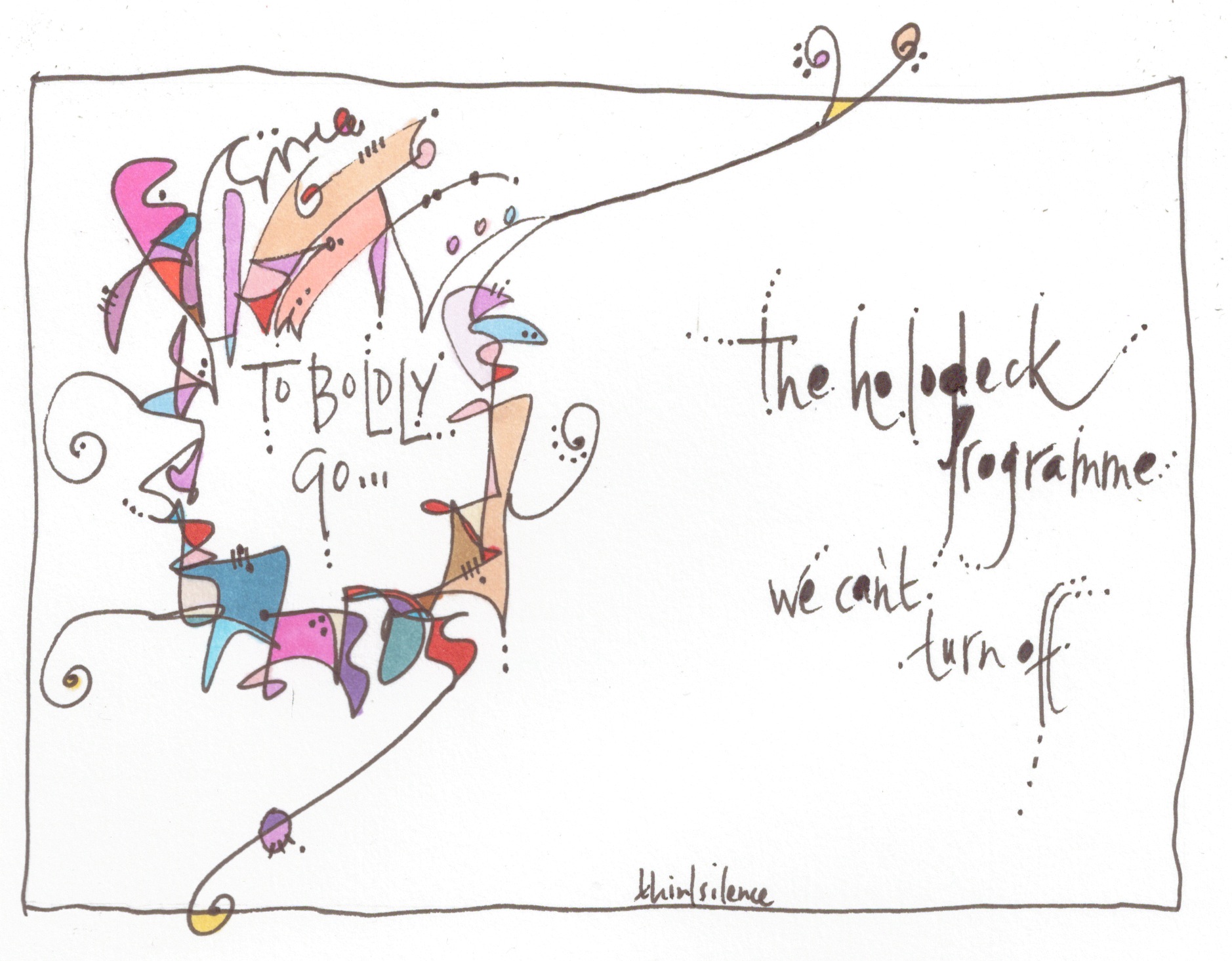
11 to boldly go

The crew of the USS Enterprise (The Next Generation) will be able to choose all manner of holodeck programmes to escape duties or idle away their down-time in space.*

Author and artist Frank Schaeffer offers: ‘Our brains have evolved to seek patterns.  We test these patterns and discover useful ways of perceiving what’s around us.  Our perception is not reality.  We create a narrative.  We want to see where we fit.’**

The universe allows us to do this.  Maybe life as we’re discovering it is the most amazing thing to come out of the universe’s billions of years of evolving – I appreciate, this a Human projection.  It’s as though it’s beholden on us to be imaginative and creative in a plethora of ways: maybe the meaning we give to planets and raindrops is what it’s all about.

In this way, the universe is a great big holodeck we programme with our meanings, both individual and collective, handling them all simultaneously.

Humans are strange creatures among the many species, having to search for meaning and happiness in whatever part of the world we find ourselves in … and, one day, among the stars.

Somehow we know there are better “programmes” than others.  We know the programme Nobel Peace Prize-winner Mulala Yousafzai has chosen for her life (working for the rights of children to education) is a far better one than the one the Taliban gunman who tried to take her life two years ago.  We also know many people will join her in this.

This suggests an interconnectedness between all the programmes: we need each other to run our individual programmes and others we will share in creating more amazing and complex ones.  I know the universe can’t smile, but if it could, it would.

I am guessing the best programmes will be those which allow us to continually and increasingly explore – people, our planet, who we are – rather than building systems with towering walls protecting us from what lies beyond.  Nassim Taleb captures this well, believing, ‘one needs flâneur-like abilities to keep capturing the opportunities that arise, not stay locked up in a bureaucratic mould.’

It all happens in this vast holodeck; go programme and prosper.

(*Future tense used because it is set in the 24th Century.)
(** Check out more from Bruce Hood in The Self Illusion on how this relates to the Self.)
 

doodle more

10 doodle everywhere

Last night I met a ton of people making innovative things happen, including motion designer and illustrator Erik.*

It turned out we’d both been encouraged by artist-blogger Hugh MacLeod’s Ignore Everybody.  Erik produces some new art everyday for his postitheads stream (I’ve got a couple of these in front of me as I write – a dinosaur wearing 3D glasses and a pirate).  For me MacLeod’s encouragement meant I took on the challenge to blog everyday for a year as long as I can cartoon with this.  (You wondered why there were so many of these things.)

I want to encourage you to doodle, to draw – because you can.

McNair Wilson caught my attention today with his question: ‘Have you ever heard of anyone who dreams in text?’

I know I don’t; do you?

Text follows image.

What particularly caught my attention was the word from which doodle most recently comes:

‘The modern word doodle burst upon the
scene in the 1930s from “dawdle” – meaning
wasting time, being lazy or completing a
task slowly.’**

I connect Wilson’s doodler with Nassim Taleb’s flâneur, who wanders through life in a way which allows for more of the options and possibilities the universe proffers to be noticed.  Drawing not only is our first “literacy,” but also allows us to notice more, remember more, and, I am finding, create more.

McNair Wilson and Erik have just upped the challenge to me to be even more visual.

Warning: if you also take up this challenge, people will think your daft or annoying, a dawdler of idle.

(*You can check out Erik’s great work here.)
(**Apparently, going back to the 17th century doodle was used of a fool or simpleton, from the German dude, meaning “to play.”  This is its sense in the song Yankee Doodle first sung by British troops before the American Revolution.)

mysterious

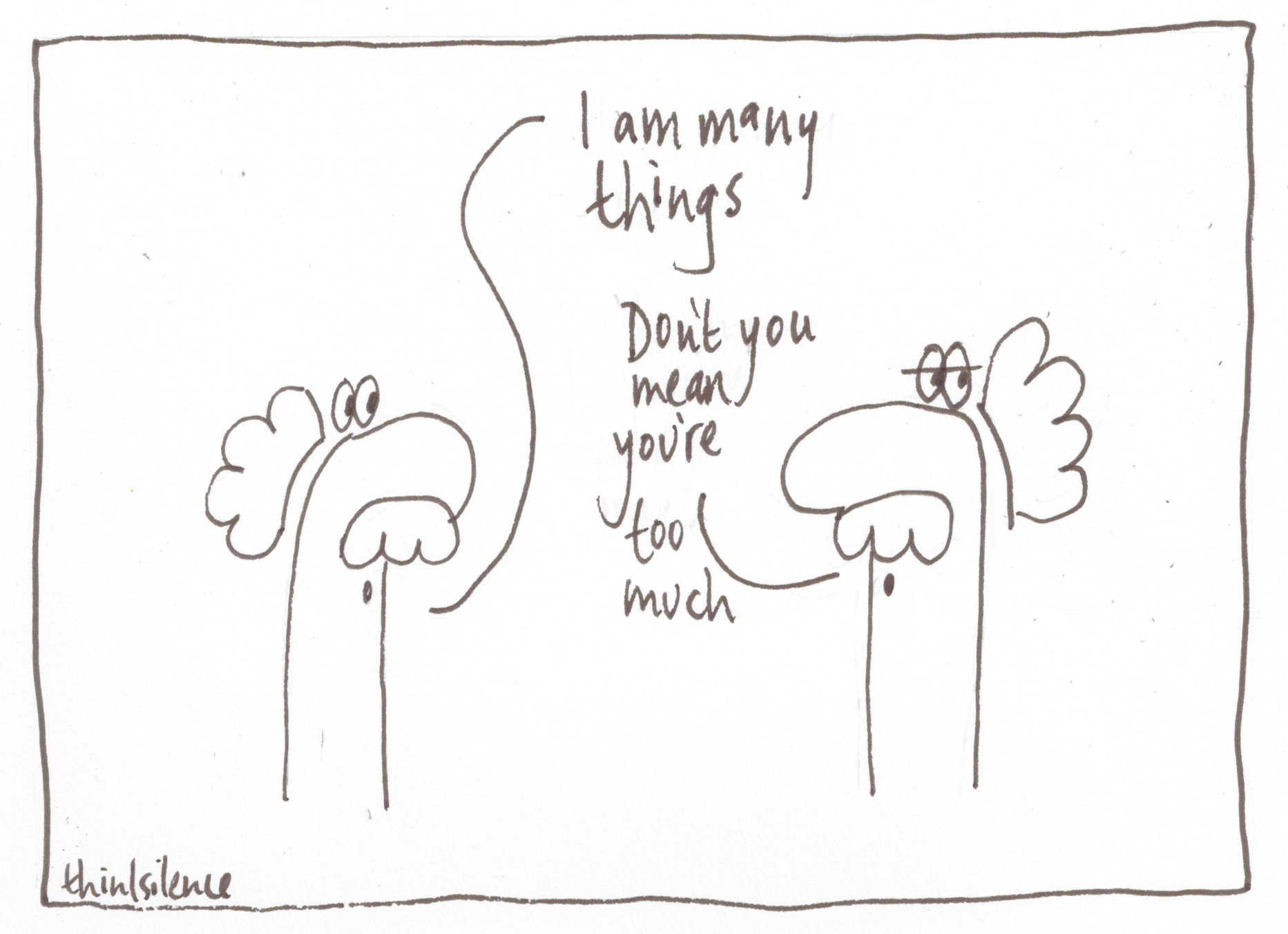
9 i am many things

I mean you.

You’re not one person, but many.

We can’t say, “This is who I am: facts, data, provable/disprovable.”  We are many more things.

The scientist in her lab scrutinises the object of her inquiry, and questions and tests, and begins again.  Later, she returns home and enjoys the taste of the food she’s prepared* with drink and significant friends without a data file in sight, nor would she dream of “datafying” this experience.

Life is a mysterious thing: the one person is many things, and these many things are one.  How does that work?

We can’t discover what life is by pressing it hard in simply one way; we must find ways of journeying which allow us to both observe and experience.  Nassim Taleb suggests “flâneuring”** as a way to make ourselves available to more, citing examples of clerics who provided significant work in industry and science and more besides, who used their spare time to inquire and explore, allowing them to see ‘a free option when it is handed to us.’

McNair Wilson tells the story of a business guy in one of his creative workshops who was struggling to take notes on unlined paper with coloured pens and doodles – the things participants were encouraged to engage in by Wilson – objecting, “I’m a matter-of-fact logical person.”

Only part of the story.

Being pressured by his team to join in, this man found he was also someone else: “But today, I am taking the best notes ever and loving it.  What did you do to me … ?”

There’s a lot of mystery in life.  There’s a lot of mystery in you, in your life.  Go with it … flâneur (turning a noun into a verb, but try it anyway – I’ve been trying it for years and interesting things happen).  Be open to the things which life and the universe and, if you have a god, your god brings to you.

It’s both/and.  Focused inquiry and wandering, thinking and feeling, concluding and staying open, drawings and words.^

(*She’s probably played with the ingredients too, changing some on a whim, introducing something to play with the flavour.)
(**Flâneur: flaˈnəː,French flanœʀ/noun 1. a man who saunters around observing society.  Instead of being a tourist, who won’t allow himself to participate in the culture he’s observing, Taleb is encouraging wandering through life in a way which allows us to experience it.  He includes the story of a guy who experienced the cities he visited by literally following his nose – rather than following a tourist trail, he sniffed his way around a new place.)
(^The first recording “literacy” for Humans was the drawing kind: the visual arguably comes before the written.  Everyone can draw, we just forget we can.)

producers

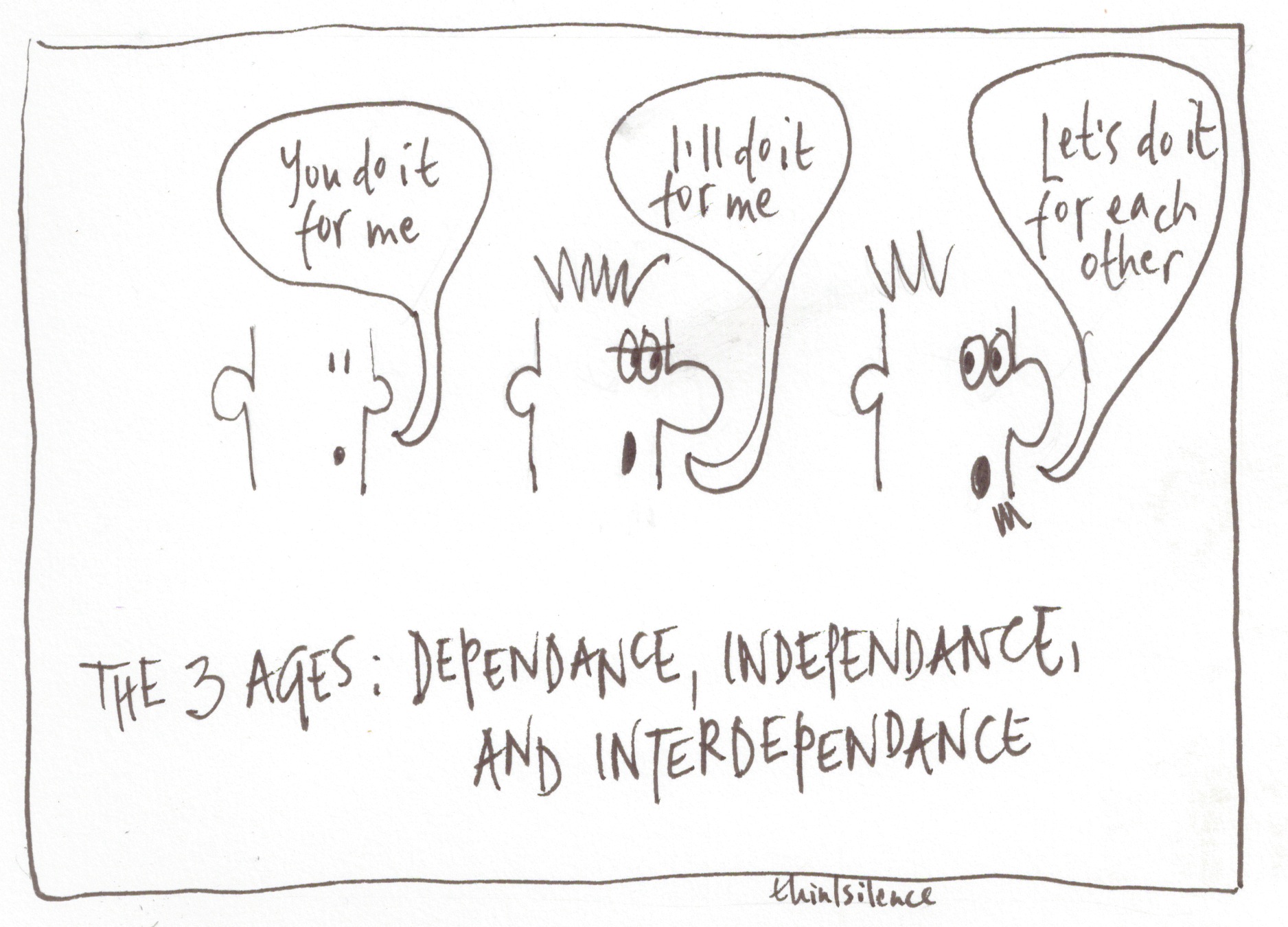
8 the 3 ages

If you aren’t already a producer, you will be.

It’s where your life is headed: Humans just have to produce things.

It’s why I’m more convinced how going to the future to have a peek at who we can be and what we can do is a really healthy habit – because continuing to look at the past doesn’t help us much at all:

‘You cannot look at [your] future
by naive projection of the past.’*

Social psychologist Erich Fromm describes the immature child as needing to live through possessive stages – she is unable to take care of herself, ** but in a healthy life these are left behind as she grows into maturity.

Then something amazing happens: discovering she is a generative being in unique ways, she is able to make, to produce, to create … and to be generous.^

When we listen to the whispers from our future, we see a world of abundance rather than scarcity, and then add to this from others see as the most unlikely materials.  I realise I’m echoing what I’ve previously explored as makers of fire: there is fuel all around (artefacts others and we have made , including ideas and thoughts), and oxygen (the world views, perspectives, stories, and paradigms of our time), and you add heat.  You are a producer of fire.

‘Encourage everyone to use coloured pens
(NOT ballpoint) for ALL writing and notetaking.  
(They will think differently. …)’^^

(*This line from Nassim Taleb reads: ‘You cannot look at the future by naive projection of the past.’  I thought changing one word still held true.)
(**’It is forced either to receive, to snatch, or to possess because it cannot yet produce.  Thus, the category of having is a necessary transitional stage in the child’s’ development.’  This Fromm describes as possessive having: something we grow out of as we mature .)
(^Generative and generous share 
the same root.)
(^^I often use coloured pens so I had to include this idea from McNair Wilson.  Who knows, it might just change something today.)

conformity and nonconformity

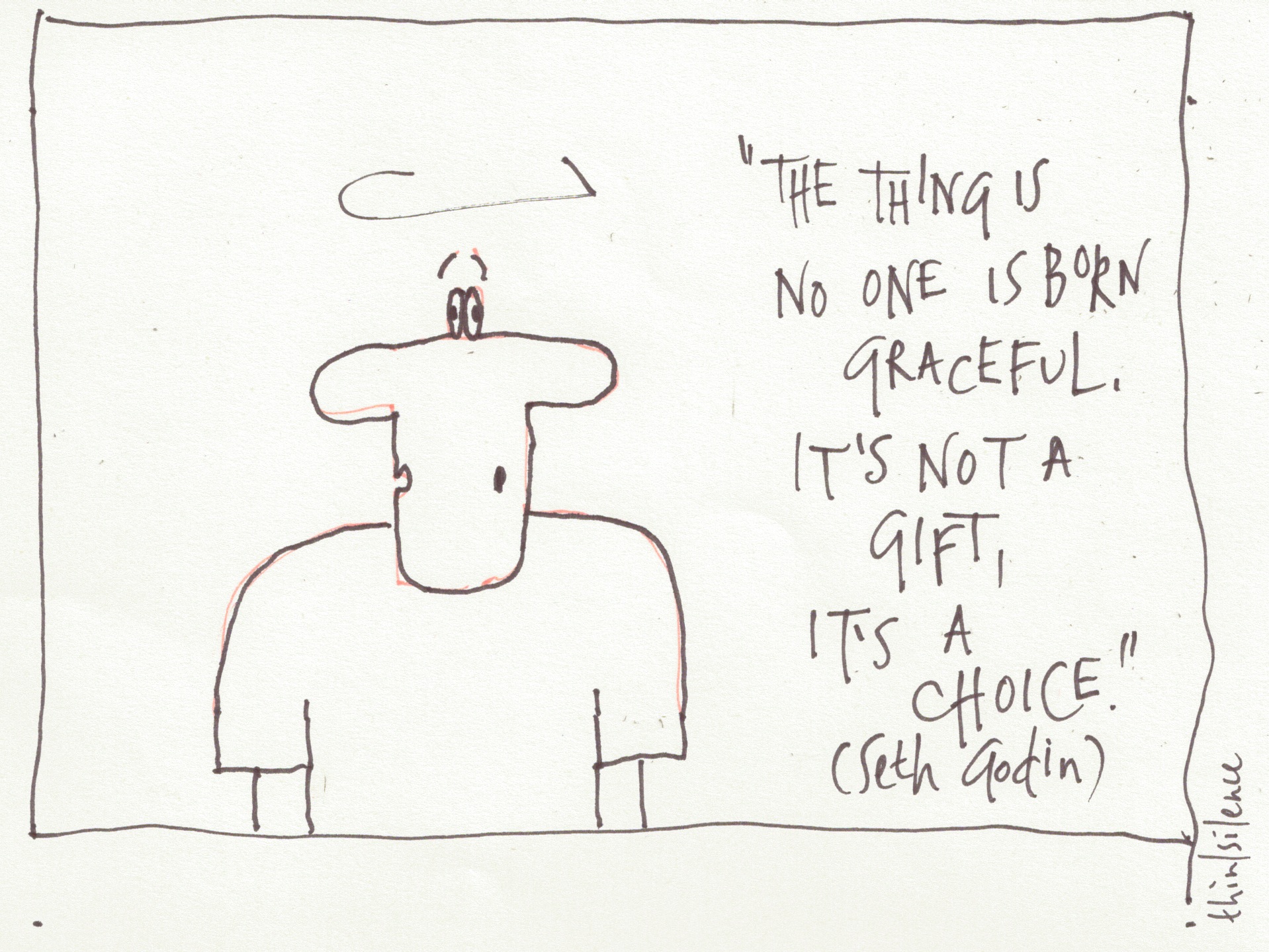
7 the thing is

We knew we are what we are, but also knew, we can be more.

There we were, two middle-aged, white males talking about things which really mattered to us, were outside our ken and experience, but which we were trying to fathom.

We can open our minds to know and understand and see more, open our hearts to the worlds of others and what they love, and open our wills to live what emerges from these transforming experiences.

Out of this journey towards more, towards the other, comes gratitude, and gratitude is connected with grace and gracefulness.

Then, the more we become a person of grace, the more we can create things of hope and beauty and goodness.

In his delightful Graceful, Seth Godin sees the person who makes themselves indispensable – the linchpin – in this way (I have simply replaced the word linchpin with grace):

‘Grace resists the pressure to conform and
comply.  Instead she works without a map,
solve interesting problems.leads, connects
and creates an impact.  Grace is the one we
can build a project around, the one we will
miss if she leaves.’

Whoever we are, we can be this person too.

(Written and cartoon drawn on the East Coast Line.)

it’s elemental

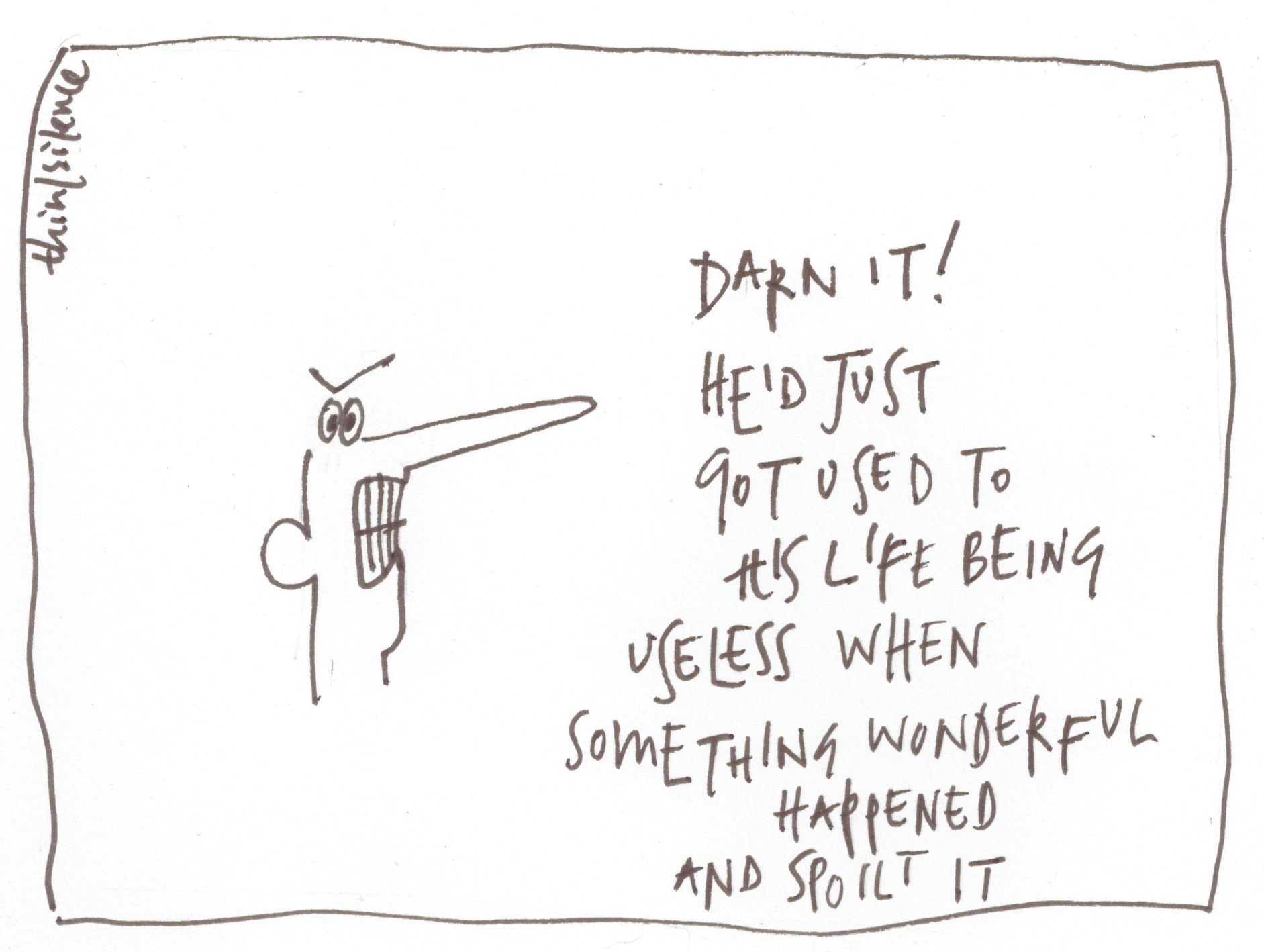
6 darn it

Richard Rohr offers five elemental truths, as gleaned from the initiation rites of different peoples.

I’ve shared a couple of these previously but here are all five:

Life is hard
You are not as special as you think
Your life is not about you
You are not in control
You are going to die

They’re intended to help a child become a contributing adult member of their society: to die first, and then live.

These elementals say, “You are Human,” and are found at the centre of who we are … waiting to be completed.

If we are to see the emerging future, we must recognise the pain in others, in our world, in our self, and, if we believe in God, even in God.

Italo Calvino‘s character Marco Polo describe the unhappy city of Raissa, where people ‘wake from one bad dream and another begins,’ yet there is another Raissa, if only people are willing to see it:

‘Also in Raissa, city of sadness, there runs an
invisible thread that binds one living being to
another for a moment, then unravels, then is
stretched again between moving points as it
draws new and rapid patterns so that at every
second the unhappy city contains a happy city
unaware of its own existence.’

The elemental truths are incomplete and we have the opportunity to be imaginative in how we can complete them:

Life is hard but …
You are not as special as you think, and yet …
Your life is not about you, so …
You are not in control, but …
You are going to die, so …

To do this is not easy, as Daniel Kahneman concedes when he writes:

Reframing is effortful and System 2* is
normally lazy.  Unless there is an obvious
reason to do otherwise, most of us passively
accept decision problems as they are framed
and therefore rarely have an opportunity to
discover the extent to which are preferences
are frame-bound rather than reality-bound.’

When we allow ourselves to see this reality – the pain and the possibility – then we have a story worth sharing.

(*System 2 thinking is a slower, more deliberate way of thinking, in contrast to System 1 thinking which fast, instinctive, and emotional.  It requires a lot of effort and therefore we tend to find it’s lazy.  Nassim Taleb picks up on how energy-sapping open thinking is when he introduces the sceptical empiricist: whilst we may wish to come to a conclusion about something and move on, we can remain sceptical about whether we know all there is to know or have covered all the angles.)

comparisons

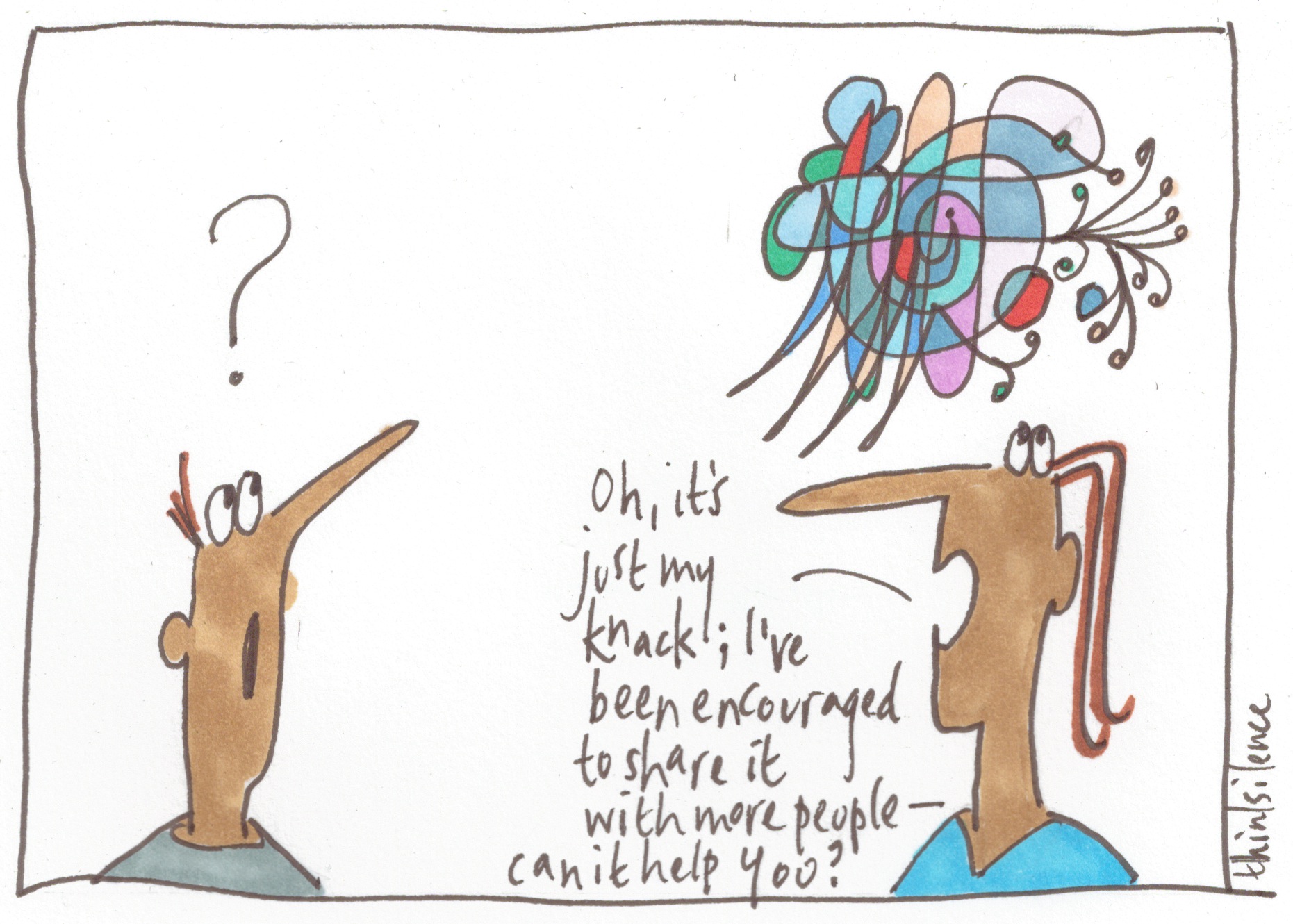
5 oh, it's just my knack ...

The best person to compare yourself to is your self.

A few nights ago I’d the opportunity of meeting some brilliant young people helping each other to identify their knacks – their talents – with a view to sharing these with one another in help and support.

Not everyone was sure of their knack, but I wanted every one of them on my team because of the amazing things I think they could offer.

The really important thing is to have done the hard work within your domain,* constantly pursuing your curiosities and honing your skills … with a passion.

When it comes to those times when it’s necessary to compare yourself with others – to get a different healthy bearing on exactly where you, then it won’t get out of hand with you ending up thinking you have nothing to offer.

Here’s how you can compare yourself with your self.

Mihaly Csikszentmihalyi points to the following as indications of whether you are in the flow of your creative work, including:

1) you see clear steps; 2) you are able to recognise feedback immediately; 3) there is a balance between your skills and the challenge; 4) you are fully focused; 5) you cannot be distracted; 6) you are not concerned with failure; 7) there is no self-consciousness; 8) your sense of time is distorted; 9) you are so in the flow that the activity becomes autotelic – an end in itself.

Turn these things around and you have a list which looks like this:

1) you cannot see clear steps; 2) it’s difficult to tell how you are doing, because you can’t recognise feedback; 3) you feel there to be an imbalance between your skills and the challenge; 4) your mind doesn’t settle; 5) you find yourself easily distracted; 6) you worry about failing; 7) you are constantly self-conscious; 8) time drags and you find yourself time-watching; 9) the activity is exotelic – a means to an end which in and of itself you do not enjoy.

This tells you you’re not living your knack, or recognising and valuing it, and this can lead to unhealthily comparing of yourself to others.

To compare yourself with your self is about seeing whole picture within and without, upgrading rather than degrading what you know about yourself.  Otto Scharmer would encourage us to see this as presencing: being present to others, to our world and to our future Self in a healthy way.

‘Life is not about removing every obstacle;
it is about finding creative solutions for
taking advantage of those obstacles, or
learning from them … or living with them.’**

Flow, sweet spot, element, knack, purpose, calling, vocation, art, genius, strength – whatever you call it, it’s got to be you.

Our knack moves us from being reactive to initiating.

(*Your areas of knowledge and expertise.)
(**From McNair Wilson’s Hatch.)

u people

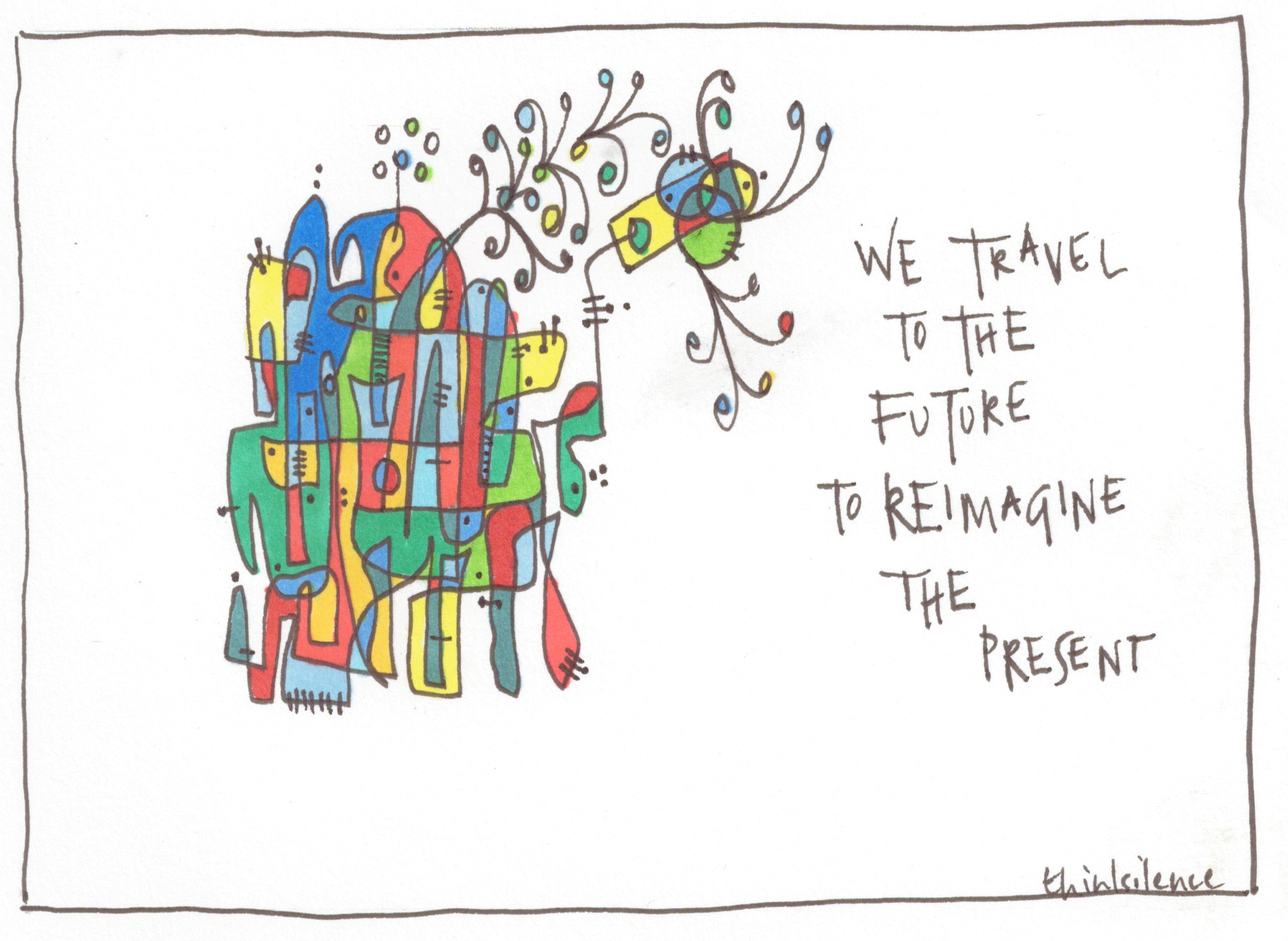
4 we travel to the future

U people come to live in the present from both their past and their future:

‘My journey began with the recognition
that I am not just one self but two selves.
One self is connected to the past, and the
second self connects to who I would
become in the future.’*

What if I don’t have to be the person I am in this moment because of who I have been, what I have done, or what has happened to me in the past alone?  What if I can live in this moment but because of who I choose to be and what I choose to do in the future?

U people understand this, giving themselves permission, and others encouragement, to connect with their futures.  They go as far as to posit, we cannot be whole and integrated people unless we also connect to our future.  This understanding opens boundaryless** possibilities.

There will always be people who call us back to, or reminds us of, our pasts; some because want to control, others want to compete, others don’t want anyone else to have what they don’t believe they can have, and, still others because they do not believe in the future, saying, “This is all you are and all you can be.”

They’re wrong.

In this very moment, you can be both your past self and your future self, so you can be more^ creative and generous.^^

(*This come’s from Otto Scharmer’s excellent Theory U; U people isn’t a term Scharmer uses but I hope it works as we think about being people formed by our past and our future.)
(**Boundaryless is a word I borrow from Jack Welch’s book Winning where its used to describe open thinking, though here I use it in relation to a remark David Shenk makes in The Genius in All of Us about how we don’t what we’re capable of.)
(^A group of people used the word more – magis – to describe how they would give everything they could for others, and then they would give more.
(^^Otto Scharmer offers three important actions to help us be U people: suspension of our seeing and understanding – in this case, how we only see ourselves as the product of our past, redirection – we reorientate towards the new we see our future can be. and, to let go – of the old ways of seeing and understanding which are no longer helpful or useful to our pursuing of the new.  Some might be cynical about all of this; I suggest what they are really reacting to is how difficult this is, and how the easier thing is to stay where they are.)

changed?

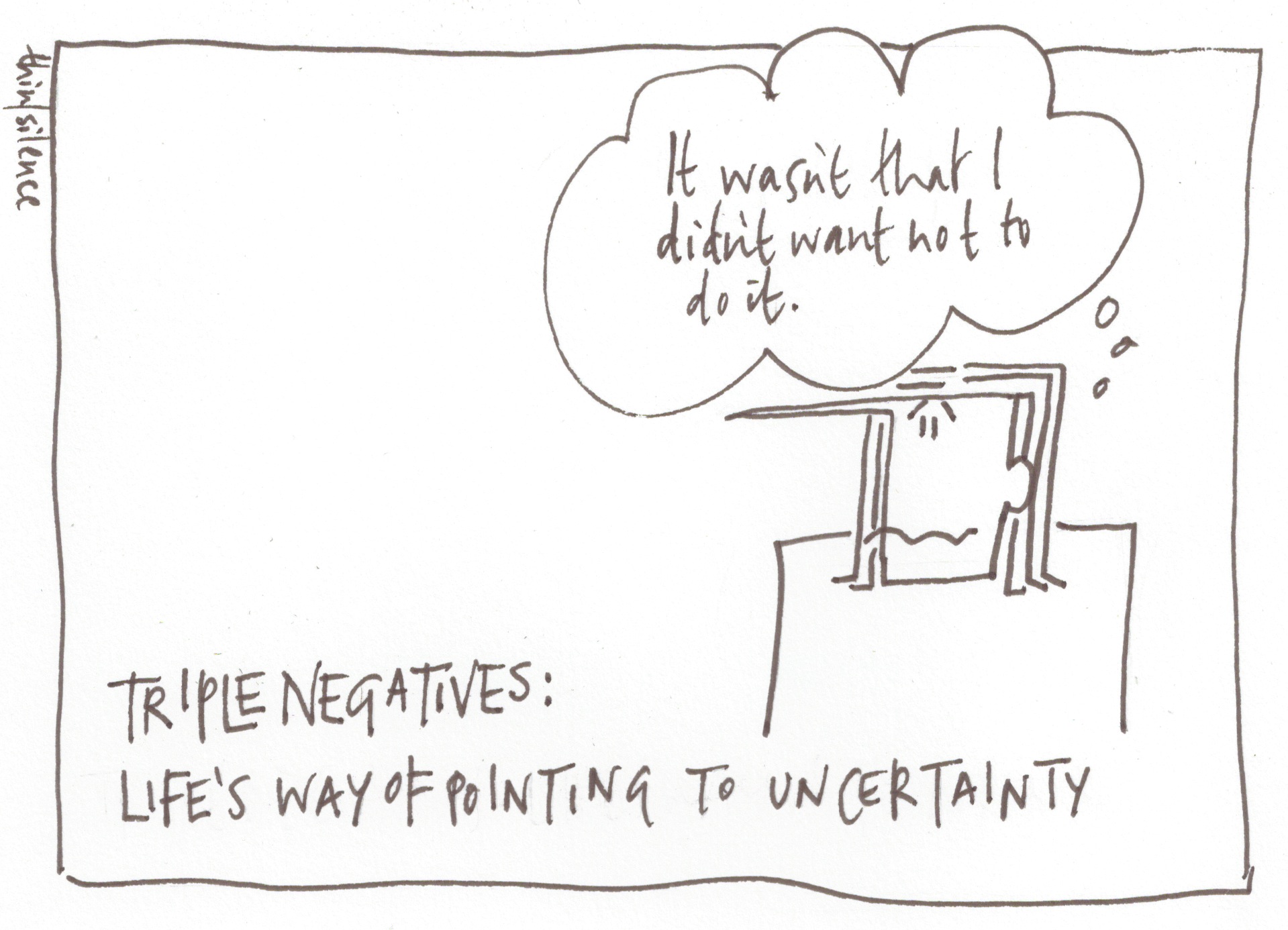
triple negatives

Interesting question.

Can we change who we basically are?

Do we need to?

Who are we, anyway, really?

We know the world needs to change.  Mohandas Gandhi encouraged us to be the change we want to see.  Personal change and world change are inextricably linked.

Can the baseline “me” be changed by the experiences I engage in and the choices I make?

Am I always slowly becoming a different person to the one I can be or want to be because I don’t choose?*

To be able to say what our life isn’t, or who we don’t want to be, can help us move forward.  By elimination we discount what we don’t want to be until we’re left with who and what we do want to be.

Change for change’s sake can be helpful too.   It gets us moving, and sometimes moving anywhere can be better than staying where we are.**

You could say I’m in the moving and changing business – helping people to identify points of purchase which are already within them and around them.  It’s about seeing differently, to see what there is rather than what there isn’t: who they are, what they have, what they can do.

(I am realising more and more this is about being  future-orientated.)

Voices which were meant to have urged us onward, to change, to become, have become voices which stand in our way.  We have to get past the voices of judgement, cynicism, and fear which hold us where we are.  I wonder whether these were once good voices: to have good self-judgement, to be curious about the other, and, to move forward whilst avoiding the destructive chaos are good things, allowing me to be more present to life.

Repent is a word which is thrown around as condemnation when it’s really invitation, it’s a future-orientated word, asking us to explore our future self.  Not what we have been but what we can be, to be open to this, to see how it comes through others, and to live out what we see.

(*In The Self Illusion Bruce Hood argues any such thing as the person: we are an ongoing adaptation to the world around us.)
(**Change for change’s sake can also be bad, when it covers up what we really ought to do, when it’s avoidance.)


the future is connected

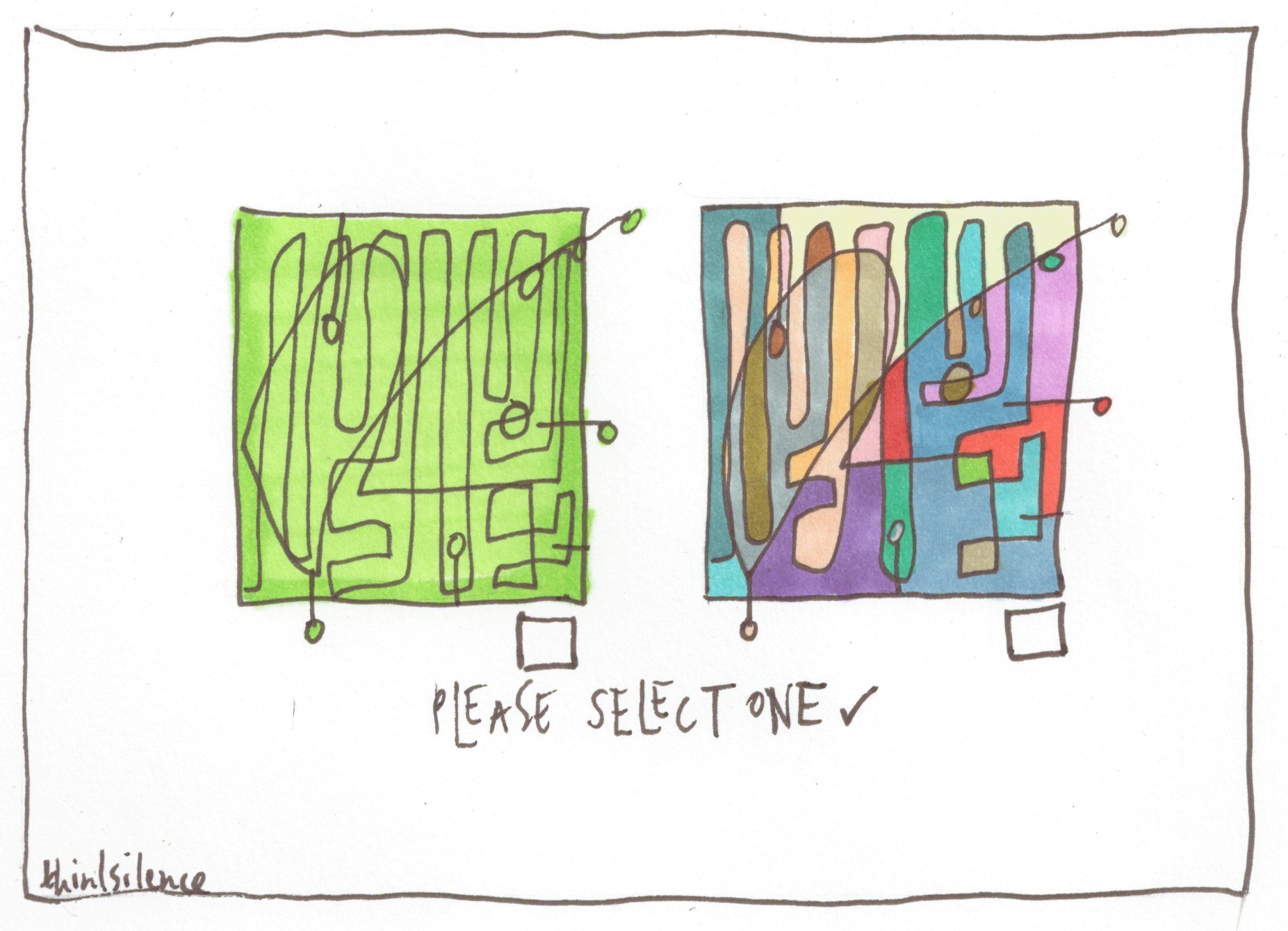
2 please select one

But we all exclude people.

Sometimes we have to – we just cannot connect to everyone – even Facebook knows this.*

Sometimes we could connect and choose not to.

We tend to connect with people like us, excluding others, although the future will be increasingly about connecting with people who are not like us,** and seeing just what kind of world we can shape together.  There will be rules which will need to be followed – developed from those of the infinite game – but all kinds of people will come together around the things which matters to them, or around a person who matters to them.

When others exclude, we can create our own places for including.

Yesterday I mentioned the story of the Impressionists; marginalised by the Ecole national superieure des Beaux-Arts, they created their own community of artists – Societe Anonyme Cooperative des Artistes Peintres, Sculpteurs, et Graveurs – making it possible for all those who wished to pursue their art without compromise to do so, as equals.

Seth Godin’s We Are All Weird is an important reminder for us of how we now live in a world without normal people – even those who count themselves as normal are weird, and this is okay.

I find myself pondering why might happen with the founding of many groups devoted to including people, identifying with, and developing them in, their weirdness – and their weird art.  These places would be filled with mind-openers and people-builders and connectors and energisers and collaborators and champions and navigators and companions.^

There’s nothing to stop us from beginning such a place for ourselves and others, exploring and developing our weird art.

(*Facebook limits the number of feeds we see from our “friends.”  It also recognises how most of us connect to only four or five people regularly; we connect to the same numbers of groups.  Check out Grouped by Paul Adams for how Facebook sees small groups of friends as critical to social networking.)
(**Many are looking into the developing second renaissance with different people and different domains coming together in exciting new ways.)
(^These eight types of people are described in Vital Friends from Tom Rath.  Rath suggests we need different kinds of friend to accompany us through life – no one is all of this kinds of friend to us and we cannot be all of these things to others.  We could call the book Weird Friends because we’re all different and that’s healthy and fine.)